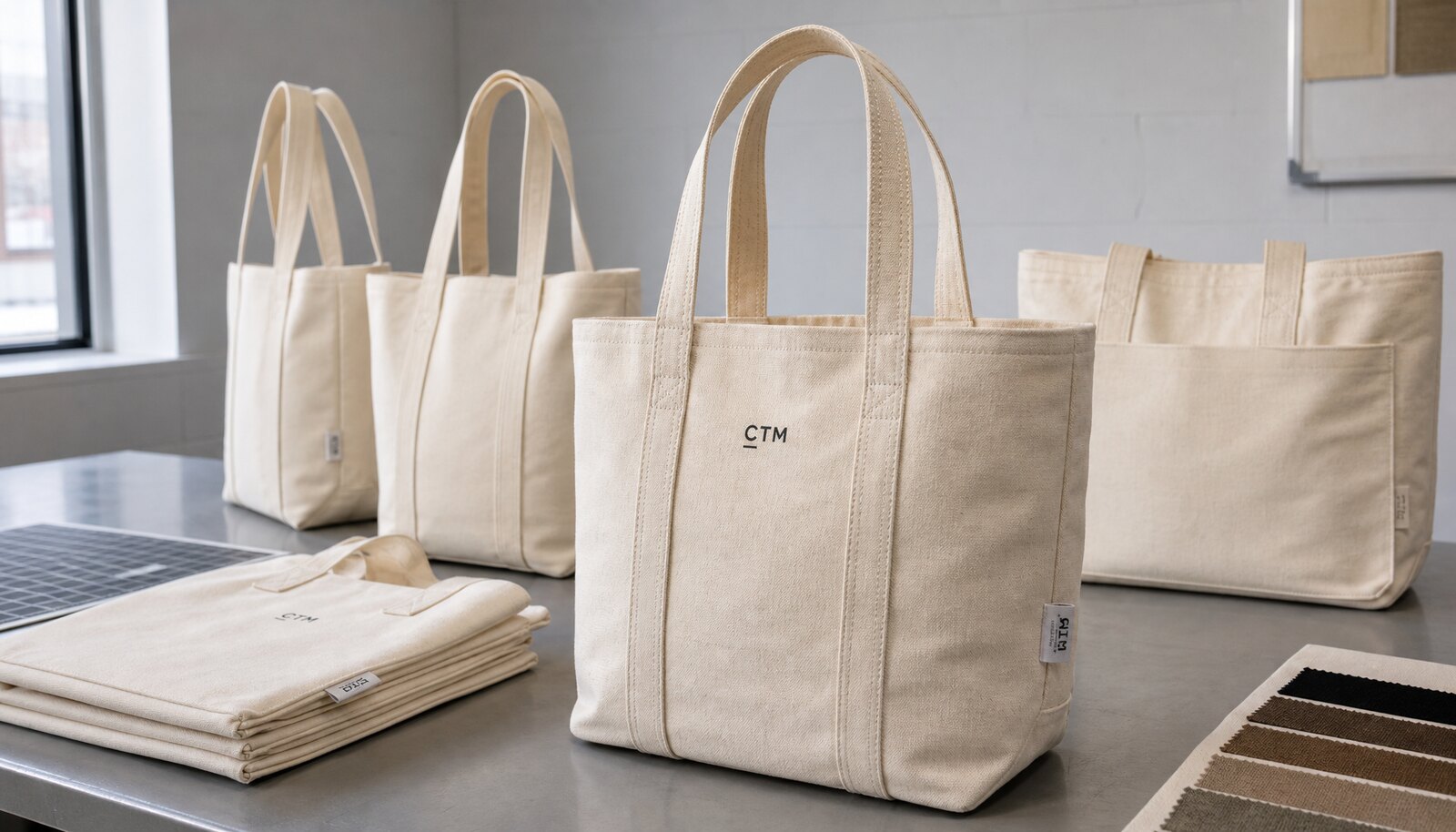
1. Start With The In-Hand Date And Work Backward
Corporate grocery totes are usually tied to a date that will not move: a conference check-in, employee kit launch, client gift drop, retail partner campaign, campus event, or holiday mailing window. For procurement, the question is not simply, "How many days does production take?" The better question is, "When does inspected, correctly packed, usable inventory need to be at the warehouse?" A tote that is finished at the factory still has several steps ahead of it. It must be inspected, packed, booked, shipped, cleared if applicable, delivered inland, received, and sometimes kitted with other items before anyone can hand it to a recipient.
Open the RFQ with five dates: event date, required warehouse receipt date, latest acceptable factory handoff date, latest sample approval date, and latest final artwork approval date. Those dates make the real schedule visible. A supplier may quote 25 production days, but that number may exclude fabric booking, artwork proofing, courier time for samples, buyer review, third-party inspection, export documents, freight booking, customs, or receiving appointments. A procurement-ready lead time should show the stages, not just one attractive number.
Build decision time into the plan. Brand approval for print color, legal approval for environmental wording, finance approval for deposit, and logistics approval for carton data can all pause the order. If the launch date is fixed, assign one owner for each approval and set a review window, such as 24 or 48 hours for proofs. Lead time planning is part factory capacity and part buyer-side discipline. Both need a calendar.
- State the required warehouse receipt date before asking for price.
- Ask suppliers to define when the lead-time clock starts and what approvals must be complete.
- Reserve time for sample courier transit, buyer review, inspection, rework, freight booking, customs, and receiving.
- Use dated milestones for fabric, strike-off, cutting, printing, sewing, packing, and shipment handoff.
- If a kitting partner is involved, confirm the tote delivery date they need before final kit assembly.
2. Write A Comparable Tote Specification
Canvas grocery totes look simple, and that is exactly why incomplete RFQs create trouble. One factory may quote a flat promotional bag. Another may quote a boxed grocery tote with a gusset. A third may include heavier canvas, cotton webbing handles, and reinforced stitching. All three prices might appear to answer the same request, but they do not describe the same product. A useful B2B specification defines the finished size, gusset, fabric, handle construction, decoration, labels, packing, and delivery term before price is compared.
Use finished measurements rather than sample-style language like "large" or "standard." Specify width x height x gusset depth, handle drop, handle width, print size, and logo position from clear reference points. If the tote must hold a gift bundle, test the bundle first. Share the maximum item size or packed kit dimensions with the supplier. A 100 mm gusset can change usability, folding, carton cube, cutting yield, and sewing time compared with a flat tote.
Be careful with soft buying words: premium, sturdy, eco, retail quality, big logo, heavy canvas. They may be useful internally, but they are not production instructions. Translate them into fabric weight, handle material, reinforcement method, print coverage, color reference, and packing format. If the bag must carry heavier items, say whether handles should be cotton webbing or self-fabric and whether stress points need bartacks, box-X stitching, or another reinforcement. Measurable details keep the quote honest and make final inspection possible.
- Specify finished width, height, gusset depth, handle drop, handle width, fabric weight, and handle material.
- Define whether the tote is flat, boxed, bottom-gusseted, side-gusseted, or has a separate bottom panel.
- State print size, print side, placement, color count, and artwork file name or revision.
- List labels, hangtags, care labels, inserts, and carton marks as part of the product, not as later add-ons.
- Attach the same specification to the RFQ, sample approval, purchase order, and inspection checklist.
3. Choose Canvas Weight, Finish, And Color With Lead Time In Mind
For many corporate grocery tote gifts, 10 oz to 12 oz finished canvas is a sensible starting point. It usually gives more structure and perceived value than very light cotton, while staying efficient for cutting, sewing, printing, folding, and freight. Lighter fabric may work for a budget handout or mailer insert, but it can feel less appropriate for grocery use. Heavier canvas can move the product toward a more retail-style tote, yet it may increase fabric cost, needle and sewing requirements, carton weight, and air freight cost.
Clarify how the supplier is defining fabric weight. Canvas may be quoted in ounces per square yard, GSM, or local shorthand. The number may refer to greige fabric, finished fabric, or a commercial category rather than a tested value. Two fabrics both described as 12 oz can still feel different because of yarn count, weave density, finishing, and shrinkage. When hand feel, structure, or print appearance matters, ask for a swatch and, where available, the test or mill reference behind the stated weight.
Fabric color is a schedule decision, not only a design choice. Natural canvas is often the fastest route when stock is available, but shade can vary by cotton lot and finishing process. Bleached canvas can provide a cleaner background, although whiteness and hand feel still need approval. Dyed canvas may better match a brand palette, but lab dips, bulk dyeing, shade correction, and colorfastness checks can add calendar time before cutting starts. If the schedule is tight, stock natural or stock dyed fabric is usually easier to manage than a custom shade.
- Confirm whether weight is finished oz/yd2, GSM, or nominal supplier terminology.
- Ask whether fabric is in stock, pre-booked, custom woven, custom dyed, or dependent on mill availability.
- Approve a fabric swatch for shade, hand feel, thickness, odor, and print background effect.
- For dyed fabric, ask for lab dip timing, bulk shade tolerance, and whether re-dyeing time is included.
- Account for heavier fabric in carton gross weight, air freight chargeable weight, and manual handling limits.
4. Match Decoration To Artwork Risk
Decoration is one of the easiest places for a canvas grocery tote schedule to slip. A bold one-color screen print on natural canvas is usually more predictable than a multi-color design with tight registration, gradients, tiny reversed text, or full-coverage ink. The bag body may be simple to sew, but print proofing, screen setup, curing, and print inspection can still become the bottleneck.
Screen printing is often the practical choice for logo-led corporate gifting because clean vector marks are easy to control through screens, ink references, and strike-offs. Heat transfer may help with detailed artwork, shorter runs, or images that screen printing cannot reproduce cleanly. If transfers are quoted, ask about hand feel, edge visibility, rub expectations, and compatibility with canvas texture. Digital methods may also be possible depending on supplier equipment, but color control on textured cotton should be checked before bulk release.
Artwork readiness saves real time. Send vector files with fonts outlined, colors identified, and final print dimensions listed. Do not leave the supplier to guess whether a logo should be centered visually or measured from a seam. If each department, sponsor, market, or region needs a different logo, treat each one as its own approval path. Even with the same tote body, every artwork version can require its own proof, screen or transfer file, print reference, QC check, and carton identification.
- Use one- or two-color screen print when schedule certainty is the priority.
- Require vector artwork, outlined fonts, approved color references, and final print dimensions.
- Ask for a strike-off on actual canvas when opacity, color, or fine detail matters.
- Define print placement tolerance from top hem and side seam or center line.
- Confirm whether printing occurs before sewing or after sewing because the placement tolerance and workflow can differ.
5. Treat MOQ As A Setup Map
MOQ is more than a price threshold. It reflects fabric purchasing, cutting efficiency, print setup, sewing-line planning, accessory ordering, packing labor, and inspection control. A 5,000-piece order in one natural canvas color with one logo is operationally very different from five 1,000-piece versions with different logos, hangtags, carton marks, and destination splits. The total quantity may be identical, but the second order carries more approvals, more setup changes, and more QC references.
Ask for MOQ by the variable that creates work: fabric color, tote size, canvas weight, logo version, print color count, woven label, hangtag, individual polybag, carton mark, and destination release. A custom woven label may have its own MOQ separate from the tote. Dyed fabric may require a higher minimum than stock natural canvas. A logo color change may need a new screen, new ink setup, and a separate strike-off, even when the artwork shape does not change.
When the event date is fixed, simplify the order wherever the brand can accept it. One tote size, one fabric color, one print placement, and one packing method make the schedule easier to protect. If personalization by region, department, or sponsor is required, show each version as a separate RFQ line. That lets the supplier price the real work and identify which version is likely to drive the critical path.
- Request MOQ and price breaks by size, fabric color, logo version, print color count, label, and packing format.
- Confirm whether changing ink color or logo text creates a new setup and approval cycle.
- Ask whether staged deliveries are produced in one run and stored or produced as separate batches.
- Avoid adding variants after PP sample approval because they can reopen artwork, screen, packing, and carton decisions.
- Compare total landed cost and delivery risk, not only the lowest unit price.
6. Use Sampling To Approve Production Reality
Sampling should answer specific sourcing questions, not simply produce a nice-looking photo. A digital proof can confirm layout, but it cannot show canvas texture, print opacity, handle comfort, seam bulk, fold behavior, or the effect of natural fabric shade on logo contrast. For B2B gifting, an approved physical reference often does the most work: it aligns procurement, brand, supplier, logistics, and inspection teams before bulk production begins.
Different samples answer different questions. A fabric swatch approves material, shade, and hand feel. A lab dip approves dyed color before bulk dyeing. A strike-off checks ink color, opacity, edge quality, registration, and print method on the actual material. A pre-production sample approves construction and decoration together. A sales sample from previous stock may be useful for general feel, but it should not become the bulk standard unless the fabric, weight, finish, print method, and construction are the same.
Write sample approvals carefully. Record the sample date, supplier reference, artwork file, fabric weight, print size, measurements, and approved changes. Avoid vague comments such as "approved with notes." Instead, state the action: move logo 20 mm lower, increase handle drop to 260 mm, change ink to the approved Pantone reference, or approve fabric shade with natural lot variation accepted. A clear approval record reduces arguments later when inspection results are compared with the approved sample.
- Define whether each sample is a reference sample, fabric swatch, lab dip, strike-off, sales sample, or PP sample.
- Measure width, height, gusset, handle drop, handle width, and print placement on the approved sample.
- Test the tote with the intended gift bundle or expected grocery-style load.
- Photograph front, back, inside seams, handle reinforcement, print close-up, fold method, label, and carton mark if available.
- Release bulk only after one named approval owner has closed all sample comments in writing.
7. Put QC Tolerances In The PO
Canvas totes are not complex products, but they still need a written inspection standard. The common problems are visible: crooked prints, weak handle attachment, open seams, dirty fabric, oil marks, inconsistent sizing, loose threads, poor trimming, wrong carton counts, and incorrect destination labels. In corporate gifting, those defects reach employees, clients, partners, or event guests. They are also expensive to fix after the goods arrive at the warehouse.
Set tolerances before production starts. For many tote programs, buyers define finished dimension tolerance, handle drop tolerance, and print placement tolerance in millimeters or inches. The exact tolerance should match the design and the factory's capability, but it must be written down. A small centered logo may need tighter placement control than a large casual graphic. Natural canvas shade variation should also be described clearly. Acceptable cotton variation, discoloration, and true defects such as stains or oil spots are not the same issue.
Use practical defect classification so everyone speaks the same language. Critical defects may include safety hazards, severe contamination, wrong artwork, or broken handles. Major defects may include open seams, incorrect size outside tolerance, misregistered print, wrong color outside the approved range, or missing labels. Minor defects may include small loose threads or slight natural slub variation within the approved fabric standard. This structure helps the factory, inspector, and buyer make decisions before the shipment date is under pressure.
- Attach inspection criteria to the PO or approved tech pack.
- Define tolerances for finished size, handle drop, print size, print placement, and carton count.
- Check handle stress points, seam security, print curing, rub resistance, stains, odor, and loose threads.
- Use AQL or another agreed sampling plan when the order quantity justifies formal inspection.
- Reserve calendar time for trimming, repacking, replacement, or other rework before the shipment booking.
8. Plan Packing For Warehouse Receiving
Packing is part of the product specification. It affects presentation, freight cost, receiving speed, kitting labor, and sometimes even perceived quality. A fold through the center of a logo can leave a visible crease. Loose totes can rub in transit and collect lint or ink transfer. Overfilled cartons can distort handles and make manual handling harder. Underfilled cartons waste cube and increase freight cost. Approve packing before production week, not after the bags are already finished.
Define the fold direction, bundle count, tie or band method, individual polybag decision, carton pack count, carton dimensions, gross weight target, net weight, carton marks, and pallet rules. If goods are going to a distributor or kitting center, ask how they prefer to receive them. Consistent bundles of 25 or 50, clear SKU labels, PO references, and carton sequence numbers can make receiving faster and reduce mistakes during partial releases.
Accessories deserve early attention. Hangtags, woven labels, care labels, UPC stickers, inserts, recycled-content claims, and branded cartons may require separate artwork approval, separate suppliers, and separate MOQs. If these details are added after the tote sample is approved, they can delay the order even when the bags themselves are ready. Include all packing and labeling components in the first RFQ so the supplier can quote the real timeline.
- Confirm whether goods are bulk packed, bundle packed, individually polybagged, or retail-ready packed.
- Approve the fold method and avoid critical creases through the logo where possible.
- Request carton pack count, carton dimensions, gross weight, net weight, total cartons, and total CBM or cubic feet.
- Include PO number, SKU, quantity, destination, carton sequence, and handling marks in carton label requirements.
- If plastic-free packing is required, ask how print surfaces and fabric cleanliness will be protected in transit.
9. Align Freight Terms Before Production Finishes
Freight planning belongs in the RFQ because the delivery term changes both cost and lead time. EXW, FOB, CIF, DAP, and DDP quotes are not interchangeable. A low EXW unit cost may exclude local pickup, export clearance, international freight, duty, customs brokerage, and final delivery. A DDP quote may be easier for budgeting, but the buyer should still understand the duty, tax, accessorial, and destination assumptions behind it.
Shipping mode affects packing and schedule. Air freight can help rescue urgent programs, but it is sensitive to chargeable weight, carton dimensions, booking availability, and destination handling. Ocean freight is often more economical for larger programs, but it requires a longer calendar and earlier document control. Courier may be suitable for samples or very small urgent quantities; for bulk shipments, compare it against landed cost, carton limits, and receiving rules.
For event-driven orders, decide on the backup option before it is needed. If a deadline tightens, the buyer may choose a partial air shipment for the first event quantity and move the balance by the standard route. That only works smoothly if cartons are packed and labeled by release group or destination. Mixed cartons with unclear allocation make partial shipment slower and more prone to picking errors.
- Compare supplier quotes using the same Incoterm or delivery term wherever possible.
- Request total cartons, total gross weight, total net weight, and total volume before final freight budgeting.
- Build time for freight booking, export documents, customs clearance, inland trucking, and receiving appointments.
- Ask who is responsible for duties, taxes, customs brokerage, and destination accessorial charges.
- If partial shipment is possible, require carton labels that separate priority quantities by destination or release group.
10. Use One RFQ Record To Control Quote Drift
The strongest canvas grocery totes lead time planning guide for corporate gifting is not a template; it is a complete RFQ record that stays consistent from first quote to final delivery. Quote drift happens when the buyer requests one product, approves a slightly different sample, issues a PO with missing details, and then adds packing, label, or destination requirements late. Each small change can alter cost, MOQ, and schedule. A master specification sheet keeps those changes visible.
Your RFQ should include product dimensions, fabric specification, artwork, decoration method, quantity by version, sample requirements, QC tolerances, packing method, delivery term, destination, and required receipt date. Ask every supplier to return the quote with a stage-level timeline and assumptions. The most useful quote states what is included, what is excluded, what buyer approvals are required, and what happens if approvals are late.
After supplier selection, use the same document to track execution. Add approval dates for fabric, strike-off, PP sample, bulk start, printing, sewing, final inspection, packing, and shipment handoff. Procurement, brand, logistics, warehouse, and supplier teams then work from the same reference. It also makes the final supplier comparison more accurate: the best option is not only the lowest unit price, but the one with visible assumptions and manageable risk.
- Keep one master RFQ and revision record for specification, artwork, packing, QC, and delivery terms.
- Require lead time by stage instead of accepting one general production number.
- Separate each version by size, fabric color, logo, label, packing format, destination, and release date.
- Issue the PO only after quote, sample comments, artwork, carton data, and delivery term match.
- Track production milestones weekly or more often when the event date is close.
Specification comparison for buyers
| Planning variable | Procurement default | Typical lead-time impact | Quote or QC detail to lock |
|---|---|---|---|
| Lead-time start point | Clock starts after deposit or PO, final artwork, fabric confirmation, and written sample approval | A quote can shift by 5 to 15 business days if the start point is undefined | Ask supplier to state whether lead time begins at PO, deposit, artwork approval, fabric arrival, or PP sample approval |
| Canvas weight | 10 oz to 12 oz finished canvas for most grocery tote gifts | Heavier cloth may add cutting, sewing, needle, fold, and freight time; custom weights may require fabric booking | Confirm finished fabric weight in oz/yd2 or GSM, not only a marketing term such as heavy canvas |
| Fabric color route | Natural stock canvas when schedule is tight; dyed or bleached canvas when brand background control matters | Custom dyeing, lab dip approval, and shade correction can add 1 to 3 weeks before cutting | Request swatch approval, lot reference, shade tolerance, and whether shade variation is acceptable on natural cotton |
| Construction | Flat tote or boxed/gusseted grocery tote with reinforced handle stress points | Gussets, binding, pockets, contrast handles, and labels add operations and line balancing time | Specify finished width, height, gusset, handle drop, handle width, seam type, and reinforcement method |
| Decoration | 1 or 2 color screen print with vector artwork for the most predictable schedule | Extra colors, large solid coverage, tight registration, transfers, or multiple placements add proofing and inspection time | Define print size, position tolerance, ink color reference, screen count, curing standard, and strike-off requirement |
| MOQ architecture | One size, one fabric color, one logo version, one carton format when the event date is fixed | Each fabric color, logo, label, hangtag, or destination mark can create a separate setup and approval path | Ask MOQ and price break by size, color, print version, accessory, packing method, and shipment release |
| Sampling | Fabric swatch plus print strike-off or PP sample on actual material | Skipping the relevant sample can save days early but create remake risk after bulk starts | Record sample date, artwork file, print size, measurements, approved changes, and approval owner |
| Inspection | AQL-based final inspection plus in-line checks for printing and sewing where possible | Rework time should be reserved before shipment booking; thread trimming may take hours, reprinting can take days | Set size, handle-drop, print-placement, stitch, color, rub, odor, stain, and carton-count criteria before production |
| Packing | Bulk folded bundles with defined pack count, carton size, gross weight, and carton marks | Undefined packing can delay warehouse receiving, kitting, palletization, and partial shipments | Approve fold method, bundle quantity, polybag decision, carton sequence marks, destination labels, and pallet rules |
Buyer checklist before sampling
- List event date, required warehouse receipt date, latest acceptable factory ship date, internal approval deadline, and any kitting or redistribution date as separate milestones.
- Provide final vector artwork with fonts outlined, Pantone or approved color reference, print dimensions, print position, logo version name, and side or placement count.
- Specify finished tote width, height, gusset depth, handle drop, handle width, handle material, seam type, and reinforcement method at the handle stress points.
- State canvas weight in finished oz/yd2 or GSM, fabric color route, finish, acceptable shade variation, shrinkage expectation if washed, and whether a fabric swatch is required.
- Define decoration method, number of colors, screen or transfer count, print size, placement from top hem and side seam or center line, curing expectation, and strike-off approval requirement.
- Break order quantity by tote size, fabric color, logo version, accessory, packing format, destination, shipment release, and requested delivery term.
- Confirm whether labels, hangtags, care labels, inserts, UPC stickers, master carton marks, or destination labels are included and whether they have separate artwork approvals or MOQs.
- Set measurable QC tolerances for finished size, handle drop, print placement, print color, registration, stitch density, loose threads, stains, odor, and carton quantity.
- Approve packing instructions including fold direction, bundle count, individual polybag or no-polybag decision, carton pack count, carton dimensions target, gross weight target, and carton sequence marks.
- State Incoterm or delivery term, destination address, customs responsibility, duty/tax inclusion, inland delivery requirement, receiving appointment rules, and whether partial shipment is acceptable.
Factory quote questions to send
- What exact canvas weight are you quoting in finished oz/yd2 or GSM, and can you provide the test or mill reference used for that weight?
- Is the quoted fabric stock natural canvas, stock dyed fabric, or custom woven/dyed fabric, and how many calendar days are included for fabric booking, lab dips, or lot approval?
- When does your lead time start: PO, deposit, artwork approval, fabric arrival, strike-off approval, or pre-production sample approval?
- Can you break the schedule into fabric readiness, artwork proof, strike-off or PP sample, cutting, printing, sewing, finishing, inspection, packing, and shipment handoff?
- Which processes are in-house and which are outsourced, including fabric sourcing, dyeing, cutting, screen printing, transfer application, sewing, labeling, inspection, and carton packing?
- What MOQ and price breaks apply by fabric color, tote size, gusset style, print color count, logo version, woven label, hangtag, and packing format?
- What decoration method is quoted, how many screens or transfer films are required, what setup fees apply, and what artwork details may need simplification for clean production?
- Can you make a print strike-off or PP sample on the actual fabric, and how many days are required for sample production, courier shipment, buyer review, and one revision?
- What inspection standard will be used for bulk, including AQL level if applicable, finished size tolerance, handle drop tolerance, print placement tolerance, color tolerance, and defect classification?
- What reinforcement is included at handle stress points: box-X stitching, bartacks, double rows, or another method, and what stitch count or thread specification is standard?
Quality-control points to confirm
- Fabric lot, weight, weave, finish, shade, hand feel, and odor are checked against the approved swatch or pre-production sample before bulk cutting.
- Finished width, height, gusset depth, handle drop, handle width, and body symmetry are measured against agreed tolerances using a documented sampling plan.
- Handle attachment is checked for consistent reinforcement, secure bartacks or box-X stitching where specified, no skipped stitches, no loose ends, and no fabric distortion at stress points.
- Side seams, bottom seams, top hem, gusset corners, binding if any, and inside finishing are inspected for open seams, puckering, uneven trimming, needle damage, and raw-edge exposure.
- Print color is compared with the approved reference under consistent lighting, with attention to natural canvas shade influence, ink opacity, and acceptable color variation.
- Print placement is measured from the top hem and side seam or center line, with logo orientation, side selection, and one-side or two-side application verified before packing.
- Print curing and adhesion are checked after the required curing time with light rub testing and visual review for tackiness, cracking, smearing, pinholes, ghosting, or ink transfer.
- Small text, line edges, registration between colors, reverse areas, and filled shapes are inspected against the approved strike-off before the full print lot is released.
- Visible surfaces are checked for oil, dirt, water marks, fabric slubs beyond approved natural variation, snags, broken yarns, needle holes, stains, and handling marks.
- Loose threads are trimmed, bags are opened to remove thread waste or debris, and finished pieces are folded consistently without creasing through critical logo areas where avoidable.