Start With the Bakery Load, Not the Logo
Canvas grocery totes for artisan bakeries are part packaging, part retail product, and part mobile brand impression. They may carry sourdough loaves, baguettes, pastry boxes, coffee beans, preserves, bottled drinks, flour packs, seasonal gift bundles, and shelf-stable grocery add-ons. The bag must open quickly at the counter, protect box corners, sit reasonably upright during packing, and keep the bakery brand visible after repeated customer use.
The first sourcing error is asking for a quote with only a logo, a rough size, and a target delivery date. A supplier can price a flat promotional tote quickly, but that does not mean the bag will work for a bakery basket. Flat totes can be acceptable for menus, apparel, or light event giveaways. They are often poor for pastries, jars, drinks, and gift sets because the load shifts, corners dig into seams, and staff need extra time to arrange items.
Procurement should build a load profile before the RFQ. List the three most common purchase combinations and one maximum realistic load. Include item dimensions, estimated kilograms, whether the bag must stand open, and whether it will be sold empty, packed at checkout, or pre-packed for pickup. For many bakery grocery tote programs, a practical test range is about 4-8 kg, but the correct figure depends on the actual basket. A tote designed for two loaves and a croissant box is not the same as one designed for jars, drinks, and pantry items.
- Measure actual product boxes, not only the existing paper bag or visual estimate.
- Use a gusseted tote for grocery-style bakery orders, especially when boxes or jars are common.
- Confirm the internal base supports the widest pastry box or gift-box format without bending corners.
- Define whether the customer carries by hand, shoulder, stroller hook, bike basket, or car-to-home transfer.
- Note if the tote will be sold as merchandise because presentation standards and defect tolerance will be higher.
- Share maximum loaded weight with the factory so handle reinforcement is engineered, not guessed.
Convert Bakery Use Into Technical Specs
A bakery tote specification should be written as a manufacturing instruction, not a mood board. The minimum RFQ should include finished width, height, gusset, fabric weight, composition, color, handle length, handle width, reinforcement, print method, print size, print location, packing method, carton assumptions, order quantity, version split, Incoterms, and required warehouse date. When those details are missing, suppliers make different assumptions and quotes become difficult to compare.
Finished dimensions matter more than lay-flat impressions. A bag listed as 38 x 40 cm may be a flat tote with no real base, while a 38 x 32 x 12 cm grocery tote can hold bakery boxes more efficiently. Buyers should specify dimensions as width x height x gusset and clarify whether measurements are taken after sewing, before washing, or after any finishing process. For artisan bakery use, an 8-12 cm gusset is often a practical starting range, but the right size depends on pastry box depth and product mix.
Tolerances should be agreed before production. Soft cotton canvas moves during cutting, sewing, folding, and steaming, so zero variation is unrealistic. A practical buyer tolerance is often +/-1 cm for finished width and height, +/-0.5-1 cm for gusset depth, +/-1 cm for handle length, and +/-0.5-1 cm for print placement, depending on design and construction. If the logo is close to a seam or the bag must fit a fixture, tighter controls should be stated and sampled.
- Write dimensions as finished width x finished height x finished gusset in centimeters.
- Define handle length, handle drop, handle width, handle material, and reinforcement method.
- State whether measurements are taken on a flat empty bag, filled bag, or approved measurement template.
- Use tolerance language in the PO, not only in an email after defects appear.
- Include print placement from fixed edges, such as top hem and side seam, instead of visual centering only.
- Attach a SKU matrix when there are multiple bakery locations, logo versions, or packing destinations.
Fabric Weight, Composition, and Shrinkage
For canvas grocery totes used by bakeries, 10-12 oz canvas is a common functional range, roughly 280-340 GSM depending on yarn, weave, and finishing. An 8 oz canvas can work for lightweight promotions, but it may collapse under jars, drinks, or multiple boxed items. A 14 oz canvas has stronger body and premium handfeel, but it increases material cost, sewing difficulty, carton weight, and freight volume. Heavier is not automatically better if the tote becomes bulky, expensive to ship, or difficult to fold cleanly.
Procurement teams should not compare suppliers using only the terms natural canvas, cotton canvas, or heavy canvas. Ounce ratings can be interpreted differently, and finishing can change handfeel. A quote should state GSM, ounce weight, fiber composition, natural or dyed status, weave type if available, and whether the material is washed, pre-shrunk, untreated, recycled blend, organic cotton, or certified to a required standard. If sustainability claims are used in retail copy, documentation should be requested before claims are printed.
Shrinkage is important when the tote may be washed by consumers or marketed as a reusable grocery bag. Natural cotton canvas can shrink after washing, and the change may affect dimensions, print feel, and logo distortion. If washability is part of the product promise, request shrinkage data or approve a wash-tested sample. If washing is not part of the claim, still check odor, humidity exposure, and packing moisture protection because canvas can absorb warehouse and sea-freight conditions.
- 8 oz canvas: suitable for light promotions, not preferred for grocery loading or premium bakery retail.
- 10 oz canvas: balanced option for moderate bakery loads and reasonable carton efficiency.
- 12 oz canvas: better body for retail totes, gift sets, and grocery add-ons with jars or coffee bags.
- 14 oz canvas: premium and rigid, but costlier, heavier, and more demanding in sewing and packing.
- Natural canvas: rustic appearance with cotton flecks and shade variation that should be approved by sample.
- Dyed canvas: stronger brand color control but may add dyeing MOQ, lab dip time, and colorfastness checks.
Construction Choices That Change the Schedule
The fastest tote to produce is a flat panel bag with standard handles. The more useful bakery grocery format is usually a box-bottom or side-gusset tote with a reinforced top hem and shoulder-length handles. This construction requires more accurate cutting and sewing because the gusset, side seam, and base corners must align. If the bottom is uneven, the tote may not stand properly and the front logo can twist when loaded.
Every feature has a lead time cost. Inside pockets, contrast handles, colored binding, woven labels, metal snaps, zippers, lining, special folding, hangtags, and barcode stickers may be justified for a retail merchandise program, but they should be separated from functional requirements. If the delivery date is fixed, keep the base body simple and express the bakery brand through print, label, and controlled packing rather than excessive construction variation.
Handle design deserves extra attention because it is a common failure point. A shoulder handle of about 55-65 cm is practical for many bakery customers, while a shorter handle may suit hand-carry purchases or small tote sizes. Handle width of 2.5-3.5 cm is a useful range for comfort and strength, though final width depends on fabric weight and design. Reinforcement should be stated as box stitch, cross-stitch, bar tack, or approved equivalent. The phrase reinforced handles is not enough for production control.
- Specify a box-bottom or side-gusset construction when the tote must hold boxes or jars upright.
- Confirm top hem depth because weak hems distort under repeated carry use.
- Avoid pockets, zippers, and hardware unless the tote is sold as premium merchandise.
- Request a measured construction sample before approving final print position or bulk cutting.
- Check that gusset seams, base corners, and front panel remain straight when the bag is filled.
- Require handle reinforcement photos or diagrams in the specification package.
Print Method, Artwork, and Approval Timing
Screen printing is usually the practical choice for bakery canvas grocery totes with one to three solid colors. It works well for logos, taglines, simple illustrations, and seasonal graphics. The risk is that coarse canvas can break fine lines, while large solid ink areas can feel stiff or crack if ink, curing, or fabric surface are not controlled. A printed pre-production sample should be approved on the actual fabric, not on a paper proof or digital rendering.
Heat transfer can be useful for small runs, complex artwork, gradients, photo-style graphics, or many seasonal versions. It is not automatically lower risk. Transfers may show edges, create a plastic handfeel, or fail if temperature, pressure, dwell time, and fabric compatibility are wrong. Embroidery can look premium on small logos, but it adds cost and may pucker lighter canvas. For most bakery grocery tote programs, screen print remains the first option unless the artwork requires another process.
Artwork delays are one of the most common reasons lead time plans slip. Factories cannot produce accurate print samples from screenshots, low-resolution web images, or incomplete brand guides. Buyers should provide vector artwork, Pantone references, print dimensions, placement from fixed bag edges, approved logo version, and any restricted zones near folds, seams, or handles. If multiple bakery locations need different logos, each file should have a controlled artwork code.
- Send AI, EPS, PDF, or SVG vector files rather than flattened screenshots.
- Define print size in centimeters and placement from top edge, side seam, or centerline.
- Limit very fine linework unless the factory confirms it can hold on the selected canvas weave.
- Test large solid logos for handfeel, cracking, rub resistance, and coverage over fabric texture.
- Confirm whether every logo version needs separate screens, setup charges, and printed approval samples.
- Freeze artwork codes before production so carton marks, packing lists, and labels match the correct version.
MOQ, Version Splits, and SKU Control
MOQ is driven by fabric purchase, dyeing minimums, cutting efficiency, print setup, sewing line changeover, trimming labor, packing configuration, and carton control. A natural canvas tote with one screen print usually has a lower MOQ than a dyed tote with contrast handles, woven labels, retail hangtags, and five store-specific carton allocations. Buyers should ask for MOQ by exact construction rather than accepting a general category number.
For bakery groups, version control can become a greater risk than the MOQ itself. Ten locations across three fabric colors may look manageable in a spreadsheet, but the order becomes thirty approval paths, carton marks, and receiving checks. Every variation creates a chance for the wrong logo, wrong label, wrong carton, or shortage in one location. If the launch date is tight, the lowest-risk approach is one standard tote body and controlled print splits.
A clear SKU matrix prevents confusion. It should show SKU code, bakery location or logo version, finished size, fabric, handle, print color count, label, packing method, carton mark, order quantity, overage policy, and ship-to destination. The factory quote should separate base bag MOQ from print split rules. Some factories can produce one bulk lot of unprinted totes and print different logos later; others require each version to meet a higher minimum.
- Ask for base tote MOQ, per-print MOQ, and per-version setup charge separately.
- Keep fabric color, handle color, and construction identical when splitting logos across locations.
- Use one approved naming convention for artwork files, SKU codes, labels, and carton marks.
- Avoid mixed cartons unless the warehouse has agreed to receive and sort them.
- Confirm whether overproduction or spare units are permitted and how they will be allocated.
- Freeze the SKU matrix before sampling so approvals match production and packing documents.
Sampling Gates and Decision Deadlines
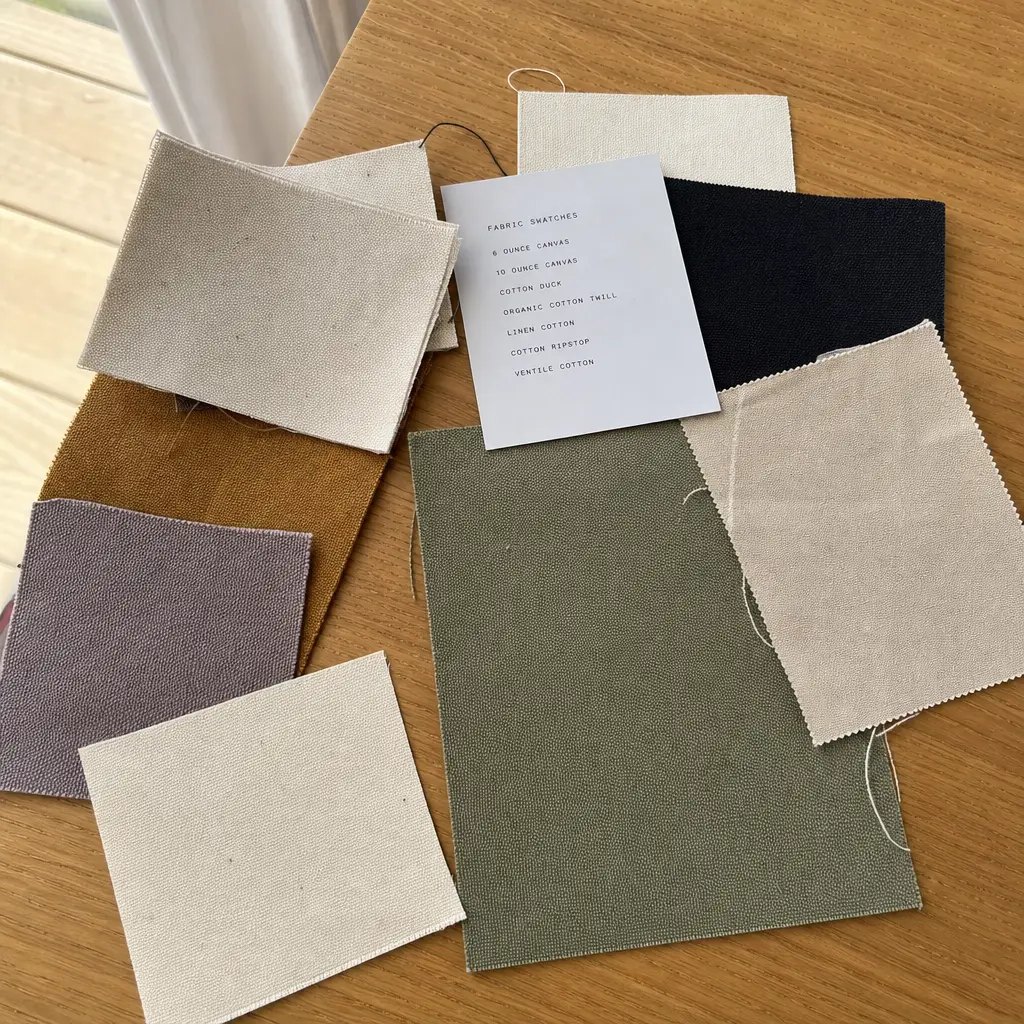
A reliable sampling path has four checkpoints: fabric swatch, plain construction sample, printed pre-production sample, and packed carton reference. Skipping a stage may appear to save time, but it often pushes risk into bulk production. For bakery totes, the construction sample should be filled with real products or dimensional equivalents to check standing shape, handle comfort, base capacity, and counter packing speed.
The fabric swatch confirms texture, shade, cotton flecks, stiffness, odor, print surface, and perceived quality. The plain sample confirms finished size, gusset, handle length, seam alignment, top hem, corner sewing, and reinforcement. The printed pre-production sample confirms Pantone appearance on real canvas, artwork scale, print position, ink feel, adhesion, and curing. The packed reference confirms folding, logo-panel crease risk, bundle quantity, carton marks, and SKU separation.
Approvals should be documented in a sample log. Each approval should include date, version number, fabric reference, artwork code, dimensions, accepted tolerances, comments, and who approved it. Keep one approved sample with the buyer and one with the factory. If an inspection agency is used, share the approved sample photos, tolerance sheet, and defect list so inspection decisions match the buyer's expectations.
- Allow 3-7 calendar days for swatch and quote clarification when RFQ details are incomplete.
- Allow 5-10 calendar days for sample making after fabric, artwork, and construction details are confirmed.
- Include courier transit and buyer review time in the calendar, not only factory sample time.
- Budget one realistic revision round unless the design is a repeat order with approved materials.
- Approve the packed carton reference before cartons are made for the full production lot.
- Do not release bulk cutting until construction, fabric, artwork, and version matrix are frozen.
Lead Time Calendar for Bakery Launches
A quoted production time of 25-35 days does not mean the full tote program can be completed in 25-35 calendar days. The complete timeline includes RFQ clarification, supplier comparison, artwork correction, sample production, courier transit, buyer review, revision comments, PO or deposit release, fabric purchasing, cutting, printing, sewing, trimming, inspection, packing, export booking, freight transit, receiving, and store allocation.
Bakery programs are often tied to specific commercial dates: holiday gift season, farmers market opening, new store launch, wholesale distributor sell-in, or local event merchandising. Buyers should plan backwards from the required warehouse date, not the first selling date. Warehouse receiving, allocation, photography, staff training, price tagging, retail display setup, and e-commerce listing work all need time before launch. If approval slips, the factory may still accept the order, but the buyer may have to choose air freight, split shipment, reduced inspection, or fewer versions.
A useful calendar includes decision deadlines. Artwork must be final before a print strike-off. Fabric must be approved before bulk cutting. SKU allocation must be final before carton marks and inner bundles are prepared. Balance payment, inspection booking, and freight booking must be scheduled before the goods are packed. Procurement should make these dependencies visible to marketing and retail operations so the project does not rely on informal reminders.
- Start 8-12 weeks before required warehouse date for normal import programs with standard natural canvas.
- Start earlier for dyed fabric, certified material, multiple logo versions, retail packaging, or peak-season capacity.
- Add 7-14 days beyond quoted production for inspection, packing correction, documents, and freight booking.
- Add 10-20 days of total contingency when launch failure would affect store openings or holiday sales.
- Reserve production capacity before final artwork if the program is large, but do not start bulk without written approvals.
- Track dates for RFQ close, artwork freeze, sample approval, PO release, production start, inspection, shipment, and receiving.
Quote Comparison and Landed Cost
Two canvas grocery tote quotes can show the same unit price while covering different materials, print setup, packing, cartons, and risk. A buyer should compare quotes against the same specification sheet and ask suppliers to identify assumptions clearly. The quote should state fabric GSM and oz, finished dimensions, gusset, handle specification, reinforcement, print method, ink colors, print size, label or hangtag, packing method, carton quantity, lead time, Incoterms, payment terms, and quote validity.
Landed cost is not just the factory unit price. A stiffer or heavier tote can reduce pieces per carton and increase CBM. Individual polybags can protect goods but add cost, plastic use, unpacking labor, and waste handling. Retail hangtags and barcodes may be necessary for store sale but can slow packing. Carton dimensions, gross weight, pieces per carton, and loading assumptions should be collected early enough for freight estimates.
Quote validity matters because cotton prices, exchange rates, freight rates, and factory capacity can change. Buyers should confirm how long the quote is valid and what happens if approvals are delayed. If a supplier's price is much lower, check whether they excluded screen charges, sample courier, cartons, labels, inspection support, inland transport, or packing labor. The goal is not the cheapest first quote; it is a specification that can be produced, inspected, shipped, and received without hidden cost.
- Compare quotes only after normalizing finished size, GSM, handle spec, print area, and packing method.
- Separate unit price from screen charges, sample cost, courier, labels, hangtags, barcodes, cartons, and inland freight.
- Request carton dimensions, gross weight, net weight, pieces per carton, and estimated CBM.
- State Incoterms clearly, such as EXW, FOB, CIF, DAP, DDP, or buyer-arranged freight.
- Ask whether spare units, replacement policy, inspection support, and carton marks are included.
- Record quote validity and the specification changes that would reset price, MOQ, or lead time.
Packing, Warehousing, and Carton Control
Packing is a quality issue for canvas grocery totes. Natural canvas can crease, absorb moisture, pick up dirt, and hold odor if cartons are weak, damp, or over-compressed. Flat packing usually protects the front logo panel better than tight folding, but cartons must not be overloaded. If the tote is sold as premium bakery merchandise, a hard crease through the logo can be a major presentation defect even if the bag is structurally sound.
The correct packing method depends on the distribution path. Central warehouse delivery may need inner bundles by store allocation. Retail sale may need hangtags, barcode stickers, individual protection, or display-ready packing. Distributor delivery may require stronger cartons, pallet compatibility, and precise carton marks. If sustainability positioning is important, buyers should decide whether individual polybags are acceptable or whether lined master cartons and paper bands are sufficient.
Carton marks should be part of the PO. At minimum, they should include PO number, SKU, logo version, quantity, destination, carton number, gross weight, and any required handling or country-of-origin statement. Mixed cartons should be avoided unless the receiving warehouse has agreed to them in writing. Before shipment, buyers should request packed carton photos or inspection confirmation showing carton marks, inner bundle count, SKU separation, and carton condition.
- Define pieces per inner bundle, pieces per master carton, and whether mixed cartons are prohibited.
- Use moisture protection for sea freight, humid storage, or long warehouse dwell time.
- Avoid tight folds across the main logo panel when retail presentation matters.
- Confirm carton marks before printing cartons or applying labels.
- Check carton compression risk because heavy canvas goods can deform when stacked too high.
- Require packed carton photos or inspection records before shipment release.
Specification comparison for buyers
| Procurement decision | Practical specification target | Lead time impact | QC or quote risk to control |
|---|---|---|---|
| Bakery load profile | Define common basket and maximum realistic load, typically 4-8 kg for bread, pastry boxes, jars, coffee bags, drinks, and gift add-ons | Early load definition reduces sample revisions because fabric, gusset, and handle reinforcement can be selected correctly | If load is not stated, the supplier may quote a light promotional tote that looks acceptable but fails in counter packing or customer carry use |
| Canvas weight | 10-12 oz canvas, approximately 280-340 GSM, with actual GSM, composition, and finished bag weight confirmed | Standard natural canvas is faster than dyed or specialty certified fabric; dyed fabric may require lab dip and material MOQ | Do not accept vague terms such as heavy canvas without GSM, ounce reference, fabric composition, and sample verification |
| Finished size and gusset | Size stated as width x height x gusset, with 8-12 cm gusset for most bakery grocery use | Non-standard dimensions can reduce cutting efficiency and may add sample and production time | Measure usable internal base against the bakery's actual box or loaf combination, not only the flat bag width |
| Handle specification | 55-65 cm shoulder handles, 2.5-3.5 cm width, with box stitch, cross-stitch, or bar tack reinforcement | Special handle fabric, contrast color, or non-standard length can add material sourcing and line setup time | Weak handle stitching is often a failure point before the canvas tears; define reinforcement method and inspect it |
| Print method | Screen print for 1-3 solid colors; heat transfer for complex artwork or small version splits; embroidery only for selected premium designs | More colors, large ink coverage, fine lines, or multiple logos add setup, strike-off, curing, and approval time | Test ink adhesion, rub resistance, print placement, and handfeel on the actual canvas ground before bulk printing |
| MOQ and version control | Keep one base tote body and split only print artwork where the factory permits | Multiple fabric colors, handle colors, labels, or packing types increase MOQ and approval workload | Ask for base bag MOQ, per-logo print MOQ, setup charges, and SKU split limits separately |
| Sampling route | Approve fabric swatch, plain construction sample, printed pre-production sample, and packed carton reference | Each approval gate can add 3-10 calendar days including courier and review time | Approving only a digital mockup leaves size, shade, handle comfort, seam strength, and print behavior unresolved |
| Packing format | Flat packed or lightly folded, inner bundled if store allocation is needed, in lined export cartons | Retail packing, barcodes, hangtags, and store-specific allocation add labor and packing verification time | Over-compression can crease the logo panel, distort the gusset, and make bakery merchandise look low value at receiving |
| Inspection standard | Use written tolerances: size +/-1 cm, gusset +/-0.5-1 cm, handle length +/-1 cm, print placement +/-0.5-1 cm unless otherwise approved | Inspection time must be scheduled before shipment release, not after export booking is locked | Without defect definitions, disputes over cotton flecks, slubs, print variation, and stitch issues become subjective |
Buyer checklist before sampling
- Build a load profile with the three most common bakery purchase combinations and the heaviest realistic combination, including estimated total weight in kilograms.
- Define finished tote dimensions as width x height x gusset and compare the internal base with actual pastry box, loaf, jar, and gift-set dimensions.
- State canvas weight in both oz and GSM, fabric composition, color treatment, shrinkage expectations, and whether certified cotton or recycled content is required.
- Specify handle length, handle width, handle drop, carry style, and reinforcement method rather than using only the phrase reinforced handles.
- Freeze one base construction first when the launch date is fixed, then add logo or store versions only after MOQ and setup rules are confirmed.
- Send vector artwork, Pantone references, print dimensions, placement measurements, ink coverage notes, and any no-print areas near seams or fold lines.
- Request a fabric swatch, plain construction sample, printed pre-production sample, and packed carton reference before bulk approval.
- Set written tolerances for finished width, height, gusset, handle length, handle position, stitch density, print placement, print color, and carton quantity.
- Ask suppliers to itemize unit price, print setup, sample cost, courier cost, labels, hangtags, barcode stickers, packing labor, inland freight, and export carton assumptions.
- Confirm carton dimensions, pieces per carton, gross weight, estimated CBM, inner bundle quantity, SKU allocation method, and whether mixed cartons are allowed.
Factory quote questions to send
- What canvas weight are you quoting in GSM and oz, what is the fabric composition, and what is the estimated finished bag weight per piece?
- Is the fabric natural, bleached, dyed, washed, recycled cotton blend, organic cotton, or certified material, and what documents are available if our procurement policy requires them?
- What is the MOQ for this exact finished size, gusset, fabric weight, handle length, print color count, label requirement, and packing method?
- Can one base tote body be split into multiple bakery logos or store versions, and what are the minimum quantities, screen charges, and setup charges per version?
- How many calendar days are needed for fabric sourcing, swatch approval, sample making, print strike-off, pre-production approval, cutting, printing, sewing, trimming, inspection, packing, and export readiness?
- Which print method and ink type are included in the quote, and what curing, wash, rub, tape-pull, or scratch checks can be performed before bulk production?
- What tolerances do you apply for finished width, height, gusset, handle length, handle position, print placement, fabric weight, stitch density, and carton quantity?
- Can you provide a plain construction sample and a printed pre-production sample using final fabric, final handles, final reinforcement, final ink, and final print size?
- How many pieces are packed per inner bundle and master carton, and what are the estimated carton dimensions, gross weight, net weight, and CBM?
- Will the tote be flat packed, lightly folded, individually bagged, bundled, hangtagged, barcoded, or packed retail-ready, and is that cost included?
Quality-control points to confirm
- Finished width and height should normally be controlled within +/-1 cm unless the approved sample or PO states a different tolerance.
- Gusset depth should be measured at both base and side areas, with a typical tolerance of +/-0.5-1 cm depending on construction and fabric behavior.
- Handle length should normally stay within +/-1 cm, and left-right handle placement should be symmetrical enough to prevent twisting under load.
- Fabric weight should be verified by swatch, cutting sample, or GSM test, not by supplier wording such as premium, thick, heavyweight, or durable canvas.
- Natural cotton flecks should be distinguished from unacceptable defects such as oil marks, rust stains, weaving holes, mildew, strong odor, contamination, and large shade panels.
- Handle attachment should show complete box stitch, cross-stitch, or bar tack reinforcement with no skipped stitches, loose threads, broken yarns, twisted handles, or seam opening.
- Stitch density should be consistent across handles, top hem, side seams, bottom seams, and gusset corners, with secure back-tacking at stress points.
- Print placement should be measured from fixed edges, top hem, side seam, centerline, or approved template rather than judged only by visual centering.
- Pantone matching should be checked on the actual canvas ground because natural cotton shade and weave texture change perceived ink color.
- Ink adhesion should pass practical dry rub, tape pull, scratch, and handling checks before bulk printing, especially for large solid logos.