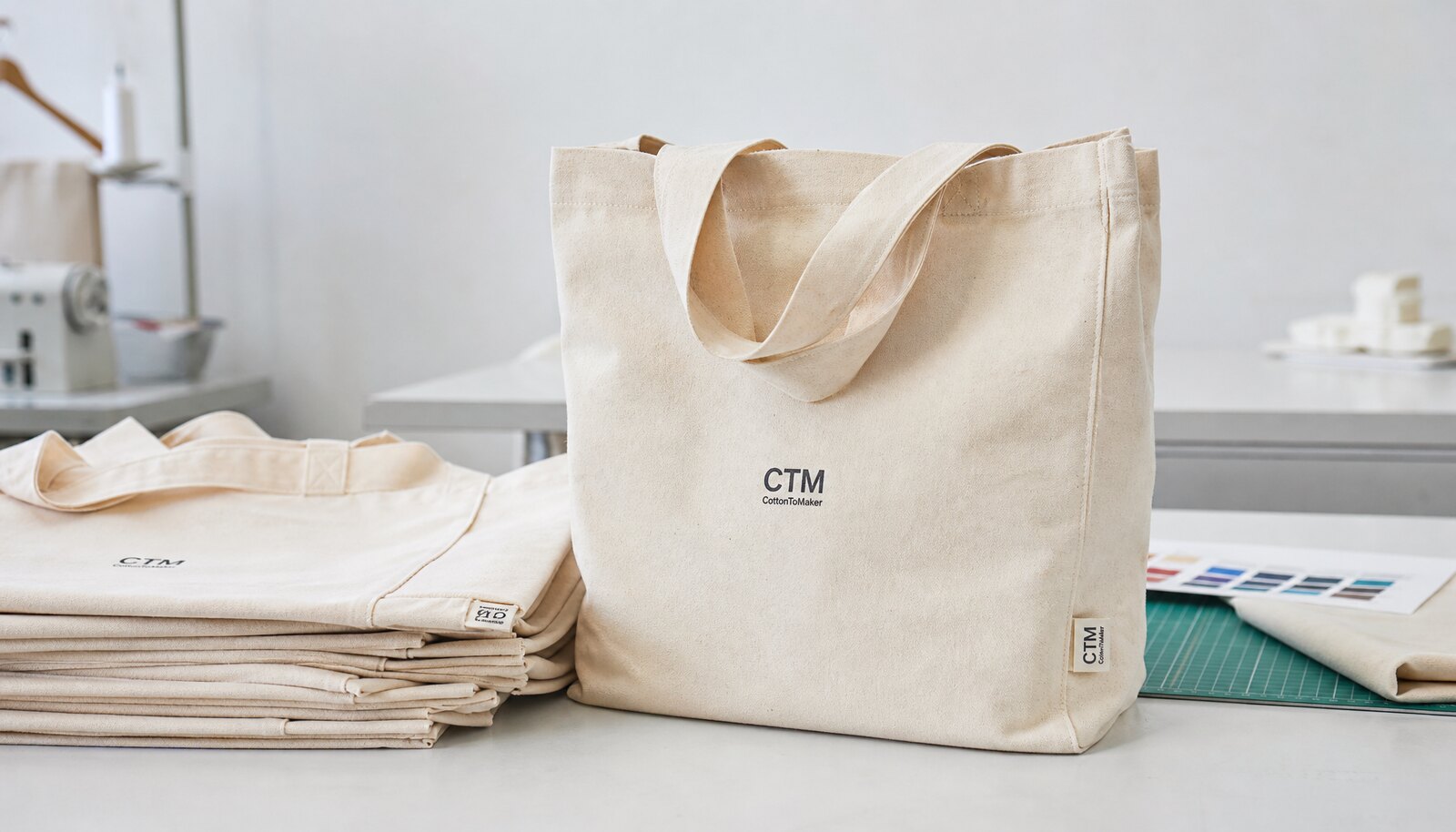
Questions to send with the RFQ so quotes are comparable
A comparable quote starts with the same input. Send tote dimensions, target GSM, handle construction, print method, print area, packing method, and the required ship date. If you leave any of these open, different suppliers will fill the gap differently and the price gap will be meaningless. For winery buyers, it also helps to tell the factory whether the tote is for resale, tasting-room gift-with-purchase, or operational grocery use, because that changes how they recommend fabric weight and handle strength.
Ask the supplier to quote both the first order and a repeat order if possible. Repeat orders often move faster because the fabric, screens, and packing method are already known. A good supplier can tell you whether the price and lead time improve on reorder, or whether the program will need the same setup again. That is useful if you plan seasonal replenishment after the first sell-through.
The practical lead time model for boutique winery buyers
A realistic plan for canvas grocery totes usually has four blocks: sample development, sample approval, bulk production, and transit. Sample work can take several days to a couple of weeks depending on art changes and whether the factory already has the right fabric. Bulk production time depends on line capacity, printing complexity, and packing requirements. Transit should be counted separately so the production date is not mistaken for the delivery date.
If your program is tied to a harvest event or retail drop, build buffer time into the schedule. The safest way is to work backward from the launch date, reserve time for one round of sample correction, and avoid changing fabric or print method after the sample is approved. A quote that looks short but leaves no room for revision is often the most expensive quote once delays are counted.
- Count sample and bulk as separate stages.
- Leave buffer time for art correction and packing changes.
- Treat transit as its own line item in the schedule.
Use the buyer guide to define the buying decision
A strong buyer guide for canvas grocery totes lead time planning guide for boutique wineries starts with the decision it must support: supplier comparison, sample approval, production release, or claim prevention. The document should turn a broad product request into measurable notes that a factory merchandiser, QC inspector, and buyer can all follow.
For wine bottle bag, the key is to connect grocery totes lead time planning for boutique wineries with fabric, construction, logo method, MOQ, packing, and inspection. When the file only repeats the product name, suppliers guess. When it records RFQ evidence, they can quote and produce against the same standard.
For acceptance, add one line that defines the target, tolerance, proof photo, and approver for this step. That makes the buyer guide usable under production pressure instead of becoming a long note that nobody can verify.
- Write decisions in measurable language, not only descriptive wording.
- Ask for sample photos plus one physical approval sample for important orders.
- Keep quotation, sample approval, and inspection notes tied to the same spec version.
- Mark every open item as buyer-approved, supplier-proposed, or QC-required.
Material and construction notes
Specify cotton canvas, jute, felt, nonwoven, or laminated paper sized to bottle diameter, weight, and condensation risk. Then connect those material choices to bottle fit, bottom reinforcement, handle or cord strength, divider option, seam allowance, and upright stability for the expected loading condition of the wine bottle bag.
The quote should state what is included in the sample and what changes in bulk production. A cheaper quote may simply use a lighter cloth, weaker trim, fewer stitches, or a less controlled packing method.
For acceptance, add one line that defines the target, tolerance, proof photo, and approver for this step. That makes the buyer guide usable under production pressure instead of becoming a long note that nobody can verify.
- Write decisions in measurable language, not only descriptive wording.
- Ask for sample photos plus one physical approval sample for important orders.
- Keep quotation, sample approval, and inspection notes tied to the same spec version.
- Mark every open item as buyer-approved, supplier-proposed, or QC-required.
Decoration and brand placement
Logo work should be described as a production method, not just artwork. For this topic, compare screen print, hot stamp, woven label, embroidery, or paper label positioned for curved bottle presentation.
The buyer guide should ask what can go wrong with the chosen method on this material. Useful supplier answers mention ink bleed, cracking, puckering, registration drift, weak label edges, hardware pressure, or poor adhesion.
For acceptance, add one line that defines the target, tolerance, proof photo, and approver for this step. That makes the buyer guide usable under production pressure instead of becoming a long note that nobody can verify.
- Write decisions in measurable language, not only descriptive wording.
- Ask for sample photos plus one physical approval sample for important orders.
- Keep quotation, sample approval, and inspection notes tied to the same spec version.
- Mark every open item as buyer-approved, supplier-proposed, or QC-required.
MOQ, price breaks, and quote comparison
Make suppliers separate base unit price, setup fee, sample fee, label or packing cost, and freight handover term. MOQ should be tied to real drivers such as fabric dye lot, print setup, trim sourcing, carton rules, or inspection depth.
This structure protects buyers from false savings. If one quote excludes sample approval or carton labeling, it is not cheaper in a practical purchasing sense; it is just incomplete.
For acceptance, add one line that defines the target, tolerance, proof photo, and approver for this step. That makes the buyer guide usable under production pressure instead of becoming a long note that nobody can verify.
- Write decisions in measurable language, not only descriptive wording.
- Ask for sample photos plus one physical approval sample for important orders.
- Keep quotation, sample approval, and inspection notes tied to the same spec version.
- Mark every open item as buyer-approved, supplier-proposed, or QC-required.
Sample approval evidence
The sample record for canvas grocery totes lead time planning guide for boutique wineries should include front, back, side, seam, logo, label, inside, and packed-carton photos. For important programs, keep one signed physical sample and record the sample version in the approval file.
Approval should include the known deviations. A small accepted deviation is manageable when written down; an unwritten deviation becomes a dispute during final inspection.
For acceptance, add one line that defines the target, tolerance, proof photo, and approver for this step. That makes the buyer guide usable under production pressure instead of becoming a long note that nobody can verify.
- Write decisions in measurable language, not only descriptive wording.
- Ask for sample photos plus one physical approval sample for important orders.
- Keep quotation, sample approval, and inspection notes tied to the same spec version.
- Mark every open item as buyer-approved, supplier-proposed, or QC-required.
Inspection method and tolerance
Define the measurable checks around bottle-fit test, loaded handle pull, bottom seam check, print rub, divider alignment, and carton crush review. Add tolerance ranges only where the buyer truly cares, and ask for photos that show the measurement point, not just a finished product overview.
For procurement decisions, the inspection note should say who checks, when they check, and what evidence is required. Photos without measurements are often not enough for remote approval.
For acceptance, add one line that defines the target, tolerance, proof photo, and approver for this step. That makes the buyer guide usable under production pressure instead of becoming a long note that nobody can verify.
- Write decisions in measurable language, not only descriptive wording.
- Ask for sample photos plus one physical approval sample for important orders.
- Keep quotation, sample approval, and inspection notes tied to the same spec version.
- Mark every open item as buyer-approved, supplier-proposed, or QC-required.
Packing and warehouse handling
Packing rules should cover upright or flat packing, bottle-protection insert, carton count, moisture control, and retail display orientation. These details affect cost, damage rate, receiving speed, and whether the goods can move directly into retail or distribution.
A wine bottle bag can pass product QC and still create claims if cartons are mislabeled, overpacked, crushed, damp, or mixed. Treat packing as part of the specification, not an afterthought.
For acceptance, add one line that defines the target, tolerance, proof photo, and approver for this step. That makes the buyer guide usable under production pressure instead of becoming a long note that nobody can verify.
- Write decisions in measurable language, not only descriptive wording.
- Ask for sample photos plus one physical approval sample for important orders.
- Keep quotation, sample approval, and inspection notes tied to the same spec version.
- Mark every open item as buyer-approved, supplier-proposed, or QC-required.
Supplier evidence that separates real factories from brokers
Ask for fit-test photos with reference bottle, bottom reinforcement close-up, handle load proof, and final carton photo set. The point is not to collect paperwork for its own sake; it is to see whether the supplier can connect the approved sample to the bulk production line.
A stronger supplier can explain which step controls fabric, cutting, sewing, decoration, packing, and final release. A weaker supplier usually replies with only a price and a broad promise that quality will be checked.
For acceptance, add one line that defines the target, tolerance, proof photo, and approver for this step. That makes the buyer guide usable under production pressure instead of becoming a long note that nobody can verify.
- Write decisions in measurable language, not only descriptive wording.
- Ask for sample photos plus one physical approval sample for important orders.
- Keep quotation, sample approval, and inspection notes tied to the same spec version.
- Mark every open item as buyer-approved, supplier-proposed, or QC-required.
Specification comparison for buyers
| Spec decision | Recommended option | When it fits | Buyer risk to check |
|---|---|---|---|
| Direct factory | Best for repeat orders, custom size, and in-house control of print and sewing | Annual winery retail programs and buyers who can manage sample approval tightly | Confirm whether any print, label, or packing work is outsourced |
| Trading company | Useful when you need several bag types or faster communication across multiple workshops | Multi-item buying programs or buyers without a local QC team | Check whether they can keep artwork version control and fabric consistency across lots |
| Stock-fabric converter | Good for urgent replenishment with standard canvas and simple logo printing | Short lead time promotions and lower-risk test orders | Limited customization and higher risk of color or handle variation if stock changes |
| Local regional supplier | Best when freight time is tight and you need quick replenishment | Short seasonal windows or last-minute event programs | Higher unit price and less flexibility on GSM, size, and print method |
| Factory with in-house printing | Preferred for clean lead time planning and better color control | Orders with logo placement sensitivity and repeat reorders | Confirm curing process and reject rates for multi-color art |
| Factory with subcontracted printing | Acceptable only if schedule is flexible and the art is simple | Budget-driven orders with longer timing tolerance | Outsourced print queues can add hidden days and create color mismatch |
Buyer checklist before sampling
- Confirm final bag size, gusset, handle drop, and usable loading weight.
- Specify fabric type, GSM/oz weight, color tolerance, and shrinkage expectations.
- Send vector artwork and define logo size, print position, and Pantone references.
- Ask for sample photos plus one physical pre-production sample before bulk approval.
- Agree carton packing, barcode or hangtag needs, and shipment marks before production.
- Record inspection checkpoints for stitching, print adhesion, stains, and quantity count.
Factory quote questions to send
- What fabric weight do you recommend for this size and expected grocery load, and why?
- Is the quoted lead time measured from artwork approval, sample approval, or deposit receipt?
- What is your MOQ for stock canvas versus dyed canvas, and how does MOQ change with print colors?
- Will printing, cutting, sewing, and packing all happen in-house or through subcontractors?
- What carton pack count, carton size, and gross weight do you propose for export shipment?
- What spare sample or overage percentage do you allow for print waste, sewing defects, or packing loss?
- What QC standard do you use for size tolerance, seam strength, and print registration?
- Can you share photos or measurements of a recent PPS or bulk run using similar canvas and print method?
Quality-control points to confirm
- Fabric GSM matches the approved range and is consistent across random roll checks.
- Tote size tolerance stays within agreed limits for width, height, gusset, and handle drop.
- Print is centered correctly, ink is fully cured, and there is no bleeding, cracking, or tackiness.
- Stitching is even at stress points, with reinforced handle attachment and no loose threads on load-bearing seams.
- Carton packing count, folding method, and polybag use match the approved packing instruction.
- No obvious contamination, oil marks, misprints, needle damage, or mixed lots appear in sealed cartons.
- Sample approval documents match bulk details: artwork version, fabric weight, size, color, and packing format.