Why hotel retail totes need a tighter RFQ
Canvas grocery totes for hotel retail sit in a different category from event giveaways. They may be sold in a lobby market, resort boutique, spa shop, airport hotel retail corner, golf shop, minibar replacement pantry, or destination gift area. Guests are not receiving a free promotional bag; they are deciding whether the tote is worth paying for and whether it fits the brand they are already inside.
That changes the RFQ. A vague note such as "canvas tote with logo" leaves too much room for supplier assumptions. One factory may quote a light flat bag, another may include a boxed bottom and reinforced handles, and a third may add barcode labels and bundle packing. The prices will not be comparable, even if the emails look similar.
The RFQ also becomes a control document. It should connect the retail brief to the factory's production plan: finished dimensions, fabric GSM, construction, handles, artwork, labels, packing, lead time, and acceptance criteria. When procurement writes those details once and uses them across sampling, quoting, and inspection, the buyer gets fewer surprises and a cleaner landed-cost comparison.
- Name the selling channel: lobby market, resort shop, spa retail, airport hotel shop, or gift program.
- State the use case: bottles, snacks, folded apparel, coffee, candles, or general souvenir carry.
- Use finished measurements, not descriptive terms like medium tote or grocery-style bag.
- Ask each supplier to spell out assumptions so hidden differences are visible before sampling.
- Treat the RFQ as the basis for quote comparison, sample approval, and final inspection.
Start with the guest use case, not the logo
A tote that looks right in a flat photo can still fail in the hands of guests. If the hotel shop sells bottled drinks, packaged snacks, coffee, or heavier gift items, the bag needs enough depth, handle support, and structure to hold shape without feeling flimsy. If the tote is mainly for folded apparel or lightweight souvenirs, the construction can be simpler. The use case should set the spec, not the other way around.
Finished size needs to be written as width, height, and gusset after sewing and pressing. A 38 x 35 cm tote and a 38 x 35 x 15 cm tote are not interchangeable. The second bag uses more material, holds more volume, and displays differently on shelf or hook. If the buyer needs the bag to stand upright for retail presentation or gift packing, that requirement should be explicit.
It also helps to write the carry expectation in practical terms. A hotel retail grocery tote is not a load-rated industrial bag, but it should comfortably handle real guest use. A reasonable internal target for this category is often 5 to 8 kg, assuming the fabric weight and reinforcement support it. That target should be tested on samples instead of inferred from fabric weight alone.
- Define what guests will carry so the bag size matches real use.
- State finished width x height x gusset with tolerance.
- Say whether the tote must stand empty, stand filled, or hang cleanly on retail fixtures.
- Set a practical load target and ask the factory to confirm suitable reinforcement.
- Use one measurement standard across all properties and replenishment orders.
Choose fabric by GSM, handfeel, and shelf impact
Fabric usually drives both the price and the retail impression. For most hotel retail programs, 10 oz to 12 oz cotton canvas, about 340 to 400 GSM, strikes a useful balance between structure, sewability, and freight efficiency. It feels substantial enough to be sold as a retail item, yet it does not push the project into a heavy premium category unless that is the goal.
Lighter canvas can work when the tote is meant to be low-cost, foldable, or sold as an add-on at checkout. The tradeoff is obvious in use: less structure, more collapse with heavier items, and weaker shelf presence. If the bag is meant to compete with other paid merchandise in a hotel shop, going too light can make the product feel promotional rather than retail-ready.
Heavier canvas can be attractive for boutique positioning, but it adds cost in multiple places. Fabric cost rises, cartons get heavier, sewing becomes slower, and seam intersections bulk up. That does not make heavier canvas wrong. It just means the buyer should choose it deliberately, not by default. Natural canvas is often the easiest base to control, while dyed canvas adds extra attention on lot variation, crocking, and color matching. Recycled or organic cotton may fit a sourcing policy, but only ask for documentation when the program truly needs it.
- 8 oz canvas: lighter, cheaper, and workable for low-load retail or promotional use.
- 10 oz canvas: a solid entry point for hotel retail when construction is reinforced.
- 12 oz canvas: stronger presence and better handfeel for premium shops and resort retail.
- 14 oz plus canvas: premium and durable, but heavier to sew, pack, and ship.
- Natural canvas is simpler to source; dyed canvas needs tighter color control and rub testing.
Specify construction so capacity is real
Construction determines whether the tote behaves like a grocery bag or only resembles one. A flat tote is cheaper and easier to sew, but it does not hold bulky goods well. Side gussets and a boxed bottom give the bag the depth it needs for bottles, gift packs, and folded apparel. If the tote must open wide on a counter or sit neatly on a shelf, that shape needs to be built into the RFQ.
The language matters. Some factories treat any side fold as a gusset. Others distinguish between side gusset, bottom gusset, boxed bottom, and separate bottom panel. Buyers should not assume those terms mean the same thing across suppliers. When the bottom shape affects display, capacity, or packing, write the exact finished structure in the spec and ask the supplier to sketch it in the quote if needed.
Seam finishing is another place where retail intent should guide the spec. A hotel retail tote does not need unnecessary luxury detailing, but it should not look unfinished either. Clean internal seams, secure stitch ends, and consistent gusset folds all matter once the bag is sold at a price point. The top hem deserves the same attention because it carries the handles and gets the most handling in daily use.
- State whether the tote is flat, side-gusseted, boxed-bottom, or built with a separate bottom panel.
- Write the finished gusset width and bottom shape instead of relying on photos alone.
- Choose seam finish based on the retail price point, not habit.
- Confirm the top hem width and stitch rows because they carry handle stress.
- Use the approved sample as the reference for base shape and seam finishing.
Make handle details measurable
Handles are one of the easiest parts of a tote to under-specify and one of the easiest places for quality problems to show up. Guests carry these bags from shop to room, to car, to beach, or onto an airport shuttle. If the handle is too narrow, it cuts into the hand. If it is too short, the bag is awkward to carry. If it is too long, the bag hangs badly and can look sloppy on the shelf.
Self-fabric canvas handles are common because they keep the look clean and cohesive. Webbing handles can also work when the buyer wants a different grip or contrast detail. The RFQ should state handle width, handle material, handle drop, total length if needed, seam allowance, and reinforcement method. For a grocery-style tote, a handle width around 2.5 to 3 cm is often practical, but the actual choice should follow load and retail feel.
Reinforcement should be spelled out instead of hidden inside generic words like strong or reinforced. Box-X stitching, bartacks, double rows, or cross-stitch patterns all have different cost and durability implications. The handle joint should be reviewed inside and outside the bag, because a neat exterior can hide weak internal execution. If the tote is expected to carry bottles or dense retail items, sample load testing is not optional.
- State handle drop, width, material, and reinforcement method.
- Ask for symmetrical placement measured from the top edge and side seams.
- Confirm whether the tote is hand-carry only or shoulder-carry capable.
- Run a sample load test using the actual intended weight range.
- Inspect the inside handle join, not only the visible outside stitch line.
Match printing to brand control and fabric texture
Most hotel retail canvas grocery totes use screen printing because the artwork is usually simple: a property logo, destination name, slogan, or a restrained illustration. Screen print works well on canvas when the buyer wants a clean look and repeatable color. It is also cost-effective when the same design runs in volume. The RFQ should state the print method, number of colors, print size, placement, and whether the artwork appears on one side or both.
Color control matters more than many teams expect. Hotel brands often work from strict brand colors, and natural canvas can affect the final visual result. The buyer should send vector artwork and any Pantone reference available. The supplier should confirm whether the base fabric tone will shift the printed color. For dark or full-coverage artwork, ask for a strike-off or signed sample and keep it as the bulk reference.
Digital print can be a better fit when the art uses gradients, detailed line work, or multiple small property variants. It is also useful for lower volumes. Heat transfer can produce crisp graphics, but the film handfeel, edge wear, and long-term durability need review before approving it for a retail tote. Embroidery can look premium, but it is often less practical on large canvas front panels because of cost and fabric distortion.
Artwork changes should also be costed properly. A group order with the same tote body but different property names, cities, or seasonal copy can trigger extra screen charges, setup fees, sorting, and packing complexity. It is usually cheaper to standardize the print size and color family across properties and limit the differences to a short line of text or a hangtag.
- Use screen print for simple logos and solid-color artwork.
- Use digital print when the design needs detail, gradients, or many short runs.
- Measure print placement from a fixed edge or centerline, not by eye.
- Ask for dry rub and light damp rub checks on dark or oversized prints.
- Price extra colors, double-sided printing, and logo changes separately.
Structure MOQ around variants, not just totals
MOQ is rarely one clean number. A supplier may say the minimum is 500 pieces, but that usually assumes one size, one color, one logo, one print method, and one packing style. Hotel buyers often need several property versions, and that changes the production economics quickly. Three thousand pieces across six logos is a very different job from three thousand pieces of one design.
The RFQ should break quantity down by variant. That means bag size, fabric color, print color, logo version, label version, and destination. If the hotel group wants the same tote body across properties, the factory can often produce more efficiently. If each version changes fabric, print method, or retail label, the supplier has more setup steps, more chances for error, and more sorting labor. Those costs should be visible in the quote.
Procurement should also ask whether setup costs are one-time or per version. Screen charges, digital setup, labels, barcode application, carton marks, and sample revisions can all be charged separately. When those charges are listed clearly, the buyer can make a clean tradeoff decision. It becomes possible to simplify artwork, reduce the number of versions, or standardize labels without reopening the entire sourcing exercise.
- Quote quantity by property, logo, size, fabric color, print color, and packing style.
- Ask whether setup charges apply per design or per order.
- Standardize the tote body to reduce cost across multiple properties.
- Group artwork by common ink colors where possible.
- Do not compare prices until the supplier has shown all variant-specific costs.
Protect landed cost with a complete quote sheet
A usable quote does more than state a unit price. It names the finished spec, the price basis, the sample terms, the lead time, and the assumptions. If one quote is EXW and another is FOB, the unit prices are not directly comparable. If one supplier includes export cartons while another omits barcode stickers, care labels, or special carton marks, the apparent savings can disappear later in the process.
Packing data matters because canvas tote bags are bulky even when they are not fragile. Heavy canvas, wide gussets, or individual retail packing can change carton efficiency and freight cost quickly. The buyer should ask for carton dimensions, gross weight, net weight, pieces per carton, carton count, and estimated CBM. That information is useful for warehouse planning, port comparison, and seasonal launch scheduling.
Separate line items help procurement make sensible decisions. Ask for sample fee, revision fee, screen charge, digital setup, dyed-fabric surcharge, hangtag, barcode sticker, woven label, care label, polybag or bundle packing, and any special carton mark. When those charges are hidden inside the unit price, the cheapest quote may not remain the cheapest after the buyer adds the missing parts back in.
Timing should be equally specific. The supplier should state when the lead time starts: after deposit, after artwork approval, after sample approval, or after all approvals are complete. Hotel retail launches often depend on opening dates, seasonal resets, or group-wide replenishment windows. Vague timing creates avoidable risk.
- Require finished spec, price basis, lead time, and assumptions on the same quote sheet.
- Ask for carton dimensions, gross weight, net weight, carton count, and total CBM.
- Separate accessory and setup charges from the unit price.
- Confirm when the production clock starts.
- Ask whether individual packing is required or whether bundle packing is acceptable.
Use sampling as a production control step
Sampling is not just about approving how the bag looks. It is the point where the buyer checks whether the factory can actually make the quoted item. The pre-production sample should be checked against the RFQ line by line: fabric weight, finished size, gusset, handle drop, handle reinforcement, print placement, print color, labels, and packing. If any detail changed to hit a price target, that change needs to be written down before bulk production starts.
Review the sample in two ways. First, measure and test it like a technical product. Second, look at it as a retail item that has to sit in a hotel shop and compete with other merchandise. Does it fold neatly? Does the logo remain readable when stacked? Does it stand well enough for display? Does the bag feel right when loaded with typical guest items? Those questions are not cosmetic; they affect sell-through and complaints.
The sample trail should be preserved. Keep the approved swatch, print proof, signed sample, packing photo, and carton mark photo. The factory should keep matching references. If bulk units later show shade variation, print drift, or handle differences, the inspector and the supplier need a shared standard. Without that, the discussion becomes subjective quickly.
When there are multiple logos or several properties in one program, pre-production sampling is even more important. It is the easiest time to catch the wrong print file, the wrong label version, or the wrong carton mark. Correcting those issues before mass cutting is much cheaper than sorting them out after the order is sewn and packed.
- Check the sample against the RFQ, not only against a photo.
- Measure dimensions, handle placement, print position, and label placement.
- Test practical load and review how the bag opens, stands, and folds.
- Keep signed references for swatch, print, packing, and carton marks.
- Require pre-production approval when multiple logos or variants are involved.
Define QC standards before bulk production
Quality control for canvas grocery totes should be straightforward and measurable. The buyer does not need an overcomplicated system, but the factory and inspector should know which issues are critical, major, and minor. A wrong logo, broken handle, missing country-of-origin mark, unreadable barcode, or unsafe seam failure is not the same as a removable thread end. When defect categories are defined early, inspection becomes faster and disputes are easier to resolve.
Size and construction should be checked on multiple units from different cartons. The team should measure width, height, gusset, handle drop, and print position against the agreed tolerance. The tote should be opened to confirm bottom shape, gusset alignment, and seam finish. Interior stitching matters because loose thread ends, skipped stitches, or unsecured seam ends often hide inside the bag and only show up during use.
Printing needs its own check. Compare bulk units against the signed sample under consistent lighting and verify ink color, edge sharpness, print coverage, and registration. For dark or oversized prints on canvas, simple dry rub and light damp rub checks can catch obvious transfer issues early. Natural canvas has texture, so the standard needs to be tied to the approved sample rather than to an imagined perfect surface.
Labels and packing are part of QC, not a separate afterthought. Barcode stickers should scan correctly, hangtags should be placed where retail staff can use them, woven labels should be oriented correctly, and carton marks should match the SKU and property version. When several hotel properties are running in one order, accurate carton separation is essential. A good tote shipped to the wrong destination still creates a receiving problem.
- Define critical defects such as wrong logo, broken handle, missing required label, or unsafe seam failure.
- Define major defects such as severe print misplacement, open seam, barcode failure, or serious staining.
- Define minor defects such as small removable thread ends within tolerance.
- Check multiple cartons and all logo versions, not only the first carton opened.
- Retain approved samples and packing photos for inspector reference.
Specification comparison for buyers
| Spec decision | Recommended option | When it fits | Buyer risk to check |
|---|---|---|---|
| Fabric weight | 10 oz to 12 oz cotton canvas, about 340 to 400 GSM, with buyer-approved swatch and mill certificate | Hotel retail, resort shops, spa boutiques, airport hotel corners, and grocery-style souvenir programs | Below 8 oz can feel promotional and may collapse with bottled drinks; above 14 oz increases carton weight, sewing difficulty, and freight cost |
| Finished size | State finished width x height x gusset, for example 38 W x 35 H x 15 cm, measured after sewing and pressing | Useful when guests carry snacks, bottled drinks, folded apparel, coffee packs, candles, or local food gifts | A quote based on cut-panel size can produce a smaller finished bag after seams, hems, and gusset folding |
| Bag construction | Side gusset with boxed bottom, lock-stitched seams, and reinforced top hem | Best for grocery-style capacity, shelf presentation, and stable display at hotel retail counters | Flat totes may quote lower but reduce usable volume and do not stand as well when merchandised |
| Handle style | Self-fabric canvas handles, 2.5 to 3 cm wide, with box-X, bartack, or double-row reinforcement | Appropriate for a retail tote expected to carry about 5 to 8 kg in practical guest use | Thin handles, short seam allowance, or decorative-only stitching can fail even when body fabric is strong |
| Logo method | Water-based screen print for one to three solid colors; digital print for detail, gradients, or many low-volume versions | Screen print is efficient for property logos, resort names, and simple destination artwork | Large dark prints need rub checks; digital print cost and color control vary on textured canvas |
| MOQ structure | Quote by fabric color, bag size, logo version, print setup, and label version, not only total units | Works for hotel groups using one tote body across several properties | Splitting 2,000 pieces across many logos can trigger multiple screen charges, samples, carton marks, and inspection points |
| Retail labeling | Barcode sticker, hangtag, woven side label, care label, and country-of-origin mark priced as separate lines | Needed when totes are sold through hotel POS systems, gift shops, marketplaces, or third-party retail partners | Labels often get missed in first quotes and later create cost, timing, or compliance issues |
| Packing plan | Flat bundle packing, commonly 25 or 50 pieces per bundle and about 50 pieces per export carton depending on size and weight | Good for warehouse receiving, backroom storage, and lower deformation risk than loose packing | Over-tight cartons crease printed panels; loose cartons distort gussets during long transit |
| Measurement tolerance | For dimensions under 40 cm, often plus or minus 0.5 cm; for larger dimensions, plus or minus 1 cm, unless buyer sets a tighter range | Useful when the hotel retail team needs a consistent look across replenishment lots | Tolerance should be written into the RFQ because different factories use different internal standards |
Buyer checklist before sampling
- Define finished bag size in width x height x gusset, and state whether measurement is taken after sewing, pressing, and final trim.
- Specify fabric weight in oz and GSM, fabric color, weave type if known, and whether cotton is conventional, recycled, organic, bleached, dyed, or undyed natural canvas.
- Clarify construction: flat tote, side gusset, boxed bottom, separate bottom panel, top hem style, seam finish, and whether the bag must stand for display.
- Set handle width, handle drop, handle material, reinforcement pattern, seam allowance, and practical carry load.
- Provide vector artwork files, Pantone or brand color references, print size, print placement, number of colors, and whether printing is one side or two sides.
- Separate quantities by property logo, fabric color, print color, size, packing method, and destination so the factory can quote the real production plan.
- Ask for all non-unit-price charges: sample fee, revision fee, screen charge, digital setup, dyed fabric surcharge, label cost, barcode application, special carton mark, and domestic freight to port if relevant.
- Define sample approval requirements for fabric handfeel, GSM, finished size, gusset shape, handle strength, print color, print position, label placement, and packing.
- Specify retail labeling needs such as barcode sticker, hangtag, woven side label, care label, country-of-origin mark, price ticket, or hotel property SKU label.
- Require carton dimensions, gross weight, net weight, pieces per carton, total carton count, estimated CBM, and pallet loading estimate if the shipment will move through a distribution center.
Factory quote questions to send
- What exact fabric are you quoting, including cotton type, weave, oz or GSM, color, and whether the price is based on greige, natural, bleached, or dyed canvas?
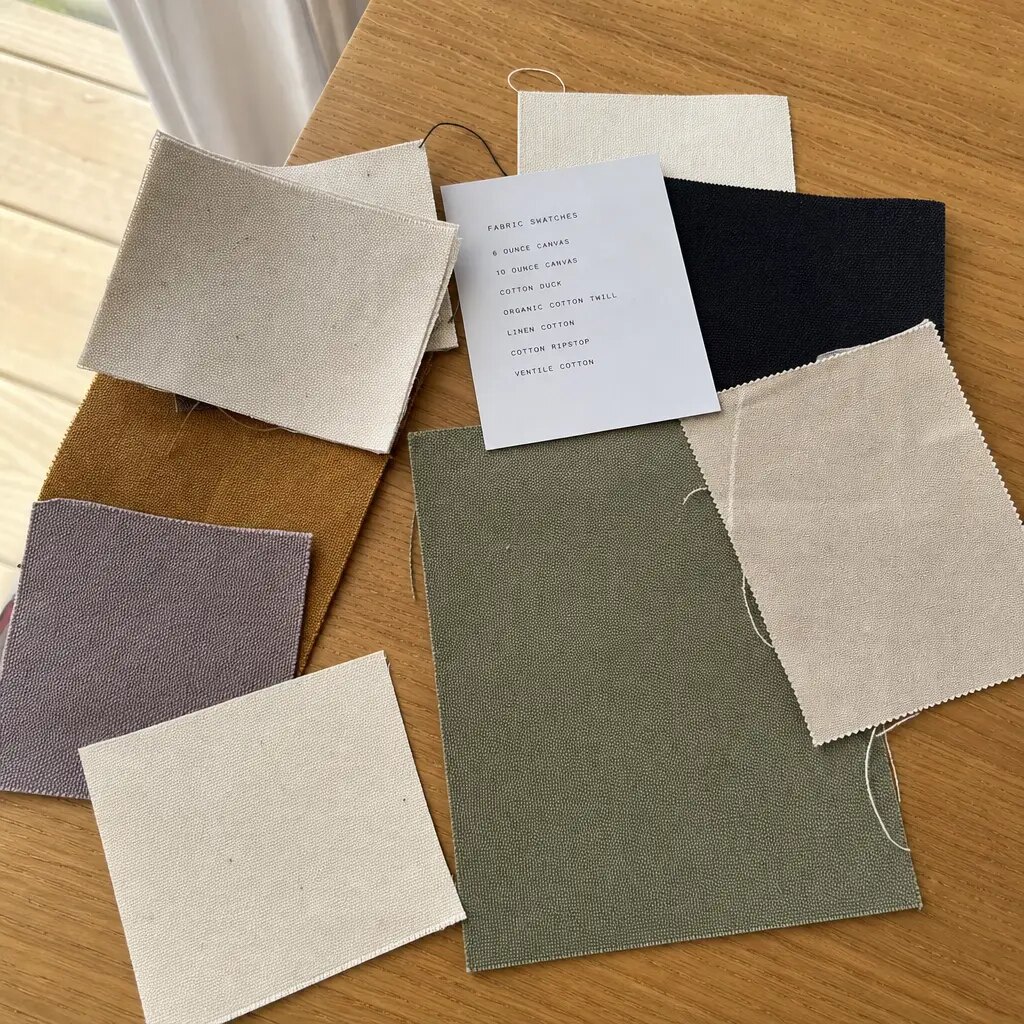
- Can you provide a fabric swatch before sample production, and will that swatch become the approved bulk reference?
- Is the quoted measurement the finished bag size after sewing, and what tolerance will you accept for width, height, gusset, handle width, and handle drop?
- Which construction is included: side gusset only, boxed bottom, separate bottom panel, reinforced top hem, inside seam binding, or standard raw-edge internal seams?
- What reinforcement is included at each handle joint: bartack, box-X, cross-stitch, double stitch, or another method?
- What practical load test do you recommend for this tote, and can you perform it on sample and bulk inspection pieces?
- What print method is included, how many colors are included, and what are the extra charges for oversized print, double-sided print, additional colors, or color changes by property logo?
- What is the MOQ by fabric color, bag size, logo version, print method, and print color setup?
- If several hotel property logos use the same tote body, can production be combined, and which costs still apply per logo?
- What sample cost, sample lead time, courier charge, and revision charge apply before bulk approval?
Quality-control points to confirm
- Finished size should be checked on a statistically meaningful sample using agreed tolerances, commonly plus or minus 0.5 cm for dimensions under 40 cm and plus or minus 1 cm for larger panels unless the buyer approves a tighter range.
- Fabric GSM should be verified by cutting and weighing test pieces, checking against a mill certificate, or comparing to a buyer-approved swatch retained before bulk cutting.
- Fabric color and handfeel should match the approved swatch under consistent lighting, especially for natural canvas where shade variation can occur between lots.
- Handle pull strength should match the intended load; for hotel grocery retail, a practical internal test is static hanging with 5 to 8 kg for a defined period without seam tearing, handle slippage, or top-hem distortion.
- Handle placement should be symmetrical, with consistent distance from side seams and no twisting after the bag is opened.
- Print color should match the approved Pantone, brand reference, or signed sample, with tolerance and lighting conditions defined before production.
- Print position should be measured from the top edge, side seam, or centerline rather than judged by eye only.
- Print durability should be reviewed with dry rub and light damp rub checks, especially for large dark artwork on natural canvas or dyed fabric.
- Seams should show no skipped stitches, broken threads, open ends, raw exposed edges on visible areas, uneven top hems, or distorted gusset folds.
- Boxed bottom corners should align evenly and create the agreed usable base width; uneven bottom construction can make a grocery tote lean or fold poorly on display.