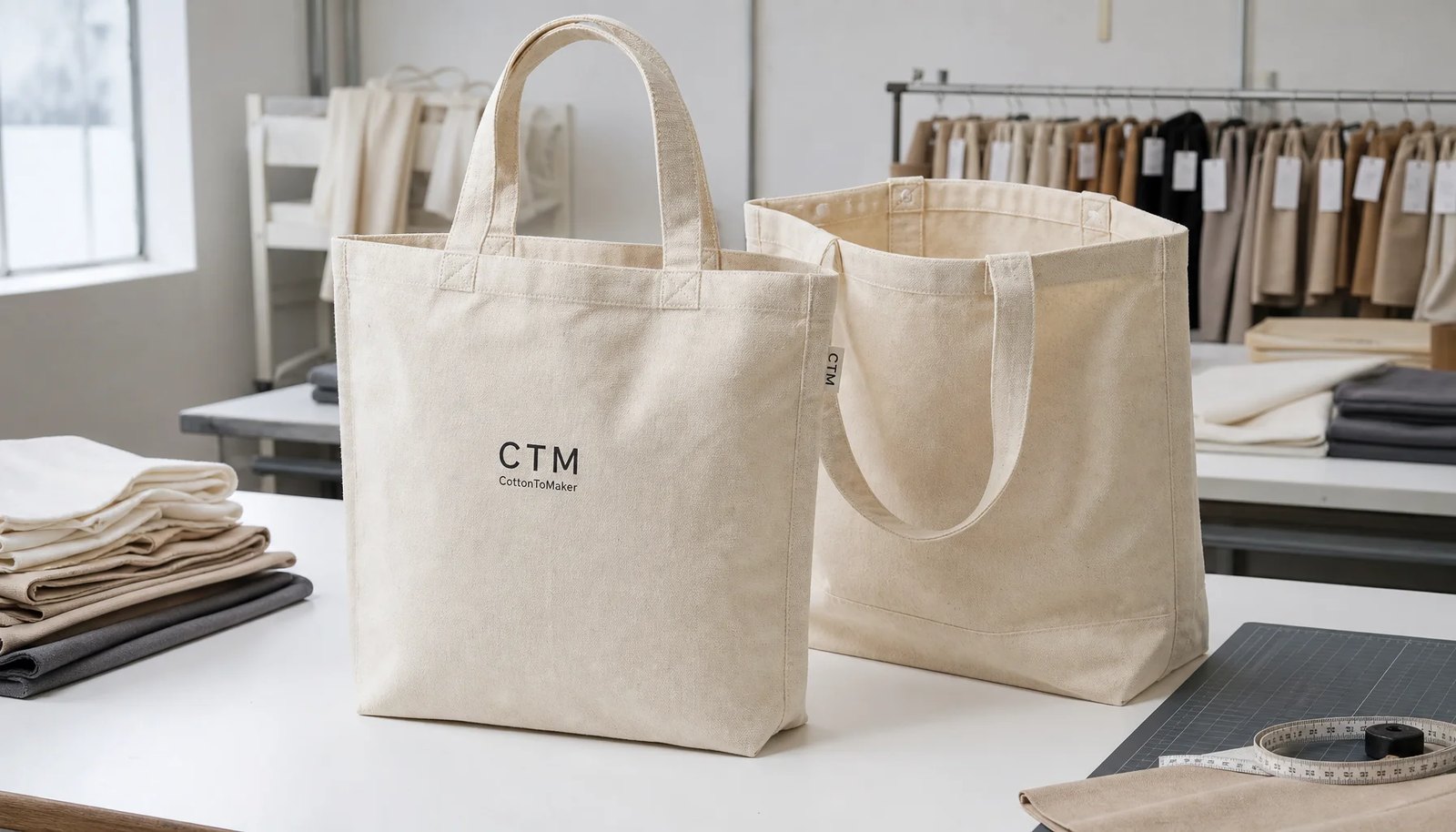
Define the Retail Use Before Choosing Canvas
Canvas grocery totes for hotel retail are not the same as lightweight giveaway bags used at a check-in desk. Guests may buy them in a lobby shop, fill them with bottled drinks, snacks, spa products, children’s items, or local souvenirs, then reuse them outside the hotel. The bag has to carry weight, look tidy on a retail shelf, and support the hotel brand without feeling disposable.
A useful RFQ starts with the load case. State whether the tote is for a boutique gift shop, resort market, conference retail counter, or in-room amenity program. The same artwork can be placed on several constructions, but the price and durability change quickly once fabric weight, handle reinforcement, gusset depth, seam finishing, and retail packing are specified.
- For light souvenir use, 8 oz canvas may be acceptable if the tote carries mostly apparel or paper goods.
- For grocery-style hotel retail, 10 oz to 12 oz canvas is a safer commercial range.
- For premium reusable shopping bags, 14 oz canvas gives a heavier hand feel but raises cost, carton weight, and sewing difficulty.
- For bottled products or multiple retail items, a boxed bottom and reinforced handles matter more than a small increase in body fabric weight.
- For shelf display, the tote must fold consistently and show the logo without deep creases across the print area.
Fabric Weight, GSM, and Shrinkage Choices
Many quotes for canvas totes use ounces, but factories may calculate fabric in GSM, yards, or meters. A buyer comparing only “10 oz canvas” can receive different bags because weave density, yarn count, finishing, and washing all affect the final hand feel. A practical RFQ should list both the target ounce and approximate GSM, then require the supplier to confirm the actual fabric specification used for pricing.
Natural cotton canvas is common for hotel retail because it looks relaxed and premium, but natural fabric has shade variation. Dyed canvas gives stronger brand control but adds MOQ pressure, dye lot risk, and possible colorfastness testing. Washed canvas feels softer and more lifestyle-oriented, but shrinkage must be controlled before cutting or the finished dimensions can drift.
- 8 oz canvas is usually around 220-240 GSM and fits lower-load retail or promotional stock.
- 10 oz canvas is usually around 270-300 GSM and is a balanced option for hotel grocery totes.
- 12 oz canvas is usually around 320-340 GSM and improves perceived value for paid retail items.
- 14 oz canvas can exceed 380 GSM and may require stronger needles, slower sewing, and higher freight cost.
- If washing is required, approve the sample after washing and state finished size tolerance clearly.
Construction Details That Prevent Handle Failure
Most tote failures start at the handle attachment or the bottom side seam, not in the middle of the fabric panel. A clean-looking hotel tote can still fail if the handles are narrow, the stitch box is too small, or the thread tension is poor. For grocery use, the handle attachment should be treated as a functional component, not only a visual detail.
Handle length also affects durability. A long shoulder handle is comfortable, but it increases swinging movement when the tote is filled. A short hand-carry handle reduces movement but may not match guest expectations. For hotel retail, many buyers use a handle drop around 24-28 cm for shoulder carry, but the final length should be tested with the actual bag size and target load.
- Use box-and-cross stitching or bartack reinforcement at each handle end.
- Keep reinforcement stitching inside the top hem area when possible to spread load across multiple fabric layers.
- Request stitch density confirmation, commonly 8-10 stitches per inch depending on fabric and thread.
- Avoid very narrow handles for grocery totes because they dig into the hand and concentrate stress.
- If using webbing handles, specify webbing width, GSM, color, and whether the handle is cotton, polyester, or blended.
Print Method and Logo Durability
Hotel retail buyers often want a clean logo, a destination graphic, or a seasonal illustration. On canvas grocery totes, screen printing remains the most practical method for solid logos and one to three color artwork. It gives good coverage, predictable cost, and reasonable durability when the ink is matched to cotton canvas and properly cured.
Heat transfer can reproduce fine detail and gradients, but it should be tested carefully on textured canvas. Transfers may look sharp on the sample table but feel less integrated with the fabric, and corners can lift if the transfer film is not suitable. Embroidery can look premium but adds cost, stitch backing, and possible puckering on large artwork areas.
- For solid CTM-style or hotel wordmark logos, use screen print with Pantone references and cured ink.
- For full-color tourism artwork, use digital print or heat transfer only after testing hand feel and rub resistance.
- For small premium marks, woven labels or embroidery can work better than printing on heavy texture.
- Set logo placement tolerance, such as plus or minus 5 mm for normal tote production unless tighter control is priced.
- Require dry rub and light wet rub checks because hotel retail bags may contact light-colored clothing.
Durability Testing Checklist for Approval
A durability checklist is useful only when it has measurable pass and fail conditions. “Strong handles” is not a specification. For canvas grocery totes, the buyer should define test weight, test duration, load shape, number of lift cycles, and failure criteria. The factory should test the pre-production sample first, then repeat checks during bulk production.
Testing does not need to be complicated, but it must reflect real use. A tote carrying square metal weights may pass while a bag carrying bottled drinks creates pressure at the bottom corners. If the hotel expects guests to carry groceries or beverages, test with distributed weight and observe handle angle, seam distortion, and gusset stress.
- Static load test: hang the tote with 8-12 kg for a defined duration, such as 30 minutes, with no seam opening or handle tearing.
- Dynamic lift test: lift and lower the loaded tote repeatedly, such as 50-100 cycles, checking handle stitch movement.
- Bottom seam check: load the bag with boxed or cylindrical items and inspect gusset corners after the test.
- Print rub check: rub printed area with dry white cloth and lightly damp cloth, then compare transfer against the approved limit.
- Seam slippage check: inspect side and bottom seams for opening, skipped stitches, or fabric distortion after loading.
- Shelf crease check: fold the tote as packed, leave it under normal carton compression, then inspect logo creasing after unpacking.
Sample Approval Should Match Bulk Production
A polished showroom sample is not enough for a hotel retail order. The approved sample should use the same fabric source, same handle material, same thread, same print method, same seam finish, and same folding method planned for bulk. If the supplier substitutes stock material for the sample and later uses custom production fabric, the buyer has no reliable reference for final inspection.
For first orders, approve both a fit sample and a pre-production sample. The fit sample confirms size, gusset, handle length, and general appearance. The pre-production sample confirms final materials, printing, construction, packing fold, hangtag or barcode position, and carton plan. This two-step approach saves time when artwork is still moving, but it prevents mass production from starting on an incomplete reference.
- Measure the sample body width, height, gusset depth, handle width, and handle drop.
- Weigh the finished sample and compare it against the quoted fabric weight and construction.
- Cut a small hidden fabric swatch if needed to verify weave and thickness against future lots.
- Photograph the inside seams and handle reinforcement, not only the front logo.
- Approve print color under consistent lighting because natural canvas can make ink appear warmer.
- Keep one sealed approval sample with the buyer and one with the factory for production comparison.
MOQ Logic and Cost Drivers
MOQ for canvas grocery totes is driven by fabric availability, cutting efficiency, print setup, sewing line time, and packing requirements. A natural canvas tote with a one-color print can usually start at a lower MOQ than a dyed canvas tote with custom webbing, multiple logos, retail hangtags, and mixed carton assortments. Buyers should not push MOQ down without understanding which part of the production flow becomes inefficient.
Cost changes are not always linear. Increasing fabric weight from 10 oz to 12 oz raises material cost and carton weight, but may also slow sewing if the seams stack thick at the gusset. Adding one print color may require another screen, another curing pass, and more registration control. A small retail packing change can add labor if each tote needs folding, hangtagging, barcode labeling, and individual bagging.
- Main material cost: canvas GSM, fabric width, cutting yield, dyeing or washing, and shrinkage allowance.
- Trim cost: handles, labels, thread, hangtags, barcodes, snaps, inner pockets, and reinforced bottom inserts.
- Printing cost: screen setup, color count, artwork size, ink type, curing time, and rejected print allowance.
- Labor cost: seam finish, gusset complexity, handle reinforcement, trimming, pressing, folding, and retail packing.
- Logistics cost: carton volume, gross weight, compression limits, pallet plan, and Incoterm.
- Quality cost: pre-production sample, inline inspection, final AQL inspection, and any agreed durability testing.
Packing for Hotel Retail Receiving
Packing is often treated as an afterthought, but hotel retail teams care about easy receiving, clean shelf transfer, and low damage. If bags arrive heavily compressed, the print panel may crease and the tote can look tired before it reaches the shop. If cartons are too heavy, hotel staff may struggle to move them through back-of-house storage.
A practical packing specification should define folding direction, quantity per carton, carton marks, gross weight limit, and whether each tote needs a hangtag, barcode, belly band, or individual polybag. For sustainability-driven hotel programs, buyers may avoid individual polybags, but the cartons then need better moisture control and clean inner liners.
- Pack with all front logos facing the same direction for faster receiving and shelf setup.
- Use 50-100 pieces per export carton depending on tote size, fabric weight, and carton handling limits.
- Keep carton gross weight within the buyer’s warehouse or hotel receiving requirement.
- Use inner carton liners when skipping individual polybags to reduce dust and moisture exposure.
- Confirm barcode placement before production if the tote will be scanned at a retail POS.
- Include carton marks with item code, color, quantity, PO number, destination, and carton number.
Lead Time Risks and Production Schedule Control
Lead time for canvas grocery totes depends on whether the fabric is in stock, whether dyeing or washing is required, and whether the print setup is simple. A realistic schedule separates sample approval from bulk production. Buyers often lose time by approving artwork but leaving packing, carton marks, or barcode files unresolved until goods are ready to pack.
For hotel retail launches, the risk is not only late shipment. A delayed sample approval can compress production and inspection time, which increases mistakes. A buyer should request a stage-by-stage schedule that shows material booking, cutting, printing, sewing, trimming, QC, packing, and handover. The schedule should also state which buyer approvals are needed at each stage.
- Stock natural canvas with one-color print can move faster than dyed or washed fabric programs.
- Custom dyed canvas needs lab dip approval and may require additional time for color correction.
- Large logo prints need screen setup, strike-off approval, curing control, and drying space.
- Retail packing details should be finalized before sewing completion, not after final inspection.
- Final inspection should happen after packing, but durability checks should start before the full order is completed.
- Shipment booking should use estimated carton dimensions and be updated after the first packed carton is confirmed.
Quote Data Needed for a Fair Supplier Comparison
A low unit price is not useful if the quote hides fabric substitution, weak handle reinforcement, missing sample cost, vague packing, or unclear Incoterm. To compare suppliers fairly, send the same RFQ sheet to each factory and require them to fill in the technical assumptions behind the price. This is especially important when sourcing canvas grocery totes for hotel retail, where the product is both a functional bag and a branded retail item.
The best quote is not always the cheapest quote. A supplier that includes GSM confirmation, sample timeline, print method, packing plan, load test evidence, and AQL inspection support may reduce rework risk. A supplier that only writes “canvas tote, logo print, good quality” leaves the buyer to discover problems after deposit or after production.
- Request unit price by quantity tier, such as 500, 1,000, 3,000, and 5,000 pieces if relevant.
- State Incoterm clearly, such as EXW, FOB, CIF, or DDP, and compare landed cost separately.
- Require sample fee, screen fee, mold fee, artwork setup fee, and courier fee as separate lines.
- Ask for carton quantity, carton size, gross weight, and estimated CBM before confirming freight.
- List fabric weight, handle material, seam finish, print method, and packing method inside the quote.
- Require lead time from deposit and sample approval, not from the first inquiry date.
- Add rework responsibility for failed durability, wrong print placement, or packing errors before shipment.
Specification comparison for buyers
| Spec decision | Recommended option | When it fits | Buyer risk to check |
|---|---|---|---|
| Fabric weight for hotel retail shelf stock | 10 oz to 12 oz cotton canvas, roughly 270-340 GSM depending on weave | Best for grocery-style totes expected to carry bottled drinks, snacks, books, amenities, and guest purchases | Do not compare quotes by ounce only; request GSM, weave, shrinkage range, and whether the weight is before or after washing |
| Handle construction | Self-fabric handles or 1.5 in cotton webbing with box-and-cross stitching | Use self-fabric for premium retail appearance; use webbing when load durability matters more than a seamless look | Handle stitch density and bartack position often decide failure more than fabric weight |
| Bottom structure | Boxed bottom with folded side gusset, 8-12 cm depth for grocery use | Fits minibar items, folded apparel, packaged souvenirs, and small food retail without making the tote look bulky | Flat totes cost less but sit poorly on shelves and overload side seams when used for groceries |
| Print method | Screen print for solid hotel logos; heat transfer only for detailed gradients or short seasonal artwork | Screen print is suitable for most natural canvas grocery totes with one to three spot colors | Require rub testing and print placement tolerance; soft canvas can shift during printing if no fixture is used |
| Inside seam finishing | Overlock plus folded binding on stress areas, or French seam for a cleaner premium interior | Use bound seams for heavier retail loads and French seams when the interior finish is visible to guests | Low-cost overlock only may pass visual inspection but fray after repeated use or washing |
| Durability acceptance test | Static load test at 8-12 kg plus dynamic carry test with repeated lift cycles | Appropriate for hotel retail where guests may use the tote as a shopping bag after purchase | A single hanging weight photo is not enough; define duration, load type, handle angle, and pass/fail criteria |
| Packing method | Flat packed with logo facing same direction, 50-100 pcs per carton depending on tote size and GSM | Supports hotel retail receiving, stockroom counting, and direct transfer to retail shelves | Compressed packing can crease printed panels; carton weight must stay manageable for hotel staff |
| Supplier route | Direct factory for repeat hotel retail programs; trading company only when combining many unrelated SKUs | Direct factory gives better control over canvas, handles, sampling, packing, and QC records | Compare whether the quote includes pre-production sample, carton marks, testing photos, and rework responsibility |
Buyer checklist before sampling
- Define tote dimensions with width, height, bottom gusset, handle length, and target carrying use, not only a reference photo.
- Specify fabric weight in both ounce and GSM where possible, and state whether the bag should be natural, dyed, washed, or unwashed canvas.
- Set minimum handle strength requirements, including stitch pattern, reinforcement size, and static load test weight.
- Confirm print method, logo size, Pantone references, print placement tolerance, and whether the artwork is printed before or after sewing.
- Approve a physical pre-production sample using the same fabric, handle material, thread color, print method, and packing fold as bulk production.
- Require seam finish photos for the inside bottom, side gusset, handle attachment, and top hem before mass production starts.
- Set acceptable tolerances for dimensions, GSM, logo placement, color variation, stitch density, and carton quantity.
- Confirm retail packing format, carton dimensions, gross weight, carton marks, barcode or hangtag requirements, and inner polybag policy.
- Request a production schedule that separates material booking, cutting, printing, sewing, trimming, final QC, packing, and vessel or courier handover.
- Compare supplier quotes using the same RFQ sheet, including sample fee, mold or screen fee, unit price, MOQ, lead time, Incoterm, and testing requirements.
Factory quote questions to send
- What exact canvas fabric will be used, including ounce, GSM, weave type, shrinkage estimate, and whether it is stock fabric or made to order?
- What is the minimum order quantity for this tote size, and does the MOQ change if we use dyed canvas, custom webbing, or multiple print colors?
- Can you provide photos or short videos of the handle load test using our proposed construction and target weight?
- Which print method do you recommend for our artwork on natural canvas, and what are the expected risks for bleeding, cracking, or uneven ink coverage?
- What are your normal tolerances for bag dimensions, handle length, print placement, GSM, and color shade between lots?
- Will the pre-production sample be made on the same sewing line and with the same fabric lot planned for bulk production?
- How many pieces are packed per export carton, what is the estimated carton size and gross weight, and can carton marks follow our hotel receiving format?
- What production stages are included in the quoted lead time, and when do you need final artwork, deposit, shipping marks, and packing instructions?
- What inspection standard do you use for canvas totes, and can you support AQL inspection with separate checks for appearance, measurement, printing, and load testing?
- If goods fail the agreed durability or print rub test, what rework or replacement process is included before shipment?
Quality-control points to confirm
- Fabric GSM must match the approved sample within the agreed tolerance, commonly plus or minus 5 percent unless the buyer sets a tighter requirement.
- Bag dimensions should be checked after sewing and pressing, with separate measurements for body width, height, gusset depth, and handle drop.
- Handle attachment must show consistent box, cross, or bartack reinforcement without skipped stitches, loose thread, or needle damage.
- Static load testing should use the agreed weight and duration, with no handle tearing, seam opening, or visible fabric rupture.
- Dynamic carry testing should simulate repeated lifting and walking movement instead of only hanging the tote from a hook.
- Print adhesion should pass dry rub and light wet rub checks without unacceptable ink transfer, cracking, or peeling.
- Inside seams must be trimmed and finished cleanly, especially at gusset corners where fabric layers stack and fraying starts.
- Carton packing must match the approved fold direction, carton quantity, gross weight limit, and retail labeling instructions.