1. Start with the real job the tote has to do
Canvas grocery totes for trade show exhibitors are usually bought for one of three jobs: carrying brochures and samples on the show floor, acting as a branded giveaway, or serving as a retail-style reusable bag after the event. Those jobs do not need the same fabric weight, print method, or handle build. A tote that looks fine on a display table may fail once it is packed with catalogs, water bottles, and sample packs. Before you compare supplier quotes, define the actual load and the end use, not just the logo placement.
For procurement, the first mistake is buying by bag shape alone. Two bags with the same width and height can differ sharply in sewing cost, freight cost, and failure risk depending on gusset depth, handle length, lining, and print coverage. If the bag is going to be handed out to trade show visitors, buyers usually want it to feel substantial and keep its shape. If the goal is a low-cost promo item, the supplier may push lighter canvas and simpler construction. The spec has to match the commercial intent.
- Define: giveaway, retail, event carry bag, or post-show grocery use.
- State target contents: brochure pack, sample kit, notebook, or mixed load.
- Decide whether appearance or load capacity is the priority.
2. Choose the canvas weight before you ask for pricing
Most buyer problems start with vague fabric language like “heavy canvas” or “premium cotton.” For sourcing, that is not enough. Ask suppliers to quote actual fabric weight in GSM or ounces per square yard. For canvas grocery totes in the trade show channel, a practical range is often 10 oz to 12 oz, roughly 340 to 420 GSM, when the bag needs to hold up well without becoming too expensive or bulky. Lighter canvas can work for short-run giveaways, but it often looks thin once printed and packed.
Heavier fabric does not always mean better value. It can improve body, print opacity, and perceived quality, but it also raises cutting waste, sewing time, and freight weight. If the bag must be folded into cartons for export, every extra ounce adds cost. Buyers should compare sample hand feel, print clarity, and bag structure, not just the raw GSM number. A supplier who cannot state the fabric spec precisely is likely quoting from habit, not from controlled sourcing.
- 10 oz to 12 oz canvas: common balance for trade show and grocery-style use.
- Lower GSM: cheaper, lighter freight, but softer body and higher print show-through risk.
- Higher GSM: better structure, but watch carton volume and total landed cost.
3. Compare supplier routes by control, not only by unit price
When buyers source canvas grocery totes for trade show exhibitors, the quote source matters as much as the quoted number. A direct factory that cuts, sews, and prints in-house usually gives better visibility on fabric, stitching, and packing. A trading company can still be useful if it manages multiple factories, but you lose some control over where problems sit. If the supplier is vague about who does the printing, who inspects the bags, and who packs the cartons, the project becomes harder to manage once production starts.
For a repeat program or a large expo order, direct factory sourcing often gives cleaner defect ownership and easier sample approval. For very small runs, a trading route may reduce the barrier to entry, but the buyer should expect extra margin and slower clarification cycles. The practical comparison is not “factory versus middleman” in theory. It is which route can show real material control, sample traceability, and stable lead time for your exact bag build.
- Direct factory: better process visibility, useful for repeat orders and custom specs.
- Trading route: can be flexible on MOQ, but verify actual production site and QC control.
- Hybrid route: useful only if the seller clearly owns communication and sample accountability.
4. Use a sourcing comparison that forces real quote differences
A fair quote comparison needs more than a unit price. For canvas grocery totes, two quotes can look similar until one includes a heavier handle, a cleaner edge finish, tighter packing, and a proper strike-off. Those details change both cost and risk. A buyer should ask every supplier to quote the same size, same fabric weight, same print method, same packing count, and same delivery term. If one supplier changes any of those, the quote is not comparable.
You also need to separate fixed costs from variable costs. Screen setup, plate making, sampling, and carton labeling may be one-time charges. Bag unit cost changes with color count, handle type, print area, and order volume. If the supplier says the MOQ is low but the setup fee is high, that may still be the best option for a test program. What matters is the landed cost per saleable tote, not the headline ex-factory number.
- Compare like-for-like: same size, fabric, handle, print, and carton count.
- Separate one-time setup charges from recurring unit price.
- Request pricing by blank, printed, and extra-color versions if needed.
5. Print method should follow artwork, not supplier convenience
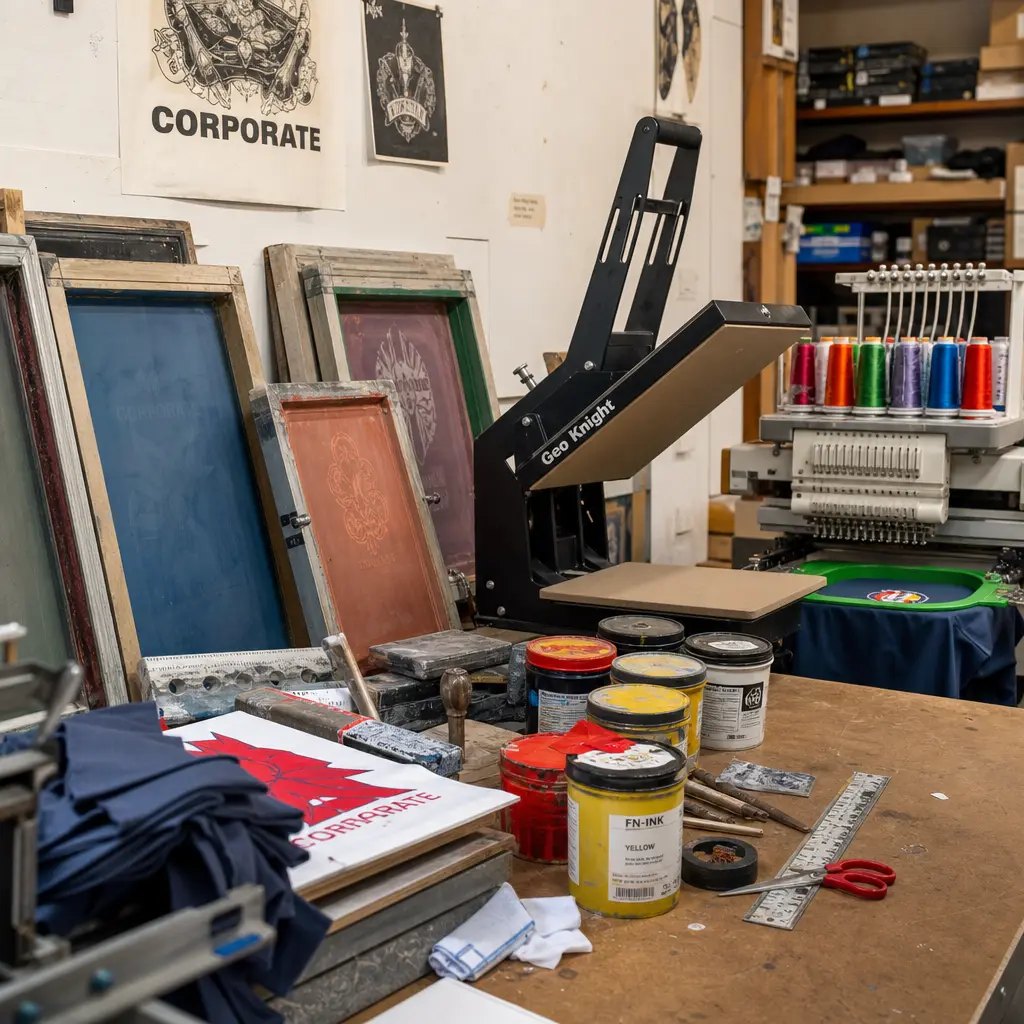
For most trade show exhibitor totes, screen printing remains the most practical method because it handles bold logos, simple shapes, and repeat orders well. It is usually the best fit when the design uses one or two colors and the buyer wants a durable finish. On coarse canvas, however, fine lines and tiny type can fill in, so the art must be simplified or the print area enlarged. A digital proof is not enough; a strike-off on the actual canvas is what tells you whether the art will read cleanly.
Heat transfer can be useful for short runs or more complex art, but buyers should compare feel, durability, and cost carefully. If the tote is expected to be reused as a grocery bag, transferred graphics may crack or wear sooner than screen print. Embroidery is usually too expensive for bulk trade show handouts, while woven labels or side labels can be a clean branding option if the bag itself should stay simple. The right method is the one that matches both the graphic and the use case.
- Screen print: best for simple logos and repeat bulk orders.
- Heat transfer: better for complex art or very small runs, with durability tradeoffs.
- Request a physical strike-off before approving production print.
6. Build the QC standard around the failure points that matter
The most common quality issues on canvas grocery totes are not subtle. They show up in handle attachment, seam alignment, print registration, and bag shape. If the buyer never states a tolerance, the factory will often rely on its internal standard, which may not match retail expectations. For trade show use, the bag may not need luxury finishing, but it should not arrive with crooked seams, loose threads, or uneven handles. Those defects are visible on the first impression and hurt brand credibility.
A useful QC approach is to set acceptance criteria around the parts that carry load and the parts buyers see first. Handles should be reinforced with bar-tacks or X-box stitching where appropriate. Seams should be straight and secure. The print should sit in the approved area without major misregistration or fading. Fabric shade variation should be limited within a lot, especially if the tote uses natural canvas and the brand expects a consistent off-white tone. For a buyer, the right standard is practical: enough detail to stop weak production, not so much that inspection becomes subjective.
- Handle attachment must be reinforced and symmetrical.
- Print registration should match the strike-off on actual fabric.
- Visible seams and corners should not twist, pucker, or fray.
- Random carton samples should be checked for stains, odor, and cutting defects.
7. Approve samples with the final fabric, not a near match
Sample approval is where many tote projects go wrong. A supplier may show a neat sample made from one canvas weight and then ship bulk production in a slightly different material because the first cloth ran out or cost changed. That is why the pre-production sample should match the final fabric, final print method, handle build, and packing style. If the supplier cannot make a sample from the same source material, the approval is only partial and should be treated as such.
For trade show programs, sample checks should cover more than appearance. Measure the finished bag, check the handle drop, test the opening width, and load the bag with a realistic sample pack. Look at how the tote stands, whether the bottom seam distorts, and whether the print cracks when the bag is flexed. A sample that looks good flat can fail once it is carried. The approval should capture both visual standards and basic function.
- Approve size, fabric, print, and handle construction together.
- Use a real load test with brochures or sample cartons.
- Keep one signed sample or photo record for production reference.
8. Packing details can change freight, damage, and receiving time
Canvas grocery totes are usually shipped flat, but flat does not mean unspecified. Buyers should state whether the bags are folded, nested, bundled, or tied, and how many go into each carton. That affects carton size, gross weight, warehouse receiving speed, and the risk of wrinkles or print abrasion. Loose packing may look harmless at the quote stage, yet it can increase cubic volume and create counting mistakes on arrival.
For importers and distributors, carton labeling matters as much as bag quality. Cartons should show style code, quantity, color, and PO reference clearly. If there are multiple print versions for different exhibitors or regions, the packaging must prevent mix-ups. A supplier who packs by hand without a clear bundle standard is more likely to ship inconsistent counts. If your warehouse team has to recount every carton, the saving on unit price disappears quickly.
- Specify flat pack, bundle count, and carton quantity in the PO.
- Require legible carton marks for style, color, and quantity.
- Check gross weight and carton dimensions before booking freight.
9. Schedule risk is usually hidden in sample timing and queue status
Expo deadlines make tote buying less forgiving than ordinary replenishment. A supplier can quote a fast production lead time and still miss the show if sample approval drifts or if the factory is already in a busy queue. Buyers should always separate sample lead time from bulk lead time and ask where production sits in the calendar. If the supplier cannot tell you when cutting, printing, and sewing will begin, the delivery promise is not very useful.
A safe planning structure is to build time around the sample, not around the order date. For a standard canvas tote program, buyers often need a few days for sample review, then production lead time measured after approval, then freight time and receiving time. If the event date is fixed, the supplier should know the last safe ship date and the latest acceptable approval date. This is where procurement teams save themselves from expediting fees and air freight surprises.
- Separate sample lead time from bulk lead time.
- Ask for the factory’s current production queue, not a generic promise.
- Build buffer time for artwork corrections, sample revision, and freight booking.
10. Use landed cost, not ex-factory price, to choose the right offer
The cheapest tote quote often stops being the cheapest once freight, sampling, carton volume, and rejects are included. A heavier canvas tote may cost more per unit but can reduce complaint risk and improve the perceived value at the trade show. A lighter tote may save on freight, but if it tears or looks thin, the brand pays for it in poor presentation. Buyers should compare landed cost per acceptable bag, not just ex-factory cost per unit.
A simple landed-cost view should include sample fees, unit price, print setup, carton packing, inland handling, ocean or air freight, duties if relevant, and a small allowance for rejects. If two suppliers are close on price, the one with cleaner sampling, better QC evidence, and more stable packing often wins in real cost. Procurement teams do not need perfect accounting on the first round, but they do need enough visibility to avoid buying on false savings.
- Add sample cost and print setup into the total program cost.
- Factor in freight volume, not just weight.
- Reserve a reject allowance when comparing suppliers.
Specification comparison for buyers
| Supplier option | What to verify | Commercial advantage | Buyer risk to control |
|---|---|---|---|
| Direct sewing factory | fabric swatch, approved sample, seam close-ups, logo test photos, packing pilot, and final inspection evidence | Better sample-to-bulk control and faster production feedback | May be weaker on export paperwork or branded packing unless checked early |
| Trading company | Factory name, production photos, trim-source proof, and who owns QC decisions | Can coordinate small mixed orders and extra services | Markup can hide real factory capability and slow defect decisions |
| Specialized bag workshop | bag size, gusset, handle drop, seam allowance, stitch density, reinforcement patch, and loading expectation | More practical for detailed construction, trims, and repeat programs | Capacity may be limited during peak seasons |
| Low-price general supplier | 8-12 oz cotton canvas, 120-220 gsm cotton, recycled cotton, or blended fabric selected by use case and target price | Useful for simple promotional runs with loose specs | Material downgrades, weak packing, and vague inspection scope can erase savings |
| Retail-ready supplier | fold method, inner bundle, carton count, carton mark, moisture protection, SKU separation, and warehouse receiving needs | Can handle labels, SKU separation, carton marks, and receiving rules | Higher unit cost must be compared against reduced warehouse work |
| Compliance-focused supplier | Fabric records, labeling review, test plan, and production traceability | Safer for retail programs and repeat brand orders | Documentation claims need evidence, not only sales language |
| Local sample room plus bulk factory | Signed sample, bulk factory handoff, first-piece photos, and deviation owner | Good for complex branding before large production | Sample room quality may not match bulk line unless handoff is controlled |
Buyer checklist before sampling
- Define the tote use case first: free giveaway, paid retail bag, or reusable grocery bag for post-show use.
- Lock one target fabric weight range in GSM and oz before asking for quotes.
- Specify finished size, handle length, handle width, and whether the bag must stand upright.
- State the print method, number of colors, print area, and whether art will repeat on both sides.
- Request a pre-production sample or strike-off on actual canvas, not just a digital proof.
- Confirm carton count, inner bundle count, and whether the goods ship flat or pre-folded.
- Ask for production lead time from sample approval, not from order placement.
- Collect the supplier's failure points: seam strength, handle attachment, print registration, and fabric shade tolerance.
Factory quote questions to send
- What exact canvas construction are you quoting, including weight in GSM or oz, weave density if available, and fiber blend?
- Is the quoted price based on direct factory sewing and printing, or are any steps outsourced?
- What is the MOQ by size, color, and print version, and what cost changes if we reduce one of those variables?
- Can you quote separately for blank bags, one-color print, two-color print, and additional print positions?
- What handle construction is included, and what test standard or pull target do you use for handle stitching?
- What is the sample fee, what sample type is provided, and how long does sample production take?
- How are the bags packed per carton, what carton dimensions do you expect, and what is the estimated gross weight?
- What is the production lead time after sample approval, and where does your queue sit now?
- What inspection photos or QC reports will you provide before shipment?
Quality-control points to confirm
- Fabric weight verified against approved spec before bulk cutting.
- Print strike-off approved on actual canvas with final ink colors.
- Handle attachment pull sample reviewed before sewing release.
- Carton pack count and label format confirmed before shipment.
- Finished bag measurement checked against approved tolerance band.
- Random carton samples inspected for stains, odor, and seam defects.