Start with the retail job, not the tote price
Canvas grocery totes for liquor retailers carry a different risk than a lightweight giveaway bag. Customers may load wine bottles, spirits, mixers, cans, snacks, ice alternatives, or grocery add-ons into one bag. The tote has to look good at checkout, hold shape under uneven weight, and protect the retailer’s brand after the customer leaves the store. That is why the first pricing question should be what the bag must do, not which supplier offers the lowest printed unit price.
The use case changes the spec. A tote sold as a retail SKU needs cleaner finishing, better folding, reliable print appearance, and a consistent shelf presentation. A gift-with-purchase bag can be simpler if the goal is campaign reach. A pickup or back-of-house bag may need fewer decorative details but stronger seams and accurate carton counts. When buyers define the job clearly, they can avoid paying for unnecessary retail packaging or, worse, choosing a low-cost tote that is not strong enough for bottle loads.
A useful bulk pricing plan connects four decisions: load scenario, shelf or storage presentation, decoration level, and replenishment needs. For example, a natural canvas tote with one dark screen print may be ideal for repeat store programs because it is easy to approve and reorder. A custom-dyed bag with multiple print colors may support a premium campaign, but it adds shade control, sampling time, and higher MOQ pressure. The right plan makes those tradeoffs visible before a purchase order is released.
- Retail resale tote: emphasize finishing, fold quality, print consistency, and barcode or hangtag needs.
- Promotion tote: emphasize unit cost, stable construction, and repeat availability.
- Checkout utility tote: emphasize handle comfort, seam strength, and fast store handling.
- Pickup or internal tote: emphasize durability, count accuracy, and packing efficiency.
Set fabric weight and construction together
For most liquor retail programs, 10 oz and 12 oz canvas are the practical comparison points. Ten-ounce canvas can work for value programs, broad promotional distribution, or lighter everyday use. Twelve-ounce canvas usually feels more substantial, supports heavier loads better, and gives a more premium impression at checkout. Heavier options exist, but they can push the product into a gift or boutique category where cost, sewing time, and freight weight rise quickly.
Fabric weight alone is not enough. A 12 oz flat tote with weak handles may perform worse than a well-constructed 10 oz gusseted tote with reinforced stitching. Buyers should compare finished construction: body size, gusset depth, bottom seam, top hem, handle material, stitch density, and reinforcement at stress points. For liquor retailers, a gusseted base often matters because upright bottles create point loads and uneven balance. The tote should not twist badly when one side is heavier than the other.
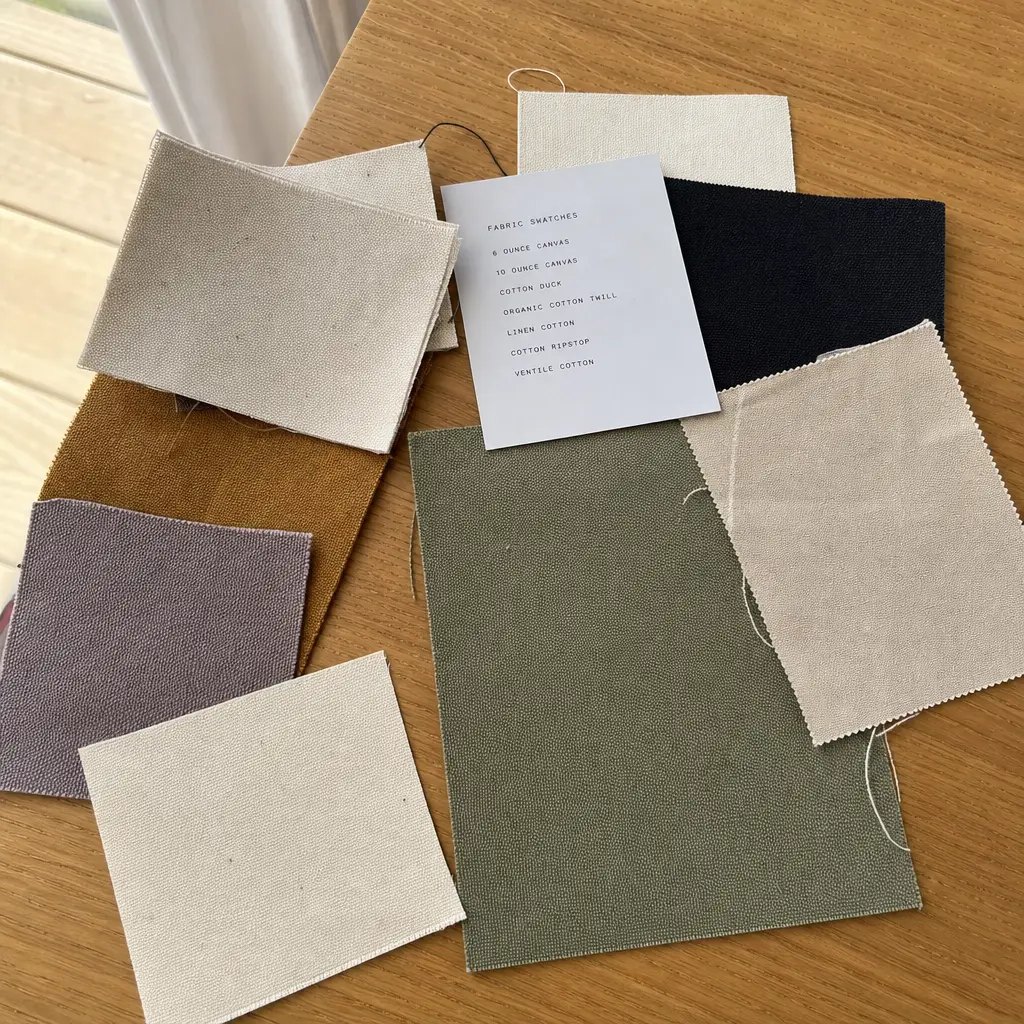
Ask suppliers to state fabric in GSM or ounces and to identify whether it is natural, bleached, dyed, or custom dyed. Natural canvas is often simpler to source and approve because shade expectations are less precise than custom color programs. Dyed canvas can be attractive for branded retail displays, but it requires shade approval under consistent lighting and may increase MOQ. Any tolerance, including fabric weight or shade variation, should be confirmed by the supplier instead of assumed by the buyer.
- 10 oz canvas: suitable for cost-conscious programs and lighter grocery use.
- 12 oz canvas: stronger choice for bottle loads and premium shelf feel.
- Gusseted body: improves usable capacity and loading stability.
- Reinforced top hem and bottom seam: helps control shape and stress.
- Dyed fabric: requires tighter shade approval and usually more sampling discipline.
Specify handles for bottle-weight stress
Handles are often the failure point on grocery totes used by liquor retailers. The load may be heavy, narrow, and uneven, especially when bottles sit upright in the gusset. A low-cost handle that looks acceptable in a photo can stretch, twist, or tear when a customer carries several bottles across a parking lot. Handle construction should therefore be defined in the RFQ with the same care as fabric weight.
Important handle details include material, width, drop length, attachment method, stitch pattern, and bar-tack reinforcement. Cotton webbing handles often provide a sturdy feel and can be easier to reinforce consistently. Self-fabric handles can look clean and coordinated but may require careful stitching to avoid twisting or bulk at the attachment point. Handle drop should match the intended carry method. Short handles may be fine for hand carry, while shoulder-length handles need more attention to comfort and stress at the upper seam.
Buyers should ask for close-up photos of the handle attachment and should inspect the physical sample under load. A practical sample check is to load the tote with a supplier-agreed weight that reflects real customer use, lift it repeatedly, and inspect whether stitches open, handles deform, or the top hem pulls out of shape. Do not rely on a vague statement that the bag is “heavy duty.” Translate that claim into a construction detail and a test.
- Confirm handle width, handle drop, and material before quote comparison.
- Require bar-tacks or equivalent reinforcement at handle stress points.
- Inspect skipped stitches, loose threads, and uneven handle placement.
- Test the sample with realistic weight before approving production.
- Avoid changing handle length after approval unless the sample is remade.
Choose a print method that survives canvas texture
Screen printing is usually the most practical decoration method for bulk canvas grocery totes when the artwork is simple. One-color or two-color logos, bold type, and solid shapes can print cleanly on natural canvas and remain cost-effective for repeat orders. Fine lines, gradients, small legal copy, or photographic artwork are harder to control because the canvas weave interrupts detail. A simple, high-contrast design often looks more premium and creates fewer production problems.
Heat transfer can be useful for detailed artwork or smaller runs, but it needs careful approval on textured canvas. Buyers should check whether the transfer bonds evenly, whether edges lift, and whether the logo cracks where the tote is folded for packing. Embroidery can look upscale, but it increases cost, adds stitch time, and may distort lighter canvas. It is best reserved for premium programs where the added decoration value is intentional.
Print approval should happen on real fabric, not only on a digital mockup. Ask for a strike-off or pre-production sample showing final ink, final print size, and final print position. Inspect opacity, registration, edge sharpness, and placement relative to the top hem, side seams, and fold line. If the logo lands on a fold, confirm that the packing method does not create cracking or transfer marks during transit.
- Use screen print for clean logos, repeat orders, and stable pricing.
- Use transfers only after checking adhesion, edge lift, and fold behavior.
- Keep small type and fine lines away from rough canvas texture.
- Define logo size and placement tolerance in millimeters or inches.
- Approve print on final canvas before full production starts.
Build pricing from the real cost drivers
The main quote drivers are fabric consumption, sewing time, handle construction, decoration setup, packing labor, and freight density. Buyers often compare a headline unit price without realizing that one supplier included labels, carton marks, and retail folding while another quoted only the basic printed tote. For a clean bulk pricing plan, every supplier should price the same body size, canvas weight, handle, print method, packing method, and carton requirement.
Spec simplification is usually the safest way to control cost. Reducing print colors, using stock natural canvas, keeping one size, and avoiding unnecessary inserts can lower cost without weakening the customer experience. By contrast, forcing a supplier to hit an unrealistic target price can result in thinner fabric, weaker stitching, or rushed inspection. The goal is not the cheapest theoretical tote; it is the lowest cost tote that meets the retailer’s use case and acceptance standard.
Ask suppliers to separate setup charges, sample charges, unit price, packing extras, and freight or export charges where possible. If the supplier cannot itemize every cost, they should still be able to explain what is included. This is especially important for retail-ready packing, because hangtags, bands, barcodes, individual polybags, and special folding can add labor and affect carton size. The quote should show those choices clearly so merchandising, operations, and finance can evaluate the same product.
- Fabric weight changes material cost and shipping weight.
- Handle reinforcement changes sewing time and failure resistance.
- Extra print colors increase setup, registration risk, and scrap risk.
- Retail-ready packing adds labor but may reduce warehouse handling.
- Carton size and count affect freight, storage, and receiving time.
Use MOQ to control variants, not just quantity
MOQ should be reviewed by variant, not only by total order quantity. A supplier may offer one MOQ for a natural canvas body, another MOQ for a custom-dyed fabric, and another minimum for each print color or artwork version. If a retailer wants three store logos, two fabric colors, and two handle options, the real production quantity can fragment quickly. That fragmentation weakens pricing and increases the chance of mismatched inventory.
For a first order, the strongest approach is usually one size, one fabric, one handle, one print layout, and one packing method. This makes supplier quotes comparable and makes quality control easier. If store teams later confirm strong demand, the retailer can add colorways or upgraded packing on a second run. A narrow first run does not mean a weak program; it means the buyer is protecting margin while learning what shoppers actually buy or use.
MOQ also affects replenishment. Ask whether the supplier can keep artwork, screens, carton marks, and approved specs on file for reorders. If the tote becomes a recurring checkout item, reorder speed may matter more than squeezing a few cents from the first order. Buyers should also ask whether stock fabric can be reserved or whether each reorder depends on market availability. The answer helps determine whether to buy deeper upfront or plan smaller recurring orders.
- Confirm MOQ by style, fabric color, print design, and packing method.
- Start with stock fabric when testing demand or managing budget.
- Avoid multiple colorways until the base tote proves itself.
- Ask whether screens and carton marks can be reused on reorders.
- Compare lower MOQ options against higher unit price and lead-time impact.
Request supplier evidence that can be verified
Supplier evaluation should focus on evidence that helps control the order. Factory photos are useful only if they show relevant operations: cutting tables, sewing lines, handle reinforcement, print setup, inspection, and carton packing for tote bags. A general showroom photo or catalog image does not prove the supplier can manage canvas grocery totes at bulk volume. Buyers should ask what the supplier controls directly and what is subcontracted.
Subcontracting is not automatically a problem, but it must be visible. If printing is outsourced, the buyer needs to know who approves the strike-off, who checks cure, and who is responsible if the final print fails inspection. If canvas is purchased externally, the buyer should ask how fabric weight and shade are verified before cutting. If packing is done at another site, carton count and labeling procedures need more attention. Clear ownership reduces arguments when a shipment does not match the approved sample.
A practical evidence package includes a written spec sheet, physical pre-production sample, photos of production steps, and a final packing plan. For higher-value or time-sensitive orders, buyers can request in-line inspection photos or third-party inspection using agreed defect criteria. The point is not to create paperwork for its own sake. The point is to make sure the factory, supplier, and buyer are all approving the same tote.
- Ask who controls fabric sourcing, cutting, sewing, printing, inspection, and packing.
- Request a spec sheet with dimensions, materials, print, packing, and tolerances.
- Use production photos that show the actual tote process, not generic capacity.
- Require disclosure of outsourced print or sewing steps.
- Keep the approved sample as the reference for bulk inspection.
Approve samples with measurable acceptance points
A blank sample can help confirm shape and hand feel, but it is not enough for production approval. The pre-production sample should use the final canvas, final handle, final stitch method, final print, and intended packing fold. Measure the finished width, height, gusset, handle drop, and logo position. Then compare those values against the written spec. If the sample is approved with exceptions, those exceptions should be written down before production starts.
Load testing should reflect actual retail use. The buyer and supplier can agree on a practical weight, such as a realistic bottle-and-grocery load, then check handle attachments, top hem distortion, seam opening, and base stability. The test does not need to be complicated to be useful. It simply needs to be repeatable and documented so both sides understand what “strong enough” means for this program.
Sample review should include folding and packing behavior. A tote may look good when open but develop a hard crease through the logo when folded tightly. If the order will ship in fixed-count cartons, ask the supplier to fold the sample the same way production will be packed. Check whether the print transfers, cracks, or rubs. Also confirm that any barcode, hangtag, band, or inner bag appears in the correct position and does not slow store handling.
- Measure the physical sample and record approved dimensions.
- Check the loaded tote for handle pull, seam stress, and bottom twist.
- Inspect print placement against hems, seams, and fold lines.
- Review thread ends, stains, corner seams, and handle alignment.
- Save signed photos and notes with the purchase order record.
Control packing, cartons, and receiving risk
Packing decisions affect margin after the tote leaves the factory. Loose packing can cause wrinkles and count errors. Overly tight packing can crease canvas and damage the print. Retail-ready packing can improve shelf presentation but adds labor, materials, and carton volume. The best option depends on whether the totes go to a central warehouse, directly to stores, or into a promotional kit.
At minimum, the quote should state carton count, carton dimensions, gross weight, net weight, fold method, carton marks, and whether inner packaging is included. For example, a buyer may ask for 50 pieces per master carton for easier receiving, but the supplier should confirm whether that count creates excessive compression. If cartons contain mixed styles, each carton should show style code, color, print version, PO number, and quantity. Unclear carton marks create extra warehouse labor and inventory errors.
Palletizing should be quoted separately when needed. Corner boards, stretch wrap, pallet labels, and carton orientation can matter when goods move through a retail distribution center. If the tote is sold as a product, barcodes or hangtags must be checked before shipment, not discovered at receiving. A packing confirmation with photos of folded goods, open cartons, sealed cartons, and carton labels is a simple way to reduce avoidable disputes.
- Define carton count and fold method before production packing begins.
- Confirm carton size, gross weight, net weight, and estimated CBM.
- Use carton marks that match PO, SKU, style, color, and quantity.
- Check whether barcodes, hangtags, bands, or polybags are included.
- Request final packing photos before shipment release.
Compare landed cost with quality risk included
The quote to buy on is landed cost per acceptable unit. That includes the tote, print, setup, samples, packing, export cartons, inland handling, freight, duty if applicable, inspection, and receiving costs. A supplier with a lower unit price may be more expensive if carton packing is weak, labels are missing, or the product requires warehouse rework. Build the comparison sheet so every supplier is measured against the same assumptions.
Quality risk belongs in the commercial decision. A weak handle on a liquor tote can create customer complaints and damage the retailer’s brand experience. Poor print cure can make a sellable tote look cheap on shelf. Inaccurate carton counts can waste receiving time and delay store allocation. These are not abstract procurement concerns; they are real operating costs. The best pricing plan balances cost reduction with clear acceptance standards.
For larger orders, consider defining major and minor defects and using an AQL-based inspection approach before shipment. Major defects may include broken seams, loose handles, severe stains, incorrect print, wrong size, or unsafe construction. Minor defects may include small thread ends or slight cosmetic variation within the approved standard. The exact AQL level should be agreed with the supplier or inspection provider based on order value and risk. What matters is that both sides know how the shipment will be judged before cartons are sealed.
Lead time should be treated the same way: confirm assumptions rather than accepting a generic promise. A standard natural canvas tote with simple print may fit a 30–45 day production window after sample approval, but that is only an example to verify. Custom dyeing, peak-season capacity, special packing, or artwork changes can extend the calendar. Build backward from the in-store date and include sample approval, production, inspection, transit, customs where relevant, and warehouse receiving.
- Compare factory price, packing, freight, duty, inspection, and receiving cost together.
- Use the same Incoterm or clearly note different freight assumptions.
- Define major and minor defects before final inspection.
- Confirm lead time by stage, not only as one delivery date.
- Choose the lowest acceptable landed cost, not the lowest printed unit price.
Specification comparison for buyers
| Spec decision | Recommended option | When it fits | Buyer risk to check |
|---|---|---|---|
| Fabric weight | 10 oz for value programs; 12 oz for stronger retail presentation | Use 10 oz when the tote is promotional or price-sensitive; use 12 oz when it must carry bottles and groceries repeatedly | Confirm actual GSM or ounce weight on the spec sheet. Marketing labels can hide lighter fabric or loose weave construction. |
| Bag size and gusset | Medium grocery tote with 5–7 in gusset and stable bottom seam | Best for wine bottles, spirits, mixers, packaged snacks, and mixed checkout baskets | A narrow flat tote may look cheaper to buy but can tip, twist, or limit usable loading space. |
| Handle construction | Cotton webbing or self-fabric handles with bar-tack reinforcement | Fits heavier loads where shoppers carry bottles by hand or over the shoulder | Ask for handle drop, webbing width, stitch density, and reinforcement photos before approval. |
| Bottom support | Gusseted base with reinforced seam; optional bottom insert only if retail use requires it | Useful when bottles are packed upright and the bag must stand at checkout | Extra inserts add cost and packing complexity. A well-sewn gusset may be enough for most grocery tote programs. |
| Print method | 1–2 color screen print for clean logos; transfer only for detailed artwork or lower quantities | Works when branding needs to be visible, repeatable, and cost-controlled | Check ink cure, rub resistance, opacity, and cracking at fold lines. Canvas texture can break fine detail. |
| MOQ plan | One size, one fabric, one handle, one print layout for the first run | Best for pilot orders, seasonal promotions, and new retail SKUs | Splitting colors, handle styles, or artwork versions can multiply MOQ and weaken price leverage. |
| Packing method | Fixed-count bulk cartons; retail bands, hangtags, or individual bags only when needed | Fits warehouse receiving, store replenishment, or counter display programs | Loose packing can cause count errors and wrinkles. Retail-ready packing adds labor and should be priced separately. |
| Supplier route | Factory or supplier that controls sewing, print coordination, inspection, and packing | Best when the buyer needs repeatable specs and accountability | If cutting, sewing, or printing is subcontracted, define who owns defects, delays, and sample corrections. |
| Lead-time plan | Example target: 30–45 days after approved sample for standard natural canvas and simple print | Works for common materials and uncomplicated artwork, subject to supplier confirmation | Custom dye, special trim, peak season, or sample changes can extend the schedule. Confirm each stage in writing. |
Buyer checklist before sampling
- Define use case: resale tote, gift-with-purchase, checkout bag, club reward, or pickup packaging.
- Confirm finished size, gusset depth, handle drop, handle width, and target load scenario.
- Specify canvas type, target GSM or ounce weight, color, shrinkage expectation, and acceptable shade range.
- Choose print method, print size, print location, Pantone reference, and minimum line thickness for artwork.
- Limit the first order to one body size and one print layout unless store strategy requires variants.
- Request a physical pre-production sample using final fabric, handle, stitching, print, and packing method.
- Set practical tolerances for finished dimensions, fabric weight, print placement, and handle alignment.
- Ask for carton count, carton dimensions, gross weight, fold method, carton marks, and barcode requirements.
- Confirm whether sample, setup, labels, hangtags, polybags, export cartons, palletizing, and documents are included.
- Use an inspection checklist covering seams, bar-tacks, stains, print cure, logo placement, quantity, and carton labels.
Factory quote questions to send
- What exact canvas weight is quoted in GSM or ounces, and what tolerance do you normally hold?
- Is the fabric natural, bleached, dyed, or custom dyed, and is stock fabric available for a lower MOQ?
- What are the finished bag dimensions, gusset depth, handle drop, handle width, and seam allowance?
- What stitch density do you use on main seams and handle attachments, and do you add bar-tacks at stress points?
- What realistic load test do you recommend for this construction, and can you test a sample before production?
- How many print colors, print positions, screens, and setup charges are included in the quoted price?
- Can you provide a print strike-off or pre-production sample showing final ink density and fold behavior?
- What is the MOQ by style, fabric color, print design, and packing variant?
- What are the carton pack count, carton size, gross weight, net weight, and estimated CBM per carton?
- What is the lead time by stage: material booking, sampling, printing, sewing, inspection, packing, and shipment handoff?
Quality-control points to confirm
- Confirm fabric weight against the approved target, with tolerance agreed in writing, such as a supplier-confirmed percentage range rather than an assumed standard.
- Measure finished width, height, gusset, handle drop, and print position from a sampled set, not from a single perfect sample.
- Inspect stitch density on main seams and handle areas; common buyer checks include skipped stitches, broken threads, loose ends, and uneven seam allowance.
- Pull-test or load-test the handle area using a realistic agreed weight before production approval and again during final inspection when practical.
- Check bar-tack length, placement, and consistency at every handle attachment point because bottle weight concentrates stress there.
- Rub-test cured print with a dry white cloth and check whether ink transfers, flakes, cracks at folds, or loses opacity on canvas texture.
- Inspect canvas surface for oil marks, stains, weaving slubs beyond the approved standard, shade variation, and dirt from handling.
- Check bottom gusset alignment so the tote does not twist when filled with upright bottles or mixed grocery items.
- Verify carton counts by physical piece count during packing checks, not by carton weight alone.
- Use defined major and minor defect categories and, for larger orders, agree on an AQL sampling plan before shipment.