Start with the finished tote, not just the fabric
A canvas grocery tote for farmers market vendors looks simple, but sourcing it well requires a finished-product brief, not a fabric note. The buyer is deciding how the bag should behave in the market: whether it needs to stand up on its own, how much weight it should carry, how the handles should feel, how clean the logo should print, and how repeatable the result must be across reorders. Those are procurement decisions, not style preferences.
The common mistake is to ask for a "canvas tote" and let the supplier fill in the rest. That produces quotes that cannot be compared. One factory may price a flat 10oz bag with self-fabric handles and no internal reinforcement. Another may price a 14oz boxed-bottom tote with cotton webbing handles, bound seams, and retail packing. Both may be valid products, but they are not the same build.
A better RFQ names the finished bag in production language: dimensions, finished fabric weight basis, fiber content, color, construction, print method, handle spec, tolerance range, packing format, and inspection rules. With that structure, the buyer can compare quotes on the same product and avoid paying for features that were never requested.
This also helps the design team. When the commercial target is clear, the spec usually gets simpler: fewer options, fewer assumptions, and fewer approval rounds. That matters in seasonal market programs where the buyer needs a dependable bag, not a development project.
- Write the brief around the finished tote, not the roll of canvas.
- Separate use case, load target, construction, decoration, packing, and inspection before asking for price.
- Treat fabric weight as one variable, not the whole quality story.
- Make repeatability a requirement if the tote will be reordered seasonally or by account.
Match the tote to the load profile
Farmers market vendors use grocery totes in different ways, and the load profile should drive the spec. A bag for produce samples, herbs, bread, and light packaged goods does not need the same structure as a retail tote that routinely carries jars, bottles, potatoes, or boxed items. If the buyer does not define the use, the supplier is left guessing at the level of strength and stiffness needed.
The first question is commercial: what is this bag for? A giveaway bag, a private-label retail item, a reusable CSA pickup bag, and a wholesale market-association tote all sit at different points on the cost and performance curve. A giveaway can justify a lighter canvas and simpler construction. A retail item needs stronger presentation and tighter consistency. A pickup bag may need a sturdier base and cleaner labeling because the same customer uses it every week.
Load testing should be named in the brief. For many reusable grocery tote programs, 8 to 12 kg for short carry use is a practical internal benchmark. If the bag is sold or promoted as heavy-duty, the standard can be higher. The point is to name the condition before sampling begins. Otherwise, teams argue later about whether a bag that stretches, sags, or strains is acceptable.
If the bag must sit at a stall during filling, capacity shape matters as much as strength. A wider mouth, gusset depth, and boxed bottom can make the tote easier to load and easier to sell, even when the fabric weight stays the same.
- Define channel: giveaway, wholesale resale, private-label retail, CSA pickup, or event merchandise.
- Set a load target and test duration instead of using generic durability language.
- Decide whether the bag must stand upright, fold flat, or prioritize the lowest carton volume.
- Specify hand carry, elbow carry, shoulder carry, or a combination before fixing handle drop.
Choose the right canvas weight and fiber route
Canvas weight is often quoted in ounces, but that number can hide more than it reveals. A supplier may say 10oz, 12oz, or 14oz and still mean different things depending on whether the fabric was measured before or after finishing. For comparison, 10oz is about 339 GSM, 12oz about 407 GSM, 14oz about 475 GSM, and 16oz about 542 GSM. Those conversions help procurement normalize quotes, but only if every supplier is using the same basis.
For most farmers market grocery tote programs, 12oz to 14oz finished cotton canvas is the practical middle range. A 10oz canvas can be fine for light-carry promotional use or lower-price resale. It is easier to fold and easier to hit a lower unit cost, but it may feel soft and collapse more readily unless the construction is strengthened elsewhere. A 12oz canvas usually gives a better balance of structure, sewability, printability, and freight cost. A 14oz canvas adds more body and a more substantial hand feel, which can support a higher retail price, but it also increases stiffness, sewing effort, and shipping weight.
Heavier is not automatically better. If a handle fails, moving from 12oz to 14oz may not solve the problem unless the attachment method improves. If the bag tips over or feels too floppy, a boxed bottom or gusset may matter more than another ounce of fabric. Buyers should compare adjacent weights on the same pattern and see how the tote behaves under a realistic load before locking the spec.
Most buyers start with 100 percent cotton because it is easy to understand and easy to print. That is usually the safest commercial choice. Natural canvas has a utility look that works well for produce, farm shops, and market branding. White canvas gives stronger contrast for logos and can feel more retail-oriented, but it shows stains and handling marks more easily. Black or dark canvas can look premium, but it brings shade matching and print complications if the logo needs a light underbase.
Recycled cotton or cotton-poly blends can be the right answer when the buyer has a sustainability requirement or a specific cost target. The buyer should not assume the blend is interchangeable with virgin cotton. Recycled inputs can vary in shade, fiber length, odor, surface texture, and tensile strength. If the claim matters, request the supporting documentation before artwork or product copy is approved.
- 10oz, about 339 GSM: useful for promotional or light-carry programs.
- 12oz, about 407 GSM: common balanced option for reusable grocery totes.
- 14oz, about 475 GSM: better structure and premium feel, with higher cost and stiffness.
- 16oz, about 542 GSM: use selectively for heavy-duty positioning, not as a default.
- Require the quote to state finished GSM, tolerance, and whether the fabric was washed or otherwise finished before measurement.
Use construction to solve the real handling problem
The body fabric is only part of the bag. Base construction determines whether the tote opens wide enough for quick loading and whether it can sit on a table without falling over. A flat tote is the cheapest to produce and folds compactly, but it does not stand up well. A side gusset increases capacity, while a bottom gusset or boxed bottom improves stability and makes loading easier. For many market use cases, 80 to 120 mm gusset depth is a useful starting point, but the right depth depends on the merchandise mix and the desired silhouette.
Handles deserve the same level of scrutiny. Cotton webbing handles are usually the better default for repeat-use grocery totes because they feel more substantial and typically hold up better under daily handling than narrow self-fabric handles. A handle width of 25 to 38 mm is a practical range for many programs. Narrow handles can cut into the hand when the bag is full. Very wide handles can add cost and bulk without improving the bag enough to justify the extra material.
The attachment method is a major risk point. X-box stitching, bar-tacks, double rows, and patch reinforcement can all be acceptable if they are executed consistently and the bag is tested under realistic load. The important thing is not to name a stitch pattern in isolation. The buyer should also ask for stitch density, thread type, and the actual pull-test or loaded carry requirement.
Interior finishing matters more than many quotes admit. For a wholesale tote, neat overlock seams and clean trimming may be enough. For a higher-priced retail product, bound seams or turned seams can improve the inside look and reduce fraying. The buyer should inspect the inside of the bag, not only the front panel.
If the tote will be folded and sold in a bundle or at a checkout, construction also affects packability. A bulky reinforcement or very stiff canvas can be fine in use but awkward in retail packaging. That is a real tradeoff and should be decided before the order is placed, not after bulk production starts.
- Use gussets or a boxed bottom when upright loading matters.
- Specify handle width, handle drop, handle material, and reinforcement pattern.
- Treat handle attachment as a critical function area, not a cosmetic detail.
- Match interior seam finish to the retail position and target price.
- Approve the construction with the bag loaded, not only empty.
Choose decoration after the artwork is reviewed
For most canvas grocery totes for farmers market vendors, screen printing is the most practical decoration method. It is usually the best fit for one-color or two-color logos, bold typography, and repeat programs where cost and consistency matter. The RFQ should define the print method, Pantone target, print size, print position, ink type, curing method, and acceptable placement tolerance. If the artwork contains small text or thin lines, a strike-off on the actual approved fabric should be part of the process, not an optional extra.
The right decoration method depends on the artwork, not just the budget. Heat transfer or digital transfer can reproduce finer detail, but the buyer should evaluate edge sharpness, hand feel, cracking, and rub resistance. Embroidery can look premium, but it adds cost and can pucker lighter canvas, especially on larger logos. A woven label or sewn patch can be a good option when the brand wants a cleaner, subtler look. Each method has tradeoffs, and the tradeoff should be deliberate rather than accidental.
Placement language matters because vague instructions create avoidable variation. Instead of saying "center logo on front," specify the print width and height in millimeters, the distance from the top edge, the distance from the side seam, and the maximum placement tolerance. If there is a second-side print, define whether it uses the same artwork and whether each side needs a separate inspection point. If the logo sits near a seam or gusset, ask how distortion will be controlled during printing.
Ink cure and adhesion are quality-control issues, not just factory process details. Under-cured ink can transfer during packing or wear off in use. Overly heavy ink can crack when the tote is folded or stuffed. For dark canvas with light logos, ask whether an underbase is required and whether that changes hand feel or cost. Buyers should ask for rub testing when the logo is the commercial reason for the bag.
- Screen print is usually best for simple farmers market logos and repeat programs.
- Transfers can support detail, but require adhesion, cracking, and hand-feel review.
- Embroidery and patches can elevate the product but add cost and placement risk.
- Specify print size, position, Pantone target, and tolerance in production language.
- Approve a strike-off on the final fabric when artwork or color accuracy matters.
Build the RFQ so factories quote the same bag
A vague RFQ creates a vague quote. If one supplier prices a 10oz flat tote and another prices a 14oz boxed-bottom tote with cotton webbing handles, the unit prices are not comparable even if the application sounds similar. The RFQ should describe the finished bag clearly enough that each supplier is pricing the same build. At minimum, include finished dimensions, fabric weight basis, fiber content, color, construction, handle spec, reinforcement, decoration, labels, packing, quantity, inspection requirements, shipment terms, and approval timing.
The quote should be itemized so procurement can see what is driving the price. Ask for separate costs for the bag body, printing, labels, hangtags, barcode labels, polybags, inserts, cartons, sampling, testing, and setup charges. This matters especially when the program will reorder. A screen setup charge or label die charge may be one-time, while printing and packing remain recurring. Without itemization, the buyer cannot model the reorder price or know where a negotiation will actually move the number.
MOQ should be clarified by variable. A supplier may say the MOQ is 500 pieces, but that may only apply to one size, one fabric color, one artwork, and one packing format. If the order splits into natural and black canvas, two logo versions, and retail and bulk packing, the effective MOQ can change. Ask suppliers to state MOQ by fabric color, artwork, handle color, label version, and carton configuration so the commercial impact is visible before purchase order approval.
For larger programs, a quote matrix is useful. Keep the core tote constant and ask for options such as 10oz versus 12oz fabric, one-color versus two-color print, bulk pack versus individual polybag, woven label versus no label, or 25 mm versus 38 mm handles. That approach exposes the cost of each choice and prevents teams from overpaying for features they do not need.
If the supplier cannot quote clearly, the problem is usually the brief, not the factory. The buyer should fix the spec before negotiating price. That is faster than trying to reconcile vague numbers after the sample stage.
- Describe the finished tote, not a generic canvas bag with logo.
- Separate unit cost, setup cost, sampling cost, decoration cost, and packing cost.
- Clarify MOQ by color, artwork, size, handle, label, and packing format.
- Ask for a quote matrix when comparing material or decoration options.
- Include inspection and packing requirements before the supplier gives the final price.
Sample in stages and approve the real production standard
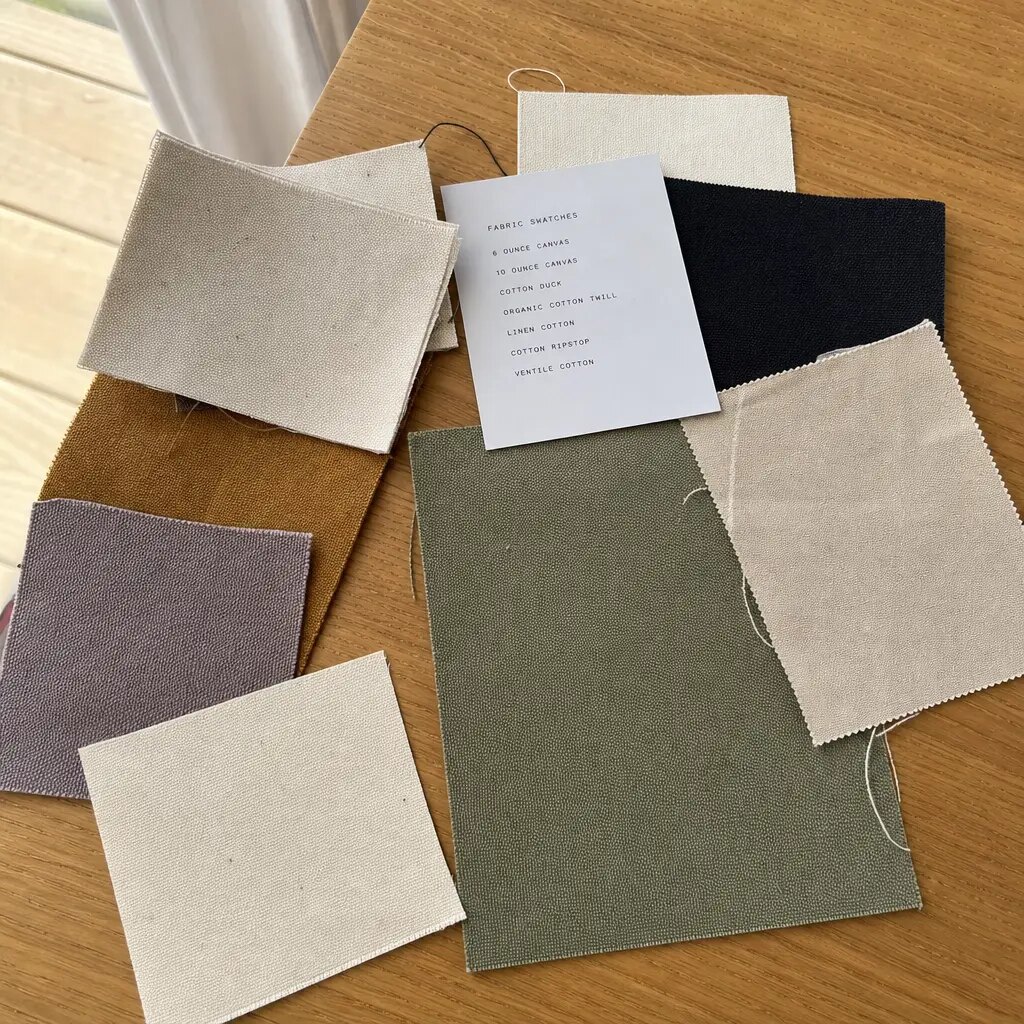
Sampling should prove repeatability. A showroom sample can show workmanship, but it does not approve the order unless it uses the same fabric, same weight, same handle material, same construction, same decoration method, and same packing format as production. A practical approval sequence starts with material swatches, then lab dips if dyed fabric is required, then a print strike-off, then a pre-production sample, and finally a signed gold sample that becomes the bulk reference.
The pre-production sample should be measured like a production unit. Check body width, height, gusset depth, handle width, handle drop, seam allowance, reinforcement placement, print position, label position, and finished weight. If the tote is washed, dyed, or heat-set, measure after the final finish. If it is packed individually, approve the folded size and packing appearance as well. A sample that looks good open on a table but packs badly can still create distribution problems later.
Approval should be documented in a way the factory can follow. Keep one signed physical sample, one measurement sheet, one approved artwork file, one approved color reference, and one packing instruction tied to the purchase order. Photos are useful, but they do not replace touch, measurement, print rub, or loaded carry behavior. If the buyer approves only by email images, disputes become harder to resolve when the shipment arrives.
Reapproval rules matter for repeat orders. The supplier should not change fabric mill, fabric weight, weave, finish, handle webbing, thread, ink, label source, or carton configuration without notice. Even small changes can affect appearance, strength, or landed cost. A repeat program should have a simple rule: if the change can affect customer perception, function, compliance, or packing, it needs reapproval.
- Use swatches and strike-offs to reduce risk before full sample approval.
- Approve a pre-production sample built with final material, construction, print, and packing.
- Measure after the final finishing step, especially for washed canvas.
- Keep the gold sample and document set tied to the PO and reorder record.
- Define supplier changes that trigger reapproval.
Set inspection rules that reflect how the tote will fail in use
Quality control works best when acceptance rules are written before production starts. For canvas totes, the main measurement points are finished width, height, side gusset, bottom gusset, handle drop, handle placement, print placement, and label position. The tolerance should fit the product. For many sewn textile bags, plus/minus 5 to 10 mm can be commercially realistic depending on the dimension and construction, but the buyer should set the actual range based on the approved sample and customer requirement.
Fabric inspection should cover weight, shade, odor, stains, holes, oil marks, heavy slubs, dye streaks, and contamination. Natural canvas can have character and variation, but the acceptable range still needs to be defined. If the retail brief calls for a clean, premium look, the defect threshold should be tighter. If the program leans into a utility appearance, some surface variation may be acceptable as long as it does not affect strength or cleanliness.
Sewing defects should be classified clearly. Critical defects include open seams, broken handle attachment, sharp foreign objects, severe contamination, or anything that makes the bag unsafe or unusable. Major defects include incorrect size outside tolerance, missing reinforcement, misaligned handles, poor print adhesion, wrong label, wrong packing, or visible stains. Minor defects may include small thread ends or slight cosmetic variation within the agreed standard. This language helps avoid subjective decisions at final inspection.
Functional checks matter because bags fail in use, not in a line drawing. Inspectors should load the tote with realistic shapes such as jars, bottles, produce, or cartons. Point loads show stress at the seams and handles in a way flat weights do not. A short loaded carry check, handle pull check, print rub check, and base stability check can reveal issues a visual inspection misses. The objective is not to over-engineer the tote. It is to make the acceptance rule clear enough that the shipment is either passable, repairable, or rejectable before it leaves the factory.
- Set tolerances for dimensions, print position, shade, weight, and packing before production.
- Classify defects as critical, major, and minor so inspection decisions are consistent.
- Check fabric, sewing, decoration, labels, cartons, and barcode accuracy.
- Use realistic load tests to evaluate handles and base seams.
- Retain inspection records by PO, production lot, and carton range.
Treat packing, freight, and lead time as part of the spec
Packing can change the economics of a tote program quickly. Bulk packing in master cartons is usually the most freight-efficient option for wholesale distribution. Individual polybags, hangtags, barcode labels, inserts, inner cartons, and retail belly bands may be necessary for resale, but every added step increases labor and often increases carton volume. The buyer should request carton dimensions, units per carton, gross weight, net weight, and packing material details before comparing landed cost.
Cotton canvas is absorbent, so moisture and odor control matter. Ask how finished bags are stored before packing, whether cartons use a liner or moisture protection, and how long goods may sit before export. A tote can leave the sewing line in good condition and still arrive with odor, mildew risk, or carton staining if storage is poor. For white or light canvas, handling marks are more visible, so packing method and factory cleanliness affect the reject rate as well as the appearance.
Freight should be compared after carton configuration is known. A lower unit price can be offset by poor carton cube, low pack count, or unnecessary individual packing. A slightly higher factory price can produce a lower landed cost if carton density is better and relabeling is not required. Ask suppliers to quote bulk pack and retail-ready pack separately when the final channel is not locked.
Lead time depends on material, decoration, and packing complexity. Standard natural canvas with one-color screen print usually moves faster than custom-dyed, washed, lined, embroidered, or retail-packed versions. Build the schedule around approval milestones: material approval, artwork approval, strike-off approval, pre-production sample approval, bulk production, inspection, packing, and shipment. A clear calendar prevents one delayed barcode file or one late color decision from pushing the entire order.
- Compare carton cube and gross weight, not only unit price.
- Quote bulk packing and retail-ready packing as separate options.
- Confirm moisture protection and storage conditions for cotton canvas goods.
- Include barcode and carton label checks in final inspection.
- Build lead time around approval milestones, not only the factory sewing days.
Specification comparison for buyers
| Spec decision | Recommended option | Cost / durability / printability tradeoff | When it fits | Buyer risk to check |
|---|---|---|---|---|
| Fabric weight | 12oz to 14oz finished cotton canvas, about 407 to 475 GSM | Moderate cost; good balance of structure and sewability; prints cleanly on most simple logos | Core reusable grocery tote programs where presentation and unit cost both matter | Confirm whether the weight is finished GSM, not greige weight before finishing |
| Lighter-cost option | 10oz finished canvas, about 339 GSM | Lowest fabric cost; easier freight; softer hand feel; can print well but feels less substantial | Promotional market bags, giveaways, light produce carry, and low-price retail | May need stronger handles and base construction to avoid a flimsy customer impression |
| Premium option | 14oz to 16oz finished canvas, about 475 to 542 GSM | Higher fabric and freight cost; stronger body; stiffer hand feel; still printable but slower to sew | Higher-ticket retail totes or heavier grocery loads | Check whether stiffness affects folding, packing, and shopper comfort |
| Fiber route | 100 percent cotton canvas, natural or white | Most straightforward for quoting and decoration; easiest to explain to end customers | Broad market programs with conventional cotton positioning | Ask for fiber declaration, shrinkage range, and lot control |
| Blend route | Recycled cotton or cotton-poly blend with approved sample | Can improve sustainability story or hit a cost target, but variation risk is higher | Programs that can accept some shade and hand-feel variation | Check strength, odor, shedding, and print edge quality before bulk approval |
| Base construction | Boxed bottom or side/bottom gusset, typically 80 to 120 mm deep | Adds material and sewing cost but improves load stability and shelf presence | Bags that must stand on a table and hold mixed groceries | Confirm finished gusset depth and reinforcement at stress points |
| Handle construction | Cotton webbing handles, 25 to 38 mm wide, with X-box or bar-tack reinforcement | Slightly higher cost than self-fabric handles; better comfort and durability | Repeat-use grocery tote programs where hand carry matters | Verify handle drop, stitch pattern, and pull-test method |
| Decoration | Screen print for one- to two-color logos on natural or white canvas | Best unit economics for simple art; strong repeatability if setup is controlled | Most farmers market branding and private-label retail totes | Specify Pantone target, print placement, ink type, and cure standard |
| Sampling route | Material swatch, print strike-off, pre-production sample, then signed gold sample | Adds time upfront but reduces bulk risk and rework cost | Orders where construction, color, and logo placement must repeat reliably | Do not approve from photos alone; keep the approved sample package tied to the PO |
Buyer checklist before sampling
- Define the commercial use first: wholesale market association tote, retail-resale bag, CSA pickup bag, gift-with-purchase, or low-cost promotional carry bag.
- Set a load target before choosing fabric. For many reusable grocery tote programs, an internal benchmark of 8 to 12 kg for short carry use is practical; use a higher standard only if the bag is sold as heavy-duty.
- Specify finished dimensions in millimeters: width, height, side gusset, bottom gusset, handle width, handle total length, and handle drop.
- State fabric weight as finished GSM and/or finished oz per square yard. For reference, 10oz is about 339 GSM, 12oz about 407 GSM, 14oz about 475 GSM, and 16oz about 542 GSM.
- Ask whether the quoted fabric weight is measured before or after washing, dyeing, calendaring, or shrinkage control. Quotes are not comparable unless the basis is identical.
- Choose natural, white, black, or custom-dyed canvas intentionally. Custom dye should include lab dip approval, shade tolerance, and lot segregation.
- Define the construction up front: flat tote, side gusset, bottom gusset, boxed bottom, self-fabric handle, cotton webbing handle, lining, binding, and reinforcement pattern.
- Use cotton webbing handles for most repeat-use grocery totes. Specify the width, handle drop, reinforcement method, and whether handles are folded, bound, or turned.
- Require print details in the RFQ: method, artwork size, Pantone targets, number of print positions, placement from top edge and side seam, acceptable tolerance, and curing method.
- Request a print strike-off on the actual approved fabric when the logo has small text, thin lines, large solid areas, or tight color requirements.
Factory quote questions to send
- Is the quoted fabric weight finished GSM, finished oz per square yard, or greige fabric weight before finishing? What tolerance do you allow per roll and per production lot?
- What is the exact fiber content of the canvas and handle webbing? Can you provide a material declaration or test report if required by our customer?
- What are the finished bag dimensions in millimeters, including width, height, side gusset, bottom gusset, handle width, handle total length, and handle drop?
- What dimensional tolerance do you apply after sewing for body width, height, gusset depth, and handle drop?
- Which construction is included in the quote: flat tote, side gusset, bottom gusset, boxed bottom, bound seams, or turned seams?
- What reinforcement do you use at each handle attachment: bar-tack, X-box stitch, double row stitch, patch reinforcement, or another method?
- What stitch density do you use on the main seams and handle attachment area, and what thread type is included?
- Can you perform or arrange a handle pull test and a loaded carry test? Please state the load, duration, and pass/fail condition.
- Will cutting, sewing, printing, washing, labeling, and packing happen in the same facility? If not, which steps are subcontracted?
- Which print method is included in the price, and what extra charge applies for additional colors, larger print areas, second-side printing, Pantone matching, or underbase printing?
Quality-control points to confirm
- Verify finished fabric weight on production material, not only on the swatch. Agree a tolerance before production, such as plus/minus 5 percent unless the buyer needs tighter control.
- Measure a statistically useful sample for body width, height, gusset depth, handle width, handle drop, and handle placement. Record the results against the signed spec sheet.
- Check shade lot by lot under consistent lighting. Natural canvas variation is normal, but the acceptable window must still be defined before bulk shipment.
- Inspect fabric defects before sewing: holes, oil marks, dye streaks, heavy slubs outside the agreed standard, mildew odor, excess lint, and visible contamination.
- Check shrinkage where washed or dyed canvas is used. Confirm that the approved dimensions are taken after the final finishing step, not before.
- Inspect stitch density and seam security. Look for skipped stitches, broken thread, loose tension, wavy seams, open seams, and poor trimming.
- Treat handle attachment as a critical function area. Confirm reinforcement pattern, stitch coverage, handle alignment, and distance from the top edge match the approved sample.
- Run a loaded carry check using realistic shapes such as jars, bottles, produce, or cartons. Flat weights do not show how the bag behaves with point loads.
- Check base stability when loaded. A farmers market tote should remain reasonably upright if that was part of the approved brief.
- Inspect print placement against the measurement sheet. Define acceptable tolerance in millimeters from top edge, side seam, and centerline before bulk printing.