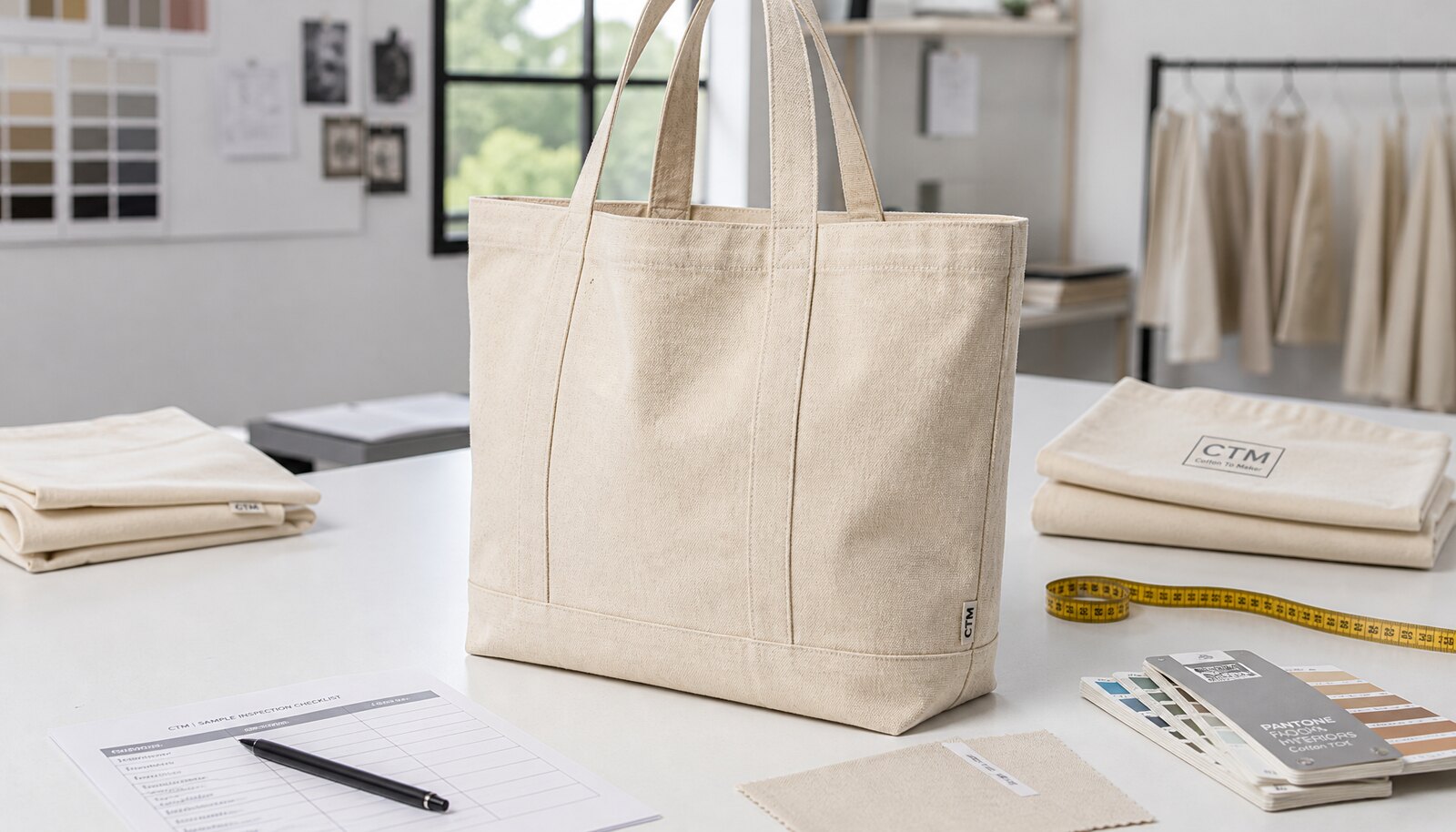
Start with the buying job, not the tote name
A request for "canvas grocery totes" sounds clear until the quotes arrive. One supplier may price a soft cotton shopper. Another may assume a structured 12 oz canvas bag with a box gusset. A third may suggest recycled cotton blend with visible fiber variation. All three can honestly call the item a canvas tote, yet they will differ in cost, hand feel, freight weight, logo quality, folding bulk, and perceived gift value.
For corporate gifting, the first decision is not fabric weight. It is the job the tote must do. A conference giveaway may need fast unpacking, low unit cost, and cartons that can move easily through a venue. A client gift may need a more substantial hand, cleaner folding, an insert card, and stronger presentation from the moment the box opens. A grocery campaign needs volume, usable gusset depth, and handle reinforcement. An employee welcome kit may need SKU separation, regional carton labels, and compatibility with other kit items.
Supplier compliance in this category has four practical parts: product specification, brand execution, supplier evidence, and delivery control. Product specification covers fabric, dimensions, construction, and practical load. Brand execution covers decoration method, logo position, color tolerance, and presentation. Supplier evidence covers the production site, material declarations, claimed certifications, and process control. Delivery control covers packing, inspection, carton marks, Incoterms, and receiving rules. When each part is measurable, procurement can compare quotes fairly and inspect the goods without arguing from memory.
- Write a one-page sourcing brief before sending artwork to suppliers.
- State the end use, destination, event date or warehouse date, target quantity, and quality level.
- Separate mandatory requirements from preferences so cost-saving suggestions do not quietly change the product.
- Ask each supplier to restate the specification in its quotation.
- Keep one controlled RFQ version with dated artwork, measurements, packing rules, and compliance requirements.
Translate the design into measurable specs
Finished dimensions need to be written in language a factory and inspector can both use. Include finished width, finished height, gusset depth, handle width, and handle drop. If the tote has a boxed bottom or side gusset, clarify how the gusset is measured. Is it the full expanded depth, or the folded side panel when the bag lies flat? This small detail causes real sourcing disputes. The buyer expects grocery volume; the supplier measures a flat panel and believes the order is correct.
Tolerances belong in the PO or technical sheet, not in a late email after inspection. For many sewn cotton bags, main body dimensions may be controlled around +/- 1 cm, while smaller details such as handle width or logo placement may need +/- 0.5 cm or another agreed tolerance. Do not make the tolerance unrealistically tight just because the number looks tidy. Cotton canvas can shrink, relax, skew, and distort during dyeing, washing, printing, sewing, pressing, and packing. A useful tolerance protects the program without setting the factory up for unnecessary rejection.
Construction details decide whether the tote feels like a gift or a disposable bag. Define top hem width, seam allowance, side-seam finish, bottom gusset style, handle attachment, reinforcement stitches, thread color, and stitch density target. For handle bases, specify bartack, box stitch, X stitch, or extended handle stitching instead of writing "strong handles." If the tote needs a bottom board, inner pocket, woven label, care label, hangtag, or branded side tab, include placement and attachment method in the technical file.
- Use a drawing with arrows for width, height, gusset, handle drop, handle width, and logo placement.
- State finished-size tolerances and the measurement method used during inspection.
- Define top hem width, seam allowance, side seam, bottom gusset, handle reinforcement, and stitch density target.
- Specify whether the tote should fold flat, stand when filled, fit a gift carton, or hold rectangular grocery items.
- Tell the supplier the approximate contents and load range so construction recommendations are grounded in real use.
Specify fabric weight, composition, and finish
Fabric is usually the largest cost driver and one of the biggest quality variables. Suppliers may quote by ounces per square yard, GSM, or loose descriptions such as "heavy canvas." Procurement should ask for both ounce weight and approximate GSM after finishing. As working references, 8 oz canvas is often around 270 GSM, 10 oz around 340 GSM, 12 oz around 400 GSM, and 16 oz around 540 GSM. These are not guarantees. Weave density, finishing, washing, moisture content, and cotton quality can make two fabrics with the same nominal weight feel different in hand.
For many corporate gifting programs, 10 oz to 12 oz canvas offers a balanced middle ground. It feels more substantial than lightweight cotton while keeping carton weight and freight more manageable than 16 oz canvas. An 8 oz tote may be acceptable for budget event handouts, especially when the bag is mainly a carrier for brochures or samples. The tradeoff is softer structure and a less premium feel. A 16 oz tote can look and feel more durable, but it adds material cost, folding bulk, sewing stress, shipping weight, and sometimes MOQ.
Composition and finish should be treated as compliance points. Natural cotton canvas may show seed flecks and shade variation. Bleached canvas gives a cleaner print background but adds processing. Dyed canvas can match a campaign palette, though MOQ and lead time often rise. Washed canvas feels softer and more relaxed, but size and shade may vary more. Recycled cotton blends may show flecks, heathering, or mixed fiber character. That can be desirable, but it should not surprise the brand team at approval time. If a supplier claims recycled, organic, OEKO-TEX, GOTS, or another certification-related attribute, ask for documentation tied to the actual material and facility scope.
- Ask whether fabric weight is quoted before or after finishing, washing, dyeing, or coating.
- Require a physical swatch before bulk approval when hand feel, shade, or print quality matters.
- Define acceptable natural flecks, slubs, shade variation, recycled-fiber variation, and odor level.
- Confirm whether the material is 100% cotton, recycled cotton blend, organic cotton, cotton-poly blend, or another composition.
- Do not print sustainability claims on marketing materials or packaging unless documents support the exact claim for the order.
Control logo and decoration risk early
Decoration is where small assumptions become very visible. Screen printing is usually a dependable option for one- or two-color corporate logos, bold typography, and solid shapes on cotton canvas. It can deliver good opacity and repeatability when ink deposit, mesh selection, drying, and curing are controlled. It is not automatically right for every design. Fine lines, small reversed text, halftones, tight registration, and large solid ink areas should be reviewed before the supplier confirms price and schedule.
Transfers and digital methods can support gradients, photographic artwork, variable names, and complex color designs. They also change the hand feel and may leave a film edge on textured canvas. Embroidery can feel premium for a small logo, monogram, patch, or side label, but large dense embroidery may pucker the fabric or distort folding. Woven labels and patches are useful when the brand mark should be subtle, or when printing on dark or textured canvas would be unreliable. Each method has different setup charges, MOQ logic, color limits, and inspection criteria.
A digital mockup is useful for alignment, not approval. It cannot show ink absorption, print opacity, edge sharpness, curing, color shift on natural canvas, or what happens when the bag is folded. For corporate gifting, request a print strike-off or decorated pre-production sample. The artwork file should specify logo dimensions, print area, distance from top seam or centerline, Pantone references if applicable, minimum line width, minimum text height, and acceptable placement tolerance. If the logo sits near a fold, seam, gusset, or handle base, test that location physically before bulk production.
- Use screen print for bold logos and repeatable solid colors when artwork is not overly detailed.
- Use transfer or digital methods for gradients, full color, or variable information, but test hand feel, edge quality, and adhesion.
- Use embroidery, woven labels, or patches for smaller premium details unless a large decorated area has been sampled successfully.
- Approve a physical strike-off under consistent lighting and keep it as the inspection standard.
- Define print placement tolerance, color tolerance, opacity expectation, rub resistance, and whether slight fabric texture show-through is acceptable.
Verify the supplier behind the quote
A compliant quote should make production responsibility clear. A direct factory, trading company, sourcing agent, or specialized bag workshop can all be suitable, but the buyer needs to know who is doing what. Ask for the production site name and address, whether printing is in-house or outsourced, where fabric is sourced, and who has authority to approve QC decisions. If the supplier cannot explain the production flow, it will be harder to manage traceability, rework, schedule risk, or branded-goods control.
Documents need to connect to the actual order. A business license, factory profile, audit summary, ISO certificate, BSCI or SMETA report, SEDEX membership reference, material declaration, or restricted-substance statement is useful only when the facility name, scope, validity date, and product type are relevant. Logos on a sales deck are not verification. If a supplier claims recycled content, organic cotton, OEKO-TEX, GOTS, or similar attributes, request the certificate or transaction-related evidence required by your internal policy. Not every tote order needs the same paperwork, but every procurement or marketing claim should be supportable.
Brand protection is part of supplier compliance. Canvas grocery totes for corporate gifting often carry recognizable marks, campaign names, executive event branding, or employee program identities. Ask how artwork files are stored, who has access, how misprints are segregated, whether overruns are prohibited from resale, and how rejected branded units are destroyed or returned. Put these rules in the PO or supplier agreement before production starts. Clear rules help the supplier act quickly when defects occur.
- Match the factory name on documents with the site producing the totes.
- Ask which steps are in-house and which are outsourced: fabric, dyeing, printing, embroidery, sewing, packing, and export handling.
- Request dated sample-room or production photos tied to your order, not only showroom images.
- Check validity dates and scope for any audit, certification, or material document claimed.
- Include rules for artwork confidentiality, overrun control, misprint disposal, and rejected branded goods.
Build an RFQ that makes quotes comparable
A strong RFQ keeps suppliers from filling gaps with different assumptions. Instead of asking for the cheapest canvas grocery tote, specify fabric, finished dimensions, construction, decoration, packing, compliance documents, inspection requirements, Incoterms, and requested delivery date. Ask suppliers to quote against the same version of the file and list deviations clearly. A low unit price does not mean much if it excludes screen charges, uses a lighter fabric, changes handle reinforcement, or assumes bulk packing when the buyer needs gift-ready folds.
MOQ is rarely one number. It may apply by fabric color, bag size, artwork version, print color count, packing style, or shipment destination. A natural canvas tote with one-color screen print may support a lower minimum than a custom-dyed tote with multiple logo versions and individual packaging. If a program needs five regional logos, the per-version MOQ matters more than the total order quantity. Ask for the MOQ logic before paying for samples.
Line-item pricing makes internal comparison cleaner. Separate the tote unit price from screen charges, embroidery digitizing, transfer setup, sample fee, strike-off fee, courier, hangtag, insert card, polybag or paper band, carton, testing, documentation, inland freight, and bank or handling fees. Ask for price validity and quantity breaks at realistic volumes only. Also state overage and under-run rules. For event gifting, a 2% shortage can be more serious than a slightly higher unit cost because every attendee, employee, or client may need the same item.
- Ask suppliers to quote to the same fabric, size, construction, logo, packing, and inspection assumptions.
- Require deviations to be written as alternates, not hidden inside the main quote.
- Break MOQ down by color, artwork, size, packing, and destination split.
- Compare total program cost, not only unit price.
- State Incoterms, currency, payment terms, price validity, and whether exact quantity is required.
Use samples as production controls
Samples should not be treated as nice-looking sales souvenirs. They are production controls. A practical approval sequence may include a fabric swatch, existing reference tote, custom sample, print strike-off, pre-production sample, packing sample, and top-of-production reference. Not every order needs every stage, but branded corporate gifting programs with fixed event dates or multiple stakeholders should not skip the pre-production sample. It should use the intended fabric, construction, decoration, labels, fold method, and packing materials.
Sample comments need to be measurable. "Make it nicer" is not an instruction. "Increase handle drop from 23 cm to 28 cm" is. "Move logo 15 mm upward" is. So are "change fabric from 8 oz to 10 oz," "increase ink opacity," "straighten top hem," and "revise fold so it does not cross the logo." Record the approved sample date, version number, artwork file name, Pantone reference, fabric weight, and any accepted deviation. If approval is remote, use photos with rulers and close-ups, but do not rely on photos for hand feel or fabric weight when the order is important.
Packing samples deserve their own approval. A tote can be well sewn and still arrive with a crease through the logo, ink transfer between stacked prints, dust from unprotected packing, or bulky folds that increase carton size. Test how the item looks after staying folded for several days. Confirm whether insert cards, hangtags, stickers, barcodes, or tissue touch the printed area. If the tote will be assembled into a kit, the packing sample should reflect the assembly workflow.
- Approve fabric, construction, decoration, labels, and packing as separate checkpoints.
- Keep one signed physical sample with the buyer and one sealed reference with the supplier when feasible.
- Treat any change in fabric lot, decoration method, sewing construction, or packing as a new approval point.
- Use the approved sample and technical sheet together; neither should replace the other.
- Do not release bulk cutting until the supplier confirms all sample comments are incorporated.
Set QC standards before production
Quality control must be defined before cutting starts. A practical plan for canvas grocery totes can include incoming fabric check, first-piece approval, inline inspection, final random inspection, and packing verification. The buyer should state the sampling method or AQL requirement, measurement tolerances, defect categories, and shipment release authority. If a third-party inspection company will be used, align the supplier on timing, access, sample pull, and reinspection cost before production begins.
Defect classification should match business risk. Critical defects may include wrong branding, wrong material, unsafe contamination, mold, severe odor, incorrect country labeling, or structural failure that makes the tote unusable. Major defects may include print placement outside tolerance, incorrect size, missing handle reinforcement, broken stitches at stress points, visible stains, mixed SKUs, wrong carton labels, or packing that damages the logo. Minor defects may include small loose threads, slight approved shade variation, or minor internal marks that do not affect presentation.
Functional checks matter because grocery totes are expected to carry things, not only photograph well. If the program has a load expectation, specify a simple test method: load the tote with the agreed weight for a defined time, then check handle bases, seams, and gusset corners. If your policy requires a handle pull test, state the method in advance. The goal for many corporate gifting orders is not laboratory certification. It is to avoid obvious failure at the event, office, warehouse, or client delivery point.
- Define critical, major, and minor defects for fabric, sewing, decoration, packing, and labeling.
- Inspect measurements for body size, gusset, handle drop, handle width, and logo position.
- Check stress points: handle bases, top hem, side seams, bottom corners, pockets, and labels.
- Verify print curing, rub resistance, ink transfer risk, edge sharpness, opacity, and registration against the strike-off.
- Require carton-level checks for quantity, SKU separation, carton marks, packing list accuracy, and destination split.
Treat packing as part of the product
Packing affects brand impression, receiving labor, damage risk, and freight cost. A tote with clean sewing can still fail operationally if it arrives with deep logo creases, mixed artwork versions, missing carton labels, excess dust, mildew odor, or cartons that are too heavy for the receiving site. Define packing in the RFQ and sample stage instead of letting the factory choose the fastest method at the end.
No-polybag packing is common for sustainability reasons, but canvas still needs protection. Cotton can absorb odor, collect dust, and pick up moisture during storage or ocean transit. If individual polybags are not allowed, consider master polybags, tissue interleaving, paper bands, inner cartons, carton liners, or agreed bundle wraps. If the print is thick or dark, confirm full curing before stacking and consider tissue or spacing to prevent mark-off. For humid routes, discuss moisture protection and whether desiccant is appropriate for carton size and transit conditions.
Carton marks should support the receiving workflow. Include PO number, SKU, tote color, artwork version, quantity, carton number, destination, gross weight, carton dimensions, and handling notes where needed. If the order ships to multiple offices, regions, event venues, or kit assemblers, carton marks and packing lists should prevent accidental mixing. Set a maximum carton gross weight that the warehouse can handle safely. Overpacking to save a small amount of space can create damage, slow receiving, and increase manual handling problems.
- Approve the fold method and confirm whether the logo should face outward, inward, or avoid fold lines.
- Define individual packing: no polybag, recycled polybag, tissue, paper band, hangtag, insert card, or bulk bundle.
- Set inner bundle quantity, master carton quantity, carton size, gross weight limit, and carton strength expectation.
- Require carton labels to show PO, SKU, artwork version, color, quantity, carton number, and destination.
- Ask for packed-carton photos and a packing pilot before full order sealing.
Plan lead time around the critical path
Lead time is not just sewing time. A realistic schedule may include supplier onboarding, fabric confirmation, swatch approval, artwork review, strike-off, sample production, courier transit, stakeholder approval, bulk fabric procurement, cutting, printing, curing, sewing, trimming, pressing, packing, inspection, rework, export documents, freight booking, customs, and warehouse receiving. A supplier may be telling the truth when they say sewing is quick. The order still is not quick if fabric, artwork, packing, or compliance documents are unresolved.
The production clock should start only when the specification is frozen and pre-production approval is complete. Changes to logo size, fabric color, print method, insert card, carton label, or destination split can reset part of the timeline. Ask for a milestone calendar that shows supplier tasks and buyer approval deadlines. This makes internal delays visible too, such as slow artwork approval, late receiving labels, or a brand team that has not signed off on the final logo size.
Work backward from the required arrival date, not the ex-factory date. If the totes will be used in a gift kit, they must arrive before kit assembly, not on the final dispatch day. Build buffer for inspection failure, rework, customs questions, freight congestion, holidays, and warehouse appointment delays. If a supplier offers an aggressive lead time, ask which steps are being compressed and what risk increases. A realistic schedule is worth more than a fast promise that depends on perfect conditions.
- Request dates for fabric reservation, sample, approval, bulk cutting, decoration, sewing, packing, inspection, ex-factory, and arrival.
- Confirm whether fabric is in stock, reserved after deposit, or purchased only after sample approval.
- Add time for physical sample courier transit and internal stakeholder review.
- Book inspection based on the packed-ready date, not the optimistic sewing completion date.
- Set a final artwork lock date and require written approval for any cost or schedule impact after that date.
Specification comparison for buyers
| Supplier option | What to verify | Commercial advantage | Buyer risk to control |
|---|---|---|---|
| Direct sewing factory | fabric swatch, approved sample, seam close-ups, logo test photos, packing pilot, and final inspection evidence | Better sample-to-bulk control and faster production feedback | May be weaker on export paperwork or branded packing unless checked early |
| Trading company | Factory name, production photos, trim-source proof, and who owns QC decisions | Can coordinate small mixed orders and extra services | Markup can hide real factory capability and slow defect decisions |
| Specialized bag workshop | bag size, gusset, handle drop, seam allowance, stitch density, reinforcement patch, and loading expectation | More practical for detailed construction, trims, and repeat programs | Capacity may be limited during peak seasons |
| Low-price general supplier | 8-12 oz cotton canvas, 120-220 gsm cotton, recycled cotton, or blended fabric selected by use case and target price | Useful for simple promotional runs with loose specs | Material downgrades, weak packing, and vague inspection scope can erase savings |
| Retail-ready supplier | fold method, inner bundle, carton count, carton mark, moisture protection, SKU separation, and warehouse receiving needs | Can handle labels, SKU separation, carton marks, and receiving rules | Higher unit cost must be compared against reduced warehouse work |
| Compliance-focused supplier | Fabric records, labeling review, test plan, and production traceability | Safer for retail programs and repeat brand orders | Documentation claims need evidence, not only sales language |
| Local sample room plus bulk factory | Signed sample, bulk factory handoff, first-piece photos, and deviation owner | Good for complex branding before large production | Sample room quality may not match bulk line unless handoff is controlled |
Buyer checklist before sampling
- State the end use: conference giveaway, employee welcome kit, client gift, retail insert, grocery campaign, event merchandise, or recurring corporate program.
- Specify finished tote dimensions: width, height, gusset depth, bottom panel if applicable, handle width, and handle drop, with written tolerances for every measured point.
- Define the measurement method: flat measurement before filling, finished measurement after sewing, and whether the gusset is measured as full expanded depth or folded side panel.
- Confirm fabric weight in ounces per square yard and approximate GSM after finishing; common references are about 8 oz/270 GSM, 10 oz/340 GSM, 12 oz/400 GSM, and 16 oz/540 GSM, but final weight must be verified by swatch or test.
- Identify fabric composition and finish: natural cotton canvas, bleached cotton, dyed canvas, washed canvas, recycled cotton blend, organic cotton, cotton-poly blend, or custom weave.
- Record acceptable shade variation, seed flecks, slubs, recycled-fiber color variation, odor level, shrinkage expectation, and whether washing, dyeing, or special finishing is included.
- Specify construction: top hem width, seam allowance, side-seam type, bottom gusset style, handle attachment method, bartack or box-stitch reinforcement, stitch density target, thread color, and optional bottom board.
- Define the functional expectation: approximate carrying load, typical contents, whether the tote must hold bottles or boxed goods, whether it should stand upright, and whether handles are shoulder-length or hand-carry.
- Lock logo details: print method, print area, logo dimensions, placement from reference seams, Pantone references, color count, minimum line width, minimum text height, and registration requirements.
- Separate MOQ by fabric color, bag size, artwork version, print color count, packing version, and destination split; do not accept only a total headline MOQ.
Factory quote questions to send
- What is the exact quoted fabric weight in ounces per square yard and approximate GSM after finishing, and what tolerance do you apply to fabric weight in bulk?
- Is the fabric stock, custom woven, dyed to order, washed, recycled, organic, blended, or substituted from available greige goods; and what is the expected lead time for the fabric lot?
- Can you send a physical swatch card from the quoted fabric lot or closest production fabric showing color, weave, hand feel, thickness, shrinkage expectation, and print-surface quality?
- What fiber composition are you quoting, and what documents can support any recycled, organic, or restricted-substance claim for this specific material?
- What finished size tolerance do you recommend for width, height, gusset, handle width, and handle drop, and how will your QC team measure these dimensions?
- What construction is included in the price: top hem width, seam allowance, stitch type, stitch density, handle reinforcement, bottom gusset method, and thread specification?
- What practical load do you recommend for this construction, and can you perform or arrange a simple handle pull or load test according to our required method?
- Which decoration method is included, and what setup charges apply for screens, plates, digital files, transfer films, embroidery digitizing, strike-offs, color matching, or curing tests?
- For our artwork, what minimum line width, minimum reversed text height, print placement tolerance, and Pantone or color tolerance do you recommend on this fabric?
- Will the sample be made with the same fabric weight, same sewing construction, same thread, same print process, same curing process, same labels, and same packing as bulk production? If not, list every difference.
Quality-control points to confirm
- Fabric weight matches the approved specification within the agreed tolerance, with no unauthorized substitution in weave, composition, finish, or color.
- Fabric surface is suitable for the approved decoration, with no excessive slubs, holes, thin sections, stains, weaving defects, visible barring, or open weave in the logo area.
- Fabric color, shade range, hand feel, seed flecks, recycled-fiber variation, washing effect, and odor match the approved reference and are acceptable under the agreed light condition.
- Finished width, height, gusset depth, bottom panel, top opening, handle width, and handle drop are within written tolerance; common finished-bag tolerances may be around +/- 1 cm for main dimensions and +/- 0.5 cm for handle width or small placement details, but the PO should state the actual rule.
- Logo size and placement match the approved strike-off and technical drawing, measured from top seam, side seam, centerline, or bottom reference point as specified.
- Print color, opacity, edge sharpness, registration, curing, rub resistance, cracking, pinholes, and ink transfer risk are checked against the approved decorated sample.
- Seam allowance, stitch density, thread color, stitch line straightness, and reinforcement method match the approved sample, with no skipped stitches, broken threads, loose thread nests, needle cuts, or seam slippage.
- Handle bases, top hem, side seams, gusset corners, bottom stress points, pockets, and label stitching are checked for structural consistency and correct reinforcement.
- Handles are cut evenly, sewn symmetrically, aligned to the bag body, and hang straight when the tote is lightly loaded.
- Top hem, side seams, bottom gusset, and side panels are balanced so the tote does not twist, lean, or distort because of uneven cutting, shrinkage, or sewing tension.