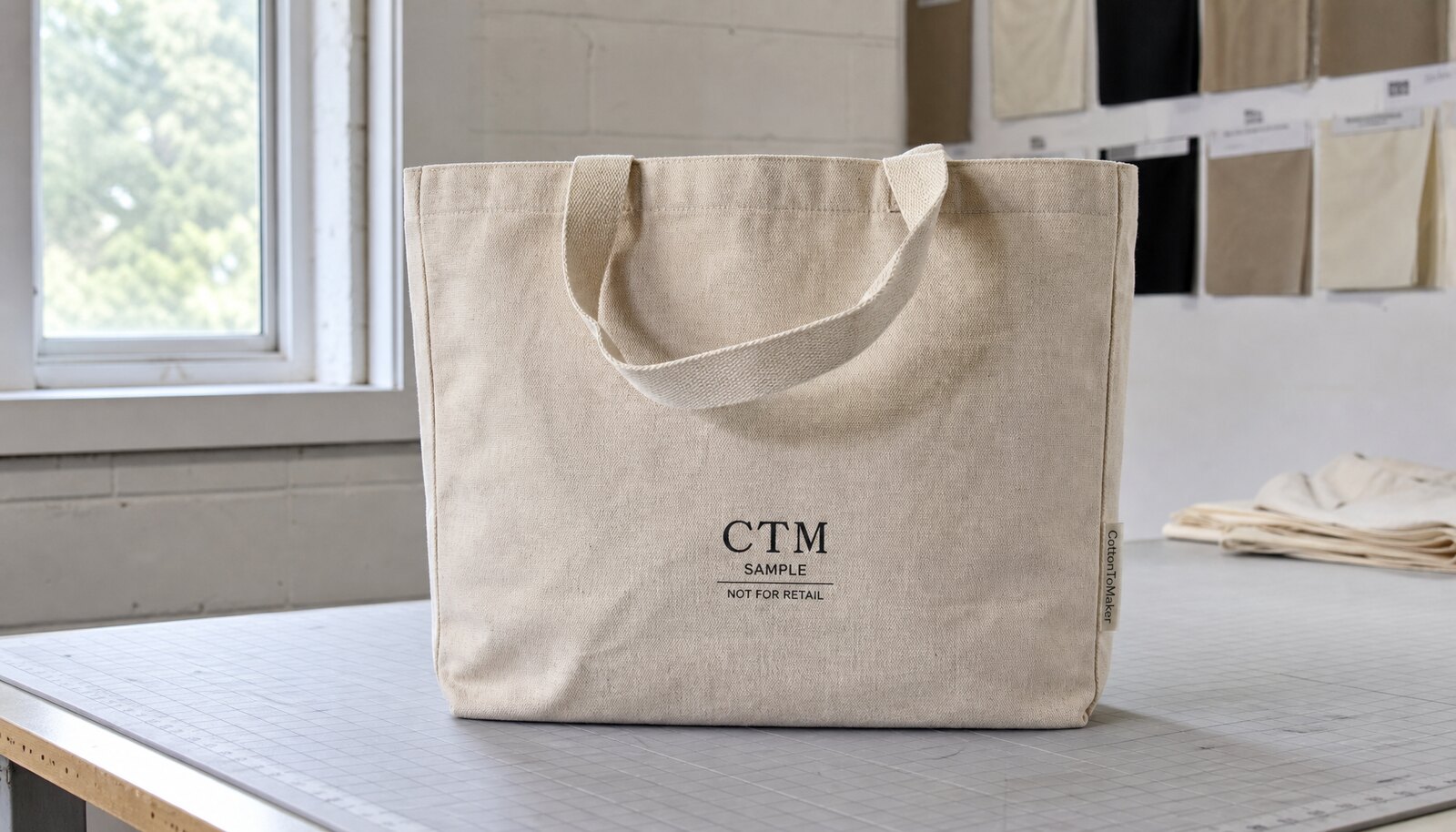
1. Start With the Distribution Use Case
A carton packing plan for canvas grocery totes for corporate gifting should start with one plain question: how will the recipient actually receive the bag? A tote handed out flat at a conference is not packed the same way as a tote going into an employee welcome kit, a direct mailer, a regional sales shipment, or a client gift displayed on a reception table. The bag may be identical, but the packing standard should not be.
This is where many RFQs get muddy. Procurement asks for a unit price before the receiving process is defined, so each supplier fills in the blanks differently. One quote may assume 50 pieces per export carton, bulk packed, with no inner bags. Another may include individual polybags, a careful fold, stronger cartons, and 25 pieces per carton. The second number looks higher until the warehouse, kitting team, or event crew explains what the first quote left out.
The use case also changes inspection priorities. Trade-show teams need clean stacks and quick unpacking. Employee mailers need dust control, fold consistency, and print rub resistance. Gift-kit assembly needs the tote to fit a secondary box without crushing notebooks, apparel, drinkware sleeves, or printed inserts. Multi-location programs need carton labels that let receiving teams route cartons without opening every box.
For sourcing clarity, describe the channel in operational language. Event handout usually means bulk pack or simple folded stacks. Executive gift usually needs a neater fold and cleaner inner packing. Direct mail often needs individual protection and tighter count control. Gift kits need exact folded dimensions. Multi-destination rollouts need destination labels and single-SKU cartons unless mixed cartons are intentionally designed.
- State the final distribution method before asking for pricing: event table, office drop, employee mailer, gift kit, retail-style display, or multi-location delivery.
- Tell the supplier whether the tote should arrive flat, folded once, folded into thirds, individually bagged, tissue wrapped, belly banded, or ready for kitting.
- Define whether cartons should be single-SKU, mixed by destination, or packed as controlled assortments for kit assembly.
- Share warehouse rules early, including maximum carton gross weight, pallet height, labeling format, appointment delivery needs, and whether cartons will be hand-carried.
- If the tote goes into another box, provide the inner box dimensions and ask the factory to test the approved fold before bulk packing.
2. Turn the Tote Into a Measurable Specification
Canvas tote pricing only becomes comparable when the construction is fixed. For grocery-style corporate gifting totes, define finished body width, finished body height, gusset depth, handle width, handle drop, fabric weight, fabric color, top hem, side seam, bottom seam, and handle reinforcement. A small adjustment to any of these details can change material usage, sewing time, carton count, and the way the gift feels in hand.
Use finished dimensions after sewing, not only cut panel dimensions. Phrases such as large grocery tote or standard canvas tote do not control cost or quality. A stronger RFQ says something closer to: finished size 38 cm W x 40 cm H x 12 cm gusset, cotton web handles 3 cm wide, handle drop 25 cm, 10 oz / approximately 340 GSM canvas, 2.5 cm top hem, reinforced handle box stitch. The numbers can be different, but the format should be measurable.
Tolerances belong in the RFQ, not in a late inspection argument. Practical commercial starting points for sewn promotional bags are around ±1 cm for body width and height, ±0.5-1 cm for gusset depth, ±1 cm for handle drop, ±3-5 mm for simple print placement, and ±5% for fabric GSM. These are not universal standards, but they are useful anchors for negotiation. If the tote must fit a kit box, either tighten the tolerance or allow more clearance in the box.
Handles deserve their own line in the specification. Cotton web handles are familiar and comfortable for grocery-style use. Self-fabric handles can look cleaner, but they add folding bulk. Wider handles spread weight better and may improve perceived quality, though they can change sewing labor and top-fold behavior. Handle drop should be measured from the finished top edge of the bag to the highest point of the handle opening. Shoulder length is a style note, not a measurement.
- Specify finished body width, height, gusset, handle width, handle drop, fabric weight, canvas color, top hem, seam type, and reinforcement.
- Use both ounce and GSM references where possible, such as 10 oz / about 340 GSM or 12 oz / about 400 GSM, because suppliers may quote in different systems.
- Ask whether handles are cotton webbing, self-fabric, dyed webbing, natural webbing, or another material, and confirm exact width and length.
- Replace vague words like strong with measurable construction: box stitch, cross stitch, bartack, stitch density, seam allowance, and top hem width.
- List tolerances in the RFQ and PO so inspection teams know how to judge bulk production fairly.
3. Choose Fabric, Color, and Claims Carefully
Natural canvas is often the easiest choice for corporate grocery totes. It works with many logo colors, has a familiar promotional look, and usually keeps the approval process shorter than dyed fabric. Still, natural canvas is not one fixed shade. Yarn lot, finishing, washing, and fabric weight can shift the tone from warm cream to a cooler grey natural. For repeat orders, ask how shade continuity will be managed and whether fabric can be reserved from the same lot.
Fabric weight affects both recipient experience and carton planning. A 10 oz / approximately 340 GSM canvas is a practical baseline for many corporate gifting programs because it balances hand feel, cost, and cube. A 12 oz / approximately 400 GSM canvas feels more substantial and may suit heavier inserts or grocery-style reuse. Heavier is not always better. It increases folded thickness, carton gross weight, CBM, and sometimes makes the fabric texture more visible through the print.
Dyed canvas can strengthen brand alignment, but it adds production risk. Approve a lab dip before bulk dyeing, and define the viewing condition if color is critical. Dark dyed fabric may need an underbase or a different print method for light logos. Bright brand colors can shift on cotton canvas because the base fabric tone, dye recipe, and finishing process all influence the final result. The quote should say whether lab dips, bulk dye minimums, and colorfastness checks are included.
Be precise with sustainability language. A natural-looking tote is not automatically organic, recycled, unbleached, certified, or lower impact. If the program requires organic cotton, recycled cotton, azo-free dye, OEKO-TEX-related documentation, GOTS-related documentation, or another claim, put that requirement in the RFQ. Ask which certificate covers which part of the supply chain: yarn, fabric, dyeing mill, sewing factory, or finished product.
- Use natural canvas when lead time, broad logo compatibility, and classic promotional styling matter more than exact bag color.
- Use dyed canvas only after confirming MOQ, lab dip lead time, shade tolerance, print opacity, and colorfastness expectations.
- Ask for a swatch or sample panel from production-equivalent fabric, not only a photo or generic stock swatch.
- Agree GSM tolerance in writing and check production fabric rolls before cutting.
- If sustainability claims matter, request specific documents or material declarations and define how claims may be used on packaging or marketing copy.
4. Match Decoration to Folding and Handling
For many canvas grocery totes in corporate gifting, screen print remains the most predictable decoration method for one-color or two-color solid logos. It is efficient at scale, visually clean on simple artwork, and straightforward to inspect against a signed sample. Its weak point is fine detail. Canvas texture can break up small type, thin lines, and tight registration, especially on heavier or coarser weaves.
Transfer print can be useful for gradients, multi-color artwork, short runs, or logos that do not screen print well. Review more than the flat appearance. Check hand feel, edge adhesion, flexibility, and behavior after folding. Some transfers look crisp on an open tote but feel plasticky or show stress where the bag is folded. If the tote will be packed tightly, mailed, or handled several times before distribution, the approval sample should be folded, stacked under pressure, and rubbed before sign-off.
Woven labels, side labels, and patches suit programs that want the gift to feel reusable rather than purely promotional. They create a smaller, more durable brand mark and avoid a large front-panel print. They also add inspection points: label color, orientation, position, stitch quality, fraying, and whether a patch leaves pressure marks on the next bag in the carton.
Artwork placement should be measured from finished bag edges. A digital mockup is helpful, but it is not enough. Define logo width and height, distance from the top edge, distance from side edge or centerline, print side, and orientation. Keep artwork away from the top hem, handle stitching, gusset folds, and seam distortion unless the design intentionally uses those areas. If the carton fold crosses the logo, approve the printed bag after folding, not only while it is open.
- Use screen print for solid corporate logos, larger production runs, and straightforward color control.
- Use transfer print for gradients, detailed graphics, or shorter runs, but test fold lines, rubbing, edge lift, and hand feel.
- Use woven labels or patches when the brand mark should be subtle, durable, or premium for repeated reuse.
- Specify print size, position, side, number of colors, artwork revision, and acceptable color reference in the PO.
- For PMS matching, agree a reasonable tolerance because canvas base color and weave affect the final visual result.
- Add a handling check to sample approval: fold the printed tote as packed, stack under pressure, rub the print area with light friction, and check for cracking, tackiness, or ink transfer.
5. Treat the Carton Plan as Part of the Product
The carton plan is not a shipping footnote. For canvas grocery totes for corporate gifting, it affects freight cube, carton count, warehouse labor, damage risk, inspection accuracy, and recipient presentation. A complete carton packing plan states fold method, inner packing, pieces per carton, carton dimensions, net weight, gross weight, carton board grade, sealing method, carton marks, pallet requirements, and whether cartons are single-SKU or mixed.
Piece count should come from actual folded thickness and weight. A 50-piece carton may work for a lightweight flat tote. The same count may be too bulky for a 12 oz gusseted tote with individual polybags. Many buyers set a maximum gross carton weight in the range of 12-18 kg for repeated manual handling, but the correct number depends on warehouse rules and local safety requirements. Ask for estimated gross weight, not just pieces per carton.
Compression is a quality issue, not just a freight issue. Overfilled cartons can create hard creases, pressure marks, distorted handles, crushed patches, or print blocking if ink is not fully cured. Underfilled cartons can collapse during stacking and waste cube. The practical answer is a carton pack trial using the approved tote, fold, inner packing, and carton count.
Carton marks should be written for the people receiving the goods. At minimum, include PO number, SKU or item code, product description, color, artwork version, quantity, carton number, total cartons, net weight, gross weight, carton dimensions, and destination when applicable. For multi-location programs, destination-coded carton labels can prevent costly sorting. If mixed cartons are necessary, the carton label and packing list should show the exact contents.
- Approve the fold method before bulk packing, especially when logo appearance, kit-box fit, or retail presentation depends on it.
- Set pieces per carton together with a maximum gross weight and carton dimensions rather than accepting an arbitrary 25 or 50 pcs/carton.
- Request carton dimensions, net weight, gross weight, and estimated CBM before final supplier selection and freight booking.
- Use export-grade cartons appropriate to the route, stacking height, palletization, and number of warehouse touchpoints.
- Require clear shipping marks with PO number, SKU, quantity, carton sequence, destination, and artwork version.
- Ask for sealed carton photos, carton-mark photos, and at least one random carton opening photo before shipment release.
6. Approve Samples Before Bulk Production Moves
A physical pre-production sample is essential when the tote is a visible corporate gift. Digital artwork approval confirms layout intent, but it cannot prove canvas hand feel, print texture, handle comfort, seam strength, fold thickness, or carton fit. The sample should use production-equivalent fabric, the correct handle, approved print method, correct label or patch, and the same construction planned for bulk. If a supplier uses a substitute blank for speed, treat it as a concept sample.
A representative carton pack sample matters when presentation, count, or freight cube matters. You may not need a full master carton shipped internationally, but the factory should run a pack trial with the actual fold, inner bag, carton count, carton size, carton marks, and gross weight. Photos can support review. For high-value programs or fixed event dates, a physical packed sample or third-party inspection of the pack trial may prevent avoidable repacking.
Approval records should be specific enough for production and inspection teams to follow. Keep one signed sample for construction and measurements and another reference for print color and placement if needed. Record fabric GSM, finished dimensions, handle drop, top hem width, print position, logo size, approved color reference, fold method, carton count, carton dimensions, and tolerances. If anything changes after approval, issue an updated approval record.
Include a simple use simulation. Put the expected contents inside the tote, carry it briefly, fold it as planned, stack several pieces, and check the handles, print, seams, and fold recovery. This does not replace laboratory testing, but it catches mismatches between the sourcing spec and the real gifting scenario.
- Separate concept sample approval from true pre-production sample approval.
- Approve fabric, construction, print, handle, labels, fold, inner packing, and carton plan as connected parts of one product.
- Measure the sample and record actual dimensions, not only the supplier's written target.
- Keep approved samples accessible for inspection teams, warehouse receiving, and repeat-order comparisons.
- If a sample is approved with comments, require the supplier to confirm every correction in writing before bulk production starts.
7. Define QC, AQL, and Defects Early
Quality control works best when the checklist is agreed before production starts. For canvas grocery totes, inspection should cover fabric receipt, cutting, sewing, printing, packing, and final release. The aim is to catch problems while they can still be corrected. Wrong handle drop found on the first sewn pieces is manageable. Wrong handle drop found after every carton is sealed is a far more expensive problem.
Fabric checks should cover GSM, shade, weave defects, slubs, stains, oil marks, odor, and roll-to-roll consistency. Sewing checks should cover finished dimensions, seam alignment, top hem, stitch density, loose threads, handle position, handle reinforcement, and skipped stitches. Printing checks should cover placement, size, color, opacity, sharpness, curing, tackiness, rubbing, and blocking. Packing checks should cover fold, carton count, carton mark, carton condition, and packing-list accuracy.
AQL inspection provides a formal sampling structure, but it only works if defect categories are clear. Many soft goods buyers use common general inspection levels and define critical, major, and minor defects by brand risk. The exact AQL level should be set by the buyer or inspection provider. The classification matters: a needle fragment, mold, wrong logo, or unsafe contamination is critical. A front-panel stain, wrong handle length beyond tolerance, poor print adhesion, or short carton is major. A small trimmed-thread issue or minor natural slub outside the main print area may be minor if agreed.
Do not ignore carton-level QC. A well-sewn tote can still create a distribution problem if cartons are mislabeled, mixed incorrectly, short-counted, overpacked, wet, or weakly sealed. Random carton openings after packing should confirm SKU, count, color, logo version, inner packing, fold, and physical condition. Shipment release should wait until carton totals match the packing list.
- Define critical, major, and minor defects before inspection rather than debating after goods are packed.
- Check GSM and shade from bulk fabric rolls, not only from the approved sample.
- Inspect first production pieces for body size, handle drop, reinforcement, print position, and print curing before full production continues.
- Open random sealed cartons after packing to verify count, SKU, color, logo version, fold, inner packing, and carton marks.
- Ask for a QC report with measurement tables, defect photos, carton photos, carton weight checks, and the inspector's release recommendation.
- Hold shipment release until packing-list totals, carton marks, and physical carton counts agree.
8. Compare Quotes by Landed and Distribution Cost
The lowest FOB unit price is not automatically the best procurement result. Canvas grocery totes are bulky relative to unit value, so carton dimensions, CBM, packing density, gross weight, and warehouse labor can change total landed cost quickly. A supplier with a slightly higher unit price may still be the better option if the carton plan is cleaner, the goods need less rework, and receiving teams can route cartons without opening everything.
A useful quote breaks out the main cost drivers: tote body, printing, setup charges, screen charges, sample charges, sample freight, labels or patches, hangtags, individual packing, master cartons, palletization, inspection support, document fees, and shipping basis. If the supplier gives one bundled number, ask what is included and excluded. Procurement needs to know whether the price assumes natural canvas or dyed canvas, screen print or transfer, bulk pack or polybag, 25 or 50 pcs/carton, FOB or DDP.
Landed cost should also include downstream handling risk. If cartons arrive mixed without clear labels, a destination warehouse may spend hours sorting. If goods are overpacked and heavily creased, the buyer may need steaming, repacking, or manual inspection. If carton strength is weak, re-cartoning may be required before redistribution. These costs are invisible in a sample photo but very real at volume.
For DDP quotes, confirm the assumptions behind the delivered number. Ask which HS code, duty rate, freight mode, delivery address, fuel surcharge, commercial delivery condition, appointment fee, liftgate fee, and customs responsibility are included. DDP can simplify a one-off corporate gift order, but it reduces visibility. Experienced importers may prefer FOB to control freight, insurance, brokerage, and delivery timing.
- Compare unit price, setup fees, sample cost, packing cost, carton cost, freight cube, duty assumptions, and receiving labor together.
- Ask each supplier to quote the same Incoterm, port, currency, carton plan, overrun tolerance, and lead-time start point.
- Request carton dimensions and estimated CBM before supplier selection because tote programs are often cube-sensitive.
- Include destination rework risk when comparing bulk pack, polybag, and gift-ready packing.
- For DDP offers, ask which charges are included and which delivery events trigger extra cost.
9. Plan Lead Time Around Real Production Steps
Lead time should be counted from the point when the supplier has approved artwork, approved sample, confirmed packing plan, deposit or payment milestone, and any required labels or documents. Counting from the inquiry date creates false confidence. Canvas tote production looks simple, but delays often come from artwork revisions, lab dip approval, print screen preparation, transfer sheet production, packing material availability, carton labeling, inspection scheduling, or export booking.
The schedule should separate artwork proofing, sample development, sample shipping, buyer review, bulk material preparation, cutting, sewing, printing, curing, trimming, folding, packing, inspection, and ex-factory release. Dyed canvas adds lab dip and bulk dyeing time. Woven labels or patches add label sampling and production time. Gift kits add fit testing with the other components. Each step needs an owner and an approval date.
Printing and packing often become bottlenecks. Screen-printed totes need enough curing time before tight folding and carton pressure. Packing teams need time to trim threads, fold consistently, insert polybags, count pieces, apply carton marks, weigh cartons, and stage goods for inspection. A factory can finish sewing on time and still miss the shipment window if packing is treated as a last-day task.
Split shipment can protect urgent event dates, but only when planned intentionally. A buyer may air ship a small priority quantity for the first event and sea ship the balance. That works best when carton dimensions, gross weights, destination labels, and priority quantities are confirmed. Without accurate packing data, the air portion can become expensive, incomplete, or difficult to route.
- Ask for lead time after sample and artwork approval, not only after order placement.
- Break the timeline into proofing, sampling, material, cutting, sewing, printing, curing, packing, inspection, and export release.
- Add buffer for buyer artwork changes, lab dip review, national holidays, raw material delays, port congestion, and inspection rework.
- Confirm packing materials and export cartons are ready before bulk goods come off the sewing line.
- Use split shipment only with confirmed carton dimensions, priority quantities, carton labels, and destination requirements.
10. Write RFQs That Force Comparable Answers
A strong RFQ for canvas grocery totes for corporate gifting is specific enough that multiple suppliers answer the same question. Include intended use, quantity, finished dimensions, fabric weight, color, handle construction, print method, artwork file, branding placements, inner packing, master carton plan, maximum gross weight, inspection expectation, Incoterm, destination, and required delivery date. The goal is not paperwork. The goal is quote comparability.
Ask suppliers to identify deviations and assumptions. If they cannot meet the requested carton count, they should propose an alternative with carton dimensions, net weight, gross weight, and CBM. If the artwork is not suitable for the requested print method, they should recommend another method and state the cost impact. If MOQ changes for dyed canvas, woven labels, patches, individual polybags, or palletization, those thresholds should be visible before the PO is issued.
Avoid vague terms such as premium, strong, eco-friendly, large, standard, and gift-ready unless each term is defined. Premium may mean heavier fabric, better stitching, cleaner folding, a woven patch, or stronger carton depending on the supplier. Convert preferences into measurable requirements. Instead of gift-ready, write: folded to approximately 22 cm x 28 cm, inserted in individual recyclable polybag if available, 25 pieces per export carton, carton marked by destination and PO.
The purchase order should carry the same detail as the RFQ and approval record. Important requirements should not live only in email threads. The PO, artwork approval, pre-production sample approval, packing approval, and inspection checklist should all tell the same story. That is how a simple tote purchase becomes a controlled B2B procurement program instead of a logo-on-bag transaction.
- Send one spec sheet, one artwork file, and one packing target to every supplier.
- Ask suppliers to quote the requested specification and list any deviation line by line.
- Define finished dimensions, tolerances, fabric weight, handle drop, reinforcement, print placement, and carton plan.
- State artwork revision, print size, print side, color reference, and print method.
- Require carton dimensions, pieces per carton, gross weight, net weight, CBM, and carton marking layout in the quote.
- Ask for excluded costs, including screens, sample freight, labels, polybags, palletization, inspection support, certificates, and document fees.
Specification comparison for buyers
| Procurement decision | Recommended specification | When it fits | Buyer risk to verify |
|---|---|---|---|
| Direct factory vs trading company | Use a direct factory or a clearly managed production partner when cutting, sewing, printing, packing, and inspection must follow one controlled specification. | Repeat corporate gifting programs, custom dimensions, strict carton marks, fixed delivery dates, or orders where packing consistency affects distribution. | Confirm who physically cuts, sews, prints, packs, and signs QC records. A showroom sample does not prove bulk production control. |
| Blank stock vs custom production | Use blank stock only for urgent, simple logo jobs. Use custom production when size, fabric weight, handle drop, color, fold method, or carton plan must be controlled. | Blank stock fits short lead times and small campaigns. Custom production fits brand kits, multi-location rollouts, retail-style gifts, and annual repeat buys. | Stock lots may vary in canvas shade, GSM, handle length, fold method, carton count, and inventory availability. |
| 10 oz / about 340 GSM vs 12 oz / about 400 GSM canvas | Specify fabric by both ounce and GSM reference, with a written tolerance such as ±5% unless the supplier proposes another agreed standard. | 10 oz / 340 GSM suits many standard corporate gifts. 12 oz / 400 GSM suits heavier inserts, grocery-style reuse, and a more substantial hand feel. | Heavier fabric improves perceived substance but increases folded thickness, carton gross weight, freight cube, and sometimes print texture visibility. |
| Natural canvas vs dyed canvas | Use natural canvas for shorter approval cycles and classic promotional styling. Use dyed canvas only with lab dip approval, shade tolerance, and print-opacity review. | Natural canvas fits broad gifting programs. Dyed canvas fits campaigns where bag color is part of brand value. | Dyed canvas can require higher MOQ, longer fabric preparation, colorfastness checks, and bulk shade control across rolls. |
| Screen print vs transfer print vs woven patch | Use screen print for one to two solid colors, transfer for gradients or small runs, and woven label or patch for a durable lower-profile brand mark. | Screen print fits bulk corporate logos. Transfer fits detailed artwork. Woven labels and patches fit premium reusable gifts. | Check curing, blocking, rub resistance, edge sharpness, registration, patch stitch quality, and whether canvas texture breaks up small type. |
| 25 pcs/carton vs 50 pcs/carton | Set pieces per carton from actual folded thickness, inner packing, carton size, and maximum gross weight, not habit. Common planning ranges are 25-50 pcs/carton. | 25 pcs/carton is safer for heavier gusseted totes, individual polybags, or premium folds. 50 pcs/carton can work for lighter flat-packed totes. | High counts can crush top layers, create hard creases, exceed warehouse handling limits, or distort freight estimates. |
| Individual polybag vs bulk pack | Use individual polybags only when cleanliness, direct mail handling, kit assembly, or retail-style presentation requires it. | Polybagging fits employee mailers, gift kits, and cartons opened at multiple sites. Bulk pack fits simple event handouts. | Unnecessary polybags add material, labor, cube, and sustainability concerns. Missing polybags may cause dust, moisture, or transfer claims. |
| Pre-production sample vs photo approval | Approve a physical pre-production sample and a representative carton pack sample before bulk production. | Important for fixed event dates, exact print placement, special folds, kitting, carton gross weight limits, or multi-destination labels. | Photo approval cannot verify canvas hand feel, handle comfort, print texture, actual fold thickness, or carton compression. |
| AQL inspection vs informal checking | Use a written inspection checklist and AQL sampling plan when quantities, destinations, or brand standards justify formal release control. | Useful for corporate gifting programs where defects, wrong counts, or carton-label errors create downstream sorting cost. | AQL only works if critical, major, and minor defects are defined in advance with measurable tolerances. |
Buyer checklist before sampling
- Define the final distribution method: trade-show handout, office drop, employee mailer, retail-style gift, sales kit, or gift-kit assembly.
- Lock finished body width, height, gusset depth, handle width, handle drop, fabric weight, canvas color, top hem width, seam type, and reinforcement before requesting price.
- State whether the bag is natural canvas, dyed canvas, washed canvas, recycled cotton blend, organic cotton, or another material claim, and ask what documentation supports it.
- Specify fabric weight as oz and GSM reference, and agree a bulk fabric tolerance, commonly around ±5% unless a different standard is approved.
- Define measurement tolerances for finished bag body, gusset, handle drop, print size, and print placement before approving samples.
- Specify print method, artwork revision, logo size, print position from finished edges, number of print sides, number of colors, and color matching method.
- Set reinforcement expectations: handle box stitch, cross stitch, bartack, stitch density, seam allowance, top hem, bottom seam, and whether bottom reinforcement or insert is required.
- Choose bulk pack, individual polybag, tissue wrap, belly band, insert card, hangtag, or gift-ready fold according to the actual distribution channel.
- Specify carton pieces, target carton dimensions if known, maximum gross weight, carton board strength, tape method, export marks, pallet pattern, and destination labels.
- Ask for a physical pre-production sample and a representative carton pack sample using the same fabric, print, fold, inner packing, carton count, and carton marks planned for bulk.
Factory quote questions to send
- Are you the factory that cuts, sews, prints, and packs these canvas grocery totes, or will any process be subcontracted? If subcontracted, which process and who controls QC?
- What is the MOQ for blank natural canvas, printed natural canvas, dyed canvas, washed canvas, and gift-ready packed totes at 10 oz / 340 GSM and 12 oz / 400 GSM?
- What finished size, gusset, handle width, handle drop, top hem, seam construction, stitch density, and reinforcement are included in the quoted unit price?
- What bulk fabric GSM tolerance do you use, and will GSM be checked from production fabric rolls before cutting?
- What measurement tolerances do you apply for body width, body height, gusset depth, handle drop, print size, and print placement?
- Which print method is included, what logo size is assumed, and what setup fee applies per color, side, screen, transfer sheet, woven label, patch, or embroidery program?
- For dyed canvas, what is the lab dip lead time, bulk shade tolerance, minimum dye lot, and colorfastness test method you can support?
- What carton size, pieces per carton, net weight, gross weight, carton board grade, and sealing method do you recommend for this exact tote, fold, and inner packing?
- Can you prepare a physical pre-production sample and a representative carton pack sample using the exact fabric, print, handles, labels, fold, inner packing, and carton count planned for bulk?
- What overrun or underrun tolerance do you work to, how is it approved, and how is the final invoice adjusted?
Quality-control points to confirm
- Bulk fabric weight matches the agreed GSM or ounce target within the written tolerance and is checked from production fabric rolls, not only from sample yardage.
- Canvas color, weave, hand feel, odor, staining, and visible defects match the approved sample or approved lab dip within an agreed commercial tolerance.
- Finished dimensions stay within tolerance for body width, body height, gusset depth, top hem width, handle width, and handle drop.
- Stitching is straight and secure, seam ends are backtacked or locked, bartacks or box stitches are consistent, and loose threads are trimmed before packing.
- Handle attachment is symmetrical, reinforced as approved, and checked with a practical pull or static load test appropriate to the intended gift contents.
- Print position, print size, PMS or approved color reference, edge sharpness, opacity, coverage, and registration match the signed sample and artwork approval.
- Print surface is dry and cured, with no blocking, cracking, peeling, tackiness, odor, or ink transfer after normal folding and carton pressure.
- Labels, woven patches, hangtags, care labels, side labels, belly bands, and insert cards are in the correct position, orientation, and version.
- Individual polybags, tissue, belly bands, inserts, or other inner packing match the approved pack method and do not deform, stain, or trap moisture against the tote.
- Carton count, SKU label, PO number, artwork version, color, destination, carton sequence, net weight, gross weight, and packing list match the physical carton contents.