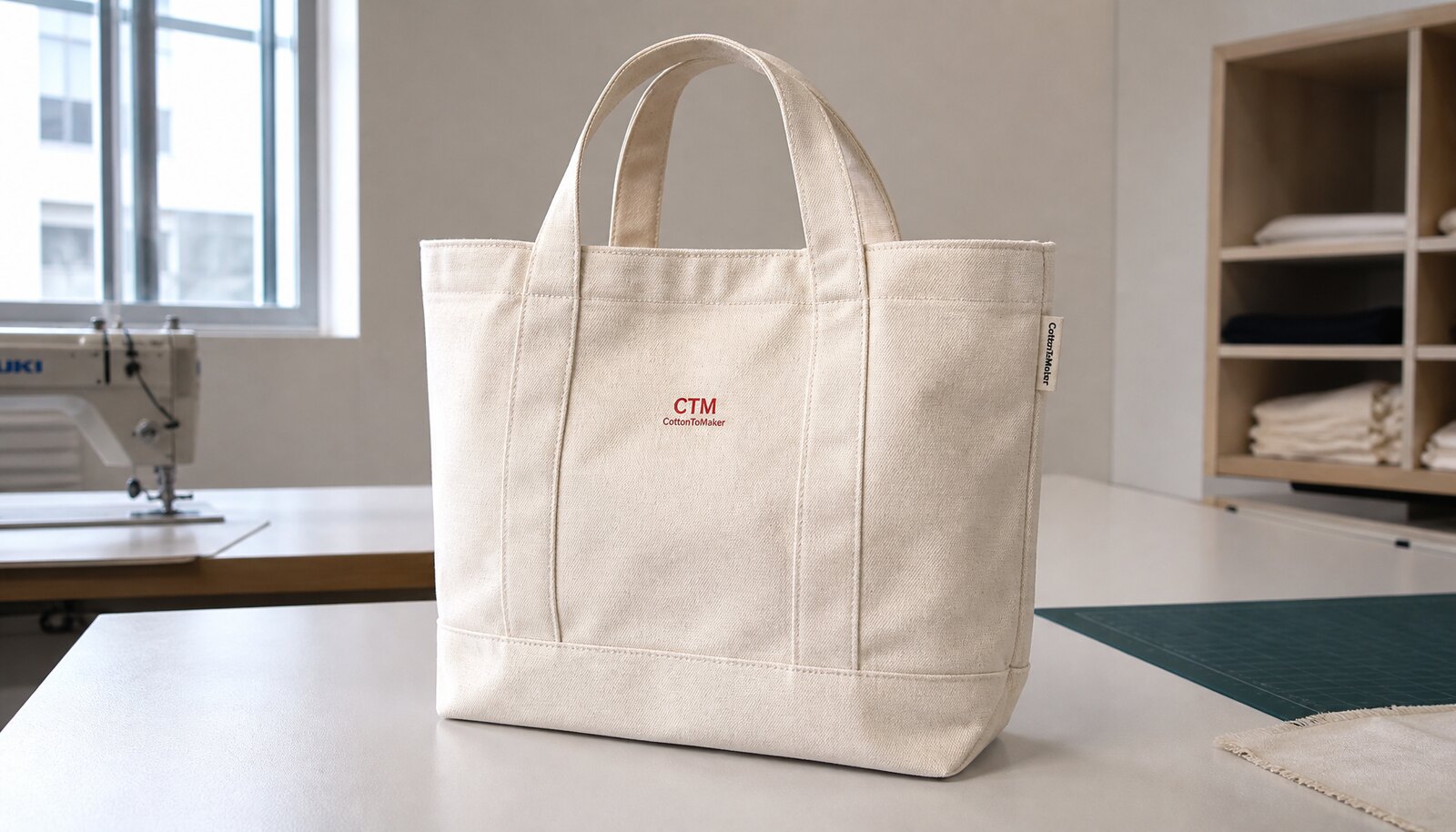
Start With the Pricing Model, Not the Logo
The fastest way to get useless quotes on canvas grocery totes is to lead with the logo and ignore the build. Bulk price is driven first by fabric weight, then by panel size, handle construction, print method, packing, and the country route. A simple one-color tote in 8 oz canvas and a structured 12 oz tote with reinforced handles can look similar in a mockup and still belong to different cost bands. If a supplier gives you one number without breaking those pieces out, you cannot tell whether the quote is competitive or just incomplete.
For corporate gifting, the real question is not the cheapest tote. It is the cheapest tote that still arrives clean, consistent, and presentable. Most buyers should compare the same size, same stitch count, same print placement, and same pack plan before they compare unit price. If you compare a flat 8 oz stock blank against a custom 12 oz sewn tote, you are not comparing suppliers. You are comparing two different products.
- Treat fabric weight, print colors, and packing as separate price drivers.
- Ask whether the quote assumes ex-works, FOB, or delivered pricing.
- Use one approved spec across every supplier so the price gap is real.
Choose the Fabric and Build That Fit the Gift Program
For canvas grocery totes, 8 oz to 10 oz canvas is the usual starting point for gift programs that need a clean hand feel and an affordable bulk price. Around 270 to 340 GSM works well for lightweight to medium-duty grocery use. Move to 12 oz or about 400 GSM when the tote must feel premium, hold shape better, or support heavier contents without looking soft and underbuilt. A thick canvas is not always better; it is only better when the brand wants a more durable presentation and can absorb the extra sewing and material cost.
The build should match how the tote will be used. Flat tote bodies are cheaper and pack smaller. A gusset adds usable volume and usually improves the perceived quality for retail or gifting. Long handles are more versatile for shoulder carry, but they change fabric consumption and may need stronger reinforcement. If the tote will be inserted into a welcome kit, leave enough room for the contents and do not over-spec the body depth just to improve the sample appearance.
- 8 oz to 10 oz canvas suits mass gifting and simple logo programs.
- 12 oz canvas fits heavier content or a more premium brand presentation.
- Gussets increase usefulness but also raise fabric and sewing cost.
- Specify handle width, drop length, and reinforcement at the start.
Pick the Print Method for the Artwork, Not for Habit
For bulk pricing, screen print is usually the benchmark because it is repeatable, fast, and economical for one to three solid colors. It holds up well on canvas when the ink and curing are managed correctly. Water-based or discharge-style inks can give a softer hand feel, but the finish depends on the fabric color and the printer’s control of curing. Heat transfer is useful when the artwork is detailed or the order is too small to justify screen setup, but it usually costs more and can create a less textile-like finish. Embroidery can work for a small mark, but it is not the default for a grocery tote because it adds labor and can distort lighter canvas panels.
The artwork file should be prepared for factory use, not just for a website. Supply vector art, clear Pantone references if color matching matters, and exact print placement measured from the seam or top edge. If the logo sits too close to a seam, the printer may need to shift it during setup and the final piece can look misaligned even when it technically passes. A clean RFQ should specify whether print is one side, both sides, or a small woven label plus one printed panel.
- Use screen print for simple logos and bulk runs.
- Use heat transfer only when detail or short-run volume justifies it.
- Give the supplier exact placement dimensions from fixed bag landmarks.
- State whether the reference color is Pantone, CMYK, or sample-matched.
Use MOQ Logic That Reflects the Real Production Setup
MOQ is not a random number. It usually comes from fabric minimums, print setup time, labor efficiency, and carton pack economics. A factory may quote a lower price at 3,000 pcs because the print screens, cutting layup, and sewing line are running efficiently. The same factory may still accept 500 pcs, but the unit price climbs because setup cost is spread over fewer bags. For corporate gifting, the right MOQ is the one that matches the campaign size and your repeat-order expectation, not the lowest threshold a supplier is willing to say yes to.
Different sourcing routes serve different MOQ needs. Stock blank plus local print is often the cleanest option under 500 pcs if the bag size is standard and the brand can accept a generic canvas weight. Full custom cut-and-sew makes more sense once the order is large enough to justify fabric reservation and decoration setup. If the supplier pushes a very low MOQ without explaining where the material comes from, assume they are quoting stock goods or mixing construction methods.
- Under 500 pcs usually favors stock blanks or short-run decoration.
- 500 to 3,000 pcs is where setup fees matter most in the quote.
- Above 3,000 pcs, repeatability and fabric reservation become more important than novelty.
- Do not accept MOQ without knowing what cost element it protects.
Demand a Quote You Can Compare Line by Line
A usable factory quote should separate the product into a few visible lines: fabric, cutting and sewing, printing setup, unit print cost, packing, and carton export prep. If the supplier gives one all-in number, you lose the ability to see whether a cheaper quote is only cheaper because it excluded packing or used a lighter canvas. For example, a quote for a 10 oz tote should clearly state the finished size, handle length, print colors, inner pack count, master carton count, and the incoterm being used. That is the minimum needed to compare two offers fairly.
When the line items are visible, quote gaps become easier to explain. A higher price can be justified by heavier fabric, stronger handles, better carton packing, or a tighter print tolerance. A lower price may simply mean the supplier assumed a smaller tote, a looser weight tolerance, or no individual bag packing. For procurement, the job is to remove ambiguity before the first sample is made, because ambiguity later becomes chargebacks, rework, or rush freight.
- Require separate lines for sample, setup, bulk unit price, and packing.
- Make the supplier state what is excluded, not only what is included.
- Compare quotes only after the spec sheet is identical across vendors.
- Ask for an itemized proforma, not a marketing summary.
Approve Samples Against Production Reality
Samples should be judged like production pieces, not like showroom pieces. A clean sample that cannot be repeated is a bad sample. Check the actual canvas weight, panel alignment, stitching at the handle top, seam trim, and whether the print sits where the RFQ said it would sit. If the sample uses a special fabric lot or a hand-finished print process that will not be used in bulk, it should be flagged and replaced with a true pre-production sample before order release.
For acceptance, set a few practical thresholds. The tote should match the approved dimensions, carry the intended load without handle stretch, and show no print smudging after curing. If your brand cares about shelf appearance, ask for a side-by-side comparison of two or three sample bags from the same run. Small differences in weave, thread tension, and print density are normal, but they should not change the perceived quality across the lot.
- Measure finished size, handle drop, and gusset depth on the sample.
- Load-test at the expected use weight and inspect seams after stress.
- Reject samples that rely on handwork not available in bulk.
- Approve only when the pre-production sample matches the final spec.
Packing and Kitting Change the Real Cost
Corporate gifting programs often fail on packing, not on the tote itself. A flat-packed bag is cheaper to ship, but the presentation may be too plain if the buyer expects a polished gift set. Individual polybags, belly bands, inserts, and barcode labels all add labor and carton volume. The right packing plan depends on whether the tote is being mailed alone, nested with other gifts, or handed out at a live event. If the supplier does not ask about the final use, the quote is probably under-scoped.
The most practical packing spec is the one the warehouse can execute without guesswork. State how many bags go into one inner pack, whether the bags should be folded with handles inside or outside, and whether the cartons need a moisture barrier. For overseas shipping, outer cartons should be strong enough for stacking and basic handling. A cheap tote packed badly can arrive with wrinkles, damp smell, or crushed handles, and that destroys the gift impression even if the bag itself is well made.
- Specify flat pack, fold method, and polybag use if presentation matters.
- Use master carton counts that fit your receiving and distribution plan.
- Add insert cards or hang tags only when the brand actually needs them.
- Confirm whether the supplier can do kitting or only bag packing.
Lead Time Usually Slips in Fabric and Approval, Not Sewing
For a standard custom canvas grocery tote, sample lead time is often around 5 to 10 days if the material is available. Bulk production commonly needs 25 to 40 days after sample approval, but that range moves when fabric is being woven, dyed, or reserved for another order. Printing can be a bottleneck only when the logo has multiple colors, tight registration, or a special cure requirement. If a supplier promises a very short bulk lead time without mentioning fabric allocation, assume the schedule is optimistic until proven otherwise.
The safer way to manage schedule risk is to lock each milestone separately. Approve the artwork, then the sample, then the fabric, then the pre-production approval, then the bulk shipment window. If the gift date is fixed, plan backward and leave room for inspection, carton correction, and export booking. A one-week delay at sample stage is often easier to absorb than a one-week delay once the bags are already in sewing.
- Sample approval should happen before fabric and print mass release.
- Build buffer time for packing corrections and booking delays.
- Ask the supplier which step is most likely to move the ETA.
- Do not assume all tote components are available on day one.
Compare Landed Cost, Not Just Factory Price
The cleanest procurement decision is based on landed cost per acceptable tote, not ex-factory price alone. Once freight, duty, inland transport, packing extras, and inspection are added, a low factory quote can become the expensive option. That matters most for canvas grocery totes because the product is bulky relative to its material value. A more compact pack plan or a better carton ratio can lower the landed cost even if the factory unit price is slightly higher. Likewise, a quote that includes robust packing can reduce damage and rework later.
For a useful comparison, build one sheet with columns for fabric weight, print method, inner pack, carton count, incoterm, and all-in landed cost estimate. Then ask each supplier to quote the exact same spec. If a quote is significantly cheaper, identify the missing piece before you celebrate it. Usually the gap is in the fabric weight, packing, setup fees, or freight assumption. Once those are visible, the real buying decision becomes much easier.
- Use landed cost per saleable unit, not factory price alone.
- Compare freight and packing on the same assumptions.
- Treat unusually low quotes as a scope review, not a win.
- Choose the supplier who can repeat the spec, not only the sample.
Specification comparison for buyers
| Spec decision | Recommended option | When it fits | Buyer risk to check |
|---|---|---|---|
| Direct factory in a sewn-tote region | OEM cut-and-sew factory with in-house screen print and packing | Stable programs from about 1,000 to 20,000 pcs with repeat orders | Confirm real sewing capacity, fabric sourcing, and whether print or carton work is subcontracted |
| Trading company route | Use only when the supplier can consolidate fabric, sewing, and decoration | When you need one contact for multiple accessories or mixed bags | Watch for hidden markups and vague subcontractor control |
| Stock blank tote + local printing | Blank 8 oz to 10 oz canvas from stock with domestic logo print | Low to mid volume, short timelines, and simple one-color logos | Check blank quality consistency and whether the tote size matches the gift contents |
| Low-MOQ digital print shop | Short-run decorator using stock totes and digital or heat transfer | Pilot orders, regional events, or multi-color art under 500 pcs | Risk of slower rub resistance, higher unit cost, and inconsistent print hand feel |
| Vertical mill plus bag converter | Factory that controls fabric weaving or greige supply and finishing | When you need tighter fabric control and long-term cost stability | Verify actual mill allocation, not just sales claims |
| Regional sourcing hub | Local office with offshore production and domestic QA touchpoints | When procurement needs easier communication and consolidated logistics | Confirm inspection authority and whether samples reflect bulk production |
| Packaging-focused supplier | Supplier that can add inserts, belly bands, polybags, and carton labeling | Gift programs that need retail-ready presentation or kitting | Check pack-out accuracy, labor charge, and carton count discipline |
| Pure local cut-and-sew shop | Domestic sewing with quick iteration and limited offshore dependence | Urgent launches, prototype-heavy programs, or made-in-country requirements | Expect higher labor cost and limited fabric color options |
Buyer checklist before sampling
- Lock the tote size, finished seam allowance, handle length, and target fabric weight before requesting pricing.
- State the print method, number of colors, print placement, and whether both sides need decoration.
- Ask for separate pricing on sample, bulk, packing, and freight so the quote can be compared line by line.
- Set an MOQ based on one production run, not on the most optimistic price break.
- Require bulk photos or a pre-production sample before approving stitching, print registration, and color tone.
- Confirm carton pack count, carton size, and whether the tote ships flat or with inserts.
- Put your acceptable tolerance for size, weight, and print shift in the RFQ.
- Ask which steps are done in-house and which are subcontracted.
Factory quote questions to send
- What fabric is being quoted exactly: raw canvas weight in oz or GSM, weave type, and pre-shrink treatment?
- What is the finished tote size, handle length, handle width, and seam allowance used in the price?
- How many print colors are included, what decoration method is proposed, and what are the setup charges?
- What MOQ applies to this exact fabric and print combination, and does a repeat order get a lower price?
- Are sample fees, plate or screen fees, and packing charges included or separate?
- What is the standard inner pack and master carton spec, including carton count and gross weight?
- What is the lead time from sample approval to ex-factory completion, and what risks can move that date?
- Can you share a recent production photo set, inspection checklist, or reference specification for a similar tote?
Quality-control points to confirm
- Fabric weight should match the approved range, typically within about plus or minus 5 percent of the target GSM or ounce weight.
- Bag dimensions should stay within an agreed tolerance, usually about plus or minus 0.5 cm for smaller panels and plus or minus 1 cm for larger panels.
- Handle attachment points need even stitch density and no skipped stitches, loose thread, or puckering at the stress points.
- Print registration should stay aligned to the approved artwork and not drift on the gusset or near seams.
- Rub resistance should be checked after curing so logos do not shed ink during handling.
- A loaded tote should carry the agreed test weight without handle tear, seam opening, or excessive stretch.
- Carton counts should match the pack plan and outer cartons should remain square, dry, and clearly labeled.
- Odor, oil marks, needle holes, and uneven cutting must be rejected before shipment approval.