Start with the roaster’s real retail use case
A canvas grocery tote for a coffee roaster is more than a blank promotional bag with a logo on it. It may need to hold dense bags of roasted coffee, a boxed dripper, ceramic mugs, tumblers, chocolate bars, bakery items, local grocery products, or a subscription bundle. It also becomes a walking version of the roaster’s brand. If the tote stretches, stains easily, hangs crooked, or looks poorly printed after a short period of use, customers do not blame the fabric mill. They remember the roaster.
Begin the sourcing brief with the sales channel. A free event giveaway can be lighter and simpler. A paid merch-wall tote needs cleaner sewing, more consistent folding, better print placement, and packaging that feels retail-ready. A wholesale or grocery collaboration tote may need barcode labels, store-specific carton marks, and a gusset wide enough for items beyond coffee. A premium gift-with-purchase may justify heavier canvas, a woven side label, or a custom hang tag because the opening experience is part of the offer.
The most useful brief describes contents, channel, display method, and quality tier before it discusses price. Instead of asking suppliers for a heavy canvas tote, say the bag should carry four 12 oz coffee bags plus a boxed dripper, or two 1 lb bags plus light groceries. If it must stand when filled, hang on a peg, fit inside a subscription carton, or ship flat to multiple cafés, include that early. Those details drive the pattern, gusset, handle drop, carton quantity, and landed cost.
- Define the channel: café retail, event giveaway, wholesale add-on, grocery collaboration, subscription insert, or premium merchandise.
- Use real products to define performance, not only a generic kilogram rating.
- Clarify display and packing: flat folded, hanging, standing filled, bundled into a kit, or packed for multi-store distribution.
- Choose the first-order priority: lowest cost, premium brand presentation, long reuse life, or fastest delivery.
Choose canvas weight using finished GSM, not loose product names
Fabric weight is usually the first sourcing conversation, and it is also one of the easiest places to create confusion. For canvas grocery totes for coffee roasters, 12 oz canvas is a practical default. Depending on weave and finish, that often means about 380-420 gsm as finished fabric. It gives the bag enough body for grocery-style use, prints well with simple artwork, and usually keeps sewing, packing, and freight costs under control. For many paid café merchandise programs, it is the sensible starting point.
A 10 oz canvas, often about 300-360 gsm finished weight, can work for lighter promotional programs or lower-price retail add-ons. It folds smaller and can reduce material cost, but it usually has less structure. If you use 10 oz canvas, do not let the handles become an afterthought. Reinforce the top hem and handle joins properly. A lighter tote with good seam engineering may perform better than a heavier tote with narrow seam allowance and weak stitching.
A 14 oz canvas, often about 450-500 gsm finished weight, gives a firmer hand feel and a more premium impression. It can suit higher-end roasters, larger gusseted grocery totes, and resale merchandise where perceived value matters. The tradeoff is not only fabric cost. Heavier canvas creates bulk at the top hem and handle joins, may slow sewing, can increase carton gross weight, and may affect freight. If handles are folded from the same heavy fabric, they can also feel stiff.
When comparing supplier quotes, require the weight basis in writing. A quote that says 12 oz without explanation is not enough for procurement. Ask whether the number refers to greige fabric, finished fabric after dyeing, finished fabric after washing, or a marketing description. Request a swatch, a fabric data sheet when available, and an agreed tolerance. For many cotton canvas programs, around plus or minus 5% may be a realistic commercial tolerance unless you negotiate a tighter standard.
- Use 10 oz finished canvas for light promotional or entry-level totes, but keep handle reinforcement strong.
- Use 12 oz finished canvas as the balanced default for most coffee roaster grocery tote programs.
- Use 14 oz finished canvas for premium positioning or heavier repeated use when landed cost supports it.
- Ask every supplier for finished GSM/oz, measurement basis, and fabric weight tolerance.
Specify finish, shade, shrinkage, and natural-canvas character
Canvas finish changes the tote’s look, print behavior, sewing behavior, shrinkage, and aging. Natural unbleached canvas is popular with coffee roasters because it works well with kraft coffee packaging, black artwork, minimalist labels, and a warm retail aesthetic. It may include cotton seed flecks, slubs, slight shade variation, wrinkles, and minor surface irregularity. These details are not automatically defects. They become defects only when the buyer and factory have not agreed what is acceptable.
Bleached canvas gives a cleaner, brighter background, but it may show dirt more quickly. Dyed canvas helps match brand colors, yet it adds dye-lot control, crocking, colorfastness, and often higher MOQ. Black canvas can look premium and hide some marks, but lint may be more visible and light-colored prints may need stronger ink opacity. Recycled or organic cotton canvas can support a sustainability story, but procurement teams should request documentation before using those claims on hang tags, product pages, or wholesale materials.
Shrinkage deserves a clear line in the specification. Cotton canvas can shrink, relax, or skew after washing, steaming, pressing, humidity exposure, or packing recovery. If the tote is designed for a subscription box, a café display fixture, or a specific coffee-bag bundle, small dimensional changes can matter. Specify finished dimensions after the intended finishing process, not cut-panel dimensions. If the tote is washed or pre-shrunk, ask for shrinkage information and measure the sample before and after the process.
Approve a fabric swatch and a sewn pre-production sample. The swatch controls shade, texture, and hand feel. The sewn sample shows how the fabric behaves when cut, stitched, printed, folded, and packed. For repeat coffee roaster programs, keep signed physical standards. They help prevent reorder drift when the next fabric lot is slightly darker, softer, rougher, or more heavily flecked.
- Define whether seed flecks, slubs, lint, cotton odor, and shade variation are acceptable, especially on the print panel.
- Use dyed canvas only after checking MOQ, dye-lot consistency, crocking, colorfastness, and print opacity.
- Specify finished-size expectations after washing, steaming, pressing, or pre-shrinking if those steps apply.
- Keep approved swatch, sewn sample, and print strike-off as standards for bulk QC and reorders.
Build the tote body around coffee packaging and grocery function
The body pattern determines whether the bag actually works as a grocery tote. A flat tote may be fine for documents, light merchandise, or low-cost event giveaways. Coffee roasters usually need a gusseted grocery tote because retail coffee bags, brewer boxes, tumblers, and grocery items have thickness. A side or bottom gusset increases usable volume, makes loading easier, and helps the tote look better when filled on a café display.
Select dimensions around the roaster’s real products. A tall, narrow tote can look elegant but may not fit boxed brewers or multiple coffee bags side by side. A wide, shallow tote loads easily but may swing awkwardly if the handles are too long. Specify finished body width, finished height, gusset depth, and usable opening width. Do not rely only on front-panel dimensions. Two totes with the same front size can carry very different loads if one has a deeper gusset.
The top hem is structural, not decorative. A deeper folded hem strengthens the opening and gives the handle attachment more stable fabric to bite into. Bottom seams and gusset corners need enough seam allowance and stable stitching because stress concentrates there when the tote is filled with dense coffee and groceries. A good fabric choice can still fail if the seam engineering is weak.
Ask for a simple technical drawing. It should show finished width, height, gusset, top hem depth, handle placement, handle drop, seam type, print size, print position, label position, and fold direction if packing matters. A drawing turns a vague product name into a comparable specification. Without it, three suppliers may quote three different bags while using the same phrase, canvas grocery tote.
- Use gussets for coffee bags, boxed brewers, tumblers, groceries, and retail bundles.
- Specify finished dimensions and usable opening width, not only approximate flat measurements.
- Add top hem depth, seam allowance, gusset construction, and bottom corner details to the RFQ.
- Load the sample with actual coffee products before approving the pattern.
Treat handles as a durability spec, not a styling detail
Handle failure is one of the fastest ways for a tote to disappoint a customer. Buyers often focus on canvas weight because it is easy to compare, but dense coffee loads usually stress the handle join before they stress the center of the fabric panel. The specification should separately define handle material, width, finished length, handle drop, placement, stitch pattern, stitch density, thread type, and reinforcement.
Self-fabric handles create a cohesive look because the handles match the tote body. They can feel premium on natural or dyed canvas, but they must be folded and stitched carefully. On heavier fabric, self-fabric handles can become bulky where they join the top hem. Cotton webbing handles are efficient, consistent in width, and often comfortable for repeated grocery use. Webbing can also give a practical, utilitarian look that suits many coffee brands.
Handle drop affects real usability. Short handles look tidy at checkout and reduce dragging when carried by hand. Longer handles allow shoulder carry, which many customers prefer for groceries. As a reference, many shoulder-style totes fall around 25-30 cm handle drop, while hand-carry styles are shorter. The exact number should be tested with the finished bag size, expected load, and display method. A difference of 2 cm can be noticeable, so write the tolerance.
Reinforcement needs to be visible in the spec. Box-X stitching, bar-tacks, or reinforced multi-row stitching are common choices. A single straight stitch at the top edge may look acceptable in a photo, but it is not a good match for repeated grocery positioning. Ask the supplier what pull test or loaded carry test they can perform. Even a simple defined test is better than relying on the phrase strong handles.
- Specify handle material, width, finished length, drop, placement, and reinforcement pattern.
- Use box-X, bar-tack, or approved multi-row reinforcement for reusable grocery totes.
- Match handle drop to the intended use: hand carry, shoulder carry, or display hanging.
- Ask for a defined handle pull or loaded carry check during sample approval and final inspection.
Match decoration to canvas texture and coffee brand artwork
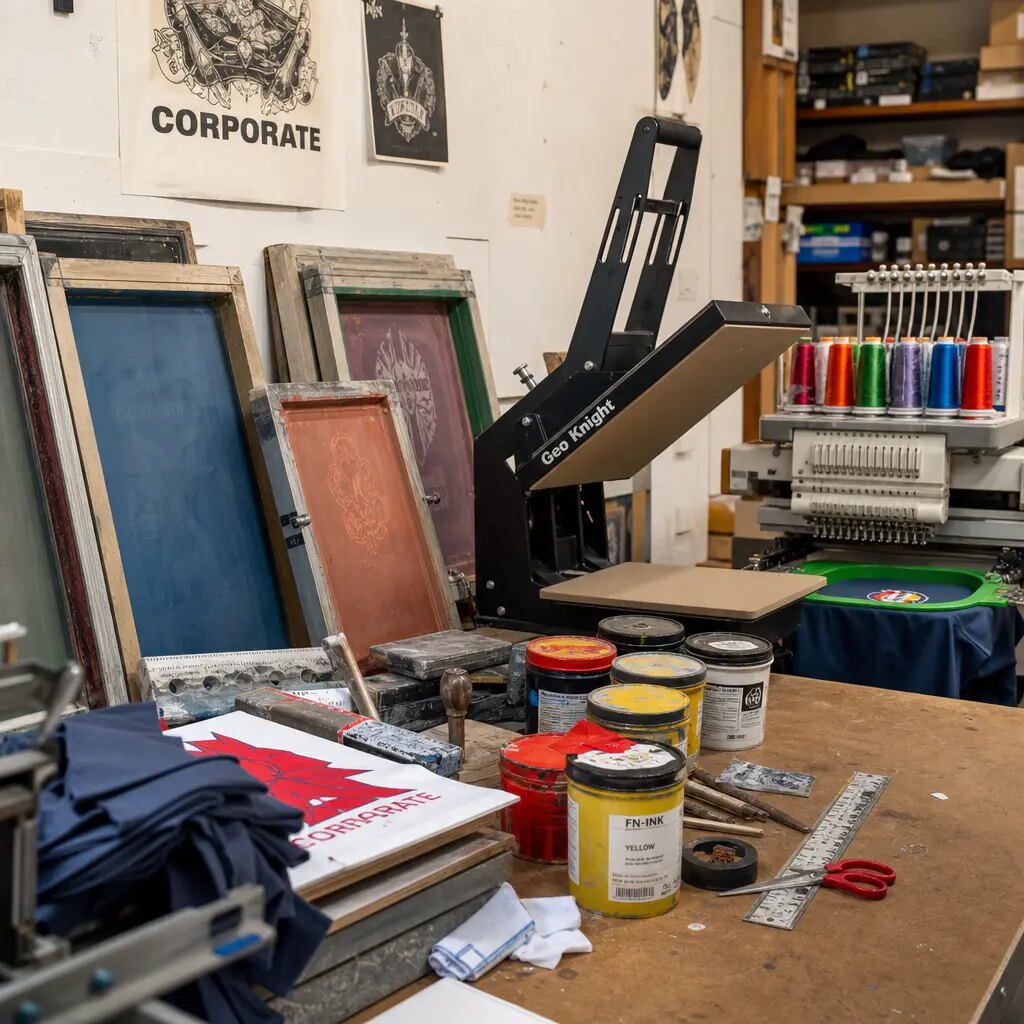
Coffee brands often have strong identity systems, but cotton canvas has its own limits. Natural canvas is textured and absorbent. Fine lines, tiny text, gradients, and photographic artwork may lose clarity. For most canvas grocery totes for coffee roasters, one- or two-color screen printing is the most reliable decoration method. It works well for bold logos, café names, simple illustrations, roast marks, slogans, and anniversary graphics.
Screen printing still needs a technical brief. Ask for ink type, curing method, maximum print size, placement tolerance, color reference, and minimum line width. Pantone references help, but ink on natural canvas will not look exactly like ink on coated paper. A print strike-off on the actual production canvas is the best approval tool. For multi-color artwork, agree on realistic registration tolerance. Textured fabric and sewn-bag variation do not behave like flat paper.
Woven side labels, hem labels, and hang tags can add a premium detail without covering the tote with a large print. A small woven side label works especially well for minimalist roaster branding and can stay consistent across different tote colors. Custom woven labels add MOQ, setup cost, and lead time, so include them early in the RFQ. Hang tags and barcode stickers may be necessary for retail resale or wholesale distribution, but they also add packing labor and inspection points.
Embroidery can look refined for small marks, but it is not always practical for large graphics. Large embroidery areas can pucker the canvas, stiffen the panel, and increase cost. Heat transfer may suit complex art or shorter programs, but adhesion and rub performance must be tested on the exact canvas finish. Make the decoration decision from physical strike-offs, not digital mockups alone.
- Use screen print for bold, repeatable coffee roaster logos and simple artwork.
- Approve ink opacity, color, curing, placement, and rub performance on the actual canvas.
- Use woven labels or hang tags for premium identity when a large print is unnecessary.
- Avoid tiny text, gradients, oversized embroidery, and complex transfers unless tested on production fabric.
Make supplier quotes comparable with tolerances and assumptions
Many tote quotes look attractive because they are not quoting the same product. One supplier may price 10 oz raw canvas, another 12 oz finished canvas, and a third may include stronger handles, better packing, or a print strike-off. The lowest unit price may simply be a different specification. A procurement-ready RFQ defines the tote as a finished item with measurable requirements and a clear approval path.
Include finished dimensions, gusset depth, fabric weight and finish, fabric color, handle type, handle drop, reinforcement, print method, print size, print color count, label requirements, packing method, carton quantity, inspection requirement, order quantity, and incoterm. Attach vector artwork and a measured placement diagram. If artwork is not final, tell the supplier to quote provisional pricing and list artwork assumptions.
Tolerances should be realistic and written. For many sewn cotton totes, plus or minus 0.5 cm to 1.0 cm for major finished dimensions may be workable depending on size, fabric, and finishing. Handle drop, print placement, print registration, fabric weight, and carton count need their own tolerances. Unrealistic precision can increase cost, rejection, and dispute risk, especially on washed or textured canvas.
Separate one-time charges from recurring unit costs. Screen charges, sample fees, label setup, hang tag setup, artwork conversion, testing, inspection, special carton labels, and packing changes should be visible. Normalize incoterms as well. EXW, FOB, CIF, and DDP include different cost layers. The procurement number that matters is landed cost per sellable tote that matches the approved specification.
- Send the same technical pack to every supplier before comparing price.
- State finished-size, handle, print, fabric, and packing tolerances in the RFQ.
- Separate setup charges, sample charges, recurring unit costs, and logistics assumptions.
- Compare quotes using the same incoterm, payment terms, inspection plan, and packing standard.
Understand MOQ drivers before pushing for a lower unit cost
MOQ is rarely random. It is usually driven by fabric availability, dyeing or washing, cutting efficiency, print setup, label production, carton requirements, and factory scheduling. A natural canvas tote with one-color screen print and standard bulk packing is usually easier to source at a lower MOQ than a dyed canvas tote with custom woven labels, multi-color artwork, individual retail sleeves, and store-specific carton labels. When the MOQ is higher than expected, ask which specification element is controlling it.
For a first run or demand test, simplify the program without weakening the core construction. Use stock natural canvas, one print location, one ink color, standard handles, and bulk folded cartons. Keep the handle reinforcement, seam allowance, and QC expectations strong. Once the roaster proves sell-through, the next run can add alternate colors, custom labels, premium hang tags, or channel-specific packing.
Request price breaks at realistic quantities. Ask for 500, 1,000, 2,500, 5,000, and 10,000 pieces only if those levels match forecast or reorder plans. Price breaks may come from fabric roll efficiency, spreading setup costs, print efficiency, or carton labor. If cash flow limits the first order, ask whether the supplier can retain patterns, screens, approved samples, and artwork files so reorders are faster and more consistent.
Avoid lowering price by quietly stripping out strength. For a coffee roaster tote, the perceived quality and reuse life are part of the brand value. Better cost levers include reducing print colors, using a standard fabric color, avoiding individual polybags, choosing standard carton marks, consolidating shipments, or removing nonessential hang tags. Reduce complexity, not the parts customers feel first.
- Ask which item drives MOQ: fabric, dyeing, print, labels, packing, or scheduling.
- Simplify first-run branding before reducing handle or seam quality.
- Request price breaks that match realistic forecast and reorder quantities.
- Reduce cost through standardization and packing efficiency, not hidden construction downgrades.
Plan lead time by production stage, not one headline date
Lead time should be broken into stages. Sampling is separate from material booking, fabric finishing, cutting, sewing, printing, curing, inspection, packing, freight booking, and transit. A simple tote can move quickly once materials are ready, but delays often happen during artwork approval, fabric sourcing, dye-lot approval, label production, or carton label confirmation. A retail launch date should not be based only on sewing time.
Start with sample development and print strike-off approval. If the tote uses stock natural canvas and one-color screen print, this stage is usually straightforward. If it uses dyed canvas, washing, organic or recycled documentation, woven labels, custom hang tags, or special retail packing, build in more time before bulk production. Approve all components before bulk cutting begins; late changes create waste and schedule risk.
Printing needs curing and handling time. Ink that looks dry may still require proper curing before folding and packing. If totes are packed too soon, heavy ink areas can block, smell, crease, or transfer. Ask the supplier how long printed canvas cures and how they prevent print-to-print contact in cartons. This matters for dark ink on natural canvas and light ink on black or dyed canvas.
Reorders should be managed as a file, not a fresh project every time. Ask whether the factory stores patterns, screens, artwork files, approved samples, label specifications, and carton marks. Confirm how they communicate fabric shade changes and whether they will submit a new swatch when the original canvas lot is no longer available. Repeat café merchandise should feel like the same product across production runs.
- Break timelines into sample, material, cutting, sewing, printing, curing, inspection, packing, freight booking, and transit.
- Approve fabric, artwork, labels, and packing before bulk cutting starts.
- Allow curing and handling time for printed canvas before folding and carton packing.
- Create a reorder file with sample, swatch, artwork, pattern, label, packing, and QC references.
Approve samples through functional testing, not photos alone
A tote sample should be reviewed as a working product. Load it with the coffee bags, accessories, or grocery items it is expected to carry. Check whether the handles twist, whether the top edge pulls, whether the gusset sits flat, and whether the bag feels balanced. Carry it by hand and over the shoulder if the handle drop allows. Coffee is dense, so an empty tote can hide problems that appear quickly under load.
Measure the sample in the same condition that bulk goods will be inspected. If the tote will be washed, pressed, steamed, folded, or packed before shipment, measure after that process and after normal recovery from packing where relevant. Record finished height, width, gusset, handle drop, handle width, print placement, label placement, and folded size. If the approved sample is raw but bulk is later pressed or washed, dimensions may shift and create avoidable disputes.
Approve three physical references when possible: fabric swatch, pre-production sample, and print strike-off. The swatch controls fabric. The sample controls construction. The strike-off controls ink, opacity, placement, and artwork execution. Sign and date the approved references, then ensure the factory, buyer, and inspector are using the same standard.
If the first sample fails, identify the cause instead of simply asking for a better sample. The issue may be design, fabric, sewing, print, or packing. A tote may need a wider gusset, stronger handle reinforcement, deeper top hem, adjusted print size, different ink, or a revised fold method. Document the change in the specification. Scattered email approvals are easy to misread when bulk production starts.
- Load-test the sample with the intended coffee and grocery contents.
- Measure finished dimensions after the exact finishing process specified for bulk.
- Approve fabric, construction, and print as separate physical references.
- Document every revision in the tech pack before giving bulk approval.
Specification comparison for buyers
| Spec decision | Recommended option | When it fits | Buyer risk to check |
|---|---|---|---|
| Sourcing route | Direct factory or coordinated supplier controlling fabric booking, cutting, sewing, printing, inspection, and export packing under one production plan | Best for repeat coffee roaster tote programs where finished dimensions, handle drop, print placement, carton counts, and reorder consistency matter | Confirm which steps are in-house and which are subcontracted; require one accountable production owner for samples, bulk QC, corrective action, and shipment release |
| Default fabric weight | 12 oz canvas, commonly about 380-420 gsm finished weight depending on weave and finish | Balanced choice for café retail, reusable grocery carry, branded resale, subscription bundles, and daily customer reuse without excessive landed cost | Ask whether the quoted weight is finished fabric weight after dyeing, washing, or pre-shrinking, not greige weight; agree on tolerance, often around plus or minus 5% |
| Premium fabric weight | 14 oz canvas, commonly about 450-500 gsm finished weight, paired with upgraded top hem and handle reinforcement | Fits premium merch, heavier bean bundles, larger gusseted grocery totes, stronger shelf presentation, and higher perceived value | Check seam bulk, needle size, sewing speed, handle-join puckering, print hand feel, carton gross weight, freight impact, and shrinkage behavior |
| Value fabric weight | 10 oz canvas, commonly about 300-360 gsm finished weight, with reinforced handles and modest load expectations | Works for event sales, light grocery use, seasonal giveaways, and entry-level retail add-ons | Do not treat fabric weight as the only strength measure; weak handle joins, narrow seam allowance, or low stitch density can fail before the body fabric |
| Fabric finish | Natural unbleached, bleached, dyed, washed, or pre-shrunk canvas specified with shade and shrinkage expectations | Important when the tote must match café brand visuals, hold finished size, or look consistent on a merch wall | Natural cotton may show seed flecks, slubs, shade variation, and cotton odor; dyed canvas adds crocking, colorfastness, and dye-lot control requirements |
| Finished size and tolerance | Finished dimensions measured after sewing, pressing, washing if specified, and normal packing recovery; common tolerance is plus or minus 0.5 cm to 1.0 cm for main dimensions when agreed | Needed for barcode-ready retail packing, subscription boxes, café display, or a tote designed around specific coffee bags and accessories | Avoid approving cut-panel dimensions as final dimensions; record the measurement condition and timing |
| Body construction | Gusseted grocery tote with reinforced folded top hem, secure side seams, defined bottom/gusset construction, and usable opening width | Best when the bag must hold retail coffee bags, boxed brewers, groceries, tumblers, or mixed café merchandise | Check gusset symmetry, bottom corner stress, seam allowance, panel grain alignment, and whether the loaded bag twists or collapses |
| Handle construction | Self-fabric or cotton webbing handles, commonly 2.5-3.8 cm finished width, with box-X, bar-tack, or reinforced multi-row stitching | Needed for dense coffee loads, shoulder comfort, and repeated customer reuse | Specify handle drop, placement from side seam, stitch pattern, stitch density, and pull/load test method; avoid vague wording such as heavy duty handles |
| Print method | One- or two-color screen print for bold logos; woven side label, hang tag, or small embroidery for premium detail where appropriate | Best for natural canvas, simple roaster marks, café merch walls, and repeat brand programs | Confirm minimum line width, ink opacity, curing time, placement tolerance, registration tolerance, dry/wet rub expectations, and print strike-off approval |
Buyer checklist before sampling
- Define the real load target with product examples: two 12 oz retail coffee bags, four 340 g bags, two 1 lb bags plus a brewer box, mixed groceries, or a café gift bundle.
- State whether the tote is a giveaway, paid merch item, wholesale add-on, grocery collaboration bag, subscription insert, or premium gift-with-purchase; the channel changes cost and finish expectations.
- Lock finished body width, height, gusset depth, usable opening width, top hem depth, handle width, handle drop, handle placement, and print placement before requesting final quotes.
- Specify canvas weight as finished oz/yd² or finished GSM and ask for the acceptable weight tolerance, commonly quoted around plus or minus 5% unless a tighter standard is agreed.
- Identify fabric status: greige, natural unbleached, bleached, dyed, pigment dyed, washed, pre-shrunk, recycled blend, organic cotton, or certified cotton where documentation is required.
- Clarify acceptable natural-canvas character: seed flecks, slubs, shade variation, lint level, cotton odor, wrinkles, and whether fabric must be free of visible contamination on the print panel.
- Choose the handle material and reinforcement method as a separate line item: self-fabric versus cotton webbing, box-X versus bar-tack, stitch density, and reinforcement patch if used.
- Require a pre-production sample using the same canvas lot or approved equivalent, same finish, same handle construction, same print method, same label, and same packing approach as bulk production.
- Ask for measurable tolerances: finished size, handle drop, print placement, print registration, fabric weight, stitch density, shrinkage after wash or steam if relevant, and carton quantity.
- Define QC defect classes before production: critical defects, major defects, minor defects, and whether shipment approval follows AQL inspection or a custom 100% check for specific points.
Factory quote questions to send
- What is the finished fabric weight in oz/yd² and GSM, and what is the acceptable weight tolerance for the canvas lot used in bulk production?
- What yarn count, weave construction, fabric width, and shrinkage performance can you provide for the proposed canvas, or can you provide a fabric data sheet from the mill?
- Is the canvas natural unbleached, bleached, dyed, pigment dyed, washed, pre-shrunk, organic, recycled blend, or another finish, and what documentation is available for any claim we will use commercially?
- Are the quoted dimensions finished dimensions after sewing, pressing, washing if applicable, and packing recovery? What tolerance will you hold for body width, height, gusset, handle drop, and print placement?
- What seam construction will you use for side seams, bottom seam, gusset corners, and top hem, including seam allowance and stitch type where available?
- What exact handle construction is included: material, width, finished length, handle drop, placement from side seam, stitch pattern, stitch density, thread type, and reinforcement points?
- For our target load, do you recommend self-fabric handles, cotton webbing handles, or reinforced self-fabric handles, and how does the choice affect cost, MOQ, sewing time, comfort, and appearance?
- Which print method do you recommend for this artwork on this canvas finish, and what are the setup costs, minimum line width, maximum print size, color matching standard, curing requirements, and registration tolerance?
- Can you provide a print strike-off on the exact production canvas before bulk printing, and how many sample or strike-off approval rounds are included before additional charges apply?
- What load or pull test can you perform internally for handle attachment, and what method, test weight, duration, and pass/fail criteria do you recommend for this tote?
Quality-control points to confirm
- Finished body width, height, gusset depth, top hem depth, handle drop, handle placement, and print placement match the signed specification within the agreed tolerance after the specified finishing and packing preparation.
- Canvas weight is checked against the approved swatch or fabric data sheet, with actual finished GSM/oz recorded if required; fabric lot variation stays within agreed tolerance.
- Canvas color, shade, weave character, slub level, seed flecks, lint, odor, hand feel, and surface cleanliness match the approved swatch standard, especially on the front print panel.
- Cut panels follow the correct grain direction where required, with no obvious skewing, twisting, diagonal pulling, or uneven side seam behavior after the tote is lightly loaded.
- Side seams, bottom seams, top hem, gusset corners, and handle joins use the specified seam allowance, stitch density, reinforcement pattern, and thread color.
- Handle attachment has no skipped stitches, loose threads, broken thread, needle cuts, open seams, pulled fabric, crooked reinforcement, or weak bar-tacks/box-X stitching.
- Handle width, handle drop, and left-right placement are consistent enough that the loaded tote hangs balanced and feels the same across inspected samples.
- Top opening is even; gusset corners are symmetrical; bottom sits reasonably flat for a grocery tote; there is no major puckering, twisting, or uneven folding caused by sewing tension.
- Print color, opacity, edge sharpness, placement, and registration match the approved strike-off; multi-color registration tolerance is realistic for textured canvas and recorded in the spec.
- Printed areas pass the agreed dry rub and, if relevant, wet rub, scratch, adhesion, or tape check after proper curing time; ink does not remain tacky or transfer under normal handling.