1. What makes a winery tote RFQ different from a generic promo-bag request
Boutique wineries do not buy canvas grocery totes the way a general promotional buyer does. The bag can act as retail packaging, a giftable item, a grocery carry bag, and a brand touchpoint all at once. That mix changes the buying logic. A tote that is acceptable for a tradeshow handout may feel underbuilt in a tasting room, while a visually premium bag may still fail if it cannot handle bottles or everyday grocery use.
A winery-specific RFQ needs to do more than ask for a logo and a unit price. It should tell the supplier what the tote will be used for, where it will be sold, and what kind of carry stress it must survive. If the bag is meant to support bottle sales, write that in plain language. If it will be sold at retail, say so. If it must look display-ready on a boutique shelf, include that too. Suppliers quote more accurately when they understand the commercial role of the bag, not just its shape.
Procurement teams also need to separate presentation issues from functional issues. In boutique retail, a bag that stands upright, folds neatly, and looks intentional may convert better than a bag with slightly cheaper materials but a sloppier profile. At the same time, a bag with great visual structure but weak handles is a return risk. The RFQ should make both priorities visible so you can compare quotes on the right tradeoff.
Write one sentence at the top of the request that defines the use case. Example: 'Canvas grocery tote for winery retail and bottle carry, intended for resale in tasting-room shops and occasional grocery use.' That single line will guide fabric weight, handle reinforcement, print durability, carton pack, and QC expectations more effectively than a style name alone.
- State the commercial role of the tote before you ask for price.
- Separate shelf presentation needs from carry-performance needs.
- Tell the supplier whether the tote is for resale, giveaway, or bottle-support use.
2. The three spec choices that move price and quality the most
The biggest price swings usually come from fabric weight, construction complexity, and decoration method. A slightly heavier canvas improves structure and perceived quality, but it increases material cost, sewing time, and freight weight. A more complex bottom or gusset improves capacity, but it consumes more fabric and adds sewing operations. A richer print can improve shelf appeal, but it can also increase setup cost and reject risk.
For canvas grocery totes for boutique wineries, the most useful starting point is usually a mid-weight body that balances structure with cost. As a rough comparison point, many buyers evaluate finished canvas in the 10–14 oz range for retail and grocery use, while lighter weights can work for low-cost giveaways and heavier weights can make sense when the bag must stand up well in a boutique setting. The exact number depends on how much bottle support, shape retention, and shelf presence you need.
Do not let suppliers quote 'canvas' without clarifying finish and weight. Ask for finished fabric weight in oz and GSM, plus whether the cloth is natural, bleached, washed, or dyed. A washed canvas may feel more premium and drape more softly, but it may also look less structured on shelf. Natural canvas can be cost-effective and brand-friendly, but it can vary more in tone. Bleached canvas can help print clarity, but it may change the visual feel. You need the finish specified because the same name can hide very different outcomes.
Handle design is another major cost and performance lever. Handle width, length, attachment method, and reinforcement all affect how the tote feels in use. A 1–1.5 in / 25–38 mm webbing handle is often comfortable for grocery carry, but comfort alone is not enough. Ask whether the handle is sewn into the seam, surface attached, doubled back, or reinforced with bartacks or a box-X. Those details matter more than the color of the webbing when it comes to actual load performance.
For boutique winery buying, structure is often as important as raw durability. A bag that collapses flat can still be fine for a giveaway, but retail buyers usually expect a neater silhouette. If you want the tote to look better on a shelf or at point of sale, state whether it must hold shape when empty. That requirement affects both fabric choice and construction, and it should be in the RFQ rather than left to interpretation.
- Quote finished weight, not a vague canvas description.
- Treat gusset style and bottom construction as real cost drivers.
- Ask for handle reinforcement details in the base quote.
3. Choose the decoration method based on artwork, brand tier, and wear
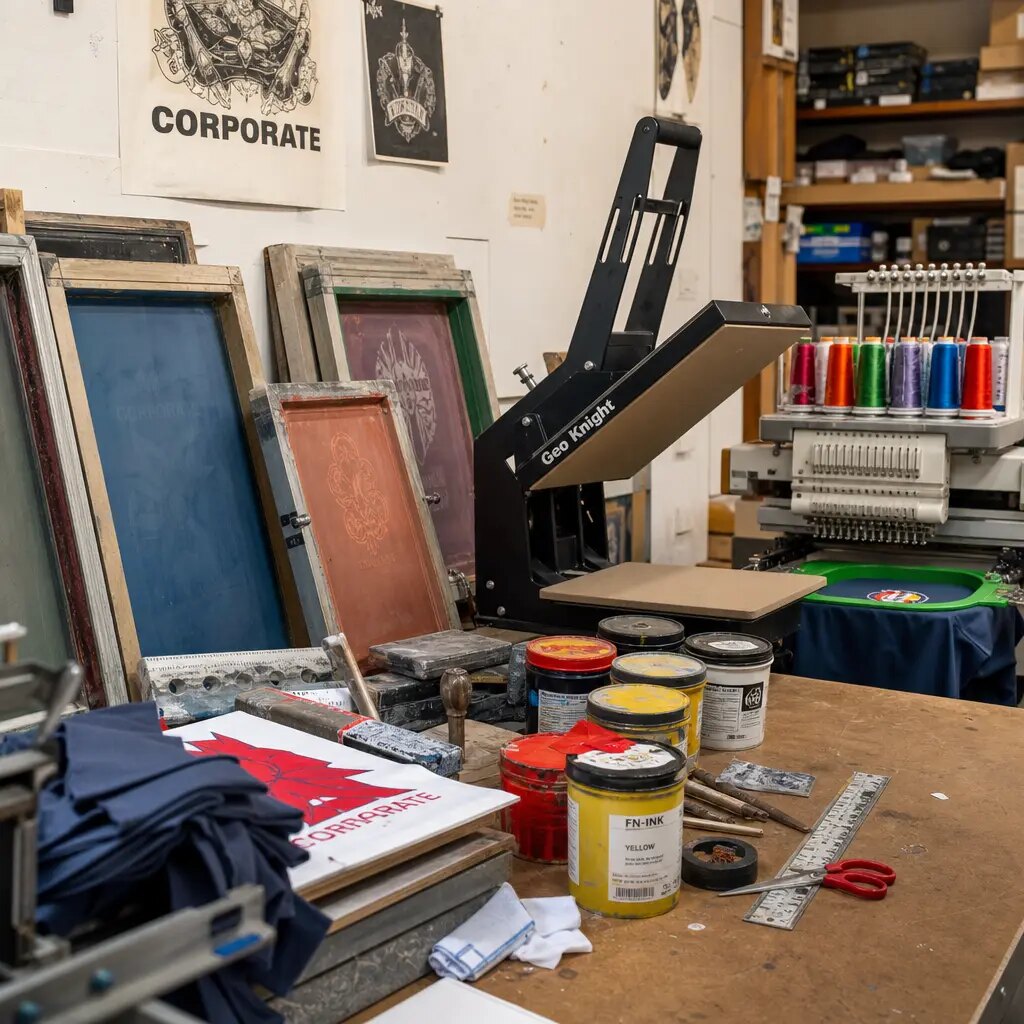
Most winery tote programs start with screen print for a reason: it is usually the cleanest option for simple logos, bold typography, and one- or two-color branding. It can also be efficient to quote because the setup cost, color count, and run quantity are easy to see. For natural canvas, screen print often produces the most straightforward retail look when the artwork is not too fine.
But screen print is not automatically the best answer. If your logo includes gradients, small type, fine line work, or multiple colors, ask the supplier to quote transfer or digital print as a comparison. If the bag is a premium retail item and the artwork is minimal, embroidery may create a stronger perceived value. The right method depends on the art and the market position, not on the factory's default process.
The key procurement question is not only how the tote looks on day one, but how it survives handling. A winery tote may be folded, stocked, carried, and resold multiple times. Ask the supplier how the selected decoration method behaves after folding, abrasion, and repeated handling. A print that looks fine on a flat sample can still crack, blur, or feel too stiff once the bag is used.
Placement is another common source of confusion. Ask for print size and location measured from the finished seams, not just from the blank panel edge. A centered logo on a cut panel may appear too high, too low, or slightly off once the bag is sewn. If the artwork has a brand lockup, require the supplier to show the placement on a sewn sample or strike-off with seam references marked clearly.
If your winery uses seasonal graphics, ask whether the decoration method allows economical art changes. Screen print is often efficient for repeated artwork, while digital or transfer methods can be better for limited runs or multiple SKUs. The best quote is not the one with the cheapest base bag; it is the one that matches your artwork, replenishment cadence, and brand tier without hidden rework cost.
- Use screen print for simple, repeatable branding.
- Quote placement from finished seams, not from raw panel edges.
- Ask how the decoration will look after folding and carry use.
4. How to write the RFQ so every supplier prices the same tote
A strong RFQ is not longer for the sake of being long. It is specific where differences matter and silent where they do not. For this product, the buyer should lock the items that affect price and quality: finished dimensions, fabric weight, handle type, reinforcement, decoration method, color target, packing, documentation, and delivery term. Everything else can be optional or listed as an alternative.
If you do not separate required items from optional items, quotes will drift. One supplier may include polybags and a nicer handle finish. Another may exclude them. One may quote FOB, another EXW. One may include a second proof, while another charges for every revision. The unit price then becomes almost meaningless unless you know what is embedded in it.
The easiest way to improve quote quality is to ask for a line-item response. Require separate lines for sample charge, setup charge, unit price, packing, revision fee, and any rush or color-change surcharge. Also ask the supplier to list exclusions. That one instruction often reveals hidden assumptions that would otherwise surface only after the PO is issued.
For a winery buyer, the RFQ should work for production, merchandising, and finance. Production needs the bag spec. Merchandising needs artwork and finish clarity. Finance needs price basis, taxes, freight responsibility, and payment assumptions. If all three can read the RFQ and know what is being bought, the supplier will have less room to reinterpret the order later.
A practical RFQ format is four blocks: product core, decoration and approval, packing and delivery, and commercial terms. That structure is short enough for suppliers to answer properly and complete enough to support fair comparison. It also keeps the request from becoming a generic checklist that invites generic responses.
- Freeze the items that move price and quality.
- Ask for line-item pricing and explicit exclusions.
- Organize the RFQ into product, decoration, logistics, and commercial terms.
5. How to compare supplier routes before comparing price
A direct factory, trading company, and print specialist can all quote canvas grocery totes, but they do not carry the same risk profile. A direct factory usually gives the cleanest view of production control, repeatability, and packing. A trading company may help if you are sourcing multiple items at once or want one contact to manage export paperwork. A print specialist can be useful when the decoration is the main reason for the purchase, but the underlying bag may still be made elsewhere.
The route matters because it changes who owns the spec. If the quote comes through a middleman, ask who is actually making the bag, who approves the sample, and who is responsible if bulk production deviates from the sample. If the seller cannot answer that clearly, you may be looking at a coordination quote rather than a controlled manufacturing offer. That can be fine, but it should be priced and managed accordingly.
Direct factories are often stronger for replenishment programs where the same tote will be reordered in waves. Trading companies can be useful when the winery needs low internal workload or when the order is bundled with other packaging items. Specialists can be valuable when visual quality matters more than factory ownership. The right choice depends on the buying objective, not on a rule of thumb.
One useful vetting question is: 'Who changes the line if the approved sample and bulk do not match?' A supplier that can answer with a real correction process is usually easier to manage than one that only forwards messages. You are not just buying a tote; you are buying a process that can hold the tote consistent across batches.
Do not let low unit price bias the route decision. Compare route by control, documentation, corrective action, and replenishment stability. Those factors usually determine whether the winery program feels smooth or becomes a series of follow-up emails.
- Use the same spec sheet with every supplier route.
- Ask who owns sample approval, bulk correction, and export paperwork.
- Choose route based on control and workload, not habit.
6. Supplier vetting: how to validate factory capability before you place the order
The RFQ is only useful if the supplier can actually make what you are asking for. Before you compare the price, validate that the factory has the right machinery, decoration capability, and quality discipline for the tote you want. A simple way to do that is to ask for recent photos of the sewing line, print area, finishing area, and packing area, plus a short explanation of how your style would run through production. You do not need a long audit report to spot weak capability; you need enough evidence to see whether the supplier has made similar products before.
Ask for real proof rather than broad claims. If the supplier says they can do stitched reinforcement, ask for a close-up photo of the seam and bartack. If they say they can print fine type, ask for a strike-off on similar fabric. If they say they can meet a retail finish standard, ask how they inspect sewing, color, and packing before shipment. A capable supplier should be able to answer with process detail, not just reassurance.
Watch for red flags that suggest the quote is more promise than capability. Common ones include refusal to share a production sample, no clear answer on stitch reinforcement, no explanation of how fabric weight is measured, and vague responses about packing or lead time. Another warning sign is a quote that is significantly cheaper but omits details most other suppliers include. That can mean the supplier is not controlling scope, or that key items will surface as extras later.
It is also worth checking whether the factory can support repeat production. Boutique wineries often reorder the same bag across seasons, so a one-time sample is not enough. Ask whether the supplier keeps a master sample, how they archive the artwork file, and whether the same production line or subcontractor will be used on repeat orders. Consistency is a procurement issue, not just a design issue.
If the supplier cannot explain how they would handle a spec change, treat that as a capability gap. Reliable suppliers can tell you what changes require new setup, what can be adjusted without a new MOQ, and what affects print or sewing accuracy. That transparency is useful because it tells you where the real cost and schedule risk sits.
- Ask for proof of similar sewing and print capability.
- Use close-up photos, strike-offs, and process descriptions to vet the factory.
- Treat weak answers on repeat production as a warning sign.
7. What to approve in a pre-production sample, and what to measure
A pre-production sample should prove that the tote can be made, packed, and presented the way you expect in bulk. It is not enough for the sample to look attractive. It must match the sewn dimensions, handle feel, print placement, and fold behavior that the winery actually needs. If the tote will be sold retail, the sample should also show whether it stands properly, keeps a tidy silhouette, and looks intentional from a customer-facing distance.
Measure the sample on the sewn bag, not on the cut fabric. Check finished width, height, gusset depth, top hem width, and handle drop. For print, verify the logo placement from the seam references, and look at the artwork under good light from both close range and normal shelf distance. If the brand uses small type or fine lines, this matters a lot because those elements often expose alignment and ink problems first.
A useful sample approval also includes a realistic carry test. For grocery or wine use, load the bag with the kind of items it is likely to carry and inspect whether the handles stay comfortable, the sides distort excessively, or the bottom twists. If the tote is supposed to support bottles, make the sample prove that use case. A bag that only passes when empty is not a valid approval for a carry program.
Packaging should be part of sample approval too. Ask the supplier to show the final fold method and pack count. If the tote is going to be sold on shelf, folded shape matters. If it is going into warehouse storage, cube efficiency matters. If it is going into e-commerce or distributor stock, the fold must not crush the print face. The sample should match the intended pack condition, not just the sewn bag alone.
Keep a master sample, the strike-off, and the signed spec sheet together. When the bulk arrives later, those three items become the reference set for inspection. That makes it easier to decide whether a deviation is a real defect or just a normal tolerance issue.
- Approve the sewn bag, not just the artwork proof.
- Check the sample under realistic load and fold conditions.
- Keep a master sample with the signed spec sheet and strike-off.
8. QC standards that are specific enough to use in the PO
Weak QC language creates most tote disputes. 'Good quality' does not tell the factory what to build, inspect, or reject. A usable QC plan should define the sampling framework, the defect classes, and the exact acceptance rules for the details that matter to your winery program. Many buyers use ANSI/ASQ Z1.4 or ISO 2859-1 as a starting point and then write the AQL on the PO or quality agreement. If your internal standard differs, say so clearly.
Critical defects should be reserved for issues that make the bag unsafe, non-compliant, or obviously unsellable. For example: torn seams, broken handles, missing branding on a branded order, wrong color on a controlled program, holes in the fabric, or contamination that cannot be removed without damage. These should be zero tolerance. If the tote is meant to hold bottles, a handle failure is not a cosmetic defect; it is a product failure.
Major defects are the problems that would make the bag unattractive or unacceptable to a retail buyer. Examples include off-center print that is visually obvious, seam twisting, open raw edges, uneven top hem, incorrect dimensions outside the agreed tolerance, weak handle reinforcement, or carton packing that crushes the tote shape. For a winery retail program, these issues can harm both saleability and brand perception.
Minor defects are the issues that do not affect use but still need a limit. Examples include loose threads, small wrinkle marks from packing, slight shade variation within the approved range, or tiny print specks that do not interfere with readability. The point is not to ignore them; it is to keep them from being confused with functional or presentation failures.
Make the tolerances measurable. A practical RFQ should specify the acceptable variation for overall width, height, gusset depth, handle drop, and print placement. Handle drop and print position usually deserve tighter control than body width because shoppers notice them immediately. If the tote must fit into a shelf display or ship in a known carton pattern, write that requirement into the inspection standard as well.
For load and seam performance, ask the supplier to use a simple, repeatable test and tell you the result in plain language. Define the weight profile you expect the bag to carry and the type of test the factory should run: static hang, repeated lift, or carry simulation. You do not need a laboratory spec to be useful; you need a test that reflects the actual job the tote will do.
For print durability, require a dry rub check or abrasion check appropriate to the print method. Screen print, transfer, and embroidery fail differently. A sample should also be inspected after folding, because crease lines can show whether the print will age badly in warehouse handling. If the bag will be handled often in the tasting room, that fold-and-rub reality matters.
For bottle-use programs, ask for a simple stability check: the tote should not collapse so much that insertion is awkward, and the base should not twist under normal fill. That does not mean the bag must be rigid like a box; it means the bag should behave sensibly for the product you are buying. State that expectation in the RFQ so the supplier can quote the right construction.
AQC examples help, but acceptance examples are even better. Instead of saying 'good stitching,' say what good stitching means: no skipped stitches at the handle anchor, no loose backtack, no seam opening when the bag is loaded, and no visible wandering needle line that creates an untidy retail finish. That level of specificity lets the factory quote the work honestly and gives inspection teams a clearer pass/fail rule.
- Use a named sampling framework and write the AQL on the order.
- Define critical, major, and minor defects with examples.
- Add measurable tolerances for handle drop, print placement, and dimensions.
- Tie load testing to the tote's real use case.
9. Packing, carton loading, and delivery terms that change landed cost
Canvas tote pricing is easy to misread because the bag itself is only one part of the landed cost. The fold method, carton size, pieces per carton, and Incoterm can change the total cost more than a small unit-price difference. A tote that looks cheaper ex-factory may use bulky packing that increases freight. A slightly more expensive tote may ship more efficiently and cost less overall once freight and handling are included.
Ask every supplier to quote the fold method, bag count per carton, carton dimensions, and gross weight. That allows you to compare cube, not just unit price. A quote without carton size is incomplete for procurement. For retail distribution, a cleaner fold may be worth a little extra cube if it protects the print face. For warehouse replenishment, denser packing may be better if the bags arrive without visible damage.
Clarify the Incoterm before you compare prices. EXW, FOB, CIF, and DDP are not interchangeable. EXW shifts more transport responsibility to the buyer. FOB changes the handoff point at the port. CIF includes freight to the destination port. DDP may include delivery duties depending on how the seller structures the move. If suppliers quote different terms, you are not comparing the same landed cost.
Carton marks matter more than many buyers expect. Ask for SKU, artwork, color, PO number, and quantity on the outer carton. If you use multiple winery SKUs, state whether cartons should be mixed or single-SKU. Mixed cartons can help when orders are small, but they may create warehouse receiving complexity. Your RFQ should decide that before the supplier packs it their own way.
If the bags will go to stores, distributors, or fulfillment centers, specify the packaging outcome you need. The question is not only how many totes fit in a carton; it is whether the packed bags arrive with a sellable shape and a usable receiving pattern. Good suppliers can talk about both, not just one.
This is also where you should ask about damage prevention. Can the supplier avoid hard compression on the print area? Can they add tissue or interleaving if needed? Can they keep fold lines away from the logo? Those details may add a small cost, but they can save rework and reduce returns for a retail program.
- Quote the packing method with the unit price.
- Compare suppliers using the same Incoterm.
- Ask for carton dimensions and outer carton marks.
- Treat cube efficiency and pack quality as landed-cost variables.
10. Compliance, supplier claims, and what to ask after the quote comes in
Many tote RFQs stop at size, price, and sample, but procurement teams also need to check what the supplier can actually support after the quote is issued. Depending on your market and buyer type, you may need material declarations, origin paperwork, test support, or colorant statements. Ask for these before you place the order so you know whether the supplier can satisfy internal review and receiving requirements. If the tote will be sold through a retailer or distributor, documentation gaps can slow approval or delivery even when the bags themselves are fine.
Do not take supplier claims at face value without asking how they are validated. If the seller says the canvas is organic, recycled, or compliant with a specific market requirement, ask what proof exists and who issued it. If they say a report is available, ask for the report date, the testing lab, and the exact product that was tested. This is normal procurement diligence, not distrust. It is how buyers avoid receiving paperwork that does not match the batch.
It is also useful to ask whether the factory has any recent audit or quality issues that would affect your order. A buyer does not need a full audit book for every tote request, but red flags matter: inconsistent answers about where the bag is sewn, no clear material source, refusal to share current photos, or a quote that appears too low because the supplier is not including key work. The more clearly they explain the production chain, the easier it is to trust the quote.
Set a simple issue-handling rule in advance. If the shipment arrives short, damaged, or out of spec, how must the issue be reported, what evidence is required, and what remedy does the supplier offer? Replacement, credit, or rework should not be a surprise after delivery. A supplier that has a clear process for shortages and defects is usually easier to work with than one that says 'we will see after shipment.'
For repeat winery programs, create a short post-delivery review. Track on-time delivery, carton condition, print quality, sample-to-bulk match, and whether the packing worked in your warehouse or store. Bring that information into the next RFQ so the next round is based on what actually happened, not on assumptions from the first quote.
- Ask for compliance documents before PO placement.
- Validate supplier claims with the issuing lab, date, or source document.
- Write a simple remedy process for shortages and defects.
- Use post-delivery data to improve the next RFQ.
Specification comparison for buyers
| Decision point | What to ask suppliers to quote | Procurement implication | Buyer risk to check |
|---|---|---|---|
| Fabric and hand-feel | Quote finished fabric weight in oz and GSM, weave type, finish, and whether the bag is natural, bleached, washed, or dyed. Ask for a swatch or reference sample. | Heavier or washed canvas improves shelf presentation and structure, but it raises material, sewing, and freight cost. For boutique winery retail, 10–14 oz finished canvas is often where buyers start comparing options; lighter bodies may suit giveaways, while heavier bodies suit retail and bottle-carry use. | Do not accept a quote that says only 'canvas' or 'heavy canvas.' Confirm finished weight, not greige weight, and verify whether the supplier is quoting after wash or before finish. A 12 oz claim can mean very different things across factories. |
| Bag format and dimensions | Quote finished width, finished height, gusset depth, bottom style, top hem width, and handle drop in the same units. Ask whether the measurements are based on cut panels or sewn bags. | Small dimension changes affect fabric usage, carton count, fit for wine bottles, and bag look on shelf. A 1–1.5 cm change in handle drop can make the tote feel either comfortable or awkward in hand. | Check whether the quote assumes a flat tote, boxed bottom, side gusset, or bottom gusset. A bag that seems comparable on paper may hold bottles very differently once sewn. |
| Handle construction | Quote handle material, width, finished length, attachment method, stitch pattern, and reinforcement at the stress points. Ask for a stitched photo or sample close-up. | Handle spec drives comfort and load performance. For winery buyers, a 1–1.5 in / 25–38 mm cotton webbing handle is common for comfort, but the real value comes from reinforcement and stitch control. | Watch for weak backstitching, short bartacks, or handles attached only at the seam. Ask whether the handle is sewn into the seam, surface attached, or doubled back, because that changes both cost and failure risk. |
| Print and decoration | Quote print method, number of colors, print area size, placement tolerance, and whether a strike-off on actual fabric is included. | Decoration choice affects setup cost, durability, lead time, and how premium the tote feels in a winery retail setting. One- to two-color screen print is usually the cleanest cost/value starting point. | Fine type, metallic ink, gradients, and large solid blocks can create different reject rates. Require a real fabric strike-off; a PDF proof cannot show ink edge quality, placement shift, or texture interaction. |
| MOQ and price breaks | Ask for price at target MOQ, at a lower test quantity, and at the next tier. Request any separate setup fee for color, size, or artwork changes. | This shows whether the order is economical for launch, seasonal gifting, or replenishment. It also reveals whether the low unit price is hiding one-time setup charges. | Watch for hidden jumps when changing handle color, adding a second print location, or splitting the order by color. A quote that looks cheaper can become more expensive once options are added. |
| Supplier route | Compare direct factory, trading company, and print specialist options using the same spec sheet and delivery terms. | The best route depends on whether the buyer values price, coordination, export paperwork, speed, or decoration control more highly. | Ask who owns the quality problem if the sample is approved but bulk production deviates. Route clarity matters more than supplier label alone. |
| Packing and carton optimization | Quote fold method, polybag or no polybag, pieces per carton, carton dimensions, gross weight, and outer carton markings. | Packing density changes freight cost and warehouse handling efficiency. Overcompressed packing can damage print and shape; loose packing can increase cube and freight cost. | Do not compare quotes without carton sizes and pack counts. A cheaper tote can become the more expensive landed item once freight cube is included. |
| Compliance and documentation | Ask for material declaration, colorant statements if relevant, origin documents, and test support for the target market. Ask what is available before PO placement. | Compliance paperwork reduces retailer onboarding issues and import delays. Missing documents can hold up receiving or create rework after the bags are already produced. | Confirm which documents are available at quotation stage and which are only provided after order placement. Do not assume the supplier can produce a test report without checking the lab source and date. |
| Lead time and delivery term | Ask for sample time, bulk production time, shipping-ready date, and whether the quote is EXW, FOB, CIF, or DDP. Ask what event resets the schedule. | Lead time changes materially when artwork is revised, fabric is sourced specially, or export booking is handled by the factory. Delivery term affects landed cost and risk allocation. | A good quote names the Incoterm and the ship-ready date separately. Vague dates make seasonal winery programs risky, especially around harvest, holidays, and event calendars. |
Buyer checklist before sampling
- Write the tote's end use first: winery retail SKU, tasting-room retail, event giveaway, grocery resale, or bottle-support carry bag.
- Freeze finished dimensions, gusset depth, handle length, and handle attachment method before requesting prices.
- Specify the decoration method, number of ink colors, artwork size, and exact print placement measured from seams.
- Ask for finished fabric weight in oz and GSM, plus whether the quoted weight is finished canvas weight or base fabric weight.
- Request a real pre-production sample or strike-off on the actual fabric, not only a digital mockup.
- Confirm packing method, pieces per carton, carton dimensions, and whether individual polybags are included.
- Require line-item pricing for sample, setup, unit price, revision sample, packing, and any rush or color-change surcharge.
- Ask which documents the supplier can provide: material declaration, origin statement, test reports, compliance statements, and commercial invoice format.
- Set the delivery term in the RFQ: EXW, FOB, CIF, or DDP, so freight responsibility is clear.
- Define your acceptable defect thresholds in writing before the supplier quotes, not after the first inspection.
Factory quote questions to send
- What exact finished dimensions, gusset depth, and handle drop are included in your quote, and are they based on the sewn bag or cut panel?
- Is the quoted fabric weight finished weight, and can you confirm the weave, finish, and whether the material is washed, bleached, or natural?
- What print method will you use, how many colors are included, what is the registration tolerance, and do you provide a strike-off on production fabric?
- What is your MOQ per style, per color, per artwork, and per handle option, and what changes trigger a new setup fee?
- What reinforcement is included at the handles and bottom corners, and can you show a photo of the stitch construction?
- What is the quoted packing method, pieces per carton, carton size, gross weight, and carton mark format?
- Which pricing term is this quote based on: EXW, FOB, CIF, or DDP, and what exactly is excluded?
- What pre-shipment QC checks do you perform, and can you share the inspection checklist or photo set used for approval?
- Which documents can you provide before PO placement and which only after production: material declaration, test report, origin document, and commercial invoice format?
- If we revise the artwork, change the bag size, or add a second print location, which cost lines change immediately and which stay fixed?
Quality-control points to confirm
- Use a written inspection plan before production starts. For common retail totes, many buyers use ANSI/ASQ Z1.4 or ISO 2859-1 as a sampling framework, with the acceptance level and AQL named on the PO or quality agreement. If your internal standard differs, state it clearly so the factory is not guessing.
- Set separate limits for critical, major, and minor defects. Critical defects should be zero tolerance for safety or compliance failures; major defects should be low enough that the tote would not be accepted for retail sale; minor defects can have a higher allowance if they do not affect function or brand appearance.
- Critical defects to reject: torn seams, broken handles, fabric holes, missing decoration on a branded order, wrong color for a controlled program, and any contamination that cannot be cleaned without damage.
- Major defects to control: handle attachment not meeting the approved stitch pattern, print registration visibly off-center, seam twisting, open raw edges, uneven top hem, incorrect dimensions outside the agreed tolerance, or carton packing that damages the tote shape.
- Minor defects to track: loose threads, small wrinkle marks from packing, slight color shade variation within an agreed range, and tiny print specks that do not affect legibility or brand presentation.
- For stitch strength, ask the supplier what pull or load test they use on the handle attachment. If they cannot name the method, require a simple in-house load test on finished bags using the expected filled weight plus a safety margin. Record whether the bag was held, slipped, or tore at the seam.
- For load testing, define the target use case. A winery tote that may carry bottles and groceries should be tested with the intended load profile, not with an empty-bag flex check. Require the supplier to state whether the test is static hang, repeated lift, or drop handling. A practical benchmark many buyers use is 6.5–11 lb / 3–5 kg for grocery carry bags, then a higher internal test margin for bottle-carry programs if the bag is expected to move glass safely.
- For seam quality, inspect stitch density, backtack length, bartack placement, and whether the needle line remains straight at the handle anchor. A strong stitch with poor placement can still fail in use or look unacceptable in retail. Ask for a measured stitch count per inch or per 3 cm on the approval sample.
- For print durability, ask for a dry rub check and, if applicable, a wash or abrasion check on the selected print method. Screen print, transfer, and embroidery behave differently under fold pressure and abrasion, so approval on one method does not prove another method is acceptable. If the logo contains fine type, require a closer visual read at arm’s length and under daylight-equivalent light.
- For dimensional control, define tolerance separately for overall width, height, gusset depth, and handle drop. Buyers often allow a wider tolerance on large utility totes than on retail presentation bags, but the tolerance should be written and matched to shelf fit and carton packing. A practical starting point is tighter control on handle drop and print placement than on body width.