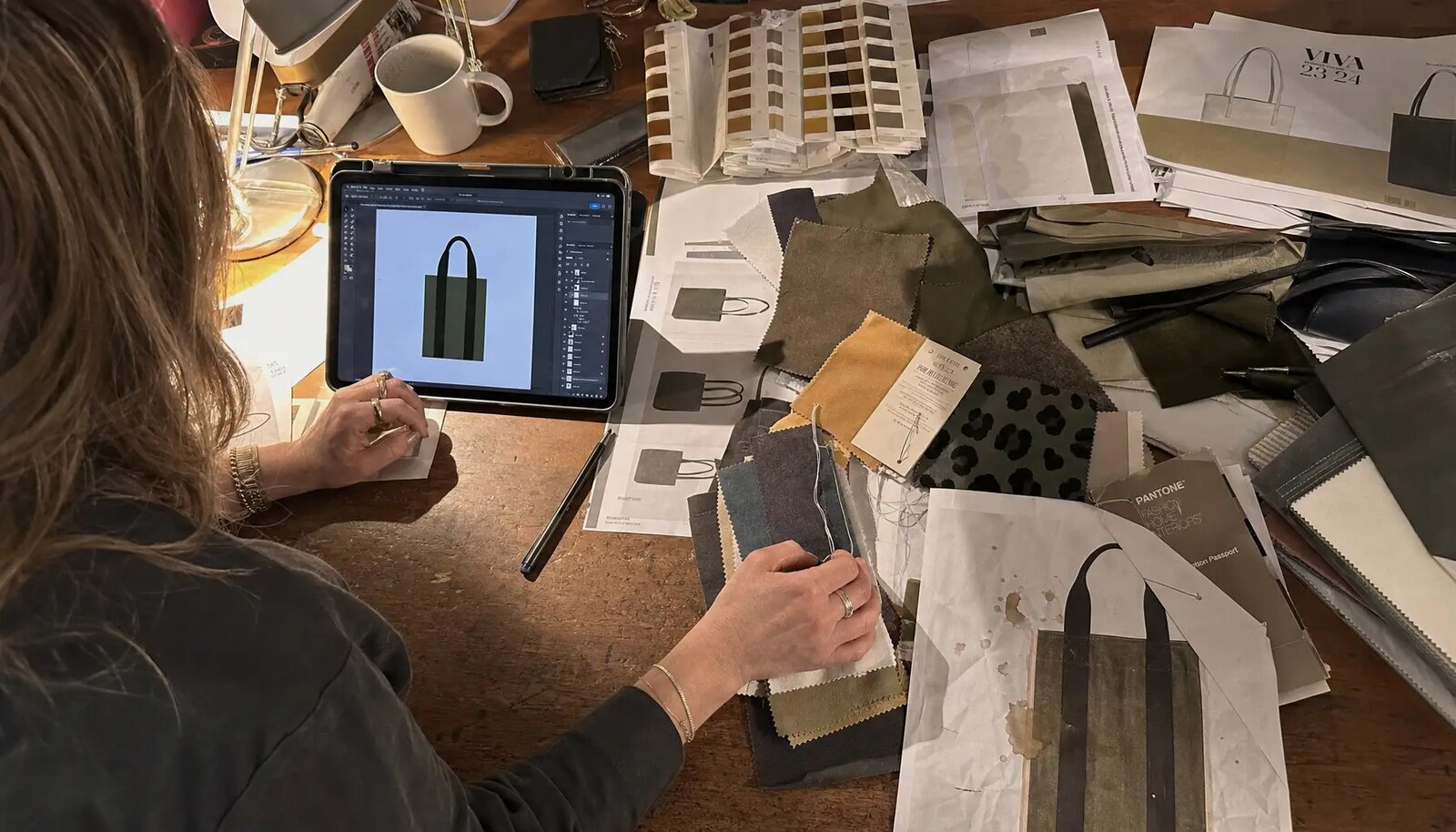
Lead time starts with the spec, not the PO
For canvas grocery totes for boutique wineries, the lead time problem usually starts before production does. Buyers often ask for a quote with only a logo file and a rough size, then discover that the factory cannot price the job until the fabric weight, handle build, print area, and packing format are fixed. Every one of those choices affects cutting, sewing, setup, and carton planning, so the quote is only as useful as the spec behind it.
If you want a realistic schedule, treat the tote as a small manufacturing project, not a stock item with branding added at the end. The fastest programs are the ones where the buyer gives the supplier a clean tech pack, a clear target load, and a single approval path. The slowest are the ones where the design changes after sampling or the pack format is decided after the bulk order is already in motion.
- A vague size request creates sample churn because the factory cannot confirm gusset depth, handle drop, or fold size.
- A missing print spec can add days while the supplier decides between screen print, transfer, or a label-only approach.
- Late packing decisions can force a repack, which is usually slower than making the tote itself.
Choose fabric weight for use, not just appearance
The best starting point for a winery grocery tote is usually 12 oz canvas. It gives enough body for retail presentation, prints cleanly, and still keeps the bag affordable enough for promotional or boutique retail use. If the tote will carry heavier grocery loads, bottles, or a gift bundle, 14 oz can make sense, but the buyer should expect more cost, more sewing time, and more freight weight.
Lighter canvas can be acceptable for short-term promotions or low-load retail use, but it becomes risky if the tote is meant to replace a paper carrier or handle mixed grocery items. A light cloth may look fine on a quote sheet and still fail in the field because the bottom sags, the handles stretch, or the print telegraphs unevenly across the weave.
- 10 oz canvas: good for lower-cost seasonal programs, but confirm the load target and the print opacity.
- 12 oz canvas: the safest all-around choice for most boutique winery grocery totes.
- 14 oz canvas: better for premium retail or heavier contents, but inspect seam quality and print adhesion carefully.
- If the tote will be dyed, confirm whether the weight is measured before or after finishing, because that can affect the real hand feel.
Print method and logo layout drive the real schedule
For this product, screen print is still the most practical route in most cases. It is durable, easy to quote, and works well with simple winery marks, wordmarks, and short taglines. One-color print usually moves faster than multi-color art because setup is simpler and registration is easier to hold on textured canvas. If the design is complex, the buyer should expect extra lead time for screen prep, proofing, and ink matching.
A second decoration element, such as a woven side label or a small sewn patch, can strengthen the brand story without forcing a large print area. That said, every extra decoration step is another labor operation and another place where the schedule can slip. Keep the main branding on one side unless the retail plan truly needs both sides decorated.
- Screen print is usually the best cost-to-durability choice for bold logos and short text.
- Heat transfer may suit very small runs, but it can feel less premium and may age differently on rough canvas.
- Two-color art needs tighter registration control and should be approved on the exact fabric color you will run in bulk.
- If you want a woven label, fix the placement in millimeters, not as a vague general note.
Compare sourcing routes before you compare unit price
A unit price means little unless you know the sourcing route behind it. A direct factory quote, a trading company quote, and a local decorator quote can all appear competitive while carrying very different hidden timelines. One supplier may own the sewing line but outsource print work; another may hold stock blanks but need more time for logo application; a third may offer a low minimum but build the schedule around a small decoration shop that cannot absorb volume spikes.
Use the comparison table as a practical filter. If you need repeatable supply for store programs or winery gifting, a direct factory with in-house cutting, sewing, and printing is often the cleanest route. If your volume is modest or the artwork changes often, a sourcing partner may be better at piecing together the right production path, but you should still ask who actually owns the calendar and the inspection step.
- Direct factory works best when the spec is stable and the buyer wants tighter process control.
- Trading company sourcing can help when the order needs mixed trims, multiple mills, or coordination across more than one plant.
- Stock blank plus local print may shorten the start of production, but it limits fabric choice and can weaken the premium feel.
- Local decoration can be useful for very small programs, but it often becomes expensive once freight, blank tote cost, and labor are all added.
MOQ is usually a setup problem, not a sales tactic
For custom canvas totes, MOQ is driven by fabric color, print setup, and packing efficiency. A factory can sometimes quote a lower piece count than expected, but that does not mean the order is efficient. If the order uses one fabric color, one print color, and a simple flat pack, the MOQ can be more manageable. If you add multiple art versions, dyed fabric, special labels, or retail-ready packing, the minimum often rises because every extra variable creates setup time and leftover material risk.
Buyers should separate the headline MOQ from the true order logic. A low MOQ on total pieces can still be costly if the supplier requires minimums per art or per color. The cleanest RFQs state the intended split by design, the expected reorder plan, and whether the factory may ship a small overrun to protect its cutting efficiency.
- Ask whether MOQ applies per design, per colorway, or per carton configuration.
- Confirm if the supplier allows a mix of one logo with different handle or label colors.
- If the order is for a boutique winery chain, plan the quantities by store count and replenishment cycle instead of ordering a random round number.
- Reorderability matters as much as the opening MOQ because one-off savings can become expensive later if the spec is not repeatable.
Samples should follow the same path as bulk production
A useful sample is not just a small tote with a logo on it. It needs to prove the same fabric, the same print method, the same handle construction, and the same folding or packing logic that will be used in bulk. The best sample path is usually proto sample first, then pre-production sample after artwork and packing are locked, and then a sealed reference sample that the factory uses as the bulk standard.
The buyer should not treat the sample stage as a design playground. Every change after sample approval can shift the schedule because it may require new screens, new cutting patterns, or a repack plan. The most expensive mistake is approving a beautiful sample that cannot be reproduced at bulk speed with acceptable consistency.
- Measure the sample, do not just look at it. Check body dimensions, handle drop, seam symmetry, and fold size.
- Rub test the print lightly on the approved cloth to catch under-cured ink or surface dust issues.
- Fill the sample with the real load, not a light placeholder, and inspect the bottom seam and handle stress.
- Keep one approved sample signed and dated by procurement and the supplier as the bulk reference.
Packing details can add more delay than sewing
Packing is often underestimated because it appears simple. In reality, tote packing affects labor time, carton count, unit cost, and even fabric appearance on arrival. A flat-fold tote packed in a standard export carton is usually the most efficient format for offshore production. If the buyer wants tissue, individual polybags, printed inserts, or retail hangtags, the supplier needs more labor and more control over the final pack sequence.
For boutique winery programs, the pack format should reflect how the tote will be sold. A gift-shop display may justify a cleaner individual pack, while a wholesale replenishment order may only need flat-fold units grouped by inner quantity. The wrong pack format can make the product look premium on paper and slow in reality because the factory has to add a second packing station or repack after inspection.
- Specify fold direction and finished fold size so the carton count stays consistent.
- Confirm whether the tote is packed with handles inside or outside the fold to protect print quality.
- Ask for carton dimensions and gross weight before shipment booking, especially if air freight is possible.
- If pallets are required, state pallet height limits and whether the cartons must be single-stacked or double-stacked.
Use a schedule that includes approval time and transit time
A sensible lead time plan for custom canvas grocery totes usually has four blocks: sample approval, material preparation, bulk production, and transit. The first three are controllable if the buyer is responsive and the spec is locked. Transit is not controllable, which is why the purchase order should be issued with a buffer, not against the exact date the launch team hopes to receive goods.
For most custom offshore orders, a practical planning window is 10 to 14 weeks before the product must be on the warehouse floor. Simple repeat orders can move faster, especially if fabric is in stock and the print is one color. Dyed fabric, special labels, or larger quantities usually push the schedule toward the longer end. If the totes are tied to a harvest event, holiday program, or store opening, the buyer should move earlier than feels necessary.
- Week 1 to 2: artwork lock, fabric confirmation, sample approval, and PO release.
- Week 3 to 5: fabric prep, cutting plan, and screen or label setup.
- Week 6 to 9: sewing, printing, in-line checks, and carton packing.
- Week 10 to 14: inspection, booking, transit, and receiving buffer.
Read the quote by landed cost, not by the lowest unit number
A cheap tote can become an expensive tote once the hidden items are added. The real comparison should include the unit price, screen setup, cartons, internal labels, inspection, domestic transport, ocean or air freight, duty, and a small reserve for rework or shortage. For importers and distributors, the landed cost is what matters, because that is the number that hits margin and promotional planning.
The most useful quote format breaks out what is included and what is excluded. If one supplier includes export cartons and another does not, the lower quote may be misleading. If one quote assumes a standard 12 oz fabric and another quietly uses a lighter cloth, the price difference is not a real comparison. Ask for the quote to state the fabric spec, print process, pack method, and shipping basis in plain language.
- Compare ex-works pricing only when the spec, pack, and quality scope are truly identical.
- Add freight, duty, inspection, and domestic handling before deciding the winner.
- Watch for cost growth from extra print colors, longer handles, thicker fabric, or custom inserts.
- If the supplier will not state exclusions clearly, the quote is not ready for approval.
Specification comparison for buyers
| Spec decision | Recommended option | When it fits | Buyer risk to check |
|---|---|---|---|
| Fabric weight | 12 oz natural canvas as the default starting point | Most boutique winery retail programs that need a balance of hand feel, print clarity, and cost | Too-light fabric can feel cheap and distort under load; too-heavy fabric raises cost and may slow sewing |
| Fabric weight for premium retail | 14 oz canvas with reinforced bottom and clean top hem | Gift shop programs, higher ticket bundles, or totes that must carry heavier grocery loads | Longer sewing time, higher freight weight, and possible print cracking if the ink system is not matched to the cloth |
| Handle construction | Self-fabric handles or cotton webbing with bar-tack reinforcement | Programs where the tote must feel sturdy and the customer will carry bottles, jars, or a mixed grocery load | Short handles, weak stitch count, or inconsistent drop length create complaints after first use |
| Print method | 1-color or 2-color screen print | Most winery logos with bold marks, text, and simple artwork | Registration drift, weak ink cure, or poor ink coverage on textured canvas |
| Decoration route | Front print plus a small woven side label | When you want brand presence without adding much sewing time | Extra placements can add labor and scrap if the label position is not fixed in the tech pack |
| Source route | Direct bag factory with in-house cutting, sewing, and printing | Repeat orders where you need clearer control over schedule and QC | Factory capacity can tighten fast in peak seasons; confirm print line availability before issuing the PO |
| Source route alternative | Trading company or sourcing partner managing one or more factories | When you need broader supplier access, mixed trims, or help coordinating special packing | Lead time can stretch if the middle layer does not control the actual production slot or inspection process |
| MOQ structure | Quote by fabric color, print color, and carton pack, not just total piece count | Any program with more than one artwork, size, or retail channel | A low headline MOQ can hide setup fees, color minimums, or forced overrun quantities |
| Lead-time buffer | Plan a 10 to 14 week window before store receipt for custom offshore production | Seasonal launches, harvest events, or holiday retail windows | Ocean transit, rework, or late artwork approval can consume the entire buffer if the schedule starts too late |
Buyer checklist before sampling
- Lock the tote size, gusset, handle length, and target load before asking for quotes.
- Specify canvas weight in oz or GSM, plus whether you want natural, bleached, or dyed fabric.
- State the print method, number of colors, print area, and whether both sides need decoration.
- Confirm the sampling path: proto sample, pre-production sample, and approved bulk reference.
- Ask how MOQ is calculated for fabric color, art color, and packaging format.
- Define folding method, polybag requirement, carton count, and carton labeling before production starts.
- Request a production calendar with cut, print, sew, pack, and ship milestones.
- Build in inspection time and transit time so the tote lands before the retail launch, not after it.
Factory quote questions to send
- What canvas weight are you quoting, and what is the measured GSM or oz after finishing?
- How many print colors are included, and is the quote based on screen print, heat transfer, or another method?
- What is the MOQ by artwork, fabric color, and carton pack, and what triggers a surcharge?
- What sample stages do you provide before bulk production, and how much time does each stage add?
- What handle material, handle width, and stitch reinforcement are included in the base quote?
- How are the totes packed for export, and how many pieces per carton fit without damaging shape or print?
- What is the production lead time after sample approval, and what parts of that timeline are most likely to slip?
- What cost items are excluded from the unit price, such as cartons, labels, testing, freight, or inspection?
Quality-control points to confirm
- Fabric weight should match the approved spec within a tight tolerance so the tote does not feel thinner than the sample.
- Cut dimensions should hold the agreed tolerance for body width, height, gusset, and handle drop.
- Print registration should stay aligned across all panels, with no blur, pinholes, or under-cured ink.
- Stitch density should be consistent at stress points, especially handle joins and bottom seams.
- Top hem and gusset corners should sit flat without puckering or twisting after pressing.
- Color consistency should stay within the approved bulk shade if the fabric is dyed or piece-dyed.
- Fold and pack method should protect the print surface and keep carton count accurate.
- Carton markings, inner pack labels, and shipper marks should match the PO so receiving does not stall.