Start with the winery use case, not the logo
A canvas grocery tote for a boutique winery is not just a giveaway. In most programs it has to carry retail purchases, survive repeated folding in a tasting room, and still look clean enough to sit beside wine on a shelf. If you start with the artwork, the bag usually gets overdesigned in the wrong places and underbuilt where the load actually lands. Procurement should start with the carry scenario: one bottle, two bottles, mixed groceries, chilled items, or a club pickup that gets reused every week.
The load case drives everything else. A tote that only carries tasting-room merch can use a lighter build and simpler decoration. A tote that has to hold bottles plus produce needs stronger handles, firmer seams, and a print layout that will not crack when the bag folds. Define the normal load, the peak load, the carry distance, and the expected reuse count before anyone quotes the bag. That gives suppliers a target they can engineer against instead of guessing what 'durable' means.
- Write the normal load and abuse load separately.
- State whether bottles are carried upright, side by side, or mixed with groceries.
- Decide whether the tote is a retail display item, a utility bag, or both.
- Set an expected reuse count so the supplier knows the durability target.
Choose fabric and finish as one system
For many boutique winery grocery tote programs, 12 oz canvas is the practical baseline. It gives enough structure for retail use and moderate bottle carry without becoming so rigid that the bag feels awkward to fold or shelf. Lighter canvas can work for a short promotion, but once the tote is expected to handle bottles, cold goods, or repeated customer use, very light fabric becomes the first failure point. Heavier 14-16 oz canvas can make sense for premium positioning or heavier loads, but it raises stiffness, freight cube, and sewing time.
Fabric weight alone does not tell you whether the tote will perform. Buyers should ask for finished GSM, weave density, shrinkage control, and any finish that changes feel or size after cutting. A natural canvas with a soft finish and controlled shrink can behave very differently from a stiffer unwashed build. If a supplier only quotes an ounce number, the spec is still incomplete. The body, handles, print, and packing all have to be designed together, or the bag will pass the quote stage and fail the first reorder.
- Use 10-12 oz for balanced cost and everyday retail utility.
- Move to 14-16 oz when the bag must feel premium or carry heavier bottle loads.
- Ask for finished GSM and weave density, not just a nominal ounce claim.
- Require shrinkage control if the bag must hold exact sewn dimensions after production.
Compare sourcing routes on control, not just price
The same tote can come from a direct factory, a trading company, or a local decorator, and those routes are not interchangeable. A direct cut-and-sew factory is usually the best fit when you need custom dimensions, stronger handle anchoring, and a repeatable build for future orders. A trading company can be helpful when you are buying multiple branded items at once, but the buyer still needs the real factory identity and the actual inspection path. A decorator is useful for a fast pilot or urgent run, but it often depends on stock blanks, which limits control over fabric, seam build, and reorder consistency.
The useful comparison is not unit price in isolation. It is what is included in the quote and how likely the bag is to match on the next order. A lower number can be meaningless if one supplier includes bar-tacks, pre-production samples, carton labeling, and final QC photos while another excludes them all. Compare the same dimensions, the same fabric weight, the same handle build, the same decoration method, and the same pack spec. That is the only way to price risk, not just material cost.
- Direct factory: best for custom construction and repeat orders.
- Trading company: useful when you need one coordinator, but factory identity must still be disclosed.
- Local decorator: useful for stock-blank pilots and urgent small runs.
- Do not compare quotes until the spec, tests, and pack plan are identical.
Lock handle and seam geometry early
Handle design is where many winery totes fail in use. A customer may forgive a small print blemish, but they will not forgive a handle that bites into the hand, stretches out, or tears at the anchor after a few grocery trips. Buyers should specify handle material, width, length, and drop, then match those choices to the expected load. Webbing handles usually improve comfort and reduce stretch; self-fabric handles can look cleaner and feel more integrated, but they need stronger anchoring if the tote will regularly carry bottles.
The seams matter just as much as the handles. Ask for bar-tacks or X-box reinforcement at the handle anchors, a stable bottom seam, and a seam allowance that the factory can reproduce without variation. If the tote has a gusset, the gusset should sit square under load rather than twisting when the bag is filled. Put stress away from the logo whenever possible. The goal is a bag that still hangs straight after repeated use, because a distorted tote looks old long before it actually wears out.
- Use webbing if comfort and load retention matter most.
- Use self-fabric handles only if the anchor build is strong enough for the working load.
- Require bar-tacks or X-box reinforcement at every load-bearing handle point.
- Keep stress away from the print area and from the folded corners of the gusset.
Treat branding as a structural decision
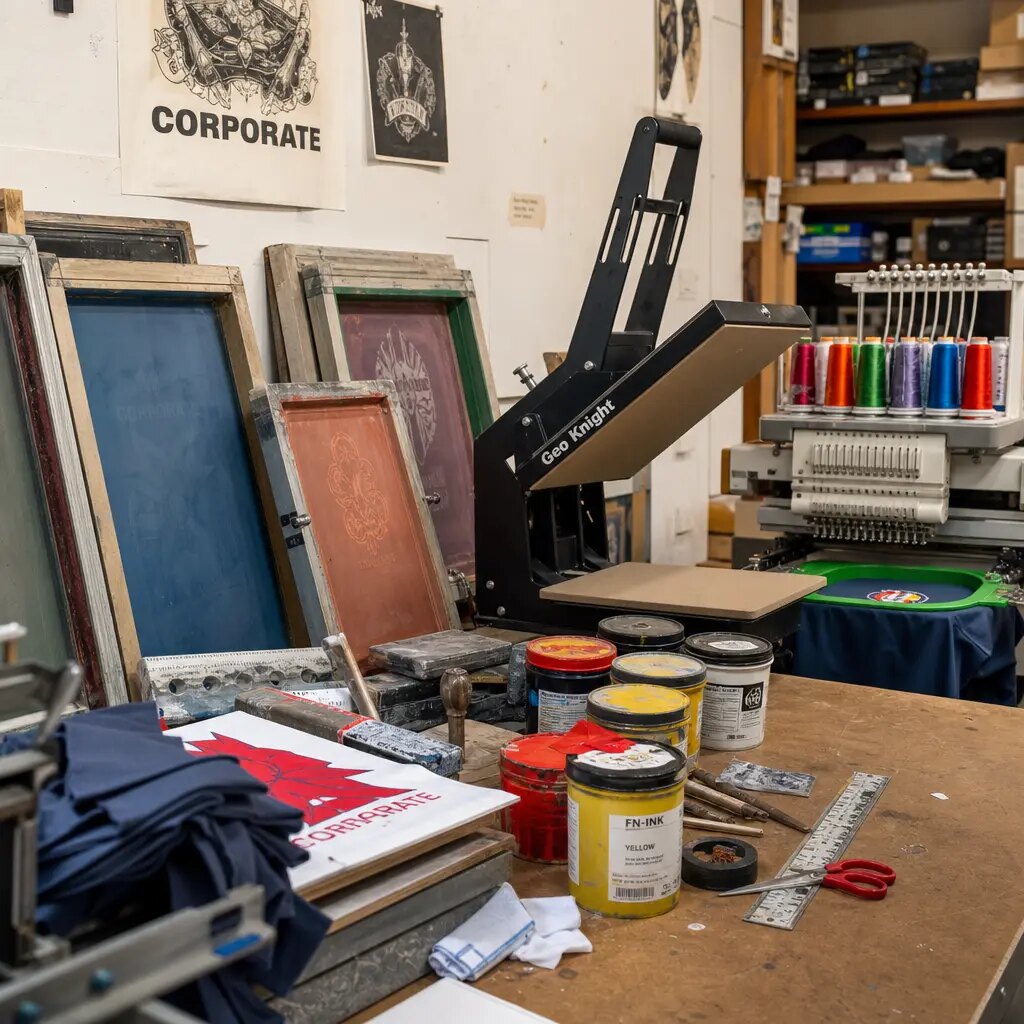
For a winery tote, the logo is part of the durability problem. Large printed areas can stiffen the fabric, hold a crease, and crack sooner if the ink is too heavy or the cure is weak. Screen printing is usually the most practical option for simple 1-3 color art because it is repeatable and relatively durable when cured correctly. A woven label or small embroidery can feel more premium, but it adds stitching steps and a different failure path around the patch or backing. The right answer depends on how the tote will be used, not just how it looks in a sample photo.
Placement matters as much as method. Keep the artwork away from fold lines, handle anchors, and seam intersections. If the logo crosses a crease or sits too close to a gusset fold, the print is much more likely to crack early. A restrained front-panel logo or a small side label often ages better than a large flood print and still reads clearly in a retail setting. For procurement, the key question is not which decoration looks richest on day one. It is which decoration still looks acceptable after folding, loading, and a few months of use.
- Use screen print for simple, repeatable bulk runs.
- Use a woven label or embroidery when the brand wants a premium accent and accepts the extra sewing steps.
- Keep artwork away from fold lines, handle anchors, and seam intersections.
- If the print is large or heavily inked, require rub and fold validation before bulk approval.
Run a durability checklist with named methods
A useful durability checklist needs named methods, pass/fail thresholds, and a clear failure definition. Generic language like 'strong enough' or 'good quality' does not help a buyer settle a claim or reject a weak sample. If the tote will carry wine, groceries, or chilled goods, the test plan should cover handle pull, seam strength, print rub, fold flex, and dimensional stability. The target should be tied to the intended working load, not to a vague idea of robustness.
Use a practical minimum test set that the factory can repeat before shipment. For a bag that must hold bottles, test above the normal service load and reject any creep, opening, or print failure that appears during the hold period. If the bag may be wiped or washed, add a moisture or laundering test. The purpose is to catch the failure mode the customer will actually see: handle stretch, seam pop, print cracking, or a bag that shrinks enough to miss the approved size.
- Handle pull: ASTM D1683 or ISO 13935-2 style static load at 2x working load or 9 kg, whichever is higher; hold 30 seconds; reject seam rupture or anchor creep above 3 mm.
- Seam strength: side seams, bottom seam, and handle anchors tested separately; accept only if seam opening stays within 2 mm at load and no stitch skip appears.
- Print rub: AATCC 8 dry crocking grade 4 or better, and wet grade 3 or better where relevant; reject flaking or smearing visible at 30 cm.
- Fold-flex: 200 cycles across the logo zone; reject crack lines wider than 1 mm or edge lift above 1 mm.
- Dimensional stability: AATCC 135 or ISO 6330 if washed or moisture conditioned; accept shrinkage no greater than 3%, skew no greater than 2%, and panel mismatch no greater than 5 mm.
Approve samples like production, not like artwork
A sample only has value if it reflects the actual bulk build. Buyers should ask for a prototype and then a pre-production sample made from the same fabric, same thread, same print method, and same sewing line that will be used in bulk. If the supplier swaps in a lighter canvas or changes the handle construction just to make the sample look neater, the approval is not meaningful. That is how tote programs drift: the approved sample is one product and the bulk order is another.
Review the sample like a receiving inspection. Measure the body, gusset, handle drop, and seam alignment. Check the top hem, the corner shape, the print placement, and the fold behavior. If the tote is going into a premium retail program, freeze one golden sample and tie it to the bill of materials. Use an AQL standard or an equivalent inspection method for final acceptance, and keep the sample, the inspection record, and the lot code together so disputes can be traced to a specific batch.
- Approve a prototype and a pre-production sample, not one vague sample stage.
- Measure the bag against the drawing, not against memory.
- Freeze a golden sample so the factory cannot change thread, fabric, or print placement quietly.
- Use AQL 2.5 major / 4.0 minor, or an equivalent buyer-defined inspection rule, on final goods.
Pack for shelf appeal and warehouse survival
Canvas grocery totes look simpler than they are. Packing changes how they arrive, how they stack, and how they present on a shelf. If cartons are packed too tightly, the panels can crease permanently and the printed area can crush. If the cartons are too loose, the bags shift, pick up dirt, and arrive with a tired look before they ever reach the customer. Buyers should approve the fold direction, carton count, and outer carton label format before production starts, not after the factory has already packed the first carton.
Moisture control is easy to overlook, but canvas absorbs the environment around it. If the route passes through humid transit lanes or beverage warehouses, ask for polybags, desiccant, or another protection method that keeps the tote clean and dry. Also check carton strength for your own receiving and storage stack. A good tote in a weak carton is still a bad delivered product. The packing spec should describe how the bag will look at receiving, not just how cheaply it ships from the factory.
- Approve fold direction and carton count before bulk sewing starts.
- Match carton dimensions to your warehouse handling and pallet plan.
- Use moisture protection if the route or storage environment is humid.
- Require carton labels that match the buyer's receiving process and SKU naming.
Write the RFQ so reorder changes are visible
The RFQ should make substitutions hard to hide. Freeze the bill of materials, then state which changes need buyer approval before they can happen. That includes fabric mill changes, thread changes, print method changes, handle source changes, and carton changes. If the supplier wants to improve the build, that can be a separate approval, but it should not happen silently. For a winery program, reorder consistency matters because a customer will notice if the second run is stiffer, smaller, or printed differently from the first.
A practical RFQ reads like a manufacturing spec, not a template. It should include the working load, finished dimensions, tolerance window, fabric weight, handle build, print placement, packing plan, test plan, and inspection method. It should also name the exclusions that change price: sample fees, screens, plates, re-test charges, packaging upgrades, and shipping assumptions. This is where procurement protects itself. The clearer the spec, the less room there is for a quote that looks competitive but is really incomplete.
- Freeze the BOM and require approval for any material or process change.
- Name the working load, finished dimensions, and tolerance window in the RFQ.
- List exclusions such as sample fees, screens, packaging upgrades, and re-test charges.
- Treat reorder consistency as a written requirement, not a verbal expectation.
Compare quotes by accepted-bag cost
The useful metric is not unit price. It is accepted-bag cost at delivery. That means the bag price plus sample fees, print setup, packing, freight assumptions, expected inspection cost, and the cost of any likely rework. If one supplier is cheaper but needs an extra approval cycle or uses a construction path that raises reject risk, the lower quote may be more expensive by the time the order is received and sorted. For a boutique winery, the real loss is often not the bag cost. It is the time lost to a late or inconsistent replenishment.
The easiest way to compare is to force every quote into the same structure. Same spec, same tests, same packing, same lead time assumptions, same inspection scope. Then note what is excluded and what changes on reorder. If the bag is a one-time promotion, a lower-cost stock-blank route may be fine. If it is a recurring retail item, control and reorder stability matter more than saving a few cents on the first PO. That is the commercial tradeoff procurement should make explicit before anyone signs off.
- Compare only after the same spec, test plan, and pack plan are on every quote.
- Treat sample fees, screens, and inspection as part of landed cost.
- Write down the exclusions so hidden charges surface before the PO.
- Use accepted-bag cost and reorder risk as the real comparison metric.
Specification comparison for buyers
| Spec decision | Recommended option | Decision value | Risk or reorder consequence |
|---|---|---|---|
| Sourcing route for a custom winery program | Direct cut-and-sew factory with in-house sewing, printing, and final QC | Usually the best repeatability on custom construction; small-run setup can be 5-15% higher than a decorator, but the BOM and inspection path stay controlled | Lower silent-swap risk if the same line runs the bulk order and reorders |
| Pilot order for a first-time tote program | Stock or near-stock canvas body with limited customization | Lowest entry cost and fastest launch; useful for 50-300 unit validation runs | Higher reorder drift if blank stock, color, or handle spec changes later |
| Fabric weight for mixed grocery and bottle carry | 12 oz canvas as the baseline, 14-16 oz for heavier or more premium use | 12 oz is the most balanced cost-to-structure point; 14-16 oz usually adds about 10-20% in material and freight cost | Too-light fabric sags under bottles; too-heavy fabric increases stiffness and carton cube |
| Handle construction | Cotton webbing or self-fabric handles with bar-tacks plus X-box reinforcement | Adds one extra sewing operation per anchor, but improves carry confidence and load retention | Straight stitch only is cheaper upfront, but handle creep and anchor failure are more likely |
| Print method for winery branding | 1-3 color screen print, or a small woven label for a premium accent | Screen print usually gives the best cost per impression on volume; woven labels add labor but can age better at the fold line | Large solid ink areas crack faster if placed across seams or folds |
| Packing route for export and storage | Flat pack with an approved fold direction, carton spec, and moisture protection if needed | Improves freight efficiency and retail presentation; adds a small packing cost but reduces in-transit scuffing and creasing | Loose packing can create dirty or wrinkled product; over-tight packing can crush print and panel shape |
| Sample approval route | Prototype plus pre-production sample using the same fabric, same print method, and same sewing line | Higher upfront discipline, but it prevents approval based on a sample that cannot be duplicated in bulk | If the sample uses substitute materials, the reorder will not match the approved bag |
| Final inspection standard | AQL 2.5 major / 4.0 minor, or an equivalent buyer-defined method | Higher QA time, lower dispute risk on finish, dimensions, and print placement | Without a defined inspection standard, acceptance becomes subjective and reorder claims are harder to settle |
Buyer checklist before sampling
- Write the real load case in kilograms, bottle count, and carry distance, not just 'grocery use'.
- Freeze the finished GSM, weave, finish, and shrinkage allowance before comparing prices.
- Specify handle material, width, drop, anchor pattern, and thread type so every quote is comparable.
- Place the logo away from fold lines, gusset seams, and handle anchors.
- Set finished dimensions and a tolerance window for body width, height, and gusset depth.
- Require a prototype and a pre-production sample made from the same BOM and the same sewing line.
- Define the inspection method in advance, including AQL or an equivalent pass/fail rule.
- Lock the fold direction, carton count, carton label format, and moisture protection before the PO.
- Require lot traceability for fabric, thread, print screens, and finished cartons.
- Compare quotes by accepted-bag cost, not unit price alone.
Factory quote questions to send
- What is the finished fabric spec after any pre-shrink or washing step, and which mill lot is being booked?
- Is the handle self-fabric or webbing, what is its width, and how is it anchored at each stress point?
- Where exactly will the artwork sit relative to the fold line, gusset, and handle attachment?
- What are the finished bag dimensions and tolerances after sewing, and how will they be measured?
- Which seam construction is used at the bottom seam, side seams, and handle anchors?
- Can the prototype and pre-production sample use the same fabric, thread, print method, and sewing line as bulk?
- What internal tests are run before shipment, and what pass/fail limits do you use for pull, rub, and wash checks?
- Who performs final QC, what inspection standard is used, and can you share the inspection form?
- How will the bags be packed, including fold method, carton count, carton dimensions, and moisture protection?
- Which steps are subcontracted, and what change-control process prevents an unapproved material swap on reorder?
Quality-control points to confirm
- Handle pull test: run a static load test aligned to ASTM D1683 or ISO 13935-2. Load each handle to 2x the intended working load or 9 kg, whichever is higher, hold for 30 seconds, and reject any seam rupture, yarn break, or anchor creep greater than 3 mm.
- Seam strength check: test the side seams, bottom seam, and handle anchors separately. Under the same load, accept only if seam opening stays within 2 mm and there is no skipped stitch line, popped thread, or corner tear.
- Print rub resistance: use AATCC 8 for dry crocking and ISO 105-X12 or equivalent for wet crocking where the bag may contact condensation. Accept dry grade 4 or better and wet grade 3 or better, with no flaking visible at 30 cm.
- Print and fold durability: run a fold-flex check on the logo zone for 200 cycles, or an agreed internal method, and reject any crack line wider than 1 mm, edge lift greater than 1 mm, or visible distortion that changes the logo shape.
- Dimensional stability: use AATCC 135 or ISO 6330 if the bag is washed or moisture conditioned. Accept shrinkage no greater than 3% in length or width, skew no greater than 2%, and panel mismatch no greater than 5 mm.
- Visual retail QC: reject bags with oil marks, stain spots, broken stitches, loose threads longer than 10 mm, needle damage, or shade mismatch from the approved sample.
- Packing QC: inspect carton count, fold direction, and compression behavior. Accept only if a 24-hour stacked carton test at the planned warehouse load leaves no crushed print area and no permanent crease deeper than 2 mm.
- Traceability QC: require a lot number on the carton, fabric roll ID, thread code, and print screen or artwork ID, plus one sealed gold sample retained for the lot.