Why Fabric Weight Drives the Whole Tote Spec
For hotel retail canvas grocery totes, fabric weight is not a minor hand-feel decision. It affects how the tote presents on a boutique shelf, how confidently a guest can carry bottled drinks or packaged snacks, how sharply the logo prints, how many bags fit in a carton, and how the landed cost compares with the intended retail price. If a purchase request only says "cotton canvas grocery tote," different suppliers may quote different products while appearing to answer the same RFQ. One factory may quote 8 oz canvas with narrow handles and a simplified seam, while another quotes 12 oz canvas with reinforced handles and individual packing. The unit prices will not be comparable.
A procurement team should treat fabric weight as the anchor specification, then build the rest of the tote around it. The right choice depends on the selling use, guest expectation, property positioning, and logistics model. A resort marketplace selling a reusable grocery tote beside premium snacks may need a stronger 10 oz or 12 oz bag. A hotel group ordering a promotional tote for a short seasonal campaign may accept 8 oz if the size is controlled, the print is simple, and the expected load is moderate.
The important B2B question is not "what is the best canvas weight" in isolation. It is "what fabric weight supports the product promise without creating unnecessary cost, freight, or schedule risk." Heavier canvas can improve perceived value, but it also increases material consumption, carton gross weight, and sometimes sewing and print challenges. Lighter canvas can reduce cost and fold neatly, but it may collapse when displayed with a wide gusset or feel too promotional for a retail program.
- 8 oz canvas usually suits lower-cost promotional, amenity, event, or light retail totes where the bag is not expected to carry heavy groceries.
- 10 oz canvas is the common middle ground for grocery-style hotel retail bags because it balances structure, cost, printability, and freight.
- 12 oz canvas gives a more structured premium feel for luxury hotel shops, spa retail, and branded merchandise, but it increases landed cost.
- Finished GSM should be discussed because dyeing, washing, coating, pressing, and finishing can change the measured weight and the perceived stiffness.
- The approved sample should be judged loaded and folded, not only viewed empty on a table.
Translate Oz Canvas Into GSM Before Comparing Quotes
Canvas quotations often use ounces, while sourcing files, QA manuals, and material specifications may use GSM. Both terms are useful, but they are not always applied consistently. Some suppliers describe fabric by traditional ounce weight, some by finished GSM, and some by a mill code that does not exactly match the final sewn tote. For commercial comparison, ask every factory to state the approximate GSM and to clarify whether the weight is measured before dyeing, after dyeing, after washing, or after other finishing.
As a practical guide, 8 oz canvas often falls around 260-300 GSM, 10 oz around 330-360 GSM, and 12 oz around 390-430 GSM. These ranges help screen RFQs, but they should not replace physical sample approval. A tightly woven 10 oz canvas may feel more stable than a loosely woven 12 oz fabric. A washed 12 oz fabric may feel softer and less structured than expected. Natural cotton canvas may also contain slub, seed flecks, and shade variation that are part of the material character but still need approval for retail presentation.
Buyers should also avoid comparing fabric weight without bag weight. Two totes may both be called 10 oz, but the finished unit weight can differ because of gusset depth, handle width, seam allowance, lining, labels, and bottom reinforcement. For repeat hotel retail programs, record the finished bag weight from the approved sample. It becomes a practical check when reviewing future production or comparing suppliers.
- Use both units in the RFQ: for example, "10 oz cotton canvas, approx. 330-360 GSM, finished fabric."
- Ask whether the stated weight is greige, dyed, washed, coated, or finished, because the buying implication can change.
- Request a fabric swatch or construction details when the order value is meaningful or when retail appearance is important.
- Do not compare only unit price until the quoted GSM, finished bag weight, gusset size, and handle construction are known.
- For dyed canvas, require bulk shade tolerance because darker colors can show dust, lint, abrasion, and print defects more clearly.
- For natural canvas, approve the acceptable level of slub, seed fleck, and shade warmth before bulk cutting.
Choose Weight by Hotel Retail Use, Not by Habit
Hotel retail is not one uniform channel. A tote may be sold in a lobby marketplace, used for guest grocery purchases, displayed in a spa shop, bundled with welcome amenities, offered in a resort beach store, or used for conference gifting. A grocery-style tote needs more practical capacity than a flat promotional bag. It should open easily, hold rectangular items, and remain comfortable when the guest carries a mixed load through the property or back to a room.
A useful way to choose fabric weight is to define the expected load, shelf presentation, and retail price point before asking for quotes. If the tote must carry beverage bottles, boxed snacks, sunscreen, a small towel, and souvenir items, 10 oz canvas with a boxed bottom is usually a safer baseline than 8 oz. If the product is positioned as premium branded merchandise and the tote itself is part of the value proposition, 12 oz may help, provided the buyer accepts the impact on freight, sewing, folding, and carton density.
For properties with multiple retail uses, consider whether one standard tote can serve all locations or whether separate versions are needed. A single 10 oz natural canvas grocery tote may work well across a hotel group because it is flexible enough for market, spa, and gift uses. A luxury boutique may justify a 12 oz version with a hangtag and better retail fold. A high-volume event may need an 8 oz version to meet budget, but it should not be described internally as the same product.
- Light use: 8 oz canvas for amenity kits, paper goods, lightweight snacks, guest welcome items, or short-term event retail.
- Standard grocery use: 10 oz canvas for mixed hotel market purchases, resort shop products, and general reusable retail bags.
- Premium use: 12 oz canvas for structured boutique totes, higher retail price points, branded merchandise, and heavier expected loads.
- Avoid very light canvas with a wide gusset because the empty bag may collapse and look weak on display.
- If the tote must stand upright on shelf, test the empty bag and a lightly filled bag; heavy fabric alone does not guarantee shelf shape.
- If guests will carry the tote on the shoulder, check handle drop, handle width, and loaded comfort, not just fabric weight.
Build the Full Construction Around the Fabric Weight
Fabric weight alone does not make a good grocery tote. The finished strength comes from fabric, gusset geometry, handle construction, seam allowance, thread, stitch density, and reinforcement method. A 12 oz tote with weak handle stitching can fail earlier than a well-made 10 oz tote. For hotel retail buyers, the most common stress area is the handle attachment because guests often carry bottled drinks, folded towels, or retail purchases in one hand while moving through the property.
For grocery-style totes, specify side and bottom gussets clearly. A flat tote can be quoted cheaply, but it will not function like a grocery bag and may disappoint retail teams. A boxed bottom of 8-12 cm gives more usable capacity and better shelf shape for packaged items. Wider gussets increase fabric consumption and put more stress on the corners, so the construction should be adjusted rather than simply widened on paper.
Handle choice should match the brand look and usage. Self-fabric canvas handles create a clean, consistent appearance because the handle and body can match. Cotton webbing handles may be more consistent, can feel comfortable, and may simplify production, but the color and texture may not match the body fabric exactly. For B2B procurement, the safest approach is to request both options in the quote when cost, appearance, or lead time is uncertain.
- Handle drop: a common retail range is about 22-28 cm, depending on whether the tote is intended for shoulder carry or hand carry.
- Handle width: narrow handles can cut into the hand when loaded; wider handles add comfort but consume more fabric or webbing.
- Handle type: self-fabric handles look integrated; cotton webbing handles can improve consistency and reduce some sewing complexity.
- Reinforcement: each handle end should use an approved box stitch, cross stitch, or bartack suitable for the expected load.
- Gusset depth: 8-12 cm is practical for many grocery-style hotel retail totes; wider gussets should be load-tested.
- Thread and needle: heavier canvas needs suitable thread tension and needle selection to avoid skipped stitches, puckering, and visible needle damage.
- Top hem: the top opening should be stable because it carries handle stress and affects how the tote looks when displayed.
Match Print Method to Canvas Texture, Artwork, and Retail Handling
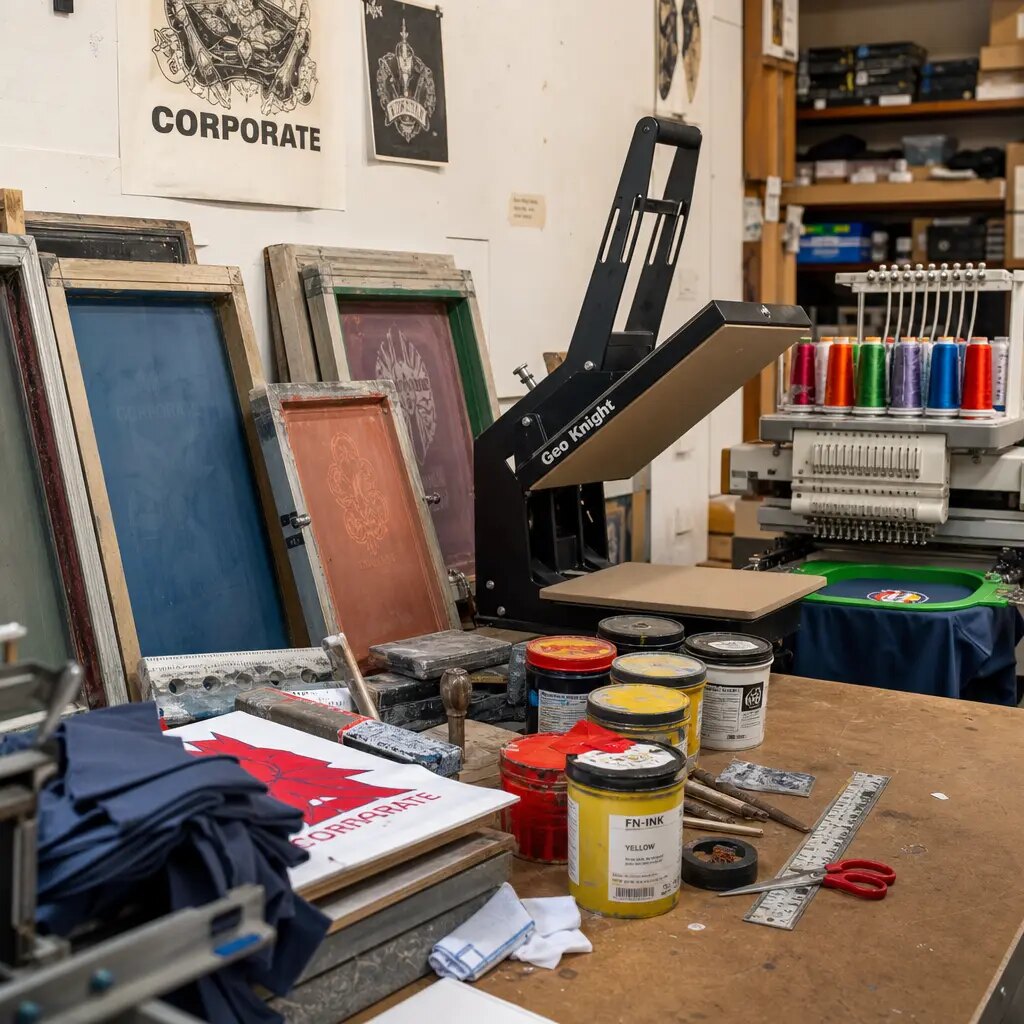
Most hotel retail canvas grocery totes use screen printing because it is cost-effective for solid logos, property names, simple line art, and repeat orders. On natural cotton canvas, however, the weave texture and slub can affect edge sharpness and ink coverage. A logo that looks perfect on a digital proof may look more organic on real fabric. That can be acceptable, even desirable, for natural canvas merchandise, but it must be approved on the actual fabric weight and color.
Water-based screen print can provide a softer hand feel, especially on natural canvas. It may require careful curing to avoid weak rub fastness or inconsistent color strength. Plastisol or heavier ink systems can provide stronger coverage, but large print areas may feel stiff, crack when folded, or create panel distortion. Heat transfer can be useful for complex graphics, gradients, or smaller runs, but it may not match the handcrafted look some hotel brands want from canvas. Embroidery can look premium on a small mark but can become costly or pucker thinner canvas when the logo is large.
Before bulk production, require a print sample or strike-off on the final fabric. For hotel retail, the logo is not only decoration; it is part of the sellable product. Confirm logo size, placement from top edge, position relative to gusset, and the fold line used in packing. If the printed panel will be folded across the logo, the risk of creasing or ink transfer increases.
- Screen print: best for solid hotel logos, one to four colors, stable repeat orders, and predictable unit cost.
- Water-based ink: softer hand feel, but curing, opacity, and rub fastness need attention, especially on darker canvas.
- Thicker ink: stronger coverage, but large printed areas may feel stiff and can crease when folded under pressure.
- Heat transfer: useful for detailed artwork, but test adhesion, edge lift, cracking, and hand feel after folding and rubbing.
- Embroidery: better for small premium marks than large grocery tote front panels because stitch count and puckering risk increase.
- Print placement: define the distance from top edge and side seams, and set a tolerance for bulk inspection.
- Artwork approval: approve the real print on the real fabric, not only a digital mockup.
Understand MOQ Logic Before Negotiating Price
MOQ is rarely only about how many bags a sewing line can make. For canvas grocery totes, MOQ depends on fabric availability, dye color, print setup, label production, packing material, cutting efficiency, and whether the factory can combine your order with other production. Natural cotton canvas often has the most flexible MOQ because standard stock may be available. Custom dyed canvas, custom woven labels, custom webbing, special washes, and multi-color printing increase setup requirements.
A buyer can make a hotel retail quote more workable by separating must-have requirements from negotiable details. The hotel group may require a specific front logo, target dimensions, and barcode label, but may be able to accept stock natural canvas instead of a custom dyed body. That one decision can reduce lead time, color risk, and minimum order pressure. Similarly, a one-color screen print may be easier to repeat across properties than a multi-color print with tight registration.
When requesting alternates, require the factory to label each version clearly. Procurement teams often receive several prices but lose track of which fabric weight, label, or packing method each price includes. A structured quote table should show fabric weight, GSM, size, handle type, logo method, label details, packing, carton quantity, sample charge, setup charge, lead time, and MOQ. Without that detail, price negotiation can accidentally reduce product quality.
- Lowest MOQ route: stock natural canvas, standard size, one-color screen print, no custom label, simple folded packing.
- Medium MOQ route: stock dyed canvas, woven side label, two-color print, barcode sticker, or paper band packing.
- Higher MOQ route: custom dyed fabric, custom handle webbing, special wash, multiple print positions, hangtag, and retail-ready barcode packing.
- Quote comparison rule: request separate lines for 8 oz, 10 oz, and 12 oz using the same dimensions, artwork, handle construction, and packing assumptions.
- Cost clarity: screen charge, sample charge, label charge, hangtag charge, barcode charge, and packing material should be visible instead of hidden.
- Repeat order planning: ask whether the fabric, labels, and screens can be kept consistent for future replenishment.
Cost Drivers Buyers Often Miss in Canvas Grocery Totes
Fabric is usually the largest cost driver, but it is not the only one. Heavier canvas increases material cost, cutting weight, sewing difficulty, needle wear, carton gross weight, and sometimes drying or curing time. A wider gusset consumes more fabric than many buyers expect because it changes the panel geometry and may increase cutting loss. Long self-fabric handles also add fabric consumption and sewing labor.
The lowest unit price may come from a hidden change that matters later: thinner canvas, narrower handles, less seam allowance, no reinforcement, smaller print, cheaper label, bulk packing, or fewer pieces per quality check. For hotel retail, those shortcuts can show up as poor shelf shape, handle complaints, print defects, or inconsistent presentation across properties. A good quote should make the assumptions visible so the procurement team can decide where to save and where not to save.
Freight should be considered early, especially for hotel openings, seasonal launches, or urgent replenishment. A 12 oz tote may look better, but if the program must ship by air to meet an opening date, carton weight and volume can damage the margin. For repeat programs with sea freight planning, 12 oz may be reasonable. For urgent multi-property allocation, 10 oz may provide a better balance of presentation and logistics.
- Fabric consumption: affected by body size, gusset depth, handle length, handle type, shrinkage, seam allowance, and cutting loss.
- Print cost: affected by color count, print size, ink type, number of positions, curing method, registration tolerance, and reject allowance.
- Labor cost: affected by boxed corners, reinforced handles, inner labels, side labels, hangtags, barcodes, and individual packing.
- Packing cost: paper band, polybag, hangtag, retail sticker, carton divider, or barcode label all add material and handling steps.
- Freight cost: heavier canvas and low carton density can change landed cost more than the ex-factory unit price suggests.
- Inspection cost: more complex branding and retail packing require more inspection time and clearer defect standards.
- Reorder cost: a cheaper first order may become expensive if the fabric or label cannot be repeated consistently.
Sample Approval Should Test Load, Look, Fold, and Retail Reality
A proper sample for a hotel retail grocery tote should be made with the final fabric weight, final handle construction, final logo method, final label set, and final folding method. A sample made from substitute fabric may be useful for size discussion, but it should be labeled as a fit sample or construction sample, not a production standard. Bulk approval should wait until the buyer has reviewed a pre-production sample that reflects the final quote.
During sample approval, load the tote with the actual type of merchandise it will carry. Bottled drinks create point weight and handle stress. Folded towels create bulk. Snack boxes test gusset shape. Spa products and sunscreen can test whether the bag stands and whether the bottom corners distort. After loading, review handle comfort, seam stress, bottom shape, and print distortion. Then empty the bag and see whether it recovers its shape well enough for retail presentation.
Packing should also be tested at sample stage. Fold the tote as it will be packed, place light pressure on it, and leave it for a period before reviewing the front panel. This simple check can reveal whether a heavy print creases, whether a paper band damages the surface, or whether the fold line crosses the logo. For procurement teams, a strong sample approval process reduces arguments later because inspection can compare bulk goods to the approved standard.
- Measure finished width, height, side gusset, bottom gusset, handle length, and handle drop against the spec sheet.
- Weigh the complete tote to confirm that the quoted fabric weight and construction match the physical product.
- Load test with at least the expected real-use weight; for grocery totes, 5-8 kg is a useful working check unless your program needs a different standard.
- Check handle comfort and seam stress after carrying the loaded sample, not only after placing weight inside it.
- Rub the print dry and lightly damp to see whether ink transfers, cracks, becomes tacky, or changes appearance.
- Review the folded sample after packing pressure, especially when using heavy ink on 10 oz or 12 oz canvas.
- Scan any barcode in its final position and confirm that folding or carton abrasion will not make it unreadable.
- Keep one approved sample at the buyer side and one sealed reference sample at the factory.
Set Quality-Control Standards Before Production Starts
Quality control is easier when the purchase order defines measurable standards before production begins. For canvas grocery totes, common disputes involve fabric weight, shade, dimensions, handle strength, print position, print color, loose threads, gusset symmetry, and packing appearance. If those items are only discussed after bulk production, the factory and buyer may have different expectations. A short but precise QC addendum can prevent many of these problems.
Fabric weight should be checked using an agreed method, such as a GSM cutter or a defined swatch weighing process. Finished dimensions should be measured after sewing and pressing, because canvas can shrink or distort during production. Print should be checked after curing, not immediately after application. Handle strength should be tested in a way that resembles actual use: static hanging tests are useful, but buyers should also inspect the stitching and fabric around the handle attachment for tearing or distortion.
For hotel retail, cosmetic defects matter because the tote is a sellable item, not only packaging. Natural canvas variation may be acceptable, but stains, oil marks, heavy shade differences, misaligned logos, and damaged labels can reduce retail value. Define critical, major, and minor defects if your organization uses AQL inspection. Even a simple defect list helps the factory know what to sort before shipment.
- Fabric: verify GSM, shade, odor, stains, weaving flaws, excessive slub, and whether the approved natural canvas character is maintained.
- Dimensions: measure width, height, gusset, handle length, and handle drop on finished pieces after pressing.
- Stitching: check skipped stitches, broken thread, loose thread, seam slippage, puckering, raw edges, and reinforcement consistency.
- Handles: inspect every sampled handle attachment for box or cross stitch quality, top hem stress, and fabric tearing.
- Print: verify placement, color, curing, rub fastness, cracking, bleeding, ghosting, and ink transfer to folded surfaces.
- Labels and retail details: check spelling, placement, barcode scanability, origin marking, care text, and hangtag attachment.
- Packing: confirm folding method, units per carton, carton marks, moisture protection, and whether printed panels are protected from abrasion.
Packing Choices Affect Shelf Presentation and Warehouse Handling
Hotel retail teams often care about how the tote arrives at the property, not just how it leaves the factory. A canvas grocery tote may be received by a distributor warehouse, hotel purchasing office, gift shop backroom, or individual property with limited storage. Packing should protect the print, make counting easy, avoid moisture problems, and prevent deep creases that make the product look old before it reaches the shelf.
Individual polybags protect the bag from moisture and handling marks and make warehouse counting easier, but some hotel brands prefer to reduce plastic. Paper bands can look cleaner and may suit retail-ready presentation, but they protect less during long shipment and may leave pressure marks if packed too tightly. Bulk packing is lowest cost but may require local repacking and can expose the tote to dust, carton abrasion, or inconsistent folding.
If the tote is sold through a POS system, barcode placement matters. The barcode should remain flat, scannable, and visible after folding and handling. Hangtags should not puncture a visible area in a way that weakens the fabric or damages the front panel. Ask for packing photos before shipment because they show the real fold line, carton fill, carton marking, and whether printed panels are touching each other.
- Simple bulk pack: lowest cost, suitable when the buyer will repack locally or when the tote is used as operational packaging.
- Individual polybag: better moisture and abrasion protection, easier counting, but adds plastic and labor.
- Paper band: cleaner retail handling and lower plastic use, but less protection against moisture and carton rub.
- Hangtag or barcode: useful for retail systems, but needs placement approval, scan testing, and attachment method approval.
- Carton planning: request units per carton, carton size, gross weight, net weight, and carton marking before final shipment.
- Crease control: define folding direction so the fold line does not cross the main logo or barcode when avoidable.
- Moisture control: for long shipments, confirm carton quality and whether inner liners or desiccants are needed for the route.
Specification comparison for buyers
| Spec decision | Recommended option | When it fits | Buyer risk to check |
|---|---|---|---|
| Main fabric weight for hotel retail grocery tote | 10 oz canvas, about 330-360 GSM | Balanced choice for minibar groceries, resort shops, welcome market shelves, staff-curated gift bundles, and mid-price retail programs | If the bag must stand well on shelf, verify body stiffness after washing, pressing, and print curing, not only raw fabric GSM |
| Lower-cost fabric option | 8 oz canvas, about 260-300 GSM | Good for promotional hotel market bags, seasonal event merchandise, conference gifting, or lighter retail price points | May feel thin if the tote has a large gusset, long handles, or dark screen print; require a physical sample loaded with 5-7 kg |
| Premium retail fabric option | 12 oz canvas, about 390-430 GSM | Fits luxury hotel boutiques, spa retail, branded grocery totes, and programs where the bag is part of the merchandise value | Higher fabric cost, heavier carton weight, slower sewing, and longer drying time for water-based print can affect landed cost and lead time |
| Handle construction | Self-fabric canvas handles with reinforced box or cross stitch | Best when buyers want a clean retail look and matching color between body and handles | Handle fabric must match body shrinkage and color lot; inspect handle attachment for skipped stitches, weak bartacks, and tearing under load |
| Bottom and side gusset | Boxed bottom with 8-12 cm side gusset | Useful for grocery items, folded towels, snack packs, wine accessories, spa products, and hotel sundries | Wide gussets need heavier fabric, accurate corner sewing, or bottom support; otherwise the tote collapses and looks cheaper on shelf |
| Logo print method | Screen print for solid logos; heat transfer only for complex color artwork or small runs | Screen print gives stable cost and good hand feel for most hotel retail logos, property names, and single-color brand marks | Confirm ink coverage, curing, rub fastness, wash fastness, and whether heavy ink makes the front panel ripple or crack when folded |
| Label and branding details | Printed front logo plus woven side label, inner care label, hangtag, or barcode as needed | Works for retail buyers who need brand visibility plus origin, care, SKU, or POS information | Labels add labor steps and MOQ pressure; check label placement tolerance, barcode scanability, and whether label material matches brand standards |
| Packing format | Individually folded in polybag or paper band, then export carton | Suitable for hotel retail backroom handling, distributor warehouse receiving, and property-level allocation | Over-compressed packing can crease heavy canvas and distort the printed panel; define folding line, carton quantity, moisture protection, and carton marking |
Buyer checklist before sampling
- Define the target retail price, expected load, replenishment model, and selling environment before choosing 8 oz, 10 oz, or 12 oz canvas.
- State fabric weight in both oz and approximate GSM, and specify whether the weight is greige, dyed, washed, coated, or finished fabric.
- Confirm tote dimensions using width, height, side gusset, bottom gusset, seam allowance, handle length, and handle drop, not only a general size description.
- Decide whether the tote must stand on shelf, hang from a peg, fold flat in a drawer, or ship directly to multiple hotel properties.
- Require one pre-production sample using final fabric, final logo method, final handle reinforcement, final label set, and final packing fold.
- Test the sample with realistic hotel retail loads such as bottled drinks, boxed snacks, folded towels, spa items, amenity kits, and small souvenir products.
- Review print coverage on natural canvas because slub, weave texture, seed flecks, and heavy ink areas can change the visual result.
- Set tolerance for fabric weight, dimensions, print position, print color, canvas shade, stitch defects, handle strength, and packing appearance in the purchase order.
- Confirm MOQ logic by fabric color, print color count, label type, hangtag, barcode, packing method, and whether the order can use stock fabric.
- Request carton dimensions, gross weight, net weight, units per carton, loading photos, and packing photos before shipment booking.
Factory quote questions to send
- What canvas weights can you supply for this grocery tote style, and are the weights measured before or after dyeing, washing, coating, and finishing?
- For 8 oz, 10 oz, and 12 oz canvas, what are the estimated finished bag weight, carton quantity, carton dimensions, and carton gross weight for our target size?
- What is the minimum order quantity for natural canvas, bleached canvas, stock dyed canvas, and custom Pantone dyed canvas?
- Can you quote the same size and artwork in 8 oz, 10 oz, and 12 oz so our team can compare fabric weight without hidden construction changes?
- Which print method do you recommend for our artwork, and what is the setup cost by color, screen, position, or transfer film?
- Can the print pass basic dry rub, wet rub, tape, and wash fastness checks appropriate for hotel retail handling?
- What handle reinforcement will be used, how many stitches per inch are typical, and what load test can the finished tote pass?
- Can you quote both self-fabric handles and cotton webbing handles so we can compare cost, appearance, lead time, and strength?
- What are your normal cutting, sewing, printing, finishing, inspection, and packing lead times after sample approval?
- What dimensional tolerance, fabric weight tolerance, print placement tolerance, and shade tolerance will you apply during inspection?
Quality-control points to confirm
- Fabric weight should be checked from a cut swatch using a GSM cutter or agreed weighing method, with tolerance stated in the PO.
- Finished tote dimensions should be measured after sewing and pressing, including width, height, side gusset, bottom gusset, handle length, and handle drop.
- Handle attachment should use reinforced box stitch, cross stitch, or approved bartack with consistent thread tension and no loose thread at stress points.
- Print position should stay within agreed tolerance from the top edge, side seam, and bag centerline, especially for centered hotel logos.
- Ink curing should be verified by dry rub, wet rub, tape pull where appropriate, and visual check for cracking, tackiness, bleeding, ghosting, or transfer to folded surfaces.
- Color shade should be compared under consistent lighting against the approved sample, especially for dyed canvas, natural canvas lots, or colored ink.
- Seams should be checked for skipped stitches, needle holes, puckering, seam slippage, broken thread, raw edges, and uneven gusset corners.
- The bottom gusset should be symmetrical and able to open fully without twisting, because shelf shape matters for grocery-style retail totes.
- Labels, hangtags, barcode stickers, and care labels should match placement, spelling, scanability, origin marking, and brand requirements.
- Packing should protect the printed panel from heavy creasing, moisture, carton abrasion, dust, odor, and barcode damage.