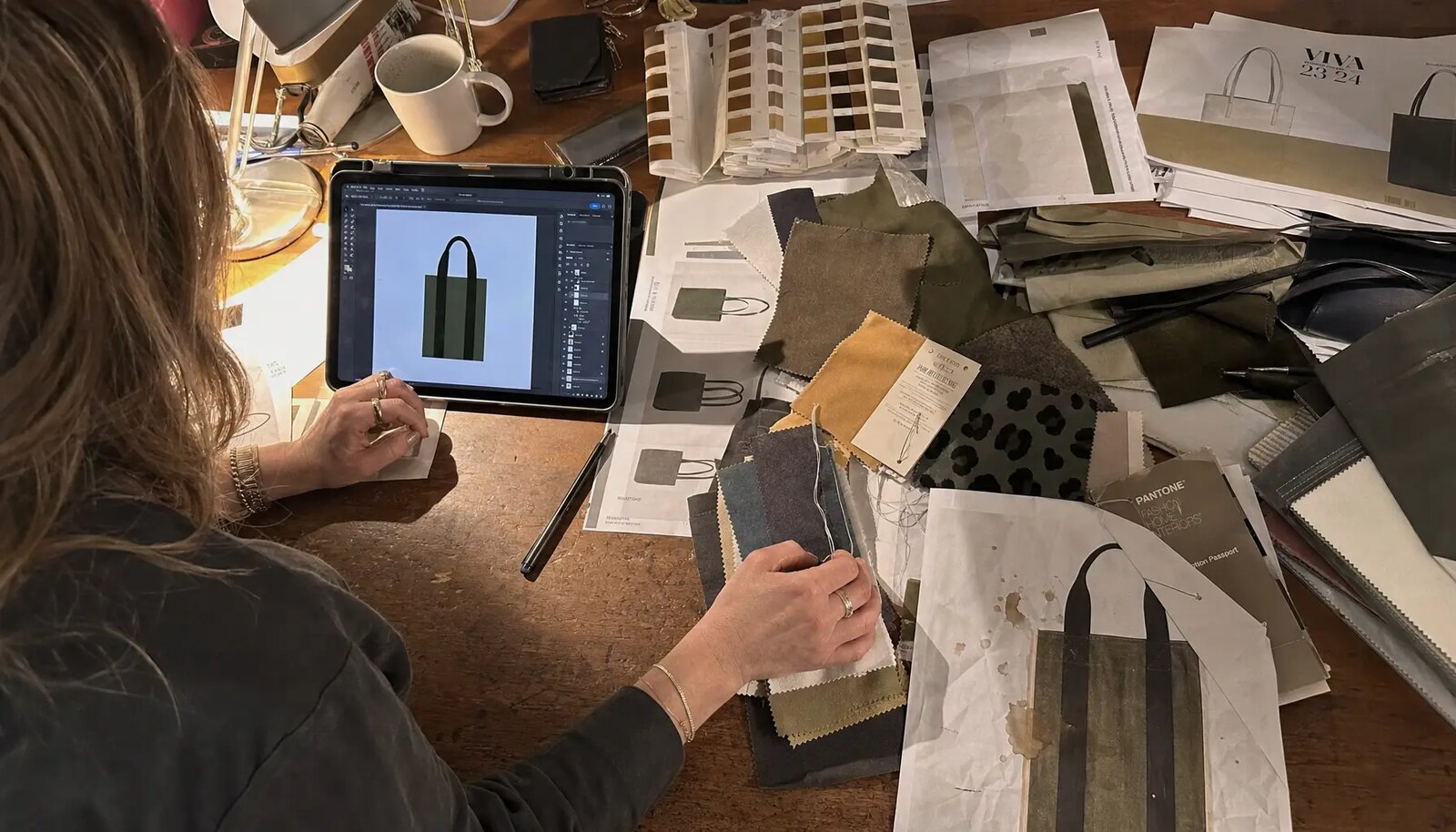
Why print proofing is the main failure point on canvas grocery totes
Eco apparel brands usually spend time on the tote’s message and almost no time on defining what a passable print actually looks like in production. That gap creates the common result: the factory prints something that technically matches the artwork file, but the bag still looks off on shelf. On canvas grocery totes, the texture of the fabric, the body seams, and the thickness of the ink all change how the artwork reads once it is printed at scale.
The problem gets worse because grocery totes are usually large-panel bags. Bigger print areas mean more visible skew, more chances of pinholes in solid fills, and higher rejection rates if the artwork sits too close to seams or top hems. A buyer guide for this product should therefore start with print proofing, not with generic sustainability language. If the print proof is weak, even a well-sewn bag becomes a claims issue once it reaches stores.
- Natural canvas texture can make small text appear less sharp than on coated or smoother fabrics.
- Large one-color slogans are simple to quote but can still fail due to heavy ink feel or uneven fill.
- Artwork centered on a flat PDF may look off-center on a sewn tote if side seams pull the panel inward.
- Proofing has to account for fabric shade, seam positions, handle shadows, and gusset breaks.
Choose the right canvas weight before discussing print detail
For grocery tote programs tied to eco apparel brands, the safest working range is usually 10oz to 14oz canvas, roughly 280 to 400 GSM. Below that, the bag may still work as a lightweight giveaway tote, but the print panel can ripple and the bag can lose shape when loaded. Above that range, the tote becomes sturdier but freight cost rises, folding becomes bulkier, and some print areas need more pressure to achieve a clean deposit.
A common buying mistake is comparing prices on nominal ounce labels instead of finished GSM. Some suppliers quote greige fabric weight, others quote finished fabric after washing, shrinking, or dyeing. If one factory prices 12oz and another prices 10oz finished but both call the product 'canvas grocery tote,' your quote sheet is already distorted. For RFQ accuracy, specify the finished GSM tolerance and ask whether the sample used the same fabric as the quote.
- 10oz to 12oz canvas suits promotional reusable shopping totes with moderate carrying needs.
- 12oz to 14oz canvas suits retail resale totes where shape, print stability, and durability matter more.
- Heavier canvas increases carton weight and may reduce pieces per carton.
- Natural unbleached canvas can show specks and tone variation; that is normal unless the PO requires a cleaner visual grade.
Print method selection: what works, what costs more, and what fails in bulk
Screen printing is still the default method for canvas grocery totes because it handles simple brand graphics well, scales economically at volume, and gives better opacity than many digital options on natural fabric. It is especially suitable when eco apparel brands want a clean logo, campaign phrase, or line-art graphic with one to three colors. It also allows better repeatability across reorders when screens are stored and the artwork stays unchanged.
Digital print can work for photo-like artwork or short runs, but on canvas it often delivers a softer edge and greater sensitivity to base fabric variation. Heat transfer may be useful for highly detailed multicolor work, yet the hand-feel can conflict with an eco brand’s expectation of a fabric-first product. When comparing quotes, buyers should not only ask 'which method' but also define acceptable hand-feel, rub resistance, and edge sharpness. Those are the areas where the same artwork can look very different from one supplier to another.
- Screen print is usually the best value for medium and large runs with bold artwork.
- Digital print suits low MOQs or gradient artwork but needs realistic expectations on color depth and consistency.
- Heat transfer can solve detail limits but may create a patch-like surface on soft canvas.
- Large solid areas require careful ink deposit control to avoid cracking or a stiff print panel.
Build the print proof around measurable acceptance criteria
A print proof should be more than an approved visual. The buyer needs a one-page standard that defines where the artwork sits, how close it can come to seams, how much color variance is acceptable, and which defects are rejectable. Without that sheet, a factory can defend bulk output as commercially reasonable, while the buyer sees an inconsistent retail program. Both parties may be looking at the same sample and drawing different conclusions.
For canvas grocery totes, the most useful proof document includes the final bag dimensions, print dimensions, exact placement references, Pantone callouts where applicable, and a note on seam exclusion zones. If artwork is allowed to run onto a gusset, say so clearly and approve the distortion visually on a sewn sample. If not, keep the art safely within the front panel and define the minimum clearance from edges and fold lines.
- Set print position tolerance in millimeters, for example from top hem to artwork top edge and side seam to artwork edge.
- Define whether slight natural fabric specking beneath ink is acceptable.
- State if tiny pinholes in large solid areas are acceptable up to a limit or fully rejectable.
- Record the approved ink finish: matte, standard, or slightly raised.
- If using white ink on natural canvas, approve the expected warmth of the final appearance.
Sample approval sequence that prevents expensive bulk surprises
The right sample flow is digital proof, then print strike-off if color is critical, then a full pre-production sample made in the final fabric and construction. Skipping straight from artwork PDF to bulk production saves a few days but often costs much more in rework, delayed shipment, or post-arrival discounting. Apparel brands selling the tote as a retail item should treat the PPS as a commercial approval, not a formality.
The physical sample needs to be reviewed in the same folded and opened condition the end customer will see. A print can look good on a laid-flat sample in the factory and still appear skewed when the bag stands with gussets expanded. The sample should also show handle attachment, top hem, side seam bulk, and any branding labels or swing tags because those details affect both visual balance and packing method.
- Approve artwork scale on the actual bag size, not only on-screen.
- Review front panel symmetry with handles upright, since handle shadow can visually shift the graphic.
- If there are multiple colorways, request at least one full physical sample in the most difficult print color.
- Do not approve a PPS made from substitute fabric unless the quote and schedule explicitly state that limitation.
MOQ logic and why small assortment splits distort quote comparisons
Canvas grocery totes often look simple, so buyers expect easy MOQ flexibility. In reality, the MOQ depends on fabric color, cutting efficiency, print setup, and packing complexity. If an eco apparel brand wants four artwork variants across one bag size, the factory may be willing to keep one sewing MOQ but still charge separate print setups. That means the quoted unit price can look attractive until the setup line is added back in.
A better quote comparison separates sewing cost, fabric cost, and print cost. Then procurement can see whether a lower MOQ is truly efficient or simply hiding fixed setup charges elsewhere. For repeat retail programs, consolidating artwork sizes and keeping the same print screens across colorways usually gives the best balance. It is also easier for the factory to maintain consistency if fewer artwork variables are moving at once.
- MOQ may be by total order quantity, by fabric color, by print color count, or by SKU.
- Natural canvas often supports lower MOQs than custom-dyed fabric because the mill minimum is lower.
- Changing only ink color may be cheaper than changing full artwork dimensions.
- Mixed assortments increase packing labor and carton labeling complexity even when sewing is straightforward.
The cost drivers that matter most on this product
On a bulk canvas grocery tote order, the main cost drivers are fabric weight, print coverage, number of print colors, tote size, gusset depth, and handle construction. Buyers often focus only on bag dimensions, but a 5 cm deeper gusset can change fabric consumption noticeably, especially on larger supermarket-style totes. Likewise, moving from one-color logo print to a large two-side print can push up both direct print cost and reject risk.
Packing and shipping also deserve attention. A heavier 14oz canvas bag with wide bottom gusset may deliver the right retail quality, but if it reduces carton efficiency too much, the landed cost can move outside target. Quote evaluation should therefore include at least an estimated pieces-per-carton, carton size, and carton gross weight. Without those, a low FOB price can still become an expensive import program.
- Fabric typically remains the largest cost component on simple canvas totes.
- Extra-wide webbing or self-fabric handles with reinforcement add sewing time and material cost.
- Bleached or dyed canvas can carry a noticeable uplift over natural canvas.
- Front-and-back print, inside print, and bottom print each add setup and handling.
- Individual polybagging may be required by some retailers but adds labor and material.
Packing standards that protect print quality and improve warehouse handling
Packing is often treated as an afterthought, but it directly affects the condition of the print upon arrival. Freshly printed canvas totes can scuff if compressed too tightly or if rough internal seams rub against adjacent panels in transit. This is more likely when bags are nested aggressively to reduce carton count. For retail buyers, light scuffing may still pass factory AQL and yet fail visual standards at receiving.
The practical solution is a defined packing method tied to the bag shape and print area. Flat packing works for most grocery totes, but the number of pieces per bundle and per carton should be limited based on fabric weight and print coverage. If multiple SKUs share one carton, separators or clearly banded bundles help avoid picking errors at the importer warehouse. Carton gross weight should also remain realistic for manual handling, especially for denser 12oz to 14oz canvas.
- Typical export packing may be 25, 50, or 100 pcs per carton depending on size and fabric weight.
- Set a maximum carton gross weight if your warehouse or retailer has handling limits.
- If prints are large and dark, request precautions against set-off and abrasion during transit.
- Label cartons by SKU, color, quantity, PO number, and destination if shipments split across channels.
- If barcodes or hangtags are inserted, state whether they are attached before or after final folding.
Lead time planning: where tote orders usually slip
Lead time on canvas grocery totes is less about sewing difficulty and more about approval timing, print setup, and fabric readiness. A straightforward natural canvas order with one-color print can move quickly after sample approval, but custom dyeing, multiple artwork versions, or revised packing instructions can add days at each stage. Buyers should stop using one total lead-time number and instead map the key gates: artwork approval, sample completion, bulk material readiness, production slot, inspection, and booking-ready date.
Print proofing itself can become the bottleneck when internal teams from brand, marketing, and procurement all approve at different times. The factory then receives piecemeal feedback and restarts the sample cycle. A cleaner method is to appoint one commercial approver who consolidates comments into a final signoff. For repeat orders, keeping a controlled spec sheet and archived approved sample reduces the risk of artwork drift between seasons.
- Natural canvas usually shortens sourcing time compared with custom-dyed base fabric.
- Screen preparation, PPS review, and revised artwork alignment are common hidden delays.
- Holiday peaks can delay both printing and vessel booking even when sewing capacity is available.
- Build lead time from approval date, not from inquiry date, when planning retail launches.
How to compare supplier quotes without missing hidden commercial gaps
Two suppliers can quote nearly the same tote size and still be pricing very different products. One may include 340 GSM finished canvas, reinforced handle stitching, and FOB packing, while another is pricing lighter fabric, a simpler handle join, and ex-works only. Buyers should standardize quote comparisons by breaking the offer into fabric, construction, print method, print colors, packaging, and trade term. This reveals whether a cheaper quote is truly efficient or simply thinner in spec.
For eco apparel brands that care about brand presentation, supplier evidence matters almost as much as price. Ask for photos of similar canvas tote production, close-up stitch images, print strike-offs on comparable fabric, and inspection reporting format. A factory that can present clear technical evidence usually handles proofing issues more predictably. This is especially valuable when importing, because remote approval leaves less room to correct problems once bulk goods are finished.
- Request ex-works and FOB in the same currency for clean landed-cost modeling.
- Compare print size and print color assumptions line by line.
- Match carton assumptions before calculating freight per piece.
- Check whether sample charges are refundable against bulk order.
- Review whether quoted lead time starts after deposit, artwork approval, or PPS approval.
Specification comparison for buyers
| Spec decision | Recommended option | When it fits | Buyer risk to check |
|---|---|---|---|
| Fabric weight | 12oz canvas, about 340 GSM | Best balance for grocery carry, repeat retail programs, and stable print surface | Supplier may quote 10oz body while sampling a heavier fabric; request finished GSM tolerance and fabric test method |
| Bag construction | Bottom gusset plus side gussets, reinforced handle box stitch | Needed when totes must hold groceries, folded apparel, and heavier mixed retail loads | Flat-body totes often look cheaper in quotes but distort print and carry less weight in use |
| Print method | Pantone-matched screen print | Best for bold brand artwork, care icons, campaign slogans, and medium to large runs | Large flood areas can crack or feel heavy if ink deposit is too thick; require hand-feel and rub test standard |
| Artwork coverage | One-side print under 30% coverage | Keeps cost controlled on promotional grocery totes and seasonal drops | Full-panel artwork raises setup, drying, reject risk, and carton scuff risk during transit |
| Base fabric color | Dyed black canvas only when artwork requires it; otherwise natural canvas | Natural canvas suits eco positioning and usually reduces dye lot complexity | Natural shade variation affects white or pale ink appearance; define acceptable fabric base tone range in approval |
| Sampling route | Digital layout plus physical pre-production sample with final fabric and print method | Necessary for repeatable bulk approval when branding matters | PDF approval alone does not reveal print spread, seam interference, gusset image breaks, or handle placement issues |
| MOQ logic | Split MOQ by colorway only if artwork size and print screens remain shared | Useful for capsule assortments sold across apparel stores and distributors | Small splits can turn a good unit price into multiple setup charges and longer lead time |
| Packing format | 25 to 50 pcs per export carton, flat packed with size separators if multi-SKU | Good for importer warehouse counting and lower crease risk | Over-compressed cartons can mark fresh prints and distort gussets; set max carton weight and compression limit |
| Quality approval method | Signed print proof sheet with Pantone, artwork position tolerances, and seam exclusion zones | Best for buyers managing remote production with multiple internal approvers | Without written tolerances, supplier and buyer may both claim sample match while bulk still varies too much for retail shelves |
Buyer checklist before sampling
- Define the bag’s actual retail use: grocery carry, apparel purchase bag, gift-with-purchase, or reusable store tote, because this changes GSM, gusset, and handle length.
- State fabric as finished GSM or oz with tolerance, not only 'canvas', and clarify whether the quoted weight is greige or finished fabric.
- Specify bag size in W x H x gusset, plus handle width, handle drop, and reinforcement stitch style.
- Attach vector artwork and identify Pantone references, minimum line thickness, solid fill areas, and any artwork that crosses seams or gussets.
- Decide whether print approval requires a digital proof, strike-off, pre-production sample, or all three.
- Include print location tolerances in millimeters from top hem, side seam, and centerline.
- Clarify whether natural canvas shade variation is acceptable or whether optical-white bleaching or dyed fabric is required.
- Request the sampling fabric and bulk fabric to be the same construction, not just similar in appearance.
- Set QC thresholds for print registration, color variance, pinholes, smudging, seam skew, loose threads, and carton count accuracy.
- State packing method, carton quantity, barcode or hangtag insertion, and whether cartons must remain under a maximum gross weight for warehouse handling.
Factory quote questions to send
- What is the exact canvas construction quoted: cotton content, yarn count if available, weave type, and finished GSM tolerance?
- Is the quoted price based on natural canvas, bleached canvas, or dyed canvas, and does it include fabric pre-shrinking or washing?
- Which print method is included in the quote: screen print, heat transfer, digital print, or pigment print, and how many print colors are priced?
- What print size in centimeters is included, and what surcharge applies if artwork extends onto gussets or near seams?
- Are screen charges, Pantone matching charges, or re-order screen storage fees included or billed separately?
- What is the MOQ logic by SKU, colorway, and artwork variation, and can mixed sizes share one production run?
- Will the pre-production sample use final bulk fabric, final handle construction, and final print ink system?
- What are your internal acceptance limits for print position tolerance, color variance, and rub resistance?
- How many pieces per carton are assumed in the quote, what is the carton size, and what is the estimated gross weight per carton?
- Can you provide ex-works and FOB pricing in the same quote so landed-cost comparisons are easier?
Quality-control points to confirm
- Finished fabric GSM should stay within the agreed tolerance, commonly around plus or minus 5% unless a tighter limit is written into the PO.
- Bag body size, gusset width, and handle drop should match approved tolerance; inconsistent dimensions distort shelf presentation and carton packing.
- Print position should be measured from fixed reference points such as top edge and side seam, not judged visually only.
- Pantone match should be assessed under agreed lighting, especially on natural canvas where base tone shifts perceived ink color.
- Screen print must show clean edges, no ghosting, minimal pinholes, and no obvious ink buildup ridges on large solids.
- Artwork crossing seams or gussets should remain readable and aligned within approved tolerance; otherwise move art away from construction breaks.
- Handle attachment points require stitch density consistency and no skipped stitches, with reinforcement visibly matching approved sample.
- Inside cleanliness matters for retail bags: remove loose threads, fabric dust, and stray ink transfer before packing.
- Cartons should protect prints from abrasion; random carton inspection should include top, middle, and bottom layer pieces for rub marks.
- Barcode labels, hangtags, and assortment counts should be checked at the carton level and piece level before sealing.