Why logo placement becomes a procurement issue
For eco apparel brands, a canvas grocery tote often carries more than groceries. It can sit at checkout, ship as a retail add-on, move through wholesale accounts, or be used as a reusable bag that stays in view long after the apparel purchase. The logo has to look intentional on the shelf and still read clearly when the customer is carrying a full load. That turns placement into a sourcing decision, not just a design decision.
The common mistake is to approve artwork on a flat mockup and assume the same geometry will hold in production. A grocery tote has a top hem, handle stitch boxes, seam allowances, gusset folds, fabric grain, and packing folds. Each of those can reduce the clean printable area. A logo that looks centered on screen can ride too high after folding, get visually cut by handles, or shift once the bag is filled.
Buyers need the RFQ to translate the logo into measurable production language. That means finished bag dimensions, logo dimensions, no-print zones, print method, tolerance, and sample sequence. Without those details, suppliers quote different assumptions. One factory may price a small screen print on cut panels. Another may price a transfer on assembled bags. A third may switch to lighter fabric to hit a target unit price. The spreadsheet may look clean, but the quoted products are not the same.
- Main sourcing conflict: brand visibility versus seams, handles, and gusset structure
- Most common hidden cost: artwork variants that multiply screens and packing checks
- Most common sample dispute: logo position approved visually instead of measured from fixed points
- Best procurement habit: attach a dimensioned technical sketch to the RFQ, not only a logo mockup
Lock the tote structure before you place artwork
Logo placement should start with the bag structure. A standard grocery tote is usually wider and more load-oriented than a simple event tote. Many commercial bodies sit around 350-400 mm wide and 350-380 mm high, often with a 100-150 mm bottom gusset or a combined side-and-bottom gusset. Those dimensions are not universal, but they give buyers a realistic base for planning the front panel.
Fabric weight changes both performance and print behavior. For many canvas grocery totes for eco apparel brands, 10 oz to 12 oz canvas, about 280-340 GSM, is a practical center range. It feels more substantial than lightweight cotton, gives the bag enough structure for grocery use, and remains manageable for sewing and freight. Lighter 6 oz to 8 oz cotton can work for giveaways, but it wrinkles more and carries less confidently. Heavier 14 oz canvas can be attractive for premium programs, but it raises cost, carton weight, and sometimes reduces print edge clarity if the weave is coarse.
Handle construction is the next constraint. Cotton webbing handles are common because they are durable and consistent, but body-mounted webbing can reduce the clean logo area. Self-fabric handles may match the body more closely, while full-length straps can visually split the panel. Before artwork approval, the buyer should know handle width, handle drop, stitch box size, and whether reinforcement stitching sits inside the front-panel brand zone. The logo should fit the construction, not force the sewing team to improvise.
- Useful starting spec: 10-12 oz canvas, about 280-340 GSM, for many retail grocery tote programs
- Common handle width: 25-38 mm, depending on carry target and brand preference
- Important sketch details: finished body size, gusset width, handle drop, stitch box, seam allowance, and fold lines
- Do not approve artwork until the handle attachment method and printable panel are confirmed
Define the printable zone in millimeters
A practical logo placement guide needs fixed reference points. For a front logo, the cleanest location on many grocery totes is centered horizontally and placed roughly 70-100 mm below the top hem. That usually keeps the mark clear of the top fold and upper handle reinforcement while preserving visibility when the bag is carried. The exact number should be confirmed against the finished tote height, handle layout, and retail folding method.
Logo width should also be defined in millimeters. A front logo around 180-260 mm wide is often workable on a standard grocery tote because it stays readable without crowding the side seams. If the brand mark includes small text, registration details, or a tagline, the supplier should print a strike-off on the actual canvas. Canvas texture can fill small counters, soften thin strokes, and make narrow reversed text difficult to read. A clean vector file is not proof that the artwork will hold on woven fabric.
No-print zones prevent avoidable problems. Buyers should identify clear space from the top hem, side seams, bottom gusset fold, handle stitch boxes, interior pocket stitching, label placement, and any bartacks. A typical instruction might require at least 20-25 mm from side seams and enough clearance from the bottom gusset fold so the logo does not distort when the bag is loaded. The factory may request different margins based on its sewing sequence or print equipment, but those requirements should appear before the PPS, not after bulk printing starts.
- Measure logo placement from the top hem and side seams, not from a visual mockup edge
- Show center line, print box, no-print zone, and handle stitch boxes on the same drawing
- Check the logo flat, hanging, folded, and lightly filled because each view changes how placement reads
- Avoid placing fine text on heavy slub zones, seam transitions, or gusset folds
Choose the print method by artwork and risk
Screen printing is usually the most practical method for solid logos on canvas grocery totes. It is cost-efficient at volume, works well for one- to three-color brand marks, and can deliver good opacity on natural canvas when the ink and mesh are selected correctly. For repeat apparel programs where the same tote may be reordered seasonally, screen printing also gives a clearer setup and repeat-order path.
That does not mean screen print is always the answer. Digital print can support gradients, illustrations, or many colors, but on canvas the weave may reduce sharpness and color depth unless pretreatment and curing are controlled. Heat transfer can work for lower quantities or detailed artwork, but buyers should review hand-feel, edge visibility, cracking risk, and fold-line behavior. If the bag will be folded tightly for export, a thick transfer across the main fold can age badly before the customer ever uses it.
Ink choice should match both brand positioning and performance needs. Water-based inks can feel softer and may suit natural canvas aesthetics, but opacity must be checked, especially on dyed or dark fabric. Heavier ink systems can provide stronger coverage, but the deposit can feel more noticeable. Rather than asking for eco ink as a vague requirement, buyers should ask what ink system is proposed, how it is cured, whether it meets market requirements, and how color and rub performance will be checked.
- Screen print: best fit for bulk solid logos, slogans, and repeatable brand marks
- Digital print: useful for complex artwork, but test resolution and color depth on the actual canvas
- Heat transfer: useful for short runs, but review edge feel, cracking, and fold-line appearance
- Dark fabric: require an opacity strike-off before approving bulk production
Decide whether to print panels or finished bags
The print stage affects placement tolerance. Printing cut panels before sewing usually gives the cleanest surface because the panel lies flat on the print table. It is often the right choice for centered front logos and larger artwork. The tradeoff is that sewing after printing introduces some movement. If panel alignment, seam allowance, or fabric handling varies, the finished logo can shift slightly from bag to bag.
Printing assembled bags may reduce sewing-related shift because the bag is already constructed, but it creates different limits. Seams, handles, gussets, and thick areas may prevent the bag from sitting flat. The platen may not reach certain areas cleanly, and pressure can become uneven near raised stitching. Assembled-bag printing is more likely to fit small logos, special placements, or low-volume runs where panel printing is not efficient.
Procurement should ask which method is being quoted and what tolerance applies. A useful tolerance might define logo center deviation and vertical deviation separately, such as within +/-5 mm or another agreed limit depending on size and method. The exact number matters less than the fact that the buyer and supplier agree how position will be measured during inspection. Finished goods are what the customer receives, not the cut panel.
- Panel printing usually gives better print coverage and access to the full front panel
- Assembled-bag printing may be restricted by seams, handles, and gusset thickness
- Set logo tolerance based on the chosen print stage and factory capability
- Measure bulk samples after sewing because the customer receives finished bags, not panels
Build MOQ around fabric, artwork, and SKU splits
MOQ for canvas grocery totes is not only a sewing minimum. It is affected by fabric availability, dye lot size, cutting efficiency, print setup, screen cleaning, artwork changes, label application, and packing segregation. A supplier may advertise a low minimum, but the real cost changes quickly if the order includes three fabric colors, two bag sizes, four logo versions, and market-specific carton marks.
Buyers can improve pricing accuracy by grouping the RFQ around shared production logic. One natural 12 oz canvas base, one finished size, one handle construction, and one front one-color logo will quote more cleanly than a matrix of small variants. If regional logos are required, ask for the cost by artwork version and by total order quantity. That shows whether the factory is pricing one efficient production run or several smaller jobs with repeated setup.
Screen charges should be separated from unit price. Ask whether the charge applies per print color, per screen size, per artwork, and whether screens can be reused for repeat orders. If the logo changes only slightly between markets, the supplier may still need a separate screen. Packing also matters. Mixed cartons, special carton labels, barcode stickers, or separate retailer allocations create handling time and inspection risk that should be visible in the quote.
- Quote MOQ by fabric color, bag size, print design, and print color count
- Ask for price breaks at realistic quantities, not only the target order quantity
- Separate one-time setup costs from repeat-order costs
- Confirm whether mixed cartons are allowed and how SKU separation will be checked
Use samples to prove production reality
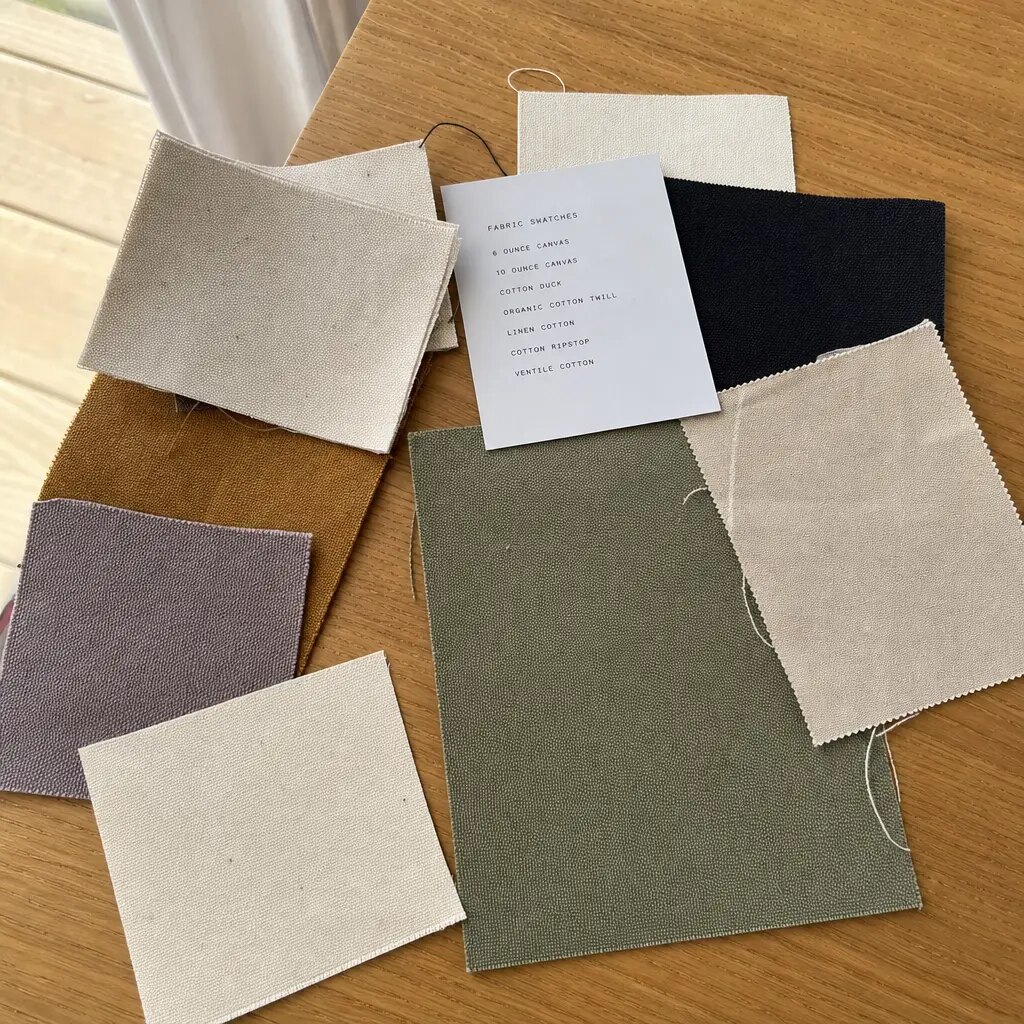
A digital mockup is useful for internal alignment, but it is not a production approval. A good B2B sample process starts with material and construction, then moves to print. First, request fabric swatches or a material card showing the proposed canvas weight, color, hand-feel, and finish. Next, review a blank construction sample to confirm body dimensions, gusset shape, handle drop, stitch placement, and fold behavior. Only after that should the printed PPS become the final approval point for logo placement.
The pre-production sample should use the actual bulk fabric or a clearly identified equivalent if bulk fabric is not ready. It should show the final print method, final logo size, final placement, final handle construction, and planned folding style. Buyers should measure the sample, photograph it with a ruler, and record the approved distances from the top hem and side seams. That turns later inspection into an objective comparison instead of a memory test.
If the artwork is color-sensitive, request a print strike-off before the full PPS. On natural canvas, exact Pantone matching can be affected by fabric shade, ink absorption, and texture. The buyer should approve a physical standard under consistent lighting rather than expecting the print to match a screen image. If the logo includes very small text, inspect more than one sample piece to see whether the factory can repeat the detail consistently.
- Recommended sequence: fabric swatch, blank construction sample, print strike-off if needed, printed PPS, top-of-production or shipment sample for higher-risk orders
- Record measured approval data, not only email comments such as looks good
- Approve the sample folded as it will be packed because fold marks can affect the logo
- Do not approve bulk production from a sample made with substitute fabric unless the risk is documented
Set QC standards for logo, fabric, and sewing
Quality control should treat the logo, fabric, and sewing as one finished product. A centered print on unstable fabric is still a weak result. A strong canvas body with a skewed logo is still commercially difficult to ship. The PO or quality appendix should define the measurable points that matter: finished dimensions, GSM tolerance, handle drop, logo position, print coverage, print color, stitch security, and packing condition.
Logo inspection needs more than a visual pass. Inspectors should measure the horizontal center against the bag center line and the vertical position from the top hem or another approved reference. They should check skew, edge sharpness, ink smears, pinholes, ghosting, double image, opacity, and contamination. For a simple one-color logo, these defects are easy for customers to see, so the acceptance standard should be firm.
Fabric and sewing checks protect the brand promise behind the tote. Confirm that GSM is within the agreed tolerance, commonly +/-5% unless otherwise specified. Check for severe slubs, stains, oil marks, mildew odor, needle damage, open seams, raw edges where not approved, loose threads, skipped stitches, and weak handle reinforcement. For grocery use, handle attachment deserves special attention because the customer will load the bag more heavily than a flat giveaway tote. If the buyer requires load testing or colorfastness testing, those requirements should be quoted and scheduled before production.
- Measure logo position against fixed reference points during inspection
- Check both print defects and sewing defects; do not let one category hide the other
- Define whether natural canvas slubs are acceptable character or rejectable defects
- For higher-risk programs, add handle pull checks, seam checks, and print rub review to the inspection plan
Control packing before it damages the print
Many logo complaints are caused after printing is complete. Fresh prints that are stacked, folded, or compressed too soon can show offset marks, scuffing, pressure shine, or ink transfer. Large logos and high-coverage prints are especially vulnerable. Packing should therefore be treated as part of the print specification, not as a warehouse detail at the end of production.
Flat packing in master cartons is usually the most efficient B2B export method for canvas grocery totes. It reduces unnecessary packaging and supports better carton density than individual presentation packs. However, the fold plan must work with the logo. If the fold line cuts directly through thick ink or a transfer edge, the buyer may receive bags with visible creases across the brand mark. Ask the factory how bags will be folded and whether an alternate fold can avoid the most visible print area.
Individual polybags may be required by some retailers, but they are not automatically better. They increase material use and handling cost, and they cannot fix poor curing. For dark prints, high-coverage logos, or humid shipping conditions, selective tissue, interleaving, or longer curing time may be more useful. Procurement should also confirm units per carton, carton dimensions, gross weight, moisture protection, and carton marks before comparing landed cost.
- Confirm curing or resting time before folding and carton packing
- Ask for the packing fold plan when the front logo is large or thick
- Use interleaving selectively when print offset risk is real
- Compare freight impact using carton CBM and gross weight, not only unit price
Compare quotes on the same specification
A low unit price is not useful if the quoted product is different. For canvas grocery totes for eco apparel brands, suppliers may vary the fabric weight, fabric finish, logo size, print method, handle quality, stitch reinforcement, sample process, packing quantity, and carton size. Each difference can change cost and performance. Procurement should normalize the specification before selecting a factory.
The most important quote comparison fields are fabric GSM and tolerance, finished dimensions, gusset type, handle construction, print method, print size, print color count, print stage, sample inclusions, MOQ by variant, packing method, carton CBM, estimated gross weight, and setup charges. If one quote includes 340 GSM canvas and another includes 280 GSM canvas, they are not directly comparable. If one quote includes panel screen printing and another includes a transfer on assembled bags, durability and appearance expectations are different.
Lead time should also be compared by path. Stock natural canvas can move faster than custom dyed fabric. A new logo screen can move faster than a multi-color strike-off process with several approvals. If the brand team needs a week for each sample review, that internal approval time belongs in the schedule. A clear timeline should separate material preparation, sampling, artwork approval, bulk cutting, printing, sewing, QC, packing, inspection, and freight handoff.
- Normalize fabric, construction, print, and packing before comparing unit price
- Ask for setup charges and repeat-order assumptions in writing
- Include estimated CBM and gross weight in landed-cost review
- Build the timeline around material and print approvals, not only sewing days
Specification comparison for buyers
| Spec decision | Recommended option | When it fits | Buyer risk to check |
|---|---|---|---|
| Canvas weight | 10 oz to 12 oz canvas, about 280-340 GSM, with an agreed tolerance such as +/-5% | Most grocery tote programs that need better structure than lightweight promotional cotton while keeping freight and sewing cost controlled | Below 8 oz can collapse or wrinkle under load; above 14 oz can raise cost and freight, and coarse yarns may reduce print edge clarity |
| Fabric construction | Plain weave cotton canvas or cotton-rich canvas with stable finishing; specify greige, bleached, dyed, or washed finish | Useful when the brand needs repeatable print behavior and more predictable shrinkage and hand-feel | Terms like heavy canvas or eco cotton are not enough for quoting; ask for GSM, construction, finish, color standard, and tolerance |
| Base fabric color | Natural or ecru canvas for most eco apparel programs; dyed black or brand colors only when commercially necessary | Natural canvas usually supports lower MOQ, simpler approval, and easier repeat orders if stock fabric is available | Dyed lots may need lab dips, colorfastness review, shade band approval, and higher minimums if the mill does not hold stock |
| Front logo position | Centered horizontally, typically 70-100 mm below the top hem, clear of handle stitch boxes and the top fold | Works for most standard grocery totes and keeps the brand mark visible when carried, folded, or merchandised | If artwork overlaps handle reinforcement, seam allowance, or a packing fold, the approved mockup may not match bulk production |
| Logo size | 180-260 mm wide for many standard front-panel marks; confirm against actual bag width and gusset fold | Large enough for retail visibility without forcing artwork into side seams or bottom expansion zones | Oversized artwork can drift into seam allowance, distort when the bag is filled, or trigger a print-size surcharge |
| No-print zone | Minimum 20-25 mm from side seams, 30-40 mm from bottom gusset fold, and clear space around handle stitch boxes as confirmed by factory | Gives production room for panel movement, sewing variation, and folding without hiding the logo | No-print zones must be shown on the technical sketch; relying on visual mockups creates disputes during PPS approval |
| Print method | Screen print for solid one- to three-color logos; digital or transfer only when artwork complexity justifies the tradeoff | Screen printing is usually the most stable cost and durability choice at volume on canvas grocery totes | Transfers can crack or show a raised edge; digital print can soften on coarse canvas; water-based ink may need opacity testing on dark fabric |
| Print stage | Print cut panels before sewing for most centered front logos; print assembled bags only for limited placements or small runs | Panel printing gives a flatter surface and better control of image coverage | Panel-to-sewing alignment tolerance must be agreed; assembled-bag printing can be restricted by seams, handles, and platen access |
| Handle construction | 25-38 mm cotton webbing or self-fabric handles, with stitch boxes placed outside the logo area | Suitable for grocery carrying strength and clean front-panel branding | Full-length straps or body-mounted webbing can split the logo area; stitch box size and handle drop must be locked before artwork approval |
Buyer checklist before sampling
- Confirm finished body width, height, gusset type, gusset width, handle width, handle drop, and handle attachment method before approving artwork.
- Specify canvas in both ounces and GSM, and ask the supplier to state the normal fabric tolerance, commonly +/-5% unless a tighter range is agreed.
- Define whether the fabric is natural, bleached, dyed, washed, organic cotton, recycled cotton blend, or cotton-poly blend, and request documentation only for claims that must appear in retail or compliance files.
- Provide the logo file as vector artwork, with final logo width and height in millimeters, print colors, Pantone references, and whether small text may be simplified for canvas printing.
- Reference logo placement from measurable points: top hem edge, side seams, center line, handle stitch box, and bottom gusset fold.
- Mark no-print zones on the technical sketch around top hem folds, side seams, bottom gusset folds, handle stitch boxes, pockets, labels, and any bartack areas.
- Ask whether the factory will print cut panels or assembled bags, then set position tolerance accordingly because sewing after panel printing can introduce movement.
- Choose the print method by artwork and order size: screen print for solid logos, transfer or digital only after approving hand-feel, durability, edge quality, and fold-line appearance.
- Request a fabric swatch, blank construction sample, print strike-off if color is critical, and pre-production sample using the actual bulk material and print method.
- Approve acceptable color variation on canvas, especially for water-based inks, natural fabric shade variation, and dark-ground opacity.
Factory quote questions to send
- What exact fabric are you quoting: fiber content, weave, yarn construction if available, finished GSM, ounce weight, finish, shrinkage expectation, and GSM tolerance?
- Is the fabric stock, made-to-order, dyed to order, or washed after sewing, and what MOQ applies to each fabric color?
- What finished bag dimensions are included in your price, and what tolerance do you apply to body width, body height, gusset width, and handle drop?
- What handle material, width, length, attachment method, stitch pattern, and stitch box size are included in the quoted construction?
- Will the logo be printed on cut panels before sewing or on assembled bags, and what placement tolerance applies for that method?
- What no-print margin do you require from the top hem, side seams, handle stitch boxes, and bottom gusset fold?
- What print method are you quoting, what ink type will be used, and what setup cost applies per color, per screen, per logo size, and per artwork version?
- What print size is included in the quoted unit price, and what surcharge applies if the front logo increases to a larger width or adds a second-side print?
- How do you control print opacity on natural, dyed, or dark canvas, and can you provide a strike-off before the full PPS?
- What are your normal tolerances for logo center position, vertical placement, skew, and print color compared with the approved standard?
Quality-control points to confirm
- Fabric GSM measured against the approved standard and within agreed tolerance, commonly +/-5% unless the purchase order states otherwise.
- Fabric shade, hand-feel, and finish checked against the approved swatch, with natural canvas shade variation handled by an agreed visual standard.
- Finished body width, height, and gusset dimensions measured after sewing, before packing compression, and within approved dimensional tolerance.
- Handle width, handle drop, handle pair balance, and stitch box position checked so the bag hangs evenly and does not cover or crowd the logo.
- Handle attachment stitching complete, secure, and consistent, with no skipped stitches, broken stitches, open bartacks, loose thread nests, or weak reinforcement.
- Top hem, side seams, bottom seam, and gusset seams sewn straight enough to avoid visible twisting or seam grin when the bag is filled.
- Logo horizontal center and vertical placement measured from agreed reference points, not judged only by eye on an uneven folded bag.
- Logo skew checked against the top hem or panel grain; visible tilt should be rejected if it exceeds the approved tolerance.
- Print coverage solid enough for the approved artwork, with no major pinholes, ghosting, double image, blocked fine text, ink smear, contamination, or weak edges.
- Print opacity on dark or dyed canvas reviewed under consistent lighting and compared with the approved strike-off or PPS.