Start With Use Case, Not a Generic Tote Quote
Canvas grocery totes look simple, which is why many sourcing problems start with an oversimplified RFQ. A startup asks for a strong canvas tote with a logo, receives several prices, and chooses the lowest unit cost. The bulk order may still look acceptable in a supplier photo, but failures appear later: handles stretch, seams pop, gussets collapse, prints crack, or cartons arrive crushed and damp.
For procurement buyers, durability is not a vague quality promise. It is a set of measurable choices tied to how the bag will be used. A tote for lightweight conference giveaways does not need the same construction as a grocery tote carrying bottles, boxed food, employee welcome kits, or retail stock. If the intended load is not stated, suppliers quote against their own assumptions, and those assumptions may not match your risk.
The practical goal is to turn marketing expectations into a factory-ready specification. Define load, dimensions, material, print, reinforcement, packing, sample approval, and inspection evidence before comparing quotes. This gives suppliers a fair basis to price the same product and gives your team a clear standard to accept or reject bulk goods.
- Treat the tote as a load-carrying product, not only branded merchandise.
- Define what durable means before requesting final prices.
- Compare suppliers only after construction, packing, and QC scope are aligned.
- Use the approved sample and written spec sheet as production controls.
- Assume undefined details may be simplified to reduce cost.
Define the Carrying Load in Kilograms
The first technical decision is the target carrying load. Grocery totes fail where force concentrates: handle attachments, top seams, side seams, bottom corners, and gussets. Hard-edged contents such as cans, glass bottles, boxed kits, or laptops create different stress than soft apparel or paper handouts. A bag that survives a light event kit may not be suitable for pantry, retail, or reusable shopping use.
Write the expected load in kilograms and describe the contents. For example: “Reusable grocery and office pantry tote; working load 10 kg; sample to be checked at 10 kg static load plus controlled carry lifts.” This is not a universal standard. It is a buyer-defined threshold based on the actual program. The number gives the factory enough information to recommend fabric, handles, thread, and reinforcement.
If the tote may serve several uses, choose the heaviest realistic common use rather than the lightest scenario. A slightly stronger tote is easier to justify than a failed bag in a customer’s hand, at an investor event, or inside a fulfillment channel.
- Light event packaging: consider 6-8 kg buyer-defined testing.
- General reusable grocery use: use 8-10 kg as a practical baseline.
- Heavier pantry, retail, or onboarding kits: consider 10-12 kg testing.
- Record the same target in the RFQ, PO, sample comments, and inspection brief.
- Review gusset corners carefully if users may carry cans, bottles, or boxed goods.
Choose Canvas Weight and Material Type Carefully
For grocery-style canvas totes, 10 oz to 12 oz cotton canvas is a common commercial range because it balances strength, handfeel, printability, and cost. In metric terms, this is roughly 340-407 GSM, though actual values vary by mill, weave, finishing, and moisture. Lighter 6 oz or 8 oz fabrics may work for short-term giveaways, but they usually feel less substantial and deform more easily under grocery loads.
Specify both oz and GSM. Some suppliers quote in ounces, others in GSM, and both terms reduce confusion during inspection. Add an acceptable tolerance, such as a written percentage range agreed with the supplier, so the factory cannot quietly substitute a visibly lighter fabric and call it close enough.
Material type also affects MOQ and repeatability. Stock natural canvas is usually the easiest first-order choice because it is commonly available and faster to sample. Bleached canvas gives a cleaner print base but shows handling dirt more easily. Custom dyed canvas may support brand identity, but it adds shade matching, higher MOQ, and longer lead time. Organic or recycled cotton may support internal sourcing goals, but buyers should request supporting documentation and confirm stable repeat supply.
- State canvas weight in both oz and GSM.
- Set written fabric-weight tolerance before bulk approval.
- Ask whether the fabric is stock, dyed, pre-shrunk, organic, or recycled.
- Request swatches if shade, handfeel, or print result matters.
- Confirm repeat-order availability if the tote may become a recurring SKU.
Specify Handles, Stitching, and Seams
Most durability complaints are not caused by the center panel. They come from handle attachment, thread failure, seam slippage, or bottom-corner stress. That means a useful quote must say more than “cotton handles included.” It should define handle material, width, total length, handle drop, insertion depth, reinforcement pattern, stitch density, and seam finish.
For grocery totes, a handle width of at least 2.5 cm is a reasonable starting point because narrow handles cut into the hand and make the bag feel cheap. Handle length should match the carry style: short hand carry, shoulder carry, or a compromise. If startup recipients commute, shop, or carry multiple items, handle comfort is part of perceived product quality.
Reinforcement should be visible and repeatable. Box-X stitching and bartacks are common ways to strengthen handle ends. Double-needle seams or bound internal seams can improve consistency and reduce fraying. When one quote is much cheaper, check whether it removes these details through shorter handle insertion, thinner thread, lower stitch density, or simpler internal seams.
- Require reinforcement at every handle end.
- State handle width, handle length, and handle drop in centimeters.
- Ask for stitch density, thread type, and seam construction.
- Inspect inside seams and gusset corners, not only the front panel.
- Do not allow handle construction to remain a factory default.
Match Print Method to the Canvas Surface
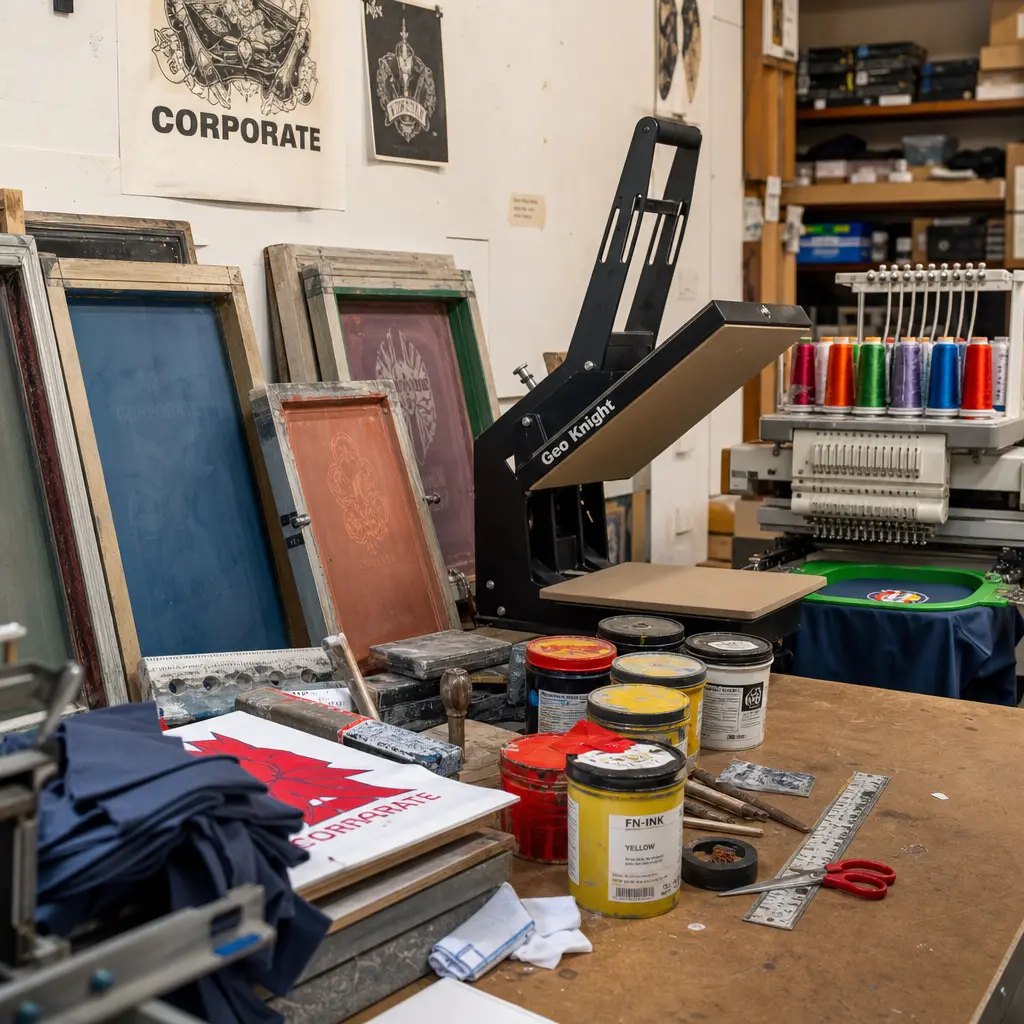
Screen printing is usually the practical choice for tech startup logos on canvas grocery totes. It works well for solid marks, one to three colors, and moderate to large logo areas. It also gives procurement teams a familiar cost structure through screen setup, color count, print area, and repeat production controls.
Heat transfer may fit gradients, photographic artwork, or fine detail, but it needs extra review on textured canvas. Check edge feel, lifting, cracking, and rub performance after folding. Embroidery can look premium for small marks, but it is less efficient for large grocery tote graphics and may distort lighter fabrics.
Print placement must be measurable. “Centered logo” is not enough. Use wording such as logo width, distance from top seam, horizontal center, and tolerance. Always review the print on the final canvas, not only on a digital mockup, because weave texture changes edge sharpness, ink coverage, and the appearance of small negative spaces.
- Use screen print for solid, repeatable logo work.
- Use heat transfer only after rub, fold, and edge-lift checks.
- Use embroidery mainly for small premium marks.
- Specify print size, placement, Pantone reference, and tolerance.
- Approve physical print samples on the final fabric.
Approve Samples That Match Bulk Production
A sample is only useful if it represents the real production method. Showroom samples may be sewn more slowly, printed with extra care, or made from substitute fabric. The pre-production sample should use the final canvas, handles, thread, print method, label, dimensions, and packing fold planned for bulk production.
During sample review, measure the bag instead of relying on appearance. Check width, height, gusset depth, handle drop, piece weight, print placement, label position, and internal seams. Load the sample to the agreed target, then use controlled lifting motions to simulate normal carrying. This is a practical buyer test, not a claim that every tote meets a universal laboratory standard.
Keep a record of approval. Photograph exterior, interior, handle bases, gusset corners, print closeups, label placement, and folded packing. A signed sample plus written comments helps prevent disputes if bulk production arrives with shorter handles, lighter fabric, different stitching, or lower print quality.
- Approve a physical pre-production sample before bulk cutting.
- Measure dimensions and handle drop against the spec sheet.
- Check loaded sample behavior at the buyer-defined threshold.
- Photograph seams, reinforcement, label position, and packing fold.
- Avoid vague approvals such as “looks fine” or “close enough.”
Write Practical Durability Tests Into the PO
A practical durability checklist should be simple enough for the factory and inspector to follow. The core test is usually static load: place the agreed weight inside the tote, distribute it across the bottom panel, suspend or hold the bag by the handles for the agreed period, and inspect for seam opening, broken stitches, tearing, or major distortion.
A second check is controlled carry movement. Lift and lower the loaded tote several times to simulate real handling. This often reveals weakness at handle stitch boxes, top seams, and gusset corners that a simple hanging test may miss. For printed bags, add dry rub review and, when relevant, light wet rub review against the approved sample.
Pass-fail language matters. Instead of “strong enough,” write what is unacceptable: broken handle stitches, seam opening beyond agreed limit, tearing around reinforcement, major print cracking, heavy transfer, or dimensions outside tolerance. This gives procurement, supplier, and inspector the same decision rule before shipment.
- Static load: test at the agreed buyer-defined kilogram target.
- Carry movement: use controlled lifts to stress handles and seams.
- Post-test review: check handle bases, top seam, side seams, and bottom corners.
- Print rub: compare against the approved sample after rubbing.
- Measurement check: sample enough random units to catch cutting or sewing drift.
Compare Quotes by Scope, Not Unit Price Alone
MOQ and pricing depend on fabric, sewing complexity, printing, labels, packing, and inspection support. A natural canvas tote with one-color print may be possible at 300-500 pieces if the supplier has stock fabric. Custom dyed canvas, special handles, woven labels, retail packaging, or multiple print positions often push practical MOQ higher and extend lead time.
Ask suppliers to state what the quote includes: fabric weight, dimensions, handle construction, print method, setup charges, sample cost, labels, export cartons, carton marks, inspection support, and trade terms. A cheaper quote may exclude screen fees, use lighter fabric, remove reinforcement, or assume compressed packing. Those differences are hard to fix after production starts.
When prices differ widely, ask what changed in the specification. Did one supplier quote 8 oz instead of 10 oz? Did they remove bartacks? Did they pack 100 pieces per carton instead of 50? Identifying trade-offs lets your team decide where savings are acceptable and where they create product risk.
- Request line-item assumptions for fabric, sewing, print, label, and packing.
- Compare MOQ at 300, 500, 1,000, and 3,000 pieces if volume may change.
- Check whether low MOQ keeps the same reinforcement and material standard.
- Confirm repeat-order fabric and print consistency.
- Treat large price gaps as a prompt for technical review.
Plan Packing and Logistics Early
Packing affects delivered quality. Canvas can crease under compression, fresh prints can block, and cartons can absorb moisture or collapse under stacking. If totes ship to offices, events, 3PLs, or retail partners, receiving condition matters as much as factory appearance.
Confirm pieces per carton, carton size, gross weight, inner packing, carton marks, barcode needs, and moisture control before comparing landed cost. Flat packing is common, but it should not become aggressive compression that damages gussets or creates hard fold lines through the print. Ask when printed bags are fully cured before packing.
Destination rules should guide packing choices. A retail order may need individual polybags, hangtags, or barcode labels. A sustainability-focused office program may prefer bundled packing without individual plastic. A 3PL may need strict carton labels and consistent counts. These choices affect cost, labor, and receiving accuracy.
- Confirm carton dimensions, gross weight, and pieces per carton.
- Avoid face-to-face print compression before ink is fully cured.
- Define polybag, bundle, liner, desiccant, and carton-mark requirements.
- Keep carton weight manageable for the receiving location.
- Review packing photos before shipment release.
Keep Lead Time and QC Evidence Visible
Lead time should be counted from final approval, not first inquiry. The schedule includes swatches, artwork confirmation, sample making, sample transit, revisions, material booking, cutting, sewing, printing, curing, trimming, inspection, packing, and shipment booking. Custom dyed canvas, special labels, or unusual print screens can become the critical path.
For event-driven startup programs, build in at least one sample correction cycle if brand presentation matters. Rushing from quote to bulk production without sample verification may save a few days but can create larger delays if the final shipment is wrong.
QC documents protect both the buyer and supplier. Keep the approved sample, spec sheet, artwork reference, PO, packing specification, inspection checklist, production photos, inline findings, final AQL summary, carton photos, and packing list. This record also helps future team members reorder the same tote without rebuilding the specification from memory.
- Count production timing from final sample and artwork approval.
- Track fabric, labels, screens, and packing materials separately.
- Request inline photos before all units are packed.
- Use final inspection data before shipment release.
- Store the reference pack for repeat orders and internal procurement review.
Specification comparison for buyers
| Spec decision | Recommended option | When it fits | Buyer risk to check |
|---|---|---|---|
| Fabric weight for grocery use | 10 oz to 12 oz cotton canvas, about 340-407 GSM, with written tolerance | Reusable grocery, office pantry, onboarding, retail, and event merchandise programs | Low GSM may look fine in photos but fail at handle pull, seam stress, corner abrasion, or shape retention |
| Canvas type | Stock natural or bleached canvas for first orders; custom dyed only when brand shade is critical | Startups needing faster sampling, lower MOQ pressure, and easier repeat buying | Custom dye can add shade variation, higher MOQ, longer lead time, crocking checks, and wash-performance risk |
| Handle construction | Cotton webbing or same-fabric handles, minimum 2.5 cm width, reinforced with box-X or bartack | Bags carrying bottles, boxed food, laptops, chargers, samples, or mixed grocery loads | Narrow or lightly stitched handles usually fail first and reduce carrying comfort |
| Bottom structure | Gusseted bottom with double-needle or bound internal seams | Grocery totes that need usable volume and better load distribution | Flat totes ship cheaply but reduce capacity and push stress into side seams |
| Print method | Screen print for solid logos; heat transfer for gradients; embroidery for small premium marks | Tech startup branding where repeatability and cost control matter | Wrong method can crack, bleed, feel heavy, distort fabric, or sit too close to seams |
| Practical load test | Buyer-defined static load at 8-12 kg, based on intended use, plus controlled carry or jerk test | Orders sent to offices, events, retail channels, or fulfillment warehouses | A good sample does not prove bulk production used the same fabric, stitch density, or thread |
| MOQ logic | 300-500 pcs for stock fabric and one-color print; 1,000+ pcs for custom dyed canvas or special trims | First merch launch, onboarding kit, investor event, pop-up retail run, or pilot resale order | Very low MOQ may limit material choice, raise unit price, and reduce shade or trim control |
| Packing plan | Flat packed 50-100 pcs per export carton, with confirmed carton size and gross weight | Clean delivery to offices, 3PLs, retail back rooms, and event venues | Over-compressed cartons can create deep creasing, print blocking, odor retention, and distorted gussets |
| Inspection evidence | Approved sample, signed spec sheet, inline photos, AQL report, carton marks, and packing list | Procurement teams that need traceability and repeat-order control | Weak documentation makes it harder to reject wrong GSM, weak seams, misprints, or packing errors |
Buyer checklist before sampling
- Define the expected carrying load in kilograms and describe the real contents, such as groceries, bottles, office kits, event materials, or retail stock.
- Specify fabric by both oz and GSM, such as 10 oz around 340 GSM or 12 oz around 407 GSM, and state the acceptable tolerance.
- Confirm finished width, height, bottom gusset, handle length, handle drop, print size, print placement, and measurement tolerance.
- State whether the canvas is natural, bleached, dyed, organic, recycled, pre-shrunk, or stock fabric, and ask whether the same construction can be repeated.
- Require handle material, width, insertion depth, reinforcement pattern, stitch density, thread type, and seam construction in the supplier quote.
- Approve a physical pre-production sample using final fabric, final handle, final print, final label, final dimensions, and final packing fold.
- Run sample load, carry, seam, print rub, and dimensional checks before bulk cutting, then write pass-fail points into the PO.
- Confirm carton size, gross weight, pieces per carton, moisture control, inner packing, barcode or carton mark format, and destination requirements.
- Ask whether the quote includes sample cost, screen cost, labels, export cartons, inspection support, inland freight, and low-MOQ or custom-material surcharges.
- Keep a reference pack with signed sample photos, spec sheet, artwork file, packing plan, inspection checklist, and final shipment documents.
Factory quote questions to send
- What canvas fabric weight are you quoting in oz and GSM, what tolerance applies in bulk, and how will it be measured?
- Is the fabric greige, natural, bleached, dyed, organic, recycled, pre-shrunk, or stock canvas, and can the same construction be repeated?
- What practical load has this tote size been tested against, and how were the handles, top seam, side seams, and bottom gusset checked?
- What handle material, width, total length, drop, insertion depth, stitch pattern, thread, and reinforcement method are included?
- Which print method, color count, print area, Pantone reference, placement tolerance, and distance from seams are included in the quoted price?
- Will the pre-production sample use the same fabric roll type, thread, ink, label, handle, sewing method, and packing method planned for bulk?
- What is the MOQ for this exact specification, and what changes if we order 300 pcs, 500 pcs, 1,000 pcs, or 3,000 pcs?
- How many pieces are packed per carton, what are the carton dimensions and gross weight, and how will you manage moisture and print transfer?
- When does production lead time start, and which materials or approvals are most likely to delay the schedule?
- What final inspection support can you provide, including inline photos, dimensional data, load test records, carton photos, and AQL summary?
Quality-control points to confirm
- Fabric weight should match the approved tolerance; a 10 oz canvas tote should not be replaced by lighter cotton fabric without written approval.
- Fabric should be checked for weaving faults, stains, oil marks, excessive slubs, color variation, odor, or lot differences visible across packed units.
- Handle attachment should show consistent reinforcement, no skipped stitches, no broken threads, no loose thread tails affecting strength, and no tearing around the stitch box.
- Handle length and drop should stay within tolerance because small sewing changes affect hand carry, shoulder carry, and perceived quality.
- Bottom gusset and side seams should remain intact after the agreed buyer-defined load and controlled carry test, with no popped stitches or seam slippage.
- Print should be positioned within tolerance, with clean edges, acceptable color variation, no major pinholes, no smudging, and no obvious cracking or transfer after rubbing.
- Finished size should be measured flat and with the gusset opened because usable grocery capacity depends on panel size, base depth, and seam execution.
- Labels, woven tags, hangtags, or barcodes should be attached in the correct position and should not weaken seams or face the wrong direction in packed goods.
- Metal accessories, snaps, or zippers, if used, should not rust, stain the canvas, snag contents, or create sharp points inside the bag.
- Cartons should be clean, dry, correctly marked, strong enough for export handling, and not overloaded beyond the receiving warehouse or forwarder limit.