Begin with the risk the tote has to carry
A canvas grocery tote for corporate gifting is not just a flat surface for a logo. It is a carrying product, a presentation item, and a logistics unit. It passes through sewing, decoration, packing, freight, warehouse handling, event setup, and finally the recipient's hands. A clean mockup proves only that the artwork can sit on a rectangle. It does not prove that the tote can hold a gift kit, stay clean in cartons, or survive a busy conference day.
Procurement teams usually get into trouble when the construction is treated as secondary. Weak handles, light fabric, unstable ink, uneven folding, and careless trimming often appear late because nobody defined the pass criteria early. By the time cartons are at a venue or in a kitting warehouse, the options are uncomfortable: sort, accept, discount, rush replacements, or explain the issue internally.
A useful canvas grocery totes durability testing checklist for corporate gifting turns those risks into measurable decisions. It connects the expected load with fabric GSM, handle reinforcement, seams, print method, packing, and inspection evidence. The result is not over-engineering. It is a cleaner buying process where suppliers quote the same product and quality teams know what to release.
- Treat the tote as a functional carrying product first and a branded surface second.
- Put construction, load expectation, decoration, packing, and inspection evidence in the RFQ.
- Define critical, major, and minor defects before final inspection starts.
- Keep one approved sample as the physical production reference for inspection and reorder discussions.
Define the load before choosing the canvas
The strongest tote specification starts with a plain question: what will the recipient actually put inside? A grocery-style corporate gift may carry a notebook and snacks, a boxed bottle set, product samples, catalogs, food items, or a multi-item employee welcome kit. Each load stresses the bag in a different way. Bottles concentrate force at the bottom corners. Catalogs push flat against side seams. Loose grocery items shift while walking and pull unevenly on the handles.
State a target carry weight in kilograms or pounds. Many reusable grocery-style corporate totes are specified around a practical 5-8 kg use load, but the right number depends on the contents, dimensions, fabric, and handle build. A 2 kg event giveaway does not need the same construction as a tote intended for dense samples or repeated grocery use. When no load is named, suppliers may quote a lighter build simply to stay price competitive.
The load figure also makes testing more useful. Instead of asking whether the tote is strong, ask the factory to load the sample with the agreed weight, lift it repeatedly, hold it, set it down, and inspect the handle attachments, top hem, side seams, bottom corners, and gusset. This is not a lifetime guarantee. It is an early warning system before bulk fabric is cut, printed, and packed.
- List the estimated packed weight of the gift set, including inserts, boxes, catalogs, and printed materials.
- Tell the supplier whether the tote will be used as a handout bag, grocery bag, retail-style gift bag, mailed kit, or shoulder-carry tote.
- For dense contents such as bottles or books, ask whether a heavier bottom, wider gusset, or stronger handle webbing is recommended.
- Ask suppliers to confirm suitability for the stated load in writing so the quote is tied to function, not only size.
Specify fabric weight without ambiguity
Fabric weight is one of the biggest drivers of price, hand feel, and durability. It is also one of the easiest specs to blur. For many corporate gifting grocery totes, 10-12 oz canvas, approximately 340-410 GSM, is a practical range. A 10 oz canvas can work well for lighter giveaways, paper goods, and everyday brand use. A 12 oz canvas is usually the safer direction for bottles, heavier kits, or repeated grocery loads.
Ask for both oz and GSM because suppliers in different markets use different systems. Then ask when the weight is measured. Greige canvas, dyed canvas, washed canvas, and finished canvas may not weigh or behave exactly the same. A quote that says 12 oz without defining the measurement point can hide differences in thickness, shrinkage, print behavior, and final hand feel.
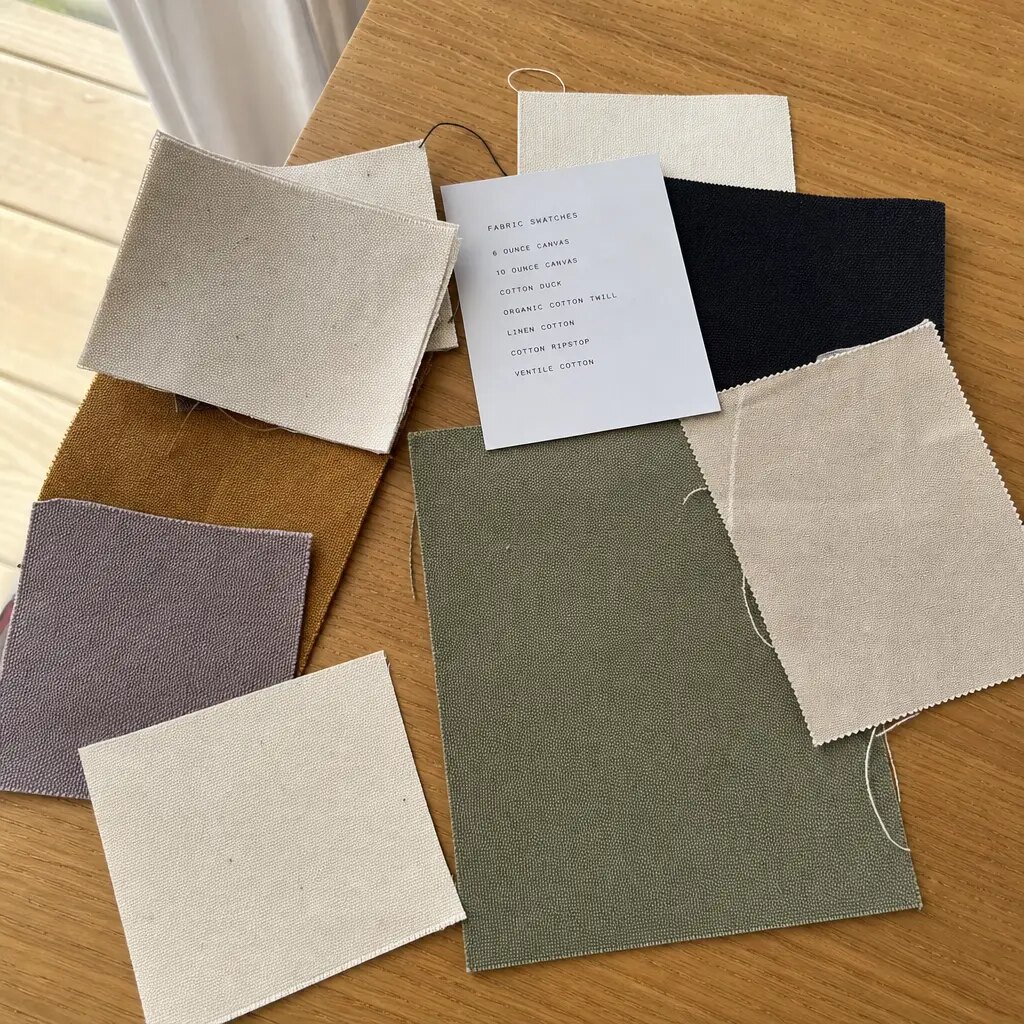
Finish deserves the same attention. Pre-shrunk or controlled-shrinkage fabric helps when finished size, logo placement, and repeat orders need consistency. Natural canvas may include cotton specks and small slubs, which can be acceptable for an unbleached look but wrong for a polished brand program. Dyed canvas needs shade control and may carry higher MOQ or longer lead time. These are sourcing decisions, not details to leave until sampling.
- Require the quote to state fabric weight as both oz and GSM.
- Clarify whether the tote is 100% cotton canvas or a cotton blend, and ask how that affects shrinkage and decoration.
- For natural canvas, define acceptable shade variation, specks, and slubs before sample approval.
- For dyed canvas, ask for lab dip or shade approval, plus tolerance for bulk shade variation.
- Keep an approved swatch or sample panel for final inspection and future reorder comparison.
Build the strength into handles, hems, and seams
Handles are often the first place a tote fails. The body fabric may be strong enough, but if the handle stitching tears through the top hem, the product fails in the recipient's hand. The RFQ should define handle material, width, drop, attachment position, and reinforcement. Cotton webbing handles are common for grocery totes because they can be strong and comfortable. Self-fabric handles can look more integrated, but they still need enough width, stable stitching, and proper reinforcement.
Handle drop should be measured, not described as short, long, or shoulder length. A short hand-carry drop may be around 25-35 cm. Shoulder-carry styles often need about 50-65 cm depending on tote height and market preference. Handle width often falls around 2.5-3.8 cm for grocery-style totes. Narrow handles may save cost, but they can feel uncomfortable under load and put more stress on each attachment point.
Reinforcement should be visible, repeatable, and placed through stable fabric layers. X-box stitching spreads force across an area. Bartacks can strengthen high-stress points. Some specs use both, depending on target load and fabric. The rest of the sewing matters too: side seams, bottom seams, gusset joins, and top hems should be secure, with clean inside finishing and no loose thread clusters waiting to unravel.
- Specify handle material, width, drop, color, and reinforcement method in the RFQ.
- Ask for close-up sample photos of all four handle attachment points, outside and inside.
- Reject reinforcement placed too close to the fabric edge or stitched only through an unstable layer.
- Check loaded hang: the tote should not twist, lean, or pull the top hem out of shape.
- Inspect side seams, bottom corners, and gusset joins for skipped stitches, open ends, and narrow seam allowance.
Choose decoration for the real canvas surface
Decoration should be chosen for the artwork, order size, canvas texture, fold position, and expected handling. Screen printing is often the default for simple corporate logos because it can produce durable, opaque prints at medium and large quantities. It is especially suitable for bold one-color or two-color marks. Still, the buyer should review edge clarity, because coarse canvas can break up fine lines and make small text less readable.
Heat transfer can make sense for complex artwork, gradients, photographic effects, or lower quantities. Its risk is physical wear: edge lift, cracking along folds, peeling, and ink transfer when bags are stacked under pressure. If the tote will be folded across the decorated area, review the approved sample after the actual fold. A perfect flat transfer does not prove it will behave well inside a compressed carton.
Embroidery, woven labels, and sewn patches can work for premium programs. Embroidery adds texture and perceived value, but dense stitching and backing can pucker lighter canvas or distort the front panel. Woven labels and patches avoid printing directly on a rough surface, but they add sewing operations and placement tolerances. Whatever the method, approve the actual process on the actual fabric, not a digital rendering or a decoration sample on a different material.
- For screen print, define print size, ink colors, number of sides, placement tolerance, and whether an underbase is needed.
- For heat transfer, require fold, rub, edge lift, and stacking tests before production approval.
- For embroidery, review pucker, backing visibility, thread color, stitch density, and panel distortion.
- Avoid placing large solid prints directly on hard fold lines unless testing shows acceptable results.
- Ask whether printed totes must be dried, cured, or rested before packing to reduce transfer risk.
Make samples earn approval
A pre-production sample should be evidence, not a gesture. It should use the intended fabric quality, comparable fabric weight, handle material, thread color, stitch construction, decoration method, logo size, and packing fold. A sample made with substitute fabric can help with early shape review, but it is not enough for production approval when durability and brand presentation matter.
Review the sample in a structured way. Measure the tote after normal unpacking, without stretching it aggressively by hand. Check width, height, gusset depth, handle drop, handle spacing, logo size, logo placement, and print color. Load it with the intended weight and see whether it hangs straight. Look inside the bag. Inspect seams, bottom corners, top hem, reinforcement, and loose threads. Then fold it exactly as it will be packed and review the print again.
Approval notes should be precise. A short email saying approved can create confusion if bulk production varies. Better records mention the sample version, date, fabric, print method, measured dimensions, accepted tolerances, and any corrections required before production. For larger or repeat programs, keep one signed or sealed sample with the buyer and one with the factory. That physical sample becomes the standard during inspection.
- Label the approved sample with version number, date, fabric weight, print method, and approved deviations.
- Photograph measurement points so the factory, inspector, and buyer measure the same way.
- Do not approve bulk cutting until the sample passes both appearance review and basic load review.
- If a sample fails, write the correction precisely, such as wider handle webbing or reinforced bottom seam.
- Confirm whether a revised sample is required after any change to fabric, handle, print method, or packing fold.
Run practical durability checks before bulk release
Durability testing for corporate gifting totes does not always require a laboratory, but it does require a clear method. Use the agreed weight, not whatever object happens to be nearby. Load the tote, lift it by the handles repeatedly, hold it for a defined period, set it down several times, and inspect the stress points. Look for stitch breakage, handle tearing, top hem distortion, bottom sag, seam opening, and fabric damage.
A handle pull or hanging check adds useful evidence. The supplier may use a controlled fixture, a hanging test, or a repeated lift test with the target weight. Ask them to describe and photograph the method. If handle stitching pulls away or the top hem distorts heavily, revise the construction before bulk production. Common corrections include wider webbing, stronger thread, larger X-box reinforcement, additional bartacks, or a more stable top hem.
Print durability needs its own checks because a structurally sound tote can still fail as a branded item. Rub the print with a clean dry cloth and check for ink transfer or powdering. Fold along the intended packing line and look for cracking. Stack printed surfaces as they will sit in the carton and inspect for transfer, scuffing, or sticking. These simple tests catch problems that a flat artwork proof cannot show.
- Load test: use the target filled weight and inspect handles, top hem, side seams, bottom corners, and gusset after repeated lifting.
- Static hold: hang or hold the loaded tote for an agreed time, then check for stretching, stitch failure, and fabric tearing.
- Handle alignment check: load the tote and confirm the handles do not twist or pull unevenly.
- Dry rub test: rub the printed area with a clean cloth and check for smearing, powdering, and color transfer.
- Fold test: fold the tote as packed and inspect cracks, edge lift, and heavy crease damage.
- Carton contact check: stack samples under pressure and review whether print surfaces scuff or transfer.
Compare quotes on one shared specification
A low unit price only means something when every supplier is quoting the same tote. Two quotes may both say canvas grocery tote while using different fabric weight, handle width, reinforcement, print setup, packing count, inspection level, and lead time. Procurement should make the RFQ specific enough that price differences reveal real cost drivers instead of hidden substitutions.
Include a specification table in the RFQ. Cover finished size, fabric composition, canvas weight, finish, color, handle construction, seam requirements, decoration, logo placement, packing, target load, sample process, inspection standard, MOQ, and delivery terms. Ask each supplier to quote against the same version number and list all assumptions. If one supplier assumes stock natural canvas and another assumes dyed-to-order pre-shrunk canvas, the comparison should show it clearly.
Price breaks should be explained, not simply accepted. A lower price at 3,000 pieces may come from fabric roll efficiency, screen setup amortization, sewing line productivity, carton utilization, or freight structure. Understanding the reason helps buyers negotiate intelligently and choose the right quantity. It also prevents accidental spec changes when a supplier tries to hit a target price.
- Reference the RFQ version in the quote, purchase order, sample approval, and inspection checklist.
- Separate unit price from screen charges, sample charges, packing charges, testing charges, and freight.
- Ask suppliers to list assumptions such as one-side print, no individual polybag, standard carton, stock thread color, and standard lead time.
- Require written approval for substitutions in fabric weight, handle material, print method, or packing.
- Compare lead time by milestone: artwork lock, fabric purchase, sample, bulk production, inspection, and shipment.
Set tolerances and defect categories before inspection
Quality control works best when the defect language is settled before production. Critical defects are safety, legality, or severe functional issues, such as broken handles under the agreed load, mildew odor, sharp foreign objects, or the wrong product. Major defects affect function, appearance, or brand acceptability: open seams, large stains, badly misplaced logos, severe print cracking, or wrong fabric weight. Minor defects are small issues that do not materially affect use, such as a short loose thread that can be trimmed.
Many B2B orders use an AQL inspection plan with agreed acceptance limits for critical, major, and minor defects. The exact AQL should follow the buyer's quality policy or third-party inspection standard. If AQL is not used, a written checklist is still essential. It should state how many cartons are opened, how many units are measured, which tests are performed, and what evidence is needed before shipment release.
Tolerances should match the nature of sewn fabric products. Finished body dimensions may reasonably allow +/- 1 cm for many canvas grocery totes. Handle drop, handle spacing, and print placement should have their own limits. Color should be judged against an approved swatch or Pantone target under agreed lighting. Inspect before shipment, while the supplier can still sort, repair, replace, or remake goods if needed.
- Define critical defects: unsafe contamination, mildew, wrong item, broken handle under agreed load, or severe structural failure.
- Define major defects: open seams, wrong size outside tolerance, wrong print color, misplaced logo, visible stains, serious print cracking, or missing reinforcement.
- Define minor defects: small trim threads, slight natural slub within standard, or minor variation that does not affect brand presentation.
- State measurement points for body size, gusset, handle drop, handle spacing, logo size, and logo placement.
- Require inspection photos showing random cartons, measurements, handles, seams, print close-ups, packing, and carton marks.
Control packing, cartons, and shipment handoff
Packing is part of product quality. Canvas grocery totes are often folded flat and bulk packed, but fold direction, carton count, print contact, carton strength, and moisture control all affect the delivered product. A tote can pass sample approval and still disappoint recipients if the logo is creased, the fabric smells damp, or cartons arrive crushed and dirty.
Confirm packing before bulk production is finished. Approve pieces per carton, carton dimensions, gross weight, fold direction, carton marks, and whether individual polybags are used. Sustainability-focused programs may prefer no individual polybag, but that decision should be paired with clean factory handling, dry goods, carton liners where appropriate, and moisture prevention. Desiccant can help for long ocean shipments or humid seasons, but it cannot compensate for wet goods or poor storage.
Shipment release should connect inspection with logistics. Before goods leave the factory, procurement should know carton quantity, carton marks, packed weight, final inspection status, and whether any defects were sorted or reworked. For event or onboarding programs, consistent folding can save warehouse teams time during kitting. For retail-style corporate gifts, presentation inside the carton may matter almost as much as freight efficiency.
- Approve fold direction and confirm whether the print is protected from direct rubbing during transit.
- Set carton count and gross weight so cartons can be handled safely and do not deform under stacking.
- Require cartons to be dry, clean, correctly marked, and consistent with the purchase order and packing list.
- Ask for photos of packed cartons, open carton layout, folded totes, carton marks, and any palletization.
- Confirm who can approve shipment release and what happens if inspection finds major defects before dispatch.
Specification comparison for buyers
| Spec decision | Recommended option | When it fits | Buyer risk to check |
|---|---|---|---|
| Fabric weight | 10-12 oz canvas, approximately 340-410 GSM, confirmed on finished fabric | Most corporate grocery totes, employee kits, conference gifts, retail-style promotions, and reusable shopping programs | Catalog names can be loose; confirm whether the weight is measured before or after dyeing, washing, shrinking, or finishing |
| Fabric composition | 100% cotton canvas or a clearly declared cotton blend, with composition stated on the quote | Programs that need material disclosure, repeatable production, predictable decoration results, or sustainability review | Blends may change shrinkage, print hand feel, dye uptake, labeling language, and recycling or sustainability claims |
| Finished size | Common grocery format such as 38 x 40 x 10 cm, or buyer-defined size, with +/- 1 cm tolerance unless tighter control is approved | Orders where the tote must fit gift contents, cartons, counters, event kits, or warehouse shelves | Loose size control affects carton count, logo placement, gift packing, kitting speed, and reorder consistency |
| Handle construction | 2.5-3.8 cm wide cotton webbing or self-fabric handles, 50-65 cm shoulder drop if shoulder carry is required, reinforced at four attachment points | Totes expected to carry groceries, bottles, books, laptops, catalogs, samples, or multi-item gift packs | Handles often fail before the body fabric; check reinforcement placement, stitch density, thread tension, and top hem strength |
| Seam build | Double-needle or lockstitch side seams, secure bottom and gusset seams, reinforced top hem, and clean inside finishing | Unlined canvas grocery totes that will be reused and seen by brand-conscious recipients | Skipped stitches, open seam ends, narrow seam allowance, and weak bottom corners can cause early failure under load |
| Target load | State expected use load, often 5-8 kg for grocery-style corporate totes, with test weight agreed before sampling | Useful when the tote may carry food items, bottles, catalogs, product samples, or heavier welcome kits | A tote that looks fine empty may sag, twist, or tear when loaded; suppliers quote more accurately when load is specified |
| Print method | Screen print for simple solid logos; heat transfer for complex or low-run artwork only after fold and rub approval; embroidery or woven label for premium programs | Choose based on artwork detail, order quantity, brand color control, canvas texture, and intended handling | Fine lines can fill in on coarse canvas; transfers may crack or lift; embroidery can pucker lighter fabric |
| Supplier route | Custom factory production for strict specs; stock body plus print for urgent simple orders; trading support for multi-item programs | Custom works best for repeat corporate gifting and QC control; stock works when timing is the main constraint | Stock totes may have fixed weak construction; custom production needs stronger RFQ details, sample approval, and lead time control |
| Inspection standard | Use an agreed AQL plan or written final inspection checklist with critical, major, and minor defect definitions | Medium and large B2B orders where receiving teams need objective release criteria | Without defect categories and tolerances, disputes become subjective after shipment |
Buyer checklist before sampling
- Define finished width, height, gusset, handle drop, handle width, canvas oz/GSM, fabric composition, fabric color, thread color, and target carry weight in the RFQ.
- State the intended contents: grocery load, bottle set, notebook bundle, catalogs, sample kit, staff onboarding pack, or loose event giveaway items.
- Ask whether canvas weight is measured on greige fabric, dyed fabric, washed fabric, or finished fabric, and require the quote to state both oz and GSM.
- Confirm finished size tolerance. For many sewn canvas totes, +/- 1 cm on width, height, and gusset is realistic; ask before requiring tighter control.
- Specify handle reinforcement: X-box size or bartack length, stitch density where available, whether reinforcement passes through the top hem, and whether all four handle ends are reinforced.
- Define seam requirements for side seams, bottom seam, gusset joins, top hem, seam allowance, loose-thread trimming, and inside finishing.
- Confirm decoration method, print size, number of colors, print side or sides, logo placement tolerance, Pantone target if required, and whether a white underbase is included.
- Ask for print tests on the actual approved production method: dry rub, fold cracking, edge lift for transfers, ink transfer during stacking, and scuffing after carton contact.
- Require a pre-production sample made with the intended fabric, handle material, stitch construction, thread color, print method, print size, and packing fold.
- Set measurable acceptance criteria for dimensions, fabric defects, stitch quality, handle alignment, print registration, color tolerance, load performance, carton count, and packaging cleanliness.
Factory quote questions to send
- What is the exact canvas weight in oz and GSM, and is that value measured before or after dyeing, washing, shrinking, or finishing?
- What is the fabric composition, yarn style if known, and finish: natural greige, dyed to order, pre-shrunk, enzyme-washed, pigment dyed, or untreated?
- What finished dimensions are included in the quote, including width, height, gusset depth, handle drop, handle width, and acceptable size tolerance?
- What target carry weight do you recommend for this construction, and what practical load test can you perform before bulk production?
- Are handles self-fabric, cotton webbing, or blended webbing, and what reinforcement method is used at each of the four attachment points?
- What stitch type, approximate stitch density, thread material, and seam allowance do you use for the side seams, bottom seam, gusset, top hem, and handle attachments?
- Which print method do you recommend for this artwork on this canvas surface, and what are the setup charges by color, side, print size, and screen or plate?
- Can you test the approved print for dry rub, fold cracking, ink transfer, edge clarity, and transfer edge lift before bulk production starts?
- Can the pre-production sample be made from the same fabric quality, handle material, thread color, print process, and fold method planned for production?
- What MOQ applies to this exact tote size, fabric color, fabric weight, handle construction, print color count, and packing method?
Quality-control points to confirm
- Finished size tolerance: agree on width, height, gusset, handle drop, and handle spacing before production. For many canvas grocery totes, +/- 1 cm is practical for body dimensions, while logo placement often needs a separate tolerance such as +/- 0.5 cm to +/- 1 cm depending on print size and sewing variation.
- Fabric weight verification: check that the delivered canvas matches the approved finished fabric weight, not only the supplier's catalog name. Keep a reference swatch or approved sample for comparison during final inspection and reorder.
- Fabric composition and finish: confirm declared fiber content, natural or dyed shade, shrinkage expectation, and whether the fabric has been washed, pre-shrunk, or treated. Avoid accepting unexplained substitutions after sample approval.
- Fabric surface defects: reject visible oil marks, heavy slubs outside agreed natural-canvas character, thin spots, misweave lines, dye streaks, cutting distortion, mildew odor, moisture staining, or strong shade variation across panels.
- Stitching quality: no skipped stitches, open seam ends, loose thread clusters, broken thread, thread nests, uneven seam allowance, needle cuts, or weak backtacking around side seams, bottom corners, gussets, and top hems.
- Handle reinforcement: X-box or bartack stitching must be centered, fully anchored, even in density, and placed at the same height on all handle ends. Reinforcement should not sit too close to a raw edge or weak single fabric layer.
- Handle alignment: handle drop, handle spacing, twist, and left-right balance should be consistent so the tote hangs straight when loaded and does not pull the top hem out of shape.
- Load performance: the tote should hold the agreed target weight without seam opening, handle tearing, major bottom sag, top hem distortion, broken stitches, or fabric tearing after repeated lifting and setting down.
- Print appearance: logo edges should be clean, ink coverage even, placement within tolerance, and brand color close to the approved target under agreed lighting. Fine text should remain readable on the actual canvas texture.
- Print durability: after dry rub, fold, stacking, and carton contact checks, there should be no obvious cracking, powdering, ink transfer, transfer edge lift, peeling, smudging, or unacceptable scuffing.