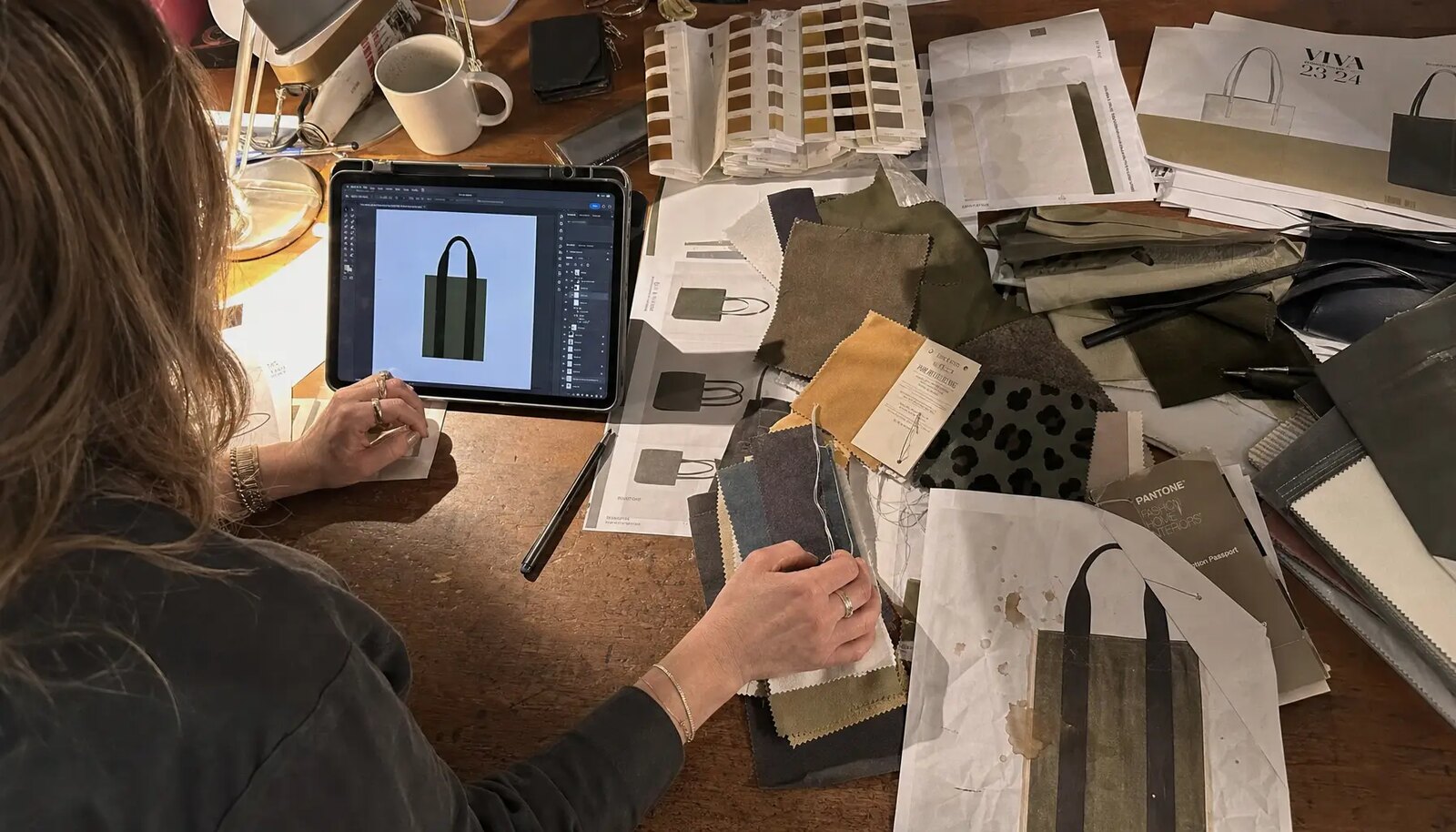
Start with the craft fair use case
Canvas grocery totes for craft fairs sit between a cheap promotional bag and a premium boutique tote. They must look good on a booth table, open quickly when vendors are busy, carry irregular purchases, and continue advertising the brand after the shopper leaves. One market bag may hold candles, jam jars, soaps, ceramics, books, produce, apparel, or boxed handmade goods, so the specification needs more structure than “natural canvas tote with logo.”
Before asking factories for price, name the commercial job. A resale tote needs better handfeel, clean stitching, tidy folding, and possibly a hangtag or barcode. A purchase-packaging tote needs bulk access, dependable handles, and visible branding. A sponsor giveaway may prioritize logo area and delivery date. Distributor stock needs repeatable dimensions, neutral specifications, and carton consistency for reorders.
- For booth packaging: prioritize bulk packing, fast carton access, consistent print appearance, and strong handle reinforcement.
- For resale merchandise: prioritize fabric handfeel, clean finishing, hangtag option, barcode placement, and presentable folding.
- For sponsor programs: prioritize logo size, artwork separation, carton planning, and on-time shipment.
- For distributor stock: prioritize stable dimensions, repeatable MOQ, carton quantity, and reorderable trims.
- For premium maker brands: consider heavier canvas or woven labels only when the resale price supports the added cost.
Define fabric weight in measurable terms
Fabric weight is a major cost driver and a common source of quote confusion. Suppliers may quote ounces, GSM, or vague phrases such as “heavy canvas.” They may also measure at different stages: greige fabric, dyed fabric, washed fabric, finished fabric, or fabric taken from a finished sewn bag. A quote is not comparable until the measurement stage is clear.
For most craft fair grocery use, 10 oz to 12 oz cotton canvas, roughly 340-407 GSM, is a practical starting range. It gives more body than a lightweight giveaway bag without making cartons unnecessarily heavy. Lighter 6 oz to 8 oz canvas can work for flyers, T-shirts, or low-cost giveaways, but it may collapse on a table and feel less reusable. Heavy 14 oz to 16 oz canvas can feel premium, but it increases material cost, sewing difficulty, carton weight, and freight volume.
- Use 10 oz to 12 oz, about 340-407 GSM, as the standard range for reusable craft fair grocery totes.
- Use 6 oz to 8 oz only for light-duty packaging or budget giveaways.
- Use 14 oz to 16 oz only after reviewing sewing risk, freight cost, and target resale price.
- Ask whether the quoted weight is greige, dyed, washed, finished fabric, or finished sewn bag fabric.
- For strict programs, include a QC instruction to verify bulk fabric weight by an agreed test method.
Choose canvas composition and color deliberately
Standard 100% cotton canvas is the common choice for craft fairs, farm shops, museum stores, and reusable grocery programs because it has a familiar natural-material story. Natural canvas, however, is not pure white paper. It often includes cotton seed flecks, slubs, and yarn variation. These may be acceptable if they match the approved sample, but they should not excuse dirt, oil marks, water marks, mold odor, holes, or contamination.
Bleached canvas gives a cleaner background for bright artwork but shows dirt more easily in cutting, sewing, and packing. Black or dark dyed canvas can look retail-ready but may need a white print underbase for strong color. Custom dyed canvas requires lab dips, shade tolerance, dye-lot control, and colorfastness expectations. Recycled or organic cotton should be quoted with realistic appearance expectations and any documentation needed before claims appear on hangtags or product pages.
- Approve natural flecks separately from stains; flecks may be normal, oil and water marks are defects.
- For dark canvas, confirm whether the price includes white underbase and whether it changes handfeel.
- For custom dye, ask for lab dip timing, shade tolerance, dye-lot minimum, and colorfastness checks.
- For recycled cotton, approve the actual shade and speck range before bulk cutting.
- For organic or recycled claims, request documents before finalizing printed marketing claims.
Specify finished size, gusset, and handles
A grocery tote needs usable volume, not only a large logo panel. A common craft fair size is around 38 x 40 cm with an 8-12 cm bottom gusset, though the right size depends on the merchandise. For jars, produce, boxed soaps, books, and candles, the gusset often matters more than extra height. A flat tote can be cheaper, but it pulls into a narrow shape when loaded and is less useful for grocery-style buying.
Write dimensions as finished width x finished height x finished gusset depth. Finished size is not cut panel size, and factories may measure before sewing, after sewing, after pressing, or after folding unless told otherwise. Handles should also be specified clearly. A 55-65 cm total self-fabric handle, 2.5-3.5 cm wide, usually supports shoulder carry better than a short narrow strap. If shoulder fit matters, state handle drop as well as total length.
- Define size as finished width x finished height x finished bottom gusset depth.
- Use an 8-12 cm gusset for general grocery-style craft fair use.
- Specify handle total length, handle drop if important, and handle width.
- Require box-X, cross-stitch, or bar tack reinforcement at each handle stress point.
- Approve gusset shape and folding behavior on a physical sample, not only a flat drawing.
Set a realistic load expectation
“Strong bag” is not a procurement specification. For craft fair grocery totes, many buyers use a short-duration working load around 8-12 kg, then require the factory to match handles, seams, and gusset construction to that target. The exact number should reflect the merchandise. Paper goods or apparel may need less; jars, ceramics, candles, and books require more caution.
The load check should not look only at the handle webbing or fabric strip. Failures often occur at the handle attachment, top hem, side seam, or bottom gusset seam. Ask suppliers how they test: weight used, hanging or carrying duration, sample size, and what counts as failure. Visible seam popping, tearing, broken stitches, or major distortion after the agreed load should be treated as a serious defect.
- State the target load, such as 8-12 kg for short-duration grocery carrying.
- Check handle attachment, top hem, side seams, and gusset seams under load.
- Avoid single straight-stitch handle attachment for grocery-style use.
- Ask whether the factory performs internal pull or load checks before packing.
- Align the load target with real products: jars and books need more strength than T-shirts.
Match print method to artwork and fabric texture
Screen printing is usually the best option for one to three solid colors, simple logos, event marks, farm shop branding, sponsor graphics, and maker-market artwork. It is efficient for repeat runs and familiar to most canvas bag factories. To quote accurately, provide vector artwork, print size in centimeters, color count, Pantone references if needed, and placement from the top edge, side seam, or sewn-bag centerline.
Canvas texture affects print quality. Fine lines can fill in, small text can lose sharpness, and natural flecks can interrupt light ink. Large ink blocks can feel stiff, especially with heavy deposits or underbase printing. Digital print and heat transfer help with gradients, photos, or multiple color designs, but large transfers can feel film-like and should be checked for fold cracking, edge lift, and rub resistance. Embroidery works for small premium marks, not large filled artwork.
- Use vector artwork and specify final print size, not only “same as file.”
- For dark canvas, confirm underbase, setup charges, curing, and effect on handfeel.
- For natural canvas, approve a print strike-off if fine lines or light ink are important.
- Set print placement tolerance, commonly +/-0.5 cm to +/-1 cm.
- Check curing with rub, fold, and stacking tests before approving bulk production.
Understand MOQ by component
MOQ is tied to fabric roll size, dye-lot requirements, cutting efficiency, screen setup, sewing-line planning, label production, and packing labor. A standard natural canvas tote with one-color screen print may be workable at 300-500 pieces when fabric is in stock. Custom dyed canvas, heavy canvas, contrast handles, woven labels, multiple artwork versions, or retail packing can push practical MOQ to 1,000 pieces or more.
Separate blank-bag MOQ from customization MOQ. A factory may sew 300 bags from stock canvas, while the dye house requires a larger batch for custom color. Five logo versions may mean five screens, five setups, and five shorter print runs. Hangtags, barcode stickers, woven labels, and special cartons can also have independent minimums. Asking for price at 300, 500, 1,000, and 2,000 pieces often reveals where the true cost break occurs.
- Ask for MOQ by fabric, sewing, custom dye, print design, label, hangtag, barcode, and packing method.
- Confirm whether split logos or split colors change price and lead time.
- Use low MOQ for demand testing, but expect higher unit cost.
- Use higher MOQ when repeatability and setup efficiency matter more than inventory risk.
- Do not compare MOQs unless the fabric weight, gusset, handle, print, and packing are identical.
Normalize quotes by landed cost per usable bag
A low unit price can disappear once the full cost is visible. Canvas grocery totes are bulky, and carton CBM can change significantly with fabric weight, folding method, pieces per carton, and individual packing. Screen charges, sample courier, labels, hangtags, inspection, rework, duty basis, and replacement of unusable units should be included when comparing suppliers.
Normalize quotes against the same specification. If one supplier quotes a 12 oz gusseted tote with shoulder handles and bar tack reinforcement while another quotes an 8 oz flat tote with short handles, the prices are not comparable. Require each supplier to list deviations from the RFQ instead of silently reducing weight, handle length, gusset depth, print area, or packing standard.
- Compare landed cost per usable bag, not only FOB or EXW unit price.
- Request carton dimensions, pieces per carton, net weight, gross weight, and total CBM with the quote.
- List screen/setup, sample, strike-off, labels, packing, testing, courier, and domestic delivery as separate lines.
- Review whether individual polybags or low carton quantities increase freight cost.
- Check quote validity because cotton fabric, dyeing, and freight costs can move before PO release.
Use sample approval to lock the standard
A stock sample is useful for checking general sewing ability and communication speed, but it does not approve a custom order. A production sample should use the intended fabric weight, fabric color, gusset, handle construction, print method, and packing presentation. A blank 8 oz tote cannot approve a 12 oz printed grocery tote with a boxed bottom and shoulder handles.
Sample review should be measurable. Record finished width, height, gusset, handle length, handle drop, handle width, print size, and print position. Test the sample with realistic contents such as jars, books, candles, small boxes, packaged foods, or produce. Check whether the bottom shape works, whether the handles are comfortable, whether the print rubs or cracks, and whether the folded presentation suits resale or booth handling.
- Request a pre-production sample made from bulk-intended fabric.
- Measure and record tolerances for size, gusset, handle, and print placement.
- Approve fabric shade, fleck level, print opacity, stitching, and folding style in writing.
- Keep one approved sample with the buyer and one reference sample at the factory.
- Send photos and tolerance notes to any third-party inspector before final inspection.
Plan QC, packing, and deadline risk together
QC should separate natural variation from actual defects. Small cotton flecks, yarn slubs, and texture variation may be acceptable if they match the approved sample. Critical or major problems include wrong logo, mold odor, oil stains, holes, severe contamination, broken handles, open seams, large print misplacement, wrong size outside tolerance, heavy smearing, missing labels, and incorrect packing.
Packing also affects quality and cost. Bulk packing is often best for craft fair vendors because it reduces plastic and speeds booth setup. Retail distribution may require individual polybags, hangtags, barcodes, inner cartons, or specific carton marks. Over-compression can crease the print panel; under-protection can expose natural canvas to dirt or moisture. For fixed craft fair dates, put the latest inspection date, latest ship date, and required delivery date on the purchase order.
- Use zero tolerance for wrong logo, mold odor, oil stains, holes, broken handles, and unsafe contamination.
- Set size, handle, print, and packing tolerances in centimeters or exact counts.
- Verify carton marks, PO number, item number, design, color, quantity, and destination.
- Use bulk pack unless retail scanning, fulfillment, or warehouse handling requires unit packaging.
- Build extra time for custom dye, heavy canvas, woven labels, multi-color artwork, retail packing, and inspection.
Specification comparison for buyers
| Spec decision | Recommended option | When it fits | Buyer risk to check |
|---|---|---|---|
| Fabric weight | 10 oz to 12 oz cotton canvas, about 340-407 GSM, with measurement stage stated | Most craft fair grocery totes carrying candles, jars, books, produce, packaged foods, apparel, ceramics, and boxed handmade goods | 6 oz to 8 oz can quote cheaper but may feel like a promo bag; confirm whether weight is greige, dyed, washed, or finished fabric |
| Canvas composition | 100% cotton for standard programs; recycled or organic only with agreed documentation | Maker markets, farm shops, reusable grocery programs, museum shops, and resale where material story matters | Recycled cotton may show more specks and shade variation; certified claims need documents, not verbal confirmation |
| Bag construction | Finished flat upper body with 8-12 cm bottom gusset or boxed bottom, lockstitched seams, reinforced handles, trimmed threads | Retail booth sales, market shopping bags, event kits, and distributor stock | A flat non-gusset tote is cheaper but less useful for groceries; weak handle attachment is a common field failure |
| Handle specification | 55-65 cm total self-fabric handles, 2.5-3.5 cm wide, with box-X, cross-stitch, or bar tack reinforcement | Shoulder carry for shoppers moving between booths, parking areas, transit, or market aisles | Short 35-40 cm handles reduce cost but force hand carry; inconsistent handle length creates mixed-carton complaints |
| Load expectation | Define a short-duration working load, commonly 8-12 kg, and match construction/QC to that target | Jars, candles, books, produce, boxed ceramics, and multiple small purchases | Do not accept “strong enough”; ask what load test is performed, for how long, and what failure criteria apply |
| Print method | Screen print for 1-3 solid colors; digital/transfer for gradients or photos; embroidery only for small premium marks | Logos, event marks, farm shop branding, sponsor graphics, and simple craft fair artwork | Large ink coverage can feel stiff; dark canvas may need underbase; confirm curing, rub resistance, placement tolerance, and setup charges |
| Color choice | Natural, bleached, or black canvas for lower sourcing risk; custom dye for larger repeat programs with lab dip approval | General craft fair resale, event merchandise, distributor stock, farm stores, and seasonal market kits | Natural canvas has flecks; dyed canvas needs shade-lot control, colorfastness checks, and separate MOQ discussion |
| MOQ logic | 300-500 pcs may work for standard natural canvas with simple print; 1,000+ pcs is common for custom dye, heavy canvas, labels, or retail packing | Importers testing demand, retailers building seasonal assortments, distributors planning replenishment | Very low MOQ can mean stock fabric, higher unit cost, less shade control, and separate setup costs for each logo |
| Packing format | Bulk pack for wholesale craft fair use; individual polybag, hangtag, barcode, or inner carton only when retail handling requires it | Bulk pack suits vendors and low-waste programs; retail chains and fulfillment centers may need scannable unit packaging | Over-packing raises CBM and waste; under-packing risks dirty natural canvas, moisture exposure, hard creases, or mixed quantities |
Buyer checklist before sampling
- Define the tote’s commercial job before requesting price: booth resale, purchase packaging, sponsor giveaway, exhibitor kit, retail shelf item, or distributor stock.
- Specify finished width, height, bottom gusset depth, handle total length, handle drop if important, handle width, fabric weight in oz and GSM, and the measurement stage.
- State composition and color clearly: natural cotton, bleached cotton, black dyed cotton, custom dyed cotton, recycled cotton, organic cotton, or cotton-poly blend.
- Set a short-duration load expectation, commonly 8-12 kg for grocery-style use, and require reinforced handle attachment instead of a single straight seam.
- Choose print method by artwork: screen print for solid logos, digital or transfer for gradients, embroidery for small premium marks, and woven labels for flexible private label.
- Provide vector artwork, print size in centimeters, print location, Pantone references, and whether exact matching or close commercial matching is required.
- Ask suppliers to quote cost elements separately: bag unit price, screen/setup charges, sample fee, labels, hangtags, polybags, carton upgrades, testing, courier, and domestic delivery.
- Request carton details with every quote: pieces per carton, carton dimensions, net weight, gross weight, total CBM, carton markings, inner pack rules, and pallet limits if relevant.
- Compare landed cost per usable bag, not only FOB unit price; include freight, inspection, defect allowance, duty basis, packing volume, and replacement cost for unusable units.
- Require a pre-production sample from bulk-intended fabric when color, GSM, handle strength, print quality, or retail presentation matters.
Factory quote questions to send
- What is the actual fabric weight in oz and GSM, and is it measured as greige fabric, finished fabric, dyed fabric, washed fabric, or finished sewn bag fabric?
- What canvas composition is quoted: virgin cotton, recycled cotton, organic cotton, cotton-poly blend, or stock canvas of mixed composition? What documents are available before order confirmation?
- Is the fabric in stock, made to order, custom dyed, or substituted from available greige fabric after order confirmation? How will shade lot be controlled?
- What are the finished bag dimensions, gusset style, handle total length, handle drop, handle width, stitch type, seam allowance, stitches per inch or centimeter, and reinforcement method?
- What short-duration load target can the construction support, and what internal load or pull checks are performed on handles, side seams, top hem, and bottom gusset?
- Which print method is quoted, how many colors are included, what ink or transfer material is used, what curing method is used, and what maximum print area is included?
- For dark canvas, does the quote include a white underbase? For natural canvas, how do you handle ink coverage over slubs, cotton flecks, seams, and fabric texture?
- Are screen setup, artwork cleanup, Pantone matching, print strike-off, pre-production sample, sample courier, hangtag attachment, barcode application, and carton markings included or charged separately?
- What MOQ applies separately to fabric, sewing, custom color, print design, woven label, hangtag, barcode sticker, and packing method? If the order is split across logos, does price or MOQ change?
- What is production lead time after deposit and written sample approval, and which steps most often delay fabric booking, printing, packing, inspection, or documents?
Quality-control points to confirm
- Finished size should be checked on flat-laid bags using the approved method; common tolerances are +/-1 cm for width and height and +/-0.5-1 cm for gusset, handle, and print location depending on construction.
- Fabric weight should be verified from bulk fabric by cutting and weighing a known area or by an agreed test method; do not accept fabric weight only by touch or generic fabric name.
- Fabric shade should be compared with the approved swatch or pre-production sample under consistent lighting; natural flecks may be acceptable only within the approved appearance range.
- Handle reinforcement must be consistent at all attachment points, with no skipped stitches, broken threads, loose bar tack ends, open box stitches, missed corners, or uneven handle placement.
- Load checks should include handles, side seams, bottom gusset seams, and top hem; tearing, seam popping, or obvious distortion under the agreed load target should be treated as serious.
- Print placement should remain within approved tolerance, commonly +/-0.5 cm to +/-1 cm, and should be centered relative to the sewn bag if that is the buyer’s requirement.
- Ink must be fully cured with no blocking, sticking, cracking under light fold, heavy smearing, or visible color transfer after a dry rub check; transfers also need edge-lift checks.
- Natural or light canvas must be free from oil stains, mold odor, water marks, large dirty areas, holes, needle damage, and foreign fibers; cotton seed flecks are not dirt.
- Inside seams and hems should be neat enough for resale use, with trimmed thread ends and no long loose threads that can catch merchandise.
- Cartons should be clean, dry, correctly marked, export-strength if needed, and packed to avoid crushing, dirt transfer, moisture exposure, and hard creasing on the print panel.