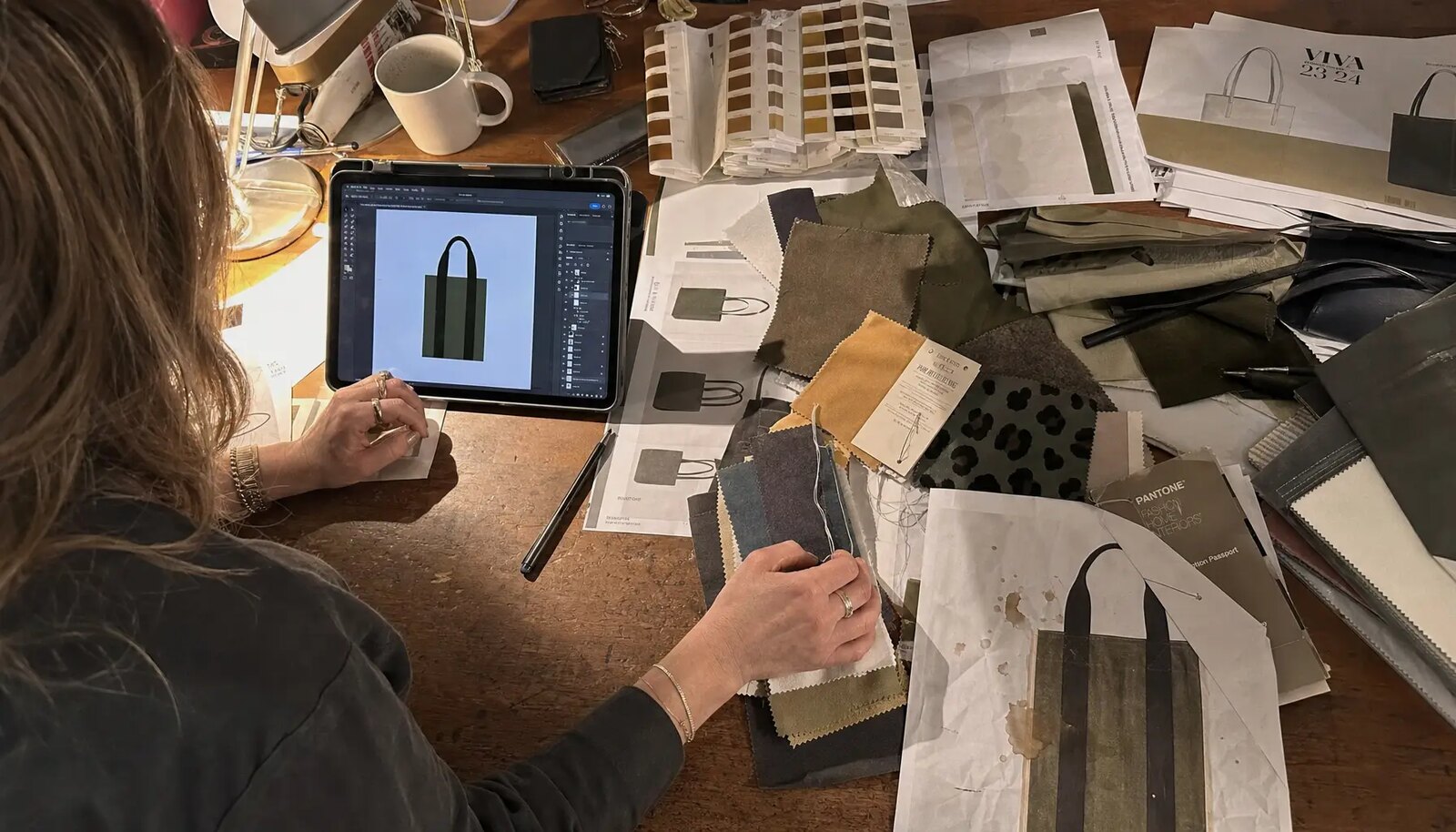
Plan the carton before approving the tote
A canvas grocery tote may look simple, but the shipping carton often decides whether a craft fair order is easy or expensive to handle. Bulk totes may pass through a factory, forwarder, warehouse, 3PL, event organizer, retailer, or temporary booth team before they reach shoppers. If cartons are too heavy, poorly marked, or packed in awkward quantities, the buyer may pay extra labor for recounting, relabeling, and redistribution.
Carton planning should begin while the tote specification is still flexible. Fabric weight, gusset depth, handle length, folding style, inner bundle quantity, and print location all affect carton size. A change from 10 oz to 12 oz canvas, or from a flat tote to a boxed-bottom grocery tote, can change gross weight and CBM enough to alter freight cost.
Start by mapping the delivery route. Courier shipments favor smaller cartons and dimensional-weight control. Palletized domestic freight needs cartons that stack cleanly. LCL sea freight needs stronger export cartons because handling is rougher. Direct-to-venue deliveries need readable marks and carton weights that event staff can lift safely.
- Identify the shipping route before finalizing pieces per carton.
- Set a target carton gross weight, often 15-20 kg unless your warehouse rules require less.
- Decide whether inner bundles should be 25, 50, or 100 pieces for event allocation.
- Request estimated carton dimensions and total CBM at quotation stage.
- Update carton data after the pre-production sample is folded.
- Include carton limits in the purchase order, not only in freight emails.
Choose canvas weight by use case and freight impact
Most craft fair grocery totes are specified between 8 oz and 14 oz cotton canvas. An 8 oz canvas can work for lightweight giveaways, but it may feel thin beside premium handmade products. A 10 oz to 12 oz canvas, roughly 270-340 GSM after finishing, is usually the practical range for branded merchandise, booth resale, market organizer programs, and shopper bags carrying mixed purchases.
Heavier fabric improves structure and perceived value, but it also increases folded thickness, carton weight, sewing strain, and freight cost. A 14 oz tote can be attractive for premium retail use, yet it may reduce the number of pieces per carton or push cartons above safe manual-handling limits. The best fabric is not automatically the heaviest; it is the lightest fabric that meets durability, display, and brand requirements.
Buyers should also define fabric appearance. Natural canvas may show slubs, shade variation, seed specks, or uneven texture. Those features can be acceptable for a craft aesthetic, but oil stains, mildew, holes, strong odor, and large dark marks should not be accepted. Dyed canvas needs shade tolerance and colorfastness expectations.
- 8 oz: budget-friendly and carton-efficient, but lower perceived value.
- 10 oz: balanced for many event and branded grocery tote programs.
- 12 oz: stronger hand feel and better structure, with moderate freight impact.
- 14 oz and above: premium feel, but recalculate carton cube and gross weight early.
- State fabric weight in oz and GSM after finishing.
- Approve fabric shade and slub level with a physical swatch or sample.
Size, gussets, and handles change both capacity and carton cube
A common grocery-style tote may measure around 38 x 35 x 10 cm or 40 x 36 x 12 cm, but the right size depends on what shoppers carry. Books need width and handle strength. Candles and jars need a stable bottom. Folded textiles need volume. Ceramics may need a wider base and stronger seams. A flat artwork proof cannot confirm usable capacity.
Gussets are useful for craft fairs because they let the bag hold boxed and irregular purchases more naturally. They also create thicker fold points at the bottom corners. A deeper gusset can make the tote more functional, but it may increase carton height and reduce pieces per carton. If the supplier estimates packing from a flat sample and the final bag has a boxed bottom, the carton plan may be wrong.
Handles deserve the same precision as the body. Shoulder handles around 55-60 cm are often better for shoppers wearing coats or carrying purchases for several hours. Cotton webbing of 2.5-3.0 cm width is common, but the reinforcement method matters more than width alone. X-box stitching or bar tacks should be specified at stress points.
- Define finished width, height, gusset depth, and bottom construction.
- State whether measurements are taken flat or opened.
- Specify handle length as loop length or total tape length, and confirm the supplier’s method.
- Require handle width, webbing material, stitch pattern, and reinforcement details.
- Ask how handles are folded or tucked inside cartons.
- Avoid changing gusset or handle specifications after freight has been quoted.
Match the print method to folding and durability
Screen printing is usually the safest bulk method for simple craft fair logos, market names, sponsor marks, and one- to three-color graphics. It offers cost control and strong color on natural canvas when properly tested. Buyers should specify ink type, Pantone reference, print size, placement, opacity expectations, and whether a soft-hand result is required.
Cotton canvas absorbs ink differently from paper or smooth fabric, so monitor proofs are not enough. A strike-off on actual production canvas helps confirm color, edge sharpness, coverage, and curing. Large solid prints require extra care because heavy ink can crack, feel tacky, or transfer if folded too soon.
Other methods can fit specific needs. Heat transfer or digital transfer may work for detailed artwork or many small design versions, but buyers should check edge adhesion and hand feel. DTG may suit short runs, though color strength can vary on natural canvas. Embroidery can look premium for small logos, but it may pucker panels and slow production.
- Use screen print for solid bulk logo artwork when possible.
- Approve a strike-off on actual canvas before full production.
- Write print placement tolerance into the PO, commonly plus or minus 0.5-1 cm.
- Test fold lines across printed areas before confirming packing.
- Check curing by rub test, fold test, and visual inspection.
- Confirm whether interleaving is needed for large or dark print areas.
Use MOQ as an allocation and packing decision
MOQ is shaped by fabric availability, dyeing, cutting efficiency, print setup, labels, packing labor, and carton allocation. A standard natural canvas tote may be available at a lower MOQ because fabric is common. Custom dyed canvas, custom handle tape, private labels, hangtags, multiple artwork versions, or special destination marks can increase the practical minimum.
Carton quantity can make a low MOQ less useful. If a buyer needs 600 totes for 12 craft fair locations, 50 pieces per carton creates 12 clean cartons. If those same 600 pieces are packed 80 per carton, the warehouse must open cartons, count partial quantities, and repack. That labor can erase savings from a slightly lower unit price.
Multiple artwork versions should also be considered separate production and packing units. Mixing versions in one carton may be acceptable only when the packing list is exact and the receiving team can sort goods. For event programs, full cartons by artwork and destination are usually safer.
- Ask for MOQ by fabric type, print version, label option, and packing method.
- Plan carton quantities around event allocation where possible.
- Avoid mixed-version cartons unless sorting is planned and documented.
- Compare MOQ with total landed and handling cost, not just unit price.
- Confirm whether partial cartons will be clearly labeled.
- Choose packing that reduces receiving work, even if factory packing cost is slightly higher.
Compare quotes using carton data, not unit price alone
Two suppliers can quote similar FOB prices while creating very different landed costs. One may pack 100 pieces in heavy cartons that are difficult for couriers and event staff. Another may pack 50 pieces in cartons that cost slightly more to label but are easier to receive, split, and deliver. For craft fair programs, handling cost matters.
A quote sheet should capture product and logistics information together. Required fields include finished size, fabric GSM, handle specification, print method, setup charges, sample charges, pieces per inner bundle, pieces per master carton, carton dimensions, net weight, gross weight, total CBM, carton material, and incoterm.
Estimated carton data is acceptable at early quotation, but it should not remain vague through production. After the pre-production sample is approved and folded, the supplier should update carton dimensions and weight. Freight forwarders and 3PLs need these numbers to compare courier, air, LCL, pallet, or truck options.
- Request carton dimensions in centimeters, not only total carton count.
- Ask for total order CBM and estimated gross weight.
- Compare dimensional weight for courier and air options.
- Record screen charges, label charges, hangtags, sample fees, and special packing fees.
- Use the same incoterm when comparing suppliers.
- Ask which data is estimated and which is confirmed.
Work a simple carton example before placing the PO
A practical carton example helps reveal risks early. Suppose the tote is 40 x 36 x 12 cm in 10 oz natural canvas, with 58 cm shoulder handles and one-color screen print. If packed 50 pieces per carton in a 55 x 40 x 35 cm carton, the CBM is 0.55 x 0.40 x 0.35 = 0.077 CBM. For 1,000 pieces, that means 20 cartons and about 1.54 CBM before pallet allowance.
If the same tote is packed 100 pieces per carton in a 60 x 45 x 45 cm carton, the CBM is 0.60 x 0.45 x 0.45 = 0.122 CBM. For 1,000 pieces, that means 10 cartons and about 1.22 CBM. The 100-piece plan may look better for sea freight cube, but each carton may weigh close to or above 20 kg depending on fabric, handles, carton, and packing material.
For courier shipping, dimensional weight can change the decision. If a carrier uses a 5,000 divisor in centimeters, a 60 x 45 x 45 cm carton has dimensional weight of 24.3 kg. Even if actual gross weight is lower, the carton may be billed at the dimensional weight. A 50-piece carton can be easier to handle and may avoid some oversize penalties, even if total carton count is higher.
- CBM formula: length in meters x width in meters x height in meters.
- Courier dimensional weight formula often uses L x W x H cm divided by 5,000 or 6,000; confirm with your carrier.
- Check actual gross weight and dimensional weight before approving carton size.
- For direct-to-event shipments, favor liftable cartons over maximum compression.
- For palletized freight, check pallet height, overhang, stacking strength, and warehouse receiving rules.
- For 3PL allocation, choose carton quantities that match destination pack-outs.
Approve the packed sample, not only the open tote
Sample approval should include how the tote looks open, how it folds, and how it packs. A sample can look correct on a table but still create problems if the handles make a high lump, the gusset resists folding, or the print creases after compression. Buyers should request folded sample photos and, for larger programs, a trial carton or packing simulation.
The pre-production sample should represent the final fabric weight, handle material, stitch type, print method, and fold method. If substitute fabric is used, the supplier should identify it in writing. A 10 oz sample cannot reliably confirm carton data for a 12 oz production order with deeper gussets.
Keep one signed sample with the buyer and one sealed reference sample at the factory. The approved sample should define acceptable fabric shade, print position, print density, handle length, reinforcement, label placement, seam finishing, and folding method. If changes are approved later, revise the spec sheet so the factory, inspector, and freight planner use the same version.
- Measure finished size, gusset, and handle drop on the sample.
- Weigh one finished tote to estimate carton net weight.
- Fold the tote exactly as planned for bulk packing.
- Check whether fold lines cross the print area.
- Review inner bundle count and ease of counting.
- Ask for trial carton photos when using heavy canvas or 100-piece cartons.
- Do not start bulk printing until sample comments are closed.
Write packing and carton marks into the specification
Inner packing should be simple, protective, and countable. Common options include 25 pieces per polybag, 50 pieces per polybag, kraft paper bands, belly bands, or plastic-reduction packing. Polybags protect natural canvas from dust and abrasion, but some brands prefer less plastic. If plastic-free packing is used, cartons must be clean and dry, and moisture exposure during transit should be considered.
Outer cartons should match the route. LCL sea freight and repeated handling call for stronger export cartons. Courier and direct-to-venue shipments usually require smaller cartons with clear marks. Palletized orders need carton dimensions that stack without overhang. A carton that is efficient at the factory may be poor for the final receiving point.
Carton marks are a control system. Craft fair orders may include different artwork versions, sponsors, colors, event dates, or destinations. Marks should identify SKU, PO number, artwork version, quantity, carton number, gross/net weight, dimensions, destination code, and country of origin if required. For multi-destination orders, destination marks can prevent unnecessary opening and relabeling.
- Specify pieces per inner bundle and master carton.
- Set maximum carton gross weight and dimensions.
- Require carton material suitable for the route, such as stronger five-ply cartons for rough handling.
- Confirm whether moisture protection is required.
- Approve carton mark format before packing starts.
- Request packing photos before shipment.
- For pallets, request photos showing stacking pattern, stretch wrap, and no overhang.
Inspect both the tote and the carton before shipment
Inspection should cover fabric, sewing, print, packing, and carton accuracy. Natural canvas does not need to be cosmetically perfect, but major stains, holes, open seams, missing reinforcement, bad odor, wrong artwork, and wrong quantities should not pass. Defect classifications should be agreed before inspection begins.
Functional checks are essential for grocery totes. Sampled bags should be tested for handle strength, seam integrity, gusset alignment, and bottom corner durability. Print inspection should include color, placement, curing, rub resistance, pinholes, tackiness, cracking, and behavior after folding.
Carton inspection prevents downstream cost. Random cartons should be opened and counted. Inner bundle quantity should match the packing specification. Carton marks should match the packing list and purchase order. Artwork versions should not be mixed unless the buyer approved mixed packing. A correct tote in the wrong carton quantity can still cause shortages at craft fair locations.
- Use AQL sampling when order size justifies it.
- Classify broken handles, open seams, holes, major stains, wrong artwork, and wrong color as major or critical defects.
- Check fabric GSM, finished size, handle length, and stitching quality.
- Perform the agreed handle pull test on sampled bags.
- Check print curing with rub and fold tests.
- Recount sampled cartons and compare with labels and packing list.
- Inspect cartons for moisture, crushing, weak tape, wrong marks, and unreadable labels.
- Schedule inspection early enough to allow rework before the shipping cutoff.
Specification comparison for buyers
| Carton plan | Sample carton quantity and size | Estimated gross weight and CBM | Handling pros and cons | Freight impact to check |
|---|---|---|---|---|
| 50 pcs per carton for 10 oz canvas tote | Approx. 50 pcs in 55 x 40 x 35 cm carton, depending on tote size, gusset, folding, and handles | Approx. 10-13 kg gross; 0.077 CBM per carton | Easy to lift, count, split by event, and ship by courier; more cartons to label and receive | Higher carton count, but lower manual-handling risk and often better for 3PL redistribution |
| 100 pcs per carton for 10 oz canvas tote | Approx. 100 pcs in 60 x 45 x 45 cm carton, if compression and fold method allow | Approx. 19-24 kg gross; 0.122 CBM per carton | Fewer cartons and simpler factory packing; can be too heavy for temporary event staff | May reduce total CBM but can trigger courier weight limits, warehouse lifting concerns, and carton crushing |
| 50 pcs per carton for 12 oz canvas tote | Approx. 50 pcs in 60 x 42 x 38 cm carton, adjusted after folded sample | Approx. 13-16 kg gross; 0.096 CBM per carton | Good balance for premium craft fair totes with safer lifting weight | Moderate cube; useful when cartons must be opened and allocated to booths or destinations |
| 100 pcs per carton for 12 oz canvas tote | Approx. 100 pcs in 65 x 48 x 50 cm carton, often large and heavy | Approx. 25-31 kg gross; 0.156 CBM per carton | Fewer cartons but difficult for manual handling; higher risk of compression marks and damaged cartons | Often risky for courier, event receiving, and 3PL rules; confirm maximum gross weight before approval |
| 25 pcs inner bundles inside master carton | 2 x 25 pcs or 4 x 25 pcs bundles per carton | Weight depends on master carton quantity; bundle count improves receiving accuracy | Fast to count, allocate, and split; slightly more packing material and labor | Reduces repacking cost for multi-location craft fair programs |
| Palletized domestic distribution | Carton size selected to fit pallet footprint without overhang | Total CBM depends on carton and pallet height; pallet adds weight and cube | Better for warehouses and 3PLs; less suitable for venues without dock access | Check pallet height, stacking strength, stretch wrap, carton burst strength, and destination receiving limits |
| Courier or direct-to-event delivery | Smaller cartons, often 25-50 pcs each, with clear destination marks | Actual weight may be lower than dimensional weight | Easier venue receiving; more labels and tracking numbers | Calculate dimensional weight using carrier formula; avoid oversize cartons that re-rate freight |
Buyer checklist before sampling
- Define finished tote dimensions: width, height, gusset depth, bottom style, handle length, handle width, and print location.
- Specify cotton canvas weight in both oz and GSM after finishing, and state whether fabric is natural, bleached, dyed, recycled, organic, washed, or pre-shrunk.
- State the intended load profile, such as books, jars, candles, packaged food, ceramics, folded textiles, or mixed craft purchases.
- Set a practical handle pull-test weight, commonly 8-12 kg for grocery-style craft fair totes unless your use case requires more.
- Provide vector artwork with Pantone references, final print size, print placement, and acceptable placement tolerance.
- Approve a physical pre-production sample on actual or clearly identified equivalent fabric before bulk printing.
- Ask for a folded sample photo and trial packing data before approving carton quantity.
- Set maximum carton gross weight, preferred pieces per carton, inner bundle quantity, pallet limits, courier restrictions, and destination receiving rules.
- Require the supplier to quote carton quantity, estimated carton dimensions, net weight, gross weight, total CBM, and carton material.
- Confirm carton marks before packing: SKU, PO, artwork version, quantity, carton number, destination code, gross/net weight, dimensions, and country of origin if required.
Factory quote questions to send
- What is the actual fabric weight in GSM after finishing, and can you provide a swatch from the same or equivalent fabric lot?
- Is the quoted canvas natural, bleached, dyed, washed, pre-shrunk, recycled, or organic, and what shade variation is acceptable between lots?
- What finished bag dimensions, gusset depth, bottom construction, handle length, handle width, seam allowance, and reinforcement method are included?
- Which print method is quoted, how many colors are included, what ink type will be used, and what screen, setup, or artwork charges apply?
- Can you provide a print strike-off on the same canvas before full production, and how many days are needed for approval or correction?
- What MOQ applies to standard natural canvas, custom dyed fabric, private label, hangtag, custom handle tape, and multiple artwork versions?
- How many pieces are packed per inner bundle and per export carton?
- What are the estimated carton dimensions, net weight, gross weight, and total CBM for the order?
- Are the cartons suitable for courier shipment, pallet loading, LCL sea freight, or domestic 3PL redistribution?
- What carton material, ply, edge-crush/burst strength, or reinforcement is used for export packing?
Quality-control points to confirm
- Finished size tolerance should normally stay within plus or minus 1 cm for width and height, and plus or minus 0.5-1 cm for gusset depth unless another tolerance is approved.
- Fabric weight should be verified from bulk material or finished goods, not only from the purchase order description.
- Handle attachment should pass the agreed pull test; for grocery-style craft fair totes, 8-12 kg is a practical starting range depending on intended load.
- Bar tack, X-box, or reinforced stitching must be complete, centered, secure, and free of skipped stitches or loose thread loops.
- Main seams, gusset seams, and bottom corners should be checked for open seams, uneven stitch density, broken thread, and raw edges that may fray.
- Print color should match the approved Pantone reference or signed sample within realistic tolerance for cotton canvas absorption and fabric shade.
- Print placement should remain consistent across the lot, commonly within plus or minus 0.5 cm to 1 cm depending on artwork size and method.
- Print curing should be checked by rub test, fold check, and visual review for tackiness, cracking, ink transfer, pinholes, and heavy buildup.
- Natural canvas should be inspected for oil marks, weaving defects, large slubs, dark stains, mildew marks, unacceptable shade panels, and strong odor.
- Carton quantity must match the packing list; random carton recounting should be included in pre-shipment inspection.