Start with the real craft fair load, not the artwork
Canvas grocery totes for craft fairs are different from thin conference totes or simple gift bags. At a craft fair, one bag may carry glass candles, ceramic mugs, jars of jam, soap boxes, books, greeting cards, produce, bottled drinks, and vendor catalogs in the same visit. The buyer is not only buying a printable surface; the buyer is specifying a small carrying system that must feel reliable in a crowded event environment.
If procurement starts with only logo size, target price, and delivery date, the factory may quote a flat, light canvas tote that photographs well but does not perform like a grocery tote. That mistake is common because many tote quotes look similar on paper. A bag listed as cotton canvas with screen print may be 8 oz or 12 oz, flat or gusseted, hand-carry or shoulder-carry, promotional grade or retail grade. The material selection guide must begin with use case and load.
For B2B buying teams, the first RFQ line should define the commercial role of the tote. A free sponsor giveaway can be lighter. A paid retail tote needs better perceived value, cleaner finishing, and stronger packaging. A vendor merchandise bag may prioritize print area and event branding. A reusable grocery-style bag should prioritize gusset, handle comfort, seam strength, and repeat-use durability. These choices affect the bill of materials, production speed, inspection criteria, carton cube, and landed cost.
- Classify the program first: free giveaway, event merchandise, vendor packaging, paid retail tote, or reusable grocery bag.
- Define the expected load: light items under 3 kg, mixed craft fair shopping around 5-8 kg, or heavier grocery-style use that may exceed 8 kg.
- For light event giveaways, 8 oz to 10 oz canvas may be acceptable if the bag is not described as heavy duty or grocery grade.
- For reusable craft fair shopping, 10 oz to 12 oz canvas is usually a safer commercial range when paired with reinforced handles and a gusseted bottom.
- For premium retail or farm shop programs, 12 oz to 16 oz can work, but the tote becomes stiffer, heavier, and more expensive to ship.
- For bulky items, prioritize gusset depth, bottom construction, and handle reinforcement before simply increasing fabric weight.
- Include the expected carrying load in the RFQ so suppliers quote construction, not just fabric and print.
Choose canvas weight by finished GSM, not by ounce label alone
Many canvas grocery tote quotes use ounce descriptions such as 8 oz, 10 oz, or 12 oz. These labels are useful shorthand, but they are not enough for procurement comparison. Some suppliers refer to greige fabric before dyeing or finishing. Others refer to finished fabric. Two fabrics both called 10 oz may feel different if one has a tighter weave, different yarn, heavier sizing, or a softer wash. GSM gives a more measurable basis for comparison, but even GSM should be reviewed with a physical swatch.
For most canvas grocery totes for craft fairs, a practical range is roughly 270-340 GSM. This range generally supports repeat shopping use without making the bag too stiff, bulky, or expensive. Lighter fabrics can be appropriate for promotional programs, but they may collapse easily and feel weak when the customer carries jars or books. Heavier fabrics increase structure and perceived value but also increase material cost, sewing difficulty, carton weight, and freight expense.
Procurement teams should ask whether the weight is measured before or after finishing. Washing, bleaching, dyeing, starching, and calendaring can change the final weight and hand feel. A dense 10 oz canvas may outperform a loose 12 oz canvas because weave density affects seam hold and print surface. For a reliable quote comparison, require the supplier to submit a swatch labeled with finished GSM, color, finish, and intended production source.
- 8 oz canvas: often around 220-240 GSM in many constructions; suitable for light promotional totes but weak for grocery positioning.
- 10 oz canvas: often around 270-300 GSM; a balanced option for many craft fair shopping totes.
- 12 oz canvas: often around 320-340 GSM; stronger structure and better perceived value with higher fabric and freight cost.
- 16 oz canvas: premium and durable, but often unnecessary unless the bag is sold as a high-value retail product.
- Ask for finished GSM, not only ounce weight, and record whether the value is before or after finishing.
- Request a swatch from the same fabric source planned for bulk production, not a general reference from another order.
- Check hand feel by folding, creasing, and loading a sample tote; a technically heavy fabric may still feel loose or unstable if the weave is open.
Select natural, bleached, dyed, or washed canvas based on brand tolerance
Natural unbleached canvas is popular for craft fairs because it supports a handmade, rustic, farm-market, and eco-oriented appearance. It also works well with simple black, navy, dark green, burgundy, or brown screen prints. For many craft fair programs, the natural cotton tone becomes part of the design language. However, natural canvas is not a controlled cream color. It can shift from pale cream to oatmeal depending on cotton batch, yarn, finishing, and storage conditions.
Bleached canvas creates a cleaner and lighter background for bright artwork, fine black graphics, or a more polished retail presentation. The tradeoff is that it may look less rustic and can show dirt more easily during sewing, packing, and event handling. Dyed canvas is useful when the tote must match a brand palette, sponsor color, school color, or seasonal retail theme. Dyed fabric usually increases approval work because lab dips, shade bands, and dye lot controls become important.
Washed canvas is chosen when buyers want a softer hand feel, slightly relaxed shape, or vintage appearance. It can be attractive for boutique craft fair merchandise, but it introduces measurement and shade risks. Washing can shrink fabric, change print behavior, and create panel-to-panel shade variation. If washed canvas is selected, final dimensions must be approved after washing, not before. Buyers should also check whether printing happens before or after washing because that affects artwork sharpness and durability.
- Use natural canvas when the buyer accepts small shade differences and wants an organic craft market look.
- Use bleached canvas when artwork needs a lighter and more neutral print base or when the retail concept is clean and minimal.
- Use dyed canvas when brand color consistency is more important than the lowest unit price or fastest lead time.
- Use washed canvas only after confirming shrinkage, final dimensions, fabric hand feel, and print behavior after the wash process.
- Approve a shade tolerance range for natural canvas instead of expecting an exact cream tone across all lots.
- For dyed canvas, ask for lab dip approval, bulk lot approval, and any minimum fabric quantity required by the dye house.
- If handles are cotton webbing, confirm whether they will match the body fabric or intentionally contrast with it.
Design the gusset, bottom, and usable capacity around real products
A grocery tote needs volume, not only a large front panel. A flat tote may be cheaper, easier to print, and easier to pack, but it does not hold boxed goods, jars, produce, or bakery items well. Craft fair shoppers often collect items from several vendors. A flat bag forces products into a stacked vertical shape, which can damage corners, make the bag uncomfortable, and reduce repeat use. A gusseted tote feels more like a shopping bag and supports a stronger retail promise.
For canvas grocery totes for craft fairs, an 8-12 cm bottom gusset is a practical starting point. It improves capacity while keeping folding and carton volume manageable. A 15 cm gusset or larger may be useful for farm stands, produce markets, or bakery packaging, but it requires careful pattern control so the bag stands square and the bottom seams align. A wider gusset also reduces the apparent front panel print area, so artwork placement must be reviewed on the final shape.
Buyers should compare finished usable capacity, not only width and height. A 38 x 42 cm flat tote and a 35 x 35 x 12 cm gusseted tote may use similar material, but they behave very differently. The gusseted version may be more practical for craft fair purchases even if the front logo area is smaller. If the tote is sold at retail, standing shape, bottom stability, and clean corner sewing often matter more than maximum logo size.
- Common grocery tote width: 35-45 cm depending on product mix, print needs, and regional shopping habits.
- Common height: 35-40 cm for comfortable hand or shoulder carry without the bag dragging against the body.
- Practical gusset: 8-12 cm for general craft fair shopping; 15 cm or more for produce, bakery, or bulky retail items.
- Bottom construction: boxed bottom with aligned corners is better for grocery-style loading than a simple flat promotional tote.
- Seam allowance: confirm it is sufficient for heavy canvas and reinforced where handles or bottom seams carry load.
- Print panel: approve artwork on the gusseted bag shape because the usable flat print area is smaller than the cut fabric panel.
- Capacity check: load the sample with representative products such as jars, books, folded apparel, candle boxes, and small cartons before approval.
Treat handle design as both a comfort feature and a failure point
Handles are often the first part of a tote to create complaints. The main body fabric may be strong enough, but a narrow handle can cut into the hand, twist under load, or tear at the attachment point. For grocery-style craft fair use, handle design must be specified in the RFQ with the same care as fabric weight. A weak handle can make an otherwise good-looking tote unsuitable for repeat use.
Self-fabric canvas handles create a matched appearance and can look premium when sewn cleanly, but they require more cutting, folding, and stitching control. Cotton webbing handles are efficient, comfortable, and often strong, especially when the webbing is wide enough and tightly woven. The buyer should confirm handle width, thickness, fiber content, color, and whether the webbing has been pre-shrunk or dyed separately. Body fabric and handle fabric may not shade match unless planned.
Handle drop should match the intended carry method. Short hand-carry handles are acceptable for compact packaging bags, but craft fair shoppers often want shoulder carry so they can browse stalls hands-free. A drop around 20-25 cm is common for shoulder-friendly totes, while shorter drops may be better for small retail bags. The handle drop must be measured consistently from the top edge of the bag to the top of the handle loop on the finished sample.
- Handle width: 2.5 cm minimum for light totes; 3.0-3.8 cm is better for loaded grocery-style use.
- Handle drop: specify hand carry, shoulder carry, or dual-use instead of leaving the factory to decide.
- Attachment: require box stitch with cross stitch, bartack, or equivalent reinforcement at each handle end.
- Stitch density: confirm a practical stitch count per inch or centimeter for heavy canvas so seams are secure without perforating the fabric excessively.
- Thread color: approve matching or contrast thread; poor thread color control can make a simple tote look cheap.
- Comfort check: load the sample and carry it for several minutes to evaluate twisting, cutting, and shoulder fit.
- Strength check: define test weight, hanging time, and pass criteria; do not rely on vague claims such as heavy duty or durable.
Match the print method to textured canvas and artwork risk
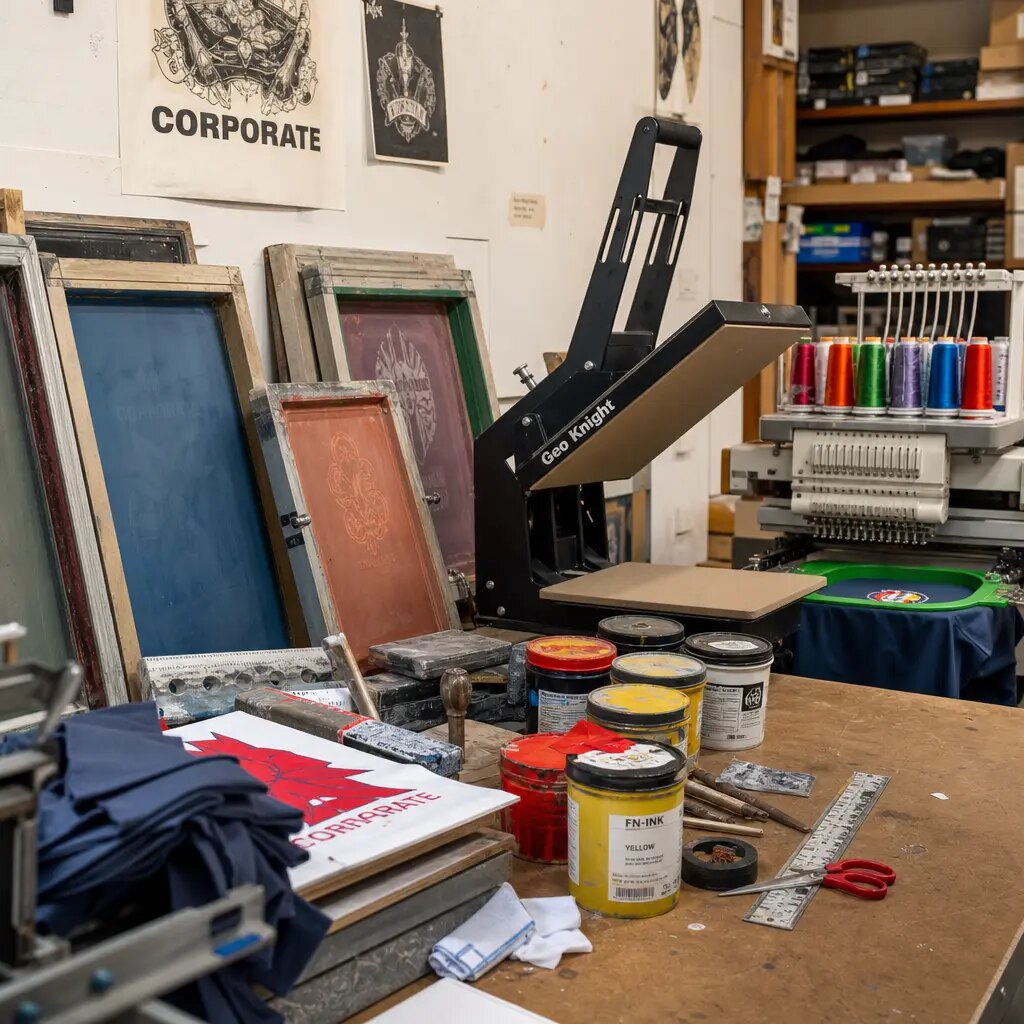
Screen printing is normally the strongest default choice for craft fair tote programs with bold logos, sponsor marks, farm market graphics, and simple retail branding. It gives good coverage and competitive cost at wholesale quantities. On canvas, however, the fabric texture affects print sharpness. Small serif text, fine lines, halftones, and QR codes can break up on slubbed or heavy canvas. What looks clean in a PDF may not reproduce cleanly on a rough textile surface.
Heat transfer and digital transfer are useful when the artwork has gradients, many colors, or low order quantity. They can reduce screen setup complexity, but buyers should check hand feel, edge durability, and appearance on natural canvas. A large transfer panel may feel plasticky or less breathable than screen print. Embroidery can add perceived value for a small logo or side mark, but it is usually not economical for full-panel grocery tote artwork and can pucker lighter canvas.
The safest procurement approach is to approve a print strike-off or pre-production sample on the selected bulk fabric. The artwork should be reviewed at actual size, not only as a digital mockup. If the program includes sponsor logos, vendor names, fair dates, or QR codes, each risk element must be checked for readability. For repeat programs, keep ink references and print placement notes because natural canvas shade variation can change the perceived print color.
- One-color screen print: best for bold logos, simple slogans, and lower unit cost at volume.
- Two- to four-color screen print: workable when artwork separations are clean and registration tolerance is realistic.
- Heat transfer: useful for gradients, photographs, or small batch artwork splits, but evaluate hand feel and edge durability.
- Digital direct or transfer printing: check whether the supplier can achieve the required color on natural or dyed canvas.
- Embroidery: suitable for small premium logos, not large full-panel graphics on lighter grocery totes.
- Woven label: useful when the front artwork changes by fair but the brand identity should remain consistent.
- QR codes: test scan performance on the actual printed canvas before approving mass production.
- Minimum line width: ask the factory to recommend a practical minimum for the chosen fabric texture and ink system.
Understand MOQ logic before splitting colors and artworks
MOQ is not only a sales policy. It is connected to fabric availability, dyeing, cutting efficiency, print setup, sewing line organization, and packing control. A standard natural 10 oz canvas grocery tote with one-color print may be practical at 500-1,000 pcs if the fabric is in stock. A custom dyed 12 oz canvas tote with several print versions, special labels, and retail packing may require a higher MOQ because every material and process step has setup cost.
Craft fair buyers often want to split one order across several fair names, vendor logos, local sponsors, retail stores, or seasonal dates. This can be managed, but each artwork version may require its own screen, setup, strike-off, and inspection control. If the order includes 1,000 pieces total but ten different front prints, the factory is not managing one simple order; it is managing ten smaller production lots. That changes price and risk.
A smart way to control MOQ is to standardize the bag body and vary only one element. For example, the same natural canvas body, same handle, same gusset, and same main brand print can be used across multiple fairs, while a small side label, hangtag, or secondary print changes by event. This reduces fabric complexity, sewing variation, and packing mistakes. Procurement should ask suppliers to price both the ideal design and a standardized alternative.
- Lowest practical MOQ is usually possible with stock natural canvas, standard body size, standard handles, and one-color screen printing.
- Higher MOQ is expected for custom dyed fabric, custom woven canvas, special handle colors, washed finish, binding, zippers, pockets, or barcode retail packing.
- Artwork splits should be quoted per design, including screen cost, setup time, strike-off approval, and packing separation.
- Color splits should be quoted per fabric color because dye lots and cutting plans cannot always be combined efficiently.
- Ask for price breaks at 500, 1,000, 3,000, and 5,000 pcs to understand whether the cost issue is fabric, printing, or labor.
- For repeat orders, keep approved fabric swatches, sealed samples, print ink references, carton labels, and shade comments.
- If the first program is a market test, choose a standard material platform that can scale without changing the entire specification.
Make sample approval represent bulk production, not a showroom idea
A sample is only useful if everyone understands what it proves. A showroom sample may prove general capability. A shape sample may prove dimensions and proportions. A print strike-off may prove ink and artwork. A pre-production sample should prove the final construction using the intended bulk fabric, handles, thread, print method, labels, and packing concept. Procurement teams should not release mass production based on a substitute sample unless all differences are listed and accepted.
For canvas grocery totes for craft fairs, the pre-production sample should be measured, loaded, photographed, and compared against the written specification. Do not review only the front panel. Check the bottom corner alignment, inside seams, thread trimming, handle reinforcement, print placement, and fabric shade. If the tote will be sold at retail, also review the hangtag, barcode, folding method, and carton presentation because those details affect receiving and store handling.
When a program includes multiple artworks or colors, it may not be practical to approve a full sewn sample for every version. In that case, approve one complete sample for the most complex version, fabric swatches for each material color, and print strike-offs for each artwork. Keep a signed sample record with dimensions, tolerances, approved comments, and photos. One approved sample should remain with the buyer, and one sealed sample should remain at the factory for production and inspection reference.
- Measure finished width, height, gusset, handle drop, handle width, seam allowance visibility, and print placement.
- Load the sample with realistic items such as jars, books, boxed candles, folded textiles, and small cartons to check comfort and bottom shape.
- Inspect print edges on the actual canvas texture, especially small text, sponsor marks, fine lines, and QR codes.
- Review inside seam finishing and thread trimming, not only the outside front panel.
- Confirm whether the sample fabric is identical to bulk fabric or a temporary substitute used for speed.
- Check whether the handle material, thread, label, ink, and packing are production materials.
- Keep one approved sample at the buyer side and one sealed reference sample at the factory.
- Record all approved tolerances in writing so final inspection has a measurable standard.
Compare quotes by landed cost and specification gaps
A heavier canvas tote is not more expensive only because it uses more fabric. It can also take more effort to cut, sew, fold, print, and pack. Heavy canvas may require slower sewing speed, stronger needles, more careful pressing, and larger cartons. A wide gusset consumes more material and increases carton cube. Individual polybags, hangtags, barcodes, inner cartons, and destination sorting add labor and volume. A low unit price can become expensive after freight and handling are included.
B2B buyers should request a costed specification rather than a single unit price. The quote should state finished GSM, fabric color and finish, bag dimensions, gusset, handle material, handle drop, print method, number of print colors, print size, label details, packing method, carton dimensions, gross weight, sample cost, production lead time, payment terms, and quote validity. If a quote does not state these details, it is difficult to compare fairly.
When one supplier is much cheaper, look for hidden differences. The cheaper quote may use 8 oz fabric instead of 10 oz, a flat body instead of gusset, narrower handles, single stitching instead of reinforced handle stitching, smaller print area, substitute transfer print, looser inspection terms, or bulk packing instead of individual retail packing. The goal is not always to choose the highest specification. The goal is to know which cost reductions are acceptable and which would damage the tote’s real use.
- Fabric cost increases when moving from 8 oz to 12 oz or 16 oz canvas and when switching from stock natural canvas to dyed or washed fabric.
- Printing cost is affected by number of colors, print area, ink coverage, artwork versions, screens, and strike-off approvals.
- Labor cost is affected by gusset construction, binding, pockets, zippers, labels, handle reinforcement, and thread trimming requirements.
- Packing cost is affected by individual polybags, tissue, hangtags, barcodes, carton quantity, destination sorting, and pallet rules.
- Freight cost is affected by carton cube, gross weight, compression limits, and shipment mode.
- Inspection cost is affected by number of artworks, number of destinations, and whether load testing or barcode checks are required.
- Ask each supplier to quote the same specification sheet before comparing unit prices.
- Calculate landed cost impact before rejecting a slightly higher unit price that may pack more efficiently or reduce defect risk.
Build QC requirements around fabric, stitching, print, and load performance
Quality control for canvas grocery totes should not be limited to appearance. A tote can look acceptable in a carton but fail when a shopper loads it with jars and books. Procurement should define inspection points before production starts, including fabric weight, shade, odor, dimensions, seam strength, handle reinforcement, print quality, packing accuracy, and carton count. The approved sample should be the reference, but the written QC standard should define measurable limits.
For fabric, inspectors should check finished GSM within tolerance, visible stains, oil marks, mildew odor, severe slubs, holes, and shade variation. Natural canvas can include small cotton flecks and irregularities, so the buyer should define what is acceptable. For dyed canvas, shade variation between the body, handles, and panels must be controlled more tightly. If the print area has large slubs or dark marks, even a technically acceptable natural fabric may look defective.
For construction, handle attachment and bottom seams are the main risk areas. The inspection plan should include a load test that reflects the intended use. The test does not need to be complicated, but it must be defined: weight, duration, whether the bag is hanging or lifted repeatedly, and pass/fail criteria. Print QC should include placement, ink coverage, cracking, smearing, color deviation, and readability. If there are several artworks, inspectors must verify carton separation so event shipments are not mixed.
- Set AQL and defect definitions before production, including critical, major, and minor defects.
- Treat broken handles, open seams, wrong artwork, mold odor, severe contamination, and wrong destination packing as critical or major issues.
- Check finished measurements against approved tolerance, usually plus or minus 0.5-1.0 cm depending on the part.
- Test handle strength with a defined load and duration rather than a general manual tug.
- Inspect inside seams for loose overlock, skipped stitches, raw edges outside approved construction, and excessive thread ends.
- Check print placement from the top edge and side seams using the approved sample as reference.
- Review ink coverage on textured canvas and reject severe pinholes, smears, ghosting, or cracking beyond the approved standard.
- Verify carton quantity, artwork separation, barcode labels, PO number, and destination marks during final inspection.
Specification comparison for buyers
| Spec decision | Recommended option | When it fits | Buyer risk to check |
|---|---|---|---|
| Main fabric weight | 10 oz to 12 oz cotton canvas, roughly 270-340 GSM depending on weave and finishing | Best balance for craft fair grocery totes that must carry jars, candles, books, produce, and packaged goods without feeling too stiff | Do not compare only by oz; request GSM, yarn count if available, and finished fabric hand feel because a loose 12 oz fabric may perform worse than a dense 10 oz |
| Budget fabric option | 8 oz to 10 oz canvas, roughly 220-300 GSM depending on construction | Light event giveaways, vendor welcome bags, or low-load promotional programs where grocery positioning is not the main promise | If the bag is marketed as reusable grocery style, a light fabric can create complaints even when the logo looks correct |
| Premium fabric option | 12 oz to 16 oz canvas, often 320-450 GSM depending on weave | Paid retail totes, boutique market merchandise, farm shop bags, and programs where structure and perceived value matter | Heavier fabric increases unit weight, sewing difficulty, carton cube, and freight cost; confirm that the buyer actually needs the upgrade |
| Fabric color and finish | Natural unbleached canvas for rustic craft positioning; dyed canvas only when brand color consistency is more important | Natural canvas works well for handmade markets, farm shops, eco retail, and event merchandise with one-color printing | Natural shade varies by cotton batch; approve a tolerance range and avoid promising exact cream color to retail accounts |
| Bottom construction | Boxed bottom with 8-12 cm gusset and reinforced seam allowance | Useful when the tote is sold or given as a grocery-style carry bag rather than a flat promotional tote | Flat totes quote cheaper but do not stand or carry bulky craft fair purchases well; compare dimensions by usable capacity, not only panel size |
| Handle material | Self-fabric canvas handles or heavy cotton webbing, 2.5-3.8 cm width, cross-stitched at stress points | Needed for heavier basket-style shopping loads and repeat use after the fair | Thin handles reduce cost but cut into the hand; require pull test criteria and specify handle drop for shoulder or hand carry |
| Print method | Screen print for solid logos; heat transfer only for detailed multicolor artwork on lower volume orders | Screen print is reliable for bold craft fair graphics, sponsor logos, farm market branding, and simple retail marks | Thick canvas texture can break fine lines; require production artwork at actual size and approve a printed pre-production sample |
| Inner seam finishing | Overlock plus lockstitch, or binding on premium retail totes | Overlock is sufficient for most wholesale craft fair bags; binding gives a cleaner inside finish for higher retail price points | Loose threads inside the tote are a common complaint; define trimming standard and seam strength before mass production |
| MOQ logic | 500-1,000 pcs for standard natural canvas with one-color print; higher MOQ for custom dyed fabric or special trims | Works for event distributors, small retail chains, and brands testing seasonal craft fair programs | Very low MOQ often means stock fabric only, digital transfer printing, or higher unit cost; clarify whether the quote is bulk production or sample-room handling |
Buyer checklist before sampling
- Define the real use case: giveaway tote, paid retail item, vendor merchandise bag, or reusable grocery bag for heavy purchases.
- Specify finished bag dimensions, gusset depth, handle drop, fabric GSM, color, and whether measurements are before or after washing or finishing.
- State the expected carrying load in kilograms or pounds and the test method you want used for handle and seam strength.
- Request fabric swatches in the proposed canvas weight and color, not only photos of previous tote bags.
- Confirm whether the quoted fabric is stock canvas, custom woven canvas, dyed canvas, washed canvas, or substitute fabric for sampling only.
- Approve print artwork at actual size, including minimum line width, ink color reference, print placement, QR code size if used, and tolerance.
- Require a pre-production sample using bulk fabric, bulk handle material, production thread, and the intended print method before releasing full production.
- Set load test and seam strength criteria suitable for grocery-style use, not only cosmetic inspection rules.
- Compare quotes by landed cost impact: fabric weight, packing volume, carton size, duty classification support, and inland handling.
- Confirm MOQ for each fabric color and print design, because mixed artworks may not share the same production setup cost.
Factory quote questions to send
- What is the finished GSM and oz weight of the proposed canvas, and is the weight measured before or after finishing?
- Can you provide the canvas construction details available from the mill, such as yarn count, weave type, and shrinkage after finishing?
- Is the canvas natural, bleached, dyed, or washed, and what shade variation should we expect across production lots?
- Is the quoted fabric a stock fabric or a custom production fabric, and what is the MOQ and lead time for each option?
- What are the finished bag dimensions, gusset depth, seam allowance, handle width, and handle drop in centimeters?
- What handle material is included in the price: self-fabric canvas, cotton webbing, or another material, and what reinforcement stitch pattern will be used?
- What print method is included in the price, how many colors are quoted, and what is the maximum print area?
- What is the minimum line width and minimum readable text size you recommend for screen printing on this canvas texture?
- Will the pre-production sample use the same fabric, ink, thread, handle material, and packing method as bulk production?
- What is the MOQ per fabric color and per artwork, and how does pricing change at 500, 1,000, 3,000, and 5,000 pcs?
Quality-control points to confirm
- Finished fabric weight should match the approved swatch within agreed tolerance, commonly plus or minus 5% unless another tolerance is specified.
- Bag width, height, gusset, and handle drop should be checked against approved sample measurements with a practical tolerance, usually plus or minus 0.5-1.0 cm depending on part.
- Handle attachment must be reinforced with box stitch, cross stitch, bartack, or equivalent stitching and pass the buyer-defined load test.
- A practical load test should include a defined weight, hanging or carrying duration, and pass criteria such as no handle tearing, no open seams, and no major deformation.
- Seams should have no skipped stitches, open seams, broken threads, loose overlock, raw edges outside the approved construction, or excessive thread ends inside the tote.
- Print placement should stay within agreed tolerance, commonly plus or minus 0.5 cm for central placement on a grocery tote panel.
- Ink coverage should be even on textured canvas, with no major pinholes, cracking, smearing, ghosting, or unacceptable color deviation from the approved sample.
- Small text, QR codes, sponsor logos, and fine line artwork should be checked at normal viewing distance and by scan test if QR codes are included.
- Natural canvas should be free from large dark stains, oil marks, mildew smell, obvious weaving holes, and severe slubs in visible print areas.
- Dyed canvas should be checked for shade consistency between panels, handles, and lots, especially when body fabric and webbing handles come from different suppliers.