1. Start with the roaster’s real use case, not a generic tote description
A canvas grocery tote for a coffee roaster is not the same product as a flat conference giveaway. It may be sold at the cafe register, used for a purchase-with-purchase campaign, packed with a holiday coffee bundle, shipped with an ecommerce order, or supplied to wholesale accounts for retail display. The tote becomes part of the brand experience, so procurement needs to control function, presentation, and repeatability, not only unit price.
Coffee is compact and heavy for its size. A tote may carry two or three 12 oz bags, several 1 lb bags, a mug, a jar, a bottle, or market goods added after the customer leaves the cafe. That load stresses handles and seams more than paper samples or apparel. The base also needs enough depth for rectangular coffee bags to sit naturally instead of being forced into a narrow stack.
The first sourcing step is to define the commercial role. A low-cost giveaway can accept lighter fabric and simpler packing. A paid merchandise SKU or gift-set carrier needs better handfeel, cleaner print, stronger handles, and more consistent dimensions. If the tote will be replenished across cafes, carton count, SKU separation, and reorder shade control become procurement issues too.
- Best-fit programs: cafe retail merchandise, grocery loyalty totes, subscription add-ons, farmers market bags, holiday bundles, and wholesale account gift sets.
- Common failure points: lightweight fabric, shallow gusset, short handles, crooked print, poor underbase, loose handle stitching, stains, odor, and over-compressed cartons.
- RFQ principle: describe the intended load and distribution route before asking suppliers for the cheapest quote.
2. Fabric weight, GSM, and composition: write the textile target clearly
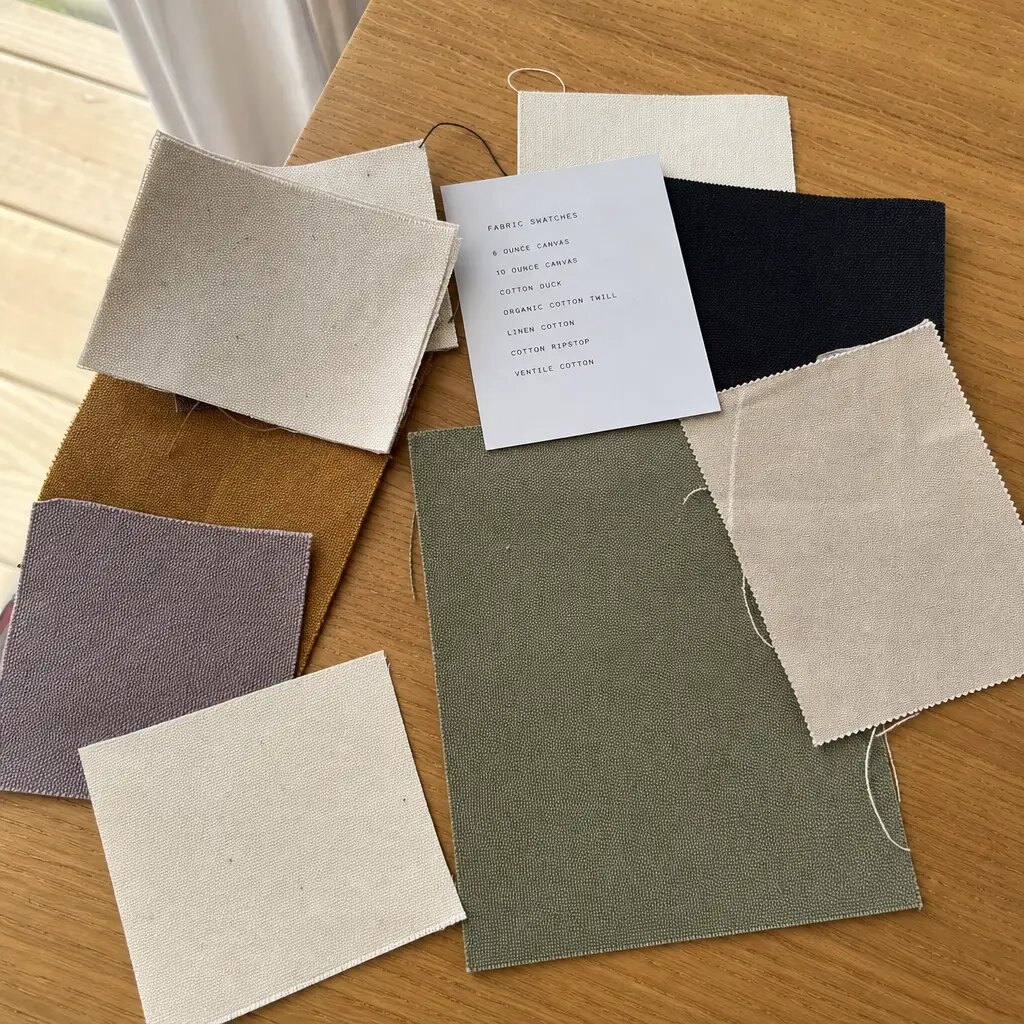
Fabric weight drives cost, feel, durability perception, sewing behavior, carton weight, and freight impact. For many canvas grocery totes for coffee roasters, 10 oz to 12 oz cotton canvas is a practical range, roughly 280-340 GSM. A 10 oz canvas can work for value merchandise and lighter grocery use. A 12 oz canvas usually feels more substantial for cafe retail and gift bundles. Heavier 14 oz canvas can look premium, but it raises fabric cost, needle stress, carton weight, and freight cube.
Be precise about units. Ounce weight is commonly stated as ounces per square yard, while GSM means grams per square meter. Ask the supplier to provide both and clarify whether the number is greige fabric before finishing, finished fabric after dyeing or washing, or only a nominal mill category. Two fabrics both called 12 oz may feel different if yarn, weave density, and finishing differ.
Composition must also be stated. Many coffee brands choose 100% cotton canvas for the familiar natural texture and good screen-print compatibility. Cotton-poly blends can change cost, shrinkage, and handfeel. Organic cotton, recycled cotton, or certified material claims require documentation and label/legal review before the buyer uses those claims on hangtags, product pages, or wholesale catalogs.
- Practical target: 10 oz for value reusable totes; 12 oz for stronger grocery merchandise; 14 oz and above only when premium feel justifies cost and freight.
- Ask for: oz per square yard, GSM, fabric construction, finish, shrinkage notes, and approved material swatch.
- QC reference: consider a plus/minus 5% fabric-weight tolerance if acceptable for the source and quality level.
3. Gusset, size, and capacity: avoid buying a flat tote by accident
The gusset is what makes the bag useful for coffee retail. A flat tote may photograph well but has limited grocery behavior. A boxed grocery tote with side and bottom gussets opens with depth, lets coffee bags sit on the base, and can hold mugs, jars, bakery items, bottles, produce, or folded apparel more naturally.
The risk is measurement language. One supplier may quote side gusset only; another may quote bottom gusset; another may describe full opened depth. Two quotes can show the same width and height but deliver different capacity. Before comparing price, ask for a simple drawing showing finished width, height, side gusset, bottom gusset or full depth, top opening, and handle drop.
A common starting range for a grocery-style tote is around 14-16 inches wide, 13-15 inches high, and 4-6 inches deep, but the final dimensions should come from the roaster’s contents. During sample review, fill the tote with the planned items and check whether the base supports the load, whether the opening is convenient, and whether it stands or folds the way the retail team expects.
- RFQ line: finished width x finished height x gusset/depth, with measurement points marked on a drawing.
- Typical tolerance: plus/minus 1 cm for body and gusset unless a display fixture or insert requires tighter control.
- Sample test: load with real coffee bags, mugs, jars, or the exact gift bundle, not paper stuffing.
4. Handle construction: control the highest-complaint detail
Handles carry the functional risk. The body fabric can be strong and the print can be clean, but a tote fails the customer if the handle attachment tears. Coffee products are dense, and customers often add groceries after buying coffee. For a paid item, weak handles are a major defect, not a cosmetic issue.
Handle details should be included in the base quote. Specify material, width, total length, usable drop, thread color, and reinforcement. Self-fabric handles create a coordinated look. Cotton web handles give consistent width and efficient sewing. For medium-load grocery totes, handles around 2.5-3.8 cm wide are often more comfortable than narrow straps. If shoulder carry is expected, say so; total handle length and usable handle drop are not the same measurement.
Reinforcement needs to be visible and inspectable. Common options include box-X stitching, bartacks, reinforced rectangle stitching, multi-row stitching, or added top-hem reinforcement. Do not leave the supplier free to use a single weak stitch line unless the product is intentionally low-load. During QC, check skipped stitches, broken thread, loose bartacks, thread nests, open corners, and uneven handle pairs.
- Specify handle drop from top opening to top of handle loop, not only total handle length.
- Require a reinforcement method: box-X, bartack, reinforced rectangle, or multi-row stitching.
- QC tolerance: handle drop commonly plus/minus 0.5-1 cm; uneven pairs can make the tote hang crooked.
5. Color route and decoration method: match artwork to production reality
Stock natural canvas is often the lowest-risk route for coffee roasters. It supports the craft retail look, keeps MOQ more manageable, and works well with one-color logos. Natural canvas should be approved as a physical swatch because seed flecks, slubs, and shade variation may be normal. However, natural texture does not excuse oil stains, mildew odor, holes, broken yarns, or large dark marks on the print panel.
Black canvas creates a stronger retail look but requires more print control. Light ink on dark fabric often needs a white underbase for opacity. That underbase can add cost, thickness, registration risk, and curing time. Small type, fine lines, and badge marks should be tested with the actual fabric and ink system before bulk approval.
Most roaster logos are suitable for screen print, especially one-color or two-color typographic marks. Transfer, DTF, or digital decoration can work for short runs, gradients, full-color seasonal art, or frequent artwork changes, but buyers should review physical samples for handfeel, gloss, cracking, edge lift, scorch marks, and adhesion. Placement must also be measured on the finished bag; a practical tolerance is often plus/minus 0.5-1 cm from the approved location.
- Lowest-risk route: stock natural canvas with one-color screen print.
- Dark canvas check: confirm white underbase, opacity, registration, halo limits, extra screens, and curing.
- Approval rule: approve actual fabric, actual print method, final logo size, and final placement before mass production.
6. MOQ and quote comparison: normalize the specification before choosing price
MOQ is shaped by material availability, cutting efficiency, print setup, sewing time, trims, and packing. Buyers often raise MOQ by adding too many custom features to a first order: custom dyed fabric, unusual size, two-sided print, woven label, inner pocket, hangtag, barcode sticker, individual polybag, or mixed carton allocation. Each option may be reasonable, but together they increase complexity.
For many coffee roasters, the safest first program is simple but not cheap-looking: stock natural or black canvas, standard grocery tote construction, one-color screen print, reinforced handles, and bundle packing. Once demand is proven, the buyer can add a seasonal color, second print location, custom label, or premium fabric.
Compare quotes only after normalizing specs. A 10 oz natural tote with one-side print and bulk packing is not comparable to a 12 oz black tote with underbase, woven label, hangtag, and individual polybag. Ask suppliers to quote the same quantity tiers, such as 500, 1,000, 2,500, and 5,000 pieces, if those fit your forecast. Separate setup charges and optional extras from the base unit price.
- Lower-MOQ choices: stock fabric, standard size, one print location, one-color artwork, no pocket, no lining, and bundle packing.
- MOQ triggers: custom dye, non-stock fabric weight, special gusset, multiple print locations, labels, pockets, lining, and ecommerce packaging.
- Quote comparison: same fabric, size, gusset, handles, reinforcement, print, packing, quantity, and trade term.
7. Lead time, packing, and landed cost: plan beyond the ex-factory price
Lead time should be broken into milestones. A quote that says “25 days production” may not include artwork revision, strike-off, sample making, sample courier, buyer approval, fabric booking, inspection, packing, freight booking, customs, or warehouse receiving. For holiday bundles, cafe openings, subscription inserts, or trade events, those details determine whether the tote arrives in time.
A practical schedule separates sample timing from bulk timing. Initial sample making may take about one to two weeks depending on fabric and print method, plus courier time and buyer review. Revisions add time. Bulk production timing starts only after the agreed trigger, such as deposit, artwork approval, sample approval, or fabric booking. Reorder timing may be shorter if fabric, artwork, and packing are unchanged, but shade and material availability still need confirmation.
Landed cost is affected by cube and handling, not only weight. Gusseted canvas totes are bulky when packed flat. Individual polybags, hangtags, inserts, and over-compression can increase warehouse labor or damage presentation. Ask for pieces per carton, carton dimensions, gross weight, and estimated CBM per 1,000 pieces. Confirm warehouse receiving limits, carton weight ceiling, pallet requirements, barcode needs, and whether cartons must be SKU-pure.
- Timeline to request: sample, revision, fabric booking, printing, cutting, sewing, QC, packing, ex-factory, freight, customs, and receiving.
- Packing details: pieces per bundle, pieces per carton, carton size, gross weight, carton marks, SKU separation, and compression method.
- Reorder planning: keep approved sample, artwork, material reference, carton plan, and lead-time trigger on file.
8. Purchase-order quote details: prevent missing-cost surprises
A low quote can be low because important items are missing. Common omissions include screen setup, artwork separation, PMS matching, white underbase, strike-off, sample courier, woven label sewing, hangtag attachment, barcode sticker, individual polybag, carton marks, upgraded carton strength, inspection support, inland freight, and bank charges. Missing specification can be worse: the supplier may be pricing lighter fabric, a flatter bag, shorter handles, or simpler stitching than the buyer expected.
Ask for line-by-line pricing. The quote should identify base bag construction, fabric composition and weight, finished dimensions, gusset method, handle spec, reinforcement, print method, print colors, print size, locations, trims, labels, packaging, MOQ, tier pricing, sample cost, lead time, and trade term. If freight is included, clarify EXW, FOB, CIF, DDP, or other basis and exactly what is covered.
Also confirm correction responsibility before the PO is issued. If the pre-production sample fails, will the supplier remake it? If bulk goods are off spec, will they sort, rework, replace, discount, or hold shipment? These discussions are much easier before the deadline pressure of a seasonal launch.
- Quote must include: fabric, size, gusset, handles, reinforcement, print, colors, locations, packing, MOQ, timing, and trade term.
- Hidden costs to surface: screens, underbase, strike-off, courier, labels, tags, barcodes, polybags, carton marks, inspection, and inland freight.
- PO attachment: approved spec sheet, artwork, color reference, sample comments, packing plan, QC tolerances, and delivery schedule.
9. Sample approval: inspect function, measurement, and brand presentation
A pre-production sample should prove the tote works, not just that the logo appears in the right place. Load it with real contents: coffee bags, a mug, a jar, a bottle, or the exact gift-set items. Check the base shape, handle comfort, opening size, folded footprint, and retail presentation when hung or stacked near a cafe register.
The sample should use bulk-intended fabric and the actual decoration process. If the factory uses substitute fabric or a temporary print method, document what is not final and require a second confirmation before mass cutting. This matters for fabric handfeel, print opacity, underbase thickness, folding behavior, and handle construction.
Measure the finished sewn sample. Check width, height, side gusset, bottom gusset or full depth, top opening, handle drop, handle width, logo size, and logo position. If approved with changes, write exact instructions such as “increase handle drop by 2 cm,” “move logo 1 cm higher,” or “change handle reinforcement to box-X.” Keep the approved physical sample as the standard for inspection and reorders.
- Do not approve paid merchandise from digital mockup only.
- Sample must verify: fabric, capacity, gusset shape, handle comfort, print coverage, stitch quality, odor, and folding method.
- Keep one dated approved sample linked to the PO, artwork, color reference, and packing plan.
10. QC acceptance framework: make defects measurable before shipment
Canvas tote QC should be simple, measurable, and agreed before production. Start with tolerances: body width, height, and gusset commonly plus/minus 1 cm; handle drop plus/minus 0.5-1 cm; print placement plus/minus 0.5-1 cm; fabric weight reference such as plus/minus 5% where appropriate. Inspect finished sewn bags, not cut panels.
Use defect categories. Critical defects involve safety, contamination, legal compliance, or unusable goods. Major defects affect function, saleability, branding, or customer complaints: weak handles, open seams, wrong artwork, wrong fabric, severe crooked print, front-panel stains, mildew odor, holes, or significant carton shortages. Minor defects may include small thread ends, slight slub variation, or small workmanship issues within the approved sample standard.
For larger orders, use an agreed AQL inspection plan, commonly general inspection level II with severity-based AQL values set by the buyer’s quality team. Add practical checks that matter for coffee totes: load or handle pull testing using expected contents or agreed test weight, odor and stain review, print rub or transfer check where relevant, and carton sampling after final packing. Goods with moisture, mildew, oil stains, strong odor, or suspected contamination should be quarantined until the buyer approves sorting, rework, replacement, or disposal.
- Major QC points: dimensions, handle strength, seam security, gusset symmetry, print position, print quality, fabric defects, odor, and carton count.
- Packing QC: verify pieces per bundle, pieces per carton, carton marks, SKU separation, carton condition, gross weight, and moisture risk.
- Inspection timing: consider in-line checks for printing and handle sewing, plus final inspection after packing and before shipment release.
Specification comparison for buyers
| Spec decision | Recommended option | When it fits | Buyer risk to check |
|---|---|---|---|
| Fabric weight | 10 oz to 12 oz cotton canvas, about 280-340 GSM; confirm oz per square yard and finished GSM | Core coffee merchandise, grocery carry, cafe retail, and gift bundles | Below 8 oz can feel like a giveaway; above 14 oz increases cost, carton weight, sewing stress, and freight cube |
| Fabric composition | 100% cotton canvas for standard natural handfeel; blends only when accepted by brand and labeling team | Roasters wanting familiar canvas texture and reliable screen-print behavior | Organic, recycled, or certified claims require valid documentation and legal/label review before use |
| Gusset construction | Boxed grocery tote with side and bottom gusset, or clearly defined full-depth gusset | Coffee bags, mugs, jars, bakery items, bottles, produce, and retail bundles | Suppliers may measure gusset differently; same width and height can hide very different capacity |
| Finished tolerances | Typical starting point: plus/minus 1 cm body and gusset, plus/minus 0.5-1 cm handle drop, plus/minus 0.5-1 cm print placement | Multi-location roasters, distributors, and reorder programs needing consistency | No tolerance makes inspection subjective; overly tight tolerance can raise cost or rejection rate |
| Handle specification | 2.5-3.8 cm self-fabric or cotton web handles with box-X, bartack, or multi-row reinforcement | Medium-load grocery totes used for coffee bags plus market items | Quotes often omit handle drop, webbing width, stitch type, thread color, and reinforcement location |
| Print method | Screen print for 1-2 spot colors; transfer, DTF, or digital for short-run full-color artwork | Most roaster logos, badge marks, typographic designs, and repeat orders | Dark canvas may need white underbase; transfers can feel stiff, gloss, crack, or lift if poorly matched |
| Color route | Stock natural or stock black first; stock dyed colors second; custom dye only when volume supports it | Lower-MOQ launches, retail replenishment, distributor stock, and seasonal programs | Custom dye adds lab dips, higher MOQ, shade approval, and repeat-lot variance control |
| MOQ route | Standard size, stock fabric, one print location, and bundle packing for first orders | Launch orders, cafe tests, subscription inserts, event resale, and purchase-with-purchase programs | Low unit price can hide setup, sample, label, barcode, inspection, carton, and freight costs |
| Packing plan | Flat packed in inner bundles and export cartons with fixed carton quantity, dimensions, and gross-weight ceiling | Wholesale distribution, warehouse receiving, ecommerce prep, and cafe replenishment | Over-compression can crease panels, mark prints, exceed warehouse weight limits, or cause count errors |
Buyer checklist before sampling
- Define use case first: paid merchandise SKU, purchase-with-purchase tote, cafe grocery bag, subscription insert, holiday gift-set carrier, wholesale account gift item, event resale, or giveaway.
- Set fabric target in both oz and GSM, such as 10 oz or 12 oz cotton canvas, about 280-340 GSM; ask whether the stated weight is greige, finished, washed, or nominal mill weight.
- Confirm composition: conventional cotton, organic cotton, recycled cotton blend, cotton-poly blend, or other. Do not publish sustainability or fiber claims until documents and labels are reviewed.
- State finished dimensions as width x height x gusset/depth, and define whether gusset means side gusset, bottom gusset, or full opened depth.
- Add written tolerances: body and gusset plus/minus 1 cm, handle drop plus/minus 0.5-1 cm, print placement plus/minus 0.5-1 cm, and fabric weight reference tolerance such as plus/minus 5% when appropriate.
- Specify handle material, width, total length, usable drop, thread color, and reinforcement method; state whether shoulder carry is required.
- List intended load: for example, two 12 oz coffee bags plus a mug, four 1 lb bags, bottles, jars, produce, or a defined gift bundle.
- Choose print method by artwork: screen print for 1-2 spot colors; transfer, DTF, or digital only when full color, gradients, or frequent artwork changes justify it.
- Declare artwork file format, PMS or brand color reference, print size, print location from top hem and side seams, number of print colors, and one-side or two-side printing.
- For black or dark canvas, confirm whether price includes white underbase, extra screen, registration control, opacity standard, strike-off, and added curing time.
Factory quote questions to send
- What exact fabric composition are you quoting, and what documentation supports any cotton, organic, recycled, or certified claim?
- What fabric weight are you quoting in oz per square yard and GSM, and is it greige weight, finished weight, washed weight, or nominal mill reference?
- Is the fabric plain canvas, duck canvas, twill, washed canvas, or another construction, and does any finish affect shrinkage, print adhesion, or handfeel?
- Is the material stock natural, bleached, stock black, stock dyed, or custom dyed, and what shade tolerance applies between lots?
- What are the finished bag dimensions and tolerances for width, height, side gusset, bottom gusset or full depth, top opening, and handle drop?
- How do you measure the gusset on this style? Please provide a simple drawing with measurement points before final price comparison.
- What handle material, handle width, total length, usable drop, stitch pattern, stitch density, reinforcement, thread type, and thread color are included?
- Does the quote include box-X stitching, bartacks, extra top-hem reinforcement, or only a basic rectangle stitch?
- What decoration method, number of colors, maximum print size, print locations, PMS matching, strike-off, and second-side print cost are included?
- For dark canvas, does the price include white underbase, added screen charge, underbase registration, opacity control, and curing requirements?
Quality-control points to confirm
- Check fabric weight against the approved standard using agreed sampling; a practical reference may be plus/minus 5% if accepted for the fabric source and buyer quality level.
- Verify fabric composition and documentation before using organic, recycled, certified, or other sustainability claims on labels, hangtags, product pages, or wholesale catalogs.
- Measure finished sewn bags, not panels: width, height, gusset/depth, top opening, handle drop, handle width, and print placement against written tolerances.
- Classify defects before inspection: critical defects affect safety or legal compliance; major defects affect function, saleability, branding, or customer use; minor defects are small workmanship issues within the approved standard.
- Treat weak handles, open seams, wrong artwork, wrong material, severe stains, mildew odor, holes, broken yarns on display panels, and large carton shortages as major or critical depending on severity.
- Inspect handle reinforcement for complete box-X, bartack, or approved stitch pattern; reject skipped stitches, broken thread, loose bartacks, open corners, thread nests, and uneven handle pairs beyond tolerance.
- Inspect gusset shape for symmetry, usable depth, even boxed corners, no severe twisting, and no distorted base seam that reduces capacity or display appearance.
- Inspect print position, tilt, opacity, coverage, registration, underbase halo, smearing, ghosting, pinholes beyond standard, edge lift, cracking, scorch marks, and unacceptable handfeel.
- Use AQL by agreement for final inspection, commonly with general inspection level II and severity-based AQL values; confirm the actual plan with the buyer’s quality team before production.
- Sample cartons after packing to verify pieces per bundle, pieces per carton, SKU separation, carton marks, carton condition, gross weight, odor, moisture, and print transfer from compression.