Start With the Bookstore Use Case
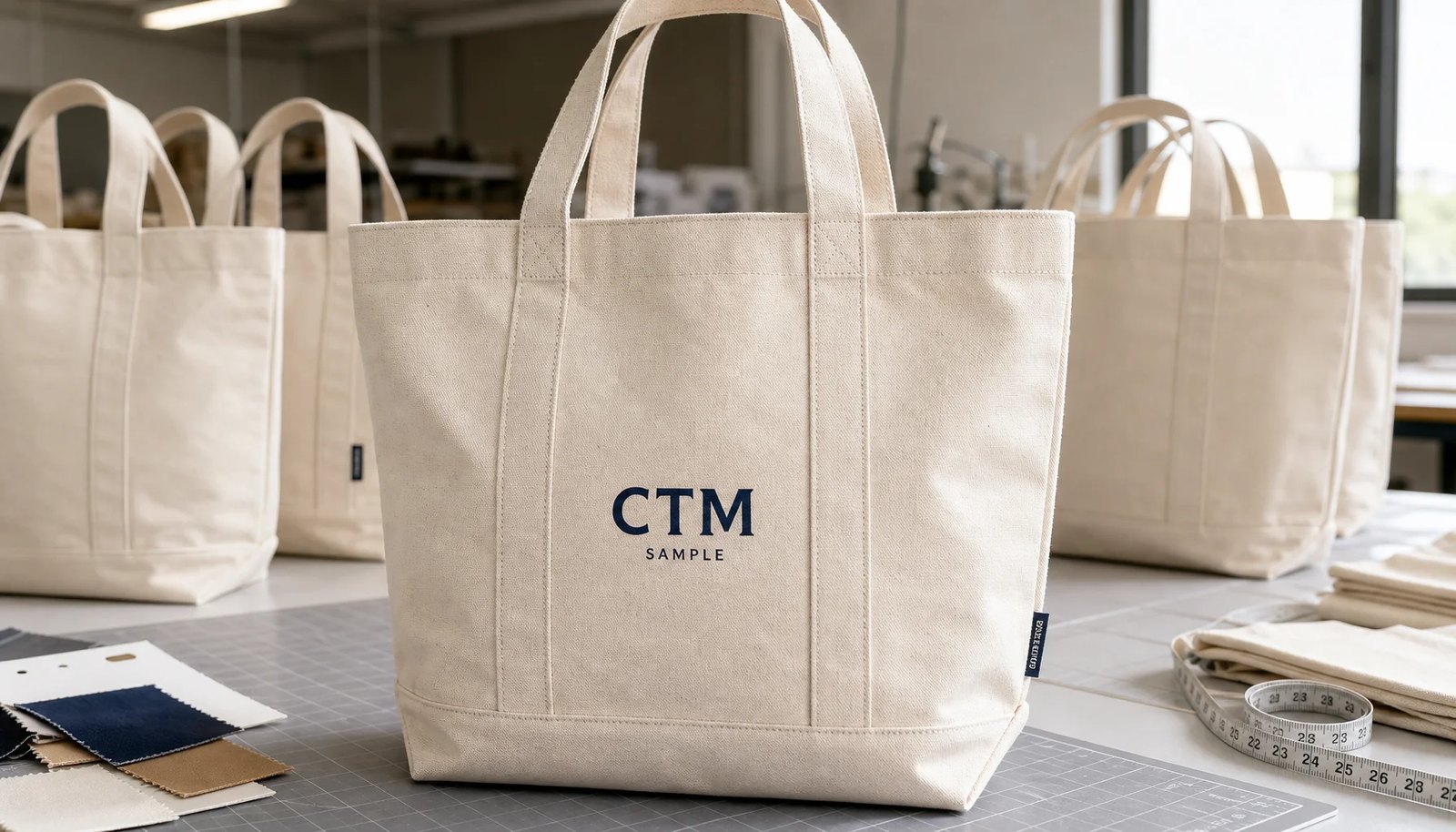
A university bookstore canvas grocery tote has a harder job than a thin conference giveaway. It may sit beside the register as a paid reusable bag, support a campus sustainability program, carry snacks and drinkware, or become a branded retail item for alumni weekends and graduation season. That job changes the pricing conversation. Capacity, handle comfort, print consistency, carton accuracy, and reorder reliability matter as much as the first unit price.
Before asking suppliers for numbers, split the order by commercial purpose. A checkout retail tote can justify heavier canvas, cleaner folding, barcode labels, and tighter print review. An orientation giveaway may need a simpler one-color mark, basic bulk packing, and a cost level that works for mass distribution. A premium alumni tote might use dyed canvas, contrast handles, woven labels, hangtags, or a more structured base. When these programs are blended into one vague RFQ, every supplier fills in the gaps differently.
Internal approval should be mapped early. Store operations may care about carton count and backroom handling. Merchandising will focus on retail look and price point. Licensing may control logo size, mascot use, trademark marks, and school colors. Finance needs margin by SKU. A strong canvas grocery totes bulk pricing plan turns those requirements into one shared specification sheet instead of a chain of late corrections.
The practical procurement question is not, “Who has the cheapest tote?” A better question is, “Which tote can we sell or distribute in the required season, at the required margin, with the fewest receiving and quality surprises?” That framing makes the rest of the buying process more disciplined.
- Checkout retail tote: prioritize finish, repeatable fabric, barcode readiness, carton labeling, and shoulder-friendly handles.
- Orientation giveaway: prioritize MOQ flexibility, one-color print, fast sample approval, and packing that event staff can count quickly.
- Alumni or gift shop retail: consider 12 oz canvas, dyed fabric, sewn label, hangtag, cleaner folding, and closer inspection.
- Grocery-style bookstore use: require a bottom gusset, reinforced handles, and enough body to carry mixed merchandise without heavy sagging.
- Online order or pickup bag: confirm SKU labeling, carton sorting, and whether the tote fits common shelves or shipping cartons.
Specify the Tote Before Pricing
Most bad quotes start with a simple phrase: “canvas tote.” One supplier may price a flat promotional bag with short handles. Another may price a true grocery tote with a boxed bottom and reinforced webbing. Both can look similar in a small mockup, but they will not perform the same in a bookstore.
Define the tote as a sewn product, not just a front panel. The RFQ should state finished width, height, bottom gusset depth, handle width, finished handle length, usable drop, seam type, reinforcement pattern, and measurement method. If the bookstore wants the bag to stand when filled, say so. If it only needs to fold flat for checkout bins, say that too.
A common grocery tote size is around 38 x 40 x 12 cm, but the right size depends on merchandise mix. Sweatshirts, water bottles, boxed gifts, and convenience items need different capacity than notebooks and small stationery. Increasing the gusset improves carrying space, yet it also changes fabric consumption, folding thickness, carton volume, and sometimes print placement.
Handles deserve their own line in the specification. Finished handle length is not the same as usable drop after sewing. For many shoulder-carry bookstore totes, 55-65 cm finished handles are practical, but the buyer should confirm the feel on an actual sample. Narrow handles may save money and still disappoint shoppers when the bag is loaded.
A simple technical sketch prevents most misunderstandings. It can be an annotated photo, a supplier drawing, or a one-page measurement table. The point is to lock the body size, gusset direction, handle placement, print location, label position, and folding method. For repeat programs, assign the approved body a style code so future artwork changes do not restart the construction discussion.
- Finished size: list width, height, bottom gusset depth, and whether measurements are taken flat, expanded, or after finishing.
- Handle details: state material, width, finished length, usable drop, placement from side seams, and reinforcement stitch pattern.
- Gusset format: confirm bottom gusset, side gusset, or boxed bottom because each affects capacity, folding, and carton volume.
- Retail presentation: define clean folding, hangtag, barcode sticker, belly band, inner bundle, or simple bulk packing.
- Repeat control: assign a style code to the approved tote body so later logo changes keep the same construction.
Buy Fabric by Spec, Not Nickname
Fabric is usually the biggest cost driver, and the language around it can be loose. Canvas may be described as 8 oz, 10 oz, 12 oz, or 14 oz, but ounce labels are not always used consistently across mills, countries, and finishing methods. For comparable supplier pricing, ask for both the ounce description and the target GSM range.
For many university bookstore grocery totes, 10 oz to 12 oz cotton canvas is the practical range, roughly about 280-340 GSM depending on weave and finish. A 10 oz tote often balances cost, feel, and structure for regular checkout or student programs. A 12 oz tote feels more substantial and supports a stronger retail impression, but it adds fabric cost, carton weight, sewing resistance, and freight impact.
Lighter canvas still has a place. An 8 oz tote can work for cost-sensitive giveaways or short-term event distribution, especially when the load is light. It is usually less convincing as a paid grocery-style bookstore tote. A 14 oz tote can be excellent for premium merchandise, but the bookstore needs a clear margin plan before moving that direction.
Color route also affects price and risk. Natural cotton canvas is often the most efficient choice and works well for campus retail when buyers accept seed flecks and small shade variation. Bleached canvas gives a cleaner look. Dyed canvas can align with a brand story, but it brings shade approval, dye-lot control, higher MOQ pressure, and more reorder risk. If the color is critical, request a lab dip or sealed fabric swatch before bulk cutting.
Finishing and shrinkage should be named in the purchase order. Even if the tote is not sold as washable, customers may wash it. Canvas can shrink, soften, distort, or change handfeel, and print performance may change with laundering. Do not promise wash performance unless the actual fabric and decoration have been tested. If no wash claim is intended, use a practical care instruction such as spot clean or hand wash only when appropriate.
- 8 oz canvas: lower cost and lighter handfeel; better for giveaways than paid grocery-style retail totes.
- 10 oz canvas: strong middle option for checkout totes, student programs, and repeat campus bookstore orders.
- 12 oz canvas: better structure and retail feel; higher unit price, carton weight, and sewing effort.
- 14 oz canvas: premium and durable; best for higher-margin merchandise rather than cost-sensitive bulk distribution.
- Natural canvas: efficient and popular, but buyers must approve flecks, shade range, odor, and handfeel.
- Dyed canvas: cleaner branding potential, but requires dye-lot control, MOQ planning, and lab dip approval when color matters.
Build Quantity Bands Around Real MOQs
A useful bulk pricing plan shows the price curve, not a single number. Ask every supplier to quote the same specification at 500, 1,000, 2,500, 5,000, and 10,000 pcs. Those bands help the bookstore decide whether to test a program, consolidate departments, or place an annual buy.
Price usually improves when sampling, cutting, screen setup, and sewing line preparation are spread across more units. After a point, the curve may flatten because cotton fabric remains a major part of the tote cost. That is normal. The goal is to see where the meaningful break occurs for the exact tote the bookstore wants.
MOQ is not one tidy number. The bag body, custom fabric color, handle color, print color count, woven label, hangtag, barcode sticker, and carton marking may each have separate minimums. A factory may accept 500 pcs using stocked natural canvas and one-color screen print, but require 2,000 pcs or more for custom dyed canvas, special handle tape, or several artwork versions.
Multi-campus and department orders need careful language. If five colleges each want 200 totes, ask whether the supplier prices the project as one 1,000-piece body order with five print setups or as five separate small orders. The difference can change unit price, screen charges, sample needs, and lead time.
Separate one-time charges from reorder economics. Screen charges, lab dips, development samples, special labels, and artwork adjustment may be first-order costs. If the bookstore expects to reorder for back-to-school, homecoming, graduation, or alumni events, ask the supplier to quote repeat assumptions while the fabric and body specification remain unchanged.
- 500 pcs: useful for pilots or small events; setup, sampling, and freight carry more per-piece weight.
- 1,000 pcs: often the first efficient band for custom printed natural canvas bookstore totes.
- 2,500 pcs: suitable for seasonal retail programs with better fabric utilization and print efficiency.
- 5,000 pcs: stronger leverage for fabric booking, carton planning, and repeat terms.
- 10,000 pcs: best for system-wide campus retail, distributors, or annual programs with firm receiving plans.
- Artwork splits: ask whether total quantity pricing applies when one tote body uses several approved logo versions.
Choose Decoration for Real Canvas
Decoration should be selected for the fabric, not for the PDF mockup. Screen print remains the workhorse for canvas grocery totes with one to three solid university colors. It is predictable, cost-effective at bulk quantities, and well suited to bookstore logos, campus slogans, mascot graphics, and department marks.
Print size matters. A large front-panel graphic uses more ink, can slow curing, and needs closer inspection on textured canvas. Fine lines may break across the weave. Small text can fill in. Light ink on dyed canvas may need an underbase. These details should be discussed before screens are made, not after the first production pieces are printed.
Heat transfer, digital print, embroidery, and sewn labels all have valid uses. Heat transfer can handle gradients or full-color artwork, but buyers should approve handfeel, edge quality, adhesion, and wash expectation. Digital printing can support detailed graphics or shorter artwork runs, but may not beat screen print for simple bulk logo work. Embroidery gives a premium feel for small marks, yet it is rarely the best route for a large grocery tote panel. Woven or cotton labels can elevate a private-label program without covering the front of the bag.
Campus licensing often sets the pace. University brand offices may review Pantone color, mascot details, clear space, trademark marks, and logo placement. Build that approval into the timeline. A late trademark change can require new screens, another strike-off, or a revised sample.
The safest approval is decoration on actual production fabric. A digital mockup cannot show ink absorption, opacity, edge quality, cracking, dry rub, or color shift against natural canvas. A strike-off or pre-production sample gives the buyer something real to approve before thousands of bags move into printing.
- Screen print: best for one to three solid school colors, bookstore logos, simple line art, and predictable bulk pricing.
- Heat transfer: useful for gradients or complex artwork; approve handfeel, edge quality, wash expectation, and adhesion.
- Digital print: possible for detailed art or short runs; compare cost and durability against screen print.
- Embroidery: best for small premium marks, not large grocery tote panels with heavy stitch coverage.
- Woven or cotton label: useful for private label programs and repeat branding across several bag styles.
- Approval rule: check Pantone target, coverage, placement, curing, and dry rub on actual production fabric.
Compare Supplier Routes Before Unit Prices
The same unit price can hide very different sourcing models. A direct cut-and-sew tote factory may manage cutting, sewing, packing, and sometimes printing in-house. Some factories use a long-term print partner. A trading company may coordinate several workshops. A domestic decorator may buy blanks and print locally. None of these routes is automatically right or wrong, but each has different control points.
For repeat bookstore programs, stability often matters more than the lowest first quote. The supplier should be able to hold the tote body specification, repeat the same fabric or an approved equivalent, manage print approvals cleanly, and pack cartons accurately by SKU. A cheap order becomes expensive if samples need several corrections, cartons are mislabeled, shortages appear, or the reorder fabric changes without notice.
Ask for evidence instead of relying on general claims. Useful proof includes photos of similar grocery tote construction, fabric swatches, print method details, sample timing, carton estimates, and inspection practices. If printing is subcontracted, ask how color approval, scheduling, defect handling, and accountability work. Subcontracting can be fine; hidden subcontracting is where surprises tend to appear.
University bookstores may also need services outside the factory floor. Credit terms, warehousing, split shipments, kitting, domestic delivery, or multi-campus distribution may justify a distributor or importer. That route may show a higher ex-factory price but reduce workload for the bookstore team.
The comparison should include responsiveness. A supplier that answers quote questions precisely, flags risks early, and documents approvals is usually easier to manage than one that sends only a low number and a generic product photo.
- Direct factory: best for custom size, repeat orders, private label control, and carton-level accuracy.
- Trading company: useful for mixed product sourcing, but require production evidence and sample correction ownership.
- Domestic decorator: good for rush or licensed artwork control, but often higher at larger quantities.
- Stock blank importer: fast for simple orders, but limited on fabric weight, handle design, and reorder matching.
- Distributor route: useful for credit terms, warehousing, kitting, or multiple campus deliveries.
- Evaluation point: compare response quality, sample accuracy, production control, inspection plan, and packing discipline.
Request Quote Data You Can Compare
A clean RFQ prevents the classic problem: five suppliers, five different bags, and no clear way to compare them. Every quote should respond to the same finished dimensions, fabric specification, handle details, construction method, decoration method, color count, print size, packing method, carton information, sample terms, lead time, payment terms, and trade terms.
Small hidden changes can create large price gaps. One supplier may use shorter handles, thinner canvas, a smaller print area, weaker cartons, or a different Incoterm. Another may include barcode stickers or a pre-production sample while the lowest quote excludes them. Without quote detail, procurement cannot tell whether the price is better or simply incomplete.
Freight needs its own data. Canvas totes are bulky, and carton dimensions can affect landed cost as much as unit weight. Ask for pieces per carton, carton size, gross weight, net weight, and estimated cubic volume. If one quote is FOB and another is delivered, normalize the comparison before presenting numbers internally.
Cost lines do not need to expose every factory margin to be useful. Ask suppliers to separate visible items where possible: base tote, print setup, sample fee, special label, hangtag, barcode sticker, individual polybag, carton marking, and estimated freight. This helps the bookstore choose which features are necessary and which are optional.
For university procurement records, keep the RFQ, supplier quote, final specification, artwork approval, sample comments, purchase order, and packing requirements aligned. If a claim or shortage appears later, the paper trail should show what was approved, what tolerance applied, and which party controlled delivery responsibility.
- Dimensions: width, height, gusset, handle length, handle drop, handle width, and measurement method.
- Fabric: cotton content, canvas ounce, GSM range and tolerance, color, finishing, shade tolerance, and shrinkage note.
- Construction: seam type, gusset type, reinforcement pattern, stitch density expectation, thread color, and label placement.
- Branding: decoration method, color count, Pantone references, print size, print position, and approval sample requirement.
- Packing: pieces per carton, inner bundles, polybag rule, carton size, gross weight, carton marks, and SKU labels.
- Commercial terms: MOQ, quantity breaks, sample fee, setup charges, lead time, payment term, trade term, and shipment documents.
Use Sample Approval as Cost Control
The sample is more than a photo opportunity. It is the point where the buyer locks the assumptions behind the quote. A stock sample can show general sewing quality, but it does not prove final fabric, handle drop, gusset size, print ink, label placement, folding, or packing.
For a true bulk order, approve a pre-production sample made with the selected canvas weight, handle construction, decoration method, print size, and label position. If the factory cannot make that sample before production, the buyer is accepting more risk than the purchase order may suggest.
Sample comments should be measurable. Do not write, “Move the logo up a little.” Write the approved distance from the top edge and side seam. Do not write, “Handles feel short.” State the required finished length or usable drop. Do not write, “Fabric feels too thin.” Compare it against the approved GSM range or swatch.
University licensing can add another approval layer. If the brand office changes logo size, Pantone color, mascot detail, clear space, or trademark placement after sample approval, the factory may need new screens and a revised production slot. That delay should be planned, not treated as an emergency.
Keep two references when possible. One sealed approved sample should stay untouched for incoming inspection and dispute resolution. A second working sample can be used by merchandising, operations, or store teams. Once the bulk shipment arrives, compare goods against the sealed sample, not against memory or an old PDF.
- Measure the sample flat and expanded, especially if the tote must stand or hold boxed merchandise.
- Check handle drop on the shoulder, not only total handle length on the specification sheet.
- Rub the cured print with a dry white cloth to screen for obvious ink transfer before bulk approval.
- Compare print color under consistent light against Pantone or the approved university brand reference.
- Review seam allowance, reinforcement, loose threads, stains, odor, and fabric shade against the written tolerance.
- Record all sample changes in writing before deposit, fabric booking, screen making, or bulk production.
Define QC Tolerances Before Production
Quality control works best when it is written before fabric is cut. Canvas grocery totes are sewn goods, so minor variation is normal. The goal is not impossible precision. The goal is to define what is acceptable for bookstore retail and what counts as a defect requiring repair, replacement, credit, or rejection.
Finished size can often be controlled within about ±1 cm for width and height on a standard tote. Gusset tolerance may sit around ±0.5-1 cm depending on construction. Screen print placement is commonly managed around ±5 mm when the panels and artwork are stable. Fabric GSM should be checked against the agreed tolerance, such as a percentage or range written into the purchase order.
Handle strength should be defined in practical terms. State the filled weight, hold time, and failure condition before production starts. The test should reflect the intended bookstore load, such as apparel, notebooks, bottled drinks, and small gifts. Avoid copying an unrealistic load requirement from an unrelated product category unless the supplier has agreed to build and test for it.
Inspection should cover appearance and function. Appearance includes stains, odor, dirty folds, major slubs, shade variation, print defects, loose threads, and retail presentation. Function includes seam security, handle reinforcement, gusset shape, barcode or label accuracy, carton quantity, and packing consistency.
If a third-party inspection company is used, its checklist should match the approved sample and purchase order. If incoming inspection is handled by bookstore staff, give them a short receiving checklist and the sealed sample. A clear standard prevents subjective debates when cartons are already on campus.
- Set size tolerance before bulk production, such as ±1 cm for width and height when suitable for the construction.
- Set print tolerance, such as ±5 mm placement, and define unacceptable bleeding, cracking, pinholes, and dry rub transfer.
- Check handle stitching for box-cross shape, backtack security, skipped stitches, broken threads, and tearing around attachment points.
- Define major defects such as open seams, wrong logo, wrong color, heavy stains, strong odor, missing labels, and carton shortages.
- Define minor defects such as long thread ends, slight shade variation within approval range, and small natural flecks when accepted.
- Use the sealed pre-production sample as the reference for incoming inspection and dispute resolution.
Control Packing, Cartons, and Receiving
Packing looks like a small detail until the shipment hits the bookstore dock. Poor packing creates counting delays, damaged folds, mixed SKUs, backroom clutter, and extra labor. For many bulk orders, flat packed totes in export cartons are the most efficient choice.
Individual polybags should not be automatic. They add material cost, labor, carton volume, plastic handling, and unpacking time. If the tote is sold as a retail SKU, a barcode sticker, hangtag, belly band, or marked inner bundle may be more useful than a polybag around every piece. If the receiving manual or online fulfillment process requires polybags, state that clearly in the RFQ.
Carton data belongs in the quote. Heavy 12 oz canvas packed loosely can create high dimensional weight. Overfilled cartons may split, crush folded bags, or become difficult to lift safely in a backroom. Ask for carton dimensions, gross weight, net weight, carton count, and estimated cubic volume before freight is booked.
Multi-campus orders need disciplined carton marking. Cartons should identify purchase order, SKU, artwork version, quantity, destination, and carton sequence. If several logos are shipped together, inner bundles should be labeled so staff do not need to unfold every bag just to sort designs.
Shortage and overage rules should be written into the purchase order. Some sewn-goods programs allow small variance, but bookstore inventory and event planning need reliable counts. The factory should provide a packing list by carton, and receiving teams should check carton labels and random bag counts before the totes move to stores, events, or online order staging.
- Bulk packing: 25-50 pcs per carton depending on canvas weight, bag size, fold method, and carton strength.
- Retail-ready packing: use hangtags, barcode stickers, belly bands, or inner bundles when sales-floor handling requires it.
- Polybag rule: avoid individual polybags unless receiving manuals, online fulfillment, or retail presentation require them.
- Carton data: request dimensions, gross weight, net weight, carton count, and estimated cubic volume before freight booking.
- Carton marks: include PO number, SKU, artwork version, campus or store destination, quantity, and carton sequence.
- Receiving check: compare carton list, carton labels, and random bag counts before distributing to store locations.
Specification comparison for buyers
| Procurement decision | Recommended specification | Best-fit bookstore scenario | Quote or QC risk to control |
|---|---|---|---|
| Fabric route | 10 oz to 12 oz cotton canvas with written GSM target, typically about 280-340 GSM depending on weave and finish; state natural, bleached, dyed, or yarn-dyed finish | Checkout totes, alumni merchandise, reusable campus grocery bags, bookstore retail items, and department programs | Do not compare ounce labels alone; require GSM tolerance, approved swatch, shade range, shrinkage note, and confirmation that natural cotton flecks are acceptable |
| Bag construction | Grocery format around 38 x 40 x 12 cm, boxed or bottom gusset, secured side seams, reinforced handle attachment, and defined seam allowance | Retail checkout bags carrying apparel, notebooks, snacks, drink bottles, gifts, and light textbooks | A flat promotional tote may be cheaper but does not meet grocery-use requirements; inspect gusset depth, seam strength, handle placement, and stress points |
| Handle specification | Cotton webbing or self-fabric handles, 2.5-3.5 cm width, 55-65 cm finished length, box-cross or bar-tack reinforcement | Shoulder carry for students, parents, alumni visitors, event shoppers, and bookstore customers leaving with multiple items | Short handles, narrow tape, weak backtacks, skipped stitches, and inconsistent handle drop are common hidden differences between quotes |
| Print method | Screen print for one to three solid school colors; heat transfer, DTG, or digital print only when artwork complexity justifies it | University logos, bookstore marks, campus slogans, mascot graphics, and department-specific designs | Approve ink coverage, Pantone target, print edge quality, curing, dry rub, and placement on actual canvas, not only on a PDF mockup |
| MOQ plan | 500-1,000 pcs for standard natural canvas with simple print; often 2,000+ pcs for custom dyed fabric, special handle colors, woven labels, or multi-SKU packing | Pilot bookstore programs, orientation season tests, recurring alumni merchandise, and multi-campus replenishment | A low MOQ may rely on available fabric lots; reorders can shift in shade, GSM, handle handfeel, print result, or carton configuration |
| Quantity bands | Request 500, 1,000, 2,500, 5,000, and 10,000 pcs pricing with identical specifications, packing, and trade terms | Budget planning, bid comparison, annual buy forecasting, and deciding whether to consolidate department designs | If each supplier quotes different fabric, carton counts, print area, or Incoterms, the price ladder is not comparable |
| Supplier route | Direct cut-and-sew tote factory with in-house printing or a named long-term print partner; distributor route when warehousing or multi-campus delivery is required | Repeat orders, private label control, custom size control, receiving accuracy, and licensed bookstore merchandise | Trading quotes may hide print subcontracting, slower corrections, weak carton control, and less ability to reserve the same fabric lot |
| Packing method | Flat packed, usually 25-50 pcs per export carton depending on fabric weight and bag size, with inner bundles, SKU labels, hangtags, or barcode stickers as needed | Bookstore backrooms, receiving docks, online order staging, campus store transfers, and event distribution | Individual polybags add cost, plastic, carton volume, and unpacking labor; use them only when required by receiving rules or retail presentation |
| Lead-time plan | 7-10 days for a pre-production sample after complete specs and artwork; 25-40 days bulk after sample approval when fabric is available, plus freight and receiving time | Orientation, back-to-school, homecoming, graduation, alumni weekends, athletics events, and holiday bookstore programs | Custom dyeing, late trademark approval, peak capacity, delayed deposit, artwork revisions, and freight congestion can push delivery dates |
Buyer checklist before sampling
- Define the selling use first: checkout grocery tote, orientation giveaway, alumni retail item, online order bag, department merchandise, or bundled purchase incentive.
- Set the target landed cost, planned retail price, and margin before choosing 8 oz, 10 oz, 12 oz, or premium canvas; fabric weight must match the commercial program.
- State finished width, height, gusset depth, handle drop, handle width, seam type, reinforcement pattern, and whether the tote must stand when filled.
- Specify fabric by ounce and GSM range, cotton content, color route, finishing, acceptable natural flecks, shade tolerance, shrinkage expectation, and whether the same fabric lot must be reserved for reorders.
- Attach vector artwork with Pantone references, print dimensions, print position measured from bag edges, color count, minimum line width concerns, and campus trademark approval requirements.
- Request quantity-band pricing at the same specification for 500, 1,000, 2,500, 5,000, and 10,000 pcs instead of comparing one-off unit prices.
- Ask the supplier to separate base tote cost, print setup, sample fee, label or hangtag cost, barcode sticker, special packing, freight estimate, and one-time development charges where possible.
- Require one pre-production sample using the actual fabric, handle construction, print method, print size, and label position; do not approve bulk from a stock sample only.
- Create written acceptance criteria for size tolerance, print color, print placement, seam allowance, handle reinforcement, stitch density, thread trimming, stains, odor, and carton labeling.
- Confirm carton quantity, carton dimensions, gross weight, barcode or SKU label rules, inner bundle method, overage or shortage allowance, and whether individual polybags are required or prohibited.
Factory quote questions to send
- What exact canvas will be used: fiber content, ounce description, GSM target and tolerance, weave type, color route, finishing, handfeel, and shrinkage expectation?
- Is the quoted price based on available natural canvas stock, a reserved fabric lot, custom dyed fabric, or new weaving, and how long can the fabric lot be held for reorders?
- What MOQ applies separately to the bag body, custom fabric color, handle color, print color count, woven label, hangtag, barcode sticker, and carton marking?
- Which decoration method is included, how many colors are included, what is the maximum print area, what ink or transfer type is used, and what screen, setup, or strike-off charges apply?
- Can you quote the same specification at 500, 1,000, 2,500, 5,000, and 10,000 pcs with identical packing, carton marks, and trade terms?
- What handle construction is quoted: material, width, finished length, usable drop, placement from side seams, stitch pattern, thread type, and reinforcement standard?
- Can you define a practical load test method for this grocery tote and provide photos of reinforcement stitching from comparable production?
- What are the sample lead time, sample shipping method, bulk lead time, production capacity window, and latest artwork approval date for delivery before the required campus selling window?
- How will totes be folded and packed, how many pieces per carton, what are estimated carton dimensions and gross weight, and are cartons suitable for export handling?
- What inspection standard and tolerance will be used for finished size, print placement, fabric shade, GSM, loose threads, stains, odor, open seams, handle strength, and carton shortages?
Quality-control points to confirm
- Finished size tolerance should normally stay within ±1 cm for width and height and ±0.5-1 cm for gusset depth unless the approved construction requires a different written tolerance.
- Fabric weight should be checked against the approved swatch with a written GSM tolerance, such as ±5% when agreed by buyer and factory; do not rely only on the marketing ounce description.
- Fabric appearance should be reviewed for unacceptable stains, weaving defects, excessive slubs, dirty fold lines, shade variation, mildew odor, chemical odor, and inconsistent natural cotton flecks.
- Handle attachment should use secure box-cross stitching, bar-tacks, or equivalent reinforcement with no skipped stitches, broken thread, weak backtack, loose handle ends, or fabric tearing around stress points.
- A practical load check should be defined before production, such as holding a stated filled weight for a stated time and confirming no seam opening, handle slippage, or tearing at attachment points.
- Print placement should be measured from the top edge and side seam, with a practical tolerance such as ±5 mm for standard screen print positioning on cut-and-sew canvas totes.
- Ink coverage must be checked on actual canvas texture for pinholes, rough edges, bleeding, color shift, cracking, poor curing, and dry rub transfer onto a clean white cloth.
- Seams should have consistent seam allowance, straight enough presentation for retail sale, no open seams, no skipped overlock areas, trimmed threads, and no visible oil marks.
- Cartons should be strong enough for export handling, correctly marked by SKU and quantity, not overfilled, and packed consistently so receiving teams can count without re-sorting every carton.
- Incoming inspection should compare bulk goods against the sealed approved sample, packing list, carton marks, and purchase order before the bookstore releases the shipment to stores or event teams.