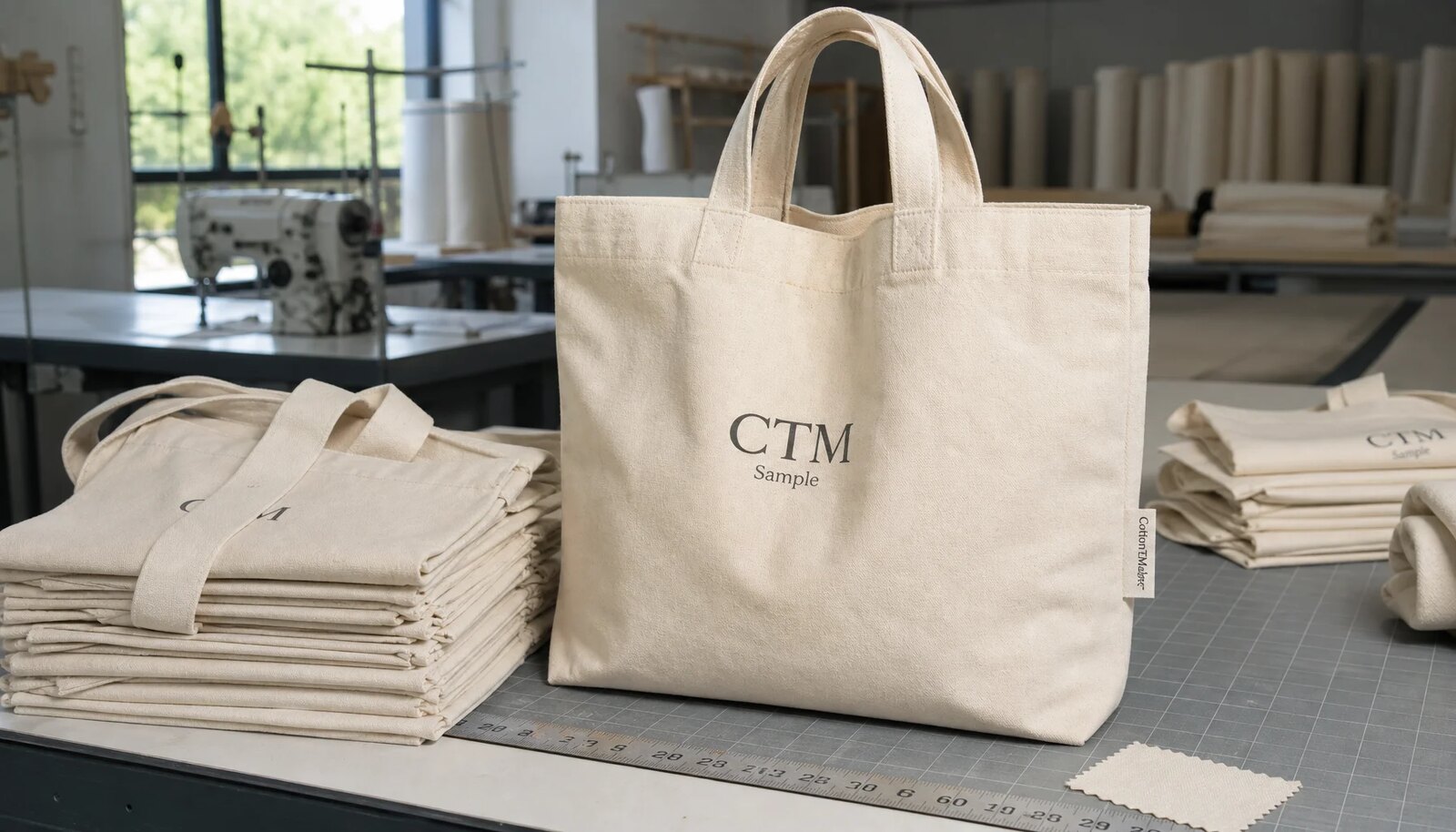
Start with the pricing problem
Hotel retail buyers usually do not need the cheapest canvas grocery tote. They need a tote that can sit in a lobby shop, spa boutique, minibar retail kit, or destination gift display without looking like a giveaway bag. The pricing plan should therefore separate the bag construction from the decoration, packing, and logistics. If all of these items are blended into one unit price, procurement cannot see why one quote is lower or where the risk is hidden.
A good RFQ for canvas grocery totes starts with a target use case. A tote used for guest grocery runs needs carrying strength and a comfortable handle. A tote sold as a souvenir needs print quality, shelf presentation, and repeatable color. A tote used in a hotel welcome retail bundle may need barcode labels, hangtags, or compact packing. Each scenario changes the MOQ logic and the cost structure.
- Retail souvenir tote: prioritize print clarity, fabric handfeel, and neat folding.
- Guest grocery tote: prioritize handle strength, gusset depth, and load testing.
- Amenity bundle tote: prioritize carton consistency, compact packing, and label control.
- Multi-property program: prioritize repeatable specifications and reorder color tolerance.
Set fabric weight before comparing prices
The word canvas is too broad for price comparison. One supplier may quote 8 oz cotton canvas around 220–240 GSM, while another quotes 12 oz fabric around 330–360 GSM. Both may call the product a canvas grocery tote, but the fabric cost, sewing difficulty, print behavior, and retail feel are different. For hotel retail, the usual practical range is 10–12 oz or roughly 280–340 GSM for a balanced grocery tote.
Heavier fabric is not always better. A 14 oz canvas can feel premium but increases fabric cost, carton weight, and shipping cost. It may also create thicker seams that need stronger machines and slower sewing. Lighter 8 oz canvas can work for promotional use, but it often feels thin for retail sale and may collapse on the shelf. Procurement should state GSM, tolerance, and fabric finish in the RFQ.
- 8 oz or 220–240 GSM: low-cost trial, light retail use, not ideal for heavy grocery loads.
- 10 oz or 280–300 GSM: common hotel retail balance of price, feel, and printability.
- 12 oz or 330–360 GSM: stronger premium feel, higher freight weight, better shelf structure.
- Dyed canvas: better brand color control but requires lab dip and rubbing fastness review.
Choose construction around the load
Canvas grocery totes are priced by more than fabric weight. Body size, gusset depth, handle length, handle width, stitch count, and reinforcement all affect labor time and material usage. A tote with a wide bottom gusset and cross-stitched handles costs more than a flat tote because it takes more cutting, alignment, and sewing. For hotel retail, a practical grocery size is often around 38 x 35 x 12 cm, but the final size should match the intended merchandise and shelf display.
Handle design needs special attention. A shoulder-length handle around 55–65 cm is convenient for guests walking around a resort or city market. A shorter hand-carry handle can look cleaner on a display rack but may feel less useful. For grocery use, handle width around 2.5–3.5 cm is more comfortable than narrow tape. Reinforced box stitching or cross stitching at the handle joint is usually worth the small extra cost.
- Flat tote: lower cost, easier packing, limited grocery volume.
- Bottom gusset tote: better for retail and grocery use, slightly higher cutting and sewing cost.
- Side and bottom gusset: best capacity, higher fabric usage, more complex seam control.
- Self-fabric handle: premium look; cotton webbing handle may offer more consistent strength.
Match printing method to artwork and repeat orders
For most canvas grocery totes in hotel retail, screen printing is the safest starting point. It gives solid color, clean edges, and competitive pricing at bulk quantities. One-color or two-color logos are usually economical because screen setup is simple and running speed is high. The buyer should specify print size, placement from the top edge and side seam, Pantone reference, and whether the print is on one side or both sides.
Heat transfer can work for detailed artwork, gradients, or small quantities, but it can feel less integrated with the fabric and may have different aging behavior. Embroidery gives a premium look but increases cost and can distort lighter canvas if backing and stitch density are not controlled. Woven labels or side labels are useful when the hotel wants subtle branding without a large front print. The pricing plan should treat each decoration method as a separate cost line.
- Screen print: best for solid logos, repeat orders, and clean unit pricing.
- Heat transfer: useful for gradients or small runs; review handfeel and wash resistance.
- Embroidery: premium but slower and more expensive; control puckering on canvas.
- Woven side label: good for understated hotel branding and repeatable small-logo programs.
Build MOQ logic instead of chasing one number
MOQ is not only a factory rule. It comes from fabric purchasing, dyeing minimums, print setup, cutting efficiency, sewing line changeover, and packing labor. A factory may accept 500 pieces for a natural canvas tote with one-color print because fabric is available and setup is simple. The same factory may require 1,000 or 2,000 pieces for dyed canvas, custom width fabric, or multiple property logos.
For hotel retail programs, the best pricing plan often uses tiered quantities by design. For example, the buyer can request 500, 1,000, 3,000, and 5,000 pieces per artwork, with separate adders for extra print colors, hangtags, and individual polybags. This lets procurement see where the price drops come from. If the price barely changes between 3,000 and 5,000 pieces, freight or fabric cost may dominate. If the price drops sharply after 1,000 pieces, setup and line efficiency are likely the main drivers.
- Quote by artwork, not only by total order quantity, when properties use different logos.
- Keep fabric color count low if the target is a lower MOQ.
- Bundle similar sizes together only if cutting and sewing setup can remain efficient.
- Separate one-time screen, sample, and tooling charges from repeat-order unit price.
Read the quote like a merchandiser
A useful supplier quote should show exactly what is included. Unit price alone is not enough. The buyer needs finished size, fabric GSM, fabric composition, handle material, decoration method, print colors, packing, carton details, sample cost, lead time, Incoterm, and payment terms. Without these details, two quotes that look 15 percent apart may not be quoting the same bag.
The most common hidden cost is packing. A tote packed loose in export cartons is cheaper than one folded with tissue, hangtag, barcode sticker, and individual biodegradable bag. Hotel retail buyers also need to know carton quantity because overpacked cartons can crease the printed panel, while underpacked cartons increase freight volume. A clean quote should make the retail presentation visible before production starts.
- Base bag price: fabric, cutting, sewing, handle reinforcement, and standard trimming.
- Decoration price: screen setup, print run charge, additional colors, and second-side printing.
- Retail packing price: hangtag, barcode, folding method, polybag policy, and carton mark.
- Logistics basis: EXW, FOB, CIF, or DDP with carton size and gross weight stated.
Approve samples in the right sequence
Sampling should reduce risk, not create confusion. A blank construction sample confirms size, gusset, handle length, seam method, and fabric handfeel. A print strike-off confirms ink color, print edge, artwork scale, and curing. A pre-production sample combines the approved construction and decoration using bulk materials. For hotel retail, the pre-production sample should be sealed and used as the inspection standard.
Do not approve mass production from a digital mockup or a studio photo alone. Canvas shade, fabric stiffness, print absorption, and seam bulk must be judged from a physical sample. Natural canvas can show slubs and shade variation, so the buyer should define what is acceptable. If the hotel brand has strict color requirements, lab dips and Pantone references should be approved before cutting bulk fabric.
- Measure finished width, height, gusset, handle drop, and print position on the sample.
- Load the sample with realistic grocery weight to review handle comfort and seam stress.
- Fold the sample as it will be packed to see whether the print creases badly.
- Keep one signed sample with the factory and one with the buyer or inspection agent.
Set QC thresholds before production
Quality control for canvas grocery totes should be practical and measurable. The inspection team needs tolerances, not only a general instruction to make good quality. Size tolerance, stitch defects, stains, print position, fabric holes, handle strength, and carton labeling should be listed in the purchase order or quality file. This protects both the buyer and factory because the production team knows the acceptance standard before sewing starts.
For hotel retail, visible defects matter more than they would for a free promotional giveaway. A stain on the front panel, crooked print, loose handle thread, or crushed retail fold can make the tote unsellable. Many buyers use AQL inspection, but AQL alone is not enough unless defect categories are defined. Critical defects should include unsafe handle failure, mold odor, wrong artwork, and mixed cartons.
- Print position tolerance: commonly within plus or minus 5 mm unless artwork requires tighter alignment.
- Stitching: no skipped stitches at handle joints and no open seams on load-bearing areas.
- Fabric defects: reject oil stains, mildew odor, large holes, and heavy shade mismatch on the same order.
- Carton accuracy: correct SKU, design, quantity, barcode, destination, and purchase order reference.
Plan packing for retail and freight
Packing is part of the product, especially for hotel retail. A loose bulk pack may be fine for back-of-house distribution, but a lobby shop often needs consistent folding, hangtags, barcode labels, and clean cartons that store well. If the tote is sold near apparel or gifts, a crushed or dusty presentation can hurt sell-through even when the sewing quality is acceptable.
Freight planning starts with carton data. Canvas totes are not fragile, but they are bulky. Heavier GSM, large gussets, and individual packing increase carton volume. The buyer should request carton quantity, net weight, gross weight, and carton dimensions at quotation stage. This allows a landed-cost comparison before the purchase order is placed, instead of discovering after production that freight cost has changed the margin.
- Loose bulk pack: lowest labor cost, best for internal hotel use or distributor repacking.
- Folded retail pack: better display condition, higher labor cost, more consistent shelf handling.
- Individual bagging: protects from dirt but may conflict with hotel sustainability policies.
- Carton labeling: include item code, artwork version, quantity, gross weight, and destination mark.
Protect the schedule from common delays
A realistic lead time for custom canvas grocery totes depends on fabric availability, printing workload, sample approval speed, sewing capacity, inspection, and vessel booking. Buyers often lose time before production even starts because artwork is incomplete or sample comments arrive late. A pricing plan should include a schedule plan, not only a price table.
The highest-risk steps are dyed fabric approval, multi-color print approval, and packaging artwork. Natural canvas with one-color screen print is usually faster because fewer approvals are required. Dyed canvas, custom labels, hangtags, and property-specific carton marks add coordination. Procurement should build a calendar that separates sample time, production time, inspection time, and shipping time.
- Artwork delay: missing vector file, unclear Pantone, or unapproved print size.
- Fabric delay: custom dyeing, mill minimums, or shade approval revisions.
- Production delay: too many logo versions split across small quantities.
- Shipping delay: late carton data, missed booking, customs document correction, or holiday congestion.
Specification comparison for buyers
| Spec decision | Recommended option | When it fits | Buyer risk to check |
|---|---|---|---|
| Direct factory order | Use when hotel retail volume is stable above the factory MOQ and artwork is approved early | Best for 1,000–20,000 pieces per design where pricing, packing, and QC can be controlled at source | Verify factory actually cuts, prints, and sews in-house or disclose any subcontracted printing process |
| Trading company or consolidator | Use when the buyer needs mixed SKUs, low trial quantities, or combined shipment with other amenity bags | Useful for launch tests, multi-property assortments, or orders split across several bag styles | Margin may hide fabric substitution; require GSM, finished size, handle length, and sample match in writing |
| Stock blank tote plus local print | Use only for urgent replenishment or small events where exact hotel retail quality is less critical | Works for 100–500 pieces when speed matters more than a custom construction | Blank dimensions, shrinkage, and print wash fastness may vary by lot; resale consistency is weaker |
| Custom cut-and-sew canvas tote | Choose for branded hotel boutiques, grocery kits, minibar retail, or welcome-shop merchandise | Best when the tote needs a retail feel, reinforced handles, gusseted base, and controlled shelf presentation | MOQ is higher because fabric purchase, cutting loss, setup, and printing screens are assigned to the order |
| Centralized print at origin | Screen print or heat transfer before sewing when artwork position must be consistent | Suitable for repeat hotel retail programs with approved Pantone colors and carton-level labeling | Late artwork changes can delay bulk cutting; approve strike-off before fabric is fully committed |
| Regional print after import | Import blank totes and decorate locally when hotel groups need property-specific logos | Fits distributor programs serving many hotel locations with small logo variations | Local print cost and handling can erase savings; specify blank fabric, packing, and print-safe surface area |
| Natural canvas fabric route | Unbleached 10–12 oz canvas or 280–340 GSM cotton canvas for most grocery tote retail uses | Fits eco-style hotel retail displays where texture, durability, and natural shade are part of the product story | Natural shade variation is normal; define acceptable color range and avoid approving only a bright studio photo |
| Dyed canvas fabric route | Reactive-dyed cotton canvas with colorfastness requirements when brand color is important | Useful for premium hotel shops, spa retail, and destination-branded grocery totes | Dye lot variation and crocking risk require lab dip approval, rubbing test, and clear reorder tolerance |
Buyer checklist before sampling
- Define finished bag size, gusset, handle length, handle width, and seam construction before requesting price tiers.
- State fabric by GSM or ounce weight, not only by the word canvas, because suppliers quote different cloths under the same name.
- Separate prices for blank bag, print setup, print run charge, inner packing, carton packing, and any hangtag or barcode work.
- Request one pre-production sample using bulk fabric, bulk print method, and final handle reinforcement before approving mass production.
- Set carton weight, carton dimensions, polybag policy, and retail labeling rules early because packing affects labor and freight.
- Compare quotes using the same Incoterm, port, exchange basis, carton quantity, and inspection requirement.
- Reserve schedule time for artwork approval, fabric procurement, printing strike-off, sewing, inspection, and export booking.
- Keep an approved sample and signed spec sheet as the production standard for repeat hotel retail orders.
Factory quote questions to send
- What fabric weight in GSM and ounce is included in the quoted price, and is it greige, washed, dyed, or bleached canvas?
- What is the minimum order quantity per size, per fabric color, and per print design?
- Which print method is quoted, how many colors are included, and what is the maximum printable area?
- Are handle reinforcement stitches, bottom gusset, inside seams, and edge finishing included in the base price?
- What sample types are available: blank construction sample, print strike-off, pre-production sample, and sealed approval sample?
- What carton quantity, carton size, gross weight, and packing method are used for freight estimation?
- What lead time applies after sample approval and deposit, and what steps can extend it?
- What inspection standard does the factory use for size tolerance, print position, stitching defects, stains, and carton labeling?
- Which costs are one-time charges and which repeat on every reorder?
- Can the factory quote FOB, EXW, and DDP separately so landed cost can be compared correctly?
Quality-control points to confirm
- Finished size tolerance should normally stay within plus or minus 1 cm for body width and height, unless the design requires tighter retail display alignment.
- Fabric weight should match the approved specification within a practical mill tolerance, commonly around plus or minus 5 percent.
- Handle attachment should show consistent reinforcement, no skipped stitches, no loose threads at stress points, and no visible tearing after a loaded hang test.
- Screen print edges should be clean, color should match the approved strike-off, and print position should remain within the signed tolerance.
- Inside seams should not expose raw fraying edges unless the sample intentionally uses that construction and the buyer accepts the look.
- Natural canvas should be inspected for oil marks, weaving holes, heavy slubs, mildew odor, and unacceptable shade variation.
- Cartons should match the approved quantity and labeling format, with no over-compression that creases the printed panel.
- A sealed pre-production sample should remain at the factory and with the buyer or inspection agent for comparison during final inspection.