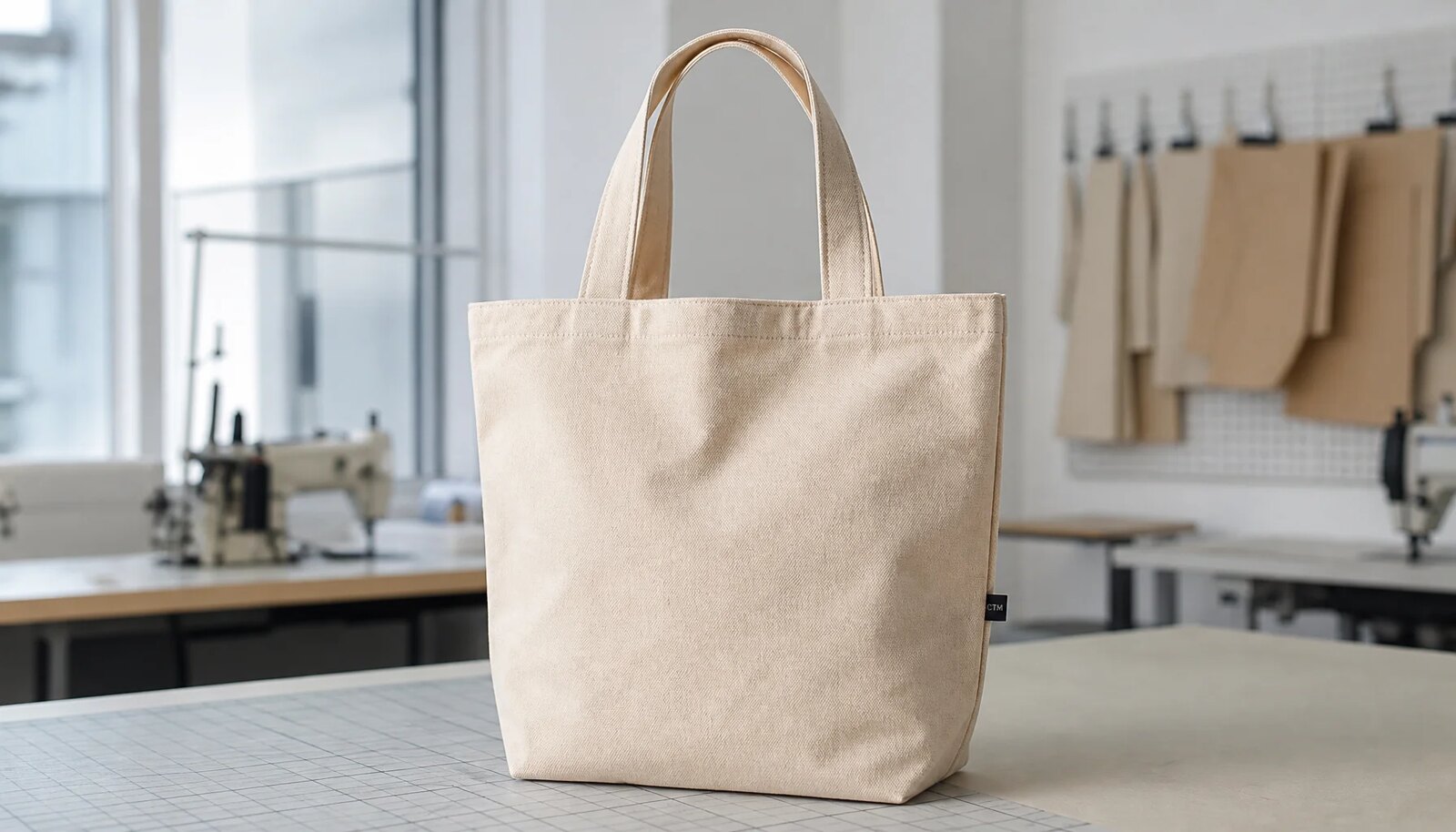
Start with the event job
A useful bulk pricing plan for canvas grocery totes starts with the job the bag must perform. A tote handed out empty at a sponsor table is not the same product as a tote pre-packed with jars, bottles, catalogs, boxed samples, or VIP gifts. If the use case is vague, suppliers may quote the lightest construction that looks competitive but does not fit the event.
Describe the tote as part of the event flow. Will bags be filled at registration, packed at a warehouse, sold at a booth, distributed flat from cartons, or shipped to several venues? Do they need to stand open on a table? Will attendees carry them for hours? Is the logo expected to stay visible after the event, or is the bag mainly a low-cost carrier for handouts?
Turn those answers into a short functional brief before requesting prices. Include event type, expected contents, estimated load, total quantity, venue split, artwork status, required arrival date, delivery term, and whether the tote is a reusable branded item or a simple event container.
- Define the load: papers only, apparel, bottles, books, packaged food, boxed goods, or mixed welcome kits.
- Define the visibility: one-day giveaway, sponsor branding, VIP gift, employee use, retail resale, or reusable public-facing bag.
- Define the handling: pre-packed, distributed flat, shipped to several venues, or assembled at registration.
- Define the calendar: sample approval, production release, inspection, warehouse arrival, and event move-in date.
Build one controlled specification
Bulk tote quotes become comparable only when the specification is controlled. The RFQ should state finished body width, finished height, gusset depth, fabric weight, fabric finish, handle material, handle drop, handle width, reinforcement method, print method, print size, print placement, packing format, and delivery term. Without those points, one supplier may quote a 10 oz gusseted tote with reinforced handles while another quotes an 8 oz flat bag with basic stitching.
Use numbers instead of adjectives. A 10 oz cotton canvas is often discussed around the mid-300 gsm range, while 12 oz canvas is commonly heavier again. Treat any oz-to-gsm conversion as a reference, not a universal rule, because conventions vary by supplier, fabric construction, and market. Ask the factory to state the actual gsm range it will control for the order.
Write tolerances into the quote. Sewn cotton bags naturally vary because fabric relaxes, cutting stacks shift, and operators handle seam allowances differently. Practical tolerances such as about +/- 1 cm on finished body dimensions and about +/- 0.5 cm on important print placement may work for many programs, but rigid kits or retail packaging may require tighter review before purchase order release.
- Write dimensions as finished size, not only pattern or cut size.
- Include a marked reference image for body size, gusset, handle drop, logo area, and top hem.
- Ask the supplier to repeat the full specification in the quotation.
- Treat the approved pre-production sample as the physical control standard.
Price the real quantity breaks
Bulk pricing is not a smooth discount ladder. A tote price is built from fabric consumption, material MOQ, cutting efficiency, sewing time, printing setup, print run speed, inspection, packing labor, carton volume, and commercial term. A supplier with a higher unit price may include screens, carton marks, inner bundles, and inspection support. A lower quote may exclude those costs and add them later.
Request quantity breaks that match real buying decisions, such as 1,000, 2,500, 5,000, 7,500, and 10,000 pieces. Ask whether each price assumes one body size, one fabric color, one artwork version, one print location, one packing method, and one delivery term. If the program has venue allocations, sponsor logos, or separate carton labels, price those splits from the start.
Separate one-time charges from repeat charges. Screen fees, custom sample fees, artwork preparation, and label development may apply mainly to the first order. Unit price, carton charges, inspection, freight, and warehouse handling repeat with every shipment. For annual events, ask for first-order cost and reorder cost so the budget does not get distorted by setup charges.
- Ask what changes at each break: fabric MOQ, setup allocation, cutting efficiency, carton quantity, or labor.
- Quote logo, venue, fabric color, and destination splits as line items or adders.
- Compare total program cost, not only unit price.
- Require suppliers to list exclusions next to each price break.
Model landed cost before award
The factory unit price is only one line in the buying decision. A complete landed-cost plan includes samples, sample freight, artwork preparation, setup charges, unit price, packing extras, inspection, export handling, freight, duty, customs brokerage, domestic delivery, warehouse receiving, and possible repacking labor. This is where a canvas grocery totes bulk pricing plan for event planners becomes useful instead of just cheap.
A simple budget model can reveal the real decision. For example, assume 2,500 totes at $2.40 each, $180 in screen and setup charges, $120 for sample and sample freight, $250 for inspection, $900 for freight and delivery, and $150 for warehouse receiving. The product line is $6,000, but the program total is $7,600, or $3.04 landed per tote before any internal labor. If another supplier quotes $2.25 but excludes carton labeling, inspection support, and delivery, it may not be the lower-cost option.
Build the schedule backward from the latest acceptable warehouse arrival date. Include RFQ comparison, sample making, sample shipping, internal approval, possible revisions, bulk production, inspection, transit, customs if applicable, and receiving. Event orders have little tolerance for late discovery, so make the quote carry the calendar.
- Compare suppliers at the same endpoint, such as delivered warehouse, not one FOB quote against one DDP quote.
- Add setup, sample, inspection, freight, duty, brokerage, and receiving costs before selecting the winner.
- Ask whether quoted prices are valid for 15, 30, 60, or 90 days.
- Keep a contingency line for revisions, split shipments, or rush freight when the event date is fixed.
Check supplier evidence by risk
Supplier evidence should match the risk level of the order. For a simple local giveaway, you may need business registration, production photos, a physical sample, and clear carton information. For a sponsor-funded national conference, you may need a fuller file: audit documents if required by your procurement policy, material declarations, sample inspection reports, packing examples, and written confirmation of subcontracted processes.
Document requests should also match the market and claim. If the tote is marketed as recycled cotton or organic cotton, ask what certificate or transaction document supports that claim and whether it applies to the material being quoted. If the order is for retail resale, ask about labeling, fiber content, country-of-origin marking, barcode application, and packaging requirements. If the event involves food pantry distribution, confirm cleanliness, odor control, moisture protection, and carton handling.
Do not treat a polished catalog image as proof of production control. You want to see whether the supplier understands event logistics, carton marking, split shipments, and sample-based QC. Ask how the supplier handles subcontracted printing, dyeing, embroidery, or special packing. Subcontracting is not automatically a problem, but the quote should say who owns sample approval, schedule updates, rework, and defect cost.
- Low-risk giveaway: business registration, stock or prior sample, production photos, carton specs, and basic QC checklist.
- Sponsor or brand-sensitive event: pre-production sample, strike-off, print inspection photos, packing mockup, and supplier-controlled artwork version.
- Retail or claim-based program: fiber labeling, origin marking, claim documentation, barcode or hangtag controls, and buyer-required compliance files.
- Multi-venue program: carton label examples, venue allocation sheet, packing list format, and confirmation of who verifies counts.
Choose fabric and construction together
Canvas grocery totes need enough structure to carry practical contents without looking collapsed. Fabric weight matters, but it is not the whole specification. Weave density, finishing, top hem depth, handle attachment, gusset construction, and sewing quality all affect performance. A well-built moderate-weight tote can outperform a heavier-looking bag with weak handle stitching.
Natural canvas is often cost-efficient and widely available. It has visible cotton texture and usually works well with simple screen-printed artwork, especially darker ink. Bleached canvas can create a cleaner look and stronger contrast. Dyed canvas may be necessary for brand programs, but it adds shade approval, dye-lot control, lead-time risk, and possible print opacity challenges.
Handle construction is one of the highest-risk decisions. Common options include cotton webbing handles and self-fabric handles. For event grocery totes, handle width often falls around 2.5-3.8 cm, but comfort and durability depend on the expected load and carry style. Shoulder carry needs a longer drop than hand carry, so do not leave that dimension to factory habit.
- Use a gusseted base for boxy items, bottles, food products, or pre-packed kits.
- Use a flat tote when slim contents, compact packing, and low cost matter more than capacity.
- Specify handle material, width, drop, attachment position, and reinforcement.
- Ask for a realistic load check on sampled bags using buyer-defined contents or weight.
Match decoration to the artwork
Decoration can change tote pricing quickly. Screen printing is usually efficient for simple artwork, one to three solid colors, and larger quantities. Each additional color may require another screen, setup, registration step, washdown, and curing control. The RFQ should include final artwork, print size, placement, color count, and PMS references where required before the supplier prices the job.
Canvas is not a smooth coated surface. The weave, slubs, and absorbency affect edge sharpness and opacity. Fine sponsor text may fill in or break up. Pale ink on natural canvas can look muted. Bright artwork on dark fabric may need a white underbase, which can add setup and another print pass. A digital proof helps with layout, but it does not prove ink coverage, rub resistance, hand feel, or registration on actual material.
Transfer, DTG, and digital methods can work for full-color artwork, gradients, shorter runs, or designs that are impractical for screen printing. They are not automatic upgrades. Each method affects texture, durability, cost, folding behavior, and lead time. If bags will be folded through the print area or stacked tightly, ask whether the decoration can crack, block, feel tacky, or transfer under pressure.
- Approve a physical strike-off or pre-production sample for sponsor-critical artwork.
- Ask whether underbase is required and whether it changes setup, run cost, or hand feel.
- Set print placement tolerance when logo position matters.
- Include rub, curing, opacity, and fold checks in inspection.
Use samples as controls
Samples are not courtesy items; they are production controls. A blank stock sample can help evaluate general fabric feel or sewing style, but it cannot approve the final order. For bulk event programs, the pre-production sample should use the actual fabric weight, final finish, handle material, reinforcement, print method, logo size, and proposed folding method.
Measure the sample like a production unit. Record body width, height, gusset depth, top hem, handle width, handle drop, handle attachment position, logo size, and logo placement. Corrections should be measurable: increase handle drop from 24 cm to 28 cm, move logo 2 cm lower, change print width to 24 cm, improve ink opacity, or add X-box reinforcement.
Test the sample with realistic contents. If the tote will carry packaged food, load it with similar weight and shape. If it will hold brochures and a water bottle, test that kit. Carry it by hand and over the shoulder if shoulder use is expected. Watch for handle stretch, seam strain, top edge curling, bottom distortion, or uncomfortable pressure.
- Approve a full pre-production sample before bulk production for new suppliers or sponsor-visible orders.
- Keep sample comments measurable: dimensions, placement, color, opacity, reinforcement, and fold method.
- Reference the approved sample date and version on the purchase order.
- Use the approved sample for inspection and repeat-order consistency.
Inspect likely failure points
Quality control should focus on usability, brand appearance, and receiving accuracy. The main checkpoints are fabric weight and appearance, finished dimensions, handle strength, seam integrity, print quality, cleanliness, count accuracy, carton labeling, and packing. A purchase order that says good quality required does not give the supplier enough direction.
Fabric inspection compares production bags against the approved sample. Canvas naturally has texture, but holes, oil marks, strong odor, visible contamination, heavy slubs in the logo area, and inconsistent shade should be controlled. For dyed fabric, shade variation should be checked by lot where possible before cutting. For retail-facing or sponsor-funded programs, the front panel standard should be tighter than for a low-cost internal giveaway.
Construction inspection should focus on load-bearing areas. Handles should be symmetrical, firmly attached, and reinforced as approved. Top hems should be secure. Side and bottom seams should be straight enough to avoid twisting and strong enough for the defined load. Sampled bags can be load checked using a buyer-approved weight and hold time that matches event reality.
Use AQL if your organization already works that way, but define defect categories in advance. Critical defects may include unsafe handle failure or contamination. Major defects may include wrong fabric, wrong print, severe stains, incorrect quantity, or missing reinforcement. Minor defects may include loose threads or small cosmetic variation outside the main logo area.
- Inspect fabric, construction, print, cleanliness, counts, carton labels, and packing against the PO and approved sample.
- Define critical, major, and minor defects before inspection begins.
- Require photos of measurements, seams, handles, print placement, folded bags, carton marks, and open cartons.
- Hold shipment release until inspection results meet the agreed threshold or rework is completed.
Control packing and receiving
Packing changes both cost and event readiness. Canvas totes are bulkier than many promotional products, especially with gussets or heavier fabric. Fold method, inner bundle count, pieces per carton, carton dimensions, and gross weight affect freight, warehouse labor, and venue allocation. If packing is not specified, the supplier may choose what is fastest for production instead of what is best for receiving.
The packing plan should follow the event workflow. For one event, bulk packing in consistent inner bundles may be enough. For multi-venue programs, cartons may need labels by venue, sponsor, color, logo version, or kit type. For VIP gifting or retail resale, individual polybags, hangtags, insert cards, or barcode labels may be required. Each added element increases labor, material, carton volume, and sometimes sustainability concerns, so use only the packing that supports the operation.
Before shipment release, reconcile carton count, pieces per carton, inner bundle count, SKU split, gross weight, carton dimensions, and packing list. Ask for carton photos and a sample label photo. The goal is simple: the receiving team should be able to identify, count, store, and stage the totes without opening every carton under event pressure.
- Confirm fold method, inner bundle count, carton quantity, carton dimensions, gross weight, and carton numbering.
- Use carton labels that match the receiving team's SKU, venue, sponsor, and quantity logic.
- Avoid individual polybags unless retail presentation, clean distribution, or moisture protection requires them.
- Put the latest acceptable delivery date and destination address in the PO and supplier confirmation.
Specification comparison for buyers
| Pricing plan level | Typical quantity break | Best fit | Cost drivers and exclusions to confirm |
|---|---|---|---|
| Pilot or sponsor approval run | 250-999 pcs | Small events, sponsor samples, approval runs, limited venue quantities | Higher unit cost because setup, sampling, cutting, and print preparation are spread over fewer pieces. Confirm screen fees, sample freight, rush charges, and whether only stock sizes are available. |
| Standard event order | 1,000-2,499 pcs | Single conference, local campaign, registration bag, or one-logo giveaway | Usually efficient for one body size, one fabric color, and one print setup. Confirm fabric weight, gusset depth, handle reinforcement, print area, carton count, inspection cost, and delivery term. |
| Multi-venue program | 2,500-4,999 pcs | Regional events, sponsor roadshows, venue allocations, or several delivery points | Better unit pricing may be offset by sorting labor. Confirm carton labels, venue packing lists, mixed SKUs, separate artwork versions, and destination-specific receiving rules. |
| Large conference or sponsor program | 5,000-9,999 pcs | National conference, trade show kit, public campaign, or sponsor-funded distribution | Stronger leverage on unit price and setup treatment. Confirm fabric MOQ, print run changes, underbase for dark fabric, AQL inspection cost, palletization, freight mode, duty, brokerage, and warehouse delivery. |
| Annual or scheduled release program | 10,000+ pcs or planned releases | Repeat events, annual sponsorship programs, employee packs, retail-adjacent merchandise, or replenishment plans | Best leverage when specs are stable. Confirm price validity, cotton cost movement, storage, call-off fees, reinspection on each lot, batch consistency, and whether setup charges repeat. |
| Material | 8-12 oz cotton canvas, 120-220 gsm cotton, recycled cotton, or blended fabric selected by use case and target price | Before price comparison | Different cloth weights, backing, or certification claims make quotes hard to compare |
| Construction | bag size, gusset, handle drop, seam allowance, stitch density, reinforcement patch, and loading expectation | Before sampling | Weak stress points create returns and failed inspections |
| Decoration | screen print, heat transfer, embroidery, woven label, or hangtag matched to fabric texture and brand durability needs | Before artwork approval | The wrong method can crack, bleed, pucker, or fail on the chosen fabric |
Buyer checklist before sampling
- Define the event use case: registration kit, sponsor giveaway, grocery-style carry bag, pantry drive, VIP gift, employee pack, resale item, or multi-venue distribution.
- List expected contents and approximate loaded weight, including bottles, cans, books, catalogs, apparel, boxed samples, packaged food, or lightweight handouts.
- Confirm finished dimensions: width, height, gusset depth, top hem depth, handle drop, handle width, print size, and print placement from top edge and side seams.
- Specify fabric weight in oz with the supplier's controlled gsm range, fiber content, finish, color standard, and whether recycled or blended cotton is acceptable.
- Set workable tolerances for finished size, print placement, fabric weight, shade, and carton count, subject to supplier confirmation and approved sample validation.
- Confirm whether the tote must stand when filled, fold flat for distribution, fit into an existing kit, or meet a maximum carton size or carton weight.
- Define handle material, handle width, handle drop, reinforcement method, stitch type, and realistic loaded-carry expectation for sample testing.
- Provide vector artwork, PMS references if required, print size, print location, color count, and any underbase or opacity expectations.
- Ask suppliers to quote real quantity breaks and separate setup, sampling, packing, inspection, freight, duty, brokerage, and delivery charges.
- Require a pre-production sample using final fabric, final construction, final decoration method, and proposed folding or packing method before bulk production.
Factory quote questions to send
- What exact fabric weight, gsm range, weave, fiber content, finish, and color standard are you pricing, and what tolerance will you hold against the approved sample?
- What are the finished dimensions for body width, height, gusset, top hem, handle width, and handle drop, and what dimensional tolerance is included?
- Which steps are in-house: cutting, sewing, printing, label application, inspection, and packing? If any step is subcontracted, who controls sampling, rework, and defect cost?
- What is the unit price at each quantity break, and what assumptions change between breaks, such as fabric MOQ, printing setup, cutting efficiency, carton quantity, or packing labor?
- Which setup charges apply for screens, color matching, embroidery, woven labels, hangtags, insert cards, polybags, carton marks, inner packs, destination sorting, or pallet labels?
- What sample types are available: blank stock sample, custom construction sample, strike-off print, and full pre-production sample? What are the fees, lead times, revision costs, and reimbursement policy?
- What print method do you recommend for this artwork, and how will you control opacity, registration, curing, rub resistance, and cracking on folded areas?
- What packing format is included: fold method, inner bundle count, outer carton quantity, carton dimensions, gross weight, carton label content, carton numbering, and palletization if required?
- What evidence can you provide before award: business registration, audit or compliance documents relevant to the order, material certification if claimed, production photos, QC checklist, and sample inspection report?
- What is the production lead time after written sample approval, and which risks commonly delay similar orders: fabric availability, dyeing, print approval, holiday closure, peak season capacity, or carton supply?
Quality-control points to confirm
- Fabric weight, weave, fiber content, finish, color, shrinkage behavior where relevant, and hand feel match the approved sample and agreed tolerance.
- Finished width, height, gusset depth, top hem width, handle width, handle drop, and print placement stay inside the buyer-approved tolerance window.
- Cut panels are aligned with the fabric grain as agreed, and the bag does not twist, lean, or distort when laid flat or lightly filled.
- Stitching is even, seams are secured at stress points, handles use the approved reinforcement, and no skipped stitches appear on load-bearing areas.
- Handle attachment is checked by pull or load testing on sampled production pieces using a realistic event load defined by the buyer.
- Print color, opacity, registration, curing, edge sharpness, hand feel, and placement match the approved artwork and pre-production sample.
- Rub testing on sampled printed panels does not show unacceptable ink transfer, tackiness, flaking, or cracking after normal handling and folding.
- No broken threads, loose labels, oil stains, needle cuts, holes, heavy slubs in prominent print areas, dirt, odor, moisture, or visible contamination appear on finished bags.
- Carton counts, inner bundle counts, SKU separation, venue sorting, carton labels, and packing list quantities match the purchase order before shipment release.
- Fold method protects the print area, avoids permanent creases through key logo details where possible, and keeps receiving labor predictable.