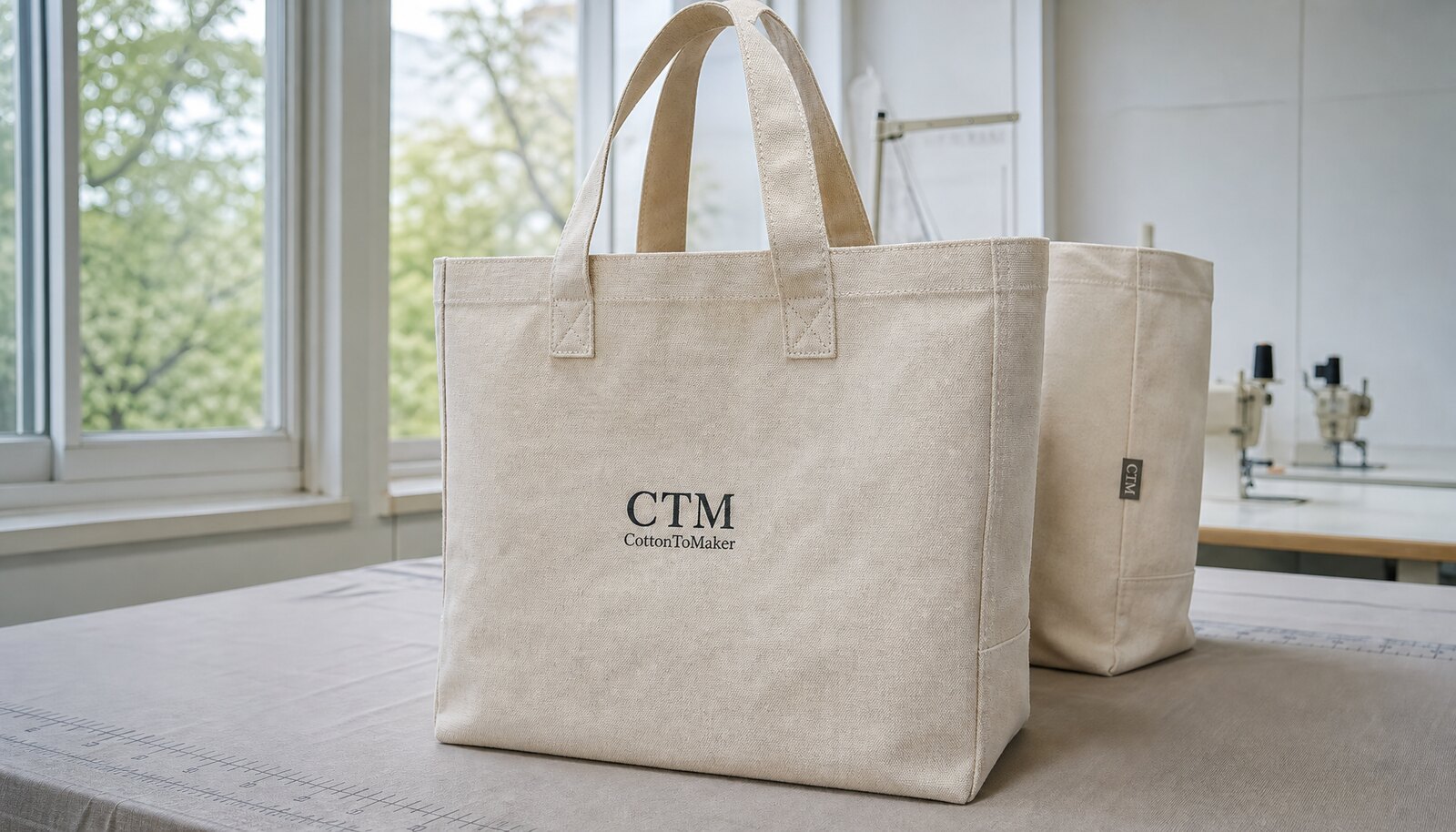
Why boutique wineries need a more disciplined tote spec
Canvas grocery totes for boutique wineries sit in a commercial middle ground that is easy to underestimate. They are expected to look premium enough for tasting rooms and gift shelves, but they also need to function as practical carriers for wine club deliveries, produce-market add-ons, gift items, or a few bottles at checkout. That combination changes the buying logic. A tote that looks acceptable in a lifestyle photo may still be a poor purchase if it collapses on a retail shelf, twists under load, or prints poorly on textured canvas.
For procurement teams, the key issue is not whether the bag is a tote. It is whether the bag can be reproduced consistently enough to protect brand presentation across an entire order. The first sample may look perfect. The second carton may not. Fabric weight can be correct on paper but feel soft if the weave is loose. Handles can meet the drawing but fail at the stitch point. A logo can look sharp on a white mockup and still shift on natural canvas. That is why the quality inspection checklist matters before bulk production, not after receiving a freight claim.
Wineries also face a usage pattern that is slightly different from general retail tote programs. The bag is often seen as part of the brand experience, not just a utility item. That means small defects are easier for buyers to notice and harder to absorb. A retail customer or tasting-room guest may not care about industrial tolerances, but they will notice a crooked logo, a wrinkled fold, a frayed seam, or a bag that does not feel sturdy enough for bottles. The buyer should therefore specify both structure and presentation in the same RFQ rather than treating them as separate concerns.
A strong spec also reduces time wasted during sourcing. If the buyer defines weight, weave, handle construction, print method, packing format, and inspection standard up front, the supplier response becomes more comparable. If those items are left vague, every quote becomes a different product disguised as the same product, and landed cost comparisons lose meaning.
- Treat the tote as a branded retail item first and a simple bag second.
- Write the specification so another factory could reproduce the same bag from the documents alone.
- Separate cosmetic acceptability from load-bearing performance before you request quotes.
Start with a spec sheet that prevents quote drift
The fastest way to get inconsistent quotes is to ask for a "heavy canvas tote" and leave the rest open. Suppliers will fill in the blanks differently. One factory may use a 10 oz fabric with a soft finish, another may quote 12 oz with a tighter weave, and a third may quietly switch from pre-shrunk canvas to a looser stock cloth to hit the price target. A buyer comparing those numbers is not comparing the same product.
For most boutique winery grocery tote programs, the practical starting range is 10 oz to 12 oz canvas, roughly 340 to 400 GSM. That range is usually strong enough for grocery use and retail resale while still keeping production manageable. If the tote is meant to carry bottles or heavier club items, the higher end of that range is generally safer. If the bag is meant mainly for event giveaways, lighter material can work, but the buyer should then treat it as a promotional item rather than a durable grocery tote.
Spec language should also cover finish. A scoured or cleaned canvas usually presents better than raw rough weave because it reduces dust, oil traces, and visual inconsistency. If the tote must stand up in a merchandising display, ask for a firmer hand or a reinforced body construction. If the bag must fold flat for shipping, define how much crease memory is acceptable around the print area. These are commercial choices, not just technical preferences.
Another detail that often gets overlooked is shrinkage. If the bag will be handled in humid storage, light washing, or steam conditioning, specify the allowed shrinkage after finishing and request the supplier's method for stabilizing the fabric before cutting. Otherwise the approved size may not survive the first production lot. The same is true for color consistency: natural canvas should be compared against a physical standard, not only a photo, because warm and cool whites vary more than buyers expect under warehouse lighting.
- Use oz and GSM together so the supplier cannot answer with a vague fabric description.
- Ask whether the fabric is scoured, bleached, dyed, or pre-shrunk, because finish changes appearance and stability.
- Define the finished size after sewing, not only the cut size before seam allowance.
What to specify for handles, seams, and load performance
The handle is usually the first place where a tote fails in use, so handle spec needs more than a length callout. For grocery-style carry, define handle width, handle material, attachment method, and where the handle sits relative to the opening. A handle that is too narrow can feel cheap and dig into the hand. A handle that is too short can make the tote awkward to carry over the shoulder. A handle that is too long can twist and pull the bag out of square.
The better question is how the handle is secured. Ask for the exact stitch pattern and whether the factory uses bar-tacks, box-X reinforcement, or another documented pattern. For procurement, this is not cosmetic detail. It affects pull strength and batch consistency. If the supplier says the handle is "reinforced," ask how many bar-tacks are used at each attachment point and whether the same pattern appears on both sides of every bag. A tote with asymmetric reinforcement may still pass a quick visual check but fail in repeated use.
Seam construction matters in the same way. If the bag has side seams or a gusset, define how those seams are finished, whether the raw edge is enclosed, and where fraying can occur. Canvas can be forgiving, but once thread tension drifts or the operator changes feeding speed, the seam can start looking uneven. That is why you should ask for seam samples from the production line, not only a perfect hand-finished prototype.
Load performance should be written in practical terms. For a winery program, that might mean bottles plus tasting materials, a grocery fill, or another realistic carrying case. If the bag is only meant to hold light merchandise, the spec should say so clearly. If it must carry more, do not assume fabric weight alone is enough; handle reinforcement and seam discipline become the real risk controls.
- Request the exact reinforcement pattern and bar-tack count for each handle attachment.
- Tie the load requirement to real use, such as bottle carry or grocery fill, not a vague "strong enough" phrase.
- Ask the supplier to show seam finishing inside the bag, not just the outside appearance.
How to compare supplier routes without comparing apples to oranges
A direct factory, a trading company, a regional converter, and a stock importer can all send a tote quote, but the risk profile behind each route is different. Procurement buyers should compare the route before they compare the unit price. The lowest number may reflect less control over the fabric mill, fewer in-process checks, or simpler packing rather than a true efficiency gain.
A direct factory with bag specialization is usually the strongest option when the order needs repeatability. The factory can more easily explain stitch density, handle reinforcement, cutting tolerance, and carton loading. That matters when a tote is part of a recurring winery assortment or a seasonal refill program. The tradeoff is that a direct factory may require more complete technical input from the buyer before it can quote accurately.
Trading companies and sourcing agents can be useful when the buyer needs smaller mixed orders, broader coordination, or help managing communication. The tradeoff is visibility. If the quote does not identify the actual maker, the buyer may not know where stitching, printing, or packing is happening. That makes defect traceability harder if there is a problem later. It also makes sample-to-bulk consistency harder to audit because the sample may have come through one path and production through another.
Converters and local decorators can work well when time is tight and a base bag already exists. They may also be useful for short-run logo projects. But the tradeoff is limited design flexibility. If the buyer needs a specific handle length, a unique gusset, a custom label, or a heavier body, the converter may push back or add cost quickly. That is not automatically a bad choice; it just needs to be matched to the actual buying objective.
The commercial rule is simple: choose the route that best supports your reorder plan and inspection standard. If the tote is a one-time event item, speed may matter more than deep factory control. If the tote will stay in the assortment for a year or more, process visibility and repeatability usually matter more than the first quote.
- Ask who actually cuts, prints, sews, and packs the tote, not only who replies to email.
- Request factory identification, machine photos, and comparable production evidence when the route is not direct.
- Do not accept a unit price until the supplier has locked the same spec version you intend to buy.
Comparison table: route, tradeoff, defect risk, and auditability
A useful sourcing comparison has to go beyond a simple price-versus-speed summary. For canvas tote procurement, the real question is how much verification work the buyer will need to do later. If the supplier route makes it harder to trace the fabric, harder to see the sewing line, or harder to get consistent reorders, the buyer should count that as a commercial cost, not an inconvenience.
The table below is designed for procurement review. It compares not only the fit and tradeoff but also defect risk, lead-time variability, auditability, and sample-to-bulk consistency. These are the points that usually matter when a first order goes sideways or when a reorder needs to match the original batch.
- Use the route comparison to decide where your oversight time should go.
- A cheaper quote that is hard to audit can cost more later.
- If sample and bulk are likely to differ, the route is already showing its weakness.
Decision table for sourcing routes
When you review the table, look at how the risk fields relate to your actual use case. A tasting-room retail tote, a wine-club delivery tote, and a seasonal giveaway tote do not need the same level of auditability. The more the tote carries brand value or physical load, the more you should favor routes that can prove consistency.
Define the measurable checks around bottle-fit test, loaded handle pull, bottom seam check, print rub, divider alignment, and carton crush review. Add tolerance ranges only where the buyer truly cares, and ask for photos that show the measurement point, not just a finished product overview.
- Score each route against the same criteria before discussing price.
- Give higher weight to defect risk and sample-to-bulk consistency for repeat programs.
- Use auditability as a tie-breaker when two quotes look close.
Sample approval: what a useful pre-production sample must prove
A sample is only useful if it mirrors the final order. That sounds obvious, but many tote samples are still made with substitute fabric, simplified stitching, or hand-applied decoration that hides production problems. For a custom winery program, the pre-production sample should use the actual canvas weight, the real handle construction, the same print method, and the intended packing format. If any of those are changed, the sample no longer predicts bulk output.
The buyer should inspect the sample in the same way the bulk lot will be judged. Measure the finished bag flat. Check the symmetry of the handles. Look at the relation between the logo and the top edge, the side seam, and the base fold. Fill the sample with a realistic load. A tote that looks neat when empty may pull awkwardly when loaded with bottles or grocery weight. This is where a bag often reveals whether the body structure and handles were designed properly.
A sealed golden sample is worth keeping for any order that may be reordered later. That sample should be clearly tied to the PO, artwork revision, thread color, and print method. If a dispute arises, the golden sample gives both parties a physical point of reference instead of an argument about photos. It also gives the inspection team a more reliable benchmark for accept/reject decisions during mass production.
If the supplier wants fast sign-off but cannot show production-equivalent materials, pause the order. The risk is not the sample room. The risk is the gap between sample handling and bulk execution. Ask whether the sample was made on the same machine, by the same sewing team, and with the same finishing steps planned for production.
- Approve the sample in the same fabric and print process intended for production.
- Test it with a practical load, not only by visual review.
- Keep a sealed golden sample linked to the exact artwork and order version.
Print method, placement, and brand presentation that hold up in use
Most boutique winery tote programs work best with simple, durable branding. Screen printing is often the default because it handles bold logos, limited color counts, and higher quantities at a stable cost. On textured canvas, a cleaner, simpler print frequently looks more professional than a complicated effect that struggles to sit evenly on the weave. If the artwork has very fine lines, tiny text, or gradients, ask whether it needs simplification before production begins.
Heat transfer can be useful for short runs or detailed graphics, but it needs careful testing on canvas because adhesion and edge definition vary by material texture. Embroidery can create a premium look, but it adds cost, stiffness, and time. On a grocery-style tote, that stiffness can be useful in small doses or a drawback if the bag is expected to fold easily. The right method depends on the role of the tote in the brand program, not on style preference alone.
Print placement should be measured. "Centered" is not enough. The buyer should state the distance from the top edge, the centerline, the bottom fold, and any side seam reference. That matters because a few millimeters can change how the bag presents on a shelf or in a retail photo. For side labels, woven tags, or inside branding, specify whether the tag is caught in the seam, edge folded, or bartacked to the bag. If the tag is meant to be visible, its position should be standardized just like the logo.
When inspecting print quality, do not stop at appearance. Rub the print lightly, check for cracking or flaking, and look for color bleed around edges. A print that looks clean but smears under handling is a rework risk, especially if the bags will be folded and restacked repeatedly in warehouse or retail use. Also ask the supplier how the print area is protected during packing so carton friction does not scuff the surface before arrival.
- Screen print is usually the best value for simple winery branding.
- Embroidery is a premium choice, not an automatic upgrade.
- Define logo placement in millimeters or inches so the supplier cannot interpret it loosely.
Build the inspection standard before production starts
A good inspection plan is specific enough to support a retail reject decision. Many tote disputes start because the buyer said "good quality" while the supplier assumed a wider tolerance. For canvas grocery totes, the buyer should divide defects into critical, major, and minor categories. Critical defects are the ones that make the bag unsafe or unusable, such as open seams, broken handle attachment, holes, contamination, or severe odor. Major defects are the ones that affect retail acceptance or brand credibility, such as crooked logos, obvious size mismatch, or visible stains. Minor defects are small variations that may be acceptable within a defined tolerance, such as very slight thread ends or minimal folding marks away from the print area.
AQL-style language is useful because it forces the buyer to think in quantities, not impressions. Even if the supplier uses its own internal inspection standard, the buyer should ask how it maps to the brand's acceptable retail threshold. For example, a small cosmetic issue that might pass a generic commodity inspection may still be unacceptable for a boutique winery display program. Likewise, a handle that feels barely adequate in a sample should not be allowed to pass simply because the tote technically remains intact during a light pull.
Inspection should also address the question of where tolerance belongs. A slightly irregular raw canvas texture may be acceptable if the stitching and print are excellent. But a crisp premium tote with a crooked print or uneven handles often fails brand presentation even if it is structurally strong. The inspection plan should reflect that hierarchy. If the bag is sold in a premium environment, visual balance is part of product quality, not separate from it.
Finally, define what happens when a problem is found. Do you rework, sort, replace, or reject the lot? If that decision is not written down, the buyer may end up negotiating after the shipment is already in motion. Put the action path in the PO, QC brief, or inspection agreement so there is no ambiguity at final audit.
- Classify defects as critical, major, or minor before the factory starts mass production.
- Link inspection outcomes to retail use: display, resale, gifting, or utility.
- State the buyer's response for reject, rework, or conditional acceptance in the PO or QC document.
Practical QC thresholds that are strong enough for procurement decisions
Inspection thresholds do not need to be overly academic, but they do need to be concrete. A buyer can avoid many disputes by specifying a measurable band rather than a vague feeling. For example, if the tote artwork must look centered, define the allowable shift from the centerline. If the handle length must match on both sides, define the maximum difference that is still visually acceptable. If the bag is meant for shelf display, define the maximum allowed lean, twist, or asymmetry when the tote is standing or hanging.
The same logic applies to stitching. A seam that is simply "neat" is too vague. The buyer should ask for even stitch spacing, no skipped stitches, and no open seam at stress points. If the factory uses bar-tacks at the handle base, ask how many stitches are in the bar-tack and whether the same pattern is used on every unit. Small variations are normal in sewn goods, but they should not be large enough to affect retail appearance or load performance.
If the buyer wants an AQL-style approach, the sampling plan should match order size and risk. Larger orders or first-time suppliers merit a more disciplined check than a repeat order from a trusted line. The inspection sample should include bags from different cartons, not just the top layer. That matters because top-layer units are often the easiest to make look clean. The buyer should also inspect for issues that a photo cannot show: odor, soft weak handle attachment, hidden stitching defects on the inside, and folding damage caused by packing.
The most useful threshold is the one that leads to a clear buying decision. If a bag fails by too much, reject. If the issue is sortable, note it. If the issue is cosmetic but still within the agreed band, accept. Ambiguity is what creates claims later. Put the threshold in writing before bulk production begins, and make sure the inspection team uses the same standard on the floor and at final release.
- Define acceptable logo shift, handle mismatch, and size variance numerically.
- Check bags from multiple cartons, not only the top of the pallet.
- Use visual, tactile, and load-related checks together because photos miss hidden defects.
Specification comparison for buyers
| Sourcing route | Best fit | Commercial tradeoff | What can go wrong if you miss the details |
|---|---|---|---|
| Direct factory with bag specialization | Repeat orders, custom spec control, and tighter stitching oversight | Usually the best mix of price transparency, production visibility, and QC control once the spec is stable | If the factory is real but under-equipped, you may still get uneven stitching, slow sampling, or batch-to-batch fabric drift |
| Trading company or sourcing agent | Smaller test orders, multi-item buying, or buyers who need consolidated service | Convenient for communication and bundled purchasing, but margin is layered into the price and production visibility is lower | The quote may hide the actual mill, subcontractor, or print house, which makes defect tracing harder |
| Regional converter or decorator | Shorter lead times for repeat print runs, local compliance needs, or smaller replenishment orders | Can speed up reorders when fabric is already stocked, but customization is often narrower than a true factory build | The unit price can look reasonable while the finished bag is less durable because handle reinforcement and fabric options are limited |
| Stock blank importer plus local branding | Very small programs, sampling, or urgent event use | Fastest path to market if you only need basic branding and accept fewer spec choices | Stock blanks may vary in shade, weave, and size, and reorders can break continuity across seasons |
| Low-cost generalist factory | Price-sensitive programs where appearance is secondary to utility | May deliver an acceptable basic tote if the spec is simple and the buyer can inspect aggressively | The risk is hidden downgrades in fabric weight, stitch density, and packing discipline that only appear after arrival |
| Premium gift-bag specialist | Boutique retail, tasting-room gifting, and brand presentation | Usually better for presentation, finishing, and detail control, but not always the cheapest option for grocery-style use | You may pay for premium finishing that is unnecessary if the tote will mainly be resold as a utility grocery item |
Buyer checklist before sampling
- Confirm the exact canvas specification in oz and GSM, and ask whether that weight is measured before or after finishing.
- Define the finished size, seam allowance, gusset depth if any, and the acceptable shrinkage range after conditioning or washing.
- State handle length, handle width, reinforcement method, and the load target in practical terms, such as bottle carry or grocery fill weight.
- Specify print method, print size, Pantone or color reference, and the maximum allowed print shift on the approved sample.
- Request a pre-production sample made from production-equivalent fabric, thread, and print method rather than a hand-finished mockup.
- Ask for sample fee terms, whether the fee is credited against bulk order, and what shipping cost applies to sample dispatch.
- Ask for carton pack count, carton dimensions, gross weight limit, and whether each tote is individually polybagged or bulk packed.
- Require QC photos from cutting, printing, sewing, final inspection, and carton loading before shipment is released.
- Set rejection rules for stains, holes, open seams, crooked logos, weak handles, odor, and major color variation.
- Verify lead time by stage: sample, material booking, bulk production, inspection, and export booking.
Factory quote questions to send
- What exact fabric weight are you quoting, and is the canvas greige, scoured, bleached, dyed, or pre-shrunk?
- What is the fiber composition, and do you have mill or fabric source documentation for the canvas used in this order?
- Which process is in-house: cutting, printing, sewing, inspection, packing, or all of the above?
- What is your MOQ by design, by print color, and by packing configuration?
- Can you quote the same tote with and without individual polybags, and show how carton size and freight volume change?
- What handle reinforcement do you recommend for a grocery-style load, and what stitch pattern or bar-tack count will you use?
- What is your standard tolerance for size, print placement, handle length, and seam alignment?
- What sample fee applies, what exactly does the fee cover, and is it refundable or deductible from bulk production?
- What is your normal lead time after sample approval, and what are the most common causes of delay?
- How do you handle fabric shade variation between lots if we reorder the same tote later?
Quality-control points to confirm
- Fabric weight should match the approved spec within the supplier's stated tolerance, and the hand feel should not collapse under normal grocery loading.
- Canvas weave should be tight and even, with no visible slubs, weak spots, thin areas, or obvious diagonal distortion after cutting.
- Finished dimensions should match the approved sample within a practical retail tolerance, and left/right bag symmetry should be visually consistent.
- Handle length and handle placement should be symmetrical, with reinforcement stitching aligned on both sides and no twist in the strap.
- Handle attachment should use a documented stitch pattern or bar-tack pattern, with no skipped stitches, loose ends, or pulled threads at stress points.
- Print location should stay within the approved placement window; obvious off-center logos, blur, haloing, or color bleed should be rejected.
- Print durability should survive a light rub check without flaking, cracking, or smearing on the inspected sample lot.
- Seams should be straight and even, with no open seam sections, broken needle holes, excessive fraying, or skipped stitches.
- Inside finishing should not leave long thread tails, loose lint, or exposed raw edges that could unravel in retail handling.
- Bags should be free from stains, oil marks, mold, odor, rust spots, or contamination from packing materials.