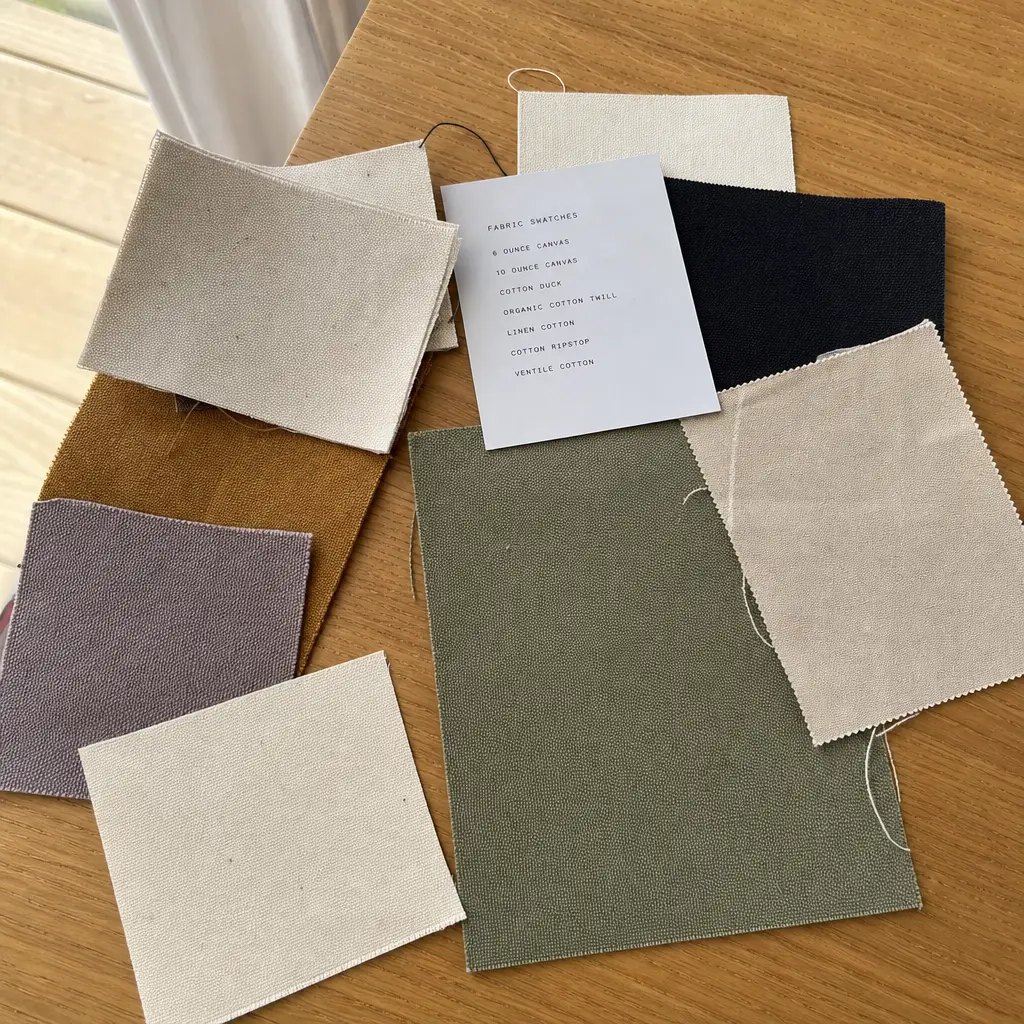
Start With the Bakery Use Case
The best canvas grocery totes for artisan bakeries wholesale buying checklist starts with a simple question: what job does the bag need to do? A canvas grocery tote might be an opening-week giveaway, a paid retail item, a bread subscription carrier, a farmers market bag, a gift-set package, or a distributor resale product. Those are not the same order. Each one changes the right fabric weight, gusset depth, handle drop, seam finish, decoration method, packing plan, defect standard, and landed-cost target.
Put the use case into the RFQ before asking for price. A tote sold beside sourdough loaves, granola, coffee bags, and jams needs better handfeel and cleaner presentation than a back-of-house subscription carrier. A distributor supplying several bakery customers needs repeatable specifications and clean carton separation, because one mixed-logo carton can slow down receiving across multiple accounts. A market tote may need comfortable shoulder carry. A gift-set tote may need a stable base so jars and pastry boxes stay upright.
The purchasing question is not simply, “What is your cheapest canvas tote?” A stronger question is, “Which construction will carry the expected bakery load, present the brand properly, and arrive in cartons our warehouse can process without rework?” Once that is clear, suppliers can quote against the same target instead of offering different products under the same broad name.
- Free giveaway: prioritize safe stitching, readable logo print, controlled cost, and acceptable handfeel without overbuilding the tote.
- Paid retail tote: specify stronger fabric, cleaner seam finishing, tighter print tolerance, better folding, and stricter stain standards.
- Bread subscription bag: test the sample with the actual packed order weight and repeated staff handling, not only an empty display sample.
- Farmers market carrier: choose a gusseted body, comfortable handle width, and a handle drop that supports hand carry plus occasional shoulder carry.
- Distributor resale program: standardize the base tote and treat each bakery logo as a controlled artwork variation with its own carton label.
Specify Fabric by GSM, Fiber, and Finish
The biggest sourcing risk is the word “canvas” by itself. It sounds specific, but it is not. Canvas weight can range from light promotional cloth to firm grocery-grade material. For bakery grocery totes carrying bread, pastry boxes, coffee bags, jars, and pantry add-ons, 10 oz to 12 oz cotton canvas, approximately 340 to 407 GSM, is a practical starting range. It gives more structure than a lightweight promo tote without jumping straight into the cost, stiffness, and freight impact of very heavy canvas.
Use both ounces and GSM in the specification. Suppliers may quote in different systems, and fabric descriptions can vary by market. A clear RFQ line might read: “100% cotton canvas, natural unbleached, 10 oz / approx. 340 GSM, tolerance +/-5%, matched to approved swatch.” If consumers may wash the tote, ask whether the supplier has shrinkage data. If the tote will be sold unwashed, focus on finished dimensions, handfeel, shade, and delivered appearance.
Fiber and finish affect price, MOQ, and lead time. Stock natural unbleached cotton is often simpler to source than custom-dyed fabric. Bleached canvas gives a cleaner print base but changes the rustic bakery look. Dyed canvas supports brand color, yet it introduces lab dip, dye-lot, and reorder-matching risk. Organic cotton, recycled cotton, or certified materials may require documents and traceability. List those requirements before quotation so the supplier is pricing the real program.
Natural canvas also needs a realistic visual standard. Small seed flecks, minor slubs, and slight tone variation may be acceptable if they match the approved reference sample. Oil marks, mildew odor, dampness, large dark stains, holes, broken yarns, and mixed shade lots inside one SKU should not pass. Put that distinction into the QC standard so the cutting team and final inspector know what to accept and what to reject.
- 8 oz / about 270 GSM: suitable for cost-sensitive promotions and lighter bread loads, but with less body and shelf structure.
- 10 oz / about 340 GSM: balanced option for reusable bakery grocery totes and multi-location programs.
- 12 oz / about 407 GSM: stronger presentation for paid merchandise, gift sets, and heavier grocery use.
- 14 oz / about 475 GSM: premium handfeel for selected programs, with added sewing, stiffness, carton weight, and freight considerations.
- Natural unbleached canvas: rustic appearance with acceptable seed flecks only when controlled against an approved swatch.
- Dyed or certified fabric: quote MOQ, lead time, shade approval, and certificate requirements separately from the base tote.
Build Dimensions Around Real Bakery Products
A grocery tote needs usable volume, not just a large logo panel. A practical starting size for many artisan bakery programs is around 38 cm wide x 40 cm high x 12 cm deep with a boxed bottom or bottom gusset. That size can usually handle a mixed purchase such as a round loaf, a baguette placed diagonally, a small pastry box, a coffee pouch, and a few packaged add-ons. Still, the final size should come from the bakery’s actual product mix, not from a generic tote catalog.
Approve the dimensions with a physical loading test. Use the real bread sleeves, pastry boxes, jam jars, coffee bags, chocolate boxes, or gift items the bakery plans to sell. If the tote narrows into a V-shape, tips over, crushes a pastry box, drags when carried, or twists near the handle attachment, the flat measurements are not enough. A boxed bottom or side gusset usually performs better for grocery use than a flat tote because it creates internal volume and a more stable base.
Handle drop deserves the same attention as bag size. A short drop can look tidy on a retail hook but frustrate market shoppers. A long drop supports shoulder carry, but a loaded bag may swing too low for some users. For bakery grocery totes, a 25-30 cm handle drop is often a workable starting point. Check it on the sample with the expected load. Handle width of 2.5-3.0 cm is generally more comfortable than narrow tape when the bag carries jars, coffee, or beverages.
Write finished measurements into the spec, not just cutting dimensions. Sewing, fabric relaxation, pressing, and folding can change the final bag. State whether width is measured across the top opening or body panel, whether the gusset is measured opened or flat, and what tolerance applies. Common commercial tolerances may be +/-1 cm for body width, height, and gusset, and +/-0.5 cm to +/-1 cm for handle drop, but the buyer should decide what the program can actually accept.
- Record finished width, height, gusset depth, handle width, handle drop, total handle length, seam type, and bottom construction.
- Use a boxed bottom or bottom gusset when the tote must carry pastry boxes, jars, coffee bags, or mixed grocery items.
- Test the sample with actual bakery goods before approving final size, base stability, and handle length.
- Avoid unnecessary oversizing because extra fabric raises unit cost, carton cube, shipping cost, and folding wrinkles.
- Define measurement method and tolerance in the tech pack so buyer and factory measure the same way.
- Confirm whether the tote must stand upright for retail display or only function as a carry bag.
Engineer Handles and Seams for Load
Handle and seam failures create bigger problems than small cosmetic flaws. A bakery tote may be loaded with jars, coffee bags, beverages, pantry items, and several loaves. That weight concentrates around the handle attachment and bottom corners. A strong fabric body cannot make up for weak stitching. The RFQ should state handle material, width, drop, attachment method, stitch pattern, thread color, and load-test expectation.
Self-fabric handles give a cohesive, premium look and are common on canvas totes for bakery retail. Cotton webbing handles can also be durable and efficient if the color, texture, and shrinkage behavior work with the bag body. The attachment should use reinforcement such as a box-cross stitch, multiple stitch rows, or bartack, depending on the factory’s equipment and the design. The reinforcement area needs enough surface to spread load without tearing the front panel or pulling out the seam allowance.
The load check can be simple and still useful. For many bakery grocery programs, a buyer may require the sample to hold 10 kg for 60 seconds without handle tear, popped stitches, or severe panel distortion. A heavier-use distributor program may need a higher weight or repeated lift test. The exact method should match the expected use and be agreed before production, not debated during final inspection.
Seam construction should match the sales channel and price tier. Overlocked internal seams are common and cost-effective for wholesale totes. Bound or taped seams look cleaner and may suit paid retail merchandise, but they add labor and cost. Bottom corners and gusset intersections deserve close inspection because they carry load and are harder to sew consistently. Look for skipped stitches, open seams, loose thread nests, uneven seam allowance, and raw edges outside the approved finish.
- Specify handle material, width, drop, attachment stitch, thread color, and reinforcement pattern.
- Use 2.5-3.0 cm handle width as a practical comfort range for grocery-style bakery loads.
- Require box-cross stitching or bartack reinforcement where handles attach to the bag body.
- Define a load test, such as 10 kg static load for 60 seconds, if the tote will carry heavy mixed purchases.
- Inspect bottom corners, gusset intersections, and handle attachment points more closely than decorative areas.
- Match seam finish to sales channel: overlock for cost-controlled wholesale, bound seams for premium retail presentation.
Match Decoration to Bakery Artwork
Most artisan bakery tote programs use water-based screen printing for one to three solid colors. It works well on cotton canvas, stays flexible, and fits common bakery graphics such as logos, wheat illustrations, bread slogans, ingredient-style artwork, and seasonal marks. It is also efficient for medium-to-large wholesale runs. The right method still depends on the fabric color, artwork detail, print area, and order quantity.
Artwork made for menus, labels, or social media often needs adjustment before it goes onto canvas. Thin serif type, distressed flour-dust textures, fine crosshatching, and tiny negative spaces can fill in on a coarse weave. Large solid areas may show fabric texture or need a heavier ink deposit. Ask the supplier to confirm minimum line thickness, minimum text height, maximum print area, and the recommended ink before screens are made. For multi-color artwork, ask for the expected registration tolerance, commonly around +/-1 mm to +/-2 mm depending on equipment and design.
Color control needs a physical check. Natural unbleached canvas is warm and textured, not a white coated paper. The same Pantone ink can look duller or warmer on natural cloth. If color matters, request a strike-off on the actual fabric instead of relying on a digital mockup. Approve opacity, edge sharpness, color appearance, curing, and handfeel before the factory prints the full order.
Other decoration methods can work when they solve a specific problem. Embroidery is better for small premium marks than large front graphics because stitch count, puckering, and back-side appearance become concerns. Woven side labels add retail detail without taking over the front panel. Printed patches can create a boutique look, though they add cutting, sewing, and placement tolerance. Heat transfers can reproduce detail, but buyers should test handfeel, edge durability, and wash expectations before using them on reusable grocery totes.
- Send vector artwork, Pantone references, final print size, print position, and acceptable adjustment limits.
- Ask the factory to confirm minimum line thickness, minimum text height, and whether distressed details should be simplified.
- Use water-based screen print for efficient one-to-three-color bakery graphics and medium-to-large wholesale runs.
- Request a strike-off when PMS color, opacity, registration, or fine artwork detail matters.
- Use embroidery only for small premium logos where stitch cost, puckering, and back side are acceptable.
- Approve decoration on a physical sample because digital mockups often misrepresent scale, texture, and color.
Understand MOQ and Variation Costs
MOQ is shaped by more than the total number of bags. Canvas tote minimums depend on fabric availability, fabric color, cutting efficiency, print setup, artwork count, label type, packing method, carton sorting, and production-line planning. A natural canvas tote with one screen-printed logo is much simpler than the same tote split across five bakery logos, two print colors, individual barcoded polybags, hangtags, and store-specific cartons.
Buyers often request several small artwork runs and compare the total to a single-design bulk price. That comparison is not equal. Each artwork may require screen setup, print alignment, drying space, inspection sorting, label control, carton marking, and separate packing records. Even when the base bag is identical, variation adds labor and increases the risk of mixed cartons. A distributor serving multiple artisan bakeries should ask for both the standardized base-bag price and the per-design artwork charge.
Fabric color is another MOQ driver. Stock natural or standard black canvas may be easier to source than custom-dyed fabric. Custom colors can require lab dips, shade approval, dyeing minimums, and reorder controls. If exact color matching is important, first ask whether a suitable stock fabric exists. If not, add lab dip review and shade tolerance to the schedule.
Packing variation can matter as much as product variation. Hangtags, barcode labels, paper bands, individual bags, store allocation, and mixed SKU cartons all require handling. Some are necessary for retail or distributor receiving, but they should be visible in the price. Instead of asking only, “Can you lower the MOQ?” ask, “Which specification choices are creating the MOQ, and what can we standardize without weakening the tote?”
- Separate MOQ per fabric color, bag size, print design, print color count, label type, and packing style.
- Ask whether stock canvas reduces MOQ compared with custom-dyed, washed, organic, or recycled fabric.
- Group multiple bakery logos on one standardized base tote when possible to improve cutting and sewing efficiency.
- Request pricing for single-design orders and combined-program orders to understand artwork variation cost.
- Clarify whether mixed designs can share one carton plan or require separate carton labels and packing records.
- Treat barcode, hangtag, and store allocation as cost and QC drivers, not minor finishing details.
Compare Quotes by Landed-Cost Drivers
Two supplier quotes can both say “canvas grocery tote” and still describe very different products. One quote may include 8 oz fabric, narrow handles, a flat body, one-color print, overlocked seams, no label, and loose bulk packing. Another may include 12 oz fabric, a boxed bottom, reinforced self-fabric handles, bound seams, a woven side label, strike-off approval, retail folding, carton marks, and inspection photos. The lower unit price is not automatically the better B2B buy if it leads to defects, repacking, customer complaints, or higher freight per usable bag.
A useful quote exposes the cost drivers. Ask for fabric weight and composition, finished size, gusset style, handle details, seam construction, print method, number of print colors, artwork count, label method, sample cost, screen charge, packing method, carton size, pieces per carton, gross weight, net weight, total CBM, MOQ, production lead time, and Incoterm. If the supplier does not state what is included, procurement cannot compare offers fairly.
Match the quote to the business model. A bakery selling the tote as paid merchandise may accept a higher unit cost for better handfeel, cleaner display quality, and fewer visible defects. A distributor shipping to several locations may value standardized cartons and lower receiving errors more than the lowest first price. A short seasonal campaign may prioritize available fabric and fast sampling. A long-running reorder program should prioritize repeatable specs and documented tolerances.
Incoterms and carton data are not small details. EXW, FOB, CIF, DAP, and delivered pricing can make the same tote look cheaper or more expensive depending on freight and destination costs. Canvas totes can be bulky relative to unit value, so carton cube matters. A quote without carton dimensions, gross weight, net weight, and CBM is not complete for landed-cost comparison.
- Fabric cost rises with GSM, bag size, gusset depth, fabric finish, handle length, dyeing, washing, and certification requirements.
- Printing cost rises with color count, print area, registration difficulty, artwork count, PMS matching, and strike-off needs.
- Sewing cost rises with bound seams, bartacks, boxed bottoms, pockets, zippers, labels, tighter trimming, and premium finishing.
- Packing cost rises with individual bags, paper bands, hangtags, barcode labels, store sorting, inner cartons, and retail-ready folds.
- Freight cost rises with carton cube, carton weight, loose folding, bulky handles, and overbuilt fabric specifications.
- Compare landed cost per accepted usable bag, not only quoted unit price per produced piece.
Approve Samples With Measurable Tests
A photo sample is not enough for wholesale canvas grocery totes. The buyer needs a physical sample to confirm fabric handfeel, weight, stiffness, shade, print opacity, stitch quality, finished dimensions, handle comfort, odor, and packed presentation. The pre-production sample should use final fabric, final decoration method, final ink colors, final handle construction, final seam type, final label placement, and the same fold method planned for bulk shipment.
Sample approval should be written, specific, and dated. If the buyer casually approves a sample with narrow handles, a crooked label, uneven print opacity, or loose threads, the factory may treat those details as accepted standards. Keep one sealed reference sample with the buyer and require the factory to keep a matching sample on the production floor. Final inspection should compare bulk goods against this sample, the tech pack, and the purchase order.
Physical checks do not need to be complicated. Measure body width, height, gusset depth, handle width, handle drop, print size, print position, and label placement. Load the tote with realistic bakery goods and run the agreed handle and bottom-seam check. For example, use a 10 kg static load for 60 seconds if that reflects expected grocery use. Rub the cured print with a dry white cloth to check for obvious ink transfer. Smell the sample for chemical, mildew, or damp odors.
For larger or color-sensitive orders, approve a print strike-off before full production and a full PP sample before mass sewing or packing. If the program includes several bakery logos, approve one base-bag construction sample plus separate print approvals for each design. Any change after PP approval, including logo size, handle drop, label placement, packing fold, or carton quantity, should be recorded as a revision because it can affect cost, lead time, and inspection criteria.
- Measure finished bag body, gusset, handle drop, print size, print position, and label placement against the spec sheet.
- Load the tote with realistic bakery goods and perform the agreed static or repeated-lift handle check.
- Inspect print opacity, registration, edge sharpness, curing, ink handfeel, and visible transfer after drying.
- Compare color under consistent light because natural canvas shade changes how ink appears.
- Check loose threads, skipped stitches, raw edges, seam allowance, bottom corners, odor, and fabric stains before approval.
- Photograph, sign, date, and retain the approved PP sample details before bulk production starts.
Set Packing and Carton Rules Early
Packing decisions affect landed cost, warehouse labor, and retail condition. Bulk packing in clean export cartons is often enough for wholesale delivery to bakery locations, cafés, distributors, and back-of-house teams. Individual polybags can protect each tote and support barcode control, but they add material, labor, disposal concerns, and carton volume. Paper bands, hangtags, and retail-ready folds improve presentation, yet they also add artwork, application labor, and more inspection points.
Quote the carton plan before issuing the purchase order. Canvas totes can take significant cube when folded loosely, especially when they have gussets and thick handles. Over-compression can reduce freight volume but leave hard creases that hurt paid merchandise presentation. Under-filled cartons waste space and allow bags to shift during transit. A usable quote should state pieces per carton, carton dimensions, gross weight, net weight, and total CBM for the full order quantity.
Carton labeling is an operations issue, not just a label design issue. Distributors and multi-location bakeries may need labels showing SKU, design name, print color, quantity, PO number, destination, carton number, and carton sequence. If several bakery logos ship together, carton separation reduces receiving errors. If the bags are sold as retail merchandise, barcode position, hangtag orientation, and folded appearance should be approved on the sample.
Moisture control matters because cotton canvas can absorb odor and dampness. Cartons should be dry, export-suitable, and suitable for the route. For long ocean freight, humid seasons, or extended warehouse storage, discuss inner liners, desiccants, pallet protection, and maximum carton weight. The supplier should not pack damp fabric or uncured print. Mildew odor, wet cartons, or strong chemical smell should be treated as serious inspection issues.
- Use bulk packing for wholesale bakery distribution when individual retail presentation is not required.
- Use individual polybags, paper bands, or hangtags only when cleanliness, resale handling, barcode control, or retail display justify the cost.
- Specify fold method because folding affects creasing, carton cube, unpacking labor, and retail appearance.
- Require carton labels with SKU, design name, quantity, PO number, destination, and carton sequence for split-location orders.
- Ask for carton dimensions, pieces per carton, gross weight, net weight, and total CBM before approving the quote.
- Confirm dry export cartons and moisture-control requirements for ocean freight, humid routes, or long storage.
Define QC Acceptance Before Production
Quality control works best when the buyer and factory agree on standards before cutting and printing. Canvas grocery totes have several visible and functional risk points: fabric defects, shade variation, size tolerance, handle strength, seam security, print quality, label placement, odor, packing accuracy, and carton condition. A purchase order that only says “good quality” leaves too much room for interpretation when defects appear.
Use defect categories. Critical defects may include mildew odor, wet cartons, wrong artwork, wrong fabric, unsafe handle failure, needle contamination, or mixed customer designs. Major defects may include visible stains, open seams, broken stitches, severe print misregistration, heavy ink bleeding, incorrect dimensions outside tolerance, badly crooked labels, or incorrect carton packing. Minor defects may include small loose threads, slight natural seed flecks within the approved standard, or minor wrinkles that do not affect saleability. These categories help the supplier understand what must be reworked before shipment.
Dimension and print standards should be measurable. State tolerance for width, height, gusset, handle width, handle drop, print position, and label placement. Common commercial examples include +/-1 cm for main body measurements and +/-5 mm to +/-10 mm for print position, but the buyer should choose tolerances that suit the design. Print checks should include centering, color drift, opacity, edge sharpness, registration, curing, and ink transfer. Sewing checks should include stitch density, handle reinforcement, seam allowance, skipped stitches, and thread trimming.
For B2B orders, final inspection should happen before shipment while the supplier can still sort, repair, or replace defective units. If using AQL, specify the plan in advance, such as ISO 2859-1 General Inspection Level II with critical 0, major 2.5, minor 4.0, or a stricter buyer standard. Even supplier-led inspection should include photos showing the approved sample, measured dimensions, print close-ups, handle attachment, inside seams, carton packing, carton labels, and rejected defects.
- Set critical, major, and minor defect categories before mass production starts.
- Check fabric GSM, shade, stains, holes, odor, seed flecks, slubs, oil marks, and dampness against the approved sample.
- Measure finished dimensions, handle drop, print position, and label placement using the written tolerance.
- Inspect handle reinforcement, seam security, stitch consistency, thread trimming, bottom corners, and raw-edge exposure.
- Review print centering, registration, opacity, bleeding, pinholes, cracking, curing, and color drift.
- Verify packing accuracy, carton labels, carton dryness, quantity per carton, SKU separation, and final count before shipment.
Specification comparison for buyers
| Spec decision | Recommended option | When it fits | Buyer risk to check |
|---|---|---|---|
| Fabric weight | 10 oz to 12 oz cotton canvas, approximately 340-407 GSM; agree tolerance such as +/-5% against the approved swatch | Reusable bakery grocery totes carrying loaves, pastry boxes, coffee bags, jars, pantry items, and farmers market purchases | Quoting only "canvas" can lead to 7-8 oz promotional cloth; 14 oz cloth may add stiffness, sewing difficulty, carton weight, and freight cube |
| Finished size | Common starting point: 38 W x 40 H x 12 D cm boxed bottom, with written tolerance such as +/-1 cm for body and gusset | General bakery grocery use where one tote may carry a round loaf, baguette diagonally, small pastry box, coffee pouch, and retail add-ons | Flat totes reduce usable volume; oversized totes consume more fabric, fold poorly, and may increase CBM without improving customer use |
| Handle construction | Self-fabric handles 2.5-3.0 cm wide, 55-65 cm total length or 25-30 cm drop, with cross-stitch or bartack reinforcement | Hand carry and occasional shoulder carry for bakery shops, market stalls, and grocery-style checkout programs | Narrow handles cut into hands under jar weight; weak reinforcement creates functional failure even when the fabric looks acceptable |
| Seam and bottom | Overlocked internal seams for cost-controlled wholesale; bound seams or taped seams for paid retail; boxed bottom for grocery volume | Overlock suits most promotional and distributor programs; bound finishing suits premium retail and gift merchandise | Open seams, raw-edge exposure, uneven seam allowance, and weak bottom corners are common rejection points on rushed production |
| Print method | Water-based screen print for 1-3 solid colors; request a strike-off for PMS match and fine artwork | Bakery logos, bread illustrations, seasonal slogans, and medium-to-large wholesale runs | Tiny serif type, distressed flour textures, and fine lines may fill in on 10-12 oz canvas unless artwork is simplified |
| Print tolerances | Position tolerance commonly +/-5 mm to +/-10 mm; registration tolerance commonly +/-1 mm to +/-2 mm for multi-color screen print | Programs with centered front logos, multiple bakery designs, or retail-facing merchandise | Digital mockups do not prove print scale, opacity, curing, color on natural cloth, or alignment on a gusseted sewn bag |
| MOQ logic | Quote MOQ per fabric color, print design, print color count, label type, and packing style, not only total pieces | Bakery groups, distributors, franchise-style programs, or seasonal campaigns with several artwork variations | Small split-logo orders add screen setup, sorting, carton labeling, and shade-control work even when the base tote is identical |
| Packing method | Bulk pack for wholesale distribution; individual polybag, paper band, hangtag, barcode, or store-allocation carton only when needed | Bulk pack suits back-of-house bakery receiving; retail-ready packing suits paid merchandise and warehouse pick-pack systems | Over-compressed cartons create hard creases; no inner protection may be risky on humid routes or through multiple warehouses |
| Sample approval | Physical PP sample using final fabric, final ink, final handle, final seam, final label, and intended fold/carton method | Required before mass production for paid merchandise, distributor resale, multi-location bakery programs, or seasonal launches | Photo approval alone does not verify GSM, handfeel, odor, handle strength, print curing, or packed presentation |
Buyer checklist before sampling
- Define the business use first: free giveaway, paid retail tote, farmers market carrier, bread subscription bag, grocery checkout bag, gift-set package, or distributor resale item.
- Specify fabric in oz and GSM, with fiber content, weave, finish, color, and tolerance; avoid broad terms such as natural canvas or heavy canvas.
- Confirm whether the fabric is standard cotton, organic cotton, recycled cotton blend, cotton-poly blend, greige, bleached, dyed, washed, or natural unbleached, and state any required certification documents before quoting.
- Lock finished measurements: width, height, gusset depth, handle width, handle drop, handle length, seam type, bottom construction, label placement, and finished-size tolerance.
- State the intended carry load and test method, for example loading 10 kg for 60 seconds or performing a repeated lift test, if the tote will carry jars, coffee, or mixed groceries.
- Send final vector artwork with Pantone references, print size, print position, minimum line thickness, minimum text height, negative-space notes, and permission limits for artwork adjustment.
- Choose decoration method by artwork and quantity: water-based screen print, pigment screen print, heat transfer, embroidery, woven label, printed patch, or mixed decoration.
- Request a print strike-off when color, opacity, fine detail, or registration matters; request a full PP sample before bulk sewing and packing approval.
- Define packing before price comparison: bulk pack, individual polybag, paper band, hangtag, barcode sticker, inner carton, store-allocation carton, palletization, or retail-ready carton.
- Require quote details for fabric weight, bag dimensions, print colors, artwork count, sample cost, screen charge, label cost, packing cost, carton quantity, gross weight, net weight, CBM, MOQ, lead time, and Incoterm.
Factory quote questions to send
- What exact canvas weight are you quoting in oz and GSM, and what tolerance will you hold against the approved fabric swatch or test report?
- Is the quoted fabric natural unbleached cotton, bleached cotton, dyed cotton, organic cotton, recycled blend, cotton-poly blend, or another construction?
- Can you provide fabric composition, width, shrinkage expectation if washed, GSM test method, and any available certification documents before bulk production?
- What finished-size tolerance will you accept for width, height, gusset depth, handle width, handle drop, and handle length, and how will each measurement be taken?
- Which seam construction is included: overlocked internal seams, bound seams, French seams, double-fold seams, reinforced bottom seam, boxed bottom, side gusset, or bottom gusset?
- How are handles attached, how many stitch rows or bartacks are used, what thread type is used, and what load check can you perform before shipment?
- For our artwork, what print method gives the cleanest result on this canvas, and what minimum line thickness, minimum text height, and maximum print area do you recommend?
- Can you provide a print strike-off for PMS color, opacity, registration, edge sharpness, and curing approval before mass printing?
- Are screen charges, setup charges, artwork cleanup, sample cost, PMS matching, woven labels, hangtags, barcodes, carton labels, and packing labor included or quoted separately?
- What MOQ applies per fabric color, per bag size, per print design, per print color count, per label type, and per packing style?
Quality-control points to confirm
- Fabric GSM should match the approved specification within the written tolerance, commonly +/-5%, using a GSM cutter and scale, supplier fabric report, or agreed equivalent method.
- Finished width, height, gusset depth, handle width, handle drop, print size, print position, and label placement should remain within the tolerance stated on the approved tech pack, such as +/-1 cm for body size and +/-5 mm to +/-10 mm for print position.
- Natural canvas should be judged against an approved swatch for acceptable seed flecks and slubs; rejectable defects should include oil stains, mildew marks, dampness, heavy yellowing, holes, broken yarns, and mixed shade lots within one SKU.
- Front print should be centered and cured, without heavy bleeding, ghosting, cracking, ink transfer, blocked negative space, severe pinholes, obvious color drift, or multi-color misregistration beyond the agreed tolerance.
- Handle attachment should match the approved reinforcement method and pass the buyer-defined load check, such as 10 kg static load for 60 seconds or another test suitable for the bakery's expected product weight.
- Seams should have secure stitching, consistent seam allowance, no open seams, no skipped stitch runs, no thread nests, no exposed raw edges outside the approved finish, and no bottom-corner weakness.
- Stitching should be checked for consistency against the approved sample; if stitch density is specified, define the range, for example 8-10 stitches per inch for key seams where appropriate to construction.
- Packing should match the purchase order for fold method, pieces per carton, SKU separation, store allocation, hangtag or barcode placement, carton marks, and carton sequence numbering.
- Cartons should be dry, export-suitable, correctly labeled, not crushed, not under-filled, not over-compressed, and packed to avoid deep creasing, moisture exposure, and mixed-design confusion.
- Final quantity should match the purchase order and packing list, with written overage/shortage tolerance and a clear rule for replacement, credit, or sorting of defective pieces.