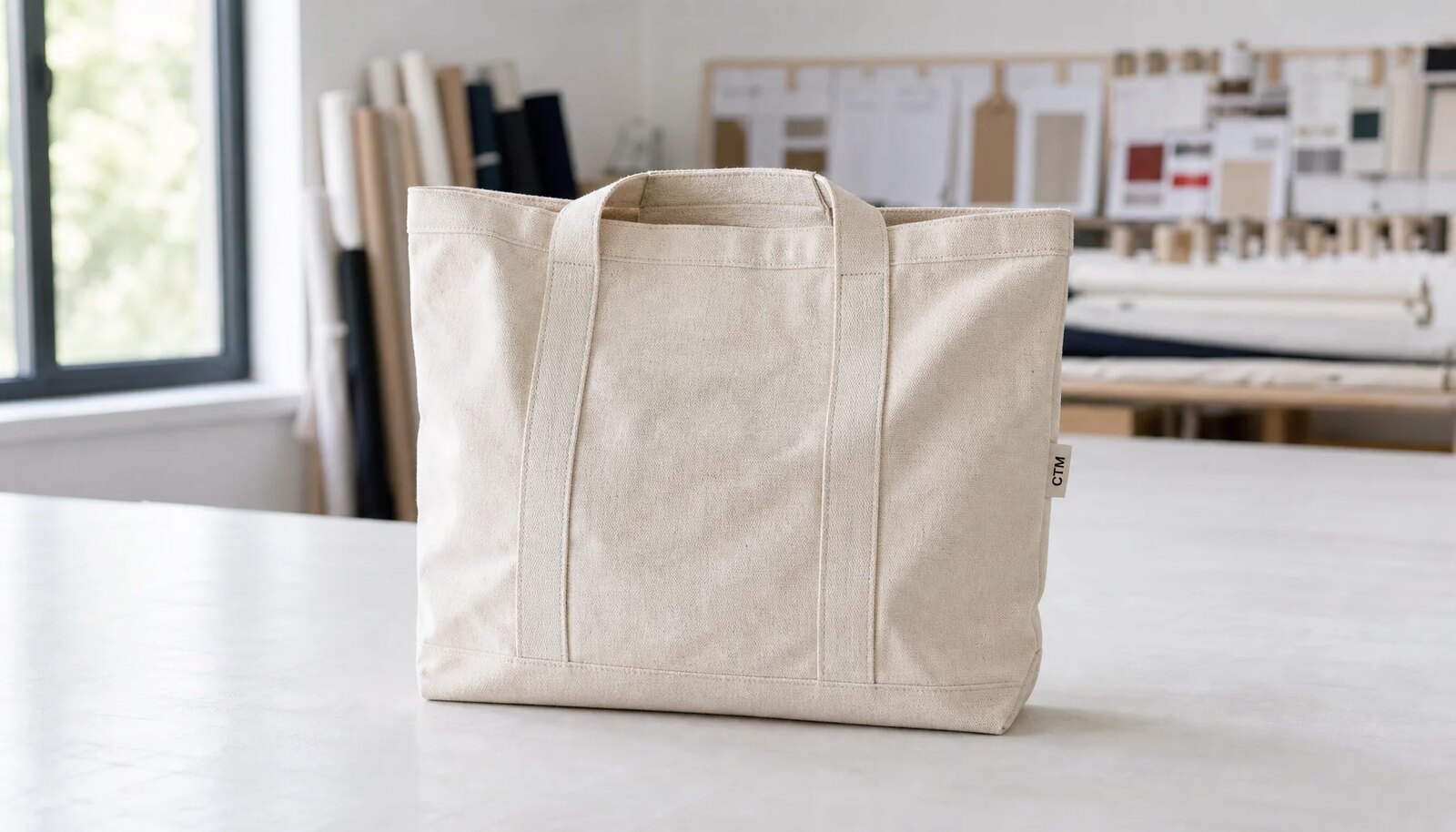
Why event tote orders fail on compliance, not design
Most problems with canvas grocery totes for event planners do not start with the logo. They start when the buyer and supplier mean different things by the same words. One side says canvas, the other assumes a light promotional cloth. One side expects a grocery-style carry bag, the other quotes a giveaway tote with thin seams and loose packing. The result is a bag that looks acceptable in a photo but fails once it is filled, shipped, stacked, or handed out in bulk.
A supplier compliance checklist fixes that mismatch before money is spent on samples or tooling. It gives the buyer a way to compare factories on the same basis and to reject vague claims that sound good in a quote but collapse in production. For event programs, the real risk is usually not visual style. It is fabric weight, stitch strength, print durability, packing method, and whether the supplier can prove what they used. If those points are not controlled, the cheapest quote often becomes the most expensive order.
- A clean sample is not enough if the cloth weight or seam build is wrong.
- Event buyers need a tote that survives distribution, storage, and carry weight.
- Compliance is a production control issue, not just a document request.
- Quote comparisons only work when every supplier is quoting the same spec.
Lock the bag spec before you compare suppliers
Start with the bag spec, not the supplier pitch. For a standard grocery-style canvas tote, 12 oz or about 340 gsm natural canvas is usually the default starting point. It gives a solid hand feel, takes print well, and keeps cost manageable for large event orders. If the bag is going into retail resale, repeat-use gifting, or heavier grocery carrying, move to 14 to 16 oz or roughly 400 to 450 gsm. That heavier cloth holds shape better, but the sewing line, handle reinforcement, and freight weight all move up with it.
The same logic applies to the bag structure. A plain open-top tote with a modest gusset is cheaper than a deep-bottom grocery bag with heavy binding and a reinforced top hem. Buyers who skip these details usually get a quote that is technically correct but commercially useless. Define finished size, gusset depth, handle drop, seam allowance, and whether the bag needs lining, binding, or a top hem finish. Once those points are fixed, you can compare real unit economics instead of comparing vague tote bag language.
- State fabric weight in ounces or GSM, not only by saying heavy or premium.
- Specify the use case: guest kit, grocery carry, retail resale, or sponsor pack.
- Define handle length and carry height so the tote fits the intended hand or shoulder use.
- If the artwork sits near a seam, note the exact print position in millimeters or inches.
What compliance evidence a real supplier should show
Compliance for canvas grocery totes is broader than a single certificate. A supplier should be able to prove who made the bag, where it was made, what fabric was used, and what finish or ink system touched the product. For many buyers, the minimum file set should include a factory business license or registration, a current address that matches the production site, and some form of audit or social compliance record if the brand requires it. For products headed into regulated or retail markets, material declarations and test reports matter more than marketing claims.
The useful question is not whether a supplier has paperwork. It is whether the paperwork matches your market and your materials. If you sell in the EU, ask for chemical and restricted-substance evidence aligned to your buyer requirements. If you sell in the US, ask whether the print ink, coatings, and any applied labels have been screened against your retail compliance rules. If a supplier cannot tell you whether the canvas is bleached, whether the print ink is water-based or plastisol, or where the testing was done, they are not ready for a controlled bulk order.
- Request factory identity, production address, and legal registration details.
- Ask for social audit records only if your market or brand policy requires them.
- Match test reports to the actual fabric, ink, label, and packaging used on the order.
- Keep the compliance file tied to the exact SKU, not to a generic tote bag sample.
Print method choice decides cost, speed, and defect risk
For most event orders, a simple one- or two-color screen print is the cleanest route. It usually gives the best balance of cost, opacity, and repeatability when the artwork is straightforward. That is why many brand buyers still prefer screen print for canvas grocery totes. The factory can control ink deposit, edge sharpness, and cure quality if the mesh, drying temperature, and registration are set correctly. On a cotton canvas surface, that matters more than a slick-looking digital proof.
Heat transfer and digital transfer have their place, especially when you need short runs or complex art with gradients or many colors. They can reduce setup barriers for a launch event or a seasonal program, but they also create new risks. A transfer that looks sharp on a sample may peel, crack, or feel too plasticky after packing and handling. The right approval step is a strike-off on the actual fabric, with the final logo size and placement locked before bulk. A PDF is not enough.
- Use screen print for volume runs with simple artwork and stable positioning.
- Use transfer methods only when artwork complexity or quantity makes them practical.
- Approve the design on final fabric under daylight and indoor light.
- If the print sits near a seam, measure the placement before bulk sewing starts.
Sample approval should prove the bag, not just the artwork
A pre-production sample is useful only if it reflects the real production settings. The supplier should build it with the same cloth weight, same thread, same handle construction, and same print method planned for bulk. Measure the finished dimensions, compare the handle drop, and inspect the anchor points where the handles meet the body. If the bag will carry grocery weight or conference inserts, pull on the handles with a real load and look for seam distortion, thread pop, or uneven stress. The sample should show how the bag behaves, not just how it photographs.
Set tolerances before production starts. For a standard canvas tote, many buyers allow small variation in body size, but logo placement and handle length deserve tighter control. A few millimeters of print shift may be acceptable on a promo bag, but the same shift can look careless on a premium retail item. If the first sample misses the mark, write down the correction clearly and have the supplier confirm the revised sample in writing. Verbal approval is where orders drift.
- Approve the body fabric, stitching, print, and packing on the same sample if possible.
- Use a signed reference sample or signed photos, not memory, as the production benchmark.
- Record the actual handle drop, body size, and gusset depth you approved.
- Reject samples that hide problems with lighting, padding, or loose folding.
MOQ and pricing only make sense when the quote is broken out
MOQ for canvas grocery totes is usually driven by fabric and process, not by a supplier trying to be difficult. Natural canvas, one-color screen print, and standard carton packing can be produced at lower quantities than dyed cloth, multiple print colors, sewn labels, or custom inserts. Each added operation creates setup time, material loss, or a separate trim line. If a supplier gives you a low MOQ on paper but cannot explain the material or setup assumptions, the quote may not survive sample approval.
Ask for a quote that separates the bag body, print setup, labels, packaging, sample charge, testing, and freight term. That format makes supplier comparison possible. It also shows where the supplier is earning margin and where the order is exposed to change orders. A single lump sum can hide a lighter fabric, a weaker stitch spec, or a packing method that saves money but fails your venue or retail distribution plan. If a supplier refuses to break out the cost structure, treat the quote as incomplete.
- Lower MOQ usually comes from stock fabric, simple print, and standard pack format.
- Multiple print colors, special labels, and dyed cloth typically raise the minimum.
- Compare suppliers on the same Incoterm so freight does not distort the ranking.
- A quote without sample fee and testing assumptions is not a clean comparison.
Packing details matter when the bags move through events or retail channels
Packing is often ignored until the goods arrive at a warehouse or venue and the labor bill begins. For canvas grocery totes, flat-packed cartons are usually the best export choice because they preserve carton density and reduce shipping volume. That only works if the supplier has a written folding standard and a count control process. If the bags are going into event kits, retail shelves, or distributor warehouses, define whether cartons are mixed by color, packed by style only, or separated by destination. These decisions affect how fast the receiving team can work.
Moisture and contamination matter more than many buyers expect. Canvas can pick up warehouse odors, dust, and handling marks if the inner pack is loose or if cartons sit too long in humid storage. Ask for carton dimensions, carton mark placement, and whether the supplier can use a liner or desiccant for sea freight. If the bags are going to a long-stay venue or a regional warehouse, specify the storage window and whether the bags must arrive ready for immediate distribution. Packing is part of product quality, not a separate admin task.
- Require a written folding and carton count method.
- Specify carton labels, style marks, and any destination markings in advance.
- Use moisture protection if the route includes sea freight or long storage.
- Confirm whether the receiving team needs mixed cartons or single-style cartons.
Lead time risk comes from sample loops, not sewing alone
A realistic timeline for custom canvas grocery totes starts before bulk production. Sample approval, artwork correction, fabric reservation, print setup, sewing, packing, inspection, and transit all sit on the critical path. A factory may quote a simple sewing lead time, but if your artwork needs revision or your fabric has to be dyed, the calendar grows fast. That is why buyers should treat the lead time as a sequence of gates instead of one promise. A missed gate matters more than an optimistic factory estimate.
Build recovery options into the plan. If the event date is fixed, ask what can be sped up without changing the spec and what cannot. Sometimes the answer is to split the order, move a portion by air, or drop nonessential extras like insert cards or custom tissue. What you want is a schedule that tells you when to make those decisions. If the supplier cannot give you milestone dates from approved sample to ship-ready goods, you do not have enough control for a time-sensitive event program.
- Treat artwork approval, sample signoff, and bulk start as separate milestones.
- Ask the factory what parts of the order can be accelerated without changing quality.
- Leave buffer time for inspections, rework, and freight delays.
- Do not let the event date be the first time anyone notices the schedule is tight.
Compare landed cost by sourcing route, not by quote headline
A direct factory quote usually wins when the order is stable, the spec is clear, and the quantity justifies the setup. Trading companies help when you need to coordinate multiple products or do not have a sourcing office to manage the back and forth. Domestic decorators and fulfillment houses are practical for rush orders, but they often lose on fabric control and unit cost once volume increases. The point is not that one route is always best. The point is that each route solves a different problem and carries different hidden costs.
Landed cost should include the quote, setup charges, packaging, inland transport, testing, freight, and any import duty or customs handling your team expects. Two suppliers can show the same unit price and still produce very different landed costs once cartons, transit mode, and rework risk are added. If one supplier is cheaper because they quietly dropped the GSM or simplified the pack spec, the quote is not actually comparable. Use the same bag spec, the same pack spec, the same market requirements, and the same sample standard before you rank the offers.
- Compare total landed cost, not just the ex-factory number.
- Keep spec, packaging, and Incoterm identical across all bids.
- Watch for hidden savings that come from lighter fabric or weaker packing.
- A slightly higher quote can still be the lower-risk buy if it includes testing and better control.
Build an RFQ that forces clean supplier answers
A good RFQ for canvas grocery totes should read like a production brief, not a marketing note. State the finished size, fabric weight, color, handle length, seam build, print method, logo file format, compliance market, packing rules, target quantity, and target ship date. Include whether you need a pre-production sample, strike-off, carton sample, or third-party inspection. If any of those points are missing, the supplier will fill the gaps with their own assumptions, and you will end up comparing offers that are not actually the same product.
The best RFQs also tell the supplier what is non-negotiable. If the bag must be suitable for retail resale, say so. If the event team needs flat-packed cartons with precise counts, say so. If the print must stay within a tight placement window, say so. Clear constraints do not make the quote harder to write. They make it usable. That is the difference between a price sheet and a sourcing decision.
- Include a dimensional sketch or tech pack if the tote has a specific shape.
- State the destination market so compliance evidence matches the right rules.
- Ask for a revised quote if the supplier wants to substitute fabric, print, or pack.
- Require the supplier to note any deviation from your spec in writing.
Specification comparison for buyers
| Supplier option | What to verify | Commercial advantage | Buyer risk to control |
|---|---|---|---|
| Direct sewing factory | fabric swatch, approved sample, seam close-ups, logo test photos, packing pilot, and final inspection evidence | Better sample-to-bulk control and faster production feedback | May be weaker on export paperwork or branded packing unless checked early |
| Trading company | Factory name, production photos, trim-source proof, and who owns QC decisions | Can coordinate small mixed orders and extra services | Markup can hide real factory capability and slow defect decisions |
| Specialized bag workshop | bag size, gusset, handle drop, seam allowance, stitch density, reinforcement patch, and loading expectation | More practical for detailed construction, trims, and repeat programs | Capacity may be limited during peak seasons |
| Low-price general supplier | 8-12 oz cotton canvas, 120-220 gsm cotton, recycled cotton, or blended fabric selected by use case and target price | Useful for simple promotional runs with loose specs | Material downgrades, weak packing, and vague inspection scope can erase savings |
| Retail-ready supplier | fold method, inner bundle, carton count, carton mark, moisture protection, SKU separation, and warehouse receiving needs | Can handle labels, SKU separation, carton marks, and receiving rules | Higher unit cost must be compared against reduced warehouse work |
| Compliance-focused supplier | Fabric records, labeling review, test plan, and production traceability | Safer for retail programs and repeat brand orders | Documentation claims need evidence, not only sales language |
| Local sample room plus bulk factory | Signed sample, bulk factory handoff, first-piece photos, and deviation owner | Good for complex branding before large production | Sample room quality may not match bulk line unless handoff is controlled |
Buyer checklist before sampling
- Lock the finished bag size, gusset depth, handle length, and target load before you collect quotes.
- State the fabric weight in GSM or ounces and specify whether the canvas must be natural, bleached, dyed, or washed.
- Choose the print method early and define the number of colors, placement, and artwork file standard.
- Request market-specific compliance evidence for the destination country, not a generic certificate list.
- Ask for a pre-production sample and a print strike-off on the final fabric, not only a PDF proof.
- Define tolerance limits for finished size, handle drop, logo position, and stitch quality.
- Specify packing style, carton count, carton marks, and any retail barcode or label needs.
- Separate EXW, FOB, and delivered pricing so freight and inland charges do not get buried in the unit price.
- Confirm the production lead time from sample approval, not from the date of inquiry.
- Ask how shortages, defects, and rework will be handled before you approve the order.
Factory quote questions to send
- What exact fabric weight, weave, and shrinkage allowance will you use for this canvas grocery tote?
- Is the canvas sourced as natural, bleached, dyed, or prewashed fabric, and can you name the mill or material source?
- Which print method will you use, what is the setup charge per color, and what is the curing or drying process?
- What is the MOQ by color, by artwork version, and by packaging configuration?
- Which compliance documents can you provide for our target market, such as test reports, audit records, or material declarations?
- Can you provide a pre-production sample and a strike-off on the actual production fabric before bulk starts?
- What tolerances do you apply to finished size, handle length, logo placement, and carton count?
- How will the bags be packed, folded, inserted, carton-labeled, and protected from moisture during transit?
- What is the production lead time from sample approval, and what steps can delay the schedule?
- Please quote the bag body, print setup, labels, packaging, testing, and freight separately so we can compare suppliers on the same basis.
Quality-control points to confirm
- Fabric weight should stay within the agreed tolerance, and the hand feel should match the approved sample.
- Stitching should be straight, even, and free of skipped stitches, loose thread, or seam puckering.
- Handle anchors should use a reinforced construction such as bar-tack or X-box stitching if the load requires it.
- Logo placement and color should match the signed strike-off, with no obvious shift, blur, or registration drift.
- Finished dimensions should stay within the agreed tolerance for body width, height, gusset, and handle drop.
- The tote should pass a practical load test that matches the intended use, with no seam opening or handle stretch beyond your threshold.
- There should be no visible stains, oil marks, broken needles, odor issues, or fabric flaws that would fail a retail inspection.
- Carton count, carton marks, and any barcode or label placement should match the packing instruction exactly.