Why this checklist matters
Canvas grocery totes can look like a low-risk accessory, but for an eco apparel brand they often carry more commercial weight than the unit price suggests. The tote may be sold at checkout, used as branded packaging, included in wholesale programs, or handled by a warehouse that expects accurate SKU labels and carton counts. A poorly specified tote creates issues in several places at once: customer perception, receiving labor, compliance review, and replenishment planning.
The most common procurement failure is not that the supplier cannot make a tote. It is that the buyer and supplier are not making the same tote. One quote may assume a basic promotional bag, another may include retail packing, and another may include testing or documentation. The prices look comparable until the buyer asks what fabric, trim, logo process, inspection, and shipping terms are actually included.
A useful canvas grocery totes for eco apparel brands supplier compliance checklist should do three things. It should make quotes comparable, make production approvals measurable, and make responsibility clear when something changes. That means fewer vague phrases such as good quality canvas or standard packing, and more controlled decisions around sample version, material evidence, testing ownership, pack-out, and shipment release.
The goal is not to bury a factory in paperwork. The goal is to prevent a small accessory from becoming an expensive exception after goods are cut, printed, packed, or already in transit.
- Treat the tote as a retail or brand-controlled product, not just a blank bag.
- Normalize quotes before comparing unit prices.
- Tie the approved sample to the spec sheet, PO, packing instruction, and inspection plan.
- Require written approval for any material, logo, trim, packing, or shipment-mark change.
Build the spec around real use
A strong spec begins with the commercial use case. A tote used as low-cost event merchandise does not need the same controls as a reusable grocery tote sold by an apparel brand through retail channels. Before asking for price, define where the bag will be sold or distributed, how it will be carried, how it will be packed, and what the receiving team needs to process it without relabeling or repacking.
The product spec should include finished body width, finished height, gusset, handle drop, handle width, fabric composition, fabric weight reference, surface finish, seam construction, handle attachment, reinforcement method, thread color, print or label method, artwork placement, fold method, inner packing, master carton quantity, carton marks, and inspection standard. If the item is sold by SKU, include SKU code, barcode format, destination, and carton-numbering requirements.
Avoid letting the supplier quote from a photo alone. Photos help communicate shape and finish, but they do not control measurement points, fabric substitutions, seam construction, label type, or packing. A basic sketch with callouts is often more useful than polished artwork because it shows the supplier exactly what must be measured and repeated.
Dimensions should be written as finished measurements unless the buyer is specifically managing patterns. Any tolerance should be agreed with the supplier and checked on a sample or pilot run. Canvas can relax, shrink, stretch, or distort during cutting, printing, sewing, pressing, and folding, so unsupported tolerances create arguments later. If a dimension matters for shelf display, carton fit, or warehouse automation, call that out separately.
- Define the tote by use case, not only by size and logo.
- Separate finished measurements from cut measurements.
- Identify which details are critical to retail presentation or warehouse receiving.
- Attach a dimensional sketch and approved artwork before requesting a final quote.
- Keep the latest spec version linked to the PO and sample approval.
Choose fabric without invented shortcuts
Fabric is one of the largest drivers of price, handfeel, durability, and brand perception. Buyers often ask for a canvas weight range because it feels decisive, but fabric weight alone does not prove performance. Weave structure, yarn quality, finish, shrinkage behavior, dyeing, recycled-content blend, and handle construction all affect how the finished tote performs.
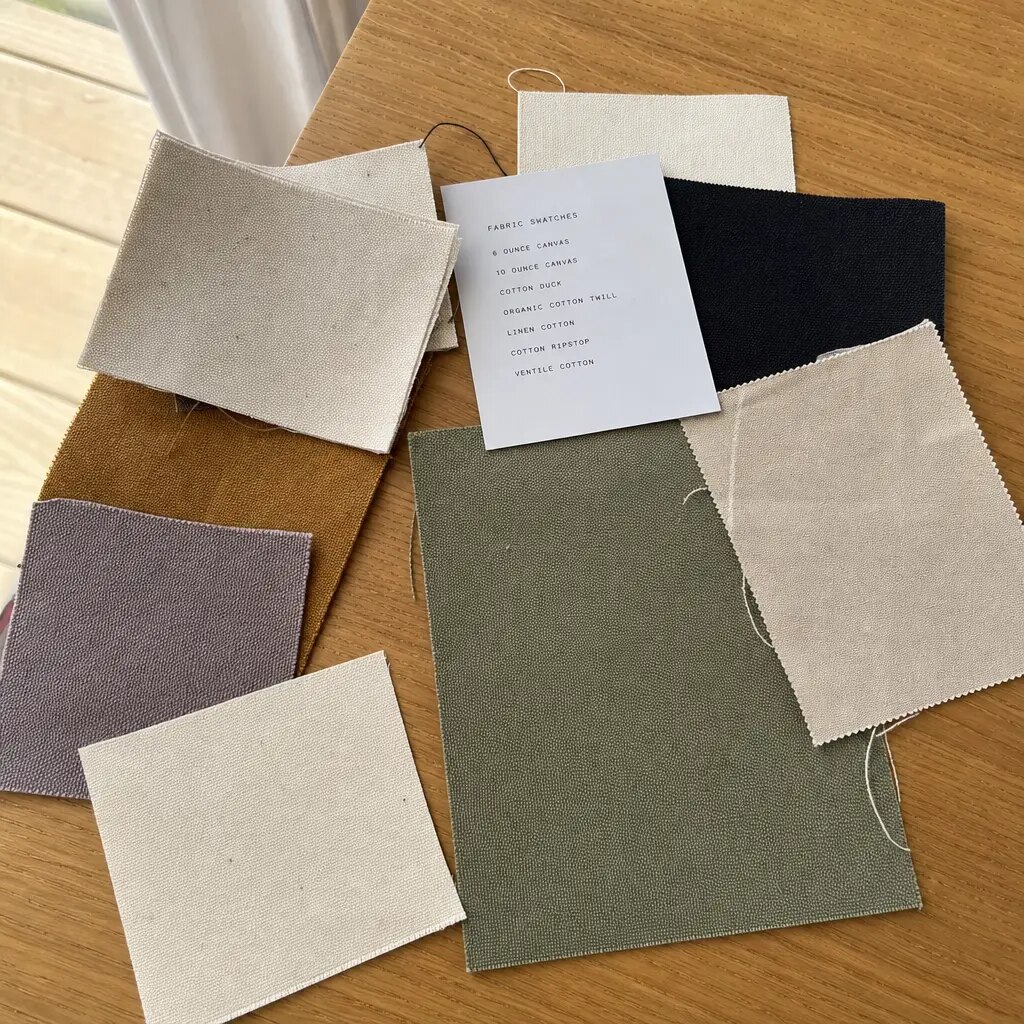
Instead of relying on a single universal threshold, ask the supplier to quote the fabric by composition, weight reference, width, finish, color, and source type. Request both the supplier's commercial description and a physical swatch. If the supplier lists both GSM and ounce weight, confirm that the conversion refers to the same fabric and not to a generic sales category. If the brand needs a specific material claim, ask what evidence can be tied to the actual production lot.
Natural canvas may show slubs, flecks, and shade variation. That can support an eco-positioned look, but it should be approved deliberately. Bleached or dyed canvas may give a cleaner brand surface, yet it adds more shade-control and lot-control questions. Recycled cotton can be commercially attractive for sustainability positioning, but buyers should ask about composition evidence, consistency, color variation, and whether the claim is allowed in the destination market.
The best fabric choice is the one that matches the channel. A premium retail tote may need more structure and cleaner finishing than a giveaway bag. A grocery-use tote may need stronger attention to handle reinforcement and seam stress than a lightweight packaging insert. Procurement should define the desired outcome and then let the supplier explain the fabric options, cost tradeoffs, and risks.
- Ask for composition, weight reference, finish, source type, and swatch evidence together.
- Do not treat GSM or ounce weight as a complete durability standard.
- Approve whether natural slubs, flecks, shade variation, or wrinkles are acceptable.
- Tie recycled, organic, or fiber-content claims to documentation for the production lot.
- Compare fabric options by use case, handfeel, print result, and construction compatibility.
Specify construction where failure happens
Most tote failures start at stress points. The front panel may look acceptable, while the handles, side seams, top hem, or bottom gusset carry the actual risk. Construction details should therefore be written as part of the durability requirement, not as optional sewing language.
The RFQ should state the seam type, edge finish, handle material, handle attachment path, reinforcement method, thread color, and whether reinforcement must appear on the outside, inside, or both. If the supplier uses terms such as standard stitching or normal reinforcement, ask for close-up photos of the construction they intend to quote. A factory's default may be perfectly fine, but it still needs to be visible and repeatable.
Stitch density and dimensional tolerances should not be presented as universal procurement truths unless the buyer has tested and approved them. A better approach is to ask the supplier what sewing standard they can hold for the chosen fabric and then verify that standard on the pre-production sample and inline pieces. For heavier fabric, dense seams, or thick reinforcement areas, machine setup may matter more than a number in the RFQ.
Handle strength should be linked to intended use. If the tote is expected to carry groceries or heavier retail purchases, define the load check with the supplier and document the method. A static-load check, pull check, or internal use test can be part of the approval process, but the threshold should come from the buyer's product requirement or retailer standard, not from a copied generic checklist.
- Inspect handles, side seams, gusset corners, and top hem as primary risk points.
- Ask for close-up construction photos before bulk cutting.
- Agree stitch and seam standards with the factory, then verify them on samples.
- Define any load check by use case and method, not by unsupported default numbers.
- Record whether raw, overlocked, bound, or enclosed interior edges are acceptable.
Control artwork and trims
Branding is where a simple grocery tote becomes a brand asset. It is also where many small errors become visible: a print placed too low, a logo tilted against the seam, a woven label curling at the edge, or a barcode sticker applied to the wrong SKU. Artwork control should be handled with the same seriousness as fabric and sewing.
Screen print is often suitable for clean spot-color artwork on canvas, while transfers may suit shorter runs, gradients, or complex graphics. Embroidery can provide texture but may distort some fabrics or small lettering. Woven labels can look premium but need clear size, fold type, attachment method, and placement. None of these methods is automatically the best choice. The right method depends on artwork detail, order size, fabric texture, fold line, target cost, and durability expectation.
Print-placement tolerances should be agreed with the supplier after reviewing the artwork, print method, bag size, and production setup. A number copied into the PO without factory confirmation may sound precise but may not be realistic for the chosen process. Define measurement points instead: distance from top edge, side seam, centerline, gusset edge, or label seam. Then approve a sample that uses the actual bulk process.
For eco apparel brands, trim and label claims deserve extra care. A label that says organic, recycled, reusable, or responsibly made can create compliance exposure if the claim is not backed by order-specific evidence. Procurement should keep artwork claims, label copy, and supplier documentation in the same approval file.
- Approve the logo method on the actual canvas, not only in a mockup.
- Define placement by measurement points and sample approval.
- Check fold lines, rubbing, edge lift, cracking, bleeding, and color shift where relevant.
- Control woven labels, care labels, hangtags, barcode stickers, and paper bands by version.
- Keep sustainability wording aligned with available documentation.
Compare cost by quote basis
A low unit price can hide missing services. For canvas grocery totes, the base sewing cost may exclude fabric upgrade, dyeing, print setup, screens, transfer film, embroidery setup, woven labels, hangtags, barcode stickers, individual packing, carton marks, inspection, testing, export documents, inland freight, and final delivery. Procurement should ask suppliers to show what is included, what is optional, and what triggers a surcharge.
MOQ needs the same treatment. A supplier may quote an attractive quantity but calculate it per artwork, per fabric color, per size, per label, per packing style, or per lot. If a brand needs several colorways or wholesale-specific carton marks, the real MOQ may be higher than the first number suggests. Ask whether variants can be combined and how separation will be controlled in packing.
Lead time should be broken into approval, material booking, production, finishing, inspection, packing, and shipment handover. A supplier that quotes fast sewing time may still need extra time for fabric, labels, printing, testing, or export paperwork. If compliance testing is required, ask whether testing happens before bulk production, during production, or on finished goods. The timing changes both risk and calendar.
The cleanest comparison is a landed quote matrix. List each supplier against the same product spec, same sample requirement, same test requirement, same packing format, same Incoterm, and same delivery point. Only then does unit price become meaningful.
- Separate base unit price from setup, trims, packing, testing, inspection, and freight.
- Ask what the MOQ applies to before planning variants.
- Compare lead time by production stage, not only by total days.
- Normalize all suppliers to the same Incoterm and delivery responsibility.
- Use total landed and receiving cost for final comparison.
Decide who owns testing
Compliance testing is often discussed too late. By the time finished totes are packed, a failed test can force sorting, relabeling, retesting, shipment delay, or cancellation. The buyer should decide the test plan before issuing the PO, especially when the tote carries fiber-content claims, recycled-content claims, organic claims, restricted-substance requirements, retailer requirements, or marketplace documentation rules.
Testing ownership has several parts. Who selects the lab? Who submits the sample? Is the sample fabric, ink, trim, or finished goods? Which market or retailer requirement is being tested against? Who pays for the first test? Who pays for retesting if the supplier's material fails? Does shipment release depend on the report? These questions are commercial terms, not admin details.
When comparing test reports across suppliers, look beyond the pass result. Check the lab name, report date, applicant, sample description, style number, material description, test scope, test method, and whether the sample identity matches the tote you are buying. A report for generic cotton canvas does not automatically cover printed finished totes, woven labels, trims, or a different fabric lot.
If the supplier claims recycled or organic content, procurement should request documentation appropriate to the claim and destination market. Do not turn a sustainability claim into marketing copy until the sourcing file supports it. When in doubt, keep product language conservative and evidence-based.
- Define the test plan before the PO is placed.
- Assign payment responsibility for initial testing and failed retesting.
- Compare reports by scope, sample identity, date, and lot relevance.
- Check whether the report covers fabric only or finished goods with ink and trims.
- Make shipment release dependent on required documents when the program demands it.
Use Incoterms as a risk tool
Freight terms affect more than who books the shipment. They determine where cost, risk, and operational responsibility shift from supplier to buyer. A canvas tote quote based on EXW may look cheaper than FOB or DDP because it excludes inland pickup, export clearance, port handling, ocean or air freight, duty, taxes, and final delivery. If procurement compares those prices directly, the wrong supplier can appear cheaper.
EXW may work when the buyer has a forwarder ready to manage pickup, export details, and local coordination. FOB is often easier for import programs because the supplier handles local export steps up to the agreed port. CIF includes freight to the destination port but may still leave duties, clearance, destination charges, and final delivery to the buyer. DDP can simplify receiving for smaller teams, but the buyer should confirm who is importer of record, what duties are included, and whether delivery timelines are realistic.
Packing choices also interact with freight. Flat-packed totes may reduce carton volume but can create fold-line issues on prints. Retail bands, individual bags, barcode labels, and SKU separation add labor and sometimes carton volume, but they can reduce warehouse handling later. Moisture protection may be important on long routes or humid storage conditions, yet it should be specified in a way that aligns with brand packaging goals.
The supplier quote should state the Incoterm, named place, carton dimensions, carton weight, units per carton, packing list format, and document package. Without that, the freight estimate is only a guess.
- Compare EXW, FOB, CIF, and DDP quotes on total landed responsibility.
- Confirm the named place where risk transfers.
- Ask for carton dimensions and weights before freight benchmarking.
- Match packing format to warehouse receiving and brand packaging rules.
- Confirm export documents, origin details, duties, taxes, and destination charges.
Approve samples in layers
A sample is not one thing. It can be a fabric swatch, blank construction sample, logo strike-off, trim sample, pre-production sample, first-piece sample, or packed-carton sample. Each one answers a different procurement question. Calling all of them approved samples creates confusion, especially when one sample uses temporary fabric and another uses final artwork.
The pre-production sample should represent the bulk order as closely as possible: final fabric or documented equivalent, final construction, final logo method, final thread color, final label, final fold, and final packing where practical. If any element is not final, mark it clearly as a reference and require a later approval before bulk cutting or shipment.
Sample approval should be measured and recorded. Note body dimensions, gusset, handle drop, handle width, print size, placement points, label position, seam finish, reinforcement method, fold result, and carton presentation if relevant. A photo is useful, but a signed physical sample or retained master sample is stronger because it captures handfeel, texture, weight, and finish.
For larger orders or visible branding, request a first-piece review. This is the moment to catch wrong logo placement, incorrect label orientation, changed seam construction, or an unexpected fabric lot before the production line repeats the mistake. First-piece approval is especially important when sewing, printing, and packing are handled in different locations.
- Name the sample type and what it approves.
- Do not treat a reference sample as final bulk approval.
- Measure and record the sample, including logo and label placement.
- Retain a signed sample or clear approval file tied to the PO.
- Use first-piece review when brand visibility or order value justifies it.
Inspect for saleability
Quality control should protect saleability, receiving accuracy, and product function. A final inspection that only counts visible defects can miss the issues that matter most: weak handle reinforcement, wrong barcode, mixed cartons, print failure at fold lines, inconsistent dimensions, or carton marks that do not match the packing list.
Start by defining defect categories. Major defects usually include issues that affect function, brand presentation, safety, saleability, or warehouse receiving: missing reinforcement, open seams, holes, wrong label, wrong SKU, wrong barcode, incorrect artwork, significant stains, or carton count errors. Minor defects may include small removable marks or short thread ends when they fall within the agreed standard. The definitions should be written before inspection, not negotiated after a failed shipment.
Inline checks reduce final-inspection surprises. Ask for fabric inspection photos, first cut panels, first sewn units, first printed units, trim application photos, and first packed carton photos. These checkpoints are practical because tote production moves quickly once cutting and sewing begin. Catching wrong placement or mixed trims early is far cheaper than sorting finished cartons.
Final inspection should sample across cartons and variants, verify packing list quantities, check carton marks, measure key dimensions, review construction, confirm label and barcode accuracy, and document any rework. If a concession is accepted, record it in writing with affected quantity, defect description, and commercial resolution.
- Define major and minor defects before production starts.
- Use inline photos to catch process drift early.
- Inspect across cartons, not only the easiest-access pieces.
- Verify SKU separation, carton marks, barcode labels, and packing list accuracy.
- Document rework, replacement, concession, or rejection before shipment release.
Specification comparison for buyers
| Supplier option | What to verify | Commercial advantage | Buyer risk to control |
|---|---|---|---|
| Direct sewing factory | fabric swatch, approved sample, seam close-ups, logo test photos, packing pilot, and final inspection evidence | Better sample-to-bulk control and faster production feedback | May be weaker on export paperwork or branded packing unless checked early |
| Trading company | Factory name, production photos, trim-source proof, and who owns QC decisions | Can coordinate small mixed orders and extra services | Markup can hide real factory capability and slow defect decisions |
| Specialized bag workshop | bag size, gusset, handle drop, seam allowance, stitch density, reinforcement patch, and loading expectation | More practical for detailed construction, trims, and repeat programs | Capacity may be limited during peak seasons |
| Low-price general supplier | 8-12 oz cotton canvas, 120-220 gsm cotton, recycled cotton, or blended fabric selected by use case and target price | Useful for simple promotional runs with loose specs | Material downgrades, weak packing, and vague inspection scope can erase savings |
| Retail-ready supplier | fold method, inner bundle, carton count, carton mark, moisture protection, SKU separation, and warehouse receiving needs | Can handle labels, SKU separation, carton marks, and receiving rules | Higher unit cost must be compared against reduced warehouse work |
| Compliance-focused supplier | Fabric records, labeling review, test plan, and production traceability | Safer for retail programs and repeat brand orders | Documentation claims need evidence, not only sales language |
| Local sample room plus bulk factory | Signed sample, bulk factory handoff, first-piece photos, and deviation owner | Good for complex branding before large production | Sample room quality may not match bulk line unless handoff is controlled |
Buyer checklist before sampling
- Create one controlled spec sheet covering finished size, gusset, handle drop, handle width, fabric composition, fabric weight reference, finish, construction, logo method, label placement, packing, carton marks, inspection standard, and approved sample version.
- State whether dimensions are finished measurements or pattern/cut measurements. Use tolerances only after agreeing them with the supplier and validating them on samples or pilot production.
- Request fabric evidence that fits the claim: swatch, composition statement, recycled-content or organic-content documentation if relevant, and lot identification for the material used in bulk.
- Define intended use in plain language: checkout resale, grocery carry, apparel packaging, wholesale gift-with-purchase, event merchandise, or replenishment SKU. The use case should drive construction, packing, and inspection priorities.
- Specify seam finish, handle attachment, reinforcement method, thread color, hem finish, and interior edge treatment. Include reference photos or a technical sketch where words may be interpreted differently.
- Lock the logo method, artwork file, color reference, print size, placement measurement points, cure or transfer process, and approval sample. Do not approve a digital mockup as the bulk print standard.
- Set MOQ by the real driver: per fabric color, artwork, label, packing style, size, dye lot, or total order. Ask suppliers to show which cost items change when variants are split.
- Assign compliance testing ownership before the PO: who chooses the lab, who submits samples, who pays for initial testing, who pays for retesting after failure, and what report is required for shipment release.
- Compare quotes on Incoterms and landed responsibility, not unit price alone. Confirm whether EXW, FOB, CIF, DDP, export documents, duties, inland freight, cartons, and inspection are included or excluded.
- Approve the actual pre-production sample, packing method, carton label, and first packed carton photo before bulk shipment. Any material, ink, trim, label, fold, or carton substitution should require written buyer approval.
Factory quote questions to send
- What finished size, gusset, handle drop, handle width, fabric composition, fabric weight reference, and finish are included in this price? Please identify any assumed tolerance separately from the target measurement.
- Is the quoted fabric from stock, made-to-order, dyed-to-order, recycled-content, organic-content, or blended material? What evidence can be tied to the actual production lot?
- Where will cutting, sewing, printing, labeling, inspection, and packing happen? If any process is subcontracted, who remains responsible for quality decisions and rework cost?
- Which logo method is included: screen print, heat transfer, digital transfer, embroidery, woven label, hangtag, or a combination? How many colors, placements, setups, and artwork versions are included?
- What sample will control bulk production: fabric swatch, blank sample, logo sample, pre-production sample, first-piece sample, or packed-carton sample? How will the approved version be identified?
- Does MOQ apply per total order, per fabric color, per artwork, per size, per label, per packing style, or per fabric lot? What happens to price and lead time if we split variants?
- Which compliance tests or documents are included in the quote, and which are excluded? Who pays if a test fails because the supplied fabric, ink, trim, or finished goods do not meet the agreed requirement?
- What is the lead-time breakdown after final approval for fabric booking, cutting, sewing, printing, finishing, inspection, packing, export paperwork, and handover to the forwarder?
- What QC standard will be used for fabric defects, dimensions, seam finish, handle reinforcement, logo placement, stains, loose threads, trim accuracy, barcode accuracy, and carton count?
- What Incoterm is the quote based on, and where does risk transfer? Are export documents, origin documents, inland freight, port charges, insurance, duties, taxes, and final delivery included or excluded?
Quality-control points to confirm
- Fabric composition, weight reference, color, handfeel, surface finish, and visible slub or fleck level match the approved swatch or signed pre-production sample.
- Finished body width, height, gusset, handle drop, and handle width are measured from agreed points and reviewed across cartons, not only on a single top sample.
- Seam construction matches the spec: correct seam type, consistent seam allowance, clean edge finish, even stitch tension, no skipped stitches, no open seams, and no loose thread clusters that affect appearance or durability.
- Handle reinforcement is in the approved position and method, with no twisting, puckering, missed reinforcement stitches, or fabric tearing under the agreed buyer-defined load check.
- Logo method matches the approved process, with correct artwork, color reference, size, orientation, cure or transfer result, and placement measured from agreed edges or centerlines.
- Print or transfer durability is checked according to the PO requirement, such as rub review, fold-line review, adhesion check, abrasion review, or wash testing when the buyer has specified it.
- Woven labels, care labels, hangtags, barcode labels, paper bands, and trim placements match the approved sample, with no mixed versions inside the same SKU or PO.
- Stains, oil marks, shade variation, holes, weaving defects, needle damage, and press marks are sorted according to the agreed defect definitions before packing.
- Inner bundles, individual packing, fold method, carton quantity, carton dimensions, carton weight, carton marks, SKU separation, and moisture protection match the packing instruction and receiving needs.
- Final inspection records identify sample size, defect categories, carton selection, inspection date, inspector, rework status, concessions if any, and shipment-release decision.