Define compliance for craft-fair resale and distribution
A canvas grocery tote for a craft fair is not only a sewn cotton bag. It may be a paid merchandise item, a sponsor giveaway, a vendor kit, a booth purchase bag, or a reusable shopping tote that carries a consumer-facing claim. Supplier compliance means the tote matches the approved material, construction, decoration, packing, labeling, documentation, and delivery plan. It also means the supplier understands that the goods must work in a live event environment where rework time is limited.
The first control is a single specification sheet used for RFQ, sample approval, purchase order, and inspection. It should include fabric, size, gusset, handle, logo, label, packing, carton marks, quantity by design, destination, and required documents. If the quote, sample, artwork proof, and PO disagree, the PO should state which approved document controls. This prevents “same as photo” decisions from replacing measurable specifications.
- State whether the tote is for resale, giveaway, vendor kit, sponsor gift, or grocery-use promotion.
- Confirm booth-facing needs: retail presentation, hangtag, barcode, price label area, or no consumer packaging.
- Check event rules for plastic packaging, sustainability language, venue receiving hours, and carton storage limits.
- Use one approved specification sheet across quote, sample, PO, production, and inspection.
- Treat fixed fair dates as higher risk because replacement production is rarely realistic.
Specify canvas fabric in measurable terms
Fabric choice drives cost, handfeel, print result, carton weight, and perceived value. For many grocery-style craft-fair totes, 10 oz to 12 oz cotton canvas is a practical starting range because it has enough body for reuse while remaining manageable for sewing, printing, folding, and freight. Lighter 8 oz to 10 oz canvas can work for giveaways or short-term promotions. Heavier 14 oz to 16 oz canvas can suit premium resale totes, but buyers should calculate carton gross weight and confirm the supplier can sew clean reinforced seams.
Ask for both ounce weight and GSM, and clarify the basis of the number. Some suppliers quote greige fabric before finishing; others quote finished fabric or a catalog name. A useful RFQ states composition, GSM or oz, finish, shade target, acceptable shade variation, and tolerance. Natural canvas may show seed specks and warm color variation. Dyed canvas requires shade-lot control. Recycled cotton, organic cotton, or blended fabric may be appropriate, but any claim printed on the tote or hangtag needs order-specific support.
- Mandatory for most orders: composition, oz or GSM, color, finish, swatch approval, and tolerance.
- Mandatory for resale or importer orders: material declaration, approved sample file, packing list, and final inspection report.
- Mandatory for sustainability claims: order-specific recycled, organic, or fiber-origin evidence before artwork approval.
- Optional but useful: shrinkage test, colorfastness test, fabric mill reference, and third-party lab test depending on market risk.
- Reject vague fabric descriptions such as “eco canvas,” “premium cotton,” or “heavy duty” without numbers.
Lock construction before pricing
Construction details must be defined before suppliers quote because small changes affect labor and durability. The RFQ should state finished width, height, bottom gusset, side gusset if used, handle width, handle length, finished handle drop, top hem width, stitch density, and reinforcement method. A grocery tote often needs a boxed or bottom gusset so it can sit on a booth table and hold bulkier purchases such as jars, candles, books, textiles, or packaged food.
Handle construction is a common failure point. Buyers should specify self-fabric or cotton webbing, width in millimeters, attachment pattern, and load expectation. “Strong handles” is not inspectable. “25 mm cotton webbing with box-X stitch at each attachment point” is inspectable. For craft-fair resale, also consider visual neatness: twisted handles, uneven top hems, and loose threads look inexpensive when displayed at a booth.
- Define finished measurements and state whether they are flat measurements after sewing.
- Specify bottom construction: flat, boxed gusset, side gusset, separate base panel, or fold-over base.
- Set tolerances for main dimensions, handle drop, print placement, and label placement before sampling.
- Require close-up photos of handle joints, gusset corners, top hem, and side seams in the sample file.
- Use a practical load test based on intended contents rather than an undefined “heavy-duty” claim.
Choose decoration for booth appearance and durability
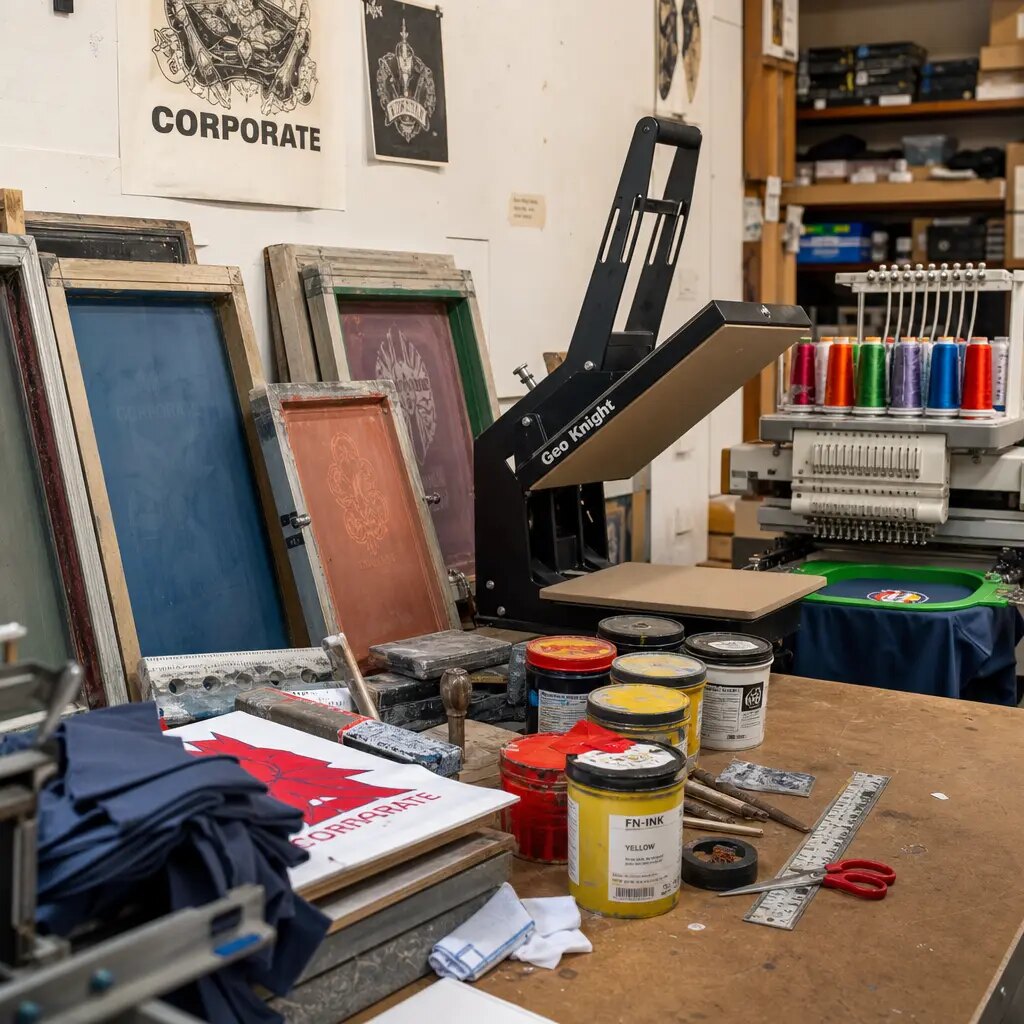
Decoration should match the artwork, quantity, and use case. Screen printing is often the most predictable choice for solid logos, maker-market branding, sponsor marks, and repeat orders. It gives good coverage on canvas and allows clear color control when Pantone targets and physical print samples are approved. Natural canvas can warm or dull colors, so a digital proof is not enough for brand-critical sponsor work.
DTF, heat transfer, or digital print may be better for gradients, photographs, short runs, or many sponsor versions. The buyer should test handfeel, edge adhesion, folding marks, rub resistance, and cracking risk. If the tote will be sold at a booth, print defects are not hidden inside a bulk giveaway; they directly affect perceived retail value. The supplier must confirm who owns print defects if printing is outsourced.
- Use screen print for solid logos, repeat programs, and medium-to-large quantity runs.
- Use transfer, DTF, or digital print for complex color, photographs, short runs, or many design splits.
- Approve print size, artwork file, Pantone target, print position, and tolerance by design.
- Test decoration on the final canvas base, not only on a generic print panel.
- Confirm whether misprinted pieces are replaced, discounted, or excluded from shipped quantity.
Compare MOQ and total program cost
MOQ is rarely a single number. A supplier may have one MOQ for sewn blanks, another for custom fabric, another for dyed color, another for print setup, and another for labels or hangtags. Craft-fair programs often include a main event tote plus sponsor, VIP, volunteer, or location-specific versions. If the body is identical, the supplier may sew one blank batch and split decoration, but every design split still adds proofing, setup, inspection, and packing risk.
Compare suppliers on total program cost, not only FOB unit price. The quote should identify unit price by quantity break, sample fee, setup charges, decoration charge per color and side, label and hangtag cost, packing cost, inspection support, carton specifications, allowed overrun or underrun, payment terms, and lead time. A higher unit price can be cheaper operationally if cartons arrive correctly sorted, barcodes scan, and fewer goods need warehouse correction.
- Request separate MOQs for blanks, fabric color, print design, label version, hangtag, barcode, and packing type.
- Ask for price breaks at realistic volumes such as 500, 1,000, 2,500, and 5,000 pieces when relevant.
- Require all setup charges to be line items rather than hidden inside the unit price.
- Confirm overrun and underrun limits, especially when sponsor allocations are exact.
- Compare landed cost including packing, sorting, inspection, sample freight, relabeling, and rework risk.
Qualify suppliers by evidence, not promises
Supplier qualification should prove repeatability. Ask where fabric sourcing, cutting, sewing, printing, labeling, packing, and export documentation happen. A direct sewing factory may control construction but outsource printing. A blank-stock decorator may print quickly but have limited control over fabric shade or handle strength. A trading company may coordinate well but must disclose who makes defect decisions and who pays for correction.
Evidence should be order-specific when the tote carries a consumer-facing claim. If the product is labeled recycled, organic, washable, reusable, compostable packaging, plastic-free, or locally compliant, the buyer should request documents before approving artwork or hangtags. Generic marketing language is not enough. For low-risk giveaways, a swatch, approved sample, inspection report, and packing list may be sufficient. For paid resale or importer programs, document control should be stricter.
- Ask for recent production samples, labeled fabric swatches, seam close-ups, print panels, and packing photos.
- Require the supplier to name outsourced processes and the person responsible for defect decisions.
- Make sustainability or material-origin claims conditional on order-specific evidence.
- Confirm buyer-appointed inspection is allowed before shipment and before balance payment.
- Record mandatory documents by order type so sales claims do not exceed supplier proof.
Control samples and retained standards
Sample approval should move from concept to production standard. A counter sample can confirm size, gusset, handle drop, sewing method, and basic print position. A print strike-off can confirm ink or transfer performance on the actual canvas. A pre-production sample should combine final fabric, final construction, final decoration, final label or hangtag, folding method, bundle count, and carton mark. Bulk production should not begin until the buyer signs off or accepts a written deviation.
Retained samples are essential for dispute control. Keep one approved pre-production sample as the inspection standard and retain at least one bulk production sample after shipment. For multi-design programs, the body sample may be shared, but each logo, barcode, hangtag, and carton mark needs its own approval record. Sample comments should be closed as approved, revise and resubmit, or approved with written concession; “fix in bulk” should not remain informal.
- Measure sample width, height, gusset, handle width, handle drop, and print position with photos.
- Approve fabric swatch, logo test, label, hangtag, barcode, folding, and packing before bulk release.
- Keep a sealed approved sample for inspection and a bulk sample for reorder comparison.
- Approve every artwork version and carton mark separately, even if the tote body is identical.
- Do not let unresolved sample comments move into mass production without written acceptance.
Set tote-specific QC and rejection workflow
Canvas tote inspection should focus on bag-specific defects: stains, oil marks, mildew odor, shade variation, skipped stitches, loose threads, twisted handles, weak handle joints, uneven gussets, panel skew, off-center print, ink smudges, transfer lifting, missing labels, unreadable barcodes, carton shortages, and mixed designs. The PO should define critical, major, and minor defects before inspection. Common AQL frameworks can be used, but the exact level should match order value, retail exposure, and event risk.
A useful QC workflow is clear before shipment: pass, hold selected cartons for sorting, rework and reinspect, accept with written concession, or reject and require corrective action. The inspection report should show sample quantity, defect counts, photos, measurement results, load-test result, carton verification, and supplier response. For repeat suppliers, corrective action should identify root cause, containment, replacement plan, and prevention for the next order.
- Use the retained approved sample as the visual and construction standard during final inspection.
- Pull samples across designs, cartons, and destinations rather than only from the top cartons.
- Record load-test quantity, load weight, duration or lift method, and any handle or seam failure.
- Classify wrong artwork, broken handles, severe contamination, mildew odor, and missing required labels as critical or major.
- Require corrective action with photo evidence before releasing balance payment on failed inspections.
Plan packing for booth, warehouse, and venue receiving
Packing should support how the totes will be received and used. Bulk packing is economical, but it can create sorting labor at the warehouse or event venue. Individual polybags protect presentation but add cost and may conflict with event sustainability rules. Paper bands, inner bundles, or recycled-content bags can be a better balance for craft fairs where totes need to be counted quickly and displayed neatly.
Carton marks matter when multiple designs, sponsors, or destinations are involved. At minimum, carton marks should show PO number, item or SKU, design name, quantity, carton number, total cartons, and destination. Retail-ready or 3PL deliveries may require barcode carton labels and specific packing-list formats. Cotton canvas also needs moisture protection when exposed to humid routes, long storage, or ocean freight, because odor and mildew complaints can make otherwise acceptable totes unsellable.
- Choose bulk pack, bundle pack, paper band, individual pack, or event-kit packing based on receiving workflow.
- Confirm pieces per carton, carton dimensions, net weight, gross weight, and maximum carton weight at quote stage.
- Sort cartons by design, sponsor, SKU, destination, or booth kit as required by the event plan.
- Request packing photos before shipment for multi-design, split-destination, or retail-ready orders.
- Add moisture controls such as liners or desiccants when route, storage time, or climate makes them necessary.
Build lead time around immovable event dates
Craft-fair deadlines are fixed, so lead-time compliance must be managed as part of supplier selection. The schedule should include artwork lock, swatch approval, counter sample, sample freight, pre-production sample approval, fabric purchase, cutting, printing, sewing, trimming, packing, inspection, shipment booking, customs documents where applicable, and inland delivery. If the supplier’s lead time starts only after every approval is complete, the buyer should make that explicit in the timeline.
Late changes are common in event programs: sponsor logos change, location names are updated, barcodes are added, or carton destinations shift. Every change should update the controlled artwork and PO file, not only a chat message. The safest plan works backward from the fair date and reserves time for inspection failure, carton relabeling, repacking, freight delay, and venue appointment issues. A fast quote is not strong if it depends on skipping samples or final inspection.
- Set milestone dates for artwork lock, sample approval, bulk start, print start, sewing, packing, inspection, and shipment.
- Require milestone photos for fabric, print strike-off, first sewn pieces, packed cartons, and carton labels.
- Freeze sponsor artwork before screens, transfers, labels, or barcodes are produced.
- Add buffer for custom dyed fabric, private labels, retail packing, split shipments, and importer documents.
- Confirm delivery terms, venue receiving rules, and the party responsible for missed appointment or relabeling costs.
Specification comparison for buyers
| Supplier option | What to verify | Commercial advantage | Buyer risk to control |
|---|---|---|---|
| Direct sewing factory | fabric swatch, approved sample, seam close-ups, logo test photos, packing pilot, and final inspection evidence | Better sample-to-bulk control and faster production feedback | May be weaker on export paperwork or branded packing unless checked early |
| Trading company | Factory name, production photos, trim-source proof, and who owns QC decisions | Can coordinate small mixed orders and extra services | Markup can hide real factory capability and slow defect decisions |
| Specialized bag workshop | bag size, gusset, handle drop, seam allowance, stitch density, reinforcement patch, and loading expectation | More practical for detailed construction, trims, and repeat programs | Capacity may be limited during peak seasons |
| Low-price general supplier | 8-12 oz cotton canvas, 120-220 gsm cotton, recycled cotton, or blended fabric selected by use case and target price | Useful for simple promotional runs with loose specs | Material downgrades, weak packing, and vague inspection scope can erase savings |
| Retail-ready supplier | fold method, inner bundle, carton count, carton mark, moisture protection, SKU separation, and warehouse receiving needs | Can handle labels, SKU separation, carton marks, and receiving rules | Higher unit cost must be compared against reduced warehouse work |
| Compliance-focused supplier | Fabric records, labeling review, test plan, and production traceability | Safer for retail programs and repeat brand orders | Documentation claims need evidence, not only sales language |
| Local sample room plus bulk factory | Signed sample, bulk factory handoff, first-piece photos, and deviation owner | Good for complex branding before large production | Sample room quality may not match bulk line unless handoff is controlled |
Buyer checklist before sampling
- Define the selling or distribution channel: booth resale, free giveaway, sponsor gift, vendor kit, paid retail SKU, grocery purchase bag, or event registration tote.
- Confirm craft-fair operational requirements: booth display appearance, unit price tag or barcode, local sales-tax handling, event sustainability rules, venue receiving hours, and carton storage limits.
- Specify fabric by composition, oz, GSM, weave or texture if relevant, color, finish, shrinkage expectation, and tolerance; do not accept only “heavy canvas” or “premium cotton.”
- Choose fabric by use case: 8-10 oz for light giveaways, 10-12 oz for most grocery-style totes, and 14-16 oz for premium resale where freight weight is acceptable.
- Fix finished dimensions: width, height, bottom gusset, side gusset if applicable, handle width, handle length, and finished handle drop.
- Set tolerances before sampling: for example +/-10 mm for main dimensions, +/-5 mm for print placement, and +/-3 mm for label placement when retail presentation matters.
- Define handle construction: self-fabric or webbing, width in mm, box-X stitch, bartack, reinforcement patch, and practical load-test expectation.
- Require a pre-production sample made with final fabric, final decoration, final label or hangtag, final folding, and final packing components before bulk cutting or printing.
- List quantities by design, sponsor, SKU, barcode, carton mark, and destination; do not give only a total program quantity.
- Separate mandatory documents from optional evidence based on the order: composition record, approved sample file, final inspection report, packing list, claim-support documents, and import paperwork where applicable.
Factory quote questions to send
- Are you the direct manufacturer, a trading company, a blank-stock decorator, or a sewing factory using outsourced printing, and which processes are in-house?
- What exact fabric are you quoting: composition, oz, GSM, weave description if available, finish, color target, and tolerance?
- Is the quoted fabric weight based on greige fabric, finished fabric, or catalog weight, and can you send a labeled swatch from the intended production lot?
- What finished dimensions, gusset style, handle width, handle drop, seam allowance, stitch density, and reinforcement method are included in the quoted price?
- What tolerances will you commit to for width, height, gusset, handle drop, print placement, label placement, and carton quantity?
- What is the MOQ for sewn blanks, MOQ per print design, MOQ per fabric color, and MOQ or surcharge for private labels, hangtags, barcodes, or retail packs?
- Which decoration method is included, how many colors are included, what ink or transfer type is used, and what setup charge applies per color and design?
- Can the pre-production sample include final fabric, final print, side label or care label, hangtag or barcode, folding method, and inner bundle or polybag?
- What sampling plan will you follow for final inspection, which defects are critical or major, and how will you handle rejected cartons or failed load tests?
- What are the lead times for swatch, counter sample, pre-production sample, bulk production, final inspection, shipment booking, and delivery after deposit and approvals?
Quality-control points to confirm
- Verify finished width, height, gusset, handle length, and handle drop against the approved sample and tolerance sheet using the same flat measurement method each time.
- Check fabric weight by supplier GSM record and, where practical, measured cut sample; confirm the quoted 8 oz, 10 oz, 12 oz, or other weight has not been substituted.
- Compare production fabric shade, handfeel, weave, slubs, and cotton seed specks against the approved swatch, especially for natural, dyed, recycled, or washed canvas.
- Inspect handle joints for complete box-X stitching, bartacks, or reinforcement patches without skipped stitches, loose thread nests, needle cuts, or weak attachment points.
- Run a practical load check on pulled production units using the buyer’s intended grocery or merchandise weight; record load, duration, sample quantity, and failure mode.
- Check stitch density and seam security at top hem, side seams, gusset joins, bottom corners, and handle attachment points.
- Inspect logo size, color, registration, opacity, edge sharpness, and position from top edge and centerline; compare each artwork version separately.
- Test decoration for dry rub, light wet rub where relevant, transfer lifting, cracking, smudging, and visible damage after folding.
- Classify severe stains, oil marks, mildew odor, wrong artwork, missing required labels, unreadable barcodes, broken handles, and carton shortages as critical or major according to the PO standard.
- Use a clear acceptance workflow: pass, hold for sorting, rework and reinspect, accept with written concession, or reject and require corrective action before shipment.