Start With the Buying Use Case
Canvas grocery totes for craft fairs have a harder job than thin conference giveaways. Shoppers carry them through crowded aisles, outdoor paths, parking areas, food stalls, and checkout tables. The contents are rarely uniform. One bag may hold jars and candles; another may hold books, boxed soap, small ceramics, prints, catalogs, apparel, and vendor samples. That mix puts stress on the bottom gusset, side seams, handle attachment, fabric body, print surface, and carton plan.
Before writing the technical spec, define the commercial purpose. Is the tote being sold as merchandise, handed out at the entrance, funded by a sponsor, packed as a vendor welcome kit, or positioned as a reusable grocery-style market bag? Each answer changes the acceptable balance of cost, presentation, and risk. A resale tote needs a cleaner finish and steadier print. A sponsor tote needs stronger color control and a real approval trail. A giveaway may put more weight on carton efficiency, fast receiving, and simple distribution.
Most sourcing problems start when buyers compare unlike quotes. One supplier may price an 8 oz flat cotton bag. Another may price a 12 oz boxed canvas grocery tote. A third may include individual polybags, hangtags, and export cartons. The lowest unit price may simply be a different product. Your RFQ should make silent downgrades difficult by fixing the specification, decoration, packing method, and Incoterm before suppliers quote.
Add one plain use statement near the top of the RFQ. For example: reusable open-top canvas grocery tote for craft fair shoppers, intended to carry dense packaged goods and distributed in bulk by event staff. That sentence helps the factory understand the application. It also gives internal buyers, marketing teams, and event managers a practical reason to reject a cheaper bag that will not perform at the fair.
- Define the use case: shopper tote, resale bag, sponsor gift, vendor kit, or grocery-style market bag.
- List likely contents: jars, books, candles, ceramics, apparel, prints, boxed goods, or packaged food.
- Clarify distribution: entrance handout, merchandise table sale, booth allocation, vendor kit packing, or multi-location shipment.
- Separate must-have features from optional upgrades such as labels, hangtags, organic cotton, or individual polybags.
- Require all suppliers to quote against the same baseline spec before reviewing optional cost-saving alternatives.
Specify Fabric Weight and Material Accurately
For many craft fair grocery tote programs, 10 oz to 12 oz cotton canvas is the practical middle ground. It usually gives enough structure for reusable shopper bags without pushing carton weight and freight cost too high. In metric terms, that range often sits around 270-340 GSM, although the conversion is not exact. Weave, yarn count, finishing, moisture content, and whether the weight is measured before or after processing all affect the final number.
Lighter 8 oz canvas can work for low-cost handouts or light loads, but it feels softer and carries less structure. Heavier 14 oz canvas can look and feel more premium, yet it also raises material cost, sewing difficulty, packed weight, and shipping cost. Do not pick the fabric weight from a catalog description alone. Ask for both ounce weight and GSM, plus an actual swatch and the approximate finished bag weight.
Two fabrics with the same listed weight can behave differently. A tighter weave may print more cleanly, hold shape better, and resist distortion under load. A looser weave may fold easily and feel soft in the hand, but it can make fine print less sharp. Natural cotton canvas can also show seed flecks, slubs, and shade variation. That character may suit a handmade market look, but it can affect pale inks, sponsor colors, and small artwork.
Material claims should be locked early. Natural, bleached, piece-dyed, yarn-dyed, recycled cotton, organic cotton, and blended canvas all create different questions around MOQ, price, documentation, and lead time. If certification is required, ask what document will be provided and whether it applies to the material, the factory, or the finished product. Also ask whether the quoted fabric is stock or made to order. Stock fabric can shorten timelines, while made-to-order fabric may improve consistency for larger programs if there is time for swatch and shade approval.
- 8 oz canvas: acceptable for light handouts, low load, and soft folding, but limited for heavy grocery-style use.
- 10 oz canvas: balanced choice for many reusable craft fair totes where cost and durability both matter.
- 12 oz canvas: stronger structure and perceived value for resale, sponsor merchandise, or heavier shopper loads.
- 14 oz canvas: premium feel, but confirm sewing capability, carton weight, CBM, and manual handling limits.
- Natural canvas: approve actual print color on the swatch because flecks and shade variation affect artwork appearance.
Lock Construction Before Pricing
A canvas grocery tote should be quoted as a finished construction, not as a loose idea. The RFQ should state finished body width, finished height, bottom gusset depth, handle length, handle width, handle material, seam type, top hem construction, reinforcement method, label placement, and measurement tolerance. If those details are missing, suppliers can reduce cost while keeping the description almost unchanged.
For craft fair use, a boxed bottom or side-and-bottom gusset is usually worth specifying. It creates useful volume, helps the tote sit better on tables, and distributes stress when shoppers load bulky goods. A practical reference size might be 38 cm wide x 42 cm high with a 10 cm bottom gusset. That is not the only workable size, but it gives suppliers a clear starting point. If shoppers will carry jars, ceramics, boxed goods, or candles, pay close attention to gusset depth and corner sewing. If the tote mainly carries prints, apparel, and lightweight goods, a slimmer gusset may be enough.
Handles deserve more attention than they often receive. Same-fabric handles give a coordinated look. Cotton webbing can be consistent and efficient to sew. Shoulder-length handles around 55-60 cm usually work better than short hand-carry handles, especially at outdoor fairs, winter markets, or multi-hour events. Width also matters. A narrow handle may pass a seam-strength check but still feel uncomfortable when the bag is full.
Use exact reinforcement language. Box stitch with cross-stitch, bartack reinforcement, or an approved reinforced top-hem attachment are clearer than strong handles. The approved sample should show the handle entry point, stitch pattern, inside seam finish, and gusset corners. Photos are useful because they prevent a later argument over what the factory thought was acceptable.
- Body example: 38 cm wide x 42 cm high x 10 cm bottom gusset for a useful open-top grocery tote.
- Handle example: 55-60 cm length, 2.5-3.5 cm width, same-fabric or cotton webbing, reinforced at attachment points.
- Tolerance example: body width/height +/- 1 cm, gusset +/- 0.5 cm, handle length +/- 1 cm, print placement +/- 1 cm.
- Sewing review: no open seams, skipped stitches, broken thread, twisted handles, puckering at stress points, or uneven gussets.
- Sample record: photograph the front, back, inside seam, bottom gusset, handle reinforcement, label area, and folded presentation.
Match Decoration to Artwork Risk
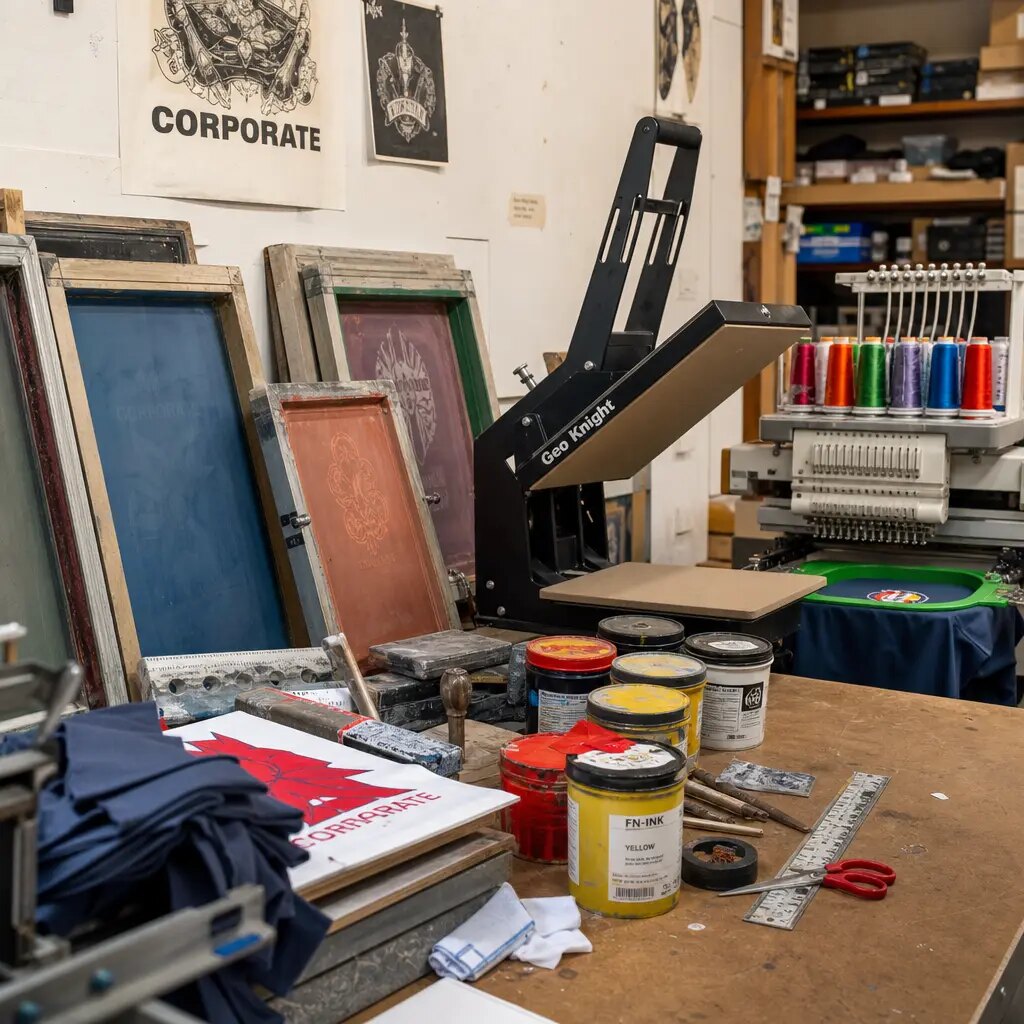
Screen printing is often the safest choice for canvas grocery totes with one to three solid colors. It works well for fair names, sponsor marks, bold illustrations, and repeat programs. The risk is detail. Textured canvas can break thin lines, fill small reverse text, soften halftones, and make colors look less bright than they do on coated paper or a digital mockup.
Send vector artwork with Pantone references, print dimensions, location, side count, color count, and any small details that must stay readable. If the design includes QR codes, fine script, small sponsor logos, halftones, or negative-space lettering, request a physical strike-off on the actual production fabric. A PDF proof cannot show ink spread, fabric texture, curing behavior, or the effect of folding across the print.
Heat transfer and digital print have a place, especially when artwork uses gradients, many colors, photographic detail, or multiple short-run designs. Still, they should be approved on the real tote material. Transfers may feel stiffer, show an edge, or crack if the film and adhesive are not suitable for canvas and repeated folding. Digital print can reproduce more detail, but color strength on natural canvas may appear softer than expected.
Make placement measurable. State the artwork size, distance from the top edge, horizontal centerline, and whether placement is measured on the finished bag or the flat cut panel. For double-sided printing, confirm whether the quote includes two screens, two print passes, extra curing time, and extra handling. If the folded presentation crosses the print area, approve a folded sample after curing, not only a fresh flat print.
- Use screen print for bold one-to-three-color artwork, event logos, sponsor marks, and simple illustrations.
- Use transfer only after checking hand feel, edge adhesion, folding behavior, rub resistance, and stiffness on canvas.
- Use digital print when color variety or detail matters more than lowest unit price and repeat color matching is less critical.
- Define artwork controls: Pantone, print size, placement, side count, color count, minimum line thickness, and small-text limits.
- Approve print on production fabric, not only on paper proof, monitor mockup, or a different cotton sample.
Build a Quote Table That Prevents Substitution
A good RFQ makes it easy for suppliers to quote the same bag and hard for them to hide substitutions. Avoid broad wording such as natural canvas tote with logo. Instead, provide a structured spec: intended use, finished size, fabric weight, fabric color, handle construction, reinforcement, print method, artwork size, packing format, carton data, sample requirement, inspection expectation, delivery terms, and quote validity.
Ask for more than a single unit price. Separate the base bag cost, printing cost, screen or setup charges, sample fees, label fees, special packing charges, inland freight if applicable, export documentation charges, and certification costs. This prevents a low unit price from becoming expensive after approvals. It also helps finance and logistics teams compare landed cost, not just FOB or ex-works pricing.
Use fixed quantity breaks. For many programs, 500, 1,000, 2,500, and 5,000 pieces are useful comparison points. The supplier should quote the same fabric, same handle reinforcement, same print method, and same packing format at each tier. If the supplier proposes an 8 oz version, a flat tote, fewer stitches, or a simpler carton pack to save cost, keep that as a separate alternate line.
Include a quote-return table so every supplier answers in the same format. Useful columns include item code, quantity, unit price, setup fee, sample fee, production lead time after approval, carton quantity, carton size, net weight, gross weight, CBM, Incoterm, payment terms, quote validity, and deviations. The deviations column is especially important. It forces the supplier to disclose what is not exactly aligned with the RFQ.
- Provide a fixed baseline: size, GSM, fabric color, gusset, handle, reinforcement, print method, artwork area, and packing.
- Quote breaks: request 500, 1,000, 2,500, and 5,000 pieces or the buyer’s real expected volume tiers.
- Cost lines: separate unit price, setup, screen, sample, label, packing, documentation, and inland freight charges.
- Logistics lines: request carton quantity, carton dimensions, net weight, gross weight, and CBM per 1,000 pieces.
- Deviation control: require suppliers to list any fabric, construction, print, packing, or Incoterm difference from the RFQ.
Understand MOQ and Cost Drivers
MOQ is not just a number on a supplier profile. It is tied to fabric roll purchasing, cutting yield, print setup, sewing line planning, thread and trim sourcing, packing labor, and carton handling. A factory may accept a small order, but the unit price can climb quickly if it must buy full rolls, make screens, schedule a short sewing run, and pack only a few cartons.
Fabric choice is one of the biggest MOQ drivers. Stock natural canvas in a standard weight usually supports smaller runs better than custom-dyed, certified, organic, recycled, or unusual-weight fabric. If the event date is close, a stock fabric with an approved swatch may be safer than custom material that needs dyeing, lab dips, shade approval, and longer booking. If a sustainability or certification claim is required, collect the document requirements before final pricing.
Decoration can also split the order into smaller production lots. Multiple fair names, city versions, sponsor combinations, or seasonal graphics may require separate screens, color checks, curing, and carton separation. The bag body may be identical, but each artwork version still creates setup work. The RFQ should state the number of designs, pieces per design, and whether each design must be packed separately.
A practical sourcing strategy is to standardize the tote and vary only the artwork. Keep one size, one fabric, one handle method, one reinforcement standard, and one packing format. Then quote each design as a separate print setup. This gives the buyer cleaner cost control and makes inspection easier because the physical bag stays the same across versions.
- MOQ is easier with stock fabric, natural canvas, one print color, one design, and bulk packing.
- MOQ rises with custom dyeing, certified material, many designs, double-sided print, retail labels, or individual packing.
- Ask what changes at each price break: fabric purchase, cutting yield, print setup, sewing allocation, or carton efficiency.
- Standardize construction across fair versions and quote artwork changes as separate print setups.
- If stock fabric is used, request swatches, lot information, shade tolerance, and repeat-order expectations.
Approve Samples With Production Discipline
Sample approval should go beyond first impressions. A nice-looking tote is not enough if it was made from substitute canvas, printed with a different process, or folded in a way that will not be used for bulk production. A pre-production sample should represent the bulk fabric, final thread, final handle build, final reinforcement, approved decoration method, and intended folding style.
Use sample stages for different decisions. A concept sample checks size, shape, and general appearance. A print strike-off checks ink color, line clarity, sponsor marks, QR codes, and artwork behavior on actual canvas. A pre-production sample confirms the final construction and should become the reference for bulk production. A golden sample should stay with the factory, and the buyer or inspector should keep a matching reference if possible.
Measure the sample the same way you will inspect the order. Check body width, height, gusset depth, handle length, handle width, stitch density, reinforcement pattern, thread color, fabric shade, odor, trimming, print placement, print color, and folded presentation. For grocery-style totes, add a practical static load check. The test should reflect the intended load rather than a vague claim that the bag is strong.
Record the approval in writing. Photograph the front, back, inside seam, bottom gusset, handle reinforcement, print close-up, label, and folded presentation. Note any accepted deviation, such as a warmer fabric shade or a slightly adjusted print position. Bulk goods should be judged against the approved production sample and written tolerances, not against memory, screenshots, or a digital mockup.
- Concept sample: confirms general size, shape, and appearance but should not release production by itself.
- Print strike-off: tests ink, line clarity, QR codes, sponsor marks, and color on actual canvas.
- Pre-production sample: uses bulk fabric, final construction, approved print method, and intended packing fold.
- Golden sample: keep one with the factory and one with the buyer, warehouse, or third-party inspector.
- Approval file: record measurements, photos, Pantone notes, load-check result, construction details, and accepted deviations.
Set Measurable QC Criteria
Canvas totes look straightforward, but small shortcuts can create expensive problems. Common defects include loose handle stitching, uneven gussets, inconsistent seam allowance, off-center prints, poor curing, fabric stains, shade panels, rough thread trimming, and mixed designs in cartons. Define the acceptance criteria before the purchase order is released. Otherwise, final inspection becomes a negotiation.
Use four types of checks: visual, measurement, functional, and packing. Visual inspection should cover stains, holes, oil marks, heavy lint, mold odor, shade variation, thread color, smudges, print defects, and trimming. Measurement checks should cover body width, body height, gusset depth, handle length, handle width, and print placement. Functional checks should cover handle security, seam strength, and the agreed load test. Packing checks should confirm folded style, quantity, carton marks, design separation, and carton condition.
For distributor or import orders, define the inspection level, such as AQL, and then add tote-specific tests. Standard visual inspection may not catch weak handle attachment because the problem appears only under load. A simple static load test on selected units can reveal seam opening, fabric tearing, or reinforcement failure. Print rub checks should happen after curing and before final packing, especially on natural canvas where ink coverage can vary.
QC should not wait until the order is fully packed. Ask the factory for inline checks after cutting, after handle attachment, after printing, and during packing. Early review can catch wrong handle length, reversed panels, misregistered artwork, or mixed designs before the entire order is affected. If the totes are tied to a fixed event date, reserve time for inspection and possible rework.
- Measurement: check body width, height, gusset, handle length, handle width, and print location against agreed tolerances.
- Handle strength: reject seam opening, tearing, loose reinforcement, skipped stitches, or stress failure after the agreed load test.
- Print quality: reject major smudges, under-cured ink, heavy pinholes in logo areas, off-center placement, and color outside approval.
- Fabric condition: reject oil marks, mold odor, holes, large stains, major shade panels, and large slubs in the main print area.
- Packing accuracy: verify quantity per carton, design separation, folded style, carton marks, carton condition, and packing-list match.
Plan Cartons for Fair Distribution
Packing is part of the sourcing decision. Craft fair teams may need to send cartons to entrances, merchandise tables, sponsor booths, vendor kit areas, volunteer stations, warehouses, or multiple event locations. Bulk packing by 50 or 100 pieces per carton is often efficient for giveaways and vendor kits because it reduces material cost and speeds unpacking. Individual polybags may help retail resale or ecommerce, but they add cost, volume, waste, and handling time.
State the packing purpose in the RFQ. If totes are sold as merchandise, buyers may need individual folding, hangtags, barcode labels, or clean single-unit packaging. If the totes are handed out at check-in, bulk packing with clear carton marks is usually more practical. If the order includes multiple designs, require design-separated cartons and a packing list showing design, quantity, and carton number.
Folding style affects both landed cost and presentation. Heavy canvas folded tightly can create hard creases across the print. Looser folding protects the decoration but increases CBM. Ask for folded dimensions, pieces per carton, carton dimensions, net weight, gross weight, and CBM per 1,000 pieces before the purchase order is finalized. Freight planning should not wait until the goods are already packed.
Carton strength matters because bulk-packed canvas totes can be heavy. Cartons may be stacked, hand-carried, opened by volunteers, or stored in temporary event spaces. Weak cartons can split and expose bags to dirt or moisture. Specify export cartons suitable for stacking and inland handling. If palletized delivery is required, confirm pallet height, carton orientation, pallet labels, and warehouse receiving rules.
- Bulk packing: efficient for giveaways, vendor kits, and event staff distribution.
- Individual packing: useful for retail presentation, ecommerce, barcode control, or clean single-unit inventory.
- Carton marks: include PO number, item code, design, quantity, carton number, destination, and event date.
- Freight data: request folded size, carton size, net weight, gross weight, and CBM per 1,000 pieces.
- Routing control: pack by design, fair location, sponsor, vendor group, or event date when distribution accuracy matters.
Control Lead Time and Event Risk
Lead time for canvas grocery totes includes more than sewing. The critical path may include artwork review, sponsor logo approval, fabric swatch approval, sample making, sample freight, sample correction, material booking, cutting, printing, curing, sewing, trimming, packing, inspection booking, export handover, customs, domestic delivery, and event staging. A supplier’s stated production lead time may start only after deposit, artwork approval, sample approval, and material arrival.
Craft fair dates do not move easily. If totes arrive late, their value can fall quickly, especially when the artwork includes dates, sponsors, city names, or seasonal themes. Build the schedule backward from the in-hands date, not the factory completion date. For resale, sponsor-funded, imported, or high-visibility programs, allow time for at least one sample correction.
Approval delays often create more risk than sewing delays. Sponsor logos may arrive late. Artwork may need simplification. Pantone references may be missing. Stakeholders may disagree about fabric feel, tote size, or print scale. Procurement can reduce this risk by approving fabric swatches early, locking construction before final artwork is complete, and setting a firm artwork freeze date.
Freight planning belongs in the RFQ stage. Carton size, gross weight, and CBM influence air, sea, truck, courier, and domestic redistribution choices. A 12 oz or 14 oz tote may be the right product, but the decision should include landed cost and delivery schedule. If timing is tight, ask suppliers which shortcuts are safe and which are risky. Skipping a strike-off, reducing curing time, or rushing inspection can save days but create avoidable quality problems.
- Ask when lead time starts: deposit, artwork approval, sample approval, material arrival, or all conditions completed.
- Schedule stages: artwork, sample, correction, material booking, cutting, printing, curing, sewing, packing, inspection, and handover.
- High-risk items: custom fabric, certified cotton, late sponsor logos, many artwork versions, QR codes, and individual packing.
- Build buffer for sample remake, inspection rework, customs clearance, domestic delivery, and event staging.
- Request carton data early so freight quotes, warehouse space, and multi-location routing can be planned before production ends.
Specification comparison for buyers
| Spec decision | Recommended option | When it fits | Buyer risk to check |
|---|---|---|---|
| Fabric weight | 10 oz to 12 oz cotton canvas, usually about 270-340 GSM depending on weave and finishing | Reusable craft fair shopper bags carrying jars, candles, books, boxed goods, apparel, prints, and vendor samples | Do not compare ounce weight alone; request GSM, finished bag weight, weave description, shrinkage expectation, and actual swatch |
| Finished size | Common grocery tote range: 35-40 cm wide x 38-45 cm high with 8-12 cm bottom gusset | Event merchandise, market shopping, sponsor giveaways, and vendor kit bags needing useful volume | Flat totes can look cheaper but reduce usable capacity, table presentation, and load distribution |
| Handle length | 55-60 cm shoulder handles; 2.5-3.5 cm width; same-fabric or cotton webbing | Adult shoppers carrying goods across aisles, parking areas, and outdoor fairgrounds | Short or narrow handles reduce cost but create comfort complaints when the bag is full or used over coats |
| Handle reinforcement | Box stitch with cross-stitch, bartack, or approved reinforced top-hem attachment | Bags expected to carry dense items such as jars, ceramics, books, candles, or multiple purchases | A simple straight seam may pass visual inspection but fail under repeated load or pull testing |
| Measurement tolerance | Body width/height +/- 1 cm; gusset +/- 0.5 cm; handle length +/- 1 cm unless tighter tolerances are agreed | Most bulk canvas tote programs where hand cutting and sewing create normal variance | Undefined tolerances make inspection subjective and can lead to disputes over otherwise measurable defects |
| Print method | Screen print for 1-3 solid colors; transfer or digital only when artwork demands gradients, many colors, or small batches | Fair logos, sponsor marks, simple line art, and repeat programs | Fine lines, reverse text, QR codes, and halftones can fail on textured canvas; require a strike-off on production fabric |
| MOQ and price breaks | Quote 500, 1,000, 2,500, and 5,000 pieces using identical specs, print method, and packing | Buyers comparing supplier capability, setup costs, and unit cost efficiency | Low MOQ quotes may hide fabric substitution, high setup fees, limited color choices, or downgraded reinforcement |
| Sample approval | Pre-production sample using bulk fabric, final thread, approved handle build, production print method, and intended fold | Required for resale, sponsor-branded, imported, or multi-location craft fair programs | A generic sample or digital mockup cannot approve shade, print behavior, seam strength, carton fold, or finished dimensions |
| Packing format | Bulk pack 50-100 pieces per carton for event distribution; individual packing only for retail or direct-to-consumer needs | Fair teams receiving and distributing cartons to entrances, booths, merchandise tables, or sponsor areas | Over-tight folding can crease prints; loose packing increases CBM; missing carton marks cause distribution errors |
Buyer checklist before sampling
- Define the commercial use: resale merchandise, entrance giveaway, sponsor-branded premium, vendor kit item, or reusable grocery-style market bag.
- List the expected load profile: jars, candles, books, small ceramics, boxed goods, packaged foods, apparel, prints, flyers, or bundled samples.
- Specify finished dimensions: body width, body height, bottom gusset depth, handle length, handle width, fabric color, fabric weight, and measurement tolerances.
- State fabric requirements in both ounce weight and GSM, and request a swatch, weave description, shrinkage expectation, and approximate finished bag weight.
- Choose mandatory construction features: boxed bottom gusset, reinforced handle attachment, top hem, inner seam finish, label, hangtag, or individual packing.
- Provide vector artwork with Pantone references, print size, print location, side count, color count, and minimum line thickness or small-text requirements.
- Request quote breaks at 500, 1,000, 2,500, and 5,000 pieces using the same construction, print method, carton pack, and Incoterm.
- Ask suppliers to separate unit price, screen/setup charges, artwork charges, sample cost, label cost, special packing cost, inland freight, and documentation fees.
- Require a pre-production sample made with bulk fabric, final handle construction, final print process, and intended folding method before mass production.
- Define QC criteria before issuing the purchase order, including tolerances, sample reference, inspection level, load test, rub test, and defect classification.
Factory quote questions to send
- What fabric weight are you quoting in both ounce and GSM, and is the GSM measured on finished fabric after bleaching, dyeing, washing, or other finishing?
- Can you provide a swatch, weave description, expected shrinkage range, fabric width, and approximate finished weight per bag for this construction?
- Is the canvas natural, bleached, piece-dyed, yarn-dyed, recycled cotton, organic cotton, or blended material, and what certification documents are available if claimed?
- Is the fabric in stock or made to order, and what shade variation should we expect between the approved swatch, bulk lot, and repeat orders?
- What are the exact finished dimensions, gusset type, handle length, handle width, seam allowance, stitch density, reinforcement pattern, and measurement tolerances?
- Can you quote 500, 1,000, 2,500, and 5,000 pieces with identical specifications and separate line items for bag body, printing, setup, labels, samples, packing, and inland freight?
- Which print method do you recommend for our artwork, and what limits apply to line thickness, reverse text, QR codes, halftones, color registration, and print size on this canvas?
- Will the print strike-off and pre-production sample use bulk fabric, final ink or transfer material, final screens or approved process, and the same curing and folding method planned for production?
- What is your normal production lead time after deposit, artwork approval, sample approval, and material arrival, and which condition starts the production clock?
- How many pieces are packed per carton, what are the carton dimensions, net weight, gross weight, folded dimensions, and estimated CBM per 1,000 pieces?
Quality-control points to confirm
- Finished body width and height should normally be controlled within +/- 1 cm, with gusset depth within +/- 0.5 cm unless the buyer approves a different tolerance.
- Handle length should be checked separately, typically within +/- 1 cm, and both handles on the same bag should be symmetrical without twisting.
- Handle attachment must match the approved sample: box stitch, cross-stitch, bartack, or approved reinforced top-hem construction with no skipped stitches or loose loops.
- A practical static load test should reflect the intended use; for grocery-style fair bags, buyers commonly specify a defined test load and dwell time rather than relying on vague strength claims.
- Side seams, bottom gusset corners, and handle entry points should show consistent seam allowance, secure back-tacking, and no open seams or fabric tearing under normal pull.
- Print placement should be measured from a defined reference point and kept within the agreed tolerance, commonly +/- 1 cm from the approved centerline or top-edge position.
- Screen print should pass a dry rub check and light scratch review after curing, with no major ink transfer, smearing, cracking, or loss in key logo areas.
- Fabric should be free from oil stains, mold odor, holes, obvious shade panels, large slubs in the print area, heavy lint, and dirt visible under normal retail lighting.
- Thread color, stitch density, label placement, trimming, and folded presentation should match the approved pre-production sample across inspected cartons.
- Carton checks should verify quantity, folded style, design separation, carton marks, barcode or item code if required, gross weight, carton condition, and packing-list match.