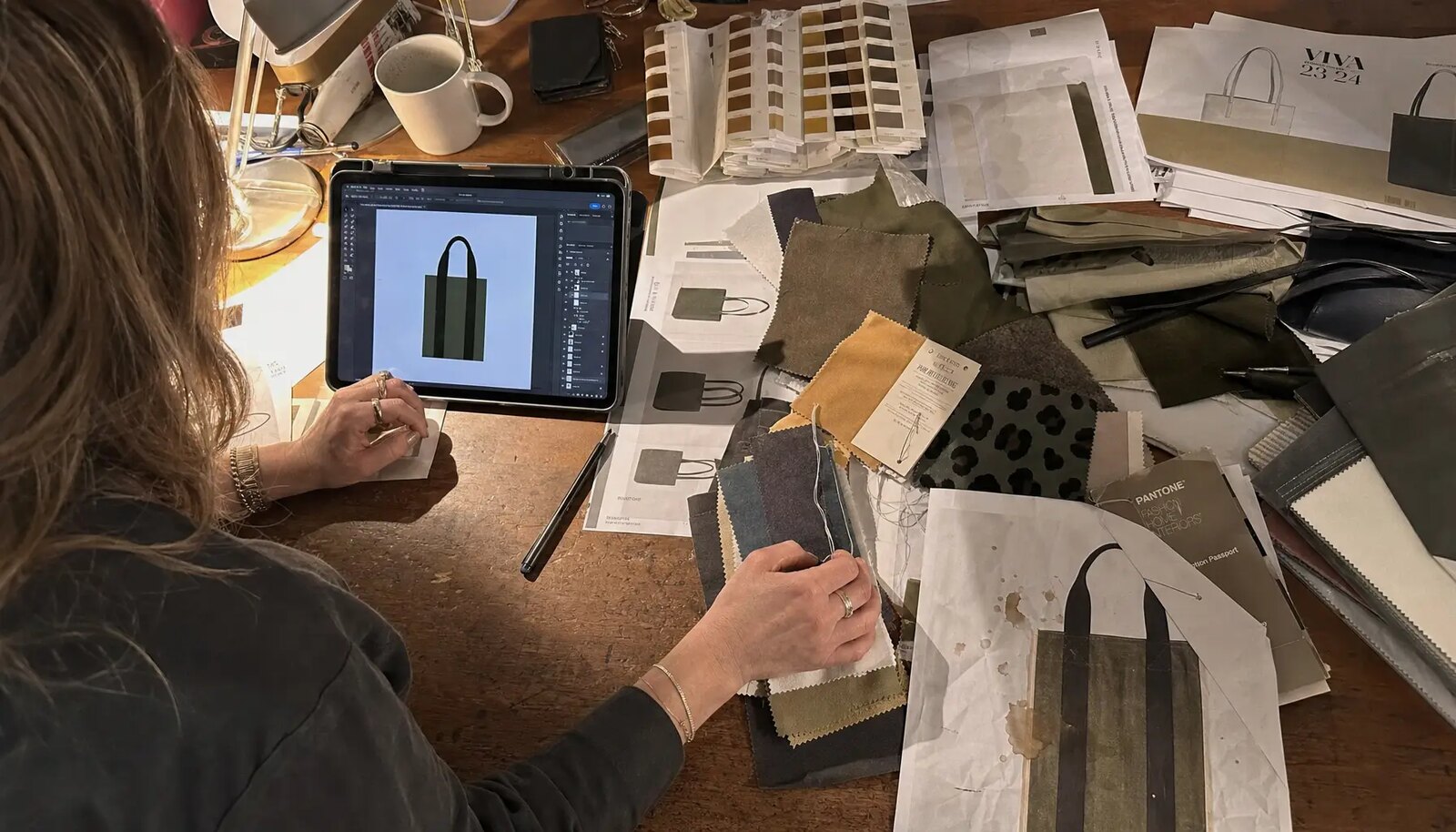
Start with the buying risk, not the mockup
Canvas grocery totes are attractive for coffee roasters because they can carry the items customers actually buy: 250 g or 340 g coffee bags, 1 kg bags, filters, cups, small brewers, tasting cards, and subscription pickup orders. The same construction that makes the tote useful also makes logo placement easy to misjudge. Gussets pull the side panels inward, reinforced handles occupy the top area, and heavier canvas does not behave like a flat artboard.
For a procurement buyer, the central question is not whether the logo looks balanced in a PDF. The question is whether the finished bag has a repeatable decoration area after sewing, pressing, folding, packing, and normal handling. A mark can appear centered on the cut panel and still look high, tilted, crowded, or low once the tote is assembled and filled.
This wholesale canvas grocery totes for coffee roasters logo placement guide turns visual approval into measurable instructions. The supplier should know the finished size, safe print area, logo dimensions, reference points, print method, sample stage, packing method, and inspection tolerance before bulk production starts. When those details are written into the quote and purchase order, final inspection becomes a measured check rather than a debate about taste.
- Treat logo placement as a product specification, not a late artwork note.
- Approve placement on a sewn sample, and also check the tote filled with realistic coffee retail items.
- Require logo size and position in millimeters.
- Check handle stitch boxes before approving any high front-panel artwork.
- Keep the approved artwork file, control sample, and QC tolerance in the same purchase record.
Define the finished tote before placing the logo
A common retail grocery tote for coffee programs falls around 380-420 mm wide, 350-380 mm high, and 120-180 mm deep. That range gives enough capacity for grocery use while staying practical for cafe shelves, market stalls, ecommerce add-ons, and carton packing. The quote should say whether these are finished measurements after sewing and pressing. Cut-panel dimensions are larger and should not be used for buyer comparison unless the finished size is also stated.
Fabric weight belongs in the same early discussion. For many roaster merchandise programs, 10-12 oz canvas, roughly 280-340 GSM as finished fabric, is a practical range. It offers more structure than lightweight promotional cotton and usually prints more cleanly than very thin fabric. Moving to 14-16 oz can create a more substantial feel, but it also increases seam bulk, slows some decoration processes, and often raises carton volume. Dropping to 6-8 oz can reduce cost, but loaded bags may sag and the print can show more fabric ripple.
Handles affect both function and artwork. A shoulder-carry tote often uses a finished handle drop of about 250-300 mm, with cotton webbing or self-fabric handles around 25-35 mm wide. The reinforcement stitch box may extend 35-60 mm below the top hem. If the logo sits near the top opening, that stitch box becomes part of the artwork boundary. Ask for handle width, finished drop, handle base location, stitch-box dimensions, and reinforcement pattern before approving the logo.
- State finished size as width x height x gusset, measured after sewing and normal finishing.
- Use +/-10 mm as a common body-dimension discussion point, then confirm the factory's actual tolerance.
- Specify top hem depth because it reduces upper logo clearance.
- Specify handle drop and stitch-box size, not only handle length.
- If the tote may carry heavy retail goods, ask for a practical load test or handle pull test method.
Calculate the printable area, not the panel size
The front panel is wider and taller than the area that can be decorated reliably. Start with the finished front width, then deduct side seam allowance and the visual pull created by the gusset. From the top, deduct the folded hem, handle stitch boxes, and any clearance needed for the screen frame, platen, transfer press, or embroidery hoop. From the bottom, deduct the area that rolls toward the base when the bag is filled.
On a 400 mm wide x 360 mm high x 150 mm gusset tote, the practical front safe print field may be closer to 260-320 mm wide and 180-240 mm high, depending on handle placement and decoration process. That does not mean the logo should fill the whole field. It means the buyer and supplier have a shared boundary. A 220 mm wide roaster wordmark may sit comfortably, while a 300 mm version may push into side pull, require a larger screen, or need tighter placement control.
Write reference points in plain measurement language. The most useful vertical reference is often the distance from the finished top hem edge to the top edge of the printed artwork. Horizontally, use finished side seams to artwork edges, plus a centerline check. If the factory uses artwork center as the measuring point, record that method. Mixed reference points are one of the quiet ways a good sample turns into inconsistent bulk production.
- Request a technical sketch showing the safe print area.
- Keep readable text at least 20-25 mm away from side seams on gusseted bags.
- Avoid small type near the bottom curve or gusset fold.
- Measure the logo top edge, not only the artwork center.
- Confirm whether front and back panels have the same printable area.
Choose placement by sales channel
A tote sold as cafe merchandise needs different branding from a gift-with-purchase bag or a subscription pickup tote. Retail merchandise usually benefits from a clear front-center mark that photographs well, reads on a wall display, and still looks intentional when carried. A pickup tote may need bolder visibility at a market. A wholesale gift tote may perform better with quieter branding, because the recipient is more likely to reuse it.
For many roasters, a centered front print around 180-240 mm wide is the most reliable starting point. It is visible without crowding the handle bases, side seams, or gusset pull. Tall stacked logos should be checked against handle stitch depth. Long horizontal wordmarks should be checked against side clearance. If the brand system includes both an icon and a wordmark, approve the exact version at actual size, not a scaled presentation slide.
Alternative placements can look strong when the supplier can control them. A lower-corner mark can feel more retail and less promotional, but skew and offset become more noticeable. Side gusset branding can work on wide-gusset totes, especially for roast icons, origin names, or short vertical text. Detailed crests, certification copy, and thin lettering should stay away from fold lines unless the distortion is deliberately approved on a physical sample.
- Use front-center placement for broad retail and ecommerce visibility.
- Use lower-corner placement only when the factory can hold skew and offset consistently.
- Use side gusset print for simple secondary branding, not detailed artwork.
- Avoid artwork crossing from front panel into gusset unless the sample proves it works.
- Test the filled-tote view because customers do not carry a flat rectangle.
Match print method to canvas and artwork
Screen printing is usually the most practical decoration method for bulk canvas grocery totes. It suits solid one-color or two-color coffee roaster logos, gives a familiar textile hand feel, and scales efficiently at wholesale quantities. On natural canvas, dark spot colors such as black, brown, navy, or green are usually straightforward. On black, navy, brown, forest green, or other dyed canvas, pale ink often needs a white underbase, double hit, or flash curing to reach acceptable opacity.
Heat transfer can be useful for short runs, multicolor artwork, gradients, or designs that are difficult to separate into spot colors. The buyer risk is hand feel and edge behavior. A large transfer on textured canvas may feel like a film instead of an integrated print. Review the sample on the actual canvas color, then fold it, rub it lightly, and inspect the edges after the material has cooled and cured.
Embroidery can create a premium badge effect, but it is not a simple replacement for a large printed wordmark. Dense embroidery can pucker canvas, stiffen the panel, and add bulk on the reverse side. It also needs clearance from top hems, seam stacks, and handle bases so the frame can hold the panel properly. For coffee roaster totes, embroidery often works best as a small badge, side label, or compact icon rather than a large front logo.
- Use screen print for most one-color bulk roaster tote programs.
- Quote underbase and double-hit charges separately on dark canvas.
- Approve transfers for hand feel, edge lift, shine, and fold behavior.
- Keep embroidery small and away from seam bulk.
- Ask whether decoration is done before sewing or after assembly.
Build an RFQ that avoids false price comparisons
MOQ is rarely a single clean number. A supplier may offer 300-500 pieces for a stock natural canvas body with a one-color front print, but require 1,000 pieces or more for custom size, custom dyed fabric, custom handle color, custom labels, or special packing. Another supplier may quote a lower quantity by using an existing tote body with different handle spacing, a narrower gusset, or a smaller printable area. Without matching construction, the cheapest quote may not be quoting the same bag.
A strong RFQ separates the blank bag cost, decoration cost, setup or screen charge, sample cost, packing cost, and special handling. It should ask for price breaks at realistic quantities such as 300, 500, 1,000, and 2,000 pieces if the roaster expects reorders. It should also identify what happens if the logo becomes 20 mm wider, adds a second location, changes from natural to dyed canvas, or needs a white underbase.
Do not leave freight for later if the purchase decision depends on cost. Canvas grocery totes are bulkier than flat promotional bags. A small change in gusset depth, handle length, fabric weight, or folding method can reduce units per carton and raise freight cost. Ask for carton dimensions, gross weight, net weight, pack count, and estimated CBM with the quote so procurement can compare landed cost, not just unit price.
- Request pricing by quantity break, not only MOQ.
- Separate bag body, print, setup, sample, packing, and labeling costs.
- Ask which construction details are stock and which are custom.
- Confirm whether quoted print area covers front only, back, gusset, or multiple locations.
- Compare CBM and carton count before choosing the lowest unit price.
Use samples as control documents
A pre-production sample should approve more than color. It should confirm the actual fabric, finished size, gusset depth, handle drop, stitch pattern, logo size, logo position, ink opacity, print hand feel, and packing fold. Measure the distance from the finished top hem to the artwork top edge. Check horizontal centering against the finished bag width. Then fill the tote with a realistic load, such as several coffee bags and a mug, to see whether the logo still reads correctly.
If the supplier prints on cut panels before sewing, the decoration surface is flatter and may give cleaner print conditions. The tradeoff is that sewing tolerance can shift the final visual placement. Ask how panels are marked and how seam allowance is controlled. If the supplier prints on finished bags, the print is applied to the assembled product, but gusset thickness and handle bulk can affect support under the print area. Ask how the factory controls tension, platen position, and registration.
Sample approval notes should be specific enough for another inspector to use without guessing. Record the artwork file name, print size, ink color target, print method, underbase requirement, top-edge measurement, centerline measurement, allowed tolerance, and carton fold method. Photograph the sample from the front, side, inside, handle junction, and folded packing view. Keep one retained sample with the factory and one with the buyer.
- Approve actual-size artwork, not only a scaled mockup.
- Do not allow later resizing without written revision.
- Check cured ink, not only fresh ink.
- Fold and unfold the sample to check cracking, blocking, and pressure marks.
- Tie sample approval notes to the purchase order.
Write QC tolerances before production
Final inspection should focus on visible branding and functional construction. A tote can be usable but commercially unacceptable if the logo is crooked, low, too close to the handle base, printed into a gusset fold, or inconsistent across cartons. For standard front-logo layouts, many buyers discuss +/-5 mm for logo center deviation and vertical placement. The right number depends on artwork size and construction, but it must be written before production begins.
Skew deserves its own check. A logo can be centered and still look tilted against the top hem. Define the reference line, usually the finished top hem or the approved control sample. Inspectors should also check print defects such as pinholes, ghosting, double image, drag marks, blocked mesh marks, rough edges, poor opacity, ink bleeding, color contamination, and unwanted print overlap into stitch lines.
Construction defects belong in the same inspection plan. Finished body dimensions may use a working tolerance such as +/-10 mm unless the supplier agrees to something tighter. Handle drop may also use +/-10 mm, but premium programs can request tighter control if the factory confirms it. Inspect skipped stitches, loose reinforcement, twisted handles, sharp thread ends, stains, mildew odor, oil marks, shade panels, and large slubs outside the approved fabric standard.
- Set logo center and vertical tolerance in millimeters.
- Check skew against a defined horizontal reference.
- Reject print overlap into stitch boxes unless approved in the control sample.
- Pull inspection pieces from multiple cartons and carton positions.
- Define acceptable natural canvas variation before bulk production.
Control dyed canvas and material claims
Many coffee roasters choose natural canvas because it suits the category visually and tends to be cost effective. Dyed canvas can look excellent, but it adds sourcing and printing controls. Dark colors need shade approval, ink opacity testing, and crocking review. A white or cream logo on black or forest green canvas may require an underbase or double hit, and those steps can slightly change edge sharpness and hand feel.
If recycled cotton, organic cotton, or certified material is part of the product promise, request documentation at RFQ stage. Do not add sustainability claims to packaging, ecommerce listings, or cafe signage until the supplier has confirmed what can be documented for that exact order. Recycled cotton canvas may show more fiber and shade variation than conventional cotton, so the approved sample should define what variation is acceptable.
Shade tolerance should not be left as a vague match to sample. For dyed canvas, ask whether approval will use a lab dip, bulk fabric swatch, or previous order reference. For repeat orders, ask whether the fabric comes from the same dye lot or a new lot. Color changes can affect logo placement work indirectly because ink build, opacity, curing, and drying behavior may change even when the artwork file stays the same.
- Approve dyed fabric with a physical swatch or lab dip before bulk cutting.
- Ask for crocking review on dark or saturated colors.
- Quote underbase and opacity testing separately from the base print.
- Request documentation before making recycled, organic, or certified material claims.
- Set realistic limits for shade panels, slubs, and texture variation.
Plan packing and lead time around the logo
Packing can protect the logo or damage it. Canvas grocery totes have uneven bulk because of gussets, handles, seams, and heavier fabric. If cartons are packed too tightly, handle bases and seam stacks can press into printed faces and leave crease or pressure marks. If cartons are too loose, bags can shift and abrade. A practical packing method is usually flat-folded bags in inner bundles of 25-50 pieces, then export cartons sized to hold the stack without crushing the print.
Ask for carton data before purchase order release: pack count, carton dimensions, gross weight, net weight, and estimated CBM. A tote that looks only slightly larger on the table can materially change carton utilization. If the sales channel requires hang tags, barcode labels, paper bands, individual bags, or pack-by-store sorting, quote those requirements before production because they affect labor, materials, carton count, and inspection time.
Lead time follows the decision sequence. Lock the finished tote construction first, then logo size and position, then print method, then packing. A change in handle drop can move the stitch box and reduce printable height. A change from natural to black canvas can trigger underbase testing. A change from front print to front-plus-gusset print can add registration work and inspection time. Repeat orders move faster only when fabric, construction, artwork size, ink, and packing stay stable.
- Request packing that keeps printed faces away from handles and rough seams.
- Confirm inner bundle quantity and carton marks.
- State whether polybags are required, prohibited, or replaced with paper bands.
- Ask for milestone dates: sample approval, material booking, production, inspection, and ex-factory.
- Treat artwork, handle, color, and packing changes as schedule changes.
Specification comparison for buyers
| Spec decision | Recommended option | When it fits | Buyer risk to check |
|---|---|---|---|
| Finished body size | About 380-420 mm W x 350-380 mm H x 120-180 mm gusset for most retail grocery totes | Coffee bags, mugs, filters, brewers, farmers market sales, subscription pickup, and retail merchandise | Quote must state finished measurement after sewing and pressing, not cut-panel size; agree tolerance such as +/-10 mm on body dimensions unless the factory offers tighter control |
| Fabric weight | 10-12 oz canvas, roughly 280-340 GSM finished weight | Good balance of structure, printability, carton volume, and perceived retail value | Ask whether GSM is finished fabric or greige fabric before finishing; below 280 GSM can ripple and sag, while 14 oz+ can increase seam bulk, print handling time, and freight volume |
| Front logo safe zone | Centered front print, top of artwork commonly 70-90 mm below finished top hem | Default placement for roaster merchandise, wholesale gifting, cafe retail counters, and events | Deduct top hem, handle stitch boxes, side seam allowance, gusset pull, bottom curve, and platen access before approving artwork size |
| Logo size | 180-240 mm wide for most coffee roaster wordmarks on standard grocery totes | Readable branding without crowding the side seams or looking oversized when filled | Wider logos may require a larger screen, higher setup cost, slower handling, or tighter placement tolerance |
| Side gusset branding | Small repeat marks, origin names, roast icons, or short vertical text only | Wide-gusset totes where the side remains visible when packed or displayed | Detailed marks can break across the fold; ask whether the factory prints before sewing or after assembly and how registration is controlled |
| Print method | Screen print for solid spot-color logos; transfer for short multicolor runs; embroidery for small badges | Screen print is usually the most practical bulk route for cotton canvas totes | Dark dyed canvas may need white underbase, double hit, or flash curing; transfers need hand-feel approval; embroidery can pucker large panels |
| Base color | Natural canvas for cost control and forgiving print; dyed canvas when brand standards require it | Natural canvas with black, brown, navy, or green spot ink suits many roaster programs | Dyed canvas needs shade approval, crocking review, ink opacity testing, and sometimes different packing protection to avoid rub marks |
| MOQ path | Stock body with custom print often around 300-500 pcs per colorway; custom size, dye, handle, or fabric often 1,000 pcs+ | Useful for pilot merchandise runs and reorder programs | A low MOQ may rely on an existing body with fixed handle spacing, gusset width, and printable area; compare construction before comparing unit price |
| Handle spec | Cotton webbing or self-fabric handles, 25-35 mm wide, finished drop about 250-300 mm for shoulder carry | Comfortable for loaded coffee totes without hiding too much of the front panel | Handle stitch boxes may extend 35-60 mm below the top hem and reduce print height; request pull-strength or load test method if heavy goods are expected |
Buyer checklist before sampling
- State finished bag size as width x height x gusset, and specify that dimensions are measured after sewing, finishing, and normal pressing.
- Specify canvas weight in both oz and GSM, and ask whether the quoted number is finished fabric weight or nominal greige fabric weight.
- Define fiber content: conventional cotton, recycled cotton, cotton-poly blend, organic cotton, or another required composition, and request documentation only when it is needed for the sales channel.
- Confirm fabric color approval method: Pantone reference, lab dip, approved fabric swatch, or previous order standard.
- Define handle material, width, finished drop, reinforcement stitch pattern, stitch-box size, and whether the handle base may enter the visual logo area.
- Request a technical sketch showing top hem depth, side seams, gusset fold lines, bottom panel, handle stitch boxes, and the safe print area.
- Mark exact logo position from finished top hem, side seams, and vertical centerline; do not rely only on a centered PDF or mockup.
- Specify the included print size in millimeters, number of print locations, number of colors, ink type, and whether underbase or double hit is included.
- Confirm whether decoration is done on cut panels before sewing or on finished bags after assembly, because the inspection risks are different.
- Approve a physical pre-production sample with actual canvas, actual handle length, actual print scale, ink opacity, seam construction, and intended packing fold.
Factory quote questions to send
- What finished bag size, gusset width, top hem depth, handle width, handle drop, and handle reinforcement stitch pattern are included in your quoted unit price?
- Is the canvas weight quoted as finished fabric GSM or greige fabric weight before dyeing, washing, coating, or finishing?
- What construction tolerance do you offer for finished width, height, gusset depth, and handle drop, and how is it checked during production?
- What is the actual printable area on the front panel after deducting top hem, handle stitch boxes, side seams, gusset folds, bottom curve, and platen access?
- What print size, number of colors, number of locations, and setup charge are included, and what surcharge applies if the logo width increases by 20 mm?
- Will the logo be printed on cut panels before sewing or on finished bags after assembly, and what process controls keep placement repeatable?
- For black, navy, brown, forest green, or other dyed canvas, does the quote include white underbase, double hit, flash curing, opacity testing, and crocking review?
- What is the MOQ for a stock body with custom print, and what MOQ applies to custom size, custom dyed fabric, custom handle color, custom label, or custom packing?
- Which sample stages are available: digital layout, blank bag sample, fabric swatch, lab dip, print strike-off, printed pre-production sample, shipping sample, and retained control sample?
- How many days are needed for each sample stage, and when are materials booked against the order?
Quality-control points to confirm
- Finished bag width, height, and gusset should be checked after sewing and normal finishing. A common commercial tolerance is +/-10 mm for body dimensions, but the purchase order should state the agreed limit.
- Handle drop should be measured from the top opening to the highest point of the handle arc. A common working tolerance is +/-10 mm unless tighter control is agreed.
- Front logo center deviation should stay within the written tolerance, commonly +/-5 mm from the approved sample centerline for standard front layouts.
- Logo top-edge placement should stay within the written tolerance, commonly +/-5 mm from the approved measurement below the finished top hem.
- Print skew should be checked against the finished top hem or another approved reference line. Do not judge only by eye on a folded bag.
- No print should enter the handle stitch box, side seam allowance, bottom gusset fold, or base curve unless the approved control sample shows that overlap.
- Screen print edges should be clean, with no visible pinholes, ghosting, double image, drag marks, blocked mesh marks, ink bleeding, or color contamination.
- On dyed canvas, inspect ink opacity, crocking, and color migration risk, especially for white, cream, metallic, or pale ink colors on dark fabric.
- Embroidery should show no puckering beyond the approved sample, no broken threads, no rough backing exposure, and no distortion near seam stacks or handle reinforcement.
- Heat transfers should be checked for edge lift, cracking after folding, poor adhesion on textured canvas, excessive shine, and unacceptable hand feel.