Where Tote Failure Actually Starts
Canvas grocery totes for farmers market vendors do not fail in a lab-only way. They fail when a shopper loads produce, bread, jars, and flowers, then lifts the bag by one handle, sets it down on a damp stall floor, and uses it again the next week. That is why a durability checklist has to start with the actual carry cycle, not the catalog image. The tote must survive weight shift, moisture, repeated lifts, and the kind of use that happens when people are moving fast and not thinking about the bag itself.
For procurement, the cost of a weak tote is not limited to replacement units. A bag that stretches, frays, twists, or prints badly weakens trust in the brand printed on it. The right question is not whether the tote looks sturdy on paper. It is whether the bag stays square, carries the intended load, and still looks acceptable after normal market use. If a spec does not address those outcomes, the buyer is paying for appearance, not performance.
- Test the tote against the heaviest normal basket, not only an empty hand feel.
- Include repeated lift, set-down, and carry cycles in the approval plan.
- Treat handle failure and seam failure as the main rejection points.
- Check whether the tote still hangs square when lifted from one handle or one corner.
Write The Load Profile Before You Write The RFQ
The fastest way to get a vague quote is to ask for a tote before defining how it will be used. A bag for herbs and light produce is not the same product as a tote for jars, bottles, and mixed grocery loads. Weight alone does not explain the stress pattern. Dense items concentrate force at the handle anchors and bottom corners, so two bags with the same total load can behave very differently in use. That is why the buyer has to define the load profile first and the decoration second.
A usable RFQ should name three numbers: normal working load, peak working load, and the failure threshold used in testing. For many farmers market programs, a normal working range might sit around 5 kg to 7.5 kg, or 11 lb to 16.5 lb, while a stress test may go higher if the tote is meant for heavy groceries. The exact value should match the channel, but the structure matters more than the number. Once the load profile is written, the factory can recommend the right fabric, handle build, and reinforcement without guessing.
- State the bag's primary use case: produce, mixed groceries, gift retail, or resale.
- Define normal working load and peak load separately.
- Ask the factory to test the tote with mixed contents, not only a clean block weight.
- If the tote must sit upright on a stall, make stand-up behavior part of the spec.
Compare Fabric Weight And Finish Like A Buyer, Not A Swatch Collector
Canvas is not one uniform material. Two suppliers can quote the same tote size and still deliver very different performance because one uses a looser weave, another uses a tighter weave, and the finishing is different. For a standard grocery tote, 12 oz canvas, roughly 400-410 gsm finished weight, is often the best balance of structure, cost, and sewability. If the tote has to carry heavier goods, 14-16 oz, or about 475-545 gsm, adds strength, but it also raises stiffness, sewing time, and freight weight. That tradeoff should be intentional.
Do not let GSM be the only fabric decision. Ask for finished fabric weight after washing and finishing, not a raw or loom-side number that will move later. Also ask whether the cloth is pre-shrunk, bio-washed, or enzyme-washed, because each finish changes size stability, surface texture, and lint level. If the buyer needs repeat-order consistency or a clean shelf look, a controlled finish usually matters more than simply choosing the heaviest cloth. For farmers market programs, the better bag is usually the one that stays predictable.
- Use finished GSM, not only raw fabric weight, in the quote.
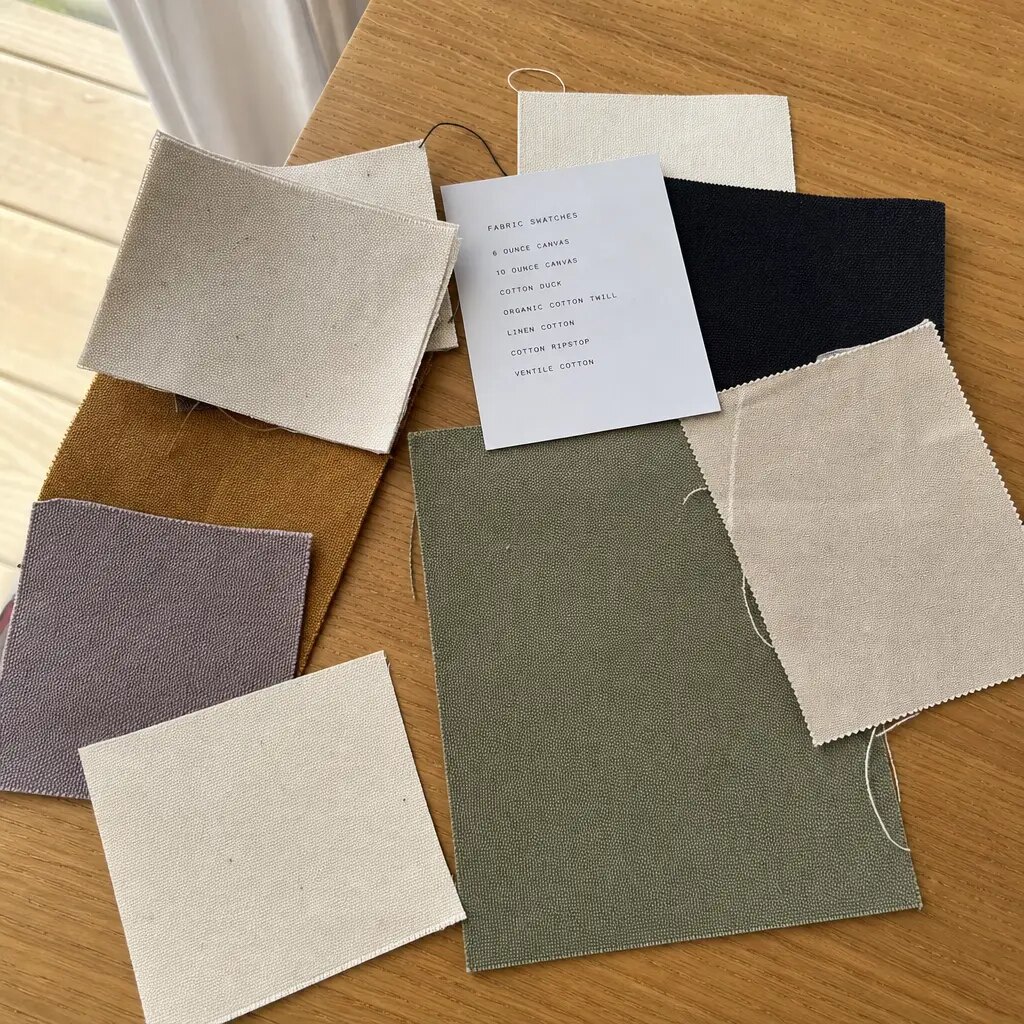
- Ask for a swatch from the exact fabric lot, not a brochure description.
- Specify whether visible seed flecks or natural slub are acceptable.
- If size consistency matters, require a shrinkage limit in the spec sheet.
Use Construction Choices To Control Risk, Not Just Cost
Buyers get a better tote when they compare construction choices against the load profile instead of against a generic price target. Self-fabric handles usually create a cleaner, more branded look and are common on retail-facing canvas grocery totes. Webbing handles usually spread force well and can feel firmer in the hand, but they change the visual profile and may increase cost. The right choice depends on whether the program is trying to sell a lifestyle object, a utility bag, or both.
Seams and reinforcement are where construction becomes structural. A box-X pattern or dense bar tack at both handle anchors is usually a better choice than a simple seam finish for a reusable grocery tote. Ask how many stitch passes are used, whether the reinforcement is mirrored on both sides of the bag, and whether the handle anchor is sewn through the full load path. If the tote has a gusset or box bottom, the side seams should not twist when the bag is full. A sample that hangs square under load is doing more work than a polished product photo ever will.
- Set the handle construction before you approve artwork or packing.
- Require reinforcement at both handle anchors, not only one side.
- Check handle symmetry by measuring from the top edge to each anchor point.
- If the bag will carry heavy groceries, ask for stronger thread and denser reinforcement.
Use The Comparison Table For Real Tradeoffs, Not Spec Theater
The comparison table above is meant to help buyers think through tradeoffs that matter in production. A heavier cloth can improve load-bearing performance, but it can also reduce hand comfort and raise freight cost. A softer finish can improve appearance and folding behavior, but it may weaken the crisp structure that helps the bag stand open at a market stall. A better quote is usually the one that matches the channel, not the one that wins on a single spec line.
When you compare suppliers, ask what changed between their answers. One vendor may be quoting a flat tote with a simple hemmed handle, while another is quoting a gusseted bag with box-X reinforcement and retail folding. Those are not interchangeable offers. If you want comparable pricing, every supplier needs to price the same fabric weight, the same handle build, the same print method, and the same carton pack. Otherwise the cheapest number is just the least complete quote.
- Compare suppliers on the same fabric, same print, same packing, and same Incoterm.
- Ask for line-item pricing if sample, setup, or packaging costs vary.
- Do not accept a quote that omits carton details if the bags are shipping internationally.
- If one vendor recommends a different build, ask for the performance reason in writing.
Print Durability Is Part Of Durability
A reusable tote can have perfect seams and still be rejected if the print cracks, transfers, or looks thin after a short period of use. For canvas grocery totes, one- or two-color screen print is often the most practical choice when the artwork is simple. It is repeatable, easy to control, and usually holds up well on a dense cotton substrate. The mistake is to force detailed art, tiny type, or gradients into a process that cannot carry that load cleanly.
Request the proof on the actual canvas color and the actual finish, not on generic white test cloth. Then check placement, edge sharpness, ink density, and cure. If the bag may be washed by the end user, ask the supplier to state the expected print behavior after that cleaning method. For private label programs, the print location matters too. A centered front mark suits a campaign run, while a smaller logo or side placement can age more gracefully on a tote that will be reused for months.
- Screen print is usually the strongest default for simple art and repeat orders.
- Request a strike-off or printed sample on the final canvas lot.
- Set a limit on ink colors before asking for pricing.
- Confirm the cure standard and rub resistance check used by the factory.
Build A Durability Test That Mirrors Market Use
A useful durability test does not need to be complicated, but it does need to be repeatable. Test the tote with a real working load, then watch handle stretch, seam opening, bottom sag, and print wear after several lift cycles. The sequence should be simple enough to repeat every time: fill, lift, carry, set down, repeat. That gives procurement a clean comparison from one supplier to the next and from one revision to the next. If the tote only passes when handled gently in a sample room, that is a warning, not a pass.
The checklist should cover three things: load, movement, and recovery. Load means the bag can hold the agreed weight. Movement means the handles and seams survive repeated lifting and shifting. Recovery means the tote returns to shape after unloading without lasting distortion. If the supplier can only show a hand-built prototype that passes, ask for the same test on production fabric and production stitching. For larger programs, keep the cycle count and test weight identical across suppliers so the results stay comparable.
- Test the sample with the real contents you expect in market use.
- Repeat the test on production fabric, not only on a hand-built prototype.
- Document what counts as failure: seam opening, handle tear, print crack, or distortion.
- Use the same cycle count for every supplier so results are comparable.
Quote Structure Should Make Hidden Costs Obvious
Most quote problems come from missing detail, not bad intent. If one supplier quotes a flat tote with one-color print, another quotes a gusseted bag with reinforced handles, and a third includes retail packing, the numbers are not comparable. A usable RFQ locks the fabric weight, finished dimensions, handle type, reinforcement pattern, print method, pack format, and shipping term. Once those items are fixed, the cost drivers become visible and the suppliers can price the same product instead of three different versions of it.
Ask for line-item logic rather than one all-in number. The factory should separate base bag cost, print setup cost, sample fee, packing cost, and any accessory or label charges. That makes it easier to compare direct factory offers, trading company offers, and stock program offers on equal footing. If the supplier cannot explain what changes the MOQ or what changes the setup fee, the quote is not mature enough for purchase. Buyers who insist on clean pricing structures usually get fewer surprises later.
- Compare offers on the same fabric, same print, same packing, and same shipping term.
- Ask for revision history between quote rounds so changes are traceable.
- Separate base bag price from setup, sample, and packaging charges.
- Do not accept a quote that omits carton details if the order ships through a warehouse or distributor.
Set Inspection Rules Before The First Lot Ships
Final approval should be based on a written spec sheet and a retained golden sample. The approved sample should show fabric shade, print placement, seam style, handle reinforcement, and packing exactly as agreed. When the first production lot arrives, compare random units against that signed sample, not against memory. Memory is not a quality standard, and verbal agreements rarely hold up when a buyer has to resolve a claim. The more the bag is reused, the more important that first approval record becomes.
For importers and retail buyers, the first shipment also sets the control level for repeat orders. If a small deviation is accepted without a written note, the next order can drift further. If a tighter tolerance is needed on print position or bag size, put that tolerance in the approval file and keep a photo record. A practical inspection plan usually includes 0 tolerance for critical defects, a named AQL plan for major and minor defects, and a clear hold or release rule for cartons that do not match the PO.
- Keep one sealed golden sample with the buyer and one at the factory.
- Compare first production against the signed sample, not a verbal promise.
- Write down any accepted deviation so the next PO does not reopen the issue.
- Keep photos of the approved sample and the first bulk lot in the same file.
Keep Reorders From Drifting
The first order is only useful if it creates a stable reference for the next one. Reorders drift when the buyer does not control fabric lot, print screen, handle source, carton format, or shade standard. The fix is simple: keep the spec sheet, the sealed sample, and the production photos together, then require the supplier to confirm whether any material or process has changed before the next run. That turns the second order into a controlled repeat, not a new sourcing exercise.
This matters even more for canvas grocery totes for farmers market vendors because the product is visible, tactile, and often bought on instinct. A bag that looks slightly different or feels slightly stiffer can still be technically acceptable and still trigger complaints from downstream buyers. The cheapest way to protect quality is not to inspect harder after the fact. It is to keep the specification tight enough that the factory cannot drift without notice.
- Reuse the same spec sheet number and revision date on every reorder.
- Ask the supplier to confirm whether fabric lot, ink batch, or handle source changed.
- If the bag is retail-facing, keep a photo reference for shade and print placement.
- Treat any material substitution as a formal change request, not an informal update.
Specification comparison for buyers
| Spec decision | Recommended option | Why buyers choose it | Tradeoff to verify |
|---|---|---|---|
| Fabric weight | 12 oz canvas, about 400-410 gsm finished weight, with a written tolerance of plus or minus 5% | Good balance of structure, price, and sewability for standard market produce and repeat retail use | Heavier or looser cloth can change hand feel, print sharpness, and freight cost; confirm finished GSM after wash and finishing |
| Heavy-load upgrade | 14-16 oz canvas, about 475-545 gsm, with reinforced handles and seams | Better when the tote may carry jars, bottles, or dense mixed groceries | Adds stiffness, sewing time, and carton weight; test whether shoppers still find it comfortable to carry |
| Fabric finish | Pre-shrunk, bio-washed, or enzyme-washed finish with shrinkage limits written into the spec | Improves size control and reduces surprise after handling or light washing | A softer finish can reduce the crisp, structured look; confirm the tote still stands open when loaded |
| Handle build | Double-layer self-fabric handles or 1 in to 1.5 in webbing with box stitching and bar tacks | Self-fabric looks cleaner; webbing usually spreads stress well and gives a firmer grip | Webbing changes the look and may cost more; self-fabric needs clean folding and stronger sewing control |
| Reinforcement pattern | Box-X or dense bar tack at both anchor points | More resistant to handle pull-out than a simple seam finish | A stronger pattern takes more sewing time and must be repeated consistently on production units |
| Bottom shape | 4 in to 5 in gusset or box bottom with balanced panel proportions | Helps the tote stand open on a stall table and fit bulkier items | Poor panel balance causes twist, droop, or uneven load distribution after repeated use |
| Decoration method | One- or two-color screen print on finished bags | Best mix of cost, readability, and durability for simple logos and market branding | Detailed art, gradients, or tiny text should not be forced into a print method that cannot hold them cleanly |
| Packing format | Flat-packed bulk cartons with moisture protection and clear carton marks | Reduces shipping cube and keeps inventory easy to receive and count | Overpacked cartons crush prints and corners; underfilled cartons waste freight space and raise unit cost |
Buyer checklist before sampling
- Write the tote's actual use case first: produce only, mixed groceries, or heavier retail purchases such as jars and bottles.
- Set a normal working load and a peak test load in both pounds and kilograms, and state whether the bag must survive repeated carry cycles or a single static hold.
- Lock fabric weight in finished GSM and ounces, and require the supplier to confirm whether the cloth is pre-shrunk, bio-washed, or enzyme-washed.
- Specify body width, body height, gusset depth, and handle drop, with a tolerance band for each critical dimension.
- Choose one handle build before quoting: self-fabric, webbing, or another option, then define handle width and reinforcement pattern.
- Select one print method, one artwork version, and a maximum ink-color count before setup pricing is requested.
- Ask for a pre-production sample on the actual fabric lot, a printed strike-off or sample, and one sealed golden sample for records.
- Require a written durability test method that names test weight, lift cycles, hold time, rub cycles, and failure criteria.
- Set shrinkage, shade, and print acceptance limits before the purchase order is issued so the factory cannot treat them as optional.
- Confirm carton pack count, carton dimensions, net and gross weight, pallet pattern if needed, and outer carton marks before release.
Factory quote questions to send
- What finished GSM will you quote, and what tolerance do you hold after washing and finishing?
- Is the canvas pre-shrunk, bio-washed, or only raw-washed, and what shrinkage percentage do you expect in warp and weft after testing?
- What are the exact finished dimensions for body width, body height, gusset depth, and handle drop, and what tolerance do you quote for each?
- What handle construction do you recommend for this load profile, and where are the stress points reinforced?
- What stitch density are you quoting on body seams and reinforcement points, and what thread size or type is used?
- Which print method are you quoting, how many colors are included, and what cure or rub test standard do you use to approve print quality?
- What is the MOQ per color and per artwork version, and how does it change if we change handle color, label type, or packing format?
- What are the sample fee, setup fee, and screen or plate fee, and are any of those credited after bulk order placement?
- What are the exact carton pack quantities, carton dimensions, gross weight, and outer carton marking format?
- What is your timeline for sample approval, bulk production after approval, and shipment readiness, and what usually causes delay?
Quality-control points to confirm
- Finished fabric GSM should stay within the agreed tolerance, typically plus or minus 5% unless the spec sheet is tighter.
- Finished dimensions should match the approved sample within plus or minus 1/4 in, or about 6 mm, for body width, body height, and gusset depth.
- Handle drop should match the approved sample within plus or minus 1/8 in, or about 3 mm, so carrying behavior stays consistent.
- After a wash or wetting test, shrinkage should not exceed 3% in warp or weft for a pre-shrunk program unless the spec allows more.
- Handles should survive 50 lift cycles at 125% of working load without seam opening, thread breakage, or tearing at the anchor point.
- A static hold at rated load for 30 minutes should not create handle elongation above 5% or visible permanent distortion at the opening.
- Screen print should survive 50 dry rub cycles and 20 wet rub cycles with no peeling, cracking, or visible color transfer to a white cloth.
- Stitch density should be about 7-8 stitches per inch on body seams and 8-10 stitches per inch at reinforcement points, with no skipped stitches in critical areas.
- If color is critical, the approved sample should be treated as the visual reference and panel-to-panel shade drift should not be obvious in normal daylight inspection.
- Pre-shipment inspection should use 0 tolerance for critical defects, with major and minor defects handled under a written AQL plan such as 2.5 for major and 4.0 for minor.