Start Carton Planning Before Tote Pricing
For university bookstores, the tote price is only one part of the buying decision. Custom canvas grocery totes are bulky compared with pens, lanyards, or folded apparel. A quote that looks competitive at the unit-price line can become expensive when the carton is oversized, underfilled, too heavy for manual receiving, or split across too many SKUs. Carton planning should start before the factory calculates the final price, not after the bags are finished.
The buyer's RFQ should describe both the product and the shipment. A bookstore may need totes for back-to-school welcome tables, campus grocery programs, alumni events, and daily checkout sales. Each use affects how the bag is folded, packed, labeled, and replenished. If the factory does not know whether the goods are going to a distribution center, a campus store backroom, or event pallets, it will usually default to the easiest packing method for production, not the most efficient method for the buyer.
- Treat pieces per carton as a quoted specification, not a warehouse detail to solve later.
- Limit carton gross weight to a receiving-friendly range agreed with the buyer's logistics team.
- Separate carton planning by tote size, fabric weight, print coverage, and inner packing choice.
- Use carton CBM to compare landed cost between suppliers, especially for bulky canvas programs.
Choose Fabric Weight for Use and Freight
A canvas grocery tote for a university bookstore normally sits between light promotional cotton and heavy-duty retail canvas. In practical terms, 10 oz to 12 oz canvas, roughly 340 to 407 GSM, is a common working range for a tote that must carry books, sweatshirts, snacks, drink bottles, and impulse retail items. Lighter fabric can reduce unit cost and carton weight, but it may collapse on display and feel too thin when students reuse it. Heavier fabric improves structure but increases bulk, carton count, and freight.
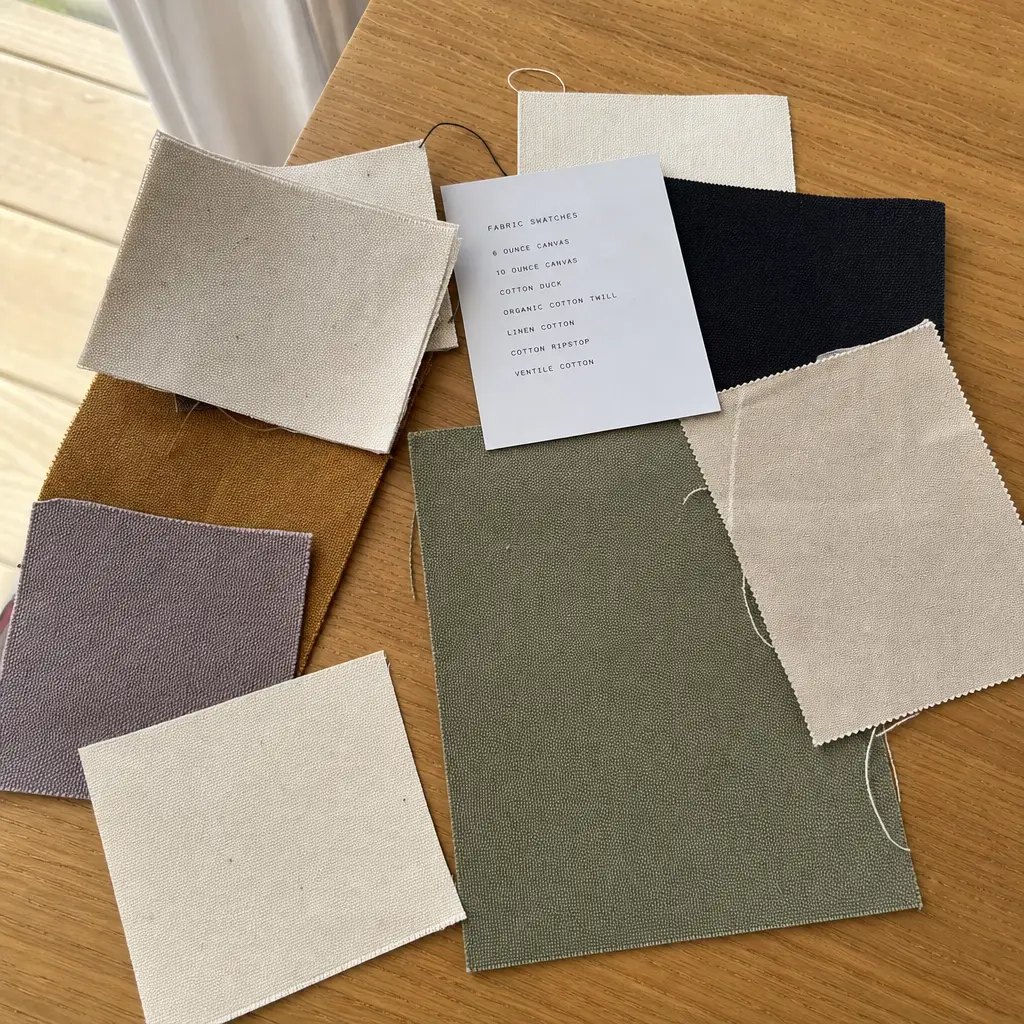
Buyers should avoid approving fabric by touch alone. Natural cotton canvas can vary in hand feel depending on yarn, weave, washing, and finishing. A 12 oz unwashed canvas may feel stiff; a washed version may feel softer but shrink more and cost more. Dyed canvas adds color consistency work and may need a separate fabric MOQ. For bookstore retail, the important acceptance point is that the fabric weight, color, and stiffness match the approved sample and still folds cleanly into the planned carton without permanent creasing that damages presentation.
- Use 8 oz to 10 oz only for low-cost orientation giveaways or short-term event bags.
- Use 10 oz to 12 oz for balanced bookstore grocery totes with reusable retail value.
- Use 14 oz or heavier only when premium positioning justifies higher carton cube and freight.
- Write both oz and GSM in the RFQ so factories in different markets quote the same material.
Lock the Bag Size Around Real Store Use
A grocery tote for campus retail is usually more useful with a boxed bottom than a flat promotional tote. A common finished size might be in the area of 15 to 17 inches wide, 14 to 16 inches high, with a 4 to 6 inch bottom gusset, but the final dimension should come from the bookstore's merchandise mix. If the bag must hold folded hoodies, notebooks, boxed gifts, and grocery items, the bottom depth matters as much as width and height.
Handle length also affects both user comfort and packing volume. A long shoulder handle improves daily reuse but creates more fabric or webbing inside each carton. A short hand-carry handle packs neater but may be less attractive for students walking across campus. The safest RFQ language defines finished handle drop, handle width, stitching method, and load expectation. Do not let suppliers quote only a front-panel size, because two totes with the same visible panel can have very different carton cube and carrying performance.
- Specify finished width, height, bottom gusset, side gusset if any, and seam allowance expectation.
- Define handle drop in finished measurement, not only total handle length before sewing.
- Use cross-stitch or bartack reinforcement at handle joints for heavier bookstore loads.
- Confirm whether the tote must stand open for cashier loading or can be a softer foldable style.
Print Method Changes Packing and Quality Risk
Most university bookstore grocery totes use screen printing because it handles bold logos, mascots, slogans, and sponsor marks well on canvas. Screen print is efficient for solid colors and repeat artwork, especially when the order quantity is stable. The buyer should define print size, print position, number of colors, Pantone references, and whether the artwork prints on one side, two sides, or across seams. Larger ink coverage can stiffen the panel and make folding marks more visible after carton packing.
Heat transfer, digital print, and embroidery can work, but each changes the risk profile. Heat transfer is useful for gradients or smaller runs, yet the film must bond properly to textured canvas and survive folding. Digital print may support complex artwork but can vary with fabric surface and pretreatment. Embroidery adds premium texture but may pucker canvas and increase cost. For licensed university artwork, the pre-production sample should include the final fabric, final print method, and the same folding method planned for bulk cartons.
- Screen print works best for bold marks, limited colors, and predictable campus bookstore quantities.
- Heat transfer needs crease and adhesion testing if bags are packed tightly.
- Embroidery should be tested for puckering and backing visibility on lighter canvas.
- Print approval should include color, position, edge sharpness, opacity, and rub resistance.
Build MOQ Logic by Fabric, Artwork, and Carton
MOQ problems often appear when a university bookstore wants one tote size but several designs: main bookstore logo, alumni weekend graphic, athletic department mark, and parent weekend artwork. The factory may be able to keep one fabric and bag construction MOQ, then split printing across designs. However, each artwork can add screen setup cost, production changeover, packing separation, and more carton labels. The quote should show MOQ by bag body, fabric color, print design, and packing style separately.
The cleanest production plan is usually one shared blank tote specification with controlled artwork splits. If each department changes the fabric color, handle color, label, hangtag, and carton label, the order becomes several small jobs, not one efficient bulk program. For distributors and importers, this difference matters when comparing suppliers. One factory may quote a low MOQ but charge heavily for setup and carton separation; another may need a higher base quantity but deliver lower total landed cost because production and packing stay simple.
- Group artwork versions under one common tote body when possible.
- Separate screen setup charges from unit price so small artwork splits are visible.
- Avoid unnecessary fabric color splits unless the bookstore needs them for retail merchandising.
- Plan carton labels by SKU before production so mixed artwork does not create receiving errors.
Calculate Cartons From Fold Method and Weight
Carton planning for custom canvas grocery totes depends on more than bag dimensions. Fabric weight, handle material, boxed bottom depth, print stiffness, inner packing, and fold direction all change how many pieces fit safely. A 10 oz flat-packed tote may fit 100 pieces per carton, while a 12 oz boxed-bottom tote with longer handles and individual polybags may need 50 pieces or fewer. The quote should include pieces per carton, carton size, net weight, gross weight, and total CBM for each SKU.
Receiving teams usually dislike cartons that bulge, split, or weigh too much for one person to handle. Overpacking also creates quality problems: deep creases across printed artwork, crushed bottom corners, and handle deformation. Underpacking wastes freight space and raises landed cost. For bookstore orders going through campus mailrooms or retail backrooms, the carton needs to be strong enough for stacking but not so large that staff cannot move it safely. A practical carton trial during sampling is worth more than a theoretical packing count.
- Set a maximum carton gross weight in the RFQ, commonly based on the buyer's warehouse policy.
- Request a packing photo showing bag fold direction, bundle count, carton fill level, and carton seal.
- Compare total CBM per 1,000 pieces when evaluating supplier quotes.
- Use separate carton counts for each SKU instead of rounding the total order into one estimate.
Select Inner Packing for Store Operations
Inner packing should match how the bookstore will receive, store, and sell the totes. Bulk packing is usually the lowest-cost and lowest-waste option when totes are sold at checkout or distributed at events. Bundles of 10 or 25 with a paper belly band can help store staff count quickly without adding much material. Individual polybags may be necessary for e-commerce fulfillment, premium retail display, or protection from dust during long storage, but they add cost, labor, plastic use, and carton cube.
If the tote needs a hangtag, barcode, retail price sticker, or campus licensing label, decide where that label goes before bulk production. A barcode placed on a hangtag may be easy for cashiers but can tangle during packing. A sticker on the inner polybag works for online picking but may be removed before store display. The buyer should define whether cartons are retail-ready, event-ready, or warehouse-only. That one decision prevents late repacking, relabeling, and labor charges after goods arrive.
- Use bulk pack for low-waste event distribution or checkout replenishment.
- Use paper-banded bundles when store staff need quick counting by shelf or event table.
- Use individual polybags only when presentation, dust control, or online fulfillment requires it.
- Confirm barcode placement and scan readability before approving final packing.
Approve Samples With Carton Behavior Included
A pre-production sample should not stop at fabric, sewing, and print. For this product, the buyer also needs to know how the tote behaves after being folded and packed. A beautiful sample on a table can still fail in shipment if the print cracks at the fold, the bottom gusset creases badly, or the handles twist under carton pressure. The sample approval should include one packed sample or at least a packing trial photo using the proposed carton method.
Sampling should move in stages when the artwork or licensing process is strict. First, approve fabric swatch and color. Second, approve artwork proof or print strike-off. Third, approve a finished pre-production sample with actual handle reinforcement, label, print, and packaging. For university marks, the bookstore may need approvals from a licensing office, athletics department, or third-party brand manager. Build this into the timeline instead of treating it as a quick artwork confirmation.
- Measure the finished sample flat and compare against the spec sheet before bulk approval.
- Fold the sample the same way it will be packed and review print crease marks after 24 hours.
- Load test the handles using a realistic bookstore weight, such as books and bottled goods.
- Keep one approved sealed sample with the buyer and one with the factory production line.
Control Lead Time Around Bookstore Calendar Risk
University bookstore demand is calendar-driven. Back-to-school, graduation, alumni weekend, sports seasons, and orientation programs do not move because a vessel is late or artwork approval takes longer than expected. The production schedule should be built backward from the required in-store date, not from the supplier's standard lead time. Canvas totes need time for fabric sourcing, cutting, sewing, printing, drying, inspection, packing, export booking, transit, customs clearance, inland delivery, and store receiving.
Lead time risk rises when the order includes dyed fabric, multiple artwork versions, licensed marks, retail labels, or special carton requirements. A practical quote separates sample lead time, production lead time after approval, inspection window, and shipping estimate. Air freight can solve a small shortage, but it is a poor default plan for bulky canvas grocery totes. For importers and distributors, it is better to split the program into a planned sea shipment plus a small controlled reserve than to rely on emergency air freight.
- Start artwork and sample approval before the final purchase order if campus approvals are slow.
- Add buffer for fabric dyeing or custom handle color instead of treating them as standard stock.
- Schedule final inspection before cartons leave the factory, not after goods reach the forwarder.
- Use partial air shipment only for urgent event quantity, not the entire bulky order.
Compare Quotes by Landed Cost and Evidence
A proper comparison for custom canvas grocery totes shipping carton planning for university bookstores should include more than unit price. Buyers need to compare the same fabric, same finished size, same handle construction, same print method, same inner packing, and same carton plan. If one supplier quotes 100 pieces per carton and another quotes 50, the freight and warehouse handling picture changes. If one quote excludes screen setup, carton labels, hangtags, or final inspection support, the apparent savings may disappear.
Supplier evidence matters. A professional factory or sourcing partner should be able to provide fabric weight confirmation, sample photos, print test details, carton dimensions, packing list format, and inspection points before the order is awarded. The best quote is the one that reduces unknowns. When buyers force every supplier to quote the same carton data and QC requirements, the comparison becomes commercial instead of cosmetic.
- Compare unit price together with total CBM, carton count, gross weight, and setup charges.
- Require the same Incoterm across quotes, such as FOB port or DDP destination, to avoid false savings.
- Request carton and packing evidence before deposit when the order has tight receiving rules.
- Reject quotes that cannot separate product cost, print setup, packing cost, and logistics data.
Specification comparison for buyers
| Spec decision | Recommended option | When it fits | Buyer risk to check |
|---|---|---|---|
| Fabric weight | 10 oz to 12 oz canvas, about 340-407 GSM | Bookstore grocery totes carrying books, apparel, snacks, and gifts without feeling too heavy at checkout | Under-10 oz fabric may collapse and look cheap; over-14 oz increases carton weight and freight cost |
| Bag construction | Boxed bottom with inside overlock seams and reinforced handle cross-stitch | Campus retail totes displayed folded or hanging and reused for groceries or textbooks | Flat totes pack tighter but hold less volume; weak handle stitching fails during student use |
| Print method | Screen print for 1-3 solid colors; heat transfer only for gradients or short runs | University marks, mascot graphics, store slogans, and sponsor logos with consistent brand color | Large ink coverage can stiffen panels; untested transfers may crack on coarse canvas |
| Carton packing style | Folded flat in same direction, 50-100 pcs per export carton depending on size and fabric | Warehouse receiving teams need predictable carton counts and fast replenishment by SKU | Overpacked cartons deform handles, exceed manual handling limits, and create receiving shortages |
| Inner packaging | Bulk pack with paper belly band or recyclable polybag only when retail presentation requires it | Bookstore backroom replenishment, orientation events, or online order kitting | Individual bags raise labor, material, carton cube, and campus sustainability objections |
| MOQ planning | One base fabric MOQ with color/print split by SKU after factory review | Multiple campus departments need related designs but one shared tote size | Too many small artwork splits create screen setup charges and uneven shipment cartons |
| Sampling route | Digital artwork proof plus physical pre-production sample before bulk cutting | Licensed university artwork needs approval from brand, bookstore, and factory before production | Approving only a flat mockup misses handle length, fabric feel, shrinkage, and carton packing behavior |
| Shipment method | Sea freight for planned semester buys; air only for shortage recovery or event deadlines | Back-to-school, alumni weekend, graduation, and holiday bookstore replenishment | Air freight on bulky canvas cartons can exceed the value of the tote order |
| Supplier evidence | Request carton photos, packing diagram, fabric GSM report, print test, and final AQL report | Importers comparing quotes from factories or trading companies | A low unit price without carton dimensions and gross weight hides landed-cost differences |
Buyer checklist before sampling
- Define finished tote size, boxed bottom depth, handle length, and intended carrying load before requesting price.
- Specify fabric as ounces and GSM, including whether natural, dyed, washed, or organic cotton is required.
- Provide artwork size, print colors, Pantone targets, logo placement, and licensed-mark approval process.
- Set carton quantity per SKU, maximum carton gross weight, and whether cartons must match bookstore receiving rules.
- Request carton dimensions, net weight, gross weight, carton count, CBM, and pieces per carton in every quote.
- Approve one pre-production sample packed in the proposed fold method before bulk fabric cutting.
- Require handle pull strength, seam inspection, print rub test, and carton drop or compression checks where relevant.
- Confirm inner packing choice: bulk pack, belly band, individual polybag, hangtag, barcode sticker, or retail-ready bundle.
- Lock carton marks, SKU labels, purchase order number, destination, and mixed-carton rules before production starts.
- Build schedule buffer for artwork approval, sample transit, licensed logo review, fabric dyeing, inspection, and vessel booking.
Factory quote questions to send
- What is the exact fabric specification in oz, GSM, weave, yarn count if available, and shrinkage expectation after finishing?
- What are the finished bag dimensions, bottom gusset construction, handle size, handle webbing material, and stitch type?
- How many pieces fit in one export carton under the proposed fold method, and what are the carton dimensions, net weight, gross weight, and CBM?
- Will each SKU ship in separate cartons, mixed cartons, or master cartons with inner bundles, and how will shortages be controlled?
- Which print method is included in the unit price, how many colors are included, and what is the setup charge for extra screens or positions?
- What sample stages are included: material swatch, strike-off, blank bag sample, printed sample, and pre-production sample?
- What MOQ applies to fabric, dye color, bag size, print design, and carton packing style separately?
- What QC standard will be used for fabric defects, sewing defects, print defects, measurement tolerance, carton strength, and barcode accuracy?
- What is the production lead time after sample approval and deposit, and how many days are needed for final inspection and export documents?
- Can the supplier provide packing photos, loading photos, carton drop-test photos, and a final packing list before balance payment?
Quality-control points to confirm
- Fabric weight tolerance should normally stay within an agreed range such as plus or minus 5 percent of the approved sample.
- Finished dimensions should be measured on a flat bag, with separate tolerances for width, height, gusset, and handle drop.
- Handle attachment should use reinforced stitching with no skipped stitches, loose threads, needle holes, or weak bartacks.
- Print position should be controlled with a measurement tolerance from top seam and side seam, not judged by eye only.
- Ink adhesion should pass a basic rub test and should not crack after folding in the carton packing method.
- Cartons should stay within the buyer's maximum gross weight and should not bulge after full packing.
- Carton marks, SKU labels, barcodes, and purchase order references should match the final packing list exactly.
- AQL inspection should separate critical defects, major defects, and minor defects so carton and label errors are not hidden inside sewing results.