Start With the Carton, Not Just the Bag
Wholesale canvas grocery totes look uncomplicated until they are tied to a trade show calendar. Then the bag becomes part product, part logistics job. It has to be sewn correctly, printed cleanly, counted accurately, packed into cartons that hold their shape, and routed through a receiving path that may include a factory, forwarder, 3PL, hotel, show decorator, convention center dock, and booth team.
That is why carton planning belongs in the tote specification. A low unit price can become expensive when cartons are too large for booth storage, too heavy for manual handling, mislabeled for event receiving, or bulky enough to force urgent air freight. The bag may be fine. The plan around the bag may still fail.
Procurement teams should compare suppliers on the same pack-out. If one quote assumes 100 pcs per carton and another assumes 50 pcs per carton, the price comparison is incomplete. The bigger carton may save corrugate cost, but it can create higher handling risk. The smaller carton may cost slightly more, yet make receiving, allocation, and counting much easier.
For wholesale canvas grocery totes for trade show exhibitors, shipping carton planning should be visible from the RFQ stage. Ask for estimated carton dimensions, pieces per carton, gross weight, net weight, total cartons, total CBM, and pallet information before the purchase order is finalized. Then confirm the numbers with a physical packing test before mass packing.
- Compare quotes using the same tote size, fabric weight, print method, packing style, and carton quantity.
- Set the required in-hands date separately from the event opening date; advance warehouse deadlines may be earlier.
- Require carton dimensions, gross weight, net weight, total cartons, total CBM, and packing photos before freight booking.
- Treat carton marks and packing lists as part of the order specification, not as last-minute warehouse paperwork.
Specs That Change Carton Volume
The carton plan starts with the physical tote. Fabric weight, gusset depth, handle length, reinforcement, bottom construction, and folding method all change how many bags fit in a carton. A 12 oz gusseted grocery tote does not pack like a 6 oz flat promotional tote. It has more fabric, more seam bulk, more handle thickness, and usually more trapped air after folding.
A useful trade show grocery tote often sits around 38 x 40 cm with a 10-12 cm gusset, or roughly 15 x 16 x 4-5 in. That size can carry brochures, small sample boxes, line sheets, snacks, light apparel, or folders without feeling oversized. A deeper gusset may be right for food, cosmetics, bottles, or boxed samples, but buyers should expect higher CBM and fewer pieces per carton.
Finished tolerance needs to be written down. Canvas totes are cut-and-sewn goods, so finished dimensions will not be exact to the millimeter. Many commercial orders use about +/-1 cm for body width and height and about +/-1.5 cm for handle length, but the supplier should confirm what is realistic for the fabric, construction, and quantity.
Open dimensions help the marketing team judge the look. Folded dimensions help logistics plan the cartons. Ask the factory to fold the sample exactly as it intends to fold bulk production. Handles should be laid consistently so stacks sit flat. If handles form a ridge down the center of the carton, the carton may bulge even when the piece count looks reasonable on paper.
- Light giveaway tote: 8 oz canvas, flat body or small gusset, lower carton weight, best for simple printed materials.
- Balanced exhibitor tote: 10 oz canvas, 10-12 cm gusset, reinforced handle joins, suitable for mixed event contents.
- Retail-style grocery tote: 12 oz canvas, boxed bottom, stronger handfeel, higher carton weight and cube.
- Premium heavy tote: 14 oz or heavier, stronger retail impression, often inefficient for large one-time giveaway volume.
- Oversized tote: more branding space, but higher freight cube, harder storage, and lower pallet efficiency.
Canvas Weight and Fabric Control
Canvas weight is commonly quoted in ounces per square yard, while procurement teams often ask for GSM as well. Both are useful, but the conversion is not a perfect promise. A 10 oz cotton canvas is often around 270-280 GSM, and a 12 oz cotton canvas is often around 320-340 GSM. Yarn count, weave density, finishing, washing, humidity, and mill tolerance can move the number.
The supplier should state whether the quoted weight is greige weight, finished weight, washed weight, or simply its standard finished fabric description. This detail matters. Cotton canvas can tighten, shrink, soften, or stiffen during finishing. Two fabrics with similar names can feel different in the hand and pack differently in the carton.
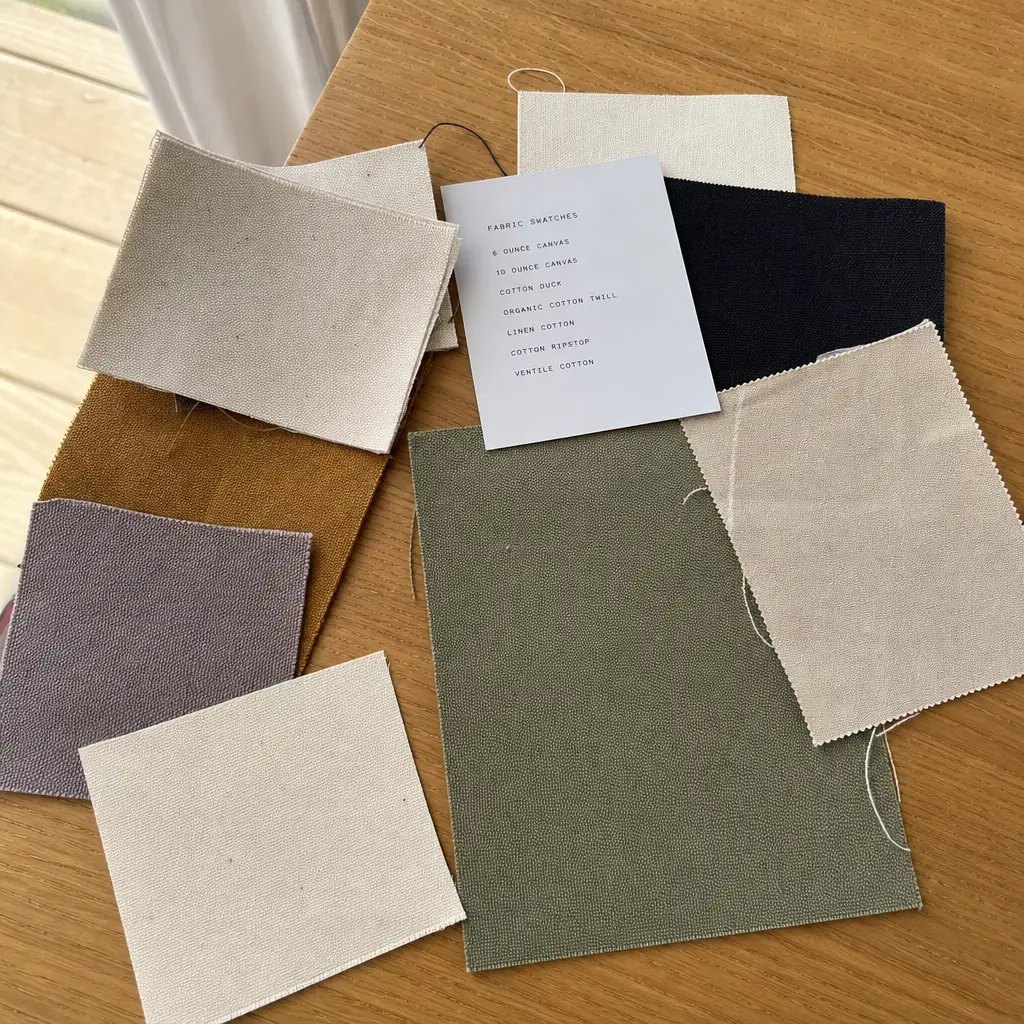
Natural canvas also varies in shade. It may look creamy, warm beige, or more grey-toned, with more or fewer cotton seed flecks. That variation can be attractive, but it should be approved before bulk production. If the logo depends on contrast, or if the totes will be photographed next to branded packaging, approve the fabric shade under practical lighting instead of relying only on a screen image.
Dyed canvas adds another layer of control. Lab dips, strike-offs, colorfastness expectations, and dye lot minimums should be discussed early. Organic cotton, recycled cotton, recycled polyester blends, and certified materials also need documentation questions before price comparison. Confirm whether the certificate covers fiber, fabric, finished goods, or transaction scope.
- Use a precise fabric line, such as 10 oz natural cotton canvas, approximate 270-280 GSM finished fabric, supplier tolerance to be declared.
- Ask whether fabric weight tolerance is +/-5%, +/-7%, or another mill standard.
- Approve natural canvas shade, fleck level, texture, and handfeel with a retained sample.
- For dyed canvas, build in time for lab dip approval and confirm any colorfastness expectation.
- For certified fabric, confirm certificate holder, document type, transaction scope, and whether finished totes can be represented as certified.
Print and Branding Choices
Most exhibitor grocery totes are best suited to screen printing when the artwork uses one to three solid colors. Screen print is widely available, cost-efficient at volume, and predictable for repeat orders. It also reads well from a distance when the logo is simple and the contrast is strong.
Canvas is textured, so artwork needs a practical review. Fine type, thin strokes, distressed effects, small reversed-out details, and tight registration can break up or fill in. Before sampling, the supplier should check the vector file for print size, placement, line weight, Pantone references, screen count, and whether the design needs an underbase or additional ink pass.
Heat transfer can make sense for full-color artwork, gradients, short urgent runs, or designs that cannot be separated cleanly for screen print. It should still be tested on the actual canvas. Check edge feel, flexibility, adhesion, cracking, and how the transfer looks after folding. Embroidery can look premium for small marks, but it is rarely efficient for large front-panel grocery tote branding.
A woven side label can add a retail finish, especially when the front print is clean and simple. It should not replace a visible front mark if the bag needs to promote the exhibitor across the show floor. Whatever method is used, approve the actual print on the actual fabric. A digital proof can confirm layout; it cannot confirm ink behavior.
- Screen print: best default for solid logos, wholesale quantities, and predictable repeat orders.
- Heat transfer: useful for full-color marks or urgent short runs, but requires adhesion and handfeel approval.
- Embroidery: suitable for small premium logos, less practical for large grocery tote panels.
- Woven label: useful as a detail or side mark, not a substitute for visible event branding.
- Artwork packet: vector file, Pantone references, print size, placement from seams, minimum line weight, and allowed tolerance.
Carton Quantity, Weight, and CBM
For many medium 10-12 oz gusseted canvas grocery totes, 50 pcs per export carton is a sensible starting point. It is not a rule. The right quantity depends on folded thickness, handle bulk, carton strength, shipping route, and the receiving team's handling limits. The carton should be full without bulging and heavy enough to be efficient without becoming awkward.
Set a carton gross weight target before comparing quotes. Many event teams prefer cartons under about 15-18 kg for manual handling, though the final target should match company policy, carrier rules, local labor requirements, and destination instructions. A 100-piece carton can look efficient on a spreadsheet and still be a poor choice behind a crowded booth.
CBM matters for sea freight, warehouse storage, local truck delivery, and air chargeable weight. CBM is calculated as carton length x width x height in meters. For air and courier shipments, carriers often compare actual weight with dimensional weight and bill the greater amount. Canvas totes can be expensive to fly because they occupy space even when they are not especially dense.
Carton strength should match the real route. Export shipments, stacked storage, and event freight handling usually justify a stronger 5-ply carton. If cartons will be palletized, ask for cartons per pallet, pallet dimensions, pallet height, stretch wrap method, and whether labels remain visible. If cartons ship loose, tape strength, strapping, and closure method matter more.
- 25 pcs per carton: useful for small booth allocations, VIP staging, or multi-location distribution, but increases carton count.
- 50 pcs per carton: practical starting point for many medium gusseted canvas grocery totes.
- 100 pcs per carton: may reduce carton count, but can become heavy, bulky, and more vulnerable to damage.
- Target gross weight: often under 15-18 kg for manual event handling unless the destination specifies otherwise.
- Required test data: pieces per carton, carton dimensions, net weight, gross weight, total cartons, total CBM, and photos.
Packing Style and Event Labels
Bulk folded packing is usually the cleanest option for trade show giveaways. The factory folds the totes consistently, stacks them into bundles, and packs them into export cartons. Bundles of 25 or 50 can make booth counting faster without adding individual plastic packaging. A paper band or simple bundle tie may be enough if the team needs quick allocation by booth, region, or sales rep.
Individual polybags should have a reason. They can protect presentation for retail sale, barcode control, gift-kit insertion, or long-term individual storage. They also add material cost, packing labor, carton volume, plastic waste, and booth setup time. For a team opening hundreds or thousands of giveaway bags, individual bags can slow the morning down fast.
Carton marks are a control tool. Trade show shipments often pass through people who do not know the item. The carton label should include PO, SKU, print version, quantity, carton number, gross weight, net weight, carton dimensions, destination, event name, booth number, and receiving contact when required. If the show decorator provides special labels, confirm when and where they will be applied.
The packing list must match the carton marks exactly. If the order includes multiple logos, regions, languages, or booth allocations, require SKU-level packing data. Avoid mixed cartons unless the receiving team has approved them and the mixed contents are clearly shown on the label. Event receiving is too time-sensitive for avoidable label puzzles.
- Bulk folded packing: best for exhibitor giveaways and fast setup.
- Bundle packing: helpful for count control and team allocation.
- Individual polybag: useful for retail, barcode, gift-kit, or clean-storage needs, but increases cube and labor.
- Inner cartons: useful for multi-booth distribution, though they add cost and may reduce cube efficiency.
- Carton marks: confirm text, sequence numbers, destination labels, booth details, and event routing before sealing.
MOQ and Quote Comparison
MOQ is not only a sewing question. It may be driven by available fabric, dye lot minimums, screen setup, label production, carton mark requirements, and cutting efficiency. For standard natural canvas with a simple screen print, many wholesale projects become practical around 500-1,000 pcs. Lower quantities may be possible, but the unit price usually rises because setup and sampling costs are spread across fewer bags.
The product image hides many cost drivers. Heavier canvas, deeper gussets, longer handles, reinforced bottoms, inner pockets, zippers, dyed fabric, multiple print colors, full-panel prints, woven labels, hangtags, barcodes, individual polybags, and custom carton labels all change cost and lead time. Carton planning also affects cost because bulky pack-outs increase CBM, warehouse space, and local delivery charges.
Ask suppliers to separate optional costs. A useful quote shows base tote cost, print setup, extra print colors, label cost, hangtag, individual polybag, bundle band, inner carton, export carton, palletizing, sample cost, and freight estimate. This lets procurement decide what actually supports the campaign. A woven label may be worth keeping. Individual polybags may not be.
Incoterms also need normalization. EXW, FOB, FCA, CIF, DDP, and delivered-to-venue quotes can include very different responsibilities. Do not compare one supplier's FOB unit price with another supplier's delivered event price without adding freight, customs, duties, destination handling, storage, and receiving fees. The carton data is what makes that comparison grounded.
- Base tote drivers: fabric weight, finished size, gusset depth, handle length, reinforcement, pockets, and sewing complexity.
- Branding drivers: print colors, print area, screens, transfers, embroidery stitches, woven label, and label placement.
- Packing drivers: polybag, hangtag, barcode, bundle band, inner carton, carton strength, palletizing, and event labels.
- Freight drivers: total CBM, total gross weight, dimensional weight, pallet plan, destination storage, and receiving fees.
- Schedule drivers: late artwork, sample revisions, dyed fabric approval, inspection timing, and urgent air shipment.
Sample Approval and Pack Test
A pre-production sample should use the actual canvas, construction, print method, handle stitching, label, and intended folding method. A plain sewing sample can help confirm size, but it cannot approve print coverage, curing, shade contrast, or final handfeel. For event orders, sample approval should be quick, but it should not be casual.
Measure the sample. Check finished width, height, side gusset, bottom gusset, handle length, handle drop, print size, print distance from the top edge, and print distance from side seams. Then load the bag with realistic event contents: catalogs, sample boxes, folders, apparel, or a bottle. A tote that looks balanced when empty may feel strained once visitors use it.
The carton packing test should happen before mass packing starts. The factory should fold production-equivalent bags using the intended method, pack the proposed quantity, close the carton, measure the carton, and weigh it. Photos or video should show folded stacks, carton fill level, closed carton, scale reading, and draft carton mark.
If the carton bulges, the handles create uneven stacks, or the gross weight exceeds the target, adjust the pieces per carton or folding method before the order is packed. This is a small intervention early and an expensive problem late. The pack test should also confirm count control, whether by bundle count, manual count, or carton weight cross-check.
- Approve fabric shade, weight, handfeel, and finish expectations against a retained sample.
- Measure body size, gusset, handle drop, print size, and print placement with a ruler.
- Perform a practical load check using the kind of items visitors will carry at the show.
- Check print curing with a rub or tape test when the print area is large, dark, or high coverage.
- Approve carton quantity, carton dimensions, gross weight, CBM, folding method, count method, and label format before mass packing.
Inspection and Defect Definitions
Canvas totes should be inspected against clear defect definitions. Phrases like good quality or export standard are too broad for an event shipment. The purchase order or inspection checklist should classify critical, major, and minor defects before production starts.
AQL sampling is common for B2B inspection, and many consumer goods inspections use ANSI/ASQ Z1.4 or ISO 2859-1 sampling concepts. The buyer should state the inspection level and acceptance limits or appoint a third-party inspector with a written checklist. Do not assume the factory's internal QC standard matches the brand's risk tolerance.
Defect definitions should fit the product. Major defects may include fabric weight outside tolerance, wrong size, weak handle stitching, open seams, severe print skew, wrong logo color, tacky ink, cracked transfer, wrong carton quantity, missing carton marks, or wet cartons. Minor defects may include a small loose thread or natural fleck variation within the approved range.
Inspection should cover both the bag and the packing. Open cartons from different parts of the lot, verify quantity, check carton condition, compare marks to the packing list, and review odor or moisture. For humid routes or sea freight, desiccant use and dry cartons deserve attention. A tote can pass visual review and still fail the event if the cartons are mislabeled.
- Critical examples: mold, contamination, sharp object, prohibited material, severe safety risk, or wrong product that cannot be used.
- Major examples: wrong size, wrong fabric, weak handles, open seams, severe print defect, wrong logo, wrong quantity, or missing event marks.
- Minor examples: small loose thread, slight approved shade variation, natural flecks, or minor trimming issues within agreed tolerance.
- Inspection scope: fabric, sewing, dimensions, print, labels, count, carton marks, carton strength, moisture, and packing list match.
- AQL detail: agree inspection level and acceptance limits before production, especially for orders tied to a fixed event date.
Lead Time and Freight Risk
Trade show orders have less recovery room than normal replenishment. A realistic timeline includes artwork review, sample making, sample transit, approval, fabric preparation, cutting, printing, sewing, trimming, inspection, carton packing, freight booking, export clearance, transit, import clearance, local delivery, and event receiving. Factory production lead time is only one part of the calendar.
For standard natural canvas and screen print, allow time after sample approval for bulk production, inspection, and transit. Dyed canvas, certified material, custom labels, full-color transfers, individual packing, palletization, and special event labels can extend the schedule. If goods go to an advance warehouse, the receiving deadline may arrive days or weeks before the show opens.
Choose freight mode after carton data is known. Sea freight is usually better for planned bulk orders because canvas totes are bulky. Air or courier may solve urgent top-up needs, but calculate dimensional weight from the tested carton dimensions first. A carton may not weigh much compared with hardware, but it still occupies billable space.
Split shipments can help when a date is tight, but they need clean control. Decide which cartons go by air, which go by sea or truck, and how those cartons are labeled before production finishes. Last-minute split decisions can create packing list errors, lost carton sequences, and confusion at the destination.
- Lock artwork before sampling; late logo changes can restart screens, transfers, or approvals.
- Reserve time for physical sample transit if procurement, marketing, or the end client must approve it.
- Schedule final inspection before shipment with enough time to correct major issues.
- Check advance warehouse deadlines, decorator paperwork, hotel receiving rules, and booth delivery windows.
- For urgent air or courier shipments, confirm carton dimensions, gross weight, and chargeable weight before approving freight cost.
Specification comparison for buyers
| Spec decision | Recommended option | When it fits | Buyer risk to check |
|---|---|---|---|
| Fabric weight for event grocery totes | 10 oz to 12 oz cotton canvas, often about 270-340 GSM before or after finishing depending on weave, yarn, moisture, and mill tolerance | Most booth giveaways, retail gift-with-purchase bags, sample kits, sales literature bags, and grocery-style reusable totes | 6 oz promotional cotton can feel too limp for catalogs; 14 oz canvas can raise carton weight, cube, and urgent freight cost |
| Bag size and gusset | Finished size near 38 x 40 x 12 cm or 15 x 16 x 5 in, with boxed bottom or full side gusset approved on a sample | Useful when visitors carry brochures, line sheets, sample packs, snacks, light apparel, or event folders through a show hall | Oversized mockups may look good in a presentation but increase CBM, reduce pallet efficiency, and crowd booth storage |
| Handle construction | Self-fabric handles with box-X stitch, bartack, or reinforced cross stitch; 55-65 cm total handle length with handle drop measured on the finished sample | Comfortable shoulder carry for several hours at an exhibition, especially when the bag contains printed material | Handle length measured flat is not the same as handle drop; weak handle attachment is a common functional failure |
| Print method | Screen print for 1-3 solid colors; heat transfer or DTG-style process only when artwork needs full color, gradients, or urgent short-run flexibility | Screen print is usually the most predictable wholesale option for clean logos on cotton canvas texture | Approve ink coverage, Pantone tolerance, placement, curing, and rub resistance on actual fabric, not only on a digital proof |
| Carton quantity | Start with 50 pcs per export carton for many medium 10-12 oz gusseted totes, then confirm by physical pack test | Keeps cartons manageable for manual handling, advance warehouse receiving, hotel delivery, and booth setup | 100 pcs per carton can reduce carton count but may exceed handling targets, bulge cartons, or create stacking damage |
| Carton strength | 5-ply export carton for export routing, stacked warehouse storage, or mixed truck handling; carton size confirmed after folding test | Appropriate when goods move through factory, forwarder, warehouse, decorator, venue dock, and booth team | Thin cartons, weak tape, or overpacked cartons can fail before the show even when the bags are acceptable |
| Inner packing | Bulk folded in bundles of 25 or 50 with desiccant per carton; individual polybag only for retail, barcode, or clean kit-insertion needs | Reduces plastic, labor, cube, booth waste, and unpacking time for giveaway programs | Bulk packing still needs clean folding, count control, moisture control, and carton marks that match the packing list |
| MOQ logic | 500-1,000 pcs often works for standard natural canvas and screen print; higher MOQ may apply for dyed fabric, certified material, custom labels, or special carton marks | Good for event campaigns with known booth allocation, clear artwork, and repeat potential | A very low MOQ may mean higher unit price, limited fabric choice, no pre-production sample, or weaker control over packing data |
| Shipping mode | Sea freight for planned bulk orders; air or courier only after carton CBM and chargeable weight are calculated | Sea freight protects landed cost when the calendar allows production, inspection, transit, customs, and receiving buffer | Canvas totes are bulky; air freight may be billed by dimensional weight even when actual weight seems modest |
Buyer checklist before sampling
- Define finished tote dimensions: width, height, side gusset, bottom gusset, handle length, handle drop, seam allowance, and folded dimension.
- Specify canvas in both oz and approximate GSM, and state whether the quoted weight is greige, finished, washed, or supplier standard.
- Ask the factory to declare normal fabric weight tolerance, such as +/-5% or the mill's commercial tolerance, instead of relying on verbal descriptions like thick or heavy.
- Confirm material type: natural cotton canvas, bleached canvas, dyed canvas, organic cotton, recycled cotton blend, recycled polyester blend, or certified fabric with documentation scope.
- Send vector artwork with Pantone references, maximum print size, print placement from seams, minimum line weight, and allowed color tolerance on canvas.
- Decide the use case: exhibitor giveaway, retail merchandise, VIP kit bag, sales team sample bag, grocery store reusable bag, or employee conference bag.
- Set a carton gross weight target before quote comparison, commonly under 15-18 kg for manual event handling unless the destination has another requirement.
- Request estimated carton dimensions, pieces per carton, net weight, gross weight, total cartons, total CBM, and pallet plan if palletized.
- Require a physical carton packing test before mass packing starts, with photos of folded bags, stacks, carton fill, closure, marks, and final measured data.
- Confirm delivery route: factory to forwarder, warehouse, 3PL, hotel receiving desk, exhibition advance warehouse, show decorator, convention center dock, or direct booth address.
Factory quote questions to send
- What exact canvas weight are you quoting in oz and GSM, and is that greige weight, finished weight, washed weight, or supplier standard finished fabric?
- What is your normal fabric weight tolerance for bulk production, and how will weight be checked during incoming material inspection?
- Is the fabric natural, bleached, dyed, organic, recycled cotton blend, recycled polyester blend, or standard cotton canvas, and can the same fabric lot type be used for sample and bulk?
- What are the finished open bag dimensions, side gusset, bottom gusset, handle length, handle drop, seam allowance, and finished size tolerance?
- What stitch type and reinforcement are included at the handle joins: box-X, cross stitch, bartack, extra patch, or standard seam only?
- Which print method is included, how many colors are included, what is the maximum print area, and what Pantone or visual tolerance will apply on textured canvas?
- Will the quote include pre-production sample, screen setup, transfer setup, woven label, care label, hangtag, barcode label, carton printing, export carton, palletizing, and destination labels?
- How many bags will be packed per carton, and what are the estimated carton dimensions, net weight, gross weight, total carton count, and total CBM for the order quantity?
- Can you provide photos or a short video of the carton packing test before mass packing, including folding method, carton fill, closed carton, weight scale, and carton mark?
- What production lead time applies after sample approval and deposit, and what dates are required for artwork, sampling, approval, bulk cutting, printing, sewing, QC, packing, and shipment booking?
Quality-control points to confirm
- Fabric weight checked against the approved standard, with the acceptable tolerance stated in the purchase order and inspection checklist.
- Fabric shade checked under consistent lighting, especially for natural canvas lots with seed flecks or dyed canvas approved by lab dip.
- Finished body dimensions within agreed tolerance, commonly around +/-1 cm for width and height unless the buyer requires tighter control.
- Handle length and handle drop checked separately, with common tolerance around +/-1.5 cm unless the bag must fit a specific shoulder-carry requirement.
- Gusset depth, boxed bottom shape, and folded profile checked because they directly affect usable capacity, carton fill, and booth storage.
- Handle box-X stitching, bartacks, or cross stitching secure, with no skipped stitches, loose thread loops, weak reinforcement, or tearing at stress points.
- Seams and gusset corners checked inside the bag for open seams, raw edges outside specification, bulky knots, and loose ends that can catch products.
- Print placement measured from top edge and side seams, with skew checked visually while the bag hangs and while samples are stacked flat.
- Ink coverage even on canvas texture, with no obvious pinholes, cracking, smearing, bleeding, tackiness, transfer marks, or unacceptable shade shift.
- Print curing checked by dry rub, tape pull, or supplier-approved test method when appropriate, especially for large solid logos and dark inks.