Why carton planning matters more than most tote bag quotes show
For coffee roasters, canvas grocery totes are often added to seasonal merch, wholesale gift sets, subscription promotions, or retail counter sales. The bag unit price gets attention first, but landed cost often shifts because the carton plan was estimated too loosely. A tote that looks only slightly thicker on a spec sheet can reduce pieces per carton, increase cubic volume, and push freight up enough to erase a low ex-works price advantage.
This is especially common when buyers compare quotes from multiple factories and one supplier prices the bag correctly but uses optimistic carton counts. Another may quote a slightly higher unit price with a more realistic packing plan. Without a carton-based comparison, the cheaper line item may not be cheaper once freight, warehouse handling, and destination repacking are included. For grocery-style canvas totes, planning the fold, handle lay, gusset shape, and bundle size early prevents that mismatch.
- Bag cost and freight cost should be reviewed together, not as separate decisions.
- Packed carton dimensions matter more than sample photos when replenishment is repeated.
- Factories that cannot explain packing logic usually estimate freight data from older jobs.
- A packed-carton sample is often worth more than a second display sample.
Choose the tote specification around shipment efficiency, not only shelf appearance
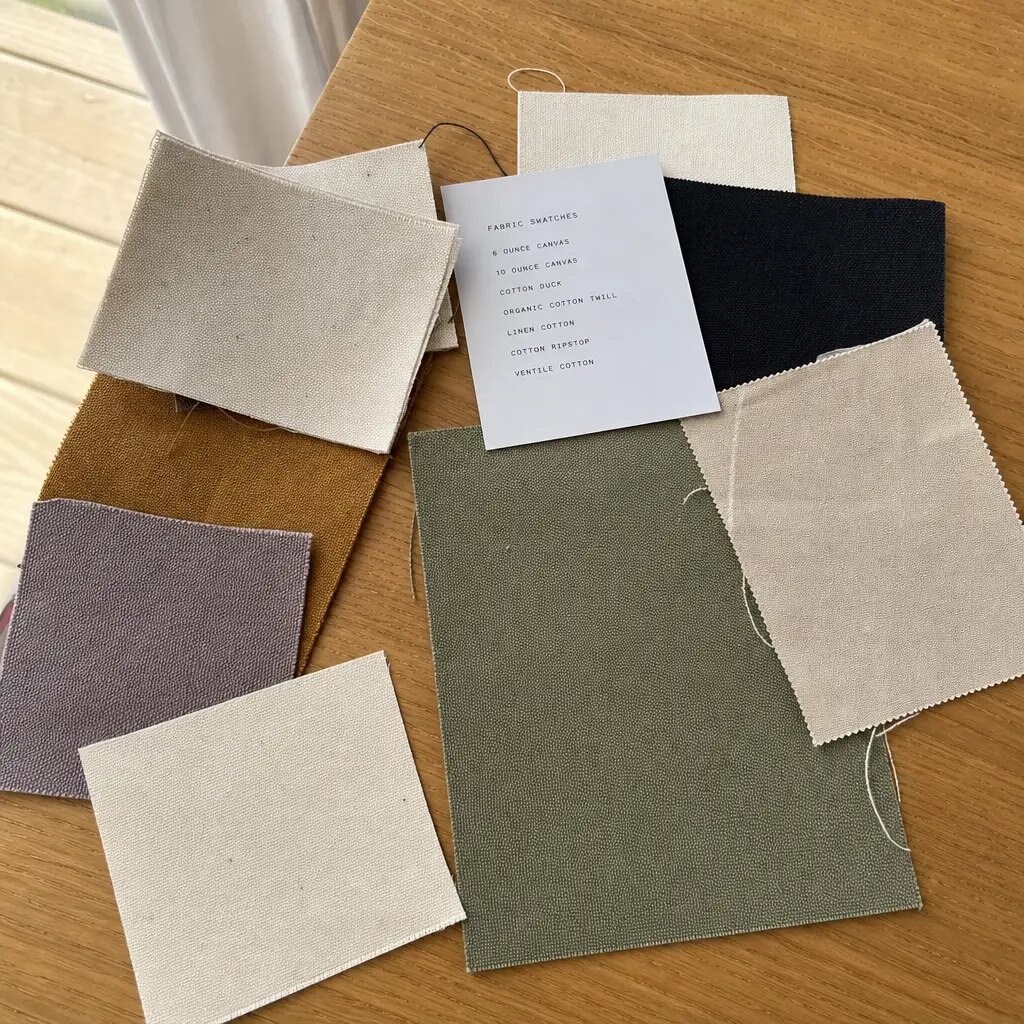
A coffee roaster grocery tote usually needs enough body to carry coffee bags, a mug, and a few pantry items without feeling flimsy. In practice, 10 oz to 12 oz canvas, roughly 280 to 340 GSM, is the safest starting band for bulk orders. It gives usable structure and decent print hold while still folding efficiently. Going heavier than that can make the bag feel premium, but the freight penalty starts to grow quickly because both unit weight and folded thickness increase.
Size and gusset should be chosen with a carton calculator mindset. A classic grocery profile with a bottom gusset often packs cleaner than a full side-and-bottom gusset if buyers need flatter cartons for warehouse stacking. The larger the base, the more the gusset springs open after folding, and that changes actual carton cube. A roaster selling tote-plus-coffee gift sets may prefer larger volume, but a distributor shipping replenishment to stores may be better served by a slightly narrower tote that stacks more tightly.
- Practical starting spec: 38 to 40 cm width x 35 to 38 cm height x 10 to 12 cm bottom gusset.
- Handle width of 2.5 to 3 cm is usually more stable than narrow tape on grocery loads.
- Longer shoulder-drop handles look retail-friendly but can increase fold bulk.
- If the bag is mainly a merch item, avoid overbuilding fabric weight that customers will not pay for.
Fabric weight, print method, and color choice all change carton outcomes
Buyers often treat GSM as a pure quality decision, but it is also a packing decision. A move from about 280 GSM to 400 GSM does not only add fabric substance. It changes how tightly the tote can be folded, how much memory remains in the gusset, and how much each export carton weighs. On larger orders, even a small increase in unit weight multiplies across cartons and affects labor at receiving. If your retail channel does not require a rigid hand feel, medium-weight canvas is usually the more efficient wholesale choice.
Print method also affects packing. Basic screen print is still the most practical method for most coffee roaster logos on canvas grocery totes. It handles one-color and two-color branding well and is easier to reproduce consistently in bulk. Digital printing can be useful for short runs or complex art, but on textured canvas it may not hold the same visual solidity, and factories may alter packing to protect larger print areas. Dark dyed fabric also needs more planning: if white or cream logos require underbase, curing and stacking time can influence production flow and packing speed.
- Natural canvas usually offers the simplest quote structure and shortest material lead.
- Black or dyed canvas may need underbase and stricter crocking review for light prints.
- Large print coverage can add drying or curing constraints before bulk packing.
- State whether minor slubs and natural specks are acceptable on unbleached canvas.
MOQ logic for coffee roaster programs: why fewer SKUs often wins
MOQ on canvas totes is not only about total pieces. It is tied to fabric availability, print setup, color separation, and production line efficiency. If a buyer requests three bag sizes, two fabric colors, and multiple roaster logos under one total quantity, the headline MOQ may still be met, but the factory can no longer run the order efficiently. That usually shows up in higher unit cost, longer lead time, or less favorable carton planning because packing becomes fragmented.
For first runs, a single body size on stock natural canvas with one artwork is usually the best control route. It gives buyers a clean baseline on real unit weight, real carton count, and real print quality. Once that data exists, adding a second colorway or retail prep variation is easier to price accurately. For importers serving multiple roaster accounts, shared blank stock with customized labels or low-variation print programs often performs better than fully separate SKUs.
- Lowest-risk MOQ route: one size, one fabric, one print placement.
- Mixed artwork across one PO may trigger separate screen charges and line changeovers.
- Custom-dyed canvas usually requires higher MOQ than stock natural fabric.
- Inner pack assortment can complicate receiving and reduce packing efficiency.
How to compare supplier quotes when carton data is incomplete
A useful tote quote should give more than price per piece. To compare suppliers fairly, buyers need at least fabric weight, finished size, estimated unit weight, print details, packing count per carton, carton dimensions, carton gross weight, sample lead time, and bulk lead time assumptions. If one quotation omits unit weight or carton dimensions, that is not a minor gap. It prevents true landed-cost comparison and usually means the supplier has not modeled the order properly.
When suppliers use different language, normalize the quote line by line. Convert oz to GSM, inches to centimeters, and carton dimensions to cubic meters. If one supplier quotes 100 pcs per carton and another quotes 50 pcs, do not assume the higher count is better. A carton can become too heavy or distorted, especially with gusseted medium-weight canvas. The better quote is the one that can survive export handling while still giving efficient cube. In many cases, a conservative 50-piece carton from a disciplined factory beats an aggressive carton count that creates damage claims.
- Create one comparison sheet with normalized units for every factory.
- Review ex-works price beside estimated freight cube, not as separate tabs.
- Flag any quote without carton gross weight and packed dimensions.
- If a supplier cannot explain fold orientation, carton count is probably only an estimate.
Sample approval should include a packed sample, not only a visual sample
Many tote programs run into trouble because the approved sample was evaluated only for look and hand feel. A merchandiser or brand owner may approve color, print, and overall shape, but bulk issues appear later when the bag is folded differently for export. Handles bunch, gussets flare, and actual carton dimensions exceed what freight booking used. For this type of order, a display sample is not enough. A packed sample or at least a folded packing approval sample should be part of the sign-off flow.
The best approval routine uses two sample stages. First, approve a pre-production sample for size, stitch construction, print position, and material feel. Second, approve folded packing with inner bundle method and carton count. If the order is large enough, ask for one full export carton built exactly as bulk shipment will be packed. This reveals whether a 50-piece carton is realistic, whether the carton board is strong enough, and whether bag memory creates bulging after 24 hours.
- Measure the folded sample thickness, not only the opened bag dimensions.
- Photograph front, back, seam, handle stitch, and folded bundle for approval records.
- Approve print color against actual fabric lot where possible, not only artwork output.
- Require the factory to note net weight and gross weight on the packed-carton sample.
Packing decisions that usually have the biggest effect on landed cost
On wholesale canvas grocery totes, simple packing usually wins unless a retail channel requires more. Individual polybags add material cost, labor cost, and cube. They can also trap moisture in some conditions if goods are packed before fully stabilizing after printing or finishing. For distributor or store replenishment, many buyers use bulk-packed inner bundles of 10 or 25 pieces and skip individual polybags entirely. That keeps carton count lower and simplifies receiving.
Carton fill should be balanced against handling. Very high carton counts may reduce total carton number, but if gross weight becomes awkward for warehouse teams or cartons bulge under stacking, the saving is false economy. Medium-weight grocery totes often work well at around 50 pieces per export carton, though the exact number depends on bag size, gusset, print area, and fold style. Carton marks should also be decided early. Roaster programs often need PO number, SKU, color, quantity, made-in origin, and destination code formatted to warehouse preference.
- State whether silica gel, moisture barrier, or carton liners are needed for long sea transit.
- Use consistent inner bundle counts so receiving teams can verify shortages faster.
- Avoid over-compressed cartons that flatten handles permanently or create seam set marks.
- If shipping to multiple warehouses, pre-sort carton labels at factory to avoid destination relabeling.
Lead time planning: where tote orders usually slip
Lead time on canvas totes looks simple, but delays often come from approval stages buyers treat as minor. Artwork revisions, print color alignment on textured fabric, custom label sign-off, and packing confirmation can all stop the line if they are still open when materials are ready. A factory may quote bulk production from sample approval, while the buyer assumes the clock starts at deposit. That difference matters when merchandise is tied to a roast launch, holiday gift window, or distributor promotion date.
Stock natural canvas with simple screen print is usually the shortest route. Custom dyeing, multiple print colors, woven label additions, barcode application, and split packing all add schedule risk. Carton planning itself can affect timing if the factory needs to source a non-standard carton size or stronger board grade. The safest method is to break lead time into components instead of accepting a single total number. That lets procurement teams see which step is most likely to slip and where a backup plan is needed.
- Typical timing components include material prep, sample approval, printing, sewing, packing, and final inspection.
- Custom dyeing and underbase-heavy prints often extend process time more than buyers expect.
- Large orders may need staged production and staged carton arrival planning.
- Request the production calendar with dependencies, not only one finished-date estimate.
QC thresholds that protect both retail presentation and freight accuracy
Quality control on canvas grocery totes should cover more than obvious sewing defects. For coffee roaster merchandise, visual presentation matters, but so does dimensional consistency because carton planning depends on it. If bag width, gusset depth, or handle placement vary too much, the folded profile changes and carton fill becomes inconsistent. QC should therefore include flat measurements, folded sample verification, print placement review, and carton build inspection.
Procurement teams should define which defects are critical to channel performance. For example, slight natural cotton specking may be acceptable on unbleached canvas, while skewed print or weak handle reinforcement is not. On dyed fabric, shade consistency and crocking resistance may be more important than tiny weave variation. For packing, the inspection should verify actual pieces per carton, gross weight range, and carton condition after stacking. That is how buyers avoid freight variance and receiving disputes at the same time.
- Set print position tolerance and handle alignment tolerance in writing.
- Review stress stitching on every production lot, not only first carton opened.
- Use AQL or your own acceptance method, but include packing conformance in the standard.
- If freight is tight, weigh random packed cartons during final inspection.
A simple landed-cost comparison method buyers can use before placing the PO
To compare two tote quotes, calculate four numbers: unit ex-works price, unit weight, pieces per carton, and cubic meters per carton. From there, estimate freight cost per piece using either actual forwarder rates or a working model. Add any differences in packaging materials, sampling charges, and destination repacking. This quickly shows whether a lower bag price is being offset by weaker packing efficiency. It also highlights when a slightly lighter fabric or smaller gusset could improve total margin without hurting the customer experience.
For example, one factory may quote a 12 oz bag at a lower sewing cost but only fit 40 pieces per carton due to bulkier gussets and longer handles. Another may quote a 10 oz bag slightly higher per piece yet fit 50 pieces per carton with lower gross weight. Depending on freight conditions, the second option can produce a better landed number and easier warehouse handling. The point is not that lighter is always better. The point is that tote specs should be judged on the final shipped program, not the sewing line item alone.
- Compare freight cost per piece, not only total freight cost.
- Include destination labor if individual repacking or relabeling is needed after import.
- Track carton cube per 1,000 pieces as a planning metric across suppliers.
- Keep one approved baseline spec so future quote changes can be measured accurately.
Specification comparison for buyers
| Spec decision | Recommended option | When it fits | Buyer risk to check |
|---|---|---|---|
| Fabric weight | 10 oz to 12 oz canvas, about 280 to 340 GSM | Best for grocery-style totes carrying retail coffee, mugs, and light pantry items without becoming too heavy for parcel or retail handling | Below about 8 oz can lose shape and print opacity; above 14 oz raises bag weight and carton freight faster than many buyers expect |
| Gusset format | Bottom gusset 10 to 12 cm with no side gusset for simpler folding | Fits flat-packed ecommerce replenishment and store stock where carton cube matters more than maximum volume | Full side and bottom gussets increase usable capacity but also create bulkier fold packs and less predictable carton counts |
| Handle construction | Self-fabric handles, 2.5 to 3 cm wide, cross stitched or box stitched | Standard grocery tote programs where durability and easy replenishment matter more than decorative handle treatments | Narrow handles twist in use; long shoulder drops can distort folded dimensions and reduce pieces per carton |
| Print method | 1-color or 2-color screen print on natural canvas | Works for coffee roaster branding, event merchandise, and private-label programs with clean logos and repeatable bulk production | Large dark flood areas can show pinholes on textured canvas; registration tolerance must be stated on approval sample |
| Color base fabric | Natural or black-dyed canvas depending logo style | Natural canvas keeps cost lower and print lead time simpler; black fabric suits premium merchandise and minimalist coffee branding | Dyed black fabric can bleed into light prints if underbased incorrectly; shade variation should be tolerated within approved standard |
| Packing count | 50 pcs per export carton with inner bundles of 10 or 25 | A practical balance for warehouse handling, distributor receiving, and shipment cube on medium-weight totes | Overpacked cartons crush handles and make cartons fail drop or compression during long transit; underpacked cartons raise carton count and paperwork |
| Retail prep | No individual polybag unless customer channel requires it | Good for B2B replenishment, lower material cost, and lower carton cube where retail display packaging is unnecessary | If barcode stickers or warning labels are required later, repacking in destination market adds labor and delay |
| MOQ route | Single-size, single-print run using stock natural canvas | Best route for first roaster merch program or distributor test orders where cost control matters | Splitting MOQ across many SKUs, print colors, or bag sizes often removes pricing advantage and extends production queue |
| Carton planning basis | Approve packed-carton sample with dimensions, net weight, gross weight, and actual pcs count | Essential for comparing ex-works and freight-inclusive quotes before PO approval | Factory estimates based only on past jobs can miss fold thickness, gusset spring-back, or handle bulk and lead to freight variance |
Buyer checklist before sampling
- Define the actual use case first: grocery carry, retail merchandise, subscription add-on, or event giveaway, because bag volume and handle length directly affect carton cube.
- State target fabric weight in oz and GSM, for example 10 oz / about 280 GSM, rather than only saying thick canvas.
- Specify finished size, gusset type, and handle drop in centimeters with tolerance, not only a reference photo.
- Request print method, print area size, print color count, and whether white underbase is required on dyed fabric.
- Ask for estimated bag weight per piece and estimated carton gross weight before approving quote comparisons.
- Require proposed packing count per carton, folded method, inner bundle quantity, and carton dimensions in centimeters.
- Decide early whether each tote needs an individual polybag, hangtag, barcode label, carton assortment label, or carton shipping marks.
- Approve a pre-production sample folded exactly as bulk packing will be done, not only a display sample stuffed for photography.
- Set acceptable fabric and print tolerances, including size tolerance, handle alignment, print position tolerance, and loose thread standard.
- If freight matters, request one packed export carton sample or at least a compression-tested carton plan before mass production starts.
Factory quote questions to send
- What is the exact fabric specification in oz, GSM, yarn type, and weave, and is it stock greige, stock dyed, or custom-produced?
- What is the estimated unit weight in grams for the quoted tote, including body, handles, and any label or accessory?
- How many pieces fit per export carton with your recommended fold method, and what are the carton dimensions and gross weight?
- Does the quoted carton plan assume no polybag, individual polybag, or inner bundle polybag, and how does each option change carton cube?
- What stitching construction is included on handles and stress points: X-stitch, box stitch, bartack, or plain reinforcement?
- What print method is quoted, what is the maximum print area, and what print registration tolerance can you hold on textured canvas?
- Is there any setup charge difference between 1-color and 2-color screen print, and what happens if print coverage is very large?
- What is the MOQ logic for this price: per color, per size, per artwork, or total order quantity across mixed SKUs?
- Can you provide a pre-production sample and a packed-carton sample before bulk, and what sample cost or lead time applies?
- What is the production lead time counted from: deposit receipt, artwork approval, pre-production sample approval, or packing approval?
Quality-control points to confirm
- Fabric weight should be within the agreed tolerance from approved sample or contract spec; many buyers use a practical tolerance such as plus or minus 5 percent depending on fabric finish.
- Finished bag width, height, gusset, and handle drop should be measured flat against agreed tolerances; uneven seam allowance often changes carton fit more than buyers notice.
- Handle attachment must match approved stitch pattern and stitch density, with no skipped stitches or obvious stress-point weakness.
- Print position should sit within the approved placement tolerance, and logos should not drift visibly toward seams or gusset folds.
- Print ink coverage should be even with no major pinholes, smudging, ghosting, or off-white contamination on natural canvas.
- Folded packing format must match approved bulk pack method so the final carton dimensions remain consistent with freight booking data.
- Carton count, inner bundle count, carton marking, and barcode labels must match packing list and receiving requirements exactly.
- Cartons should remain square after stacking and should not bulge from overpacking, especially on gusseted tote programs shipped by sea.