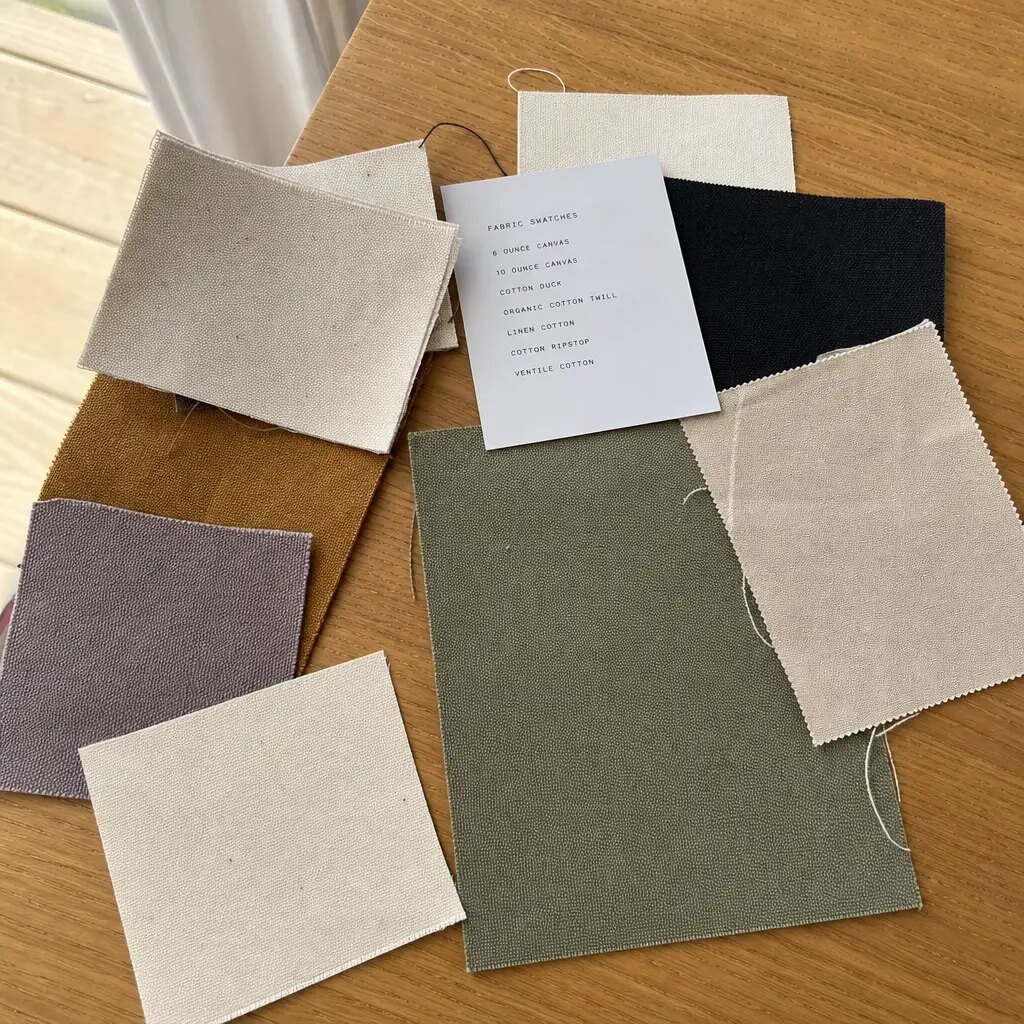
Why carton planning matters on grocery totes
Many eco apparel brands spend time on fabric, print, and logo placement, then treat packing as a back-office detail. That is where avoidable cost starts. A canvas grocery tote is heavier and bulkier than a flat promo tote, especially when it has side gussets, a boxed bottom, and reinforced handles. If the carton plan is weak, the brand pays twice: first in higher freight per unit, then again in warehouse labor, damaged cartons, or bags that arrive badly creased and need repacking before retail launch.
A good carton packing plan is not only about fitting more pieces into a box. It needs to protect print surfaces, control carton weight, suit your warehouse receiving process, and preserve the shape the product team approved. For grocery totes sold by eco apparel brands, the bag often serves as both packaging and product. That means a crushed corner, dusty fabric surface, or offset print is not a minor transit issue. It becomes a retail-quality problem.
- Packing affects landed cost through carton size, chargeable volume, pallet density, and container fill rate.
- Packing also affects sell-through when the first impression is a creased, misshapen, or dusty bag.
- Carton planning should be settled before PO placement, not after bulk sewing starts.
Start with the right grocery tote specification
For grocery use, the most common mistake is quoting a fashionable flat tote and trying to force it into a load-bearing retail role. A workable grocery tote usually needs a gusset and boxed bottom so the bag stands better, carries more volume, and distributes load across seams. For most apparel brands, 10 oz to 12 oz canvas, roughly 280 to 340 GSM, is the practical starting point. That range is strong enough for repeated use but still efficient in carton fill. Going lighter can create seam stress and body distortion. Going much heavier makes the bag expensive to ship for the visual gain.
The spec should identify finished size, gusset depth, handle width, handle drop, and seam construction. Do not let the factory infer this from a reference image. A 15 x 16 inch tote with a 4 inch gusset packs very differently from a 17 x 14 x 6 inch grocery tote. The latter usually gives better utility for retail grocery carry, but it also consumes more carton cube. The correct choice depends on whether the bag is sold as merchandise, included with purchases, or packed with other apparel items.
- Typical grocery tote canvas: 280 to 340 GSM.
- Typical handle reinforcement: X-box stitch or bar tack plus top stitch.
- Useful bag formats: flat body for lower freight, gusseted body for higher retail utility.
- If the bag is part of a premium collection, request fabric wash or softening only after confirming shrinkage and print impact.
Choose print and finishing with packing in mind
Print method changes both price and packing risk. For most eco apparel brands, water-based screen printing is still the most practical option on natural canvas. It gives good color depth, readable branding, and relatively stable cost once volumes move above small trial runs. Digital print can work for complex artwork or short runs, but it may have higher unit cost and different hand feel. Heat transfer is rarely the best choice for a grocery tote expected to flex and fold repeatedly. Embroidery looks premium but adds bulk exactly where bags are stacked and folded, which can reduce carton efficiency.
Large print areas and dark flood backgrounds create their own transit risk. Even when the print looks dry on the finishing table, dense ink can mark the inside of an adjacent folded bag if curing or cooling time is too short. That is why the fold direction matters. A logo-facing-in fold, with handles tucked inside, usually protects the printed face better than outward-facing retail folds. If presentation fold is required, the factory should allow a longer resting time before carton sealing and may need tissue separators or a lighter carton count.
- Best general-use print option: 1 to 2 color water-based screen print on natural canvas.
- Higher-risk graphics: oversized dark panels, heavy ink deposit, edge-to-edge print, or print crossing seams.
- If your brand needs exact Pantone matching, get strike-off approval on the actual canvas color, not on paper only.
Use MOQ logic that matches the packing decision
MOQ is not only a sewing question. It also depends on fabric purchasing, printing setup, and how many packing variants you want. A factory may quote 500 pieces as a nominal MOQ, but that does not mean the cost is rational at 500 pieces if you want custom carton labels, split assortments, or multiple barcode versions. Grocery totes for apparel brands often look simple, yet packing instructions create hidden complexity. If the order is split across ecommerce fulfillment, store delivery, and wholesale channels, the factory may need multiple carton plans and separate packing runs.
The lowest total cost usually comes when one bag spec runs across one fabric color, one print layout, and one bulk packing method. Every variation moves labor upward. That does not mean you should avoid customization. It means the RFQ should isolate which variables are fixed and which are optional. Ask the factory to price the base bag first, then list adders for retail folds, paper bellybands, barcode stickers, carton assortment, and drop-test upgrades. That structure makes supplier quotes comparable.
- Common pricing breakpoints are around 500, 1000, 3000, and 5000 pieces.
- A small MOQ with many SKUs often costs more per unit than buyers expect because of separate pack runs.
- For quote comparison, separate bag cost from packing adders and from one-time sampling or screen charges.
Build the master carton around warehouse reality
For medium-weight gusseted grocery totes, 50 pieces per carton is often the most balanced export plan. It keeps gross carton weight in a manageable range, gives acceptable cube efficiency, and reduces compression stress versus very high piece counts. Many factories will try 80 or 100 pieces because it reduces carton count on paper. That can work for light flat totes, but for 10 oz to 12 oz grocery totes it often leads to over-compression, deep fold memory, and misshapen bag bodies when cartons sit under stack pressure.
Carton dimension planning should start from your receiving operation, not only the supplier's loading table. If your warehouse handles cartons manually, gross weight usually needs to stay below around 14 to 16 kg. If bags are palletized for retail distribution, square cartons stack better than long narrow cartons. A 5-ply export carton with a proper inner liner is usually the safer choice for ocean freight, especially if the shipment will sit in humid conditions or move through multiple transload points.
- Practical starting point: 50 pieces per carton for gusseted grocery totes in 280 to 340 GSM canvas.
- Target outer carton design that balances stacking strength with cubic efficiency.
- Include shipping marks, PO number, style code, carton number range, and barcode label position in the packing file.
- If you need floor-ready store allocation, state whether cartons must be single-style, mixed-size, or mixed-label.
Sample approval should include a sealed packing sample
Many buyers approve a pre-production sample, then assume bulk packing will follow common sense. That is risky. The approved sample often proves sewing and print only, while the real issues appear when 50 folded bags are compressed into a master carton and moved through export handling. A sealed packing sample solves this gap. It should show the actual fold method, handle placement, inner protection, carton board, labels, and expected carton dimensions. This is where you catch whether the chosen fold creates visible print rub or whether the gusset collapses badly under compression.
For eco apparel brands, the sample stage is also where sustainability claims meet operational reality. If individual polybags are banned, the factory must demonstrate what replaces them. A paper band may be enough for direct store delivery. It may be insufficient for humid ocean transit unless the master carton has a liner. Approve the whole packing system, not only the bag. That includes barcode readability after carton sealing and the carton exterior remaining legible after normal abrasion.
- Approve a bulk-sealed sample carton, not just a single bag sample.
- Record packed bag orientation with photos from front, side, and top.
- Review carton weight, dimensions, barcode scan result, and print condition after unsealing.
- If the shipment is large, request one carton to stay compressed for several days before opening to simulate stack dwell.
Set QC thresholds for bag quality and carton performance
Quality control on canvas grocery totes should cover both product quality and packed condition. Buyers often run inspections focused on bag measurements, stitching, and print appearance, but the shipment fails later because cartons crush, labels smear, or folded bags develop offset marks. The QC standard needs to define what is acceptable at carton opening, not only what is acceptable on the sewing line. If your bags are retail merchandise, carton performance is part of product quality.
Use measurable thresholds where possible. Fabric weight tolerance, size tolerance, handle drop tolerance, stitch count or reinforcement type, and print cure performance should all be stated before production. On the packing side, define allowed carton damage, moisture exposure, and fold memory. A bag that needs steaming or manual reshaping before sale has already created hidden cost. It is better to accept slightly fewer pieces per carton than to absorb retail prep labor later.
- Inspect bag dimensions and gusset opening on random units from different cartons, not just top-layer pieces.
- Use a rub test or tape test for print cure on dark or heavily inked graphics.
- Reject cartons with burst corners, severe sidewall crush, wet marks, or unreadable barcode labels.
- If bag shape matters at retail, open a compressed carton and assess rebound after 30 to 60 minutes.
Read quote data as total landed cost, not bag price only
A lower ex-works bag price can become the more expensive option once packing is added. One supplier may quote a cheaper unit cost using lighter canvas, softer cartons, and 100 pieces per carton. Another may quote a slightly higher bag but with better reinforcement, 50-piece cartons, and a proper liner. The first quote can look better until you calculate cubic efficiency, damage risk, and receiving labor. For an eco apparel brand, the difference may also affect returns and in-store presentation, which do not show up on the supplier quote sheet.
Ask every factory to break the price into bag making, printing, packing, and testing or sampling adders. Then compare those items against carton dimensions and proposed quantity per box. As an example only, a factory might quote a 10 oz gusseted tote at $2.10 to $2.70 ex-works at moderate volume, with packing adders of $0.03 to $0.12 depending on paper bands, barcode stickers, or upgraded cartons. Those adders look small until freight is calculated on a higher carton cube or damaged cartons force repacking.
- Compare ex-works price together with carton dimensions, carton count, and gross weight.
- Request side-by-side quotes for two packing options if you are balancing retail presentation against freight efficiency.
- Do not combine one-time sampling fees with unit cost when comparing suppliers.
- If the supplier quotes FOB, verify whether inland trucking, export carton upgrade, and palletization are included.
Watch the schedule points where packing delays appear
Lead time problems on canvas totes often happen after sewing is finished. The common delay points are waiting for print approval, waiting for outer carton artwork, missing barcode data, or reworking the fold method after the first packed trial. Buyers sometimes focus on fabric booking and ignore the fact that packing components can also delay shipment. If your carton needs custom shipping marks, retail-facing carton labels, or country-specific barcode formats, those files need to be approved on the same timeline as the bag artwork.
A practical production path for a standard order might be 5 to 7 days for sample revision, 3 to 5 days for print strike-off approval, 20 to 30 days for bulk production, and several additional days for final packing and inspection. That timeline stretches if the packing method is unusual or if the order is split by sales channel. The safest approach is to treat the carton plan as part of the pre-production package, not as a final-week admin task.
- Critical approvals: fabric color, print strike-off, final measurement sheet, barcode file, shipping marks, and sealed packing sample.
- Late carton artwork approval can hold finished goods even when sewing is complete.
- If shipment date is fixed, reserve time for repacking after inspection in case carton compression or print rub is found.
Write the RFQ so suppliers quote the same thing
Poor quote comparability usually comes from vague packing language such as 'standard export packing' or 'eco-friendly packing preferred.' Those phrases leave too much room for supplier interpretation. One factory may assume 100 pieces per carton with no liner. Another may assume 50 pieces with a moisture bag. Both will say they complied. Your RFQ needs to describe the expected result, not only the intention. That means exact bag spec, print method, fold orientation, inner protection, carton count, weight limit, and carton labeling standard.
It is also worth stating what you do not want. If you do not allow individual polybags, say so clearly. If the bag must arrive without strong odor, mention that packed goods should rest after printing before sealing. If cartons will move through a 3PL that rejects overweight boxes, write the gross weight cap into the RFQ. This level of detail feels strict, but it saves time because suppliers stop quoting on assumptions.
- State dimensions, GSM, handle construction, print colors, and approved tolerances in the RFQ header.
- Describe the target fold with a simple sketch or photo reference if possible.
- Specify pieces per carton, maximum gross weight, carton board grade expectation, and barcode location.
- Ask for exceptions to be listed clearly rather than hidden in supplier notes.
Specification comparison for buyers
| Spec decision | Recommended option | When it fits | Buyer risk to check |
|---|---|---|---|
| Canvas weight | 10 oz to 12 oz canvas, about 280 to 340 GSM | Best for grocery totes that must carry heavier daily retail use without becoming too bulky in export cartons | Below 260 GSM the bag may distort under load; above 380 GSM carton fill drops and freight per bag rises quickly |
| Bag body construction | Single-layer body with boxed bottom and side gusset | Fits brands that need shelf-ready shape and more usable volume for groceries or folded apparel bundles | Flat-body totes pack tighter, so confirm whether visual shape or carton efficiency matters more |
| Handle webbing vs self-fabric handles | Self-fabric handles in same canvas, cross-stitched with X-box reinforcement | Suitable when the bag must stay fully cotton and color-matched for eco positioning | Poor reinforcement causes handle seam failure before body fabric fails; request stitch density and seam margin |
| Print method | Water-based screen print, 1 to 2 colors, cured after sewing or on cut panels depending artwork placement | Best for clean brand graphics on natural canvas with stable unit cost at medium to large runs | Large dark flood areas can offset onto adjacent bags if curing is weak or bags are packed too soon |
| Folding method | Flat fold with handles tucked inside and front logo facing inward | Works when the goal is maximum carton fill and reduced scuffing in transit | Outward-facing prints and exposed handles increase rub marks and carton void, especially on rough sea freight routes |
| Inner packing | No individual polybag, use paper bellyband or recycled tissue divider only if needed | Fits eco apparel brands reducing plastic while keeping presentation acceptable for warehouse receiving | Without a barrier layer, natural canvas can pick up dust or moisture odor if the master carton liner is weak |
| Master carton count | 50 pieces per carton for 10 oz to 12 oz gusseted grocery totes | A good balance between handling weight, loading efficiency, and receiving speed in most warehouses | At 80 to 100 pieces per carton, box crush and bag creasing increase; at 20 to 30 pieces, freight cost per unit usually climbs |
| Carton board grade | 5-ply export carton with inner liner bag and carton edge crush rating suitable for stacking | Recommended for ocean shipments, mixed-SKU containers, or long dwell time in destination warehouses | Weak carton board leads to collapsed pallet corners, barcode damage, and moisture exposure |
Buyer checklist before sampling
- State finished bag size, gusset depth, and handle drop in both inches and centimeters so the factory does not quote on a flat tote when you need a grocery-style boxed shape.
- Specify canvas weight as oz and GSM, and say whether tolerance is allowed within plus or minus 5 percent or plus or minus 7 percent.
- Define the intended fill use: groceries, apparel bundles, gift sets, or mixed retail carryout, because load use changes handle reinforcement and carton count.
- List print method, color count, print size, and whether the art sits on cut panels before sewing or on finished bags after sewing.
- Tell the factory whether bags can be packed flat, need a presentation fold, or must arrive shelf-ready with handles aligned.
- Include your no-poly or reduced-plastic rule early; otherwise many factories will quote with individual polybags by default.
- Set a target master carton weight, usually below 14 to 16 kg for manual warehouse handling unless your DC allows heavier cartons.
- Request preliminary carton dimensions and pieces per carton with the first quote, not after sample approval, because freight economics may change the chosen spec.
- Approve one sealed production sample showing final fold, inner packing, shipping marks, barcode label position, and carton count before mass production.
- State the QC acceptance point for visible print rub, handle seam skip stitches, fabric shade variation, and carton damage at arrival.
Factory quote questions to send
- What fabric construction are you quoting: 10 oz, 11 oz, or 12 oz canvas, and what tested GSM range do you allow in production?
- Is the bag price based on cut-panel printing or finished-bag printing, and does the quote include strike-off, screen charge, and print curing test?
- How many pieces fit per export carton under your proposed fold, and what are the exact outer carton dimensions and gross weight?
- Does your carton plan include an inner liner or moisture bag, and if not, what protection is used for sea shipments during humid transit?
- What handle reinforcement is standard in your quote: X-box, bar tack, double needle top stitch, or plain lock stitch only?
- What is the MOQ by fabric color and print colorway, and how does the unit price move at 500, 1000, 3000, and 5000 pieces?
- What carton board grade are you using, and can you share compression or edge crush suitability for stacked pallet loading?
- What lead time do you need for lab dip or fabric shade approval, print strike-off approval, pre-production sample, and bulk production?
- Will packed bags sit for 24 hours after printing before carton sealing to reduce offset and odor, or is same-day packing planned?
- Can you quote two packing options side by side: freight-efficient bulk fold and presentation-ready retail fold, with unit cost difference and carton impact?
Quality-control points to confirm
- Fabric GSM must match approved tolerance and feel consistent across the shipment, with no mixed heavy and light panels inside one lot.
- Body size, gusset, and handle drop should stay within approved measurement tolerance, typically plus or minus 0.5 inch for larger totes and tighter where retail inserts depend on fit.
- Handle attachment must show full reinforcement stitching without skipped stitches, broken threads, loose thread tails, or uneven seam margins.
- Print color, registration, curing, and rub resistance must match the approved standard, with no obvious offset marks on adjacent folded bags.
- Fold direction, handle tuck, barcode placement, inner packing, and master carton count must match the sealed sample exactly.
- Master cartons must remain square, dry, legible, and stackable, with no burst corners, crushed edges, or missing shipping marks after drop and stacking checks.