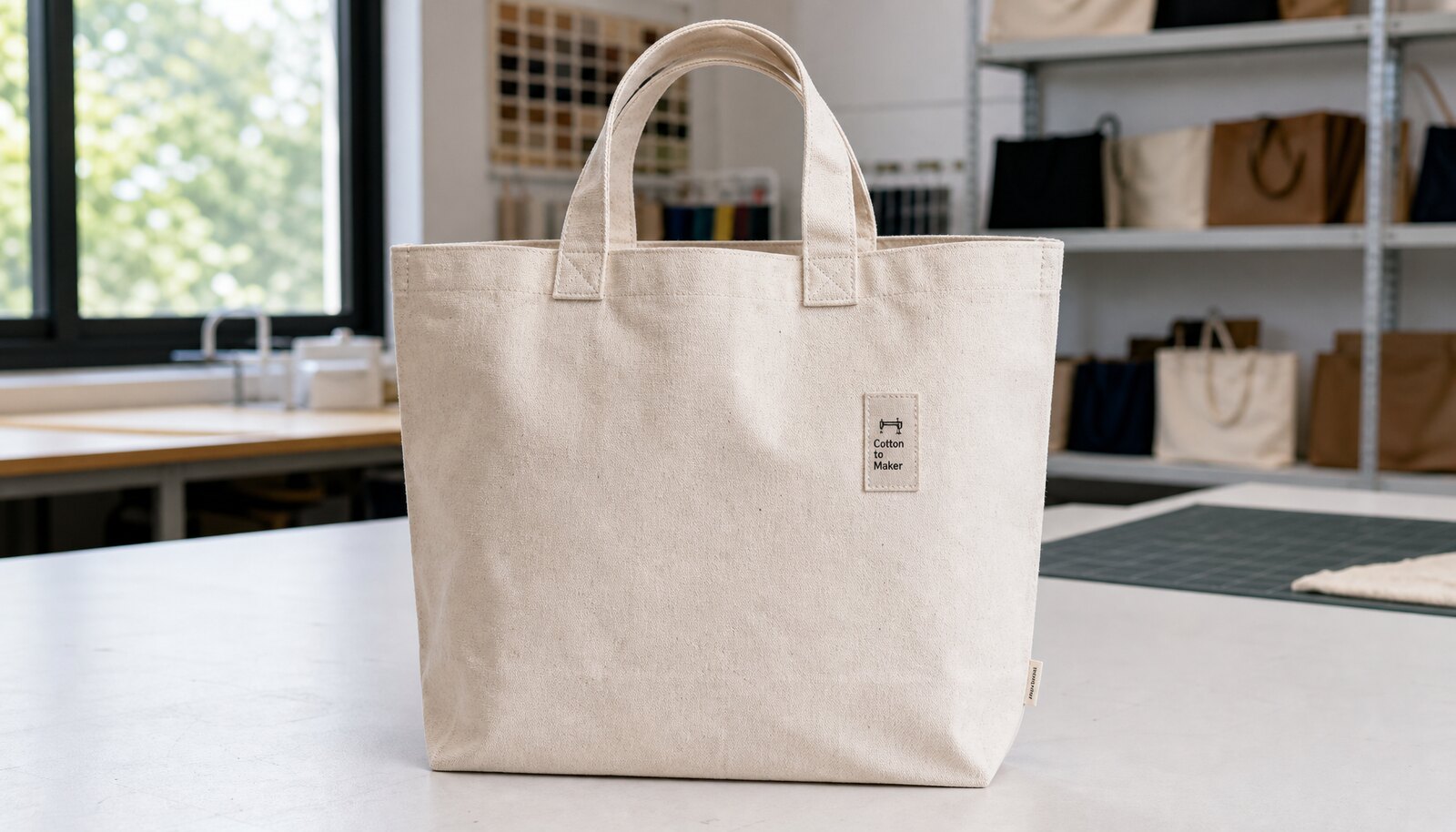
Why This Tote Needs a Different Buying Spec
Canvas exhibition tote bags for subscription boxes are not the same purchase as a generic promotional tote. A subscription box program puts the bag through two jobs at once: it has to fit inside a defined packing process, and it has to look strong enough to function as part of the brand experience once the box is opened. If you only compare bag price, you can end up with a thin body, weak handles, or a print that scuffs before the customer sees it. If you only chase a premium look, you may overbuild the bag and add unnecessary freight and folding bulk.
The first decision is the role of the bag in the box. A tote used as a carrier for the subscription contents needs more structure and a stronger handle build than a tote used as a folded gift insert. A tote that will later be carried in public should be durable enough for repeated use, while a tote that is only part of the unboxing moment can be simpler and lighter. Define that role before asking for pricing, because the answer changes the fabric weight, stitch construction, print method, and even the carton plan.
- In-box insert: optimize for flat packing and controlled print quality.
- Secondary carry bag: optimize for handle strength and gusset depth.
- Premium merch piece: optimize for structure, logo presentation, and reuse.
- Seasonal launch item: optimize for lead time and efficient MOQ.
Start With the Physical Job, Not the Decoration
The most useful RFQs start with dimensions and load, not artwork. For subscription boxes, a common mistake is sending a logo file before the factory knows what the bag must carry. A tote that only holds a folded magazine or sample kit can usually stay in the 8 to 10 oz range, while a bag meant to carry a heavier curated set is safer at 10 to 12 oz. If the bag must feel substantial in hand or survive repeat retail use, 12 to 14 oz canvas is often a better starting point. The heavier the cloth, the more the bag resists collapse, but the more it costs to ship and fold.
The same logic applies to the shape. Flat-bottom, gusseted bags are easier to fill and stand better once opened, but the gusset adds material and sewing time. If the bag is only an insert and never meant to replace a shopping bag, a flatter body may be the more rational choice. Handle drop also matters because a short handle can look neat but may be awkward after the box is opened, while a long handle can create excess bulk in the carton. Good sourcing starts by defining these physical constraints in writing.
- 8 to 10 oz canvas works for lighter inserts and lower-cost promotional programs.
- 10 to 12 oz is a practical default for reusable subscription box totes.
- 12 to 14 oz fits heavier loads, higher perceived value, and better shape retention.
- Gusseted bags help with fill volume, but they increase cutting and sewing time.
Fabric Weight, Handle Build, and Stitching That Survive Fulfillment
Fabric weight is one of the fastest ways to compare quotes, but it has to be translated into real use. Many factories quote canvas by oz, while some buyers prefer GSM. As a rough working range, 10 oz canvas is around 340 gsm and 12 oz is around 400 gsm. That matters because the same printed design can look very different on a soft, light body versus a firm, dense body. If the tote needs to sit neatly in a subscription box without wrinkling the insert cards around it, a slightly firmer canvas may save you more in fulfillment than it costs in material.
Handles are where cheap bags usually fail. A self-fabric handle can look clean and match the body, but it needs proper reinforcement where it meets the bag. Webbing handles are often stronger and more consistent, especially for heavier loads, but they may not fit every brand look. The sewing detail should be specified clearly. A box stitch with a cross stitch or dense bartack at the handle root is a safer choice than a light decorative seam. If the bag will be used repeatedly, ask for the handle stress point to be built for actual weight, not just for appearance.
- Use 10 to 12 oz canvas for the best balance of structure, print quality, and cost.
- Choose webbing or reinforced self-fabric handles when the bag will carry heavier content.
- Specify the handle drop so the bag opens cleanly after unboxing.
- Require a reinforced stitch pattern at every load-bearing point.
Print Method and Artwork Limits Affect the Real Unit Cost
For canvas tote bags, the cheapest decoration is often the most reliable. A one-color screen print is usually the cleanest option for logos, short taglines, and simple icons because it gives good opacity and holds up well on natural canvas. If the artwork has gradients, fine shading, or multiple colors that must look exact, the cost and setup complexity rise quickly. Heat transfer can handle more complex art, but the buyer should be clear about rub resistance, surface feel, and whether the decoration must survive repeated handling inside distribution cartons. Embroidery or a woven label can create a premium effect, but they usually make sense only when the bag is meant to read as a branded item, not just packaging.
The important decision is not which print method sounds best in theory. It is which one can be reproduced consistently at the requested MOQ. Keep the art away from seams, corner folds, and handle stitch zones so the image does not get distorted when the bag is sewn or folded. Send vector files, define Pantone targets when color matters, and set a maximum print area that still leaves margin from the edge. If the brand wants a natural, artisan look, a slightly imperfect print can be acceptable. If the bag is tied to a premium subscription program, the print should be centered, sharp, and repeatable across the whole batch.
- One-color screen print is usually the best value for natural canvas.
- Use vector artwork and Pantone references when color accuracy matters.
- Keep text and logos away from seams, fold lines, and gusset edges.
- Ask the factory to print an approved sample before the production run starts.
Compare Supplier Routes Before You Compare Prices
A quote from a direct factory, a trading company, and a local decorator may all describe a canvas tote bag, but the commercial risk is different in each route. A direct factory is usually the best fit when the program will repeat, the artwork is fixed, and the buyer wants control over construction details. A stock-bag wholesaler can be useful when the launch is urgent and the buyer can accept a limited body style. A trading company can simplify multi-item sourcing, but the buyer must know who is actually making the bag and who is responsible for inspection.
The right route depends on timeline, complexity, and how often the bag will be reordered. If the subscription box is a long-running program, direct factory sourcing normally gives better control over consistency and repeatability. If the bag is a one-time seasonal insert, a stock body with local decoration may be more practical even if the unit price is slightly higher. The real question is not which supplier is cheapest. It is which sourcing route gives the lowest risk of rework, freight delay, or a bag that fails the unboxing standard.
- Direct factory: strongest control over spec, QC, and repeat orders.
- Stock wholesaler: fastest path when the body design already works.
- Trading company: useful when one buyer needs several categories in one order.
- Local decoration route: useful when speed matters more than origin cost.
MOQ Logic and Cost Drivers That Change the Quote
MOQ on canvas exhibition tote bags is usually driven less by the bag shape than by setup decisions. Fabric color, print color count, packaging style, and whether the bag needs custom labels all change the economics. Many factories can work with a lower MOQ if the body uses a standard natural canvas and a simple one-color print. The moment you ask for dyed fabric, multiple print passes, custom inner labels, or mixed packing by SKU, the line has to be reset and the minimum order usually moves up. That is normal. What matters is whether the factory explains the breakpoints clearly.
The quote should separate the bag body, decoration, packing, and any special finishing. If you receive a single price with no breakdown, you cannot tell whether the factory is charging extra for print setup, handle reinforcement, or individual polybagging. For procurement teams, a clean price structure is more useful than a low headline number. It lets you compare a simple 10 oz tote against a 12 oz tote on equal terms and decide where the extra cost actually buys value. That is especially important for subscription boxes, where the bag may need to stay within a tight per-box landed budget.
- One fabric color and one print color usually keep MOQ lower.
- Custom dyed canvas, custom labels, and multi-SKU packing tend to raise MOQ.
- Ask for separate line items for bag, print, packing, and carton work.
- Compare unit price after you normalize the same spec across all suppliers.
Sample Approval and QC Thresholds Before Production Starts
A subscription box tote should move through a real sample approval chain, not a casual photo approval. The safest path is prototype sample, pre-production sample, and then a sealed golden sample that both sides treat as the reference. The sample should be checked with the actual artwork, the actual fabric weight, and the same handle construction planned for production. If the bag will sit inside a custom box, test it in the real carton with the inserts that will be packed around it. A tote that looks good on a table can behave badly inside a tight fulfillment carton.
QC thresholds should be practical, not vague. The buyer does not need a perfect artisan object, but it does need consistent dimensions, centered print, even stitching, and no obvious dirt or dye issues. If the factory sends a sample that is visibly off-center or uses the wrong handle drop, that is a sign to stop before the bulk order. Define the acceptable tolerances before production begins, including the placement of the logo, the seam straightness, the stitch density around load points, and the allowed amount of thread trimming. When those standards are written down, shipment disputes become easier to resolve.
- Approve a physical golden sample and keep one sealed for comparison.
- Test the bag with the same contents that will go into the subscription box.
- Check print registration, handle symmetry, and seam alignment on every sample stage.
- Reject samples that show wrong size, weak handle stitching, or visible contamination.
Packing Method Can Change Your Actual Freight Cost
Packing is not a small detail in tote sourcing. The same tote can create very different freight costs depending on whether it ships bulk packed, folded in a polybag, or wrapped with a card insert. For a subscription box program, the most efficient option is often bulk packing by carton if the totes are only going to be placed inside another package downstream. If the tote is also a retail item or needs a more polished presentation on arrival, an individual polybag or tissue wrap may be justified. The key is to choose the pack format that matches the final use, not the one that looks best in a catalog.
Carton sizing also matters because canvas is bulky even when folded. A few extra millimeters in the bag fold can reduce carton efficiency enough to affect ocean freight, air freight, or warehouse handling. Ask for carton dimensions, gross weight, carton count, and palletization if needed. If the print can rub during transit, the factory should use separators, interleaf paper, or a fold method that prevents the printed face from scuffing against the next bag. For subscription box operations, consistent carton labels and lot numbers also make inbound receiving easier.
- Bulk packed cartons are usually best when the tote is only a box insert.
- Individual polybags make sense when the tote must arrive retail-ready.
- Agree the fold direction so the tote fits the carton and opens correctly later.
- Specify carton marks, lot numbers, and master carton quantity before production.
Lead Time, Rework Risk, and How to Protect a Launch Window
Lead time should be broken into sample time, production time, and freight time. Buyers often receive one combined estimate and then discover the schedule has no room for artwork corrections or re-cutting if the first print is off. Custom canvas programs usually need enough time for fabric sourcing, sample approval, sewing, printing, packing, and exit inspection. If the order falls near a holiday peak or a seasonal subscription renewal, the risk rises because fabric and finishing capacity get tighter. A realistic schedule is better than an optimistic one that collapses under revision.
The way to protect the launch is to freeze the specifications early. Finalize the artwork before the sample stage, confirm the packing method before production, and reserve enough time for one controlled revision if needed. It also helps to confirm whether the factory is quoting ex-works only or if the schedule includes shipment booking, inland pickup, and export paperwork. If a supplier says the bags can be ready quickly but cannot explain the step-by-step timeline, the buyer should treat that as a risk. Speed without process is how box launches slip.
- Separate sample lead time, production lead time, and freight lead time in writing.
- Build in a revision buffer for print adjustment or stitching correction.
- Avoid final spec changes after approval unless the launch date is flexible.
- Ask whether the quoted lead time assumes normal season or peak season capacity.
Build the RFQ Around Landed Cost, Not Just the Bag Price
For procurement teams, the real comparison is landed cost per delivered tote, not ex-works price per unit. A low factory quote can become expensive after print setup, packing upgrades, carton size inefficiency, freight, customs handling, and internal rework. That is why a clean RFQ should state the finished size, fabric weight, artwork count, print method, packing spec, and target delivery window. If the supplier has to guess any of those items, the quote will either be padded or incomplete. Both outcomes make sourcing harder.
The best RFQs are short but complete. They tell the factory exactly what the tote is doing in the subscription box, what load it must carry, how it should be packed, and what the buyer will reject. They also ask for comparable pricing tiers, such as 500, 1,000, and 3,000 pieces, so the buyer can see where scale actually improves cost. That gives you a better basis for decision making than a single number. It also exposes suppliers who are quoting a different spec while pretending the products are identical.
- Compare total landed cost, including packing, freight, duty, and handling.
- Request price tiers so you can see where scale lowers unit cost.
- State the exact acceptance criteria instead of using vague quality language.
- Ask the supplier to confirm any assumptions that could change the final price.
Specification comparison for buyers
| Spec decision | Recommended option | When it fits | Buyer risk to check |
|---|---|---|---|
| Direct factory custom run | Best for repeat subscription programs with stable artwork and size | When you need control over fabric, print, handle build, and carton packing | Confirm the supplier is the actual maker, not a trading layer passing on specs |
| Stock bag with logo added | Best for urgent launches and lower MOQ orders | When the body shape is acceptable and only branding changes | Check whether stock fabric color, handle length, and carton count can still be controlled |
| Trading company or sourcing office | Best when one program combines bags, inserts, and other gift items | When procurement wants one contact for several categories | Verify factory identity, QC responsibility, and who owns artwork approvals |
| Blank bag plus local decoration | Best for very fast regional fulfillment or variable campaign art | When the campaign changes often and transit time matters more than ex-works cost | Watch for print color drift, extra handling damage, and split accountability |
| Specialist packaging factory | Best for premium subscription box presentation and custom insert work | When the tote must work with branded cartons, sleeves, or tissue | Make sure bag quality is not secondary to carton production priorities |
| Eco-material specialist factory | Best for sustainability-led brands or natural-fiber claims | When the buyer needs organic or recycled content evidence | Check claim support, fabric MOQ, and whether certificates match the exact material used |
| Regional quick-turn supplier | Best for replenishment and shorter delivery windows | When the program cannot wait for a long sea-freight cycle | Confirm whether the supplier can hold the same fabric and print tone across repeat orders |
| Integrated bag and carton vendor | Best for large subscription programs with tight packing operations | When both carton and tote need coordinated delivery | Make sure bag specs are not compromised by carton lead time or minimums |
Buyer checklist before sampling
- Define the tote's job: insert, premium gift, retailable carry bag, or reusable merch piece.
- Lock finished size, gusset depth, handle drop, and whether the bag must lie flat in the box.
- Choose fabric weight in GSM or oz and decide if the canvas should feel soft, firm, or structured.
- Specify print method, print area, Pantone target, and whether the art must survive rub or wash testing.
- State whether the bag needs a snap, zipper, pocket, or only an open top for lowest cost.
- Confirm MOQ by color, artwork version, and any packaging variation.
- Request a pre-production sample and keep one sealed golden sample for comparison.
- Define packing method, carton count, and whether bags ship bulk packed or individually polybagged.
- Ask for production lead time, sample lead time, and freight assumptions separately.
- Compare landed cost, not only ex-works price, before approving the PO.
Factory quote questions to send
- What exact fabric weight, yarn count, and weave are you quoting for this tote?
- Is the quote for a direct factory run, stock body customization, or sourced through a trading company?
- What is the MOQ by color, print version, and packing method?
- Which print method will you use, and how many colors are included in the quoted price?
- What is included in the unit price: bag body, print, label, packing, and carton work?
- What are the sample fee, sample lead time, and sample refund policy after order placement?
- Can you share a photo or video of a recent similar production run with the same construction?
- What is the production lead time after sample approval and deposit?
- How will the bags be packed inside cartons, and how many pieces per carton?
- What QC checks do you perform before shipment, and what happens if the print or seam fails inspection?
Quality-control points to confirm
- Finished dimensions match the approved sample within the agreed tolerance band.
- Fabric weight matches the spec, and the lot is consistent across the production run.
- Handle attachment uses a reinforced stitch pattern with no skipped stitches or loose threads.
- Print position, density, and color are aligned with the sealed golden sample.
- Seams are straight, seam allowance is even, and gussets match on both sides.
- Bag opens and folds the way the subscription box packing team expects.
- Any zipper, snap, or pocket operates cleanly and survives repeated opening and closing.
- No stains, oil marks, odor issues, broken needles, or exposed raw edges are present.
- Carton count, label data, and packing configuration match the PO and packing list.
- A random carton pull test confirms the bag still looks acceptable after transit handling.