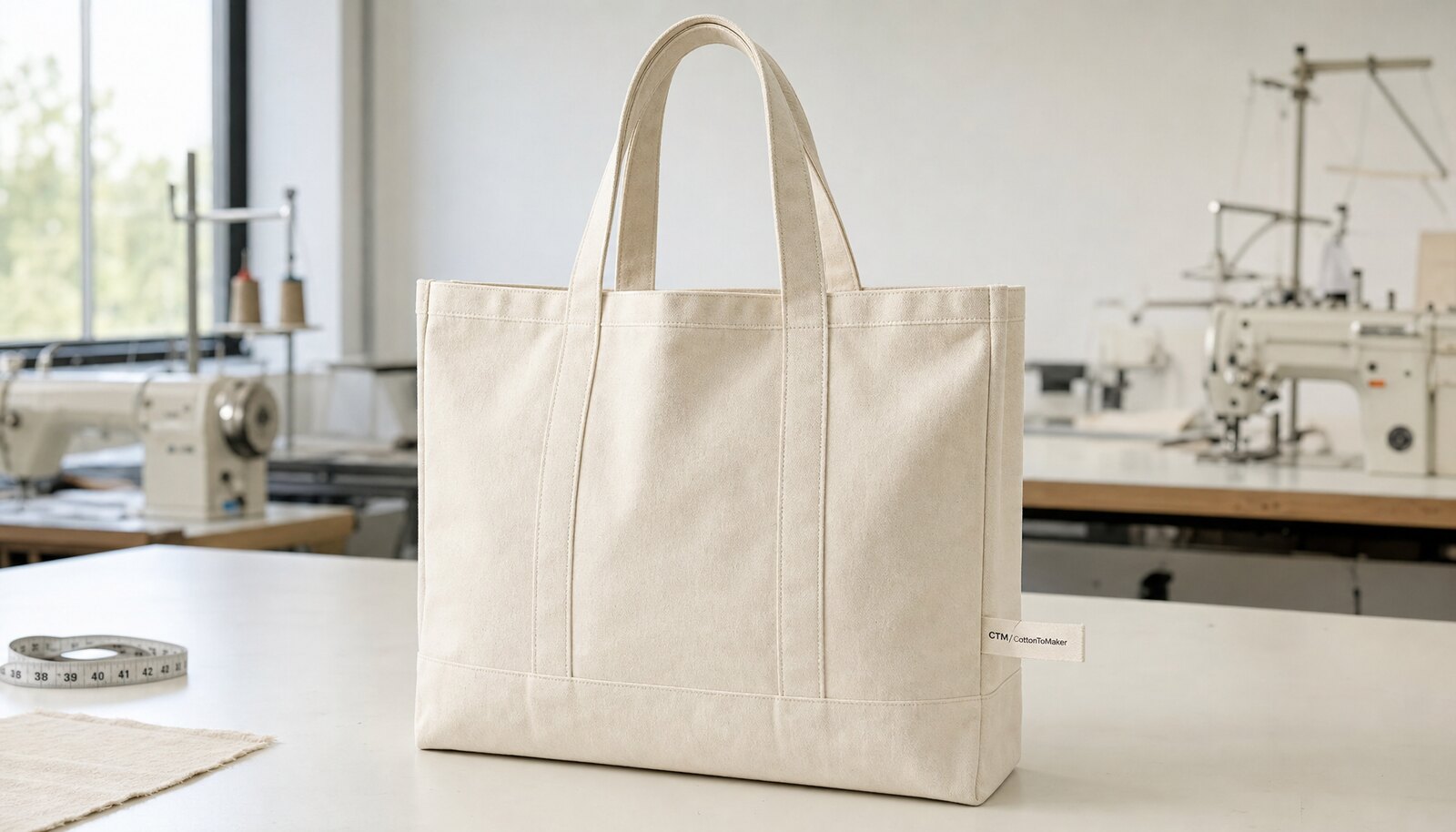
Start With The Use Case, Not The Artwork
Subscription box totes are judged in a different way from retail shelf bags. They spend time folded, handled during pick and pack, then get opened in front of the end customer. That means the quality problem is not only how the tote looks in a product photo. It is whether the bag opens cleanly, keeps its shape, and arrives without dust, crooked folds, or visible damage from packing.
Before you compare suppliers, define the real job of the bag. Is it an insert that must sit flat inside a box, a premium bonus item that the customer will reuse, or a lightweight event tote that only needs one season of service? That answer drives canvas weight, handle strength, print method, and the level of cosmetic variation you can live with.
- State the end use in the RFQ, not just the product name.
- Define whether the tote must carry product weight or only act as a gift insert.
- Write down the unboxing condition you want: flat, clean, and crease controlled.
Lock The Spec Before You Ask For Price
A tote quote is only useful if every supplier is pricing the same object. A 38 x 42 cm bag in 12 oz canvas is not comparable to a 40 x 45 cm bag in 10 oz canvas with a two-color print and different handle length. Finished size should be the buyer reference, not the cut size in the factory pattern room. If you do not lock that down, the quote spread will look artificial and the lowest price may simply be the least complete offer.
Use tolerances in the RFQ so the factory knows where the boundary sits. Many buyers allow a small tolerance band on finished dimensions, but the actual number should be written into the spec pack. The same applies to shrinkage after pressing or washing, if the bag uses any finish that can change dimensions. The goal is not to over-spec the bag; it is to prevent a factory from deciding the spec on your behalf.
- Give finished size, handle drop, gusset depth, and seam allowance.
- Write the exact dimension tolerance in millimeters or centimeters.
- State whether shrinkage after finishing is included in the target size.
Choose Fabric And Structure That Match The Box
Canvas weight is the first place buyers lose control of quality. As a rough guide, 10 oz canvas is about 340 gsm, 12 oz is around 400 gsm, and 14 oz is close to 470 gsm, though the supplier should still give a measured GSM. For subscription boxes, 12 oz is often the safest default because it feels substantial without pushing freight or sewing cost too far. Ten-ounce fabric can work for lighter promotional inserts, but it will show the difference in hand feel and body. Fourteen-ounce canvas is better when the tote is meant to be reused as a retail bag or needs a more premium presentation.
The structure matters as much as the fabric. A good canvas body can still fail if the top edge is weak or the handles are not reinforced properly. For a buyer guide like this, the decision is usually between a simple sewn handle, a double-folded top edge, or extra reinforcement at the handle base with cross-stitching or bar tacks. If the tote will be loaded into a subscription box and then reused, the buyer should also look closely at seam density, bottom seam security, and whether the bag stands upright enough for the intended packing style.
- Use 12 oz as a practical baseline unless the load or brand position says otherwise.
- Ask for the supplier's measured GSM, not only the declared ounce weight.
- Require reinforcement at the handle base if the tote will be reused outside the box.
Treat Decoration As A QC Item
The logo is where many tote orders drift from acceptable to weak. Screen print is usually the cleanest option for a simple one-color logo because it gives stable coverage and cost efficiency across volume. Small text, fine lines, gradients, or multi-color art increase the risk of registration drift and uneven ink laydown. Heat transfer can work for short runs or sample-stage pilots, but it is not automatically the better choice if the goal is a durable, repeatable subscription box insert.
Lock the decoration details before you approve sampling. Put the logo position in centimeters from the top edge and the side seam, then write the color standard clearly enough that the factory cannot improvise. If you use a woven label, sewn patch, embossed mark, or embroidery, inspect the edge finish, stitch density, and alignment just as carefully as the print. The decoration method is not only a design choice; it is part of the quality standard and should appear in the inspection checklist.
- Match the print method to the art complexity and volume.
- Ask for placement references from fixed edges, not visual language like centered or a bit higher.
- Use a rub test or similar approval step if the print will touch other items in the box.
Use Samples To Prove Bulk Readiness
A lot of buyers approve a sample that looks good and then discover the bulk order uses different materials, different label placement, or a different packing method. That is a common failure point because a base sample only proves capability, not production control. The sample that matters is the pre-production sample made from the actual bulk plan. If the factory changes fabric, thread, print screen, or carton format after approval, the sample is no longer a reliable reference.
Keep one sealed golden sample once the buyer signs off. That reference should match the approved artwork, the stated fabric weight, the final handle construction, and the actual pack format. If possible, have the factory mark its own approval on the sample record. This reduces disputes later because the question becomes simple: does bulk production match the agreed reference or not? For a procurement team, that is more useful than arguing over what the product was supposed to look like in theory.
- Approving a generic sample is not enough if bulk materials will differ.
- Save one golden sample and one final artwork file with the PO record.
- Verify that the sample includes the final label, fold, and packing method.
Set Clear Bulk Inspection Thresholds
If the purchase order only says good quality, the factory will interpret quality its own way. A better inspection plan splits defects into critical, major, and minor, then tells the inspector exactly what those categories mean for the tote. A broken seam at the handle is critical. A crooked print or off-center woven label is usually major. A loose thread may be minor if it stays within a defined length and does not affect appearance or use.
Many buyers use AQL language, but the most important thing is not the number on the form. It is the defect list and the sampling scope. You need to know whether the inspection happens before packing, after packing, or after carton sealing. For the first bulk order, a final inspection that checks workmanship, quantity, and carton count is usually more valuable than a quick visual scan, because errors in one area tend to show up in the others.
- Write the reject list for seams, print, handle symmetry, stains, and odor.
- Separate cosmetic issues from structural failures.
- Make sure the inspection covers quantity count and carton marks, not only appearance.
Pack For Fulfillment, Not Just Shipping
A tote can pass sewing inspection and still fail the customer experience if the pack-out is sloppy. Subscription box programs need a clean fold standard because the bag will be seen immediately when the box opens. Overly tight folding creates hard creases, while loose packing allows dust and friction marks. If your brand wants to avoid individual polybags for sustainability reasons, the factory should still give you a defined carton liner, clean folding method, and moisture control plan.
Carton size should match the fold pattern instead of forcing the bag into a bad shape. Ask for carton count, inner pack method, gross weight, and pallet pattern so warehouse and freight teams can work from the same data. A cheaper unit price can disappear if the bag arrives crushed, the fold is inconsistent, or fulfillment staff need to rework every carton before use. Packing is part of quality, not a separate logistics afterthought.
- Specify the fold direction and whether handles must be tucked or laid flat.
- Keep carton weight within warehouse handling limits.
- Request clear carton marks so receiving teams can verify style and quantity fast.
Read The MOQ And Lead Time Correctly
MOQ is usually a production logic problem, not a random number. Canvas weight, cutting efficiency, print setup, and packing labor all affect the minimum run. A standard natural canvas bag with one-color print will usually support a lower MOQ than custom-dyed fabric, garment washing, or multi-location decoration. When a supplier says the MOQ is high, do not just push back on the number. Ask what part of the process is driving it, because that tells you whether the quote can be reworked without damaging quality.
Lead time should also be broken into stages. Separate sampling, material booking, production, packing, and transit. If the supplier gives only one delivery date, the schedule risk is hidden. A short lead time may simply mean they are using stock fabric or ignoring pack-out time. For subscription box planning, that matters because the tote often has to land in time for a campaign or monthly shipment window, not just any arbitrary ship date.
- Tie MOQ to color count, print count, and packing method.
- Ask whether stock fabric or stock screens are being used to lower MOQ.
- Split the timeline into sample approval, bulk production, and transit.
Compare Supplier Routes On Landed Cost
The lowest ex-works price is often not the best procurement decision. A direct factory may give better control on stitching and packing, while a trading company can simplify communication but hide the real production chain. A domestic decorator can move quickly for a pilot or urgent replenishment, but the per-unit price usually rises when local labor and freight are added. The right route depends on whether your main risk is spec control, speed, or total landed cost.
To compare quotes fairly, build the same cost stack for every supplier. Include fabric, print setup, sewing, packing, cartons, sample fees, export docs, inland freight, and ocean or air freight where relevant. If one quote is cheaper because it excludes the inner pack or carton marks, it is not a clean comparison. Procurement teams save more money by normalizing the quote structure than by chasing the lowest headline number.
- Compare quotes on the same Incoterm and same packing scope.
- Separate sample cost from bulk cost so the first order is not distorted.
- Check whether any part of the order is being subcontracted without disclosure.
Close The PO With A Final Sign-Off Pack
Before you release the purchase order, collect the spec, the artwork, the approved sample reference, the defect list, and the packing plan in one record. This is the point where many teams lose control because information sits in email threads, internal chats, and spreadsheet notes that do not match each other. The factory will usually follow the latest instruction it sees, even if that instruction came from a hurried message rather than the buyer's intended spec.
The final sign-off pack does not need to be long. It needs to be complete. One drawing, one sample reference, one packing standard, one inspection rule set, and one ship schedule are enough if they are consistent. When those five items match, the chance of a tote arriving with the wrong size, the wrong fold, or the wrong logo placement drops sharply. That is the practical goal of a quality inspection checklist for subscription box totes: prevent avoidable mistakes before the goods leave the factory.
- Attach the final art file and the approved sample photo set.
- Include packing and carton specifications in the PO, not only the text email.
- Make sure sourcing, quality, and warehouse teams are all reading the same version.
Specification comparison for buyers
| Spec decision | Recommended option | When it fits | Buyer risk to check |
|---|---|---|---|
| Order route | Direct factory with in-house sewing and screen print | New program with a clear spec and repeat orders | Check whether any cutting, printing, or packing step is subcontracted |
| Quote basis | Finished bag price with packing and carton spec included | Comparing suppliers across regions or sourcing routes | Check for hidden add-ons such as labels, inserts, cartons, or export packing |
| Fabric weight | 12 oz canvas as the baseline | Standard subscription box insert that should feel substantial | Check actual GSM and whether finishing has changed shrinkage or hand feel |
| Decoration method | One-color screen print or a woven label | Simple logo, repeat volume, and tight unit cost target | Check registration tolerance, ink coverage, and rub resistance |
| Sample route | Pre-production sample made from bulk materials | First order, new art, or changed supplier | Check that the sample uses the same fabric lot, thread, and label spec |
| QC route | Third-party final inspection after packing | Large PO, long transit, or first-time supplier | Check AQL scope, carton count verification, and defect definitions |
| Packing route | Flat-folded with moisture control and master carton marks | Bags going straight into subscription boxes or warehouse pick | Check crease marks, dust, and fold consistency across cartons |
| Sourcing route | Split quote by fabric, print, sewing, packing, and freight | Comparing direct factory against trading company or stockist | Check that every supplier priced the same scope and Incoterm |
Buyer checklist before sampling
- Confirm finished size, gusset, handle drop, and tolerance before asking for price.
- Lock fabric weight in GSM or oz, not just the word canvas.
- Specify decoration method, logo placement, and print color standard.
- Approve a pre-production sample made from the actual bulk plan.
- Write defect limits for seams, print, stains, odor, and handle symmetry.
- Set the packing format, carton count, and fold direction for fulfillment.
- Ask for itemized quote lines for fabric, print, sewing, packing, and freight.
- Separate sample lead time from bulk lead time and transit time.
- Save one sealed golden sample and one approved artwork file.
- Make sure the purchase order matches the latest signed spec pack.
Factory quote questions to send
- What is the finished size, measured tolerance, and cutting allowance for this tote?
- What is the actual fabric weight in GSM or oz, and is that before or after finishing?
- Which print method are you quoting, and what is included in setup or screen charges?
- Will the bulk order use the same fabric lot, thread, and label as the sample?
- What is the MOQ per color, per artwork, and per packing style?
- What defects are treated as major, and what AQL or inspection standard will you use?
- Is the quoted price finished packed, including inner pack, carton, and carton marks?
- What is the production lead time after sample approval, and what could extend it?
- Which parts of the work are done in-house, and which parts are outsourced?
- What carton dimensions and loading quantity do you expect for the approved fold method?
Quality-control points to confirm
- Finished dimensions match the approved spec within the stated tolerance.
- Canvas weight and hand feel match the approved sample and quote.
- Handle length, handle spacing, and left-right symmetry are consistent.
- Top edge reinforcement, seam stitching, and bottom construction hold under load.
- Print placement, color density, and registration match the approved art.
- No oil stains, needle holes, loose threads, or obvious fabric slubs in visible areas.
- No broken stitches, skipped stitches, or seam slippage at load points.
- Odor, dust, and moisture level are acceptable for direct subscription box packing.
- Folding method produces repeatable pack appearance and does not crush the tote.
- Carton count, carton marks, and packed quantity match the packing list.