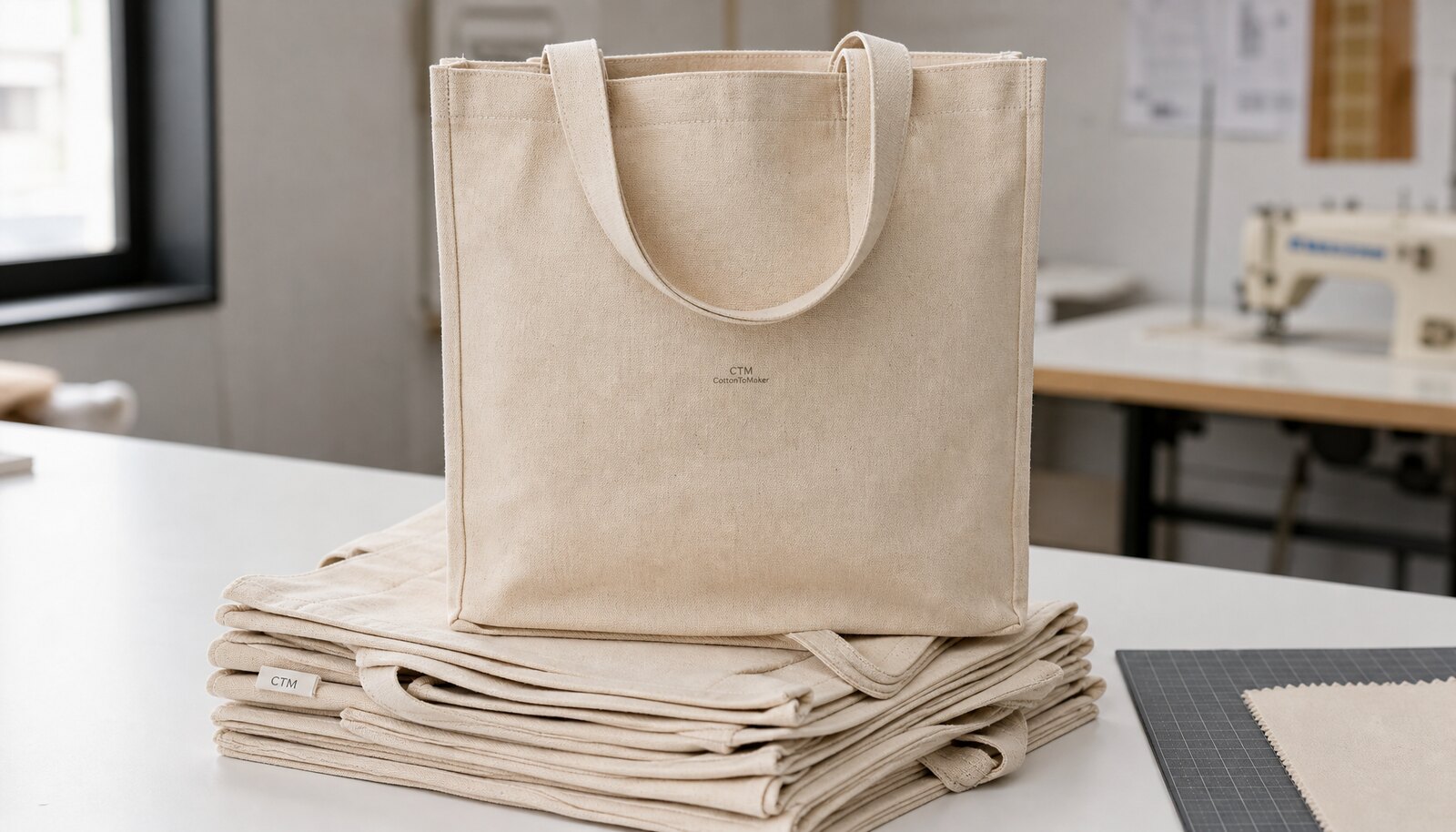
Why hotel tote sourcing goes wrong before production even starts
Most problems with canvas exhibition tote bags for hotels start in the brief, not the factory. When the request is written as a loose idea such as custom canvas bag with logo, each vendor fills in the missing details differently. One supplier may assume a lighter cloth, another may use a shorter handle, and a third may package the bags in a way that looks acceptable in transit but creates extra work at receiving. The quotes may look comparable, yet the finished goods are not truly the same product.
For a hotel, the tote is rarely a standalone object. It sits inside a guest-facing moment: conference registration, exhibition handout, VIP welcome, retail display, spa packaging, or a seasonal campaign. That means procurement is buying both a product and a presentation standard. A bag that looks fine in a catalog can still fail if it collapses on a reception counter, wrinkles badly in packing, or arrives with print placement that looks off once the seams are sewn.
The most useful early question is not what bag do you want, but what is the bag expected to do. Will staff fill it on site? Must it stand upright? Will it carry a bottle or boxed amenity kit? Is it meant for one-day event use or repeated guest use? Once that is clear, the spec becomes much easier to control. This is also where buyers save money. A precise brief reduces sample rounds, eliminates vague quote assumptions, and lowers the chance of a shipment that looks inexpensive but fails at the point of use.
Procurement teams also need to think about brand risk. In a hotel environment, small defects are visible because the bag is handled by guests and staff, not stored in a warehouse. Uneven stitching, crooked logos, or poor folding can make a low-cost tote feel careless. That is why the buying checklist should cover structure, appearance, packing, and quality control as one system instead of separate tasks.
A practical rule: if the hotel team cannot explain the bag’s use case in one sentence, the supplier probably cannot quote it consistently either. The clearer the event scenario, the more reliable the quote and the fewer surprises after production begins.
- Write the brief around the actual hotel use case, not only the material name.
- Treat packaging and carton marking as part of the product spec.
- Do not compare prices until every vendor is quoting the same construction basis.
Choose the tote structure around contents, handling, and presentation
The right tote structure depends on what will go inside and how the bag will be used. For a conference welcome kit, an open-top tote with a simple reinforced body is often enough because the hotel or event staff needs speed. For a guest gift pack or retail-style presentation, a cleaner top hem and a slightly firmer body can make the tote feel more intentional. If the bag has to stand on its own during handover or photo display, add a gusset or boxed bottom rather than relying on fabric weight alone.
A common mistake is specifying a size by visual preference instead of by fill content. A bag sized for A4 brochures may still be too narrow once a water bottle, notebook, or boxed amenity item is added. The buyer should define the actual contents and test them in a sample bag. An empty tote can look balanced on paper and still fail in use because the handles pull the opening inward or the contents sit awkwardly at the bottom.
If the tote will be reused by guests, then the structure should emphasize durability at stress points. That usually means stronger handle attachment, cleaner top-edge finishing, and a body that keeps its shape after repeated loading. If it is a one-day event handout, the structure can stay simpler and the budget can go into reliable print quality and efficient packing. Those are not aesthetic choices only; they are operational choices that affect cost, line speed, and the hotel team’s receiving experience.
There is also a visual point that procurement teams often miss: a tote can be technically correct and still look uneven if the side seams twist or the panel is cut off grain. That is why buyers should not approve based only on the flat-laid sample. Hang the bag, hold it upright, and look at the seam alignment and the visual center of the logo. A bag that looks neat on a table may look crooked in the hand.
For a hotel program, the structure should match the service moment. A reception handout, a VIP room amenity, and an exhibition giveaway do not need the same bag even if the logo is identical. The more the buyer treats the tote as part of the guest experience, the easier it is to avoid overbuying construction that adds cost without adding value.
- Common practical sizes: about 35 x 40 cm for literature, 38 x 42 cm with gusset for mixed kits, and larger formats if the tote must hold boxed gifts.
- Use a bottom gusset or boxed base when the bag must stand upright.
- If the tote is for repeated guest use, prioritize reinforced handles and a clean top hem.
Fabric weight, weave, and finish: what buyers should lock into the PO
Canvas is a broad term, so the buying team should force the quote into measurable terms. For many hotel exhibition tote programs, the most practical range sits around 8 oz to 10 oz canvas when the bag is mainly carrying literature or lightweight kit items. If the bag needs to feel sturdier, hold heavier inserts, or stay presentable after repeated use, 12 oz is often a more conservative choice. In GSM terms, that usually lands somewhere around the mid-200s to low-300s depending on yarn, weave density, finish, and shrink treatment. The exact conversion is less important than keeping every supplier on the same basis.
The spec should also name the weave and finish. Ask whether the cloth is plain weave or twill, whether it is natural, bleached, or dyed, and whether it has been pre-shrunk or otherwise stabilized. These details change not only the look but also the sewing behavior. A looser weave can look economical but may let ink sink unevenly and can feel less stable in the hand. A denser canvas can look more premium but may create bulk at the seams and make the top hem harder to keep neat.
Hotel buyers should be careful with the word heavy. Heavy by itself does not tell the factory what to use. One supplier may interpret it as a denser weave, another as a thicker yarn count, and a third may simply increase fabric weight while changing the hand feel. That is how two quotes can sound identical while producing different bags. The quote should state the weight, weave, finish, and acceptable shade range in writing. If the tote is natural unbleached canvas, some tonal variation is normal, but the fabric should still be visually stable and consistent enough that one panel does not read significantly different from another.
For repeat programs, fabric consistency matters as much as the first order price. A hotel that wants to reorder in six months needs a basis that can be matched again. If the original order is only described as good quality canvas, there is almost no control point for a future refresh. The better practice is to record the approved sample, fabric weight, finish, and color reference so the supplier can reproduce the same result later.
When the order is for a brand-sensitive hotel, the buyer should also ask about shrinkage behavior. A tote that changes shape after cutting or washing may not be acceptable even if it looks fine at packing. The point is not to demand laboratory perfection; it is to avoid preventable shape drift that would make the bag look inconsistent at handover or after short-term use.
- 8 oz to 10 oz is a practical starting point for event handouts and welcome kits.
- 12 oz is safer when the tote will carry heavier items or be reused often.
- Specify weave, finish, and pre-shrink status instead of relying on a generic canvas description.
Print method, logo placement, and visual control on textured canvas
The print decision often changes the quote more than buyers expect. For a simple hotel logo, screen printing is usually the most practical option because it gives strong coverage and a familiar, clean look on canvas. It works well when the artwork is one to three solid colors and the quantity is large enough to justify setup. If the order is smaller or the design uses multiple tones, digital print or heat transfer may be appropriate, but the buyer should inspect how the finish sits on the fabric rather than assuming all methods look equally premium.
Artwork should be matched to the use case. A subtle hotel mark may be better as a woven label, a small embroidery element, or a restrained front print. A trade-show handout that must be noticed from several meters away may need a larger screen print area. What matters is not choosing the fanciest method but choosing the one that matches the hotel’s brand standard and the event environment. Buyers should ask for print size, color count, placement tolerance, and whether the ink or transfer layer will survive folding and handling without visible cracking or edge lift.
One of the most common rejection points is logo drift. A design can be centered on the cut panel and still look off-center once the panel is sewn into a bag because seam allowance, fabric grain, and panel alignment change the visual center. Buyers should ask to see the first-off sample hanging naturally, not only lying flat. That helps catch a logo that is technically acceptable but visually unbalanced. On textured canvas, this matters even more because slub and weave variation can make a print feel slightly irregular if the placement is not carefully controlled.
For small text or an event date, legibility matters more than artwork complexity. A logo that looks clean from close range may still be hard to read when the tote is being handed out in a lobby or at registration. Ask the supplier to show a proof at actual size and confirm that line weight, edge sharpness, and registration are adequate on the chosen fabric. Thin ink coverage, fuzzy edges, or colors that look weak against natural canvas are all signals to adjust the method or the artwork.
A good sourcing habit is to define the print standard in procurement language, not marketing language. Instead of beautiful logo print, ask for print method, Pantone reference or visual match standard, print area, and acceptable variation. That makes the quote easier to compare and the approval process easier to document.
- Screen print: best for solid logos and higher quantities.
- Heat transfer or digital print: useful for smaller runs or more detailed artwork, but inspect edge quality closely.
- Woven label or embroidery: useful for a quieter, more premium hotel look.
Direct factory or trading company: a practical sourcing decision, not a slogan
Direct factory sourcing is usually the better route when the hotel wants exact control over size, construction, print placement, and reorders. It is easier to confirm raw material details, sample sequence, sewing plan, and inspection evidence when the supplier making the quote is also the supplier making the product. That matters in custom tote programs because the buyer is not buying a standard shelf item. Even small deviations in stitching or packing can change the final look and receiving effort.
A trading company can still make sense when the hotel is buying a mixed program and wants one purchasing contact for multiple item types. It can also help when the project needs consolidation or export coordination. The downside is visibility. If the trading company cannot clearly identify the actual factory capability, the buyer is forced to rely more heavily on samples and less on process control. That can work for a one-off order, but it is less attractive for a recurring hotel program that needs consistency across seasons or properties.
Rather than asking which route is cheaper, procurement teams should ask which route gives the most control over the weak points in the order. For a repeat tote used across a hotel chain, direct factory usually wins because the spec can be saved and reproduced more reliably. For a mixed promotional package with several product categories, a trading company may be simpler if the hotel values one consolidated shipment and less vendor management. The right answer depends on the project structure, not on a generic rule.
The red flag is not whether the supplier is a factory or trader; it is whether they can answer concrete questions without hedging. If a supplier cannot say which fabric basis they are using, how print setup is handled, how packaging is controlled, or what quality evidence is available before shipment, then the buying team is taking on avoidable risk. Good vendors, whatever their business model, can explain the process clearly and in writing.
A useful procurement test is to ask for the name of the production site, the sample lead time, and the inspection method. Suppliers who can describe those steps without overpromising usually have a clearer operation. Suppliers who only respond with a low price and fast delivery may still be usable, but the buyer should increase scrutiny on sample approval and pre-shipment evidence.
- Direct factory: better for exact spec control, repeatability, and QC visibility.
- Trading company: useful for mixed-category sourcing or consolidated export handling.
- If the supplier cannot explain the production process clearly, treat that as a risk signal.
Quote comparison: how to see the real cost drivers behind each offer
A tote quote should be compared line by line, not only by total unit price. Fabric weight, weave, print method, handle style, lining, closure, and packing all affect the final number. A supplier quoting a cheaper price may simply be using a lighter cloth, a smaller print area, a less reinforced handle, or a simpler packing method. None of those differences are visible if the hotel team only looks at the headline figure.
This is why procurement should ask each vendor to quote on the same skeleton spec. The hotel should state the finished dimensions, fabric basis, print method, handle length and width, reinforcement style, packing format, and carton assumptions. Once those are fixed, the comparison becomes meaningful. If a vendor refuses to quote on the same basis, that is not a minor inconvenience; it is a sign that the quote may not be comparable at all.
For hotels, the unit price is only part of the real cost. Receiving labor, repacking, damage sorting, and last-minute freight can erase a small savings quickly. A bag packed in a stable flat format may be more efficient than a retail-style presentation if the hotel only needs handout distribution. Likewise, a slightly higher quote may be worth it if the supplier can reduce defects, improve carton clarity, and shorten the approval loop. Procurement teams should compare the likely cost of exceptions, not just the cost of the bag itself.
The buyer should also ask about price sensitivity by option. For example, how much does the unit price change if the handle width increases, the print area grows, or the bag includes a gusset? That conversation helps the hotel decide where to spend and where to simplify. Often the best answer is to keep the structure simple and use the budget for better fabric consistency, cleaner print, and stronger packing controls.
If the supplier offers an unusually low price, ask what has been excluded. The most common omissions are sample remake cost, print setup, accessory changes, or special packing. A low quote can still be legitimate, but it should be backed by a complete written spec so the buyer knows exactly what is included and what is not.
- Ask every vendor to quote the same size, fabric, print, handle, and packing basis.
- Compare how much each option changes if you adjust handle, gusset, or print area.
- Do not treat the lowest headline price as the lowest landed risk.
MOQ, version control, and how to avoid accidental overbuying
MOQ is often discussed too loosely. For hotel tote sourcing, the important question is not only how many pieces the supplier will make, but how MOQ changes by size, color, print version, and packing version. A single tote body may be easy to produce, but if the hotel wants two artwork versions or two property-specific colorways, each version may count as a separate run. That can raise the effective MOQ much faster than the buyer expects.
A working planning point for simple custom tote programs is often around 1,000 pieces per version in factory discussions, but this is only a reference, not a rule. The actual threshold depends on whether the fabric is already in stock, how complex the print is, and how much setup the supplier needs. Lower MOQ can be useful for pilot programs or a new hotel launch, but buyers should expect a higher unit price and fewer options on material or packing. That is not a penalty; it is the normal cost of smaller runs.
Procurement teams should not let MOQ decisions drift into habit. If the hotel only needs a short campaign run, ordering for a full season can create excess inventory that has to be stored or discounted later. On the other hand, a too-small order can increase the odds of fabric lot mismatch or poor production efficiency. The right answer is to match the order volume to the event calendar and the expected consumption rate. That sounds obvious, but it is where many tote purchases go wrong because the buyer is thinking about cost per piece rather than use per piece.
It also helps to assign each version a clear SKU and carton code. If a hotel has one tote for a conference and another for a spa promotion, those should be treated as different items even if they share the same body. That avoids receiving errors and makes reordering much easier. When the business later wants a repeat order, the supplier should be able to identify the exact version without relying on memory or old email chains.
The practical message is simple: MOQ should protect the hotel from overbuying, not force the purchase into a number that only suits the factory line. Good suppliers can explain the tradeoff between volume, unit price, and material flexibility. Buyers should ask for that tradeoff in writing before they approve the PO.
- Ask for MOQ by size, color, print version, and packing version.
- Treat each artwork version as its own SKU and carton mark.
- Use low MOQ for pilot orders only when the spec is frozen and sample approval is disciplined.
Sample approval, document control, and pre-production evidence
A sales sample is not enough for a serious hotel purchase. It may show the intended look, but it often does not reflect the final production fabric, print method, thread tension, or packing method. The sample that matters most is the pre-production sample made from intended bulk materials. That is the version procurement should approve, sign, and archive. If the factory later changes fabric lot or printing process, the approved sample becomes the comparison point.
The sample review should be hands-on. Measure the finished bag, not just the flat panels. Load it with the items it will actually carry. Hold it upright. Check how the handles sit in the hand and whether the mouth opens easily enough for staff to pack at speed. Inspect how the logo reads when the bag is hanging naturally. These are practical tests, not cosmetic ones, and they catch issues that are otherwise missed on a desktop review.
The buyer should also require a simple record sheet. It should note the exact dimensions, fabric weight, weave and finish, print method, handle construction, packing format, and any agreed tolerance. That record is useful when the hotel reorders or when the supplier proposes a substitute material later. It also supports internal approvals because the procurement team can show exactly what was signed off.
This stage is also where buyers should stop drift. If the sample looks good but the spec sheet does not match it, revise the document before production starts. A beautifully made sample is not enough if it is not documented correctly. Many post-shipment disputes begin because the sample approval was verbal or incomplete. The fix is simple: keep one sealed approved sample and one working reference sample, plus photos from several angles. That small effort makes later QC much easier.
For hotel projects with tight schedules, sample approval should be time-boxed. Slow approvals create pressure later in the line and increase the chance that the factory pushes through minor defects to save time. Clear approval timelines, clear sign-off responsibility, and a named contact on both sides are part of procurement control, not administrative detail.
- Approve a pre-production sample made from intended bulk material, not only a showroom sample.
- Record dimensions, fabric basis, print method, handle spec, and packing format on the approval sheet.
- Keep a sealed reference sample and photo record for reorders and dispute control.
Packing, carton marking, and warehouse-ready delivery
Packing decisions matter because hotels are usually receiving for speed, not for retail display. For most canvas exhibition tote bags for hotels wholesale orders, flat packing is the most practical choice. It uses space efficiently, is easier to count, and allows the hotel to insert brochures or amenity items later. Unless the tote is being sold or displayed as a finished retail item, there is little reason to pay for elaborate presentation packing.
If the hotel wants a more polished look for a VIP kit or gift-shop placement, ask the supplier to quote those upgrades separately. Tissue wrap, a paper belly band, or an insert card can improve presentation, but each one changes labor, carton volume, and receiving time. These items should not be assumed to be free or included. They are line-item decisions with direct cost impact. Buyers should compare the benefit of a neater presentation against the added handling and freight implications.
Carton labels should be useful to the hotel warehouse team. At minimum, the carton marks should show PO number, style code, size, color or artwork version, and quantity. If there are multiple SKUs, keep them separated or clearly marked. Mixed cartons can work, but only if the receiving team has a written sorting plan. Otherwise, the savings in packing time can come back as labor at destination.
Ask for carton dimensions and gross weight, not just the number of pieces per carton. Those details help the hotel compare storage space and freight efficiency, especially if the bags are going into an airport property, a limited back-of-house area, or a distribution center with strict receiving rules. In procurement, a carton that is easy to handle is often worth more than one that merely looks efficient on paper.
The final detail is fold consistency. A flat-packed tote should arrive folded the same way across cartons so the receiving team can stack, count, and distribute without rework. If the supplier’s packing method is loose or inconsistent, the tote may look messy even when the bag itself is well made. That is a small problem with a big service effect.
- Flat-pack unless retail presentation is required.
- Quote any tissue, band, or insert-card upgrade separately.
- Use carton marks that allow receiving without opening every carton.
Quality control points that matter most for hotel buyers
Quality control for hotel totes should focus on the defects guests and staff will actually notice. Start with size verification against the approved sample. A practical tolerance is about +/- 0.5 cm for small bags and +/- 1 cm for larger tote dimensions, but the buyer should also confirm the shape, not only the numbers. A tote can be within spec and still look crooked if the panel alignment or side seam tension is off.
Next, inspect stitch quality at the highest-stress points: handle joins, top hem, side seams, and gusset corners. Loose thread tails, skipped stitches, broken backstitching, and uneven bartacks are typical rejectable defects because they signal inconsistent sewing and poor durability. Count the stitches where the load lands, especially around handle attachment, since that is where failure usually appears first in real use. If the bag is meant to carry bottles or boxed amenities, the strap and seam should be tested with that realistic weight, not with an empty bag.
Print quality deserves its own inspection. Check color density, edge sharpness, bleed, pinholes, and registration shift. On canvas, a print that looks acceptable from a distance can still fail if the ink is thin or the artwork is misaligned with the sewn seams. If the logo includes fine text or a small event date, ask for legibility at normal viewing distance, not just under close inspection. Many issues show up only after the tote is hanging or being carried.
Do not skip the top hem. A wavy hem, uneven fold, or exposed raw edge makes the bag look rushed even if the body is sewn well. For hotel use, the top edge is one of the first visual cues a guest sees. Symmetry and clean finishing matter because they shape the perceived quality of the whole product. The same is true of handle drop: if one side sits higher than the other, the bag can feel low-end even when the dimensions are nominally correct.
If possible, ask for pre-shipment photos from several angles and, when order value justifies it, a written inspection summary. That does not replace the buyer’s own QC standard, but it gives procurement a documented record before goods leave the factory. The more clearly the acceptance criteria are written, the easier it is to resolve issues without emotion later.
- Check size, panel squareness, and shape, not just dimensions.
- Inspect stress points first: handles, top hem, seams, and gusset corners.
- Reject thin print, weak registration, uneven hems, and sloppy bartacks.
Specification comparison for buyers
| Spec decision | Recommended option | When it fits | Buyer risk to check |
|---|---|---|---|
| Fabric weight / GSM | 8 oz to 10 oz canvas for standard hotel giveaway use; 12 oz if the tote must hold brochures plus boxed amenities or be reused frequently | Best for conference welcome kits, exhibition handouts, hotel retail gifts, and event registration bags where the tote needs to look presentable but still pack efficiently | Too light looks limp and may distort under load; too heavy raises sewing difficulty, freight cost, and the chance of bulky folds in packing |
| Weave and finish | Ask for the weave type, pre-shrink status, and whether the canvas is bleached, natural, or dyed before approving the quote | Useful when the hotel wants a more premium hand feel or when a specific print result depends on fabric stability | If the fabric basis is not written into the PO, suppliers may substitute a different hand feel or a looser weave that changes the final look |
| Supplier route | Direct factory for custom sizes, exact print placement, and repeat programs; trading company only if the hotel needs mixed-product consolidation or a single export point | Direct sourcing is usually better for procurement teams that need tighter control over sample approval and less margin stacking | Trading layers can hide the real factory, slow down sample sign-off, and weaken visibility on QC evidence and raw material changes |
| Print method | Screen print for 1-3 solid colors; heat transfer or digital print for small runs or multicolor artwork; woven label or small embroidery for a restrained premium look | Choose by artwork complexity, order volume, and how much abrasion resistance the hotel expects | Thin ink, poor registration, or artwork that shifts on slubby canvas can make the logo look off-center or low quality |
| Logo placement | Center the artwork against the finished seam line and not only against the cut panel | Important when the visual standard is strict and the bag will be displayed at reception or in an exhibition kit | A technically correct print can still look wrong if the bag is cut off grain or the seam changes the visual center |
| Handle construction | 25-35 mm cotton webbing handles or self-fabric handles with reinforced X-stitch and bartacks | Webbing handles suit heavier contents; self-fabric handles suit a softer hospitality look | Short handle drop, uneven stitching, or weak reinforcement often leads to customer complaints and early seam failure |
| Closure option | Open top for fast packing; top zip only when the contents need security or the bag will be reused as a travel tote | Hotels usually prefer open top for quick kitting and room or conference distribution | Adding zippers increases labor, may create puckering, and can complicate top-edge reinforcement |
| MOQ logic | Request MOQ by size, color, and print version rather than one headline number; around 1,000 pcs per version is a common planning point for simple custom orders | Useful for repeat hotel programs and event buyers testing a new design | Low MOQ can raise unit cost sharply and sometimes limits fabric shade matching, packing choices, or print setup flexibility |
| Packing method | Flat-packed with tissue or bundle wrap, then master carton with clear SKU marks and quantity count | Best for freight efficiency and receiving accuracy in hotel warehouses | Overstuffed bags, mixed size cartons, or vague carton labels create receiving errors and visible packing damage |
Buyer checklist before sampling
- Define the exact use case first: conference welcome kits, exhibition handouts, guest retail resale, or amenity packaging, because each use case changes the structure, appearance, and load requirement.
- Confirm the finished size, target fill weight, and whether the tote must hold A4 brochures, bottles, folded apparel, boxed amenities, or mixed contents.
- Lock the fabric basis in oz or GSM, and also state weave type, finish, and whether the material should be natural, bleached, or dyed.
- Specify the print method, number of colors, print size, placement, and whether the logo must remain crisp on textured or slub canvas.
- Decide whether the bag needs a gusset, top hem, lining, inner pocket, zipper, or bottom board, and do not assume those are included by default.
- State handle length, handle width, reinforcement style, and whether the handles should match the bag body or use webbing for added strength.
- Write packing instructions clearly: flat packed or folded, tissue or no tissue, polybag or no polybag, insert card or no insert card, and carton count per SKU.
- Ask the supplier to quote on one identical basis across all vendors: fabric, print, stitching, packing, carton loading, and freight assumption.
- Request a pre-production sample made from the intended bulk material, not only a sales sample or showroom sample.
- Keep a signed physical approved sample plus a photo record as the reference for mass production and reorders.
Factory quote questions to send
- What exact canvas weight are you quoting, in oz or GSM, and is it plain weave or twill?
- Is the quoted price based on raw natural canvas, bleached canvas, or dyed fabric, and can you confirm the fabric finish?
- How many print colors are included, what printing method will you use, and what are the setup, plate, or screen costs?
- What is the MOQ by size, color, and print version, and how does the unit price change if we go below that threshold?
- What handle construction are you quoting, including handle width, handle length, stitch pattern, and reinforcement at the join?
- Is the bag quoted with or without lining, inner pocket, zipper, gusset, bottom board, or top hem?
- What are the exact finished dimensions, and what tolerance do you allow on length, width, and gusset depth?
- What are the packed carton dimensions, units per carton, gross weight per carton, and whether cartons are single-SKU or mixed?
- How many days are needed for sample making, PP approval, bulk production, packing, and ready-to-ship confirmation?
- What quality checkpoints do you perform before shipment, and can you share photos or a written inspection report?
Quality-control points to confirm
- Measure the finished size against the approved sample and allow practical tolerance of about +/- 0.5 cm for small bags and +/- 1 cm for larger tote dimensions.
- Check the bag face for panel squareness: if the side seams twist, the tote can look crooked even when the dimensions are technically correct.
- Verify the fabric by declaration and by hand feel; if the canvas feels limp, overly open, or inconsistent between panels, do not pass it just because the quote says 10 oz.
- Inspect stitch quality at the handle joins, side seams, top hem, and gusset corners; loose thread tails, skipped stitches, broken backstitching, or uneven bartacks are rejectable defects.
- Count stitches where the load lands most heavily, especially at the handle attachment and the top edge, because these points usually fail first in real use.
- Check print placement on the first-off sample before bulk sewing continues; confirm the logo is centered to the finished seam line, not only to the cut panel.
- Inspect logo quality for color density, edge sharpness, bleed, pinholes, and registration shift; thin ink or fuzzy edges are not acceptable on a premium hotel tote.
- If the artwork has fine text or a small event date, confirm legibility from a normal viewing distance, not only under close inspection.
- Test the strap and seam with a realistic load that matches the hotel use case, such as brochures, a bottle, or a boxed amenity kit; if the handle stretches or the seam creaks, stop and revise.
- Check the top hem for symmetry and strength; a wavy hem, exposed raw edge, or uneven fold usually shows rushed sewing.