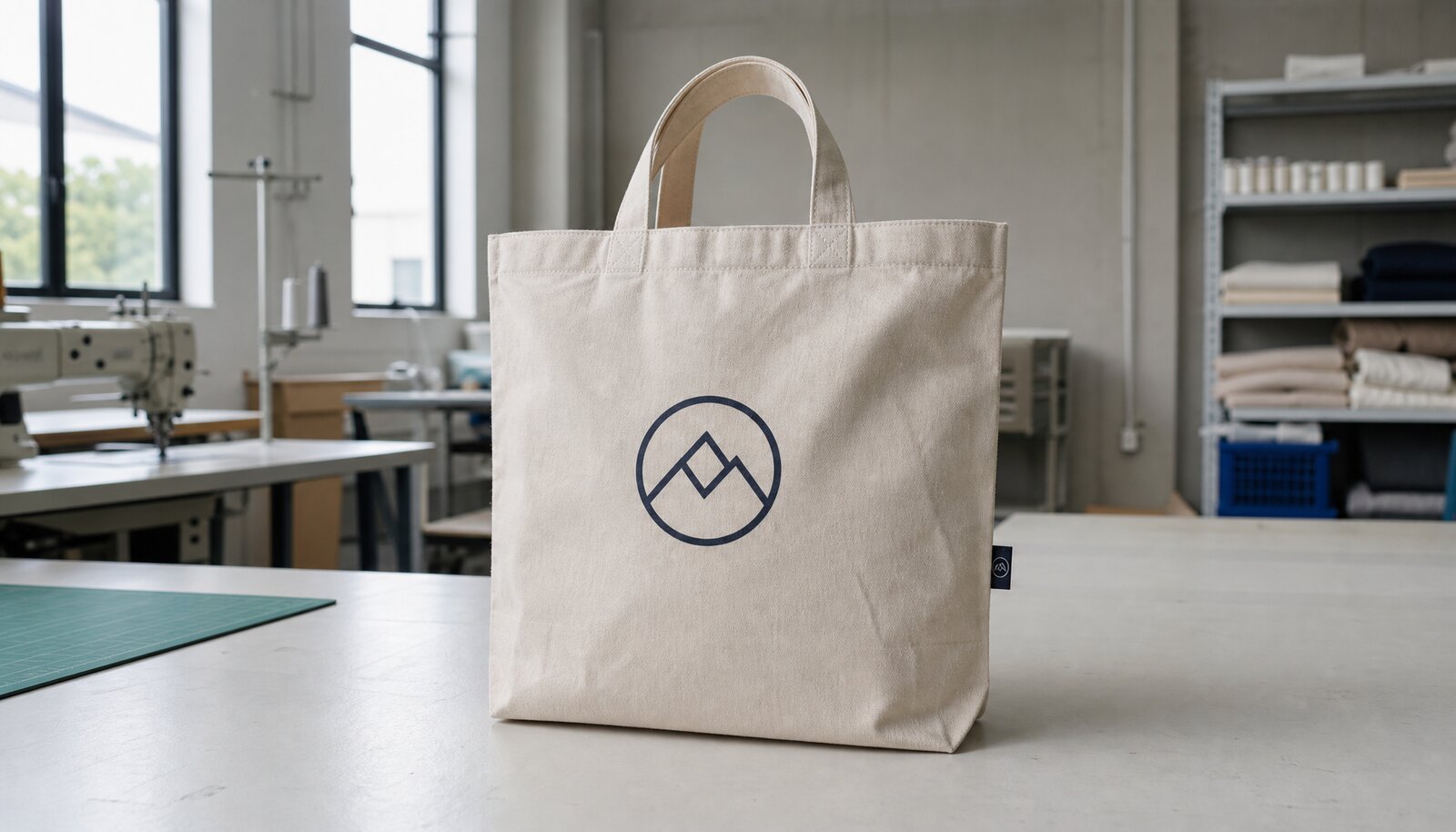
1) Why the Reorder Fails Even When the First Run Sold Well
A tote program usually does not fail because the idea is wrong. It fails when the second order gets treated like a routine top-up instead of a controlled repeat build. That is especially true for gift-shop retail, where the bag sits near books, posters, stationery, ceramics, or branded keepsakes and has to look right at first glance. If the canvas is thinner than the approved sample, the print lands a little high, or the handle hangs differently, buyers and customers notice even if the artwork is unchanged.
The sell-through pattern also matters. A gift shop may move the same tote steadily on weekends, during school holidays, around exhibition openings, or during a short tourist season, then slow down quickly. That makes reorder timing a merchandising decision, not just a purchasing one. If you wait until the shelf is bare, you often end up buying a rushed substitute or paying for speed you could have avoided with better planning.
The practical lesson is simple: keep the approved sample, the commercial assumptions, and the supplier identity attached to the reorder file. When the second run is priced or produced without those anchors, the result can be a visually similar product that behaves differently on the shelf, at the checkout, and in the customer’s hand.
For procurement teams, the real goal is repeatability. Not every tote needs a premium build, but every reorder needs a fixed reference point. Once the buyer decides what must not change, the rest of the sourcing work becomes much easier to manage.
- Treat the approved sample as a production reference, not a showroom example.
- Keep retail-resale totes separate from free promotional totes, even when the artwork is similar.
- Track why the first run sold: shelf appearance, carry comfort, visible durability, and price fit.
2) Start with Use Case Before You Ask for a Quote
Before requesting pricing for canvas exhibition tote bags for gift shops, define how the bag will actually be sold. A museum store tote, a premium souvenir tote, an event-resale tote, and a low-cost promo tote can all use canvas and a logo, but they do not need the same build. If you leave that decision vague, suppliers will fill in the blanks with their own standard, and that standard may not match your channel.
For a gift shop or museum store, the tote often needs to look like part of the merchandise table rather than a giveaway item. That usually means better body structure, cleaner stitching, and a print application that holds up to repeated handling. For event resale, the bag may need to hit a price ceiling more aggressively, so the buyer might accept simpler construction if the artwork still presents cleanly. For low-cost promo, a lighter canvas or a simpler print method may be acceptable, but it should be a conscious choice rather than a side effect of weak sourcing.
The question to answer is not only “What is the cheapest tote we can buy?” It is “What tote matches the price point and customer expectation of this channel?” That is a more useful procurement question because it gives the supplier something to engineer toward. The quote then becomes a commercial tool instead of a loose catalog price.
When buyers skip this step, they usually pay later through mismatched stock. A tote that is too flimsy can still sell, but it may drag down the perceived quality of the rest of the retail display. A tote that is too heavy or too expensive can sit unsold even though it is well made. The right spec is the one that fits the channel, not just the logo.
- State the sales channel in the RFQ so suppliers do not guess your quality level.
- Match bag build to the retail price band, not to a generic tote standard.
- Separate premium souvenir logic from promo logic before comparing quotes.
3) Write a Base Spec That Makes Quotes Comparable
A usable reorder memo starts with a spec that removes ambiguity. The first layer is geometry: finished width, height, gusset depth, handle length, and handle drop. If the tote will be displayed folded, inserted into an inner pack, or shipped in a fixed carton count, the fold geometry matters too. A few millimeters on paper may sound minor, but it can alter how the bag sits in a display basket or how many units fit in a carton.
The second layer is fabric basis. Do not stop at “canvas.” Ask for weight, weave, finish, and shade family in plain terms that your buyer team can compare across suppliers. If the supplier references oz weight or GSM, keep the unit consistent across the quote set and avoid mixing descriptions without clarification. What matters is that every offer is based on the same cloth definition. If one vendor assumes a lighter cloth and another assumes a denser one, the price comparison is not meaningful.
The third layer is construction. Record whether the handles are self-fabric or webbing, whether the seam finish is turned, enclosed, or overlocked, and where the reinforcement sits. If the bag is expected to hold books or heavier souvenirs, that load path should be explicit. A quote that omits reinforcement detail may look attractive until the first bag in the carton opens at the handle joint.
The fourth layer is decoration. Specify the print method, number of colors, artwork size, and placement reference. If the logo needs a woven label, hangtag, or side label, include that too. Retail buyers often care about those finishing touches because they affect shelf perception almost as much as the bag itself. Once all four layers are written down, the supplier can quote the same product rather than a vague version of it.
- Write dimensions, fabric basis, construction, and decoration before asking for price.
- Use one measurement system across all bids.
- Include fold and pack geometry if the tote will go into a fixed carton or display format.
4) Compare the Real Commercial Tradeoffs, Not Just the Unit Price
A tote reorder is only cheap if it stays cheap after freight, receiving, and selling. Fabric weight is the first tradeoff. A lighter cloth can lower unit cost, but if it looks limp on a shelf or feels too thin in the hand, the bag may sell more slowly or be returned more often. A more substantial cloth can raise material cost, yet improve the retail impression and reduce the chance that the tote feels like a throwaway item. That tradeoff is worth making explicit in the planning memo because it affects both margin and brand perception.
Print method is the second tradeoff. Screen print is often the most practical default for repeat orders with simple graphics because it can be durable and repeatable when the process is controlled. Heat transfer can help with more detailed artwork or smaller runs, but it should not be assumed to be the safer choice. Buyers should check how the print behaves on the actual canvas, whether the edge will crack after handling, and whether the look remains clean after folding and refolding.
Construction is the third tradeoff. Clean turned seams, better reinforcement, and a more refined handle finish can make the bag feel premium, but they add labor. If the tote is sold as a souvenir item, that labor may be worth it. If it is a low-cost promo or an event handout, the customer may not pay for the upgrade. A serious buyer should decide where the product needs to perform and where it can be simple.
The right procurement move is to compare these tradeoffs as a package. A low ex-factory price is not a win if the tote arrives with poor shelf structure or creates extra touch labor in the warehouse. In the same way, the most refined version is not always the right one if the sales channel cannot support the price. The memo should force the team to choose deliberately.
- Compare fabric, print, and construction together instead of optimizing one line item.
- Judge the bag on landed cost per sellable unit, not on factory price alone.
- Spend premium attention on retail touchpoints: handfeel, print clarity, and shelf shape.
5) Use a Side-by-Side Sourcing Comparison That Buyers Can Act On
A useful comparison table should tell the buyer what changes commercially when the sourcing route changes. Direct factory buying is usually the best fit when the bag is a repeat SKU and the team cares about repeatability across lots. It often gives the clearest line of responsibility for fabric, sewing, printing, and packing. The tradeoff is that the buyer must do more of the control work up front. If the factory is truly producing the order, that work is worth it because it reduces hidden variation on future reorders.
Trading companies and sourcing offices are different. They can be helpful when the order spans multiple item types, when the buyer needs local communication support, or when coordination across several vendors would otherwise be expensive. Their advantage is convenience. Their risk is opacity. If they cannot identify the actual sewing line, print location, and final pack site, the buyer is not comparing like with like. The quote may be fine, but the control chain is weaker.
Domestic stockholders and importers solve a different problem: time. They can fill a retail gap quickly when an exhibition date has moved, when a season is shorter than expected, or when the buyer simply missed the ideal reorder window. The downside is that stock inventory sets the product, not the buyer. If the artwork is slightly off, the tote may be usable for a generic promotion but not for a branded retail shelf.
A hybrid approval-plus-stock model can work when a core tote sells often enough to justify pre-approval. In that setup, the supplier holds finished goods or approved components against a master spec. This route can be commercially strong if the buyer writes down exactly what is pre-approved, what can be pulled from stock, and what changes require new sign-off. Without that definition, hybrid programs drift quickly.
The practical question for procurement is simple: do you need control, speed, or convenience most? For a gift-shop reorder, control usually wins unless the stockout risk is urgent. That is why the sourcing route should be chosen after the use case is defined, not before.
- Prefer direct factory sourcing for repeat retail SKUs when control matters more than speed.
- Use traders when coordination matters, but require disclosure of the actual production chain.
- Use stock only when the available lot matches the approved tote closely enough to protect retail presentation.
6) Verify the Real Factory with Documentary Checks, Not Assumptions
Saying “verify the factory identity” is not enough. Buyers need a repeatable document trail. Start with the legal company name, registered address, and the exact production address where the tote will be cut, sewn, printed, and packed. Then ask for the business document that matches that name and compare it with the invoice, packing list, sample tag, and inspection booking. If the names or addresses wander between documents, pause and ask why before you approve the order.
Next, test operational ownership. Ask the supplier to show photos of the sewing line, print area, and packing station with enough context to prove the location is real. A factory that makes the tote should be able to explain where fabric enters, where cutting happens, where printing is done, and who performs final counting or final inspection. If a supplier cannot answer those process questions without hesitation, they may still be a valid trading partner, but they are not a direct producer in the way many buyers assume.
Watch for red flags. A sample shipped from one address and the production booking handled from another can be harmless, but it can also mean the buyer is dealing with a broker layering vendors. A business card that uses factory language while the documents use a different company name is another signal to slow down. If the company is reluctant to name subcontracted steps, or if the inspection site is somewhere other than the stated plant, the buyer should not treat the quote as a direct-factory offer.
For a reorder-heavy gift shop program, this matters because defect resolution depends on who actually made the bag. If the fabric shade shifts or the handle stitch fails, the buyer needs a responsible party who can inspect the same line, not just a sales contact who forwards emails. Verification is not bureaucracy; it is how you keep the next run from becoming a guessing game.
- Match the supplier name across business documents, invoice, sample tag, and inspection booking.
- Ask which steps are in-house and which are outsourced, then record the answer.
- Treat unexplained address or company-name mismatches as a reason to slow the PO, not as a cosmetic issue.
7) Plan MOQ and Reorder Timing Around Sell-Through, Not Wishful Forecasts
MOQ is best treated as a production constraint that affects how often you can reorder and how much cash sits in inventory. For tote bags, the minimum can change based on fabric availability, print complexity, color count, and packing requirements. That means the buyer should not chase the lowest MOQ blindly. The better question is whether the MOQ supports a healthy reorder cycle for the store’s actual demand pattern.
Coverage planning is the practical method. Start with the selling pattern you already know, then back into the reorder point using transit time, receiving time, and any approval time for samples or file corrections. A tote that sells steadily through the year may justify a larger batch because it lowers buying friction and keeps stock flowing. A tote tied to a short exhibition or seasonal event may need a smaller run, even if the unit cost is a little higher, because dead stock is more expensive than a modest price premium.
This is where buyers often misjudge timing. They plan from sewing days alone and forget the rest of the chain. A sample that needs approval, a vessel that misses the ideal booking, or a warehouse that needs extra receiving time can each add days or weeks. If the reorder trigger is too late, the buyer pays twice: first in rush logistics, then in lost sales while the shelf is empty. A good reorder memo should force the team to calculate when the stock must leave the factory, not when the PO is sent.
For retail buyers, the useful measure is weeks of cover after the tote lands and is ready to sell. That is a better planning unit than order size alone because it reflects the actual business risk. MOQ only matters when it fits the calendar and the shelf.
- Ask for MOQ by design, color, and fabric basis if any of those can change the run.
- Set reorder triggers using weeks of cover, not emergency stock levels.
- Include approval time, transit, receiving, and shelf placement in the lead-time plan.
8) Sample Approval Should Lock What the Next Order Must Match
A sample is the contract in physical form. Before mass production, it should prove the dimensions, fabric basis, handle placement, reinforcement, stitch appearance, print position, and fold behavior. For a gift-shop tote, it should also show how the bag looks when presented the way it will be sold. If the product is folded for display or packed in an inner polybag, the buyer needs to see that exact presentation, not just an open bag photo on a bench.
Approval should be measured, not casual. Check the finished body against the drawing, compare the handle drop on both sides, and inspect the print against the artwork file under neutral light. If the canvas is natural or unbleached, compare the sample with the prior approved run rather than with a computer screen. Physical comparison often reveals the real problem: the bag is subtly thinner, the label sits a little off, or the print is shifted enough that the product looks less tidy on shelf.
Keep a retained golden sample at both buyer and supplier sides. Mark the revision number and note what changed, if anything, from the previous run. If the buyer approves a production sample that differs from the last accepted lot, that change should be written down before mass production starts. Otherwise, the supplier may treat the change as acceptable while the buyer later sees it as drift.
The point of sample control is not to create extra paperwork. It is to make sure the next reorder is the same product the retail team already knows how to sell. That is especially important for exhibition or museum-related totes, where the look of the bag often carries as much commercial value as the logo itself.
- Use a measured pre-production sample, not a concept sample, as the approval basis.
- Compare the new sample to the last accepted production lot, not only to artwork files.
- Keep one retained golden sample with clear revision marking on both sides.
9) QC Controls That Give Buyers Real Leverage at Inspection
A useful QC plan should separate the defects that matter from the ones that merely irritate the team. Start with a written defect ladder: critical, major, and minor. Critical defects are the ones that make the tote unsellable or unsafe in the customer’s hands, such as wrong SKU, wrong artwork, missing handle, severe contamination, or catastrophic seam failure. Major defects are those that hurt retail acceptance or function, such as off-center print, obvious shade mismatch, broken reinforcement, or size drift outside the written window. Minor defects are small cosmetic issues that do not stop sale but should be tracked if they occur too often.
Inspection should focus on specific points. Measure finished dimensions from the same references each time. Check handle placement left and right. Inspect side seams, gusset corners, and handle joins for skipped stitches or loose ends. Confirm that the reinforcement pattern is complete and not merely approximated. Examine the print for alignment, clean edges, and consistency across the carton sample. Look at the bags under neutral light, not just under bright factory LEDs that can hide color variation.
The carton itself also needs acceptance criteria. Random carton checks should verify count, SKU label, barcode placement, and fold orientation. If the bag is folded across the print face, make sure the crease does not damage the visible art. Check for crushed corners, moisture exposure, and mixed lot contamination. If the shipment is for a distributor or central warehouse, carton dimensions and gross weight should be checked against the receiving plan before the truck leaves.
These controls give buyers leverage because they turn defects into shared language. Instead of saying the bags “look off,” the buyer can point to a dimension variance, a misprint position, or a reinforcement miss. That makes corrective action possible and keeps the inspection from becoming a subjective argument.
- Use a three-level defect classification: critical, major, minor.
- Check seam starts, handle joins, gusset corners, print position, and carton count on every inspection lot.
- Set carton-level acceptance criteria for count, label accuracy, moisture, crushing, and fold damage.
10) Packing, Labeling, and Distribution Should Be Part of the Purchase Spec
Packing is not a warehouse detail; it is part of the product. A canvas tote folded too tightly can carry a crease through the print area and make the bag look used before it reaches the shelf. A bag packed too loosely can inflate freight and create uneven carton counts. The buyer should decide what the finished unit should look like after packing, not just after sewing.
For most retail tote programs, flat folding with a clean inner pack is the most workable format. It protects the bag, simplifies counting, and supports distribution through a central DC or store network. But the fold orientation should be tested against the print area. If the fold lands directly across the logo or exhibition art, the bag may arrive with a permanent crease line that undermines shelf appeal. Ask the supplier to show the exact fold on the sample and confirm that the printed panel remains visually clean after folding.
Labeling should also be written into the quote. If you need barcodes, SKU stickers, hangtags, or carton marks, state who applies them and where. Loose inserts and factory-applied labels are not interchangeable. A label that is applied later in the receiving flow may work for one business and fail for another because it shifts labor and error risk downstream. The same applies to carton marks, which should match the PO and the receiving system exactly.
If the order will move through a distributor or central warehouse, confirm carton dimensions and gross weight before shipment. That is how you avoid surprises in pallet building, storage density, and handling. Packing that looks fine at the factory can become expensive later if the cartons are awkward or inconsistent.
- Quote the inner pack, master carton count, and folding orientation before placing the order.
- Confirm whether labels are attached, inserted, or supplied loose for later application.
- Check carton dimensions and gross weight early if the bags will flow through a DC or distributor.
Specification comparison for buyers
| Sourcing route | Best fit use case | Commercial upside | Main control risk | Buyer action before PO |
|---|---|---|---|---|
| Direct factory with confirmed production line | Repeat gift-shop SKU, museum store core item, planned seasonal reorder | Usually the cleanest path for repeatability, clearer responsibility, and better control over fabric, stitch, print, and packing | Factory may still outsource cutting, printing, or packing unless you verify the line | Ask for legal name, production address, process flow, and a signed sample reference before comparing price |
| Trading company or sourcing office | Mixed-item programs, buyers needing consolidated communication, or multi-category programs | Convenient coordination and broader vendor access | The quote can hide the real maker and blur responsibility for defects | Require disclosure of the actual factory, subcontracted steps, and who owns inspection and rework |
| Domestic stockholder or importer inventory | Urgent fill-ins, missed sales windows, or short-notice events | Fastest replenishment and lower planning burden | You can only buy what is in stock, not exactly what you want | Request measured samples, carton photos, and current lot details before assuming it matches the approved tote |
| Hybrid approval-plus-stock model | Stable core bag where the seller can hold approved components or finished goods | Better speed than a full custom build while preserving some spec control | If the stocked version drifts from the master spec, the buyer inherits the variation | Define what is pre-approved, what is custom, and what changes require new sign-off |
| Use-case lens | Gift shop retail, museum store, event resale, premium souvenir, low-cost promo | Helps buyers match structure to price point and customer expectation | A tote built for giveaway use may look weak on a retail shelf | State the channel and price band in the RFQ so the quote reflects the real standard |
| Material basis | Canvas weight, weave, finish, and shade family | Improves quote comparability when all suppliers price the same cloth basis | Vague cloth descriptions allow quiet substitutions | Specify fabric basis, weave, and finish in the RFQ and sample record |
| Construction basis | Body size, gusset, handles, seam structure, reinforcement, and fold method | Reduces returns caused by weak load points or bad shelf presentation | Small structural changes can change feel, pack count, and freight cost | Lock drawings and reinforcements before the first quote round |
| Decoration basis | Screen print, heat transfer, embroidery, woven label, or mixed decoration | Lets the buyer match artwork complexity to durability and cost | The wrong method can crack, blur, pucker, or feel cheap | Ask the supplier to quote method-by-method and explain the failure mode for each |
| Packing basis | Inner pack, master carton count, barcode treatment, folding, and carton mark format | Improves receiving efficiency and shelf readiness | Packing shortcuts can damage print faces or create miscounts | Quote the same carton and inner pack structure across all vendors |
Buyer checklist before sampling
- State the channel clearly: museum store, gift shop, event resale, premium souvenir, or low-cost promo. The quote should match the selling environment, not just the artwork.
- Lock finished size, gusset depth, handle length, handle drop, and print placement before you ask for pricing.
- Ask each supplier to quote the same carton count, inner pack, folding method, barcode treatment, and shipping term so landed cost is actually comparable.
- Require the fabric basis in clear terms: weight, weave, finish, and whether the cloth is natural, bleached, dyed, or recycled-content if claimed.
- Use the approved sample as the production reference and keep a retained golden sample on both sides.
- Define a written tolerance window for dimensions, print position, handle placement, and shade range before mass production starts.
- Write defect classes in the PO or QC plan: rework, minor defect, major defect, and critical defect, with clear hold and reject rules.
- Confirm whether the quoted company is the producer, trader, or agent, and match the legal name across business documents, invoice, packing list, and inspection booking.
- Plan reorder timing from approval date to ready-to-ship date, then add transit, receiving, and shelf placement time.
- Review landed cost and replenishment risk together; the lowest ex-factory quote is not always the lowest total cost.
Factory quote questions to send
- What is the exact finished size, gusset depth, handle length, and handle drop, and can you mark them on a tech pack or cut sheet?
- What fabric basis is being quoted, and how do you describe the cloth weight, weave, finish, and shade family in your own internal records?
- Is the canvas cut from a single lot, and what happens if a later lot has a visible shade difference?
- Which stitch pattern is used at the handles, side seams, and gusset corners, and where are the reinforcement points located?
- Can you confirm whether the handle base uses box-X, bartack, or another reinforcement method, and how many reinforcement points are on each side?
- What print method is included, how many colors are in the quote, and what setup cost applies to screens, plates, or files?
- What is your sample sequence from reference sample to pre-production sample to bulk approval, and what gets measured at each stage?
- What is the MOQ by design, by color, and by fabric basis, and does changing print color or packing format change the minimum?
- Who performs cutting, sewing, printing, packing, and final inspection at the production site? If any step is outsourced, name the subcontractor.
- What is the packing method, inner quantity, master carton count, and carton dimension target, and can you confirm whether the bag is folded across the print area or kept flat?
Quality-control points to confirm
- Finished dimensions should be checked against the approved drawing and golden sample, not against memory. Set the tolerance in writing before production. For retail tote programs, use a tight but realistic window that preserves pack count and shelf appearance; any drift outside the written window should trigger hold or rework review.
- Handle placement needs both location and consistency checks. Measure from top edge to handle stitch point on both sides, then compare left and right. If the bag hangs unevenly or one handle sits visibly lower, treat it as a defect rather than a cosmetic quirk.
- Stitch inspection should focus on the points that fail under load: handle joins, side seams, gusset corners, top edge finish, and any reinforcement pattern. Check for skipped stitches, loose loops, broken threads, seam slippage, uneven stitch length, and damaged fabric caused by a dull needle.
- Reinforcement must match the PO. If the approved spec calls for a box-X or bartack, verify that the pattern is complete, centered, and repeated on every bag in the sample set. Missing legs, half-barts, or shifted reinforcement are not acceptable substitutions.
- Print inspection should cover placement, color consistency, edge sharpness, and cure. Look for misalignment, overspray, pinholes, smearing, cracking, ink transfer, or ghosting after handling. Use a simple dry rub check and a tape check if your ink system and artwork warrant it.
- Shade control matters even on natural canvas. Compare panels under neutral light and note whether one lot contains obvious cream/white variation beyond the approved appearance. Panel-to-panel contrast, dirty-looking cloth, or mixed shade packs should be treated as lot issues.
- Fabric basis needs verification, not assumption. Ask the supplier how they measure cloth weight and request the basis of measurement. If the supplied fabric feels noticeably lighter, thinner, or more open than the approved sample, hold the lot pending review.
- Retail-level contamination is a real defect category. Oil marks, dirt, adhesive residue, odor, loose fibers, and visible needle damage on the consumer-facing panel should be classified in advance as rework or reject. Do not leave that judgment to the warehouse on receiving day.
- Carton checks should confirm exact count, correct SKU label, barcode position, carton mark accuracy, and fold orientation. Random carton openings should verify that top-layer units represent the whole lot, not a hand-picked sample.
- Carton-level acceptance criteria should include no crushed corners that affect bag shape, no moisture damage, no mixed colorways in the same labeled carton unless the PO allows it, and no quantity variance beyond the written packing allowance.