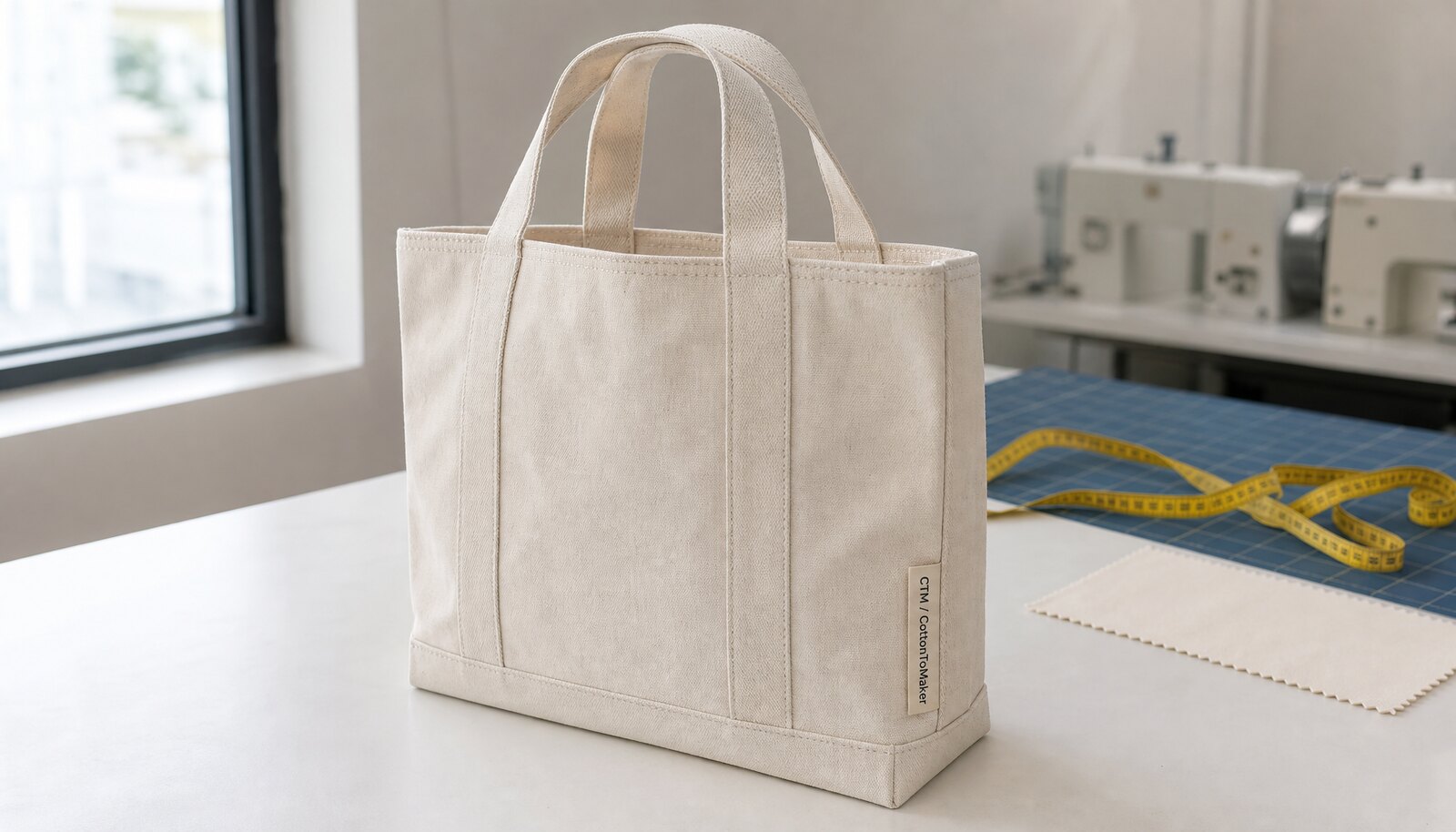
Start With the Gift Shop Use Case, Not the Tote Template
Gift shops buy bags for a different reason than trade shows, tourism events, or corporate giveaways. The bag has to earn shelf space, sit well next to other retail merchandise, and still feel useful after the customer walks out of the store. If the tote looks too promotional, collapses on the shelf, or wrinkles around the logo, it can underperform even when the unit price is attractive. Before comparing factories, define what the bag is supposed to do: carry purchases, serve as a souvenir, or support a branded retail range that the shop can reorder season after season.
That use case should appear in the RFQ in plain language. A register-side impulse item needs a clean front face, predictable folding, and a balanced logo that reads like retail product design rather than a free handout. A tote intended for books, boxed gifts, or bottles needs stronger stitching, better base stability, and a handle spec that does not look fragile. Once the use case is explicit, suppliers can quote against the same commercial target instead of guessing whether you want a premium gift item, a low-cost souvenir, or a general shopping bag.
For procurement, the real value of this first step is that it narrows supplier confusion. Most quote problems begin when the buyer says “custom tote” and leaves the factory to interpret the rest. The factory may optimize for cost, while the gift shop buyer is actually optimizing for resale appeal, repeat orders, and low return risk. A good brief states the expected shelf position, the target retail feel, and the typical customer load. That makes later decisions about fabric weight, logo method, and packout easier to compare because the commercial purpose is already fixed.
Choose Fabric Weight for Retail Behavior, Not Just Cost
Canvas weight is one of the fastest ways to move a gift-shop bag from “functional” to “sellable.” An 8 oz canvas, roughly 240 to 260 gsm, can work for lighter souvenir use or low-ticket promotions, but the bag often feels softer, drapes more, and can show seam distortion once it is folded and filled. A 10 oz canvas, roughly 280 to 340 gsm, is the most practical middle ground for retail programs because it gives the bag more body, supports screen printing cleanly, and still keeps material and freight costs reasonable. If the bag needs a premium hand feel or must carry heavier purchases, 12 oz or higher can make sense, but sewing time, waste risk, and shipping weight all rise with it.
Do not approve a quote based only on nominal weight. Ask the supplier what finished fabric behavior you should expect after cutting, sewing, and any washing or finishing processes. Natural canvas can vary in shade from lot to lot; bleached or dyed canvas requires tighter color control if the bag is sold as part of a coordinated shop range. If the supplier says the fabric is pre-shrunk, ask how that was done and what shrinkage range remains after sewing. A common failure mode is a sample that looks right in the sample room but shifts in bulk because the yarn lot, finishing method, or moisture content changed.
A procurement-minded buyer should ask for three things before committing. First, the target gsm and an acceptable tolerance band. Second, the weave density or construction detail that supports print clarity. Third, a confirmation that future replenishment orders will use the same cloth or a documented equivalent. If the supplier cannot explain the difference between a stable retail canvas and a cheaper loose weave, the bag may look acceptable in photos but disappoint on shelf. In this category, the first order is not just a price test; it is also a material consistency test.
Match the Logo Method to Reorder Volume and Artwork Complexity
For most gift-shop programs, the print method should follow the reorder pattern. Screen printing is still the default for simple one-color or two-color branding because it is durable, repeatable, and relatively efficient once the setup is complete. If the artwork has gradients, fine lines, or small-volume pilot quantities, a transfer method can reduce setup friction, but the cost advantage usually narrows as soon as the supplier has to add steps for heat pressing, edge trimming, or additional handling. Woven labels and side labels are useful when the retailer wants the canvas body to stay visually clean and the branding to feel more subtle or premium.
The RFQ should describe logo placement in measurable terms. State the artwork size, distance from top edge or seam, exact number of colors, and the expected color reference. If the print sits close to a gusset or side seam, request a strike-off on actual fabric before bulk cutting begins. Ask how the ink is cured and how print rub resistance is verified. A good supplier will explain whether the print is heat-set, air-dried, or cured through another controlled process and will know how they reject a print that smears during folding or rubbing. Embroidery is less common for basic exhibition totes because the added sewing time can distort lighter canvas and increase unit cost faster than the retail price can absorb.
A useful way to decide is to compare logo methods by the selling job. If the bag is a high-visibility item near the till, screen print usually wins because the logo reads quickly from a distance. If the store wants a quieter brand expression, a woven label or small side label can make the product feel more designed. If the order is a small test run and the artwork may change, transfers can make sense despite their weaker premium feel. The wrong choice is the method that looks easiest for the factory but does not match the repeat-order plan or shelf presentation.
Size and Structure: What Actually Sells Off the Shelf
Gift shops usually do better with medium tote sizes than with oversized exhibition bags. A practical range is often around 35 x 40 cm to 40 x 45 cm, with a 10 to 12 cm gusset, but the right size depends on what the customer is most likely to carry home. If the bag is too small, it turns into a novelty item and loses utility. If it is too large, it starts to feel like a trade-show giveaway rather than a retail item the customer paid for. The best retail tote usually fits books, bottled drinks, postcards, boxed gifts, or a couple of apparel items without appearing overstretched.
Structure matters as much as the external dimensions. A flat bottom or light gusset helps the bag stand in display and improves packing consistency. Reinforced handle attachment is not optional if the tote will carry heavier retail goods, and a clean top hem often improves the retail impression more than additional decoration does. Buyers sometimes ask for pockets, zippers, or multiple panels because they sound premium, but each extra feature adds sewing operations, increases defect risk, and raises the chance that the bulk run drifts away from the approved sample. In this category, simple and well-made usually outsells complicated but inconsistent.
If you need a commercial rule of thumb, use structure to support the selling price. A low-price souvenir bag can stay simple with basic stitching and a modest gusset. A mid-range gift-shop bag should hold shape, stand reasonably, and feel sturdy in the hand. A premium retail tote may justify heavier canvas, a more refined top hem, stronger handle reinforcement, and a cleaner fold. The point is not to overbuild the product. The point is to make the structure support the shelf price without adding features that create QC problems or slow production unnecessarily.
Understand MOQ, Setup Cost, and the Real Break Between Test and Reorder
MOQ is not an arbitrary factory slogan. It is usually the point where fabric buying, print setup, cutting efficiency, and packing labor become workable together. A simple one-color bag in standard canvas can often support a lower MOQ than a multi-color print, a custom-dyed cloth, or a special retail packout. The quote changes quickly when you ask for more than one size, more than one logo location, or mixed colors, because the factory has to reset the line, adjust the cutting plan, or hold extra material against shade variation. That is why one number without a breakdown is rarely enough for procurement.
For a gift-shop buyer, the better question is not “what is the minimum order?” but “what minimum quantity keeps the second order stable?” A cheap first order can become expensive if the supplier must recreate screens, re-confirm fabric, or restart the packing spec every time you reorder. Compare the MOQ against your sell-through rhythm. If the tote is a test item, it may be worth paying a slightly higher unit price to a supplier that can repeat the same spec cleanly. If the product is already proven, a supplier with a higher MOQ but lower setup friction may be the better commercial choice because the repeat order cost falls faster over time.
When you review quotes, separate true unit cost from setup cost. Screen fees, plate fees, sample fees, and carton artwork charges should be visible. If a supplier buries those items, the first order may look competitive but the second order may not. Ask for at least three price tiers so the step-down between trial quantity and bulk quantity is obvious. That makes it easier to see whether the supplier is discounting the right cost driver or merely spreading setup cost across the shipment.
Compare Supplier Routes and Ask for Factory Proof
Direct factory, trading company, and local decorator are not interchangeable sourcing routes. A direct factory is strongest when you need one owner for sewing, printing, and packing, and you expect repeat orders. A trading company can be helpful when communication, mixed SKUs, language support, or multi-destination shipping matter more than direct factory access, but it adds another layer between the quote and the floor. A local decorator can be useful for urgent small runs, yet the bag body is still often sourced elsewhere, which means the buyer is effectively managing two suppliers whether the paperwork says so or not.
The seller should be able to prove the route it is quoting. A factory should show the sewing line, print area, and packing area under the same business identity, plus a sample room that matches the product being sold. A trading company should be clear about which factory produces this exact bag, who owns defect claims, and who signs the pre-production sample. If the seller cannot explain fabric sourcing, print curing, and carton labeling in plain terms, the quote is not ready for comparison. The best sourcing route is the one with the clearest chain of responsibility, not the lowest number on the first line of the quote.
A practical verification check is to ask for evidence, not just reassurance. Request photos of the actual machine setup, a recent production batch of a similar tote, a QC report or inspection summary, and proof that the supplier has made this style before. Ask who handles problem resolution if a carton arrives short, a print batch rubs off, or the handle stitching fails. If the answer is vague, treat that as a sourcing risk, even if the price is attractive. Procurement buyers should prefer suppliers that can show how they control risk, not only how they market product.
Approve the Sample Against Real Acceptance Criteria
A sample is only useful if it tells you what bulk production will actually look like. Put it on a flat surface and check whether it sits square, whether the seams twist, and whether the logo remains centered after the bag is folded. Inspect the sample in daylight against the approved artwork rather than relying on showroom lighting. If the print sits near a seam or gusset, load the bag with a normal retail weight and check whether the placement still reads cleanly. Many bulk issues begin because the sample looked correct when empty but changed shape under use.
The pre-production sample should confirm the exact combination of fabric weight, handle length, print method, and packout. If the sample feels softer or stiffer than expected, ask whether the difference comes from yarn count, finishing, or moisture content. If the fold is too tight, the print may scuff in the carton. If the sample uses a cleaner or heavier cloth than the quote, stop and correct it before production. The sample is not a display piece; it is the physical version of the contract. The best buyers treat it as a locked reference, not as a suggestion.
A stronger approval process also records what is acceptable and what is not. For example, one buyer may accept slight tonal variation in natural canvas but not visible print misalignment. Another may accept a small hand-feel difference but reject any handle twist. Put those tolerances in writing and attach the signed sample where possible. If the supplier changes anything after sample approval, ask for a revised sample or written change notice. Without that discipline, a bulk order can drift one detail at a time until it no longer matches the original retail plan.
Packing for Shelf Display, Warehouse Intake, and Transit Protection
Packing affects both retail presentation and damage risk. Many gift-shop programs work best with a bulk fold, a size sticker, and carton marks that show SKU, color, and count. If the route is humid or the print is vulnerable to scuffing, an inner polybag may be worth the extra step, but only if it does not make store unpacking awkward. A belly band or small insert card can improve retail presentation without adding the complexity of a full custom hangtag system. The goal is to protect the print and keep unpacking fast, not to create a complicated unboxing project for the buyer or store staff.
Ask the factory for carton size, gross weight, and carton count before you confirm the order. That data tells you whether the shipment is warehouse-friendly and whether the bags will arrive flattened into a bad fold. If the logo is printed on the visible face, require a fold direction that protects the print and prevents scuffing. For longer routes or damp lanes, a moisture barrier or desiccant may help, but only if it fits the unpacking process at the destination. Packing should reduce receiving work, not shift labor to the retailer. If a carton is easy to count but hard to stock, the packout spec still needs work.
One practical buyer rule is to align the packing method with the sales channel. A direct-to-store program may value easy carton identification and quick shelf-ready unpacking. A warehouse or distribution-center program may care more about barcode readability, carton stacking, and stable dimensions. If the bags are meant for retail display, insist that the fold does not crush the logo area or create a permanent crease across the printed face. Simple, consistent packout usually beats decorative but fragile packaging.
Build Lead Time and Reorder Buffer Into the Commercial Plan
For custom-logo canvas totes, lead time is often driven by decisions rather than stitching speed. Artwork approval, sample signoff, and fabric confirmation can take longer than bulk sewing itself. If the job starts from a blank tote and becomes a custom printed retail bag, budget time for screen preparation, strike-off review, and carton artwork checks. A realistic schedule should leave room for at least one sample revision without forcing air freight or accepting a rushed change that later turns into a QC dispute.
Gift shop programs also need a reorder buffer. If the first run sells through faster than planned, the next order can be delayed by fabric lot differences, print queue congestion, or a missing sample record. Keep the approved sample, the final artwork file, the packing spec, and the last purchase order together so the reorder does not restart from zero. Buyers lose time when every repeat order reopens the same questions about size, label placement, or carton marks. The cleanest reorder is the one that can be matched back to a locked spec pack.
Commercially, the buffer should reflect how seasonal the product is. A tourist shop may need more safety stock before peak season and a tighter reorder window after the rush. A museum or gallery shop may prefer lower inventory exposure but a more reliable replenishment channel. The right plan depends on sell-through speed, shipping lane reliability, and whether the factory can repeat the same spec without re-sampling. The buyer who plans only for first delivery often pays more later through rush charges, stockouts, or inconsistent reorders.
Write the RFQ So Quotes Are Comparable and Decision-Ready
A usable RFQ is short, specific, and hard to misread. It should state the fabric weight, finished size, handle style, print method, number of logo colors, packout method, target quantity, and delivery term. Include sample fee, setup fee, and carton artwork requirements in the same note so the supplier does not hide those items in the unit price. Ask for price breaks at several quantities, not just the biggest one. That makes it easier to see whether the supplier is reducing true production cost or merely spreading setup cost across the shipment.
Compare quotes on landed cost, not on unit price alone. One supplier may look cheaper per bag but become more expensive after sample charges, print setup, packing changes, and freight-ready cartons are added. Another may quote a cleaner bulk price but require a higher MOQ or longer lead time. The right quote is the one that matches the retail role of the bag, protects quality in transit, and still leaves room for a repeat order without redesigning the spec. If the numbers cannot be compared line by line, the RFQ is not complete yet.
To keep suppliers honest, ask them to restate the order back to you before you approve sample production. A supplier that can summarize the exact bag, the print method, the packout, and the shipping term is more likely to deliver what you asked for. A supplier that skips details or answers only in broad terms usually needs a tighter brief. Good procurement here is not about writing a long document. It is about writing the few specifications that determine whether the bag can be repeated, sold, and replenished without surprises.
Specification comparison for buyers
| Decision area | Option | Best use case | Procurement check | Typical tradeoff |
|---|---|---|---|---|
| Source route | Direct factory with in-house sewing and printing | Repeat orders, controlled QC, one party accountable for schedule | Ask for factory photos, machine list, and who signs pre-production sample approval | Usually better control; may require clearer specs and larger MOQ |
| Source route | Trading company with verified factory control | Mixed SKUs, language support, multi-destination shipments | Confirm which factory is producing this exact bag and who owns defect claims | Easier communication; adds margin and can blur QC responsibility |
| Source route | Local decorator on imported blank bags | Small urgent regional runs or fast reorders | Match blank bag spec, fabric weight, and handle length exactly | Fast turnaround; blank mismatch can create shade or sizing issues |
| Fabric weight | 8 oz / 240–260 gsm canvas | Low-ticket souvenir bags or light carry use | Check for sagging, seam twist, and print show-through after filling | Lower cost; less structure and a softer retail appearance |
| Fabric weight | 10 oz / 280–340 gsm canvas | Core gift-shop retail line | Ask for shrinkage range, weave consistency, and shade tolerance | Best balance; still needs controlled finishing and packing |
| Fabric weight | 12 oz+ / 340 gsm+ canvas | Premium retail, heavier purchases, or stiffer hand feel | Confirm sewing strength, fold behavior, and freight impact | Stronger presence; higher material, sewing, and shipping cost |
| Logo method | 1–2 color screen print | Simple branding, repeat orders, durable retail bags | Request strike-off, cure test, and rub-resistance verification | Best unit economics; less suitable for fine detail or gradients |
| Logo method | Heat transfer / digital transfer | Low MOQ, complex artwork, pilot orders | Check hand feel, wash/rub durability, and edge lift risk | Flexible setup; can feel less premium and may scuff faster |
| Logo method | Woven label / side label | Understated brand presentation | Inspect stitching, label flatness, and seam interference | Cleaner body; branding is less visible from a distance |
Buyer checklist before sampling
- State the retail role clearly: souvenir, shopping carrier, or premium gift bag.
- Lock the finished size, gusset depth, handle length, and top hem before quoting.
- Specify fabric weight in gsm and whether the canvas is natural, bleached, dyed, or pre-shrunk.
- Provide vector artwork, exact logo size, placement, number of colors, and Pantone references if relevant.
- Choose the print method based on reorder volume and durability, not only the lowest setup fee.
- Define reinforcement points for handles, bar-tacks, and seam allowance if the bag will carry heavier items.
- Agree the packout: fold direction, polybag or no polybag, barcode, carton count, and carton marks.
- Request sample fee, plate/screen fee, label fee, and artwork setup fee as separate line items.
- Record MOQ by size, color, and print method; do not accept one vague overall MOQ.
- Ask for overrun and underrun tolerance, accepted defect rate, and what happens if cartons are short or mixed.
Factory quote questions to send
- What is the MOQ by fabric weight, bag size, print method, and colorway?
- Is sewing and printing done in-house, and if not, which subcontractor owns each step?
- What finished fabric weight, GSM, and shrinkage range will you deliver after cutting and sewing?
- What separate charges apply for samples, screens, plates, labels, carton artwork, and packaging changes?
- Can you quote at three quantity tiers so I can see the real break between test order and bulk order?
- What are the overrun and underrun tolerances on the final shipment, and do you ship shorts without approval?
- What is the acceptable defect rate for seams, print defects, stains, and mispacked cartons?
- What are the carton size, carton count, gross weight, and CBM for this spec?
- Can you share a recent factory inspection record, QC report, or production photo set for a similar bag?
- What is the standard lead time after sample approval and deposit, and what causes delays?
Quality-control points to confirm
- Finished size, gusset depth, and handle length match the approved spec within agreed tolerance, typically ±0.5 cm for small dimensions and ±1.0 cm for larger panels unless otherwise approved.
- Fabric weight is within the agreed gsm range; for most retail programs, a practical acceptance band is often ±5% of the target weight.
- Seams are straight, bar-tacks are secure, and there are no skipped stitches, seam puckers, or loose thread tails longer than the agreed limit.
- Handle placement is symmetrical and reinforcement does not twist under a normal loaded carry test.
- Logo placement is centered and the print is fully cured, with no pinholes, smearing, edge bleeding, or visible rub-off.
- A simple dry rub check on the approved sample should not show visible transfer after repeated rubbing under normal pressure; if it does, reject the print batch or require rework.
- Shrinkage should stay within the agreed range after a representative wash or steam test; if the tote is sold as a retail item, ask the factory to state its test method clearly.
- Reject bags with visible oil marks, dye spots, holes, broken stitches, distorted handles, odor contamination, or major shade variation beyond the signed standard.
- For a carton-level inspection, agree an AQL or defect threshold in advance; if none is specified, a practical buyer standard is to reject any carton with mixed SKUs, wrong counts, or repeated critical defects.
- Folded packout must match the agreed method and the carton count must match the purchase order before shipment release.