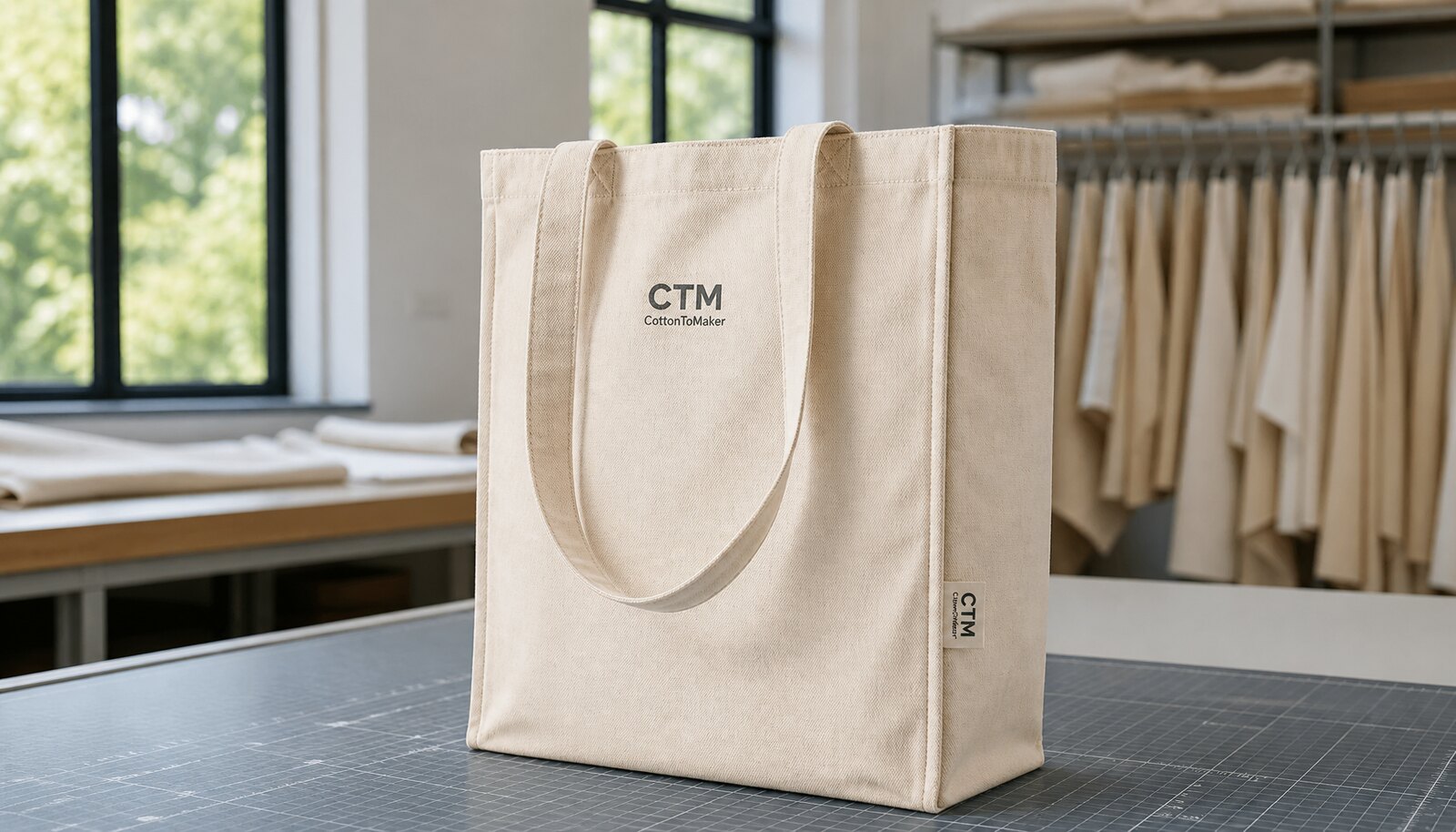
Why exhibition tote buying goes wrong in corporate sourcing
Canvas exhibition tote bags look simple, so procurement teams often compare them on unit price alone. That usually creates the first mistake: the quote may be for a very different fabric weight, a different handle build, or a decoration method that cannot reproduce the logo cleanly at scale. For corporate events, the bag is not just a giveaway. It becomes a walking brand surface, a carrying tool, and in many cases a reusable item that reflects your procurement standard after the event is over.
The safest way to source this category is to treat it like a finished promotional product, not a generic tote. You need a specification that covers fabric, size, print, reinforcement, packing, and delivery basis. Once those details are fixed, supplier quotes become comparable and the risk of late-stage surprises drops sharply.
- Use one written spec sheet across all bidders.
- Avoid vague descriptions like 'heavy canvas' or 'premium quality'.
- Separate event branding needs from retail resale needs; the spec is often different.
Choose the fabric weight for the real carry load
For most corporate events, 12 oz canvas is the practical starting point. It gives a better hand feel than light cotton, takes print well, and usually holds brochures, notebooks, and a small gift set without collapsing. If the bag will carry bottles, boxed samples, or denser merchandise, move to 14 oz or 16 oz and ask the factory to confirm seam performance, not only cloth thickness.
GSM is useful when your mill or buyer team works in metric terms, but it should not be the only number on the spec. A 12 oz target often lands roughly in the 340–360 GSM range depending on weave and finishing. Two fabrics with the same nominal weight can still behave differently if one is looser woven or heavily calendared. That affects drape, print sharpness, and whether the tote stands upright on a display table.
- 12 oz: common for standard conference bags and branded handouts.
- 14–16 oz: better for heavy inserts, premium gifting, or reuse beyond the event.
- Ask for a physical swatch plus fabric weight record from the same lot used for bulk.
Print method drives both appearance and cost
Screen print is the default for most canvas exhibition tote bags for corporate events wholesale buying checklist workflows because it is durable, economical at scale, and gives a clean logo on natural canvas. It works especially well for one- or two-color branding with solid shapes and strong contrast. The tradeoff is setup time and the need to control artwork detail. Very fine lines, small type, and tight halftones can close up on rough canvas.
For smaller runs or artwork with multiple colors, heat transfer may be the better route. It reduces some setup limitations and can reproduce more complex graphics, but the buyer should inspect adhesion, stretch behavior, and wash/abrasion resistance if the bag will be reused. Embroidery is usually only practical for a small emblem or a premium side mark, because heavy stitching can distort lighter canvas and add cost quickly.
- Screen print: best for bold logos, repeat orders, and lower cost per piece at volume.
- Heat transfer: useful for multi-color or short-run campaigns, but inspect edge lift and cracking.
- Embroidery: premium look, but only when the logo area is small and the fabric can support the needle load.
Compare supplier routes before you compare unit price
The right sourcing route depends on how much control you need over material, decoration, and packing. Factory-direct sourcing usually gives the cleanest cost structure and the best chance of matching your exact spec, especially when handle length, fabric weight, and print placement are fixed. Traders or sourcing agents may help with lower minimums, mixed programs, or multi-category consolidation, but the buyer should expect less visibility into the actual factory and more variation in what is included in the quote.
Distributors and stock-item sellers can be useful if the event date is close, but they often limit customization. That may be acceptable for a simple logo print, yet risky if you need a specific canvas shade, sewn label, or carton mark. The practical decision is not 'cheap versus expensive.' It is whether the supplier route gives you enough control to deliver the same bag twice.
- Factory-direct: best for controlled specs, better repeatability, and lower hidden markups.
- Trader/sourcing agent: useful for lower MOQ or mixed product bundles, but verify actual factory details.
- Stock distributor: fastest for urgent orders, weakest for custom fit and color consistency.
Supplier comparison table for event tote sourcing
Use the same decision logic across supplier options so the quote comparison is meaningful. The cheapest line on paper may not be the lowest landed cost if the supplier excludes sample fees, charges separately for each print color, or quotes a carton pack that increases freight volume. A good sourcing comparison also reveals who can repeat the order with the same fabric and print standard when the next event comes around.
If you are buying for multiple regions, ask each supplier to quote the same route and packing assumption. That is the only way to see whether a factory quote, a trader quote, and a local stock quote are actually competing on equal terms.
Set MOQ logic before you send artwork
MOQ is not only a factory number; it is the point where fabric cutting, screen setup, and packing labor become efficient. For a simple one-color logo on a standard size tote, a factory may accept 500 to 1,000 pieces, but the real economics usually improve at 2,000 pieces and above. If the quote includes multiple print colors, custom side labels, or special packaging, the minimum can rise quickly because every added process creates setup and rejection risk.
Procurement teams should compare MOQ logic in layers: base bag MOQ, print MOQ, packaging MOQ, and color MOQ. A supplier who says 'low MOQ' may still require a higher minimum for custom fabric color or a second decoration location. Clarifying this early avoids the common problem where a buyer approves artwork, only to learn later that the factory needs to reprice the entire order.
- Base bag MOQ can be lower than decorated MOQ.
- One-color print is usually the easiest and most stable starting point.
- Custom packaging or sewn labels often create a separate MOQ bucket.
Use sample approval to lock the details that quotes do not show
A photo is not enough. Before bulk production, insist on a preproduction sample built with the actual canvas weight, handle length, print method, and logo placement. The sample should show how the tote feels when filled, not only how it looks empty on a table. If your artwork contains small text or thin lines, check it at arm's length and from normal event viewing distance; if it is hard to read there, it will be harder to read in the show hall.
Good sample approval also captures measurements that are easy to miss in email: top opening width, gusset depth, handle drop, and the distance from print edge to seam. If your logo sits too high, it may distort near the top hem. If it sits too low, the bag can look unbalanced and lose brand impact. Once the sample is approved, the factory should keep it as the reference bag for bulk production and final inspection.
- Approve the sample against the exact artwork file and Pantone or reference color note if applicable.
- Measure finished size, not cut size.
- Keep one signed sample on each side: buyer and factory.
Packing decisions affect damage rate and freight cost
Packing is often treated as an afterthought, but it changes both arrival quality and landed cost. Canvas bags are prone to crease marks, dust, and print rub if they are packed too loosely or handled in mixed cartons. For clean event goods, individual polybags are common, but they add labor and volume. For large programs, bulk folding in a controlled carton can be acceptable if the factory environment is clean and the bag finish is not sensitive to rubbing.
Carton count should match how the bags will be received and distributed. A common tradeoff is between lower volume and cleaner presentation. If the bags are for immediate conference distribution, you may prefer smaller carton counts for easier handling. If they are being stored in a warehouse for staged releases, optimize for carton strength, stackability, and clear carton marks rather than only for minimum carton volume.
- Specify whether bags are folded with or without tissue.
- Confirm carton dimensions before choosing air, sea, or courier.
- Require outer carton marks: style, color, quantity, gross weight, and carton number.
Lead time risk is usually hidden in decoration and packing
The production timeline for canvas exhibition tote bags is rarely just a simple cut-and-sew schedule. Fabric sourcing, dye or shade matching, print plate making, sample approval, cutting, sewing, printing, QC, packing, and export booking each add time. For a standard program, a factory may quote a reasonable bulk lead time, but the real schedule risk often sits in artwork revisions or sample changes after approval has already started.
Build the timeline backward from the event date and keep a buffer for rework. If the bags are needed for a show, do not rely on the latest possible shipping date. Freight delays, customs holds, and carton reinspection can all erase a narrow margin. Buyers who manage to the event date rather than the ex-factory date usually discover the difference too late.
- Sample approval delay is one of the biggest hidden schedule risks.
- Multi-color print and special labels usually add setup days.
- Peak season can stretch sewing capacity even if material is available.
Build the quote comparison around landed cost, not just FOB
To compare supplier quotes correctly, reduce each offer to the same basis: product cost, sample cost, packaging cost, inland charge, export documents, and freight basis. An EXW quote can look low, but if the buyer must arrange pickup, export handling, and all freight, the true landed cost may exceed a more complete FOB quote. DDP can simplify budgeting, but only if the supplier is reliable and the incoterm clearly defines destination charges.
For corporate event programs, there is also a hidden cost in inconsistency. A slightly cheaper bag that arrives with weak handles, off-center print, or crushed cartons creates replacement work and brand damage. The cheapest quote is not the best quote if it forces extra inspection labor or repacking at your warehouse.
- Normalize every quote to the same incoterm before decision-making.
- Separate one-time setup charges from recurring unit cost.
- Include expected rework and inspection time in the internal cost view.
Specification comparison for buyers
| Spec decision | Recommended option | When it fits | Buyer risk to check |
|---|---|---|---|
| Fabric weight | 12 oz canvas for general event use; 14–16 oz if bags must carry catalogs, gifts, or bottles | Corporate events where the bag is reused after the show and must hold real weight without sagging | Light fabrics can look fine in photos but fail under load; confirm finished bag weight and seam strength, not just fabric GSM |
| Fabric construction | 100% cotton canvas for a natural premium feel; cotton/poly blend only if cost or wrinkle resistance matters more than authenticity | Brand programs that need a more premium hand feel and better print response | Blends can change ink absorption and color appearance; get a preproduction sample with the actual fabric lot |
| Print method | Screen print for bold logos and large quantity runs; heat transfer for multi-color small runs; embroidery only for limited logo areas | Corporate events with a clean logo, one to three colors, and repeat use | Fine lines may fill in on screen print; heat transfer can crack if film quality is weak; embroidery can distort thin canvas |
| Bag size | Common event size around 14 x 16 in or 15 x 17 in with 4–6 in gusset | Shows, conferences, and gifting programs that need literature plus a small product pack | Oversized bags raise freight and material cost; undersized bags cause complaints when brochures or boxes do not fit |
| Handle length | 22–24 in total drop for shoulder carry; shorter handles only for hand-carry programs | Exhibition visitors who walk long distances and need hands-free carrying | Long handles need reinforced attachment points; check handle turn-in and stitch count at the stress area |
| MOQ route | Factory-direct MOQ around 500–3,000 pcs by style and print complexity; trader route may accept lower MOQ but with higher unit cost | New launches, regional events, and private label trials | Low MOQ can hide setup fees or mixed-lot packing charges; compare all-in quote by carton, print color, and handle spec |
| Logo placement | Centered front print or lower-center print with a quiet side label | Corporate events where brand visibility matters but the bag should still be reused afterward | Large edge-to-edge artwork can increase reject rate and reduce resale or reuse appeal |
| Packing method | Bulk packing in polybags with carton dividers for clean goods; folded without polybags only if the carton environment is controlled | Most wholesale shipments where dust and handling marks must be minimized | Overpacking raises labor and carton volume; underpacking causes creases, print rub, and dirty goods on arrival |
| Sampling route | One approved preproduction sample before bulk, plus photo approval of bulk fabric shade and print strike-off | Any program with color-sensitive branding or tight event deadlines | Skipping sample approval often leads to shade mismatch, print off-center, or handle length errors that cannot be fixed after production |
Buyer checklist before sampling
- Define the event use case: attendee giveaway, media kit, VIP gift, or retail resale, because carry load and finish standard change with the use case.
- Lock the fabric target in both oz and GSM if possible; for example, 12 oz canvas is often more meaningful to mills than a vague 'thick canvas' note.
- Specify size, gusset, handle length, handle width, and stitch reinforcement so quotes are comparable.
- Choose the print method based on artwork, order size, and expected reuse; do not leave decoration open-ended.
- Request a preproduction sample with the actual logo size, print placement, and thread or ink color.
- Confirm carton pack count, polybag requirement, carton dimensions, and gross weight before approving shipping mode.
- Ask for lead time split by sample, bulk production, and export packing so the event date is protected.
- Compare quotes on the same basis: EXW, FOB, or DDP, and identify what is included in each line item.
- Review seam reinforcement, stitch density, and handle attachment points for event bags expected to carry heavier inserts.
- Check whether the supplier can hold fabric shade and print consistency across repeat orders, not only the first run.
Factory quote questions to send
- What is the exact fabric weight in oz and GSM, and is it finished canvas or greige weight?
- What are the finished dimensions, gusset width, handle length, and handle width after sewing?
- Which print method is included in the quote, how many colors are covered, and what is the setup charge per color?
- What is the MOQ by fabric color, print color count, and custom label or packaging requirement?
- Can you provide a preproduction sample and a bulk fabric swatch before production starts?
- What stitch count, seam reinforcement, and bar-tack standard do you use at handle stress points?
- How many pieces per carton, what is the carton size, and what is the estimated carton gross weight?
- What is the production lead time after sample approval, and what parts of the schedule are at risk during peak season?
- What is included in the unit price, and what extra charges apply for artwork changes, rush production, or split shipment?
- Can you quote the same specification under EXW, FOB, and DDP so we can compare landed cost correctly?
Quality-control points to confirm
- Fabric weight tolerance should stay within an agreed range, typically around +/- 5% to 8% for commercial buying, with the actual measurement recorded on the inspection sheet.
- Handle attachment must show even stitching and reinforcement at the top seam or bar-tack; loose thread or skipped stitches are not acceptable on bags intended for heavy inserts.
- Logo placement should stay within a defined tolerance from center or edge, and the print should not show obvious smearing, pinholes, or color shift.
- Finished size should match the approved sample within a practical tolerance; buyers should reject bags that are too shallow to hold event brochures or product kits.
- Fabric surface must be clean, free from oil marks, snags, and discoloration; a natural canvas bag can still be rejected if the shade varies too much within a carton.
- Cartons should stay dry, taped securely, and marked with style, color, quantity, and carton number so receiving teams can reconcile quantity quickly.
- If polybags are used, they should be clear, clean, and sized properly so they do not wrinkle the bag or trap moisture during transit.