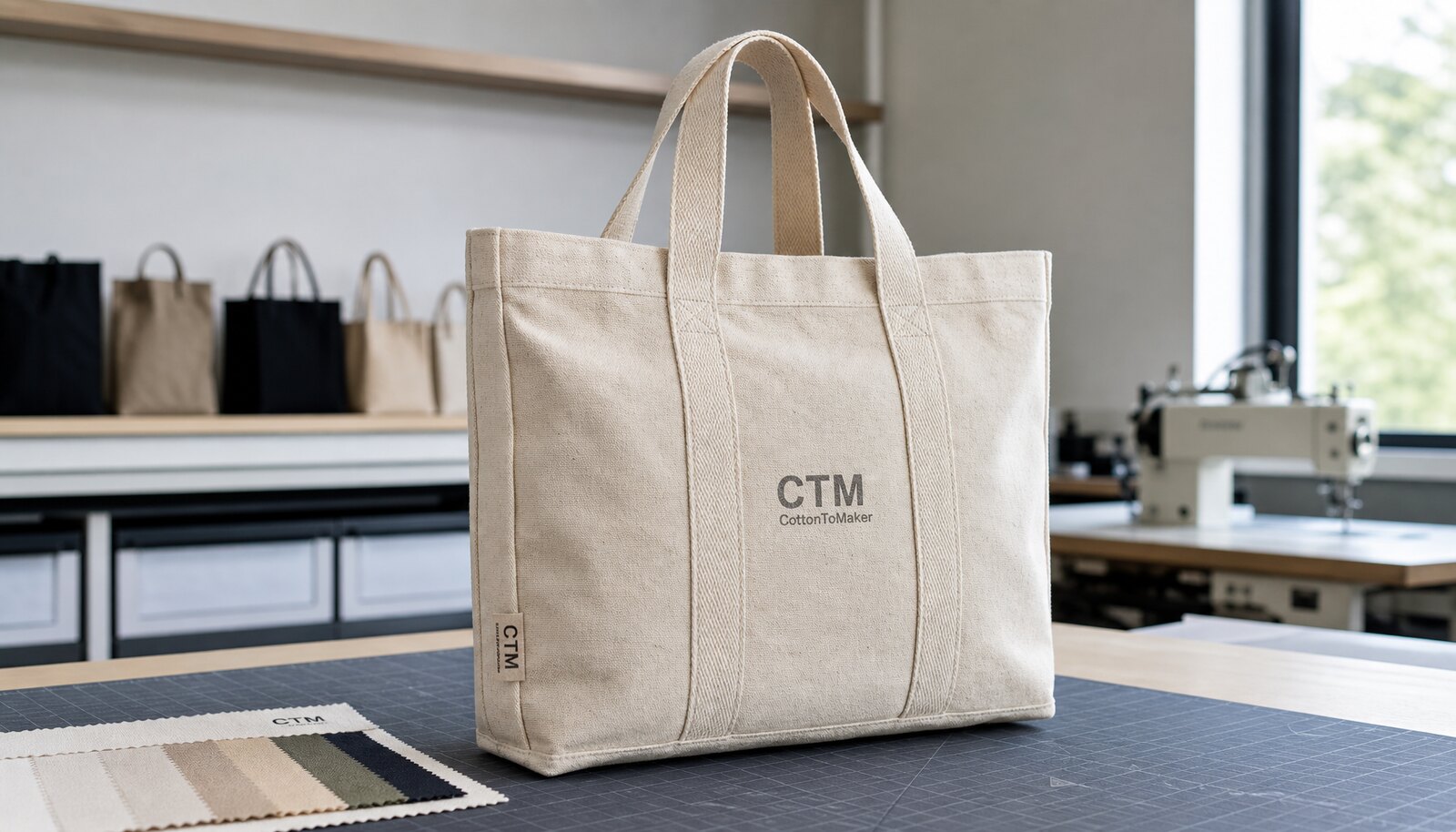
Why Coffee Brands Buy Exhibition Totes Differently
Coffee brands do not buy canvas exhibition tote bags as generic promo items. The bag is usually part of a larger packaging system that includes sample packs, retail bundles, booth handouts, subscriptions, or event kits. That changes the sourcing brief. A tote can look acceptable in a quote sheet and still fail in use if it collapses under product weight, prints too faintly on natural canvas, or ships in cartons that waste freight cube.
For procurement teams, the real question is not whether the bag is cheap. It is whether the bag supports the channel, the brand position, and the packaging job. If the tote is meant to signal quality, ethical sourcing, or low-waste packaging, then the lowest quote is often the weakest business choice. Define the event type, the expected contents, and the reuse target before you compare suppliers.
That is especially important for coffee, where the bag often becomes part of the brand memory after the purchase. If a customer keeps the tote, the bag is doing long-tail marketing work. If it tears, stains, or feels flimsy, that same tote becomes a negative signal.
- Use case first: exhibition handout, retail add-on, sample carrier, or VIP bundle.
- Compare suppliers against the same artwork, size, material, and packing assumptions.
- Treat packaging density and carton efficiency as part of the product spec, not as shipping afterthoughts.
What Canvas Does Better Than Other Packaging Options
If you are comparing canvas against paper, nonwoven PP, jute, and recycled PET, the useful question is not which material sounds most sustainable. It is which one performs the job with the least compromise. Canvas wins when the bag needs to feel substantial, carry weight repeatedly, and remain useful after the event. That reuse story matters for coffee brands because the tote is often carried in public, reused at markets, and seen again in retail settings.
Paper is the cheapest and easiest to buy, but it is usually a one-trip option unless reinforced heavily, and it performs poorly in damp conditions. Recycled nonwoven PP is often the low-cost reusable choice. It is practical for large handout programs, but the hand-feel is less premium and the brand signal is less natural. Jute offers strong natural branding cues, but it is heavier, bulkier, and rougher for fine print. Recycled PET sits between those options with a cleaner print surface and easier packing, though it should be supported by documentation if you intend to make a recycled-content claim.
Canvas is not the answer for every program. It is the best fit when the bag is part of the experience, not just a carrier. If the bag needs to justify a premium coffee position, support repeated use, and look good after folding and refolding, canvas usually makes the strongest case.
- Choose paper when the bag is truly single-use and the budget is tight.
- Choose recycled nonwoven when the run is large and price control matters most.
- Choose jute when a rustic natural look is more important than weight or print finesse.
- Choose recycled PET when you want a lighter, uniform surface and a modern sustainability story.
- Choose cotton canvas when reuse, load performance, and premium perception matter most.
The Build Spec That Changes Cost, Feel, and Failure Rate
Canvas bag quotes often look similar until the construction details are compared. Fabric weight is the first filter. A lighter canvas may be fine for flyers and small sample packs, but once the bag carries coffee bags, catalogs, and a notebook, it needs more body. A 12oz canvas is a practical default for many exhibition programs. A 14oz or heavier bag feels more structured, carries better, and tends to age more gracefully. The tradeoff is higher material cost and more weight in packing.
Handle design matters just as much. A tote intended for shoulder carry needs a handle drop that matches real use, not just the drawing. Handle reinforcement is more important than decorative stitching. X-box stitching, bar-tacks, or a reinforced seam at the load point reduce the chance of failure more than cosmetic topstitching. If the tote will carry heavier samples or boxed product, the handle area deserves the most attention in sampling.
Closures and linings should only be added when the use case justifies them. A zipper helps if the tote is used for retail resale, travel, or mailed kits. A lining can improve finish and prevent print show-through, but it adds labor, material, and lead time. For many coffee-brand orders, the simplest build that meets the use case is the one that ships cleanly and holds up longest.
- Use 12oz canvas as a common event default and 14oz when the bag must feel structured or carry heavier contents.
- Specify handle drop in the same unit as the rest of the spec and test it with the actual contents.
- Add zipper or lining only if the tote needs security, structure, or a more finished retail appearance.
Print and Branding Choices Buyers Should Lock Before Sampling
Screen printing remains the default choice for most canvas exhibition tote bags because it handles bold logos, clean fills, and repeatable production well. On natural canvas, it usually gives the best balance of cost and durability. If the artwork is a simple wordmark or icon, one-color screen print is often the cleanest option. Two-color work is still manageable when the design is restrained, but every added color raises complexity and the chance of print variation.
Heat transfer is useful when the design includes fine detail, gradients, or small type that would be difficult to hold on textured canvas. The downside is that the finish can feel less integrated with the fabric and may show wear differently after repeated folding. Embroidery can make sense for a premium coffee program, but it raises cost quickly and can distort lighter fabric if the stitch density is too high. Woven labels and side labels are often the best low-cost way to elevate the bag without overworking the artwork.
The buyer decision should be based on the brand job. If the tote is a workhorse for events, screen print is usually the right answer. If the tote is part of a gift set or retail add-on, a smaller print plus a woven label may look more considered than a large graphic. Before sampling, lock the logo size, placement, color reference method, and acceptable print tolerance so the factory is not guessing.
- Use screen print for bold logos, simple artwork, and repeatable quality.
- Use heat transfer only when the artwork needs detail that screen print cannot hold cleanly.
- Use embroidery sparingly because it adds cost and can distort thin canvas.
- Approve color reference, print size, and placement before the first sample run.
Sustainability Claims Need More Than a Material Label
The sustainability comparison should be based on what the bag actually does, not on a broad claim that canvas is better. For procurement, the useful questions are durability, reuse, packing efficiency, and claim support. A tote that is reused many times and survives repeated folding can be a stronger packaging decision than a cheaper bag that is discarded quickly. That is why canvas often makes sense for coffee brands that want the package to continue working after the original transaction.
If the bag uses recycled or certified fiber, ask for the documentation path before the order is placed. A recycled-content statement is not enough if your internal policy requires a traceable claim. Depending on the program, you may need supplier declarations, transaction documents, or a third-party certification. The same discipline applies to organic or other fiber claims. If you cannot substantiate the claim, do not build the purchase on it.
You should also judge the bag on freight and cube. A material can look sustainable and still be inefficient to ship if it is bulky, heavy, or packed poorly. For buyers, the practical test is whether the tote has enough reuse value to justify its material and transport footprint. That is where canvas often wins, but only if the build is right and the order is packed tightly.
- Ask for the documentation behind any recycled or certified fiber claim before sampling.
- Treat reuse value as part of the sustainability decision, not just the fiber label.
- Compare the bag on material, freight cube, and expected reuse, not on one attribute alone.
Budgeting for Cost, MOQ, and Lead Time Without Overstating Precision
Procurement numbers are useful when they are framed correctly. The cost, MOQ, and lead time for canvas tote bags are planning ranges, not fixed market facts. They move with fabric weight, print count, stitching detail, packing format, origin, and current material supply. A quote that looks attractive on paper can still become expensive once the supplier adds reinforcement, print setup, and carton handling. Use the numbers to budget, then confirm with the actual spec and shipping route.
As a rough planning frame, a simple factory-direct tote often falls into a lower MOQ and shorter lead time than a custom build with lining, zipper, or special printing. Offshore production commonly needs more time after PP sample approval, while stock-material domestic or nearshore supply can be faster but usually costs more per unit. The more the order depends on custom fabric, specialty dyeing, or recycled-content verification, the more the schedule should be padded. Buyers should not treat the first quote date as the final delivery promise.
The cleanest way to manage this is to ask for two quotes: the target spec and a fallback spec. The target spec protects the brand. The fallback spec keeps the event from slipping if the original build is too complex or too slow. That is more useful than forcing every supplier into the same template and hoping the number holds.
- Treat all pricing and lead time figures as budgeting ranges until the sample is approved.
- Ask for sample, bulk production, and freight timing separately.
- Compare a target spec and a fallback spec so schedule pressure does not force a poor buying decision.
Packing, Carton Efficiency, and Landed Cost Control
Soft goods can still be inefficient if they are packed badly. Flat bulk packing is usually the best choice for exhibition totes because it keeps carton count and freight cube under control. If the bags go into event kits or warehouse stock, a simple inner pack is often enough. If the channel is retail, a paper band, hang tag, or minimal insert may be useful, but individual polybags should be used only when the product or channel requires them.
Carton size has a direct effect on landed cost. Oversized cartons increase air freight cost and take up more warehouse space than necessary. Cartons packed too tightly can crease the tote body or distort the shape, which is a problem if the bag is supposed to look premium on arrival. Ask the supplier to propose pack count based on the actual bag dimensions and fabric weight, not a previous order. A heavy canvas tote can push gross weight up quickly, so carton handling and palletization need to be checked before the order is released.
The buyer should compare product price, packing cost, and freight cube together. A slightly higher unit price can still win if the bag packs tighter and the cartons are more efficient. This matters most when the bags must move by air freight for a show deadline and the shipping cost becomes a major part of the landed total.
- Specify pcs per carton and ask whether the carton must be single-size or mixed-size.
- Request folded dimensions before final pack count is set.
- Use flat bulk packing unless retail presentation or hygiene rules require more packaging.
Quality Control That Prevents Rework and Chargebacks
The strongest QC programs focus on the parts of the bag that fail in real use. First, check the finished dimensions. A tote that is too small will not hold the intended kit, and one that is too large can feel floppy or poorly made. Second, check stitch quality. Handle failures are among the most visible defects on a reusable bag, so reinforcement matters more than decorative finishing. Third, check print quality. Coffee-brand artwork often includes fine type or a small logo, and small errors are easy to see on a natural fabric background.
The sample process should include a pre-production sample, then an in-line check if the run is large enough to justify it, and finally a carton review before shipment. If your company uses AQL, define it before production begins. If not, make the inspection still concrete: finished dimensions, handle reinforcement, seam quality, print placement, carton marks, and carton counts. For bags that carry heavier loads, ask for a simple pull check or load test that matches the intended use.
Color control is often underestimated. Natural canvas is not perfectly uniform, and ink can look different on bleached and unbleached cloth. Approve the sample under daylight and indoor light, then lock that sample as the production reference. That reduces disputes later when the bulk goods are checked in a warehouse under different lighting.
- Check finished dimensions, seam appearance, and handle reinforcement on the physical sample.
- Inspect print placement under both daylight and indoor light.
- Require carton marks and counts to match the packing list exactly.
- Use a simple load test if the bag will carry coffee samples or boxed product.
Which Tote Spec Fits Which Coffee Program
There is no single canvas spec that works for every coffee program. Trade show handouts usually need the simplest version: a 12oz canvas tote, one-color screen print, open top, and flat bulk packing. That gives the best balance of cost, speed, and usefulness. If the tote is reused after the event, the brand gets more value from the same order.
Retail add-ons and bundle packaging usually justify a cleaner finish. A 14oz tote, wider gusset, and a more considered label or print can make the bag feel like part of the product rather than a giveaway. For subscription inserts or mailed kits, freight efficiency becomes more important. A lighter canvas or a recycled PET alternative may be better if the tote is not expected to carry heavy items immediately.
Premium launches and VIP programs are a different category again. At that point, the bag is part of the presentation. Heavier canvas, reinforced handles, and better finishing can justify the higher unit cost because the tote carries the brand experience. In those cases, compare canvas against jute and rPET as well, not just against paper. The right answer is the one that balances reuse, print quality, freight weight, and brand position without overbuilding the spec.
- Trade show: 12oz canvas, simple print, open top, bulk packed.
- Retail bundle: 14oz canvas, cleaner finishing, label or restrained branding.
- Subscription kit: lighter build or rPET if freight efficiency matters more than tactile premium.
- VIP program: heavier canvas or jute if the natural-fiber look is important and the weight penalty is acceptable.
Specification comparison for buyers
| Material / build | Budgetary planning band | Typical reuse profile | Freight / cube impact | Print durability |
|---|---|---|---|---|
| Paper bag, no lamination | $0.10-$0.35 | 1-3 uses, usually single-trip retail carry | Low per unit, but poor compression resistance | Low; print can scuff or crease |
| Recycled nonwoven PP tote | $0.18-$0.55 | 5-15 uses if the bag is treated gently | Low to medium; lightweight and easy to pack | Medium; works well for simple logos |
| Jute bag | $0.45-$1.10 | 20-40 uses in casual retail or event settings | Medium to high; heavier fabric and bulkier packout | Medium; best for bold, simple graphics |
| Recycled PET tote | $0.55-$1.40 | 15-30 uses with decent shape retention | Medium; lighter than jute and usually packs efficiently | Medium to high; clean print surface for logos |
| Cotton canvas tote, 12oz-14oz | $0.70-$1.80 | 30-60 uses if the build is sound | Medium; soft goods compress well, but weight rises with fabric weight | High; good for screen print and repeated folding |
| Cotton canvas tote, 14oz-plus with reinforcement | $0.95-$2.20 | 50+ uses when handles and seams are properly reinforced | Medium to high; heavier cartons, but still efficient versus rigid packaging | Very high; best choice for durable print and structure |
Buyer checklist before sampling
- Start with the use case: exhibition handout, retail add-on, sample carrier, subscription insert, or VIP bundle. The right tote is not the same for each channel.
- Quote one exact finished spec to every supplier: size, gusset, handle drop, fabric weight, print size, print colors, and packing count.
- Ask for fabric weight in oz or GSM, plus the tolerance the factory will hold in production.
- Decide whether the brand needs natural cotton, bleached cotton, dyed canvas, recycled content, or a certified fiber claim before sampling starts.
- Request sample photos, carton dimensions, and gross weight with the first quote so freight can be estimated early.
- Separate the base bag, printing, woven label, zipper, lining, and special packing on the quote. Bundled pricing hides the real cost drivers.
- Tie lead time to PP sample approval, not just purchase order date.
- Approve the bag with the actual contents inside it, not as an empty sample, if it will carry coffee packs, brochures, or boxed product.
Factory quote questions to send
- What is the exact fabric specification, including weight, weave, fiber content, finish, and expected shrinkage after pressing or washing?
- Can you quote the same tote on EXW and FOB terms, and what changes between those two price points?
- What is included in the base price, and what is charged separately for each print color, extra placement, label, or reinforcement detail?
- What MOQ applies to this exact build, including any zipper, lining, or special handle construction?
- How many days are needed for sample making, and is the sample fee credited back if the bulk order is placed?
- What are the packed carton dimensions, pcs per carton, and estimated gross weight?
- What incoming and final inspection checks are performed before packing, and which defects are rejected?
- Can you share the document trail for recycled or certified fibers if we need to substantiate a sustainability claim?
- What is the confirmed production lead time after PP sample approval, and what usually extends it?
- If the order is split across sizes or print variants, how does that affect price and delivery date?
Quality-control points to confirm
- Measure finished width, height, gusset, and handle drop against the approved sample and written tolerance.
- Check the fabric for thin spots, visible slubs, loose threads, or weave distortion that could affect print quality or bag shape.
- Inspect handle attachment points for X-box stitching, bar-tacks, or reinforced seams with no skipped stitches or loose ends.
- Verify print placement, color, and opacity on the actual tote surface, especially where the fabric folds or curves.
- Look for bleed, cracking, misregistration, or ghosting around small text and thin logo lines.
- Confirm seams lie flat after turning and pressing, with no puckering at the corners or seam breakage under light load.
- Review carton marks, counts, and pack lists so there are no mixed lots or unapproved substitutions.
- If the tote will carry samples or boxed product, ask for a simple pull check or load test that matches the intended use.