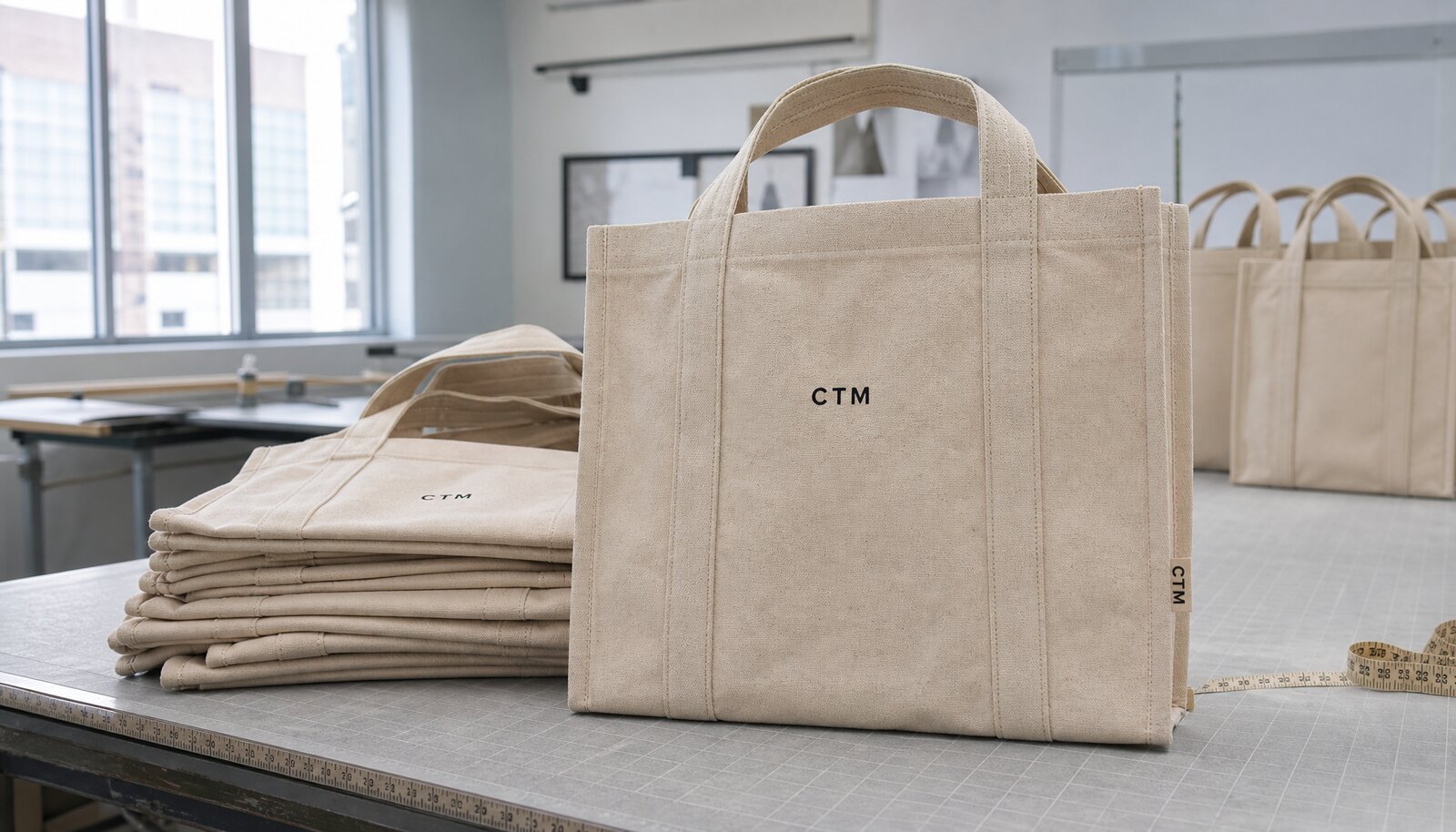
Why coffee brands should spec event totes as merchandise, not just swag
Canvas exhibition tote bags for coffee brands work best when procurement treats them as a branded carry product, not a throwaway giveaway. At a coffee expo, tasting event, retail pop-up, or trade show booth, the tote has to do several jobs at once: hold samples, move printed materials, reinforce brand identity, and survive the rest of the day after it leaves the booth. That is why the buying brief should start with use case, not with artwork. A tote that is meant to carry a packet of beans and a ceramic mug needs a different construction than a tote that only holds a brochure and a coupon card.
Coffee buyers also have a specific branding problem. The audience is often quality-sensitive and product-aware. A flimsy bag can make a specialty coffee brand look underdeveloped, while an overbuilt tote can burn budget without adding meaningful value. The right spec is the one that matches the carry load, the number of touchpoints at the event, and the expected reuse life. In procurement terms, the bag is not just a print substrate; it is a physical brand asset with a delivery deadline.
That perspective changes the sourcing conversation. Instead of asking only for a price per unit, the buyer should ask whether the supplier can consistently produce the tote construction, whether the print method survives folding and repeated handling, and whether the packing format supports booth operations. This is especially important for coffee brands planning event giveaways because the bag often doubles as the container for the brand story: roast notes, origin cards, merchandising inserts, or partner materials. If the tote fails in the first hour, the brand message is dragged down with it.
- Define the tote’s job: booth giveaway, retail insert, gift-with-purchase, or member pack.
- Match the construction to the heaviest item the bag must carry.
- Treat appearance, durability, and packing efficiency as one procurement decision.
- Plan for reuse: a bag that stays in circulation creates more brand impressions after the event.
Size, fabric weight, and structure that actually match coffee-event use
For most event giveaway programs, 10 to 12 oz canvas is the practical starting point. That range is roughly 340 to 410 gsm, though suppliers may describe the same fabric with slightly different measurement methods depending on finish and weave. It is heavy enough to feel credible at a trade show booth, but not so heavy that the cost climbs unnecessarily for a large campaign. If the tote is only carrying a small brochure set, a bean sample, and a pen, 10 oz may be enough. If it needs to hold a bottle, coffee tin, menu stack, and additional inserts, moving to 12 oz is usually more defensible.
Once the tote needs a more premium feel or must support repeated reuse, 12 to 14 oz canvas is a better fit. The bag tends to hold shape more cleanly and gives a stronger retail impression, but it also brings higher sewing effort and often higher freight weight. For coffee brands that use the tote as part of a premium launch or partner campaign, the extra cost may be justified by better perceived quality. For a high-volume event giveaway, the buyer should ask whether the added material actually improves the use case or simply makes the unit price feel more expensive.
Structure matters as much as cloth weight. A flat tote is simpler and cheaper, but a gusseted bag gives more internal volume and a more finished look. A bottom gusset can also help the bag stand on a table while attendees pack materials. Handle length should be selected by carry style, not habit: short handles are fine for hand carry, while longer handles support shoulder carry and free up the attendee’s hands. If the tote is expected to carry heavier coffee items, ask for handle reinforcement, top-edge reinforcement, and a sewn construction that keeps the shoulder strap from stretching out or tearing at the anchor point.
Buyers should also specify where shape matters. Some coffee-brand activations want a bag that hangs soft and natural; others need a bag that stands upright so it presents well on a merch table. If the tote must open cleanly for packing or visual display, note that requirement in the brief. This is where procurement discipline helps: the factory can only control what has been written into the order. A clear bag spec reduces the chance that the supplier substitutes a cheaper cloth, trims the seam allowance, or delivers a body shape that looks fine in a photo but fails on the event floor.
- 10 oz canvas fits light handouts and modest sample kits.
- 12 oz canvas is a strong default for most coffee event giveaways.
- 12 to 14 oz canvas with gusset and reinforcement fits premium or heavier-load programs.
- Specify whether the bag must stand upright, and if so ask for gusset or base support.
Print methods, decoration choices, and the risk of artwork failure
Most coffee brands will get the best balance of cost and durability from 1- or 2-color screen printing. On natural canvas, a bold logo and a short line of text are usually enough. The weave already gives the tote texture, so the decoration does not need to be elaborate to feel branded. For event giveaways, simple artwork also reduces the chance of color bleeding, registration issues, or detail loss across a rough fabric surface. If the logo includes thin strokes, tight counters, or small legal text, the buyer should ask the factory for a print proof on actual fabric rather than relying on a digital mockup.
Decorative alternatives can work, but they should be selected for a reason. A woven label, embroidery patch, or stitched side label is useful when the brand wants a higher perceived value or a retail-ready finish. Those options can be visually strong, yet they introduce additional setup, longer approval cycles, and a larger risk of small deviations between samples and bulk production. Heat transfer can handle more detail, but the buyer should ask how it performs after folding, abrasion, and repeated handling. For coffee brands, a tote that flakes or peels by the second event is not a branding win.
The biggest artwork mistakes are usually not artistic; they are technical. Small text printed on textured canvas can fill in. Fine lines can break. A logo placed too close to a seam can distort once the bag is loaded. Color matching is also tricky because natural canvas is not a white substrate. That means a bright brand color may need a defined tolerance around the approved sample rather than a vague instruction like “match the artwork.” If the supplier cannot talk clearly about registration tolerance, print opacity, and the size of the printable area in millimeters, the buyer is not ready to approve production.
For coffee event planning, the most useful question is not “Which decoration looks nicest?” It is “Which decoration still looks controlled after folding, shipping, booth setup, and repeated use?” That is the real procurement standard. A clean one-color mark that stays sharp on the day of the event is better than a complex graphic that needs apology by lunch. Buyers should ask for a pre-production strike-off or sample print on the actual bag material and compare it against the approved sample under daylight or neutral white light before giving bulk approval.
- Use screen print for bold logos, booth names, roast names, and event dates.
- Use embroidery or patches only when the brand wants a more premium finish and can absorb the extra setup cost.
- Avoid tiny text, hairline strokes, and dense halftones unless the factory has proven the method on the same fabric.
- Lock the printable area in millimeters and ask for an actual strike-off, not only a digital mockup.
Comparison table: how procurement choices change cost, risk, and event fit
The table below is useful only if the buyer uses it to compare hidden cost drivers, not just material names. In canvas exhibition tote bags for coffee brands event giveaway planning, the cheapest route is not always the lowest total cost. A route that looks expensive on paper can still win if it reduces sample churn, freight surprises, or receiving problems at the event site. Use the comparison below to decide which source path fits the event calendar, internal bandwidth, and risk tolerance.
- Use one comparison basis for all quotes: same size, same cloth, same decoration, same pack.
- Ask each supplier to disclose assumptions before you compare numbers.
- If one supplier quotes a cheaper bag but omits setup or freight, treat that as a risk, not a saving.
How supplier route affects transparency, not just price
A direct factory is usually the strongest option when the coffee brand needs to lock a specific tote construction, compare sample quality closely, and hold the supplier accountable for the bag itself. This route gives procurement a better shot at seeing the true material spec, the sewing method, and the actual production schedule. It is especially useful when the event date is fixed and the buyer cannot afford a surprise switch in cloth weight or handle construction. The factory may still outsource part of the process, but the buyer at least has a clearer line of responsibility.
A trading company or sourcing agent can be a good fit if the buying team needs one contact to manage multiple suppliers, especially when different markets or product categories are involved. The benefit is coordination. The risk is opacity. If the intermediary cannot show the real factory, explain where the decoration happens, or provide documentary proof of the production source, the buyer may end up paying for convenience without getting better control. For procurement, the key issue is whether the route creates a traceable chain of responsibility.
Local decorators using imported blanks are worth considering when timing is tight and the artwork is simple. This route can work well for a small event where the blank tote already matches the size and fabric target. But the buyer should not assume that a blank imported bag will behave the same way as a custom-specified tote. Blank size variance, handle strength, and seam quality can create problems if the bag needs to carry heavier coffee items. The right question is not whether the local vendor can print quickly; it is whether the blank is already fit for the event use case.
The decision criteria should be direct. Can the supplier prove the construction? Can they show sample consistency? Can they explain what is outsourced? Can they state the lead time with enough detail to survive an event deadline? If the answer is weak on any of those points, the route may be too risky even if the quote looks attractive.
- Direct factory is strongest on control over construction and sample consistency.
- Trading company is useful when sourcing bandwidth is limited, but proof of factory capability matters.
- Local decorator is only safe if the blank tote already meets the carry-load requirement.
- Use route selection as a risk filter, not as a price-only exercise.
RFQ details that let suppliers quote the same tote
A clean RFQ should make it hard for suppliers to misread the project. Start with the use case: coffee expo giveaway, tasting event handout, retail insert, gift-with-purchase, or member welcome pack. Then state the carry load, target tote size, fabric weight range, decoration method, and final delivery address. If the tote needs to fit a specific product set, say so. If it has to work with a booth workflow or be handed out flat-packed, say that too. A strong RFQ saves time because suppliers can quote the same object instead of sending back their best guess.
The RFQ should also separate fixed requirements from negotiable preferences. Event date, carry load, and approved artwork are fixed. Carton count, pallet requirement, and freight mode may be negotiable if they improve cost or delivery certainty. If the buyer does not separate those items, the quote comparison becomes messy and internal stakeholders end up debating assumptions instead of choosing a supplier. For coffee brands running multiple events, that confusion can multiply fast across seasons and geographies.
Do not forget documentation. Ask the supplier to state the exact construction in plain language: body size, seam type, stitch count range where relevant, handle attachment, gusset depth, print area, and carton pack. If the supplier sends only a photo and a unit price, the quote is not procurement-ready. A real RFQ response should show enough detail that another buyer could order the same tote and get the same result.
This is also where natural SEO should come from the buying process rather than forced repetition. Buyers really do search for canvas tote supplier guidance, coffee event giveaway planning, and custom exhibition tote bags because they need a usable brief. If the procurement language is specific, the article will read naturally and still capture the right intent. The goal is not to repeat the keyword; it is to answer the commercial decision behind it.
- Lead with use case and carry load.
- Freeze size, fabric target, decoration, and delivery date before final quoting.
- Require suppliers to quote the same carton and freight assumptions.
- Ask for plain-language construction details, not only a price line.
What good QC looks like on canvas tote production
Quality control for canvas exhibition tote bags should be concrete enough that a factory can inspect against it without guessing. Start with the golden sample. That sample should represent the approved fabric, print, sewing method, fold pattern, and carton label format. It should be signed off by the buyer and stored as the production reference. If the buyer later approves a different file version, an unmarked sample, or a photo taken under poor lighting, the bulk run can drift even when the supplier is acting in good faith.
The best QC programs focus on measurable checkpoints. Dimension tolerances should be stated in millimeters. Stitching should be checked against an agreed stitch-per-inch target for the main seams and handle anchors. The bag should be load tested with the actual weight the event requires, not just waved around in a warehouse. Print inspection should confirm registration, opacity, and edge sharpness under daylight or a neutral inspection light source. For coffee brands, color consistency matters because the tote often carries a recognizable brand tone. That means the supplier should be able to explain how it matches color against the approved sample and what it does if the shade drifts.
Inspection should not stop at the first few units. Random pieces should be pulled from multiple cartons so the buyer can see whether the run is stable. That matters because tote production can drift as the line changes operators or as the sewing team moves through different fabric lots. The buyer should also inspect for loose threads, uneven bartacks, broken stitches, ink smears, odor, and stains. These are not cosmetic details in a branded event giveaway; they are visible quality failures that attendees notice immediately. If the tote is sold as a reusable item or premium insert, the tolerance should be tighter still.
Carton-level QC matters too. A master carton should arrive intact, labeled clearly, and packed to a controlled quantity so the event team can count it quickly. The buyer should confirm carton compression resistance and handling performance, especially if the shipment will move through a warehouse, a distribution center, or a show-site receiving dock. A simple carton drop or handling check is worth asking for before dispatch if the bags are traveling across multiple handoffs. For procurement buyers, the lesson is straightforward: if the bag looks good but arrives creased, crushed, or mislabeled, the event team still pays the price.
- Use a signed golden sample as the production reference.
- Set dimensional tolerances in millimeters before bulk begins.
- Require a stitch-per-inch target for critical seams and handle anchors.
- Load test the tote using the actual event contents or the closest realistic weight.
- Inspect random units from multiple cartons, not only first-off samples.
- Check print quality, odor, stains, loose threads, and carton integrity before release.
Packing and carton rules that reduce event-floor friction
Packing is often ignored until the goods arrive, and then it becomes the problem everyone notices. For event giveaways, the tote should be folded in a way that minimizes hard creases through the printed area and allows the team to unpack quickly. If the logo or message sits on the front panel, the fold direction should be defined in the order so the print opens cleanly and does not look distorted in the first handout. That matters in a coffee event environment where the tote may be handed directly to visitors in a visible booth area.
Carton planning should be driven by both freight and warehouse handling. Too few bags per carton can inflate freight cost; too many can create crushing at the bottom of the stack or make the carton awkward to lift at the event site. A good carton spec balances weight, volume, and handling practicality. If the order is destined for multiple show sites, the outer carton mark should identify the order number, style code, color, quantity, and destination type clearly. This reduces sorting errors and makes receiving faster.
If the tote is going into a humid warehouse or crossing a long shipping lane, a simple moisture barrier may be worth adding. But the buyer should only add inner polybags or extra wrap if it improves arrival condition without slowing event setup. More packaging is not automatically better. The decision should be based on handling risk. A well-packed tote should arrive clean, flat enough to distribute quickly, and protected enough that the bags inside do not absorb odor or creasing from the journey.
Ask the supplier to state carton dimensions, gross weight, and carton count in the quote. Those numbers matter for freight booking, warehousing, and carrier handling. They also help the buyer estimate the receiving labor needed on site. If the tote is part of a larger coffee activation, clean packing can save real time on the booth floor and prevent the team from spending the first hour fixing avoidable packing mistakes.
- Specify fold direction if the print must remain visible on opening.
- Use a carton size that is easy to handle without crushing the tote body.
- Print clear carton marks for order, style, color, quantity, and destination.
- Add moisture protection only when it solves a real shipping or storage risk.
Lead time planning for fixed event dates and limited rework windows
The strongest planning rule is to work backward from the event receiving date, not forward from the factory’s optimistic ship date. A coffee brand giveaway can look simple on paper, but the schedule includes artwork sign-off, sample production, sample review, any corrections, bulk sewing, decoration, inspection, carton release, and freight movement. If any one of those steps slips, the tote can miss the event. Buyers should therefore set internal deadlines for artwork approval and sample sign-off before they even open the RFQ.
The best way to protect the schedule is to reduce variables. Use stock fabric where possible, keep the print to one or two colors, avoid custom accessories unless they truly support the brand story, and freeze the spec early. Every extra variable creates a new failure point: more setup, more approval, more risk of mismatch, and more chance that a late change pushes the order past the cutoff. This is especially true when the tote is part of a larger event kit that includes coffee samples, flyers, or promotional inserts with their own timing dependencies.
Procurement teams should also build a buffer for practical delays. Shipping calendars change. Holidays interrupt production. A color that looks acceptable on screen may need a second sample round on actual canvas. None of this is unusual. What matters is that the sourcing plan assumes it might happen. For repeat programs, the cleanest strategy is to finalize one core tote spec early enough to reuse it across multiple events. That creates purchasing leverage, reduces re-approval work, and makes the supplier’s job more predictable.
If the schedule is already compressed, do not respond by adding complexity. Respond by cutting optional elements. The fastest tote order is usually the one with the fewest decision points. That is a procurement lesson, not a design preference.
- Work backward from warehouse receipt, not from factory ship date.
- Freeze artwork early enough to allow one sample correction cycle if needed.
- Reduce variables: stock fabric, simple print, no unnecessary accessories.
- Build time for inspection, booking, holidays, and freight delays into the plan.
Factory verification and proof points that matter for coffee-brand use
For buyers, factory verification should go beyond asking for a catalog. The supplier should be able to show that it can actually produce the tote construction and decoration method being quoted. That means evidence such as in-house sewing or printing capability, production photos of similar canvas goods, or documentation that confirms the factory’s role in the process. If the supplier is only coordinating other vendors, the buyer should know that before awarding the order. The point is not to punish intermediaries; it is to understand where the real control sits.
Audit evidence does not need to be complicated, but it should be specific. A good supplier can explain which machines or workstations are used for cutting, stitching, screen printing, or finishing. It can show how it tracks sample versions and bulk approval. It can also provide recent inspection records or third-party audit summaries when requested. For coffee-brand event giveaways, that proof matters because the tote will be handled in public and often under brand scrutiny. A supplier that is vague about its process is more likely to create avoidable surprises.
The buyer should also verify whether the factory can support the practical details that make a project succeed: carton labels, folding consistency, color matching, and pack counts. These are small things individually, but they are exactly the things that cause event-floor friction if they are not controlled. A factory that understands tote production as a packaging and branding product, not only as a sewing item, is usually better prepared for this category.
Good supplier proof points include: a clear factory profile, named process ownership, photos of actual sewing and printing lines, sample traceability, inspection records, and transparent responses to quote questions. If the buyer asks for these items and the supplier avoids them, that is a signal. The order may still be possible, but procurement should treat the source as higher risk until the evidence improves.
- Ask for evidence of in-house sewing, printing, or clearly documented outsourced steps.
- Request production photos and sample traceability for the exact tote category.
- Look for inspection records or audit summaries, not only marketing brochures.
- Verify the supplier can handle folding, carton marking, and pack control as part of the quote.
Specification comparison for buyers
| Procurement route | Cost drivers | Best use case | Primary risk to verify | Decision criteria |
|---|---|---|---|---|
| Direct factory with in-house sewing and printing | Fabric weight, print setup, seam reinforcement, carton pack | Fixed event date, repeat orders, custom spec control | Whether the factory can prove it makes the bag construction and decoration in-house | Choose when you need tighter spec control, clearer sample ownership, and fewer handoffs |
| Trading company or sourcing agent | Markup, coordination fee, outsourced printing, sample handling | Teams that need one contact across multiple suppliers or regions | Whether the quoted source is a real tote maker or a reseller of blanks | Choose when internal sourcing bandwidth is limited and documentation is still acceptable |
| Local decorator using imported blanks | Blank bag price, decoration setup, rush labor, local freight | Very short lead times or small runs with simple decoration | Whether the blank tote size, fabric weight, and handle strength match the brief before printing | Choose only if the blank is already close to spec and the deadline is the top priority |
| Stock blank tote with local print | Blank inventory level, local print setup, pack-out labor | Fast-turn event giveaways with simple artwork | Whether stock availability is secure for the full quantity and color choice | Choose when speed matters more than exact construction control |
| Fully custom tote from factory tooling or cutting spec | Pattern development, sample revision, cutting efficiency, sewing labor, print setup | Retail-quality brand programs or premium conference gifts | Whether there are hidden pattern, sample, or setup charges beyond the unit price | Choose when the bag will represent the brand beyond a single event |
| 10–12 oz canvas, flat construction | Fabric cost, basic sewing, one-color print | Standard coffee tasting events, brochure packs, and light giveaway use | Whether the bag will sag with bottles or multi-item sample kits | Choose when budget control and broad event utility matter most |
| 12–14 oz canvas, gusseted, reinforced | Heavier cloth, extra sewing time, reinforcement, larger carton weight | Premium activations, resale-ready gifts, heavier carry loads | Whether the supplier can keep stitch quality consistent on thicker cloth | Choose when reuse value and perceived quality matter more than the lowest unit price |
| 1-color screen print | Screen setup, print labor, color matching, rework allowance | Simple logos, roast names, booth messaging, event dates | Whether small text and fine lines remain sharp on textured canvas | Choose when you want the most reliable mix of cost and durability |
| 2-color screen print or mixed decoration | Extra screen setup, registration control, longer approval time | Coffee brands with stronger visual identity or sponsor co-branding | Whether registration tolerance is tight enough to prevent blur or misalignment | Choose when the artwork is still simple but needs better brand presence |
Buyer checklist before sampling
- Event date, warehouse cutoff date, and final delivery address
- Target tote size, handle drop, gusset depth, and intended carry style
- Fabric weight target and the heaviest item the bag must hold
- Decoration method, print size, number of colors, and exact placement on front, back, or side
- Color target for fabric, thread, and print ink, including Pantone references if needed
- Packing format, carton count, master carton size, and whether the bags are for booth handout or retail resale
- MOQ target by color and by print version
- Sample approval owner and the date the golden sample must be signed off
- Freight term preference, such as EXW, FOB, or delivered, and whether pallets are required
- Contingency plan if the first sample misses the spec or the lead time slips
Factory quote questions to send
- Please quote by separate line items: fabric, sewing, decoration, packing, sample, and any setup charges. What is included in the unit price and what is excluded?
- What fabric weight, weave, and finish are included in the quoted bag, and is that weight measured before or after printing or washing?
- Do you make the bag construction and decoration in-house? If not, which process is outsourced and how does that affect lead time and QC control?
- What is the MOQ by color, by artwork version, and by packing format? If we reduce quantity, what cost elements change and what stays fixed?
- What sample stages do you provide, what is charged for each stage, and can the sample fee be credited after order confirmation?
- What are the accepted dimensional tolerances for body size, handle length, gusset depth, and print placement? Please state them in millimeters.
- What is the allowed stitch construction for the handles and side seams, and what stitch-per-inch range do you use for this bag?
- What packing method do you quote, including fold direction, inner packing, carton count, outer carton marks, and whether carton labels are machine-printed or handwritten?
- What are the freight assumptions in the quote: carton dimensions, gross weight, pallet count, stacking limit, and delivery term?
- What is excluded from the quote, including freight, duties, labels, pallets, rush charges, color matching fees, artwork cleanup, revised proofs, and any extra setup fee?
Quality-control points to confirm
- Approve one signed golden sample covering fabric, seam construction, print, packing, and carton mark format before bulk starts. Keep an identical reference sample at both buyer and factory sides.
- Measure body width, body height, handle length, handle drop, and gusset depth from random cartons, not only from first-off units. Record actual versus target in a receiving sheet.
- Set a stitch-per-inch target for critical seams and handle anchor zones before production. Require the factory to state the target and inspect for skipped stitches, loose threads, and uneven bartacks.
- Require a load test tied to the intended use case. For example, load the tote with the heaviest expected event contents and hold it for a defined period; reject obvious handle stretch, seam opening, or base distortion.
- Check print opacity, edge sharpness, registration, and color alignment against the approved artwork under daylight or a standardized white light source, not only under warehouse lighting.
- Define an acceptable color tolerance method in advance, such as a visual match against the signed sample under controlled light or a numeric Pantone target where the factory can demonstrate repeatability.
- Use an AQL-style inspection plan for finished goods and state the defect categories up front: critical, major, and minor. Set the sampling size and rejection trigger before inspection begins.
- Inspect random pieces from multiple cartons to catch variation across the run. Do not approve only the top carton or the first bundle off the line.
- Confirm the final fold pattern, carton count, and carton compression resistance. The tote should open cleanly without heavy creasing through the logo area, and cartons should survive typical warehouse handling.
- Perform a carton drop or handling check for the packed master carton, especially if the bags will ship through multiple hubs or be transferred at the event site. Verify the outer carton remains intact and the contents are not deformed.