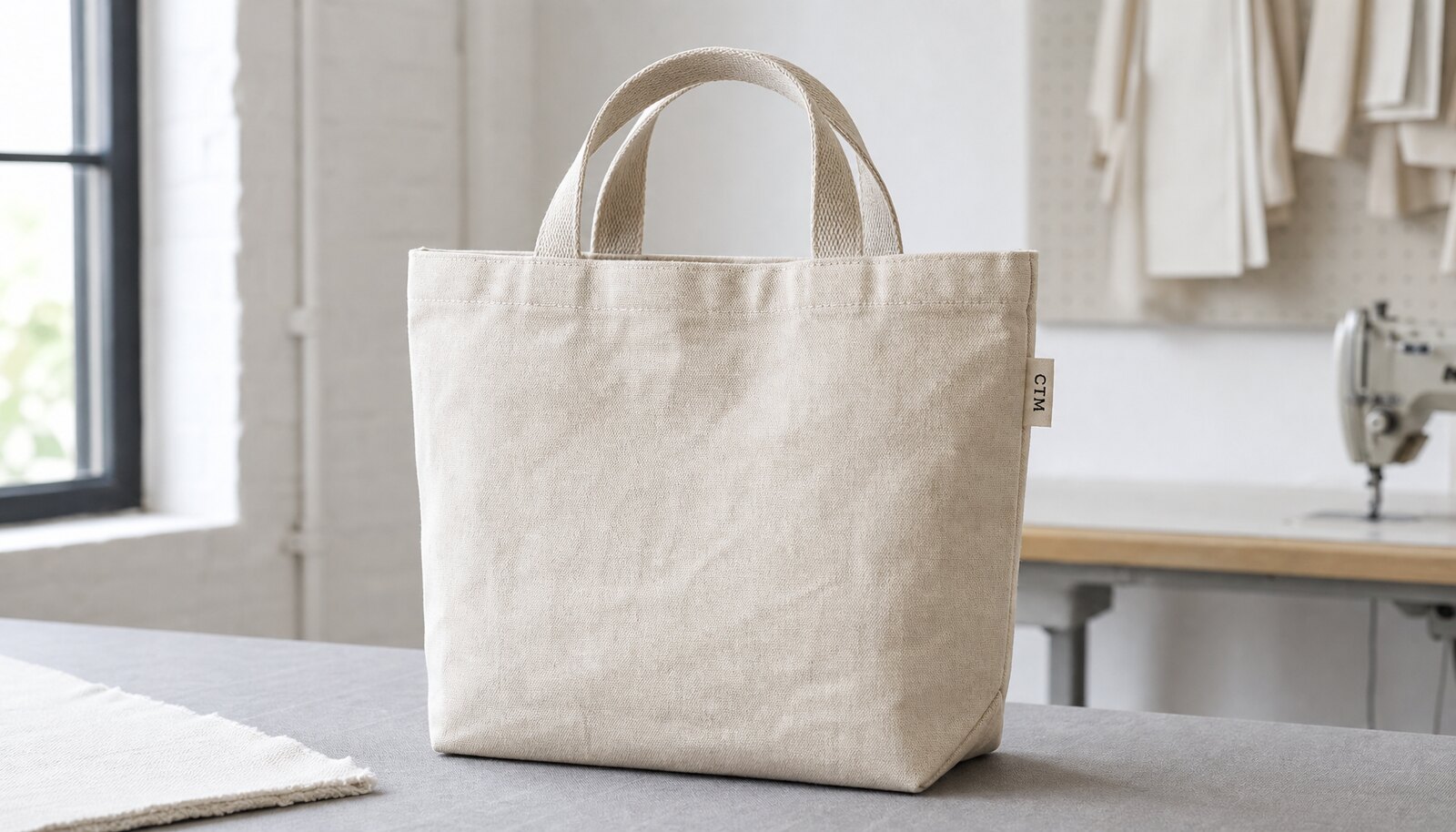
Start With The Campaign Use Case
For charity campaigns, the bag is usually a distribution tool first and a souvenir second. That changes the material decision. The fabric has to survive bulk handout, carry printed leaflets or small donations, and still look presentable when a supporter keeps it. If the campaign is public-facing, the tote also becomes a brand surface, so the print has to stay readable on a textured base cloth.
The first mistake buyers make is pricing the tote as if it were a simple giveaway item with no load requirement. A charity event bag often gets overfilled, folded into cartons, shipped to multiple sites, and handled by volunteers. That means the quote should reflect more than fabric cost. It should capture the actual use case: expected load, print simplicity, and how much of the budget can be spent on a stronger cloth or better finishing.
- Define whether the bag will hold paper inserts, product samples, bottled items, or donation kits.
- Set the visual standard: campaign utility bag, retail-style tote, or premium donor gift.
- Decide early whether the bag must be reusable enough to stay in circulation after the event.
Choose Canvas Weight And Construction With A Load Target
For most charity campaigns, 10 oz to 12 oz cotton canvas is the practical range. It gives enough body for screen printing, resists distortion when filled, and does not push freight weight too high. Eight-ounce canvas can work for light leaflets or small handouts, but it starts to feel thin once the bag is loaded. Fourteen-ounce canvas looks premium and holds shape well, but it raises cost and may be unnecessary unless the tote is intended for ongoing retail use or heavy inserts.
Construction matters as much as GSM. A plain single-layer bag is the cheapest route, but it needs proper seam allowance and handle reinforcement. If the campaign includes brochures, catalogs, or hard items, a stitched bottom patch or double-layer bottom is worth the added cost. Buyers should ask for the actual measured weight of the fabric in grams per square meter, not a vague description such as thick canvas or heavy cotton.
- 8 oz: suitable for light handouts, lower freight, lower perceived value.
- 10 oz to 12 oz: best balance of structure, print quality, and cost for most charity campaigns.
- 14 oz and above: better for premium donor programs or repeat retail use, but not always necessary.
Match Print Method To Artwork And Unit Cost
Screen printing is usually the default choice for canvas charity totes because it is durable, cost-effective at volume, and works well with simple logos or campaign slogans. One to three colors is the sweet spot. Once the artwork becomes too detailed or the color count rises, setup costs increase and registration becomes harder on the textured surface. If the design needs fine gradients, buyers should expect a different cost structure and a higher rejection risk on first samples.
The print size also changes the quote. A large front print is the most economical route if the message can be kept simple. Adding a second print location, a woven side label, or a small back mark increases both labor and inspection time. Buyers should define the print artwork in millimeters, the Pantone references if color matters, and the acceptable tolerance for placement shift. That is where quote comparisons become meaningful.
- Use screen print for strong, flat colors and repeat volume.
- Keep artwork bold and readable on the fabric weave.
- Specify whether the quote includes screens, setup, curing, and color matching.
Compare Sourcing Routes Before You Compare Unit Price
A direct factory quote is usually the cleanest option when the campaign has a fixed spec, stable artwork, and repeat annual volume. The factory can control fabric purchase, stitching, print, and packing under one process, which makes it easier to hold the same quality across reorders. A trading company can be useful when the buyer needs lower minimums, mixed product consolidation, or broader coordination across several SKUs, but the pricing may hide subcontracting layers that make QC harder to trace.
For urgent charity events, a stock program or semi-custom route can reduce lead time, but it often limits control over fabric weight, color, and print placement. Buyers should not compare these routes only on the quoted unit price. The right comparison is total delivered cost plus risk: sample clarity, production control, carton accuracy, and whether the supplier can reproduce the same tote next quarter without a spec drift.
- Direct factory: best for repeat orders and tighter control of material selection.
- Trading company: useful for smaller or mixed orders, but verify who actually makes the bag.
- Stock or semi-custom route: fastest, but least flexible on fabric and construction.
Build A Sample That Proves The Real Risk Points
A sample should not just show the logo. It should prove the bag can be produced to the approved spec. Buyers should request a pre-production sample in the exact fabric weight, handle length, seam construction, and print method intended for mass production. If the sample is made from a lighter cloth or with a different print process, it is only a visual reference and should not be used as final approval.
The sample review should focus on measurable points. Check the finished size, handle symmetry, stitch density, print sharpness, and whether the tote sits flat when empty. If the bag is meant to carry event materials, put those materials inside during review. That reveals handle stretch, bottom sag, and whether the bag holds its shape after being loaded. A good sample approval process saves more money than negotiating one cent off the unit price.
- Approve against measured dimensions, not against a hand-held visual impression.
- Test the bag with the actual campaign load, not an empty bag.
- Reject samples that use substitute fabric, alternate handles, or a different print method.
Use QC Thresholds That Fit The Bag's Real Job
Quality control should reflect the campaign's distribution pattern. If the totes will be handed out at one venue, minor cosmetic variation may be acceptable. If they will go to retail-style donors or sponsor kits, the bag has to look consistent enough to sit alongside other branded items. In either case, the supplier should define an acceptable tolerance for size, print placement, and stitch appearance before production starts.
The most common failure points are not dramatic defects. They are small issues that multiply across a big order: crooked handles, uneven top hems, loose threads at the seam, print shift on textured fabric, or carton counts that do not match the packing list. Buyers should request an inspection method that includes visual grading plus a practical load test. If the tote is too weak to survive the event floor, it is not a usable campaign bag no matter how clean it looks in photos.
- Set an acceptable size tolerance and insist on measured checks during production.
- Define stitching expectations at handles, side seams, and bottom corners.
- Include a simple load test tied to the campaign use case.
Break Down Cost Drivers So Quotes Are Comparable
A tote quote is rarely just fabric plus sewing. The main cost drivers are fabric weight, cut size, handle type, number of print colors, reinforcement, and packing format. A heavier canvas can be more expensive, but it may allow a cleaner print and reduce complaints about bag quality. A more complex logo can increase setup cost without improving campaign impact. Buyers should separate real value from cosmetic upgrades that do not change performance.
For landed cost, shipping is often where the budget moves unexpectedly. A dense canvas tote can add meaningful carton weight, especially if the bag is folded loosely or packed with excess air. If the campaign requires thousands of units, the carton count and carton size should be part of the quote review from the start. Ask for the unit price, sample charge, screen charge, carton cost, and any special packing fees as separate lines so you can compare suppliers on equal terms.
- Compare blank price, decoration price, and packing price separately.
- Ask how many bags fit in a carton at the approved fold size.
- Check whether freight changes materially if fabric weight moves from 10 oz to 12 oz.
Specify Packing So The Bags Arrive Ready For Distribution
Packing is not a final detail. For charity campaigns, it affects warehouse handling, damage rate, and how fast volunteers can distribute the bags. Flat folding reduces carton volume and makes count verification easier. Individual polybags are only worth the added material if the bags must stay clean for retail-style presentation or if the destination climate needs moisture protection. Otherwise, a clean bulk fold with clear carton marking is usually more efficient.
Carton instructions should mention unit count, master carton dimensions, gross weight target, and whether palletization is needed. If the bags are going into multiple event sites, the supplier should also label cartons by color, size, or campaign batch. That prevents sorting mistakes after arrival. A buyer who ignores packing often ends up paying twice: once in freight inefficiency and again in receiving labor.
- Use a fold standard that keeps the print visible and reduces wrinkling.
- Match carton count to warehouse handling limits and freight targets.
- Require clear outer carton marks for size, color, and batch traceability.
Plan Lead Time Around Samples, Fabric, And Peak Season Risk
Lead time for canvas totes is usually controlled more by approval flow than by sewing speed. Fabric sourcing, print approval, and pre-production sampling are the points that stretch schedules. If the campaign date is fixed, the buyer should build a buffer for sample revisions and color correction. A first sample that misses the print placement or fabric feel can easily add a week or more before production is released.
Seasonality matters too. Charity campaigns often align with fundraising events, holidays, or awareness drives, which means tote production can compete with other seasonal orders. Buyers should ask the supplier what portion of the lead time is waiting for blank fabric and what portion is actual production. That distinction tells you whether the order is at risk from material bottlenecks or only from approval delays.
- Allow time for sample review before locking production.
- Ask whether the supplier has reserved fabric or will buy to order.
- Protect the schedule with a firm approval deadline and a backup ship mode if needed.
Choose The Spec That Fits The Campaign Model, Not The Loudest Quote
The best material choice depends on how the tote will be used after handout. If the bag is a one-time event carrier, a 10 oz canvas with one-color screen print and simple packing is usually the right commercial balance. If the tote will be reused in public, moved into retail channels, or tied to donor visibility, stepping up to 12 oz with stronger reinforcement and more disciplined QC can be justified. The material decision should follow the campaign economics, not the supplier's default catalogue spec.
Buyers who get the best result usually do three things well: they lock the fabric weight before quoting, they simplify the artwork, and they ask for evidence that the supplier can repeat the same bag after approval. That approach keeps the campaign on budget and reduces the chance of a tote that looks fine in a photo but fails in the distribution line.
- Use 10 oz to 12 oz as the default decision range for most charity programs.
- Upgrade construction only when the campaign load or visibility justifies it.
- Treat sample approval and packing specs as part of the product, not admin work.
Specification comparison for buyers
| Spec decision | Recommended option | When it fits | Buyer risk to check |
|---|---|---|---|
| Fabric weight | 10 oz to 12 oz natural cotton canvas | Most charity campaigns that need a sturdy bag without overspending on heavy cloth | Very light fabric can show print strike-through and feel flimsy; very heavy fabric raises cost and carton weight |
| Weave and finish | Plain woven canvas with a washed or lightly sanforized finish | When the bag must look clean, feel soft enough for public distribution, and avoid extreme shrinkage | Unfinished fabric can shrink after printing or washing and can distort logo placement |
| Print method | 1 to 3 color screen print for large runs | When the artwork is simple and the same logo repeats across thousands of bags | Too many colors raise setup cost and can create registration issues on textured canvas |
| Decoration placement | One front print and a small side or back mark | When the campaign needs brand visibility but cost discipline matters | Overcrowded artwork can hide the message and increase rejection risk if alignment drifts |
| Handle construction | Self-fabric handles or cotton webbing handles with reinforced stitching | When the bag will carry leaflets, small gifts, or donation materials | Weak handle anchoring is a common failure point and should be load tested before approval |
| Reinforcement | Bottom patch or stitched base if the bag will carry heavier inserts | When the campaign includes books, bottles, or multi-item kits | A plain single-layer bottom may sag, tear, or lose shape in distribution |
| Supplier route | Direct factory for repeat programs, trading company for smaller mixed orders | When you need either the best unit cost or more flexible order handling | Quote comparisons are distorted if one supplier includes decoration and another excludes it |
| MOQ strategy | Base fabric and print design standardized across the campaign | When you want to keep setup cost low and split volume across a few colorways or sizes | Too many variants increase fabric loss, print screens, and leftover stock |
| Packing format | Flat packed in inner polybags with controlled carton count | When pallets, warehouse storage, or event distribution timing matter | Loose folding or inconsistent carton counts create receiving disputes and damage in transit |
Buyer checklist before sampling
- Confirm the final tote size, finished seam allowance, handle length, and target fabric weight before requesting quotes.
- Lock the artwork size, number of print colors, and print placement, then request a blank fabric strike-off or printed sample.
- State the expected carry load, whether the bag will hold flat literature or heavier inserts, and whether a bottom patch is required.
- Ask for the supplier's standard shrinkage allowance, stitch density, and reinforcement method at handle joins and side seams.
- Require a packing spec that states unit polybag use, carton quantity, carton dimensions, and whether palletization is included.
- Compare quotes on the same basis: fabric, decoration, sample charge, cartons, inland freight, and any color change or screen fee.
Factory quote questions to send
- What exact canvas weight, yarn count, and finishing treatment are you quoting?
- Is the quoted price based on blank bags, one-color print, or a fully decorated sample with setup included?
- What is your MOQ per color and per print design, and how do you handle mixed-color orders?
- What handle reinforcement and bottom construction do you recommend for the expected load?
- Can you provide a pre-production sample, and what is the sample lead time and sample charge policy?
- What are the carton size, units per carton, and estimated carton weight for this order?
- Which quality checks do you perform before shipment, and what defect level triggers rework or replacement?
- What is your production lead time after sample approval, and what steps usually extend the schedule?
Quality-control points to confirm
- Finished size tolerance should be stated up front, with a practical target such as +/- 0.5 cm for smaller totes and tighter control on print placement.
- Fabric weight should be verified against the approved spec, not just described as heavy or thick.
- Stitching at the handle and side seam should be checked for even tension, thread trimming, and secure backstitching at stress points.
- Print registration should be checked for color overlap, edge blur, and placement shift after pressing or curing.
- Load testing should reflect the real use case, such as leaflets, catalogs, or bottled gifts, rather than a generic no-load inspection.
- Carton count, folding method, and carton marking should match the shipping list to prevent warehouse disputes.
- Odor, dust, and visible fiber contamination should be reviewed on packed goods, especially for retail-facing charity programs.