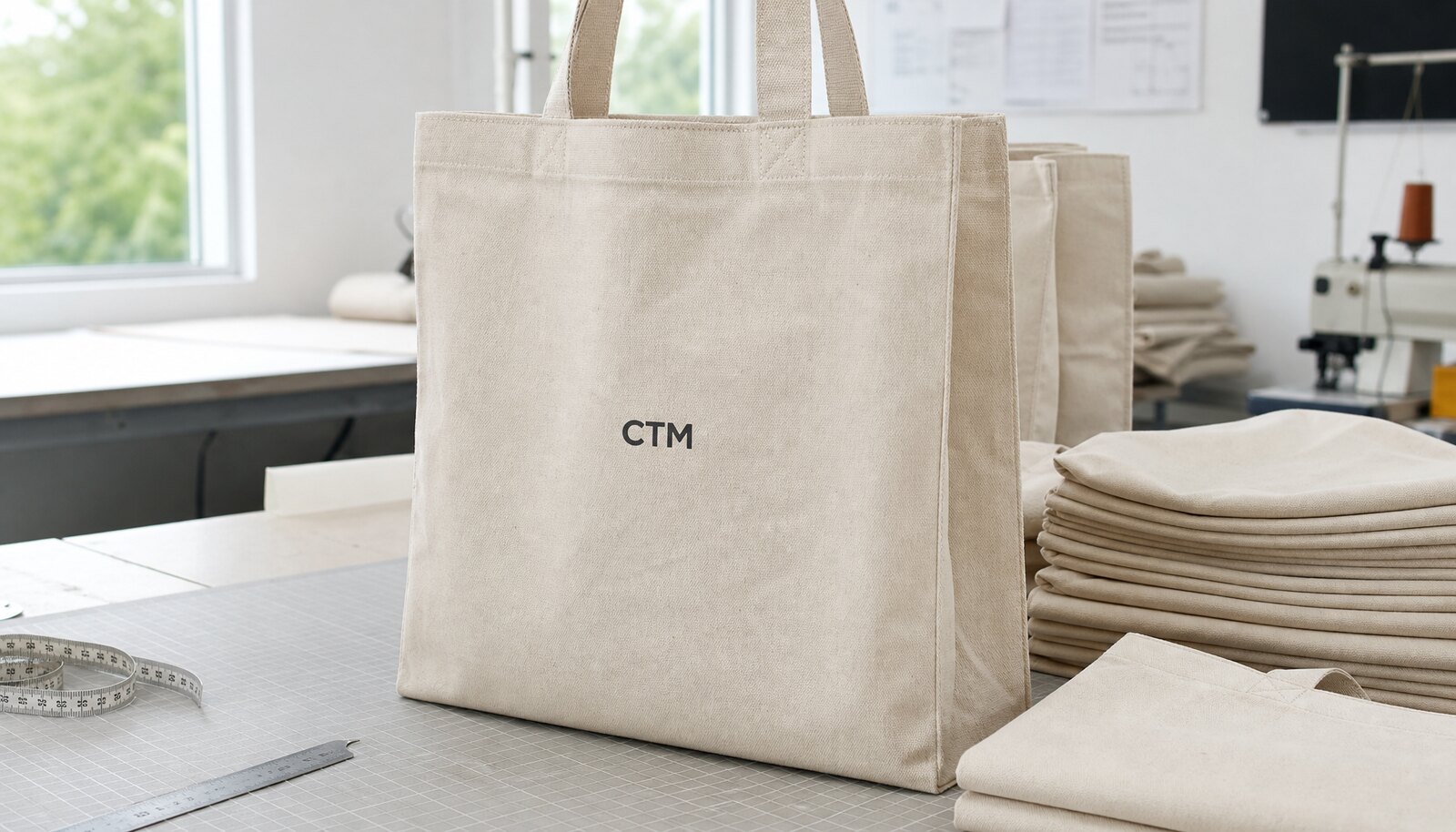
Why charity campaign buyers need a pricing plan instead of a loose quote
A tote quote can look competitive until the order reaches production. Then the real costs appear: a heavier fabric than expected, an extra print screen, stronger handles, better packing, or freight volume that was never discussed. For charity campaigns, those surprises matter more than in ordinary merchandise buying because the bag is often tied to a fixed event date and a fixed budget. If the tote arrives late or looks underpowered, the campaign absorbs the loss immediately.
That is why procurement teams should build a pricing plan before asking for offers. The plan is not a spreadsheet exercise for its own sake. It is the way you decide whether the tote is a giveaway, a donor thank-you item, a retail fundraising product, or an event carrier for brochures and small gifts. Each use case changes the bag spec. A simple handout bag can be lighter and flatter. A donor or retail bag may need better body, heavier canvas, tighter sewing, and a more polished print finish. When the use case is clear, the RFQ becomes measurable and supplier quotes stop drifting into different assumptions.
The most useful procurement mindset is to separate the commercial decision from the decoration decision. First decide the bag size, canvas weight, handle style, and packing method that will protect campaign value. Then compare print options and supply routes. If the quote is built around the full job, buyers can calculate the landed cost per usable bag, not just the ex-works price per piece. That small difference is often what saves a charity campaign budget from being eaten by freight, rework, or rushed change orders.
- Start from campaign use, not from the generic tote category.
- Treat fabric, print, packing, and freight as separate buying decisions.
- Compare suppliers on one shared spec sheet so the quotes are truly comparable.
Choose the bag spec that fits the event, not the cheapest fabric
For most charity campaigns, the practical canvas range sits around 12oz to 14oz, or roughly 340-420 GSM. That range usually gives enough body for brochures, small gifts, and donation inserts without making the bag unnecessarily heavy or expensive. Thinner canvas can work for very light handouts, but the bag may distort at the base seam and feel disposable. Heavier canvas can be justified for premium fundraising or retail use, but once the fabric gets too heavy, the bag price rises, sewing becomes slower, and freight volume can increase without enough extra campaign value.
Finished size matters just as much as fabric weight. A common exhibition tote size for charity distribution is around 35 x 40 cm or 38 x 42 cm, often with a 10 cm gusset if the bag has to carry catalogues, folded garments, boxed samples, or envelopes. For a flat profile giveaway, a gusset may not be necessary. For a donor pack or event kit, it often is. Procurement should ask suppliers to quote the same finished size, same gusset depth, same handle length, and same fabric weight. If the size changes between quotes, the comparison is not useful.
Handle design is another cost and quality lever. Shoulder-length handles around 60-65 cm are usually more practical for event distribution because attendees can carry the bag through venues, on public transport, or across a car park. Short handles can be acceptable for hand carry, but the campaign experience is less comfortable. A very long handle can be convenient, but it also increases sewing time and can affect the way the bag folds into cartons. In procurement terms, the right handle is the one that fits the campaign’s actual carry scenario and stays strong after repeated use.
A small spec change can affect both price and perceived value. For example, moving from a flat tote to a gusseted tote increases cloth use and sewing time, but it may eliminate the need for a second bag in the donor pack. Adding a reinforced base or a slightly wider opening can make the bag more usable without moving into premium territory. Buyers should think in terms of function per dollar, not just fabric weight per bag.
- Use 12oz-14oz canvas as the first pricing band for most charity orders.
- Add a gusset when brochures, sample packs, or donor inserts need real volume.
- Quote finished dimensions, not cutting dimensions, so all suppliers price the same bag.
- If the event is public-facing, prioritize handle comfort and visible structure over the absolute lowest cloth weight.
How print method changes the bulk price and the quality risk
For charity campaign bags, print method is often where buyers accidentally create the wrong tradeoff. Screen print usually gives the best value when the artwork is simple: one logo, one message, one or two colors, one print position. The reason is straightforward. Screen print setup costs are spread across volume, and the result is usually crisp, visible, and familiar to procurement teams. If the logo is clean and the event needs a strong public-facing mark, screen print is often the first method to quote.
The cost picture changes when the artwork is more complex. Multi-color art means more screens, more registration work, more ink control, and more chances for variation between batches. Small text and fine details can blur if the mesh or ink deposit is not managed well. That is why buyers should not ask only, “Can you print this?” They should ask, “What is the simplest decoration method that keeps the message legible at the volume we need?” For many charity campaigns, simplifying the artwork slightly can cut both price and defect risk.
Digital print and heat transfer are worth quoting, but they are not automatically better. Digital can handle more detail, yet it may cost more per piece and depend heavily on the cloth finish. Heat transfer can be useful for smaller runs or variable names, but buyers should test whether the decoration holds up after folding, friction, and handling in a crowded venue. Embroidery can add perceived value, but it usually makes sense only on premium fundraising bags because the cost and sewing time rise quickly. In practice, the lowest-risk bulk plan is often one print location, one clean logo, standard ink, and a curing method that the factory can prove with a rub test.
If the campaign includes sponsor marks, ask whether they can be arranged into one print layout instead of multiple placements. Consolidating artwork can lower setup cost and reduce alignment risk. It can also improve the visual result because the bag reads as a single campaign item rather than a patchwork of logos. Procurement should think about the recipient experience here: the tote is a distribution item, but it also carries the public face of the campaign.
- Screen print is usually best value for simple logos at scale.
- More colors mean more setup and more opportunities for color shift.
- Ask whether the quoted print price includes screens, ink, curing, and artwork cleanup.
- If there are sponsors, try to consolidate them into one coherent layout rather than multiple print positions.
A comparison of supplier routes, pricing behavior, and tradeoffs
This is where many sourcing guides stay too generic. Procurement buyers need to know not only what a tote can be, but how different supplier routes behave when the order is real. The same canvas exhibition tote bag can be quoted by a factory, a trader, a low-MOQ decorator, or a premium finishing house. Each route can work. Each route has a different risk profile. The best choice depends on how close the campaign date is, whether artwork is final, and whether you need control or convenience.
A direct factory quote usually gives the clearest view of the production chain. You can often ask who cuts the cloth, who prints, who sews, and where the bags are packed. That visibility is useful for repeat charity campaigns because it supports better QC and simpler reorders. A trading company or agent can be useful if the buying team needs one contact for several items or does not have the bandwidth to manage a factory. The tradeoff is opacity. If a problem appears, root-cause analysis may take longer because the quote owner and the production owner are not the same party.
Low-MOQ digital suppliers are attractive when the order is small or the campaign artwork changes frequently. They reduce setup friction and may let buyers test a design before committing to volume. But the unit price often looks less attractive once you scale. Premium finishing suppliers are useful when the tote is part of a donor gift or retail fundraiser and presentation matters more than minimum price. Their sewing, labels, insert cards, or finishing detail can elevate the bag, but procurement should still ask whether each added feature is doing real commercial work or simply inflating landed cost.
Local decoration or downstream finishing can also make sense if the bags are imported blank and printed nearer to the campaign market. That can help when artwork is approved late or when the event needs final-stage personalization. The tradeoff is handoff risk. Buyers should confirm who is responsible if the blank bags arrive off-spec, if the print shifts, or if one supplier blames the other. If the supply chain has two vendors, the contract needs clearer ownership, not less.
- Direct factory sourcing is usually strongest for repeat programs and transparent QC.
- Trading routes can help when the shipment includes multiple items or complex coordination.
- Low-MOQ and premium suppliers can both be useful, but for different campaign economics.
- If two suppliers are involved, define defect ownership and handoff responsibility in writing.
Price bands, MOQ tiers, and the mechanics of a bulk pricing plan
Procurement teams often ask for “the best price,” but the more useful question is how the price behaves as volume increases. A bulk pricing plan should show the cost bands, the setup burden, and the point where a higher run becomes more efficient than a short run. For charity totes, the real economics usually come from spreading fixed setup costs across more units: cloth cutting, print screens, artwork prep, sample approval, and carton handling. Once those costs are visible, the buyer can judge whether a volume increase is worth it.
A simple way to structure the plan is to request tiered unit pricing at the volumes most likely to matter to the campaign: for example 1,000, 3,000, 5,000, and 10,000 units. The purpose is not to force the supplier into a gimmick ladder. It is to see where setup amortization starts to improve. If the jump from 1,000 to 3,000 units only reduces the price slightly, but the cash commitment rises sharply, the campaign may be better off staying smaller and improving the bag spec instead. If the price drops meaningfully at 5,000 units, the buyer can decide whether the extra stock has a second-use destination, such as donor follow-up, retail sale, or another event.
For practical procurement, the quote should separate recurring unit cost from one-time setup cost. That is how you compare suppliers fairly. A supplier with a high screen setup but a lower unit price may be better for repeated campaigns. A supplier with a lower setup but a higher piece price may be better for a one-off event. The right answer depends on whether the charity campaign is a single date or a repeated program. This is also where landed cost matters. The bag price may appear small, but carton count, freight mode, and destination handling can swing the real budget more than the sewing line itself.
A useful internal rule is to ask what the order looks like at the budget ceiling, not just at the ideal spec. If the campaign has a fixed spend, the team should know which lever to move first: cloth weight, print complexity, handle length, pack method, or freight speed. That is the core of a bulk pricing plan. It turns the tote from a vague purchase into a controlled set of tradeoffs.
- Request price tiers at realistic volumes such as 1,000, 3,000, 5,000, and 10,000 units.
- Ask suppliers to separate one-time setup from recurring unit cost.
- Compare landed cost, not just ex-works price.
- Use the budget ceiling to decide which spec lever to adjust first.
How to structure the RFQ so quotes can be compared like-for-like
A charity campaign RFQ should make it difficult for suppliers to hide assumptions. The goal is not to overload the factory with paperwork. The goal is to force alignment on the decisions that actually change cost. The most useful RFQ is short, specific, and repeatable. It should tell the supplier exactly what they are quoting, how many units are needed, what decoration is expected, and how the goods will be packed and approved.
Start with the bag dimensions and construction. State the finished size, gusset depth, handle length, fabric weight, and whether the body is natural, bleached, or dyed. Then add the decoration details: print method, print size, number of colors, print position, and whether one side or both sides are printed. Then define packing: folded or flat, units per polybag, units per carton, carton labeling, and whether the bags need moisture protection. Finally, define approval timing and shipment expectation. Once those items are fixed, the supplier cannot quietly substitute a lighter cloth or smaller print area and still present the quote as equivalent.
Procurement teams should also ask for a line-item price breakdown. Separate fabric, sewing, print setup, packing, and freight-related services wherever possible. This matters because a single lump sum can look simple but become difficult to negotiate if the supplier later says the logo area changed, the carton size changed, or the insert card needs rework. If the RFQ includes a simple volume ladder, buyers can also see whether the factory gives meaningful price breaks at 1,000, 3,000, 5,000, or 10,000 units. That gives the charity campaign a real pricing plan instead of a guess.
The RFQ should also include supplier proof points, not only product details. Ask for the factory location, relevant equipment list, typical output capacity, and photos of sewing and printing lines if the order is important. If the supplier offers certificates or audit reports, request the most recent version. These documents do not replace sample approval, but they do reduce the chance of quoting a product the factory cannot actually make at the required standard.
- Use one RFQ for all suppliers and do not let the spec drift by email.
- Ask for line-item pricing so setup and unit cost are visible.
- Include the event date and approval deadline so lead time can be judged honestly.
- Request factory capability proof if the order is high priority or highly visible.
Sample approval should test the weak points, not just the logo
A sample is not successful because it looks nice on a desk. It is successful because it tells you what will happen in production. For canvas exhibition tote bags for charity campaigns, the first sample should tell you whether the size is right, the seams sit straight, the handles are reinforced properly, and the bag can actually carry the planned contents. The printed sample then confirms whether the logo sits in the right place and whether the ink coverage holds on the chosen cloth. If a supplier only sends a printed mockup photo, that is not enough to approve a bulk order with a fixed campaign date.
When evaluating the blank sewn sample, fill it with the real brochure pack, donation insert, or merchandise bundle. Check whether the gusset opens properly, whether the bag stands well enough for display or handout, and whether the handle drop feels comfortable. Measure the bag flat, then check it again loaded. This matters because a tote can look correct when empty but twist or distort once the contents are inside. If the charity campaign is public-facing, ask whether the seam trim, inside thread tails, and finish quality would look acceptable if a recipient opened the bag in front of other attendees.
The pre-production print sample should be inspected under normal light and, if possible, under the same conditions as event distribution. Look for edge bleed, registration error, print density variation, and under-cured ink. If the logo is on natural canvas, remember that the cloth texture will affect sharpness. A sample that looks slightly different from the mockup is not automatically a problem; what matters is whether the final result is consistent, readable, and durable enough for the campaign use case. Record approval in writing, with photos and measured dimensions, so there is no argument later if production output differs from the approved sample.
If the buyer expects a long campaign life, ask for a simple handling test on the sample: repeated folding, carrying a moderate load, and checking whether the print cracks, the seam puckers, or the handle attachment loosens. This does not need to be a laboratory exercise to be useful. It just needs to reveal obvious failure points before the production run starts.
- Approve a sewn blank sample and a printed sample when the order matters.
- Test the bag with actual campaign contents, not with an empty shell.
- Capture the sample approval in writing, including dimensions and print position.
- Ask for a simple handling test if the tote will be reused beyond a single event.
Packing, carton density, and the freight impact on landed cost
Canvas tote bags are deceptively bulky. Even when the unit price looks modest, the shipment can become expensive if the bag is folded inefficiently or overpacked in a way that causes damage. That is why bulk pricing should be discussed together with packing density. A supplier that fits more bags per carton can reduce freight cost, but only if the folds do not crease the print or crush the seams. A supplier that packs too loosely may protect the bag better but send too many cartons, which pushes up freight and warehouse handling.
For charity campaigns, the usual choice is simple bulk packing in master cartons, often with bags folded in a consistent orientation. Retail-style individual packaging should only be used when the bag is part of a donor gift or sold as merchandise. If the tote needs a small insert card or paper band, ask for those as separate priced items because they add labor. The same is true for moisture barriers, desiccant, or carton liners. Those are useful on humid shipping routes, but they should never be hidden inside a vague unit price.
Carton marks are not a detail to leave until the end. Outer labels should show style number, color, quantity, PO number, and carton sequence. If the shipment will be split for different event sites or warehouses, carton identification needs to be even clearer. Buyers should request carton dimensions and gross weight on the quote so they can estimate freight before production starts. If the supplier is unwilling or unable to provide that data, it is hard to judge the true landed cost with confidence.
A practical landed-cost comparison should also include receiving labor. A compact carton can be cheaper to ship and easier to handle, but if it is packed too tightly or mixed by style, the warehouse may spend extra time sorting and checking counts. For a charity campaign with a fixed event date, that hidden labor can matter as much as ocean or air freight.
- Ask for units per carton, carton size, and gross weight on every quote.
- Use simple packing unless the bag must be merchandised or gifted individually.
- Verify that the packing method will not damage the print or crush the seams in transit.
- Include receiving and sorting effort in the landed-cost view, not only freight.
QC standards buyers should write into the PO before mass production
Quality control is where many tote bag purchases become too vague. “Good quality” is not a usable standard for procurement. The buyer needs measurable checks. Start with the cloth itself. Ask the factory to confirm the canvas weight tolerance and whether the figure quoted is before or after finishing. Then move to construction. Ask for seam control, stitch density, handle reinforcement, and thread trimming standards. When these points are written into the purchase order, the factory has a clearer target and the buyer has a basis for rejection if the order misses the mark.
For stitching, procurement teams should not stop at visual inspection. A practical check is stitches per inch, especially on the top seam and handle attachment. For a standard canvas tote, many buyers use a commercial benchmark around 7-10 stitches per inch on visible seams, with no skipped stitches or loose loops on stress points. Handle reinforcement should be explicit too. Bar-tacks or equivalent reinforcement at the top attachment area help prevent failure when the bag is loaded with brochures or small products. For event use, a handle pull-test threshold should be agreed in writing. A common working target is around 10-15 kg of pull resistance at the handle attachment for standard campaign totes, but the exact figure should reflect the design and fabric weight.
Print QC should be just as concrete. Ask for rub testing, both dry and wet, especially if the bag is printed in a single dark tone on natural canvas. Under-cured ink can leave marks on clothing or event materials, which is a real problem for charity campaigns because bags are handled closely and often distributed in crowded public settings. Registration tolerance should be written down for multi-color logos. For simple single-color marks, the print should remain centered, readable, and not bleed at the edges. If the logo includes fine text, the buyer should require a sample that shows the text in actual production size, not only in artwork proof form.
Finally, inspection should cover appearance and packing. Random checks should reject oil stains, lint, dirt, broken needles, odor, missing thread trim, puckering, or twisted side seams. Carton count should match the packing list. Outer cartons should be checked for crush damage and label accuracy. If the shipment is event-critical, an AQL-based inspection before release is a sensible procurement safeguard. Buyers often use AQL 2.5 for major defects and 4.0 for minor defects as a practical benchmark, but the exact standard should be written into the order and agreed with the supplier. This is the level of detail that separates a real buying plan from a polite order note.
If defects are discovered, the response path should also be pre-agreed. The supplier should know whether the buyer wants rework, replacement, a shipment hold, or photo documentation before the goods leave the factory. Without that escalation path, a small problem can become a late delivery problem very quickly.
- Write stitch density, pull-test, and print rub test requirements into the PO.
- Use defect categories: major, minor, and critical, with inspection sampling agreed in advance.
- Check carton counts and carton condition before shipment release, not after arrival.
- Define the escalation path for defects before production starts.
Specification comparison for buyers
| Source option | Best fit | Typical pricing behavior | Tradeoff or risk to check |
|---|---|---|---|
| Direct factory quote | Repeat charity programs with fixed artwork and stable volume | Usually the best base price when the spec is frozen and the factory can run sewing and decoration in-house; setup costs are easier to see if itemized | Less flexible if you need mixed SKUs, late artwork changes, or split shipments; verify who actually makes the bags and who prints them |
| Trading company / agent | Mixed-product campaigns, small buying teams, or one-contact sourcing | Convenient for coordination, but the quote may include a margin that is not visible unless the factory name and cost breakdown are disclosed | Check factory identity, change-order control, and whether the agent can actually solve defects without delay |
| Low-MOQ digital supplier | Short-run campaigns, donor packs, pilot launches, or artwork with more colors | Higher unit price, lower setup burden; can be cost-effective when volume is small or approvals are uncertain | At scale, unit cost can rise quickly; confirm color consistency, abrasion resistance, and whether proofing is included |
| Screen-print volume supplier | Large charity events with one or two logo colors and a fixed message | Usually strongest value at volume because screen setup is spread across many units | Needs clean vector art and curing control; poor registration or under-cured ink can create rejects |
| Premium finishing supplier | Fundraising retail bags, donor gifts, or campaigns where presentation matters | Higher price due to heavier canvas, tighter sewing, labels, or retail packing | Check whether the premium is adding real campaign value or only increasing landed cost |
| Local decorator / downstream finisher | When bags are imported blank and printed closer to the event market | Can reduce risk on printed goods and simplify late-stage personalization | Two-vendor handoff creates accountability gaps; confirm who owns color matching and defect liability |
Buyer checklist before sampling
- Define the campaign use first: giveaway, donor gift, retail item, or event-kit carrier; the use case drives fabric weight and finishing.
- Specify finished size, gusset depth, handle length, handle drop, and any expected load in the RFQ.
- State canvas weight in oz or GSM, whether the cloth is natural or bleached, and the acceptable shade range.
- Send vector artwork, Pantone references, print size, print position, and whether one or both sides are printed.
- Ask for one sewn blank sample and one printed pre-production sample before bulk release.
- Request line-item pricing for fabric, cutting, sewing, print setup, packing, cartons, and freight-related services.
- Agree carton count, units per carton, outer label format, and whether moisture protection is needed for the route.
- Set defect acceptance criteria before production: stitching, print registration, stains, size variance, and pack count.
- Ask for production photos or video, plus a final inspection report if the order is event-critical.
- Build the timeline backward from the campaign date and set written deadlines for artwork approval, sample approval, and shipment booking.
Factory quote questions to send
- What is the quoted canvas weight in oz or GSM, and is that the finished fabric weight or the raw cloth weight before finishing?
- Is the price based on screen print, digital print, heat transfer, embroidery, or no decoration, and what setup charge applies to each method?
- What exactly is included in the unit price: cutting, sewing, bar-tacks, handle reinforcement, print, packing, cartons, and export marks?
- What is the MOQ for this exact size, fabric weight, handle length, and print layout?
- Can you confirm the finished dimension tolerance and how the bag is measured after sewing?
- What is the stitch specification on the handles and seams, and how do you control skipped stitches, seam slippage, and thread trimming?
- What sample stages will you send: blank sewn sample, printed proof, and pre-production sample?
- What ink cure method do you use, and do you test rub resistance before shipment?
- How many units per carton, what is the carton size and gross weight, and what is the estimated cubic volume for freight planning?
- What is your standard inspection method at the factory, and can you share the AQL level or sampling plan used before packing?
Quality-control points to confirm
- Write the agreed fabric tolerance into the PO. A practical range is +/-5% on canvas weight unless the supplier can prove a tighter standard with incoming cloth records.
- Check stitching in stitches per inch rather than by feel alone. For a standard canvas tote, many buyers use a commercial benchmark around 7-10 SPI on visible seams, with no skipped stitches, loose loops, or needle damage on load-bearing areas.
- Require handle reinforcement at stress points. Ask the factory to state the pull-test target in writing; for standard campaign totes, a working procurement benchmark is often around 10-15 kg at the handle attachment, but it should match the bag design and intended use.
- Measure the finished size flat after sewing, not only the cutting pattern. Specify acceptable dimensional variance on the PO, such as +/-0.5 cm to +/-1 cm depending on size and seam construction.
- For print acceptance, include position, color density, and cure quality. Ask for dry rub and wet rub checks so under-cured ink does not transfer during event use.
- For multi-color logos, confirm visual registration tolerance so the mark stays centered and readable after curing.
- Random inspection should check smell, stains, lint, oil marks, broken needles, puckering, and seam distortion. These are common public-distribution complaints because the bag is handled close to the body.
- Carton verification should include style, color, quantity, and PO number on every outer carton. Random carton opening should confirm units per carton, folded orientation, and that goods match the packing list.
- Use an AQL sampling plan for final inspection when the order is event-sensitive. Many buyers use AQL 2.5 for major defects and 4.0 for minor defects as a working benchmark, but the exact standard should be agreed and written into the PO.
- Perform a carton drop and pack check before mass shipment if the route is long or multi-leg. Confirm that folded bags do not burst open, print does not rub against adjacent units, and carton corners do not crush under stacking.