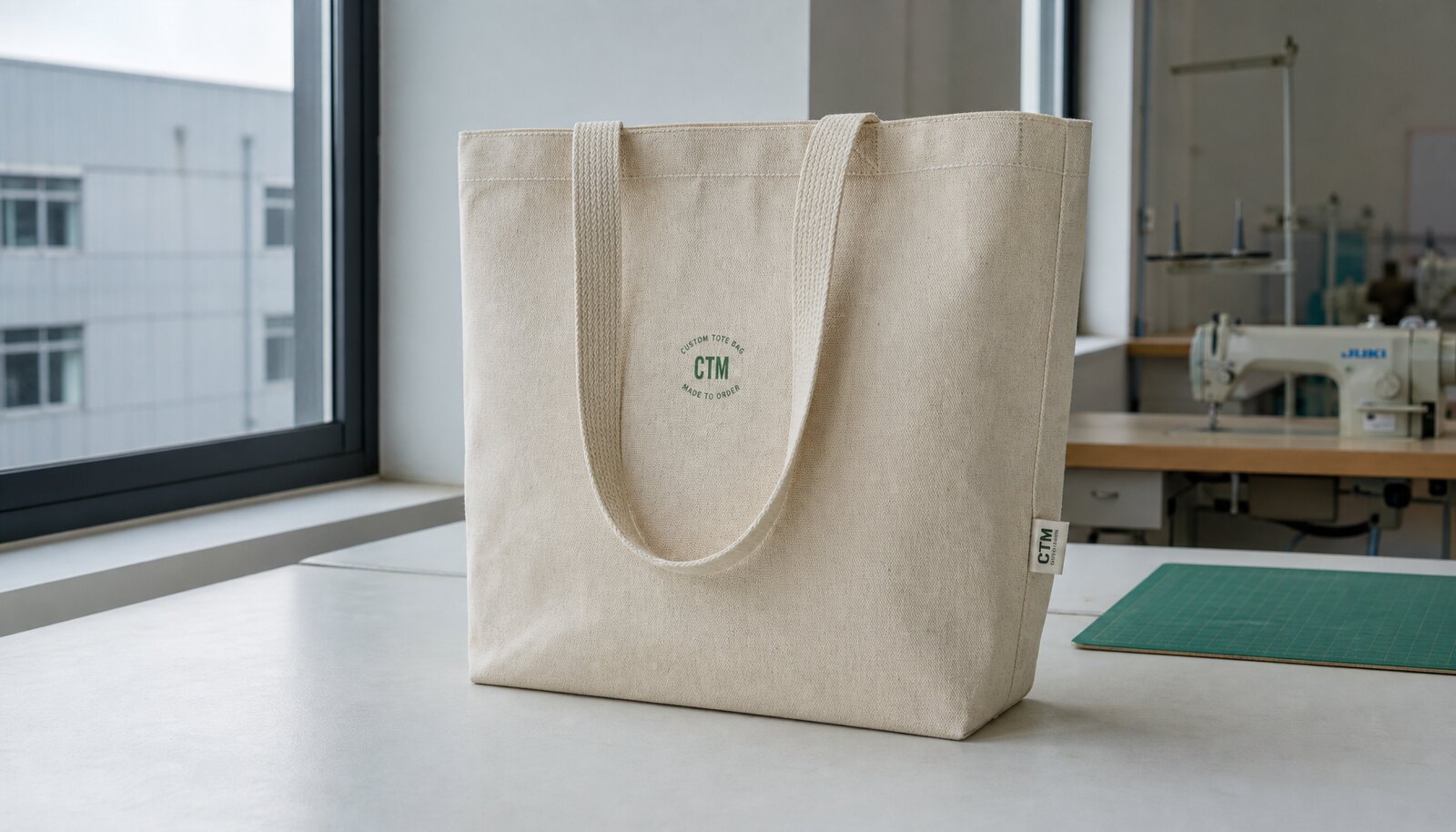
Why boutique buyers struggle with canvas tote MOQ
The phrase canvas exhibition tote bags for boutiques sounds simple, but the sourcing problem is usually not the tote itself. Boutique buyers need a bag that feels retail-ready, supports the logo cleanly, and arrives in time for a collection launch, store opening, or exhibition date. The hardest part is that the lowest quote is often built on a different assumption about fabric weight, print setup, or packing than the buyer intended.
MOQ is where this mismatch shows up first. A factory may quote a low unit price only when the order reaches a fabric or print threshold, while a smaller boutique order may need a different cutting plan, a simpler print, or a more standard size. If you compare quotes without aligning those basics, you can end up with a cheap-looking bag, a late shipment, or a production change order after sample approval.
- For small retail runs, the real cost is not only the unit price; it is the setup cost spread across the order.
- The most expensive surprise is often a hidden spec change, such as moving from 10 oz canvas to 12 oz canvas after the quote is issued.
- A boutique program should be planned around the launch date first, then around MOQ, not the other way around.
Start with the use case before choosing fabric and size
A boutique tote is not the same as a conference giveaway bag. If the bag will carry apparel, cosmetics, brochures, or folded gift items, the canvas weight and handle structure need to support repeated use. For most retail-facing orders, 10 oz to 12 oz cotton canvas, or a 280 to 400 GSM equivalent, is the practical range. Below that, the bag can feel underbuilt. Above that, cost and lead time rise without always improving the buyer experience.
Size should be tied to the actual merchandise mix. A common medium format around 35 x 40 x 10 cm works for many boutique programs because it fits daily purchases and display merchandising. If the bag is too large, packing cost and freight volume rise. If it is too small, retail staff will stop using it for customer orders, which defeats the purpose of the program.
- 10 oz canvas: better for entry price points, soft foldability, and lighter gift programs.
- 12 oz canvas: better for premium boutiques, more structure, and improved perceived value.
- Larger gussets improve usability but also increase material consumption and carton volume.
MOQ logic: what actually drives the minimum order
Factories rarely set MOQ from one factor alone. For canvas tote bags, the minimum is usually driven by fabric purchase efficiency, print setup, and sewing line scheduling. If the design uses one color on a standard size with simple handles, the MOQ may be relatively manageable. Add multiple print colors, lining, piping, zippers, or special trims, and the minimum rises quickly because each change adds setup time and risk.
Buyers should separate the quoted MOQ into fabric MOQ, print MOQ, and finished-bag MOQ. That breakdown tells you whether the supplier is flexible or merely quoting a number. A real factory can often lower finished-bag MOQ by using stock canvas, reducing print colors, or standardizing the trim package. A trading company may only repeat a minimum number without explaining where it comes from.
- One-color screen print on a standard bag is usually the easiest route for lower MOQ.
- Complex artwork, metallic ink, or full-color imagery usually raises setup cost and sample time.
- If you need several boutique colors, ask whether the factory can use stock-dyed handles or only a single body color with variable print.
Print method choices and how they affect quote stability
For boutique branding, screen print remains the most practical method when the logo is simple and the order is repeatable. It gives a clean look, stable pricing, and predictable production. It also handles large logo blocks well, which matters if the tote is part of the brand’s public visual identity. The tradeoff is that every color normally adds setup and alignment control, so the quote can move if the artwork is revised late.
Heat transfer or digital transfer can be useful for short runs, artwork with gradients, or several colors when the MOQ is too low to justify full screen setup. The buyer should understand, however, that the finish may feel less premium, and durability can vary depending on the film and adhesive used. For a boutique retail tote, the print method should match the price point and the intended reuse cycle, not just the artwork file.
- Screen print: best for a classic tote, lower running cost, and repeat orders.
- Transfer print: useful for low-volume or multi-color art, but confirm wash and fold resistance.
- Embroidery: premium-looking on small logos, but often too costly or too slow for broad body graphics.
Use quote data to compare suppliers, not just unit prices
The same tote can be quoted very differently depending on what each supplier includes. One factory may quote the blank bag only, while another includes printing, label sewing, and carton packing. A third may have a lower unit price but a higher hidden cost in oversize cartons, longer lead time, or limited color matching. For that reason, procurement teams should compare quote structure, not headline price alone.
A useful quote comparison includes the actual canvas weight, handle tape width, print method, sample fee, and packing format. If one offer is cheaper because it uses thinner canvas or a simpler reinforcement pattern, that is not a direct apples-to-apples comparison. Buyers should ask for the same basic spec in every quote, then compare the cost impact of optional features separately.
- Always identify whether the quote includes printing, label sewing, and pack-out.
- Check whether the supplier is quoting FOB, EXW, or delivered terms, because freight exposure can distort the apparent unit cost.
- Ask for carton dimensions because volume cost can matter as much as unit cost on tote shipments.
Comparison table: supplier routes for boutique tote sourcing
Different sourcing routes suit different order sizes and risk tolerance. The table below is less about spec fields and more about how each route behaves in real procurement. For canvas exhibition tote bags for boutiques, that difference matters because the buyer may need a small branded run for a launch or a larger repeat program for multiple stores.
If your team needs control over fabric weight, print registration, and packing consistency, direct factory sourcing usually gives the clearest path. If the order is tiny, mixed, or still under design development, a trading route can be faster, but it usually gives less visibility into the true production constraints.
- Write decisions in measurable language, not only descriptive wording.
- Ask for sample photos plus one physical approval sample for important orders.
- Keep quotation, sample approval, and inspection notes tied to the same spec version.
Table: supplier and sourcing route comparison
Packing rules should cover fold method, inner bundle, carton count, carton mark, moisture protection, SKU separation, and warehouse receiving needs. These details affect cost, damage rate, receiving speed, and whether the goods can move directly into retail or distribution.
A canvas tote bag can pass product QC and still create claims if cartons are mislabeled, overpacked, crushed, damp, or mixed. Treat packing as part of the specification, not an afterthought.
- Write decisions in measurable language, not only descriptive wording.
- Ask for sample photos plus one physical approval sample for important orders.
- Keep quotation, sample approval, and inspection notes tied to the same spec version.
Sample approval: the points that prevent bulk rejects
A sample is not only for visual approval. It is the only practical chance to catch the differences between a factory’s standard process and your intended retail finish. The buyer should measure the actual bag size, feel the canvas weight, inspect handle attachment, and evaluate how the tote folds. If the sample feels too stiff, too soft, or too narrow in the gusset, the bulk run will repeat that problem at scale.
Print placement is another common failure point. A logo can look fine on a flat artwork proof but sit too close to the seam once the bag is sewn. The acceptance standard should state where the print begins and ends relative to the finished seam, not just the size of the artwork file. That is especially important on exhibition totes, where the visual balance of the front panel affects perceived value.
- Measure finished size on the sample, not on the cut panel.
- Lay the bag flat and confirm logo position against the center line and top edge.
- Open and close the bag several times if a closure or lining is included.
- Use the sample to test whether the tote stands, folds, and packs the way your warehouse expects.
Packing choices that change freight cost and warehouse handling
Packing is often treated as a small detail, but it changes the landed cost and the receiving process. Flat packed totes are the standard choice because they reduce carton volume and make counting easier. Inner bundles should be tied or bagged in a way that protects print quality without creating excess plastic waste. If the bag is cotton canvas and has a light fold mark, that is usually acceptable; if the print is fragile, a protective sheet or interleaf may be needed.
Carton size should be selected with freight efficiency in mind. Oversized cartons may carry fewer bags per pallet, which increases shipping cost and warehouse space. At the same time, overstuffed cartons can crush handles or create strong fold lines. The most practical approach is to lock carton dimensions after sample approval and before bulk production, then use the same pack spec on the purchase order.
- Request a packing list that states units per inner bundle and units per carton.
- Confirm whether the tote is folded once, twice, or rolled, because that affects crease pattern and carton count.
- If the tote is retail gift-ready, specify any hang tag, barcode label, or insert card in the quotation stage.
Lead time review: where schedules slip
For this product category, a realistic schedule usually has two stages: sample development and bulk production. A practical sample window is often 5 to 10 days if the artwork and fabric are straightforward. Bulk production after approval often lands in the 25 to 40 day range, but the actual schedule depends on fabric availability, print complexity, and whether the factory needs to wait for trims or special labels. Buyers planning around an exhibition or a store launch should build in transport buffer time, not only factory time.
The most common schedule slip is not sewing capacity. It is late confirmation of artwork, pantone, hang tag text, or packing marks. Another risk is fabric substitution when a specific canvas count is not in stock. Once that happens, the supplier may still deliver on time but with a different hand feel than the approved sample. That is why a serious purchase order should freeze material and print details before the bulk start date.
- Sample stage: allow time for revisions if the first sample is close but not approved.
- Bulk stage: keep one internal approval gate for art, one for sample, and one for final carton marks.
- Transit time should be planned separately from production time if the launch date is fixed.
Specification comparison for buyers
| Spec decision | Recommended option | When it fits | Buyer risk to check |
|---|---|---|---|
| Fabric weight | 10 oz to 12 oz cotton canvas, or 280 to 400 GSM equivalent | Boutique retail use, gift-with-purchase, and exhibition carry bags where hand feel matters | Too light and the bag looks flimsy; too heavy and MOQ cost rises because cutting and sewing output slows |
| Print method | 1-color or 2-color screen print for clean logos; heat transfer only for short-run complex art | Simple boutique branding, event dates, and limited color artwork | Screen print needs accurate pantone matching; heat transfer can crack or look less premium after repeated folding |
| Handle construction | Self-fabric handles or cotton webbing handles with reinforced cross-stitch | Retail buyers who want a sturdier carry feel and fewer returns | Unreinforced handle ends can fail under books, bottles, or catalog loads |
| Body size | Medium shopper size around 35 x 40 x 10 cm, adjusted to the merchandise mix | Boutiques selling apparel, gifts, catalogs, or event kits | Oversized bags increase freight and packing volume; undersized bags disappoint end users |
| Lining | Unlined for lower cost, lined only when you need structure or smoother inside finish | Promotional use, simple retail packaging, and price-sensitive programs | Lining increases sewing time and can affect lead time; it also changes the bag’s fold behavior in carton packing |
| Closure | Open top for lowest cost; top zip or snap only when product protection is required | Boutiques carrying premium goods, small accessories, or paid retail totes | Closures add hardware cost and another failure point if puller or snap quality is weak |
| Supplier route | Direct factory sourcing for repeat programs; trading route only for very small mixed orders | Importers and brand owners with stable volume and clear artwork | Trading routes can hide true MOQ, fabric substitution, and schedule risk |
| Packing method | Flat packed in bulk with size-verified inner bundles and outer carton marks | Wholesale shipments, warehouse fulfillment, and import consolidation | Poor packing inflates volume, causes wrinkles, and makes receiving counts harder at destination |
| Lead time planning | Sample 5 to 10 days, bulk 25 to 40 days after approval, plus transit buffer | Seasonal launches, exhibition calendars, and store opening dates | Late art approval and trim delays often matter more than sewing capacity |
Buyer checklist before sampling
- Define the tote use case first: retail bag, exhibition handout, paid boutique product, or gift-with-purchase, because MOQ and print method change with the channel.
- Lock a target fabric weight before asking for quotes: 10 oz, 12 oz, or a GSM equivalent, rather than leaving the mill choice open.
- Confirm whether the quote includes printing, color matching, shoulder seams, handle reinforcement, and inside finishing, not just the blank bag.
- Specify packed carton size and carton count target if you care about landed cost and warehouse efficiency.
- Request pre-production sample photos and one physical sample when the order uses a new size, new print, or new handle structure.
- Set an acceptance rule for print placement, stitch density, and color deviation before bulk starts.
- Ask the factory to state what can be substituted if the exact canvas, thread, or webbing is unavailable.
Factory quote questions to send
- What exact fabric weight, weave density, and finishing will you use for the quoted canvas?
- Is the MOQ based on fabric purchase, printing setup, or sewing line efficiency, and can you split it by color or artwork?
- Which printing method is included, and what is the maximum artwork size and color count at this price?
- Are sample fees refundable against bulk, and how many revisions are included before approval?
- What is the standard bulk lead time after sample approval, and what steps can extend it?
- How will the bags be packed inside cartons, and what carton dimensions and gross weight should we expect?
- What in-process or final inspection points do you use for seam strength, print alignment, and dimension tolerance?
- If the specified canvas or handle tape is unavailable, what approved substitution would you offer and how would the quote change?
Quality-control points to confirm
- Fabric weight within the agreed tolerance, commonly plus or minus 5 to 8 percent for woven canvas if no tighter spec is negotiated.
- Bag dimensions checked on a flat, finished piece, including body width, height, gusset, and handle drop.
- Print position within a practical tolerance so the logo does not drift close to seams or fold lines.
- Handle reinforcement stitch cleanly locked, with no loose thread tails and no skipped stitches at the stress point.
- Seam density and seam allowance consistent from sample to bulk, especially around the bottom and side gussets.
- Fabric defects screened for obvious slubs, holes, and oil marks before cutting.
- Carton packing count verified against inner bundle count and outer carton mark.
- Odor and moisture condition checked on arrival if the bags are packed immediately after printing or steaming.